
Cardiovascular System Illness Disease CardiovascularCirculatory System CardiovascularCirculatory System



- Slides: 15
Cardiovascular System Illness & Disease
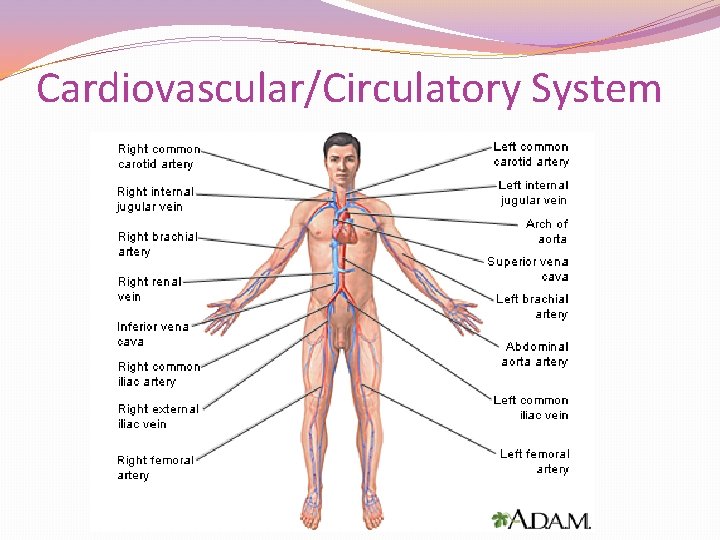
Cardiovascular/Circulatory System
Cardiovascular/Circulatory System �Arteries: carry blood away from the heart �Veins: carry blood toward the heart �Capillaries: the smallest of blood vessels. They distribute oxygenated blood from arteries to the tissues of the body and feed deoxygenated blood from the tissues back into the veins
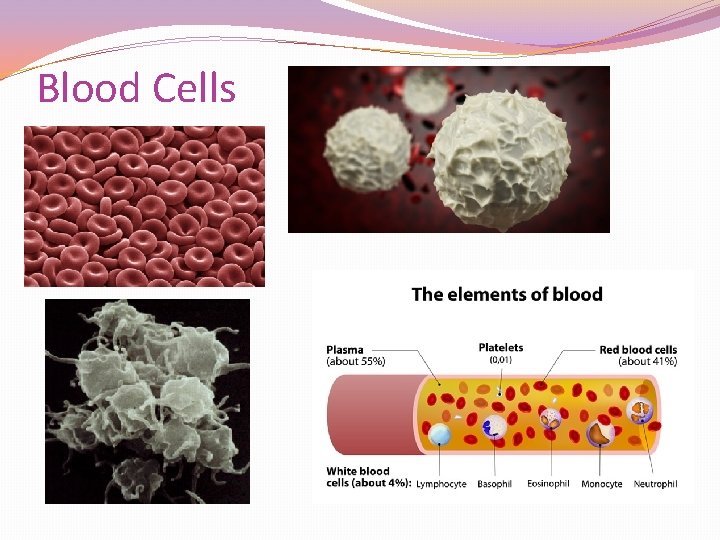
Fun Facts � Average resting Heart Rate in an adult (HR) is 72 beats per minute � Max Heart Rate (HR) is calculated by using the formula 220 -age= � Average resting Blood Pressure (BP) in an adult is 120/80 � The Aorta is the largest artery in the body � An average adult has between 9 to 12 pints of blood in their body. � Blood components are made by marrow which is found in long bones � Red Blood Cells: carry oxygen, remove carbon dioxide, live for 120 days � White Blood Cells: aka leukocytes, cells of the immune system protect the body against infectious disease � Platelets: help your body for blood clots to stop bleeding � Plasma: Plasma is the largest component of your blood, making up about 55% of its overall content. Light yellow liquid. Along with water, plasma carries salts and enzymes. The primary purpose of plasma is to transport nutrients, hormones, and proteins to the parts of the body that need it. Cells also deposit their waste products into the plasma. The plasma, in turn, helps remove this waste from the body. Blood plasma also ushers the movement of all the elements of blood through the circulatory system
Blood Cells
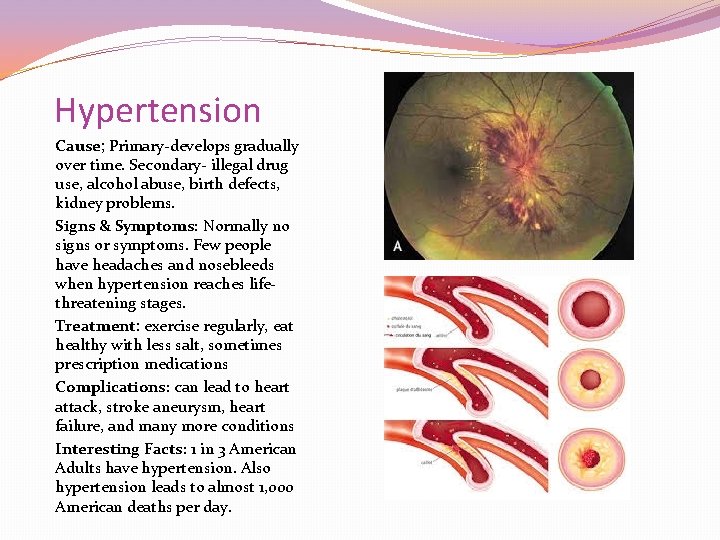
Hypertension Cause; Primary-develops gradually over time. Secondary- illegal drug use, alcohol abuse, birth defects, kidney problems. Signs & Symptoms: Normally no signs or symptoms. Few people have headaches and nosebleeds when hypertension reaches lifethreatening stages. Treatment: exercise regularly, eat healthy with less salt, sometimes prescription medications Complications: can lead to heart attack, stroke aneurysm, heart failure, and many more conditions Interesting Facts: 1 in 3 American Adults have hypertension. Also hypertension leads to almost 1, 000 American deaths per day.
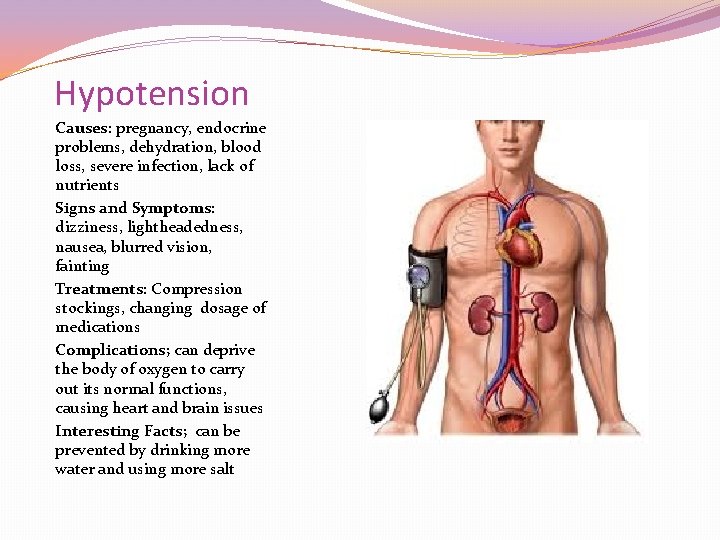
Hypotension Causes: pregnancy, endocrine problems, dehydration, blood loss, severe infection, lack of nutrients Signs and Symptoms: dizziness, lightheadedness, nausea, blurred vision, fainting Treatments: Compression stockings, changing dosage of medications Complications; can deprive the body of oxygen to carry out its normal functions, causing heart and brain issues Interesting Facts; can be prevented by drinking more water and using more salt
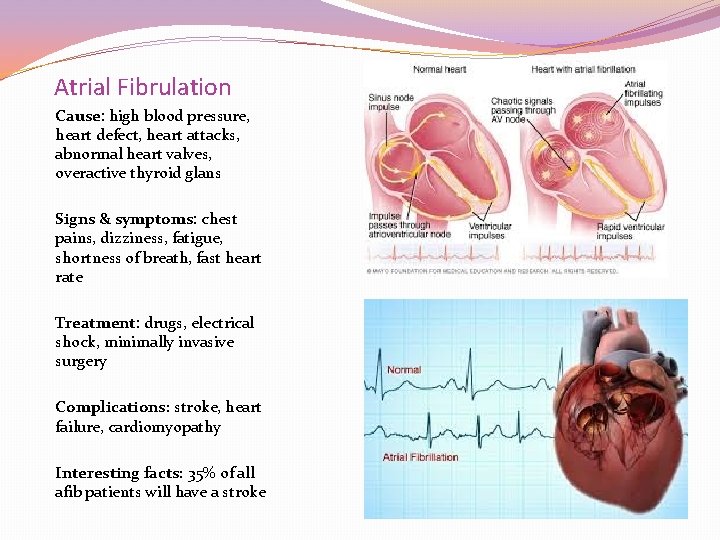
Atrial Fibrulation Cause: high blood pressure, heart defect, heart attacks, abnormal heart valves, overactive thyroid glans Signs & symptoms: chest pains, dizziness, fatigue, shortness of breath, fast heart rate Treatment: drugs, electrical shock, minimally invasive surgery Complications: stroke, heart failure, cardiomyopathy Interesting facts: 35% of all afib patients will have a stroke
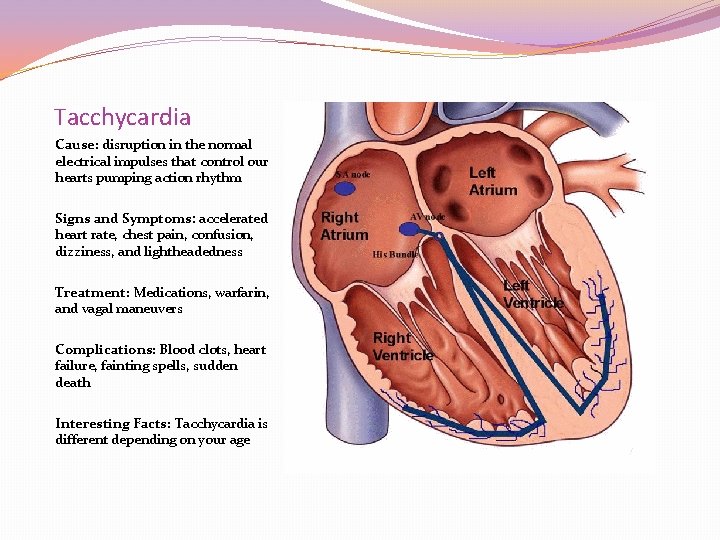
Tacchycardia Cause: disruption in the normal electrical impulses that control our hearts pumping action rhythm Signs and Symptoms: accelerated heart rate, chest pain, confusion, dizziness, and lightheadedness Treatment: Medications, warfarin, and vagal maneuvers Complications: Blood clots, heart failure, fainting spells, sudden death Interesting Facts: Tacchycardia is different depending on your age
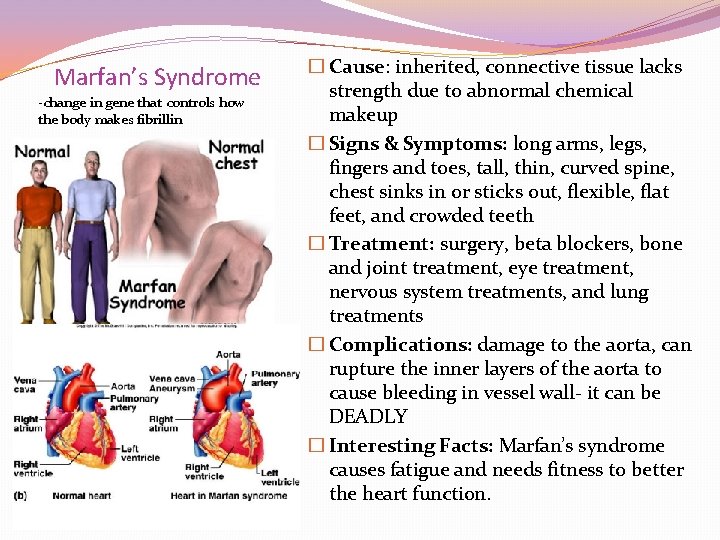
Marfan’s Syndrome -change in gene that controls how the body makes fibrillin � Cause: inherited, connective tissue lacks strength due to abnormal chemical makeup � Signs & Symptoms: long arms, legs, fingers and toes, tall, thin, curved spine, chest sinks in or sticks out, flexible, flat feet, and crowded teeth � Treatment: surgery, beta blockers, bone and joint treatment, eye treatment, nervous system treatments, and lung treatments � Complications: damage to the aorta, can rupture the inner layers of the aorta to cause bleeding in vessel wall- it can be DEADLY � Interesting Facts: Marfan’s syndrome causes fatigue and needs fitness to better the heart function.
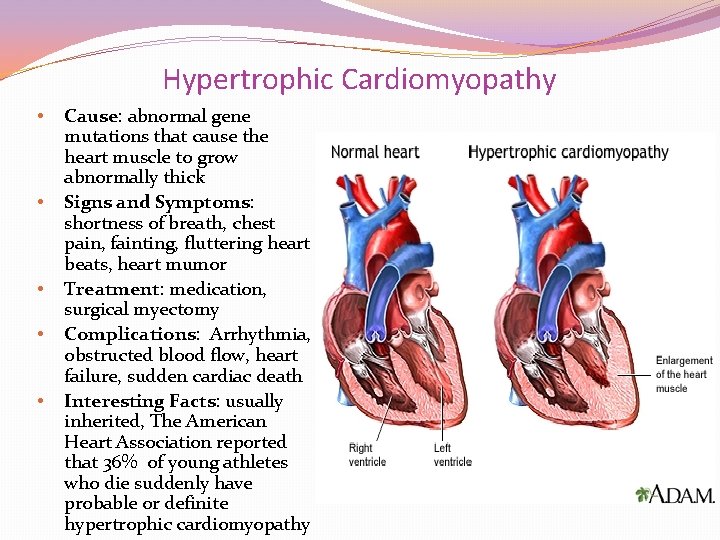
Hypertrophic Cardiomyopathy • • • Cause: abnormal gene mutations that cause the heart muscle to grow abnormally thick Signs and Symptoms: shortness of breath, chest pain, fainting, fluttering heart beats, heart mumor Treatment: medication, surgical myectomy Complications: Arrhythmia, obstructed blood flow, heart failure, sudden cardiac death Interesting Facts: usually inherited, The American Heart Association reported that 36% of young athletes who die suddenly have probable or definite hypertrophic cardiomyopathy
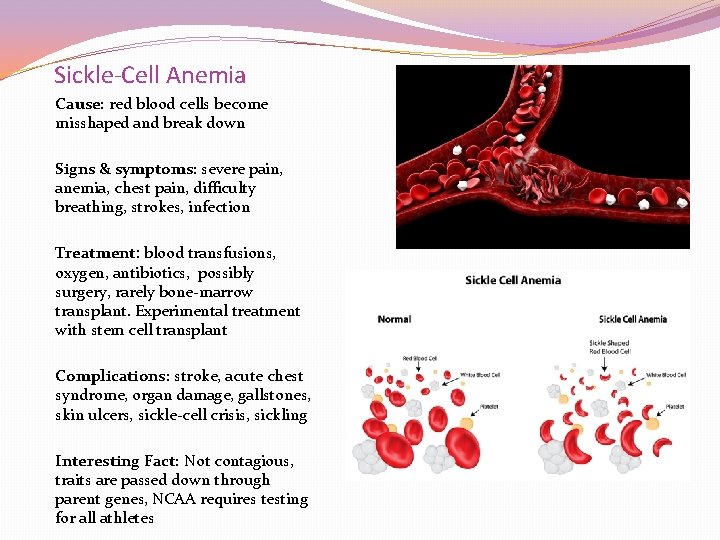
Sickle-Cell Anemia Cause: red blood cells become misshaped and break down Signs & symptoms: severe pain, anemia, chest pain, difficulty breathing, strokes, infection Treatment: blood transfusions, oxygen, antibiotics, possibly surgery, rarely bone-marrow transplant. Experimental treatment with stem cell transplant Complications: stroke, acute chest syndrome, organ damage, gallstones, skin ulcers, sickle-cell crisis, sickling Interesting Fact: Not contagious, traits are passed down through parent genes, NCAA requires testing for all athletes
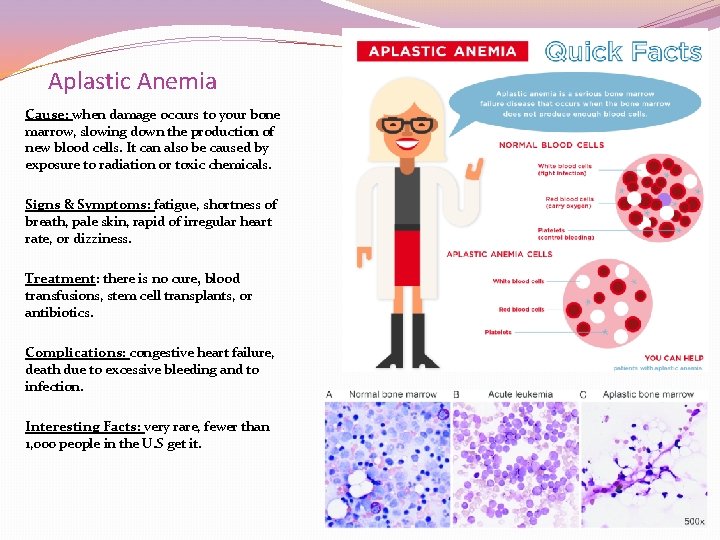
Aplastic Anemia Cause: when damage occurs to your bone marrow, slowing down the production of new blood cells. It can also be caused by exposure to radiation or toxic chemicals. Signs & Symptoms: fatigue, shortness of breath, pale skin, rapid of irregular heart rate, or dizziness. Treatment: there is no cure, blood transfusions, stem cell transplants, or antibiotics. Complications: congestive heart failure, death due to excessive bleeding and to infection. Interesting Facts: very rare, fewer than 1, 000 people in the U. S get it.
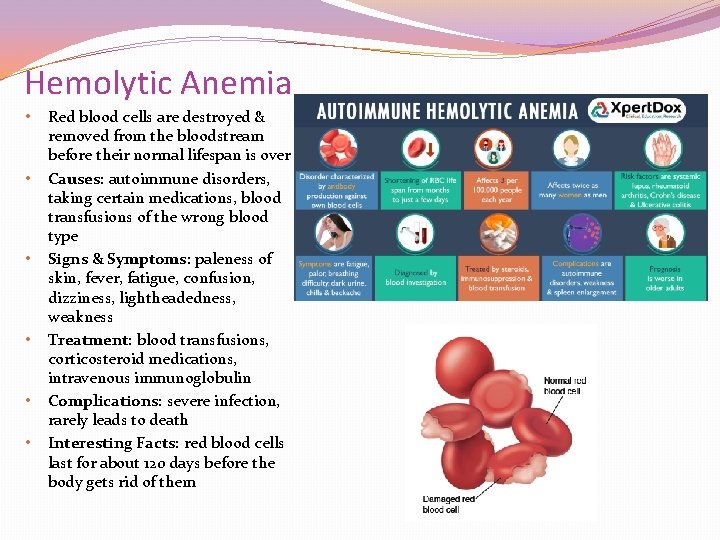
Hemolytic Anemia • • • Red blood cells are destroyed & removed from the bloodstream before their normal lifespan is over Causes: autoimmune disorders, taking certain medications, blood transfusions of the wrong blood type Signs & Symptoms: paleness of skin, fever, fatigue, confusion, dizziness, lightheadedness, weakness Treatment: blood transfusions, corticosteroid medications, intravenous immunoglobulin Complications: severe infection, rarely leads to death Interesting Facts: red blood cells last for about 120 days before the body gets rid of them
Coronary Artery Disease Cause: plaque build up in the walls of the arteries supplying the heart Symptoms: angina, shortness of breath, back and jaw pain Signs & Symptoms: Treatment: heart healthy diet, aspirin, or angioplasty surgery Complications: impaired blood flow in coronary arteries Complications: Interesting Facts: CAD is the number one killer of men and women in the U. S.