
Cardiovascular System Heart Structure Blood Flow The purpose
Cardiovascular System Heart Structure & Blood Flow The purpose of this lesson is to help you understand the heart structure and the blood flow through the heart. Introduction to Healthcare Science Next Candi Dykes
Introduction: n n n n The heart is a muscular, hollow organ often called the “pump” of the body. The size of the heart is a little larger than the size of a fist. The heart is located between the lungs, behind the sternum and above the diaphragm. The heart are two separate pumps that continuously send blood throughout the body carrying nutrients, oxygen, and helping remove harmful wastes. These pumps are the right side and left side of the heart. The right side of the heart receives blood low in oxygen from the body. The left side of the heart receives blood that has been oxygenated by the lungs. The blood is then pumped out of the heart to all parts of the body. Next
Heart Structure • Click on each label to access the definitions of each structure within the heart. Once you have read all definitions, click on the Next button below to advance. Septum Home Activities Resources Next
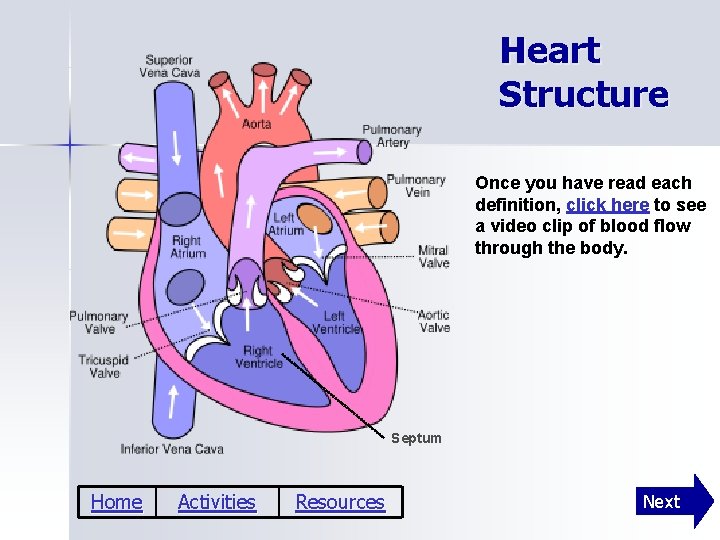
Heart Structure Once you have read each definition, click here to see a video clip of blood flow through the body. Septum Home Activities Resources Next
Activities n n n Label the Heart Cell in Motion Echocardiogram Heart Surgery Videos Virtual Heart Surgery Quiz Home Activities Resources Next
Resources: n n n n http: //www. buddyproject. org/lessons/info. asp? id=19 ; This web page can be used as a single teaching unit or as a supplement to your unit on the cardiovascular system. http: //library. thinkquest. org/2935/Natures_Best/Nat_Best_Hi gh_Level/Circulatory_Net_Pages/Circulatory_page. html http: //www. bishopstopford. com/faculties/science/arthur/Hear t%20 drag&drop. swf http: //en. wikipedia. org/wiki/Heart_valve www. emc. maricopa. edu/. . . /BIOBK/heartbeat. gif http: //heart-health-diettips. com/Picture_and_Information_On_the_Heart. html http: //www. smm. org/heart/top. html http: //www. abc. net. au/science/lcs/swf/heart. swf Home Activities Resources Next
Thank you for completing this lesson on the Cardiovascular System. Please complete the evaluation form you have been provided. Home Activities Resource s
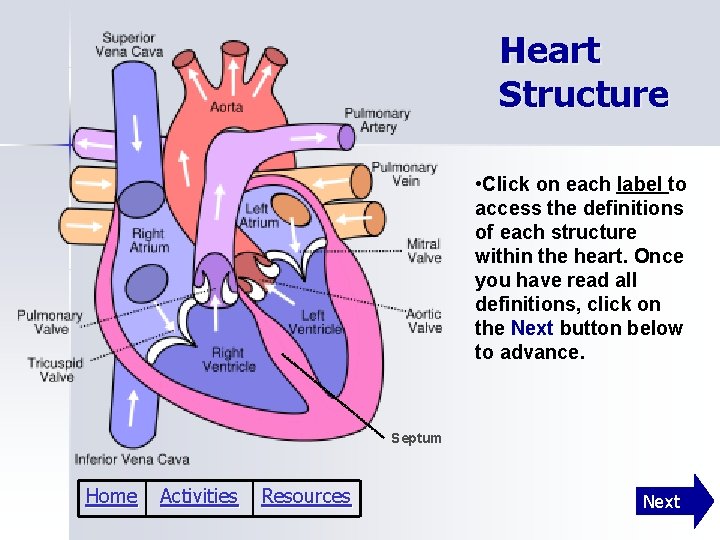
Myocardium: n Myocardium The heart is made up of a powerful muscle called the myocardium. The myocardium is composed of cardiac muscle fibers that contract and cause a wringing type of action. Next
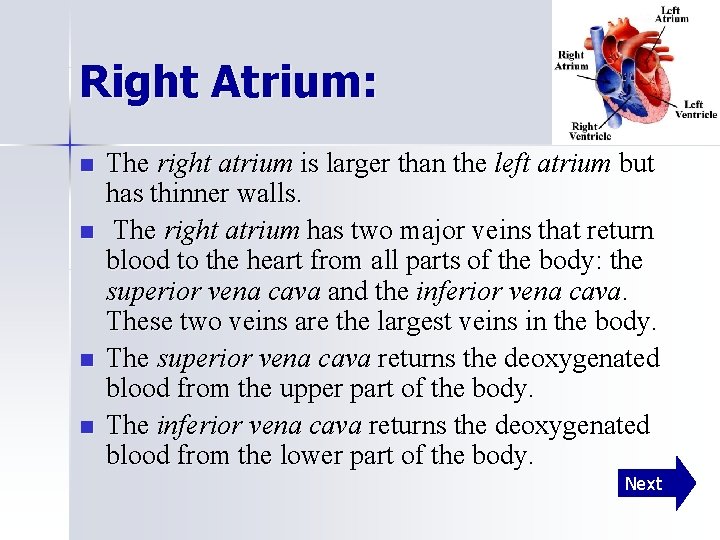
Right Atrium: n n The right atrium is larger than the left atrium but has thinner walls. The right atrium has two major veins that return blood to the heart from all parts of the body: the superior vena cava and the inferior vena cava. These two veins are the largest veins in the body. The superior vena cava returns the deoxygenated blood from the upper part of the body. The inferior vena cava returns the deoxygenated blood from the lower part of the body. Next
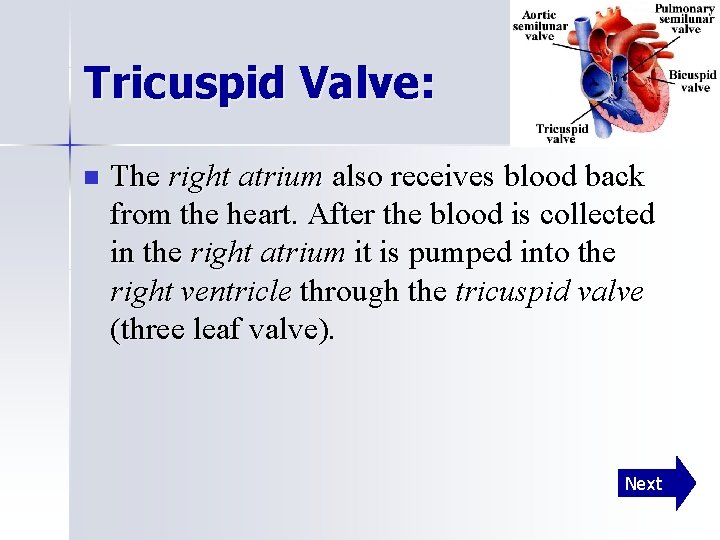
Tricuspid Valve: n The right atrium also receives blood back from the heart. After the blood is collected in the right atrium it is pumped into the right ventricle through the tricuspid valve (three leaf valve). Next
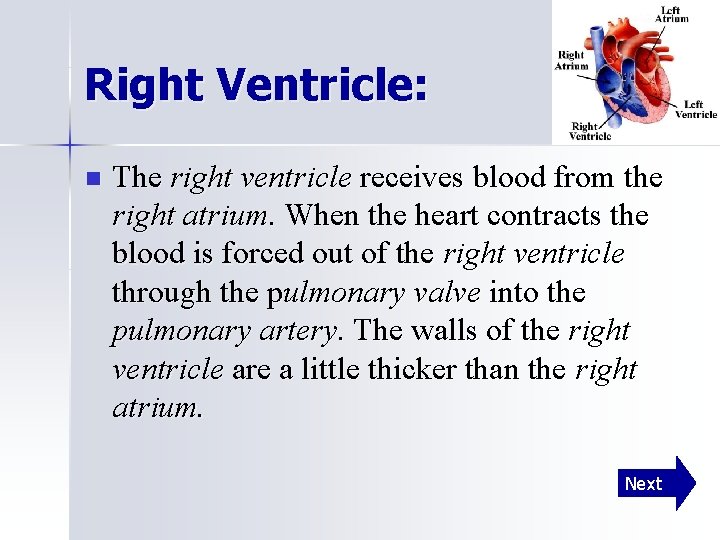
Right Ventricle: n The right ventricle receives blood from the right atrium. When the heart contracts the blood is forced out of the right ventricle through the pulmonary valve into the pulmonary artery. The walls of the right ventricle are a little thicker than the right atrium. Next
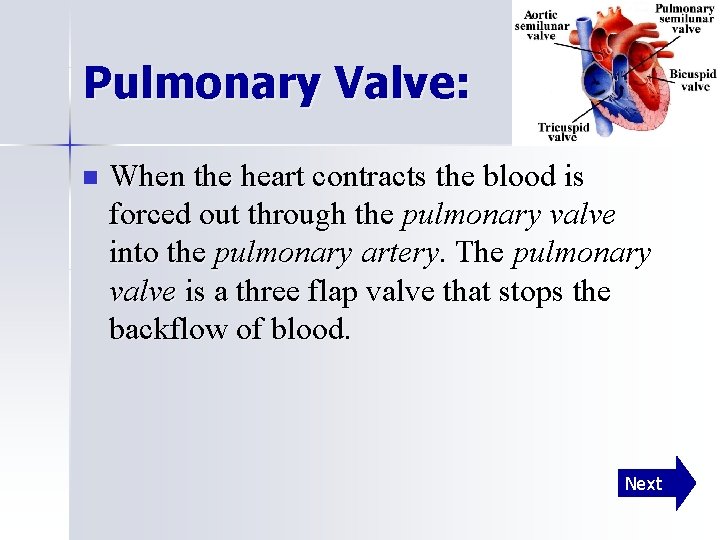
Pulmonary Valve: n When the heart contracts the blood is forced out through the pulmonary valve into the pulmonary artery. The pulmonary valve is a three flap valve that stops the backflow of blood. Next
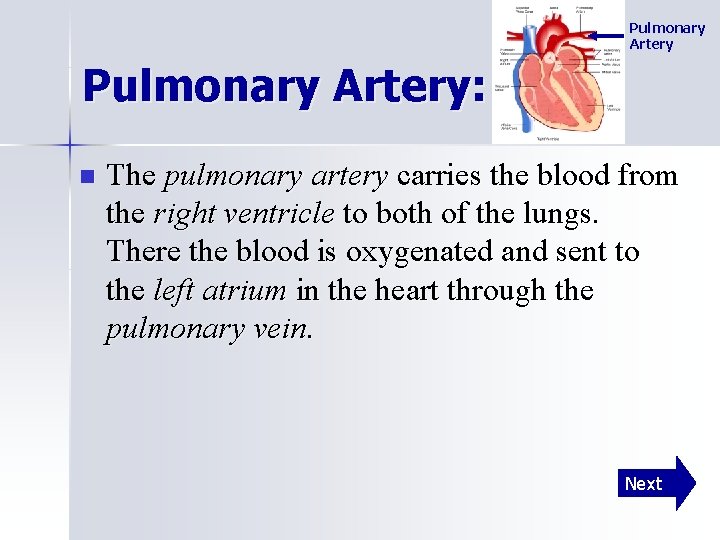
Pulmonary Artery: n The pulmonary artery carries the blood from the right ventricle to both of the lungs. There the blood is oxygenated and sent to the left atrium in the heart through the pulmonary vein. Next
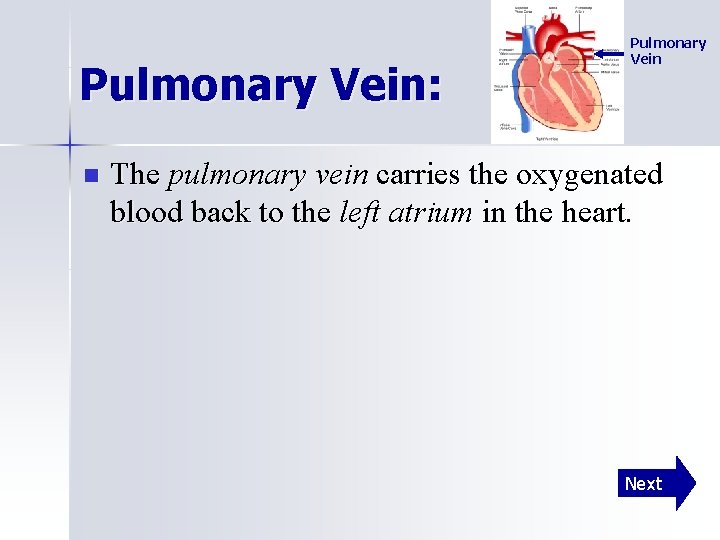
Pulmonary Vein: n Pulmonary Vein The pulmonary vein carries the oxygenated blood back to the left atrium in the heart. Next
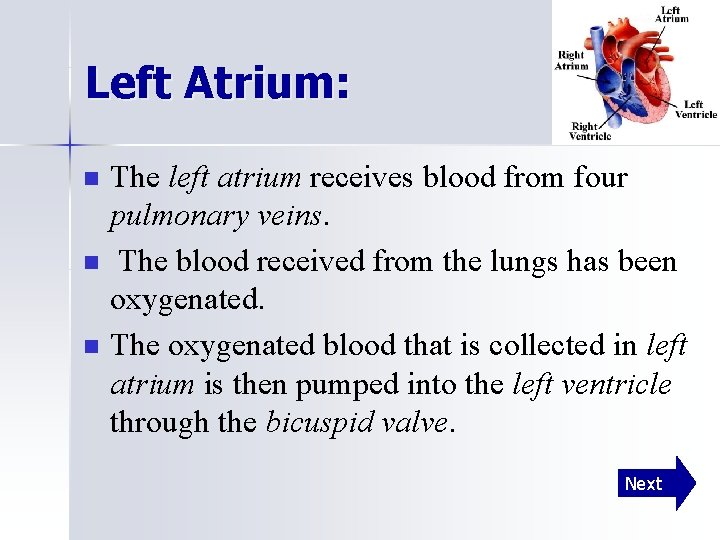
Left Atrium: n n n The left atrium receives blood from four pulmonary veins. The blood received from the lungs has been oxygenated. The oxygenated blood that is collected in left atrium is then pumped into the left ventricle through the bicuspid valve. Next
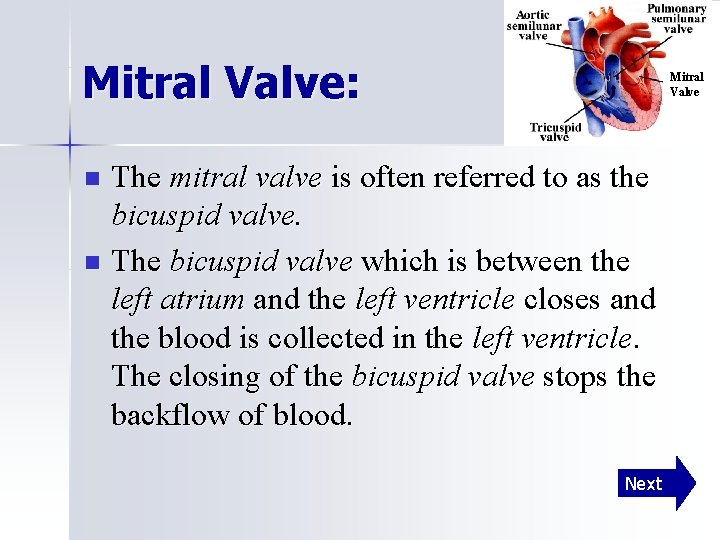
Mitral Valve: Mitral Valve The mitral valve is often referred to as the bicuspid valve. n The bicuspid valve which is between the left atrium and the left ventricle closes and the blood is collected in the left ventricle. The closing of the bicuspid valve stops the backflow of blood. n Next
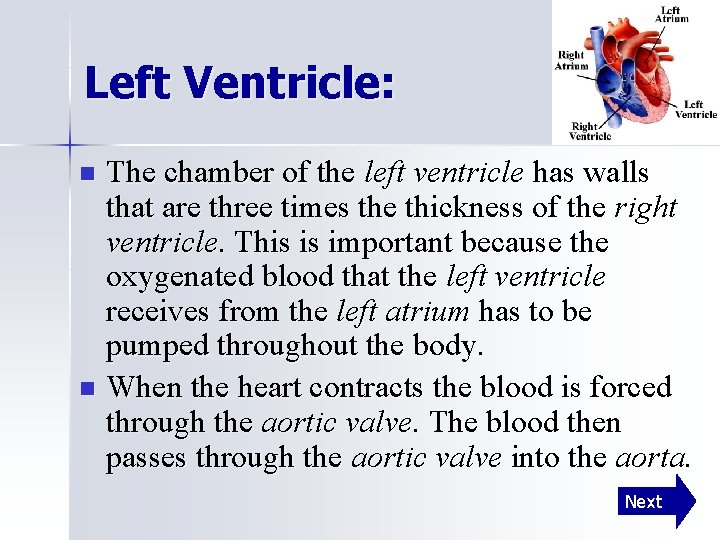
Left Ventricle: The chamber of the left ventricle has walls that are three times the thickness of the right ventricle. This is important because the oxygenated blood that the left ventricle receives from the left atrium has to be pumped throughout the body. n When the heart contracts the blood is forced through the aortic valve. The blood then passes through the aortic valve into the aorta. n Next
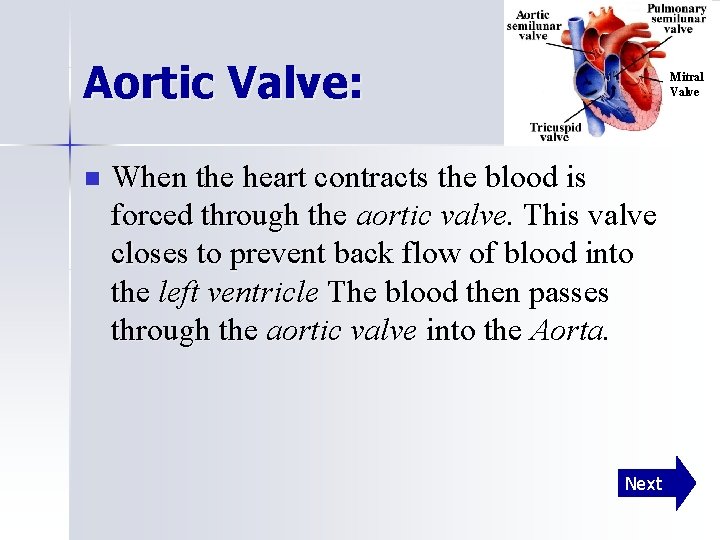
Aortic Valve: n Mitral Valve When the heart contracts the blood is forced through the aortic valve. This valve closes to prevent back flow of blood into the left ventricle The blood then passes through the aortic valve into the Aorta. Next
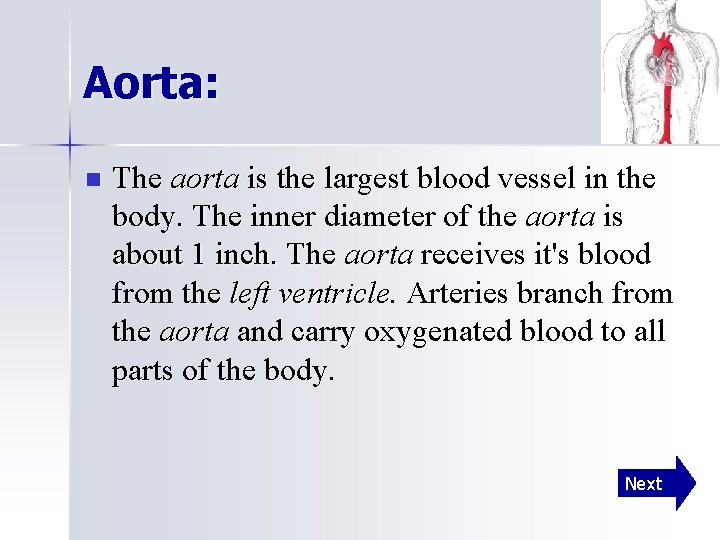
Aorta: n The aorta is the largest blood vessel in the body. The inner diameter of the aorta is about 1 inch. The aorta receives it's blood from the left ventricle. Arteries branch from the aorta and carry oxygenated blood to all parts of the body. Next
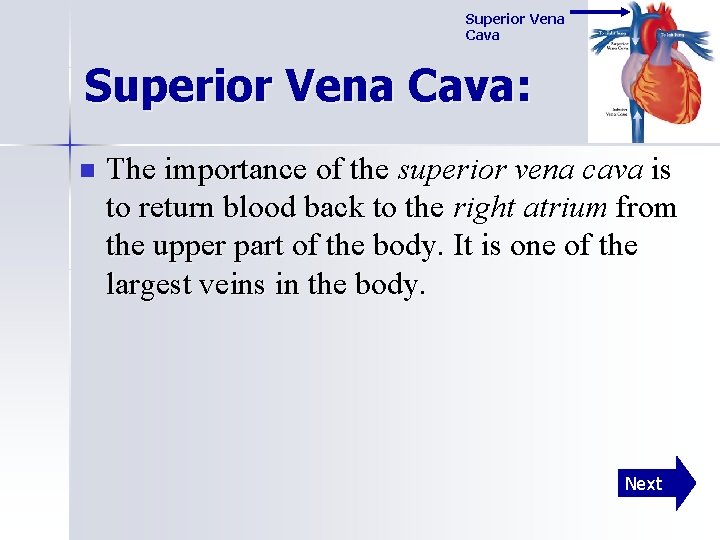
Superior Vena Cava: n The importance of the superior vena cava is to return blood back to the right atrium from the upper part of the body. It is one of the largest veins in the body. Next
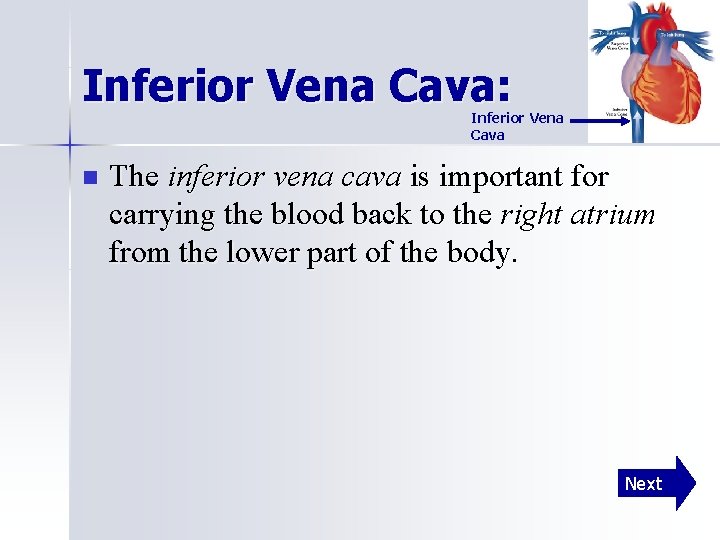
Inferior Vena Cava: Inferior Vena Cava n The inferior vena cava is important for carrying the blood back to the right atrium from the lower part of the body. Next
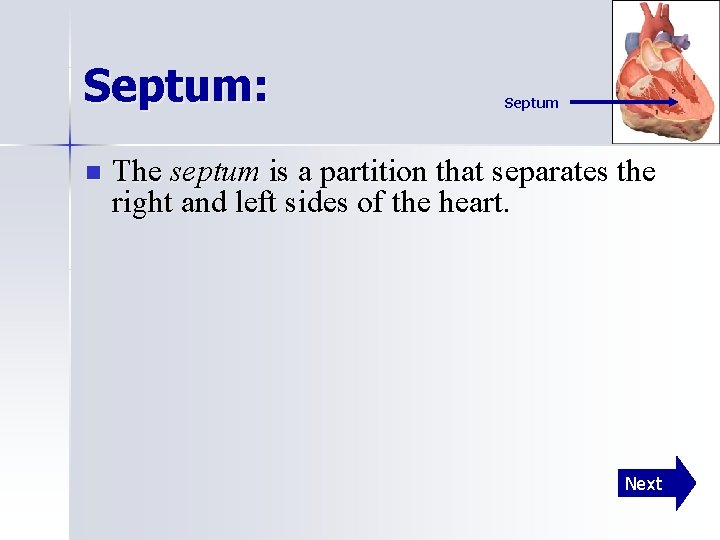
Septum: n Septum The septum is a partition that separates the right and left sides of the heart. Next
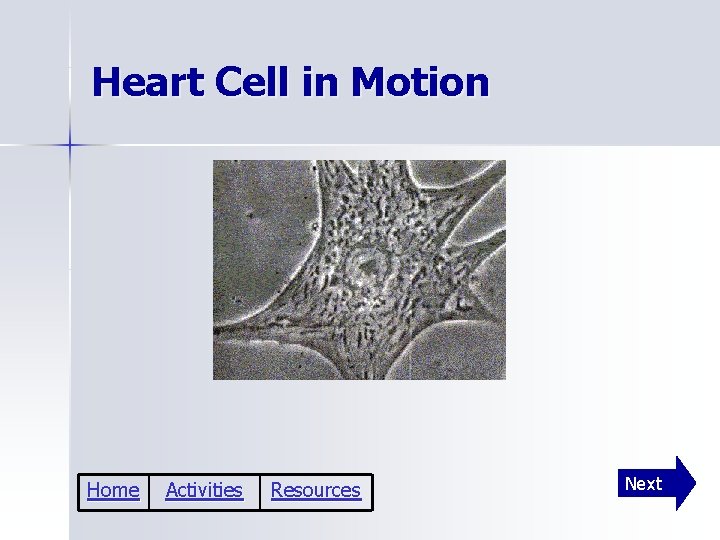
Heart Cell in Motion Home Activities Resources Next
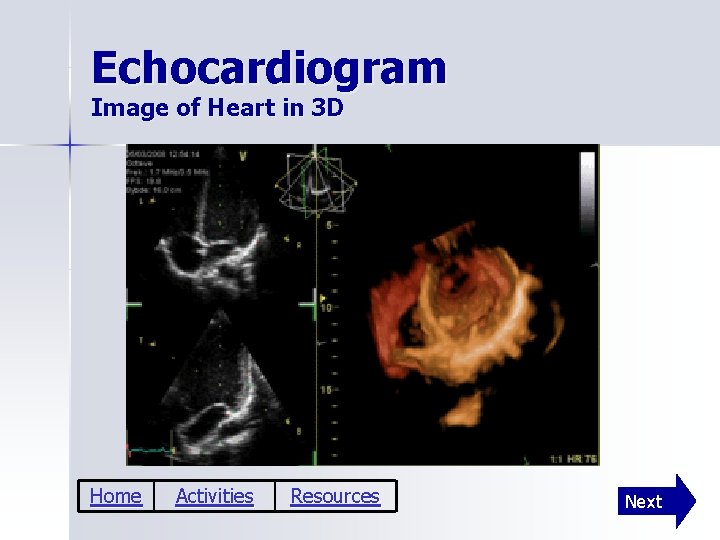
Echocardiogram Image of Heart in 3 D Home Activities Resources Next
- Slides: 24