
Cardiovascular system Functions Transport nutrients gases wastes and
- Slides: 43
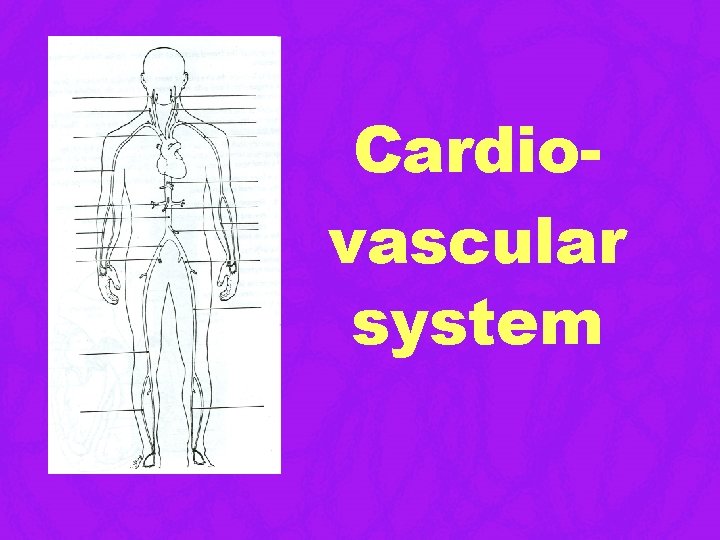
Cardiovascular system
Functions • Transport nutrients, gases, wastes and hormones • Maintain balance of fluids in body • Protection from disease • Regulate body temperature • Blood clotting
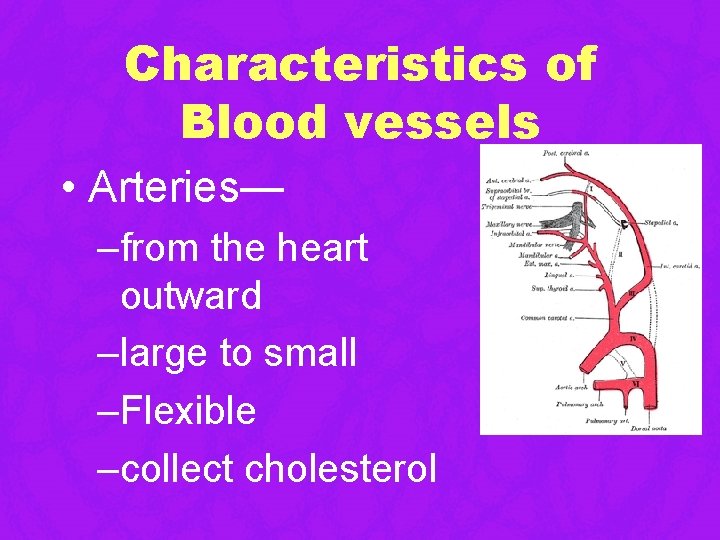
Characteristics of Blood vessels • Arteries— –from the heart outward –large to small –Flexible –collect cholesterol
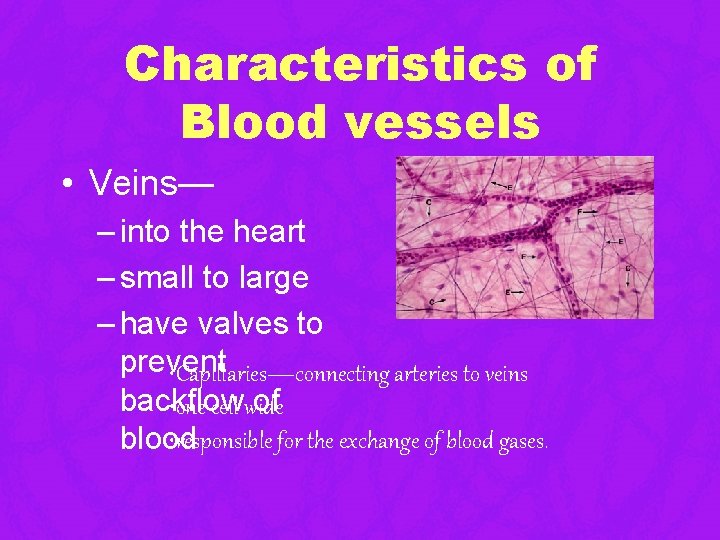
Characteristics of Blood vessels • Veins— – into the heart – small to large – have valves to prevent • Capillaries—connecting arteries to veins backflow of • one cell wide • responsible for the exchange of blood gases. blood
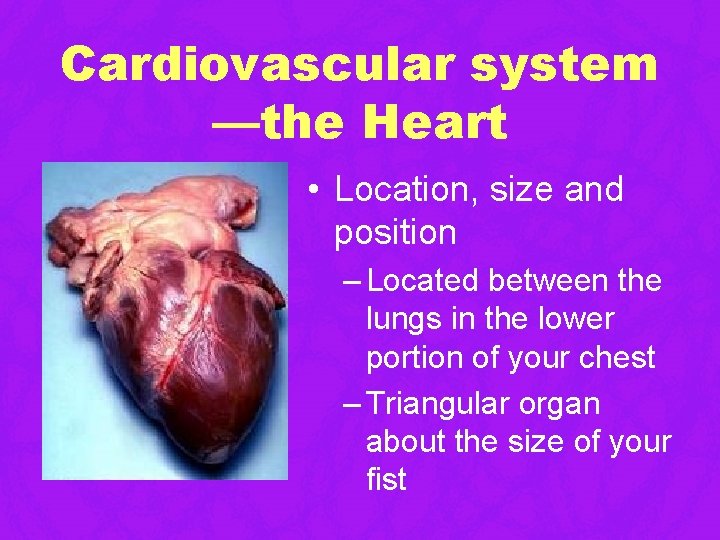
Cardiovascular system —the Heart • Location, size and position – Located between the lungs in the lower portion of your chest – Triangular organ about the size of your fist
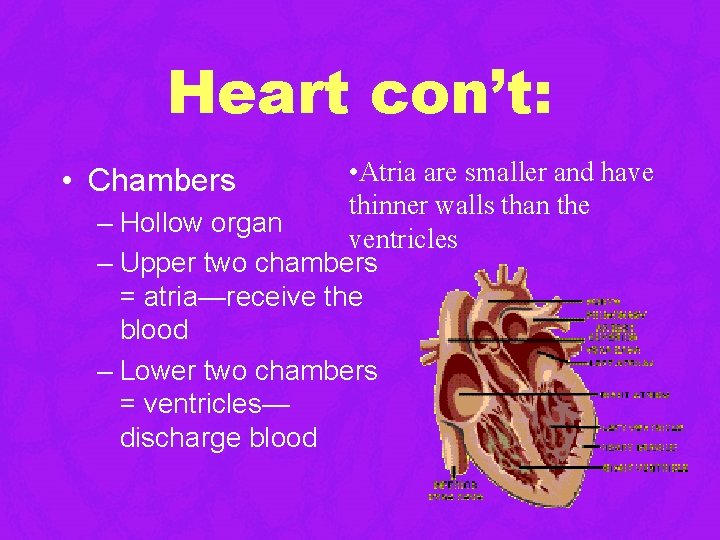
Heart con’t: • Atria are smaller and have thinner walls than the – Hollow organ ventricles – Upper two chambers = atria—receive the blood – Lower two chambers = ventricles— discharge blood • Chambers
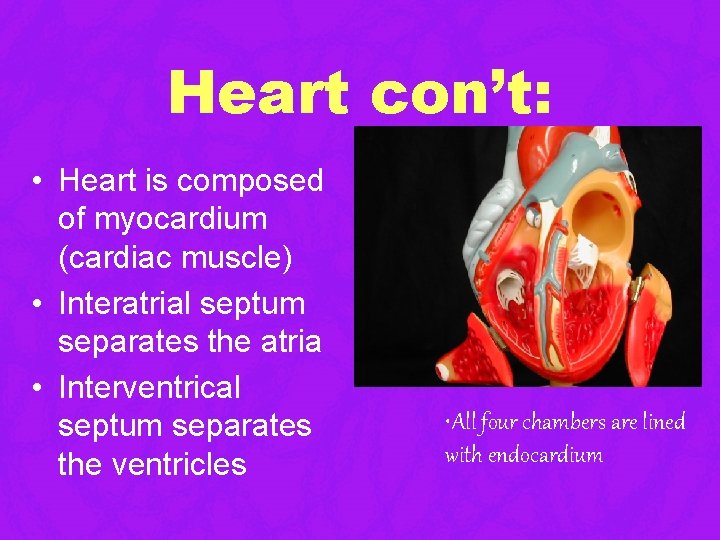
Heart con’t: • Heart is composed of myocardium (cardiac muscle) • Interatrial septum separates the atria • Interventrical septum separates the ventricles • All four chambers are lined with endocardium
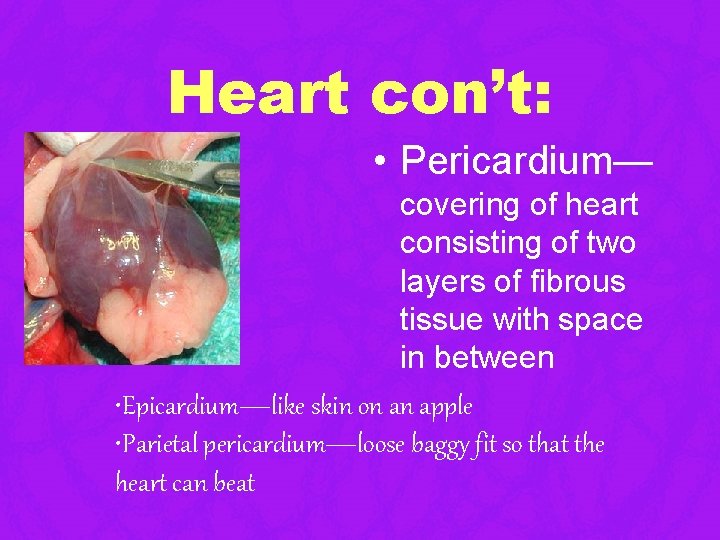
Heart con’t: • Pericardium— covering of heart consisting of two layers of fibrous tissue with space in between • Epicardium—like skin on an apple • Parietal pericardium—loose baggy fit so that the heart can beat
Heart action • Muscular pumping device distributing blood to all parts of the body • Atria contract first followed by the ventricle contraction • When heart is contracted, it is in systole • When heart is relaxed, it is in diastole
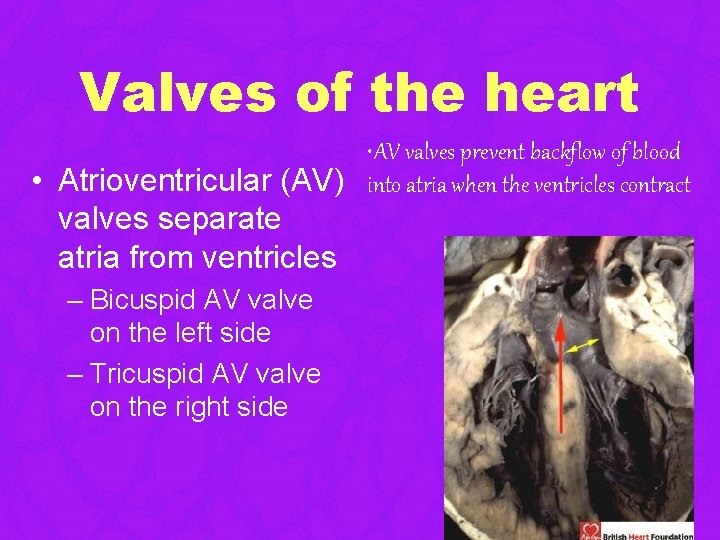
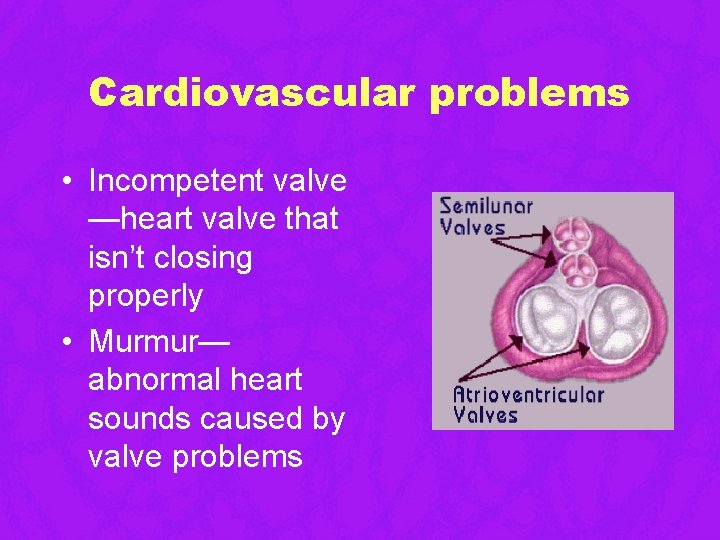
Valves of the heart • AV valves prevent backflow of blood • Atrioventricular (AV) into atria when the ventricles contract valves separate atria from ventricles – Bicuspid AV valve on the left side – Tricuspid AV valve on the right side
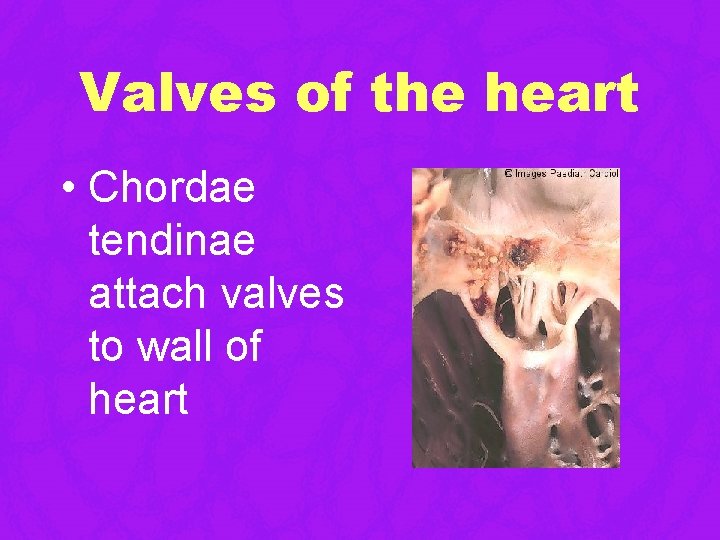
Valves of the heart • Chordae tendinae attach valves to wall of heart
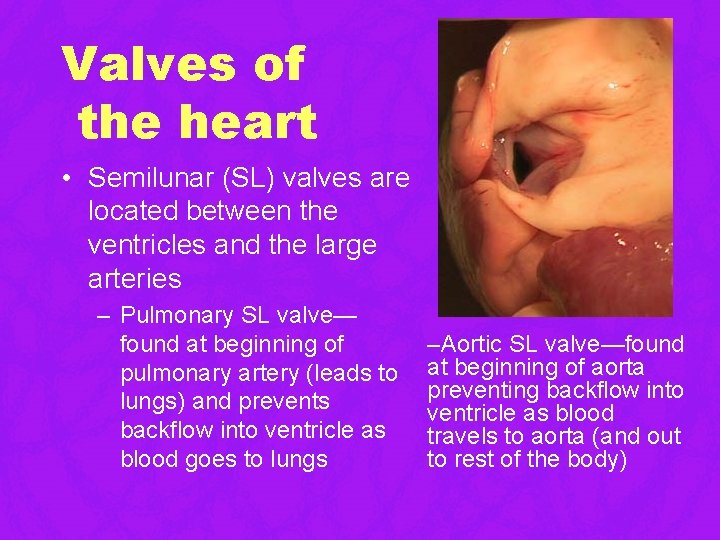
Valves of the heart • Semilunar (SL) valves are located between the ventricles and the large arteries – Pulmonary SL valve— found at beginning of pulmonary artery (leads to lungs) and prevents backflow into ventricle as blood goes to lungs –Aortic SL valve—found at beginning of aorta preventing backflow into ventricle as blood travels to aorta (and out to rest of the body)
Sounds of the heart • Lub—AV valves closing as the ventricles contract (longer and lower pitch) • Dup—SL valves closing as ventricles relax
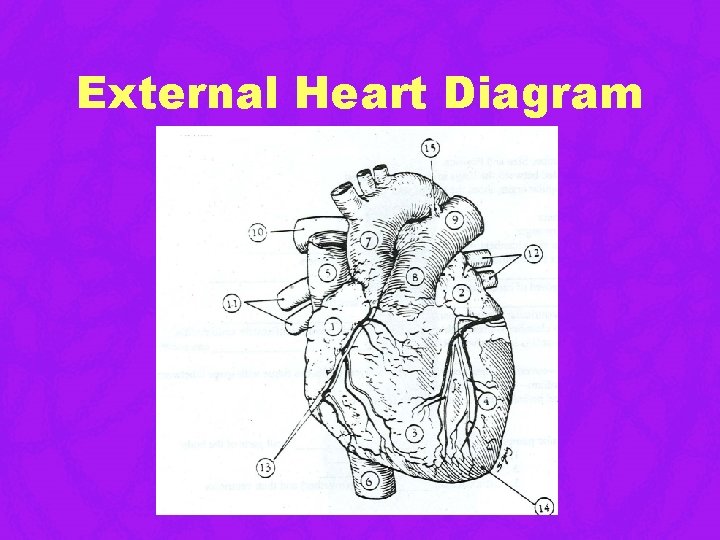
External Heart Diagram
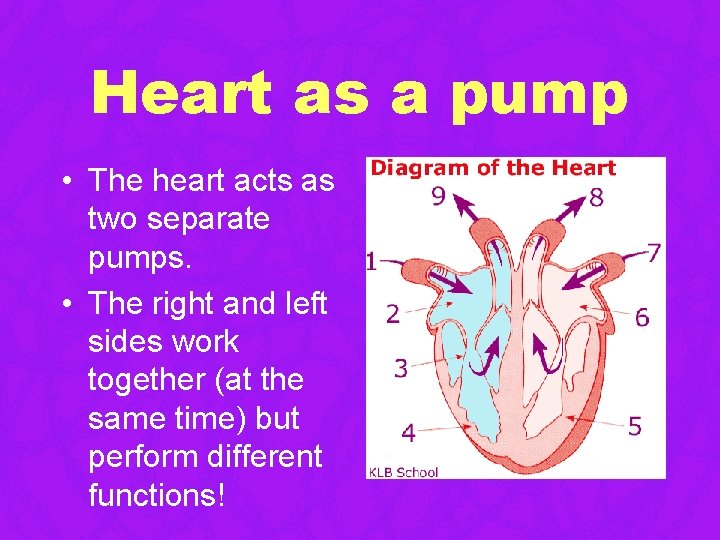
Heart as a pump • The heart acts as two separate pumps. • The right and left sides work together (at the same time) but perform different functions!
Pulmonary Circulation • Blood enters right atrium through the superior and inferior vena cava (O 2 poor blood from body) • Blood pumped through tricuspid AV valve to right ventricle • Right ventricle contracts, sending blood through the pulmonary artery to lungs (O 2 gained, CO 2 lost)
Systemic Circulation • O 2 rich blood returns to left atrium through pulmonary veins • Blood pumped through bicuspid AV into left ventricle • Left ventricle contracts sending blood to rest of body via aorta
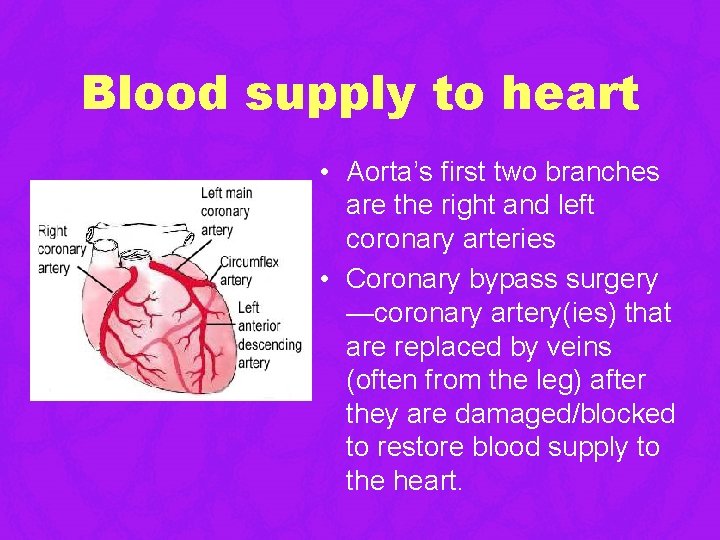
Blood supply to heart • Aorta’s first two branches are the right and left coronary arteries • Coronary bypass surgery —coronary artery(ies) that are replaced by veins (often from the leg) after they are damaged/blocked to restore blood supply to the heart.
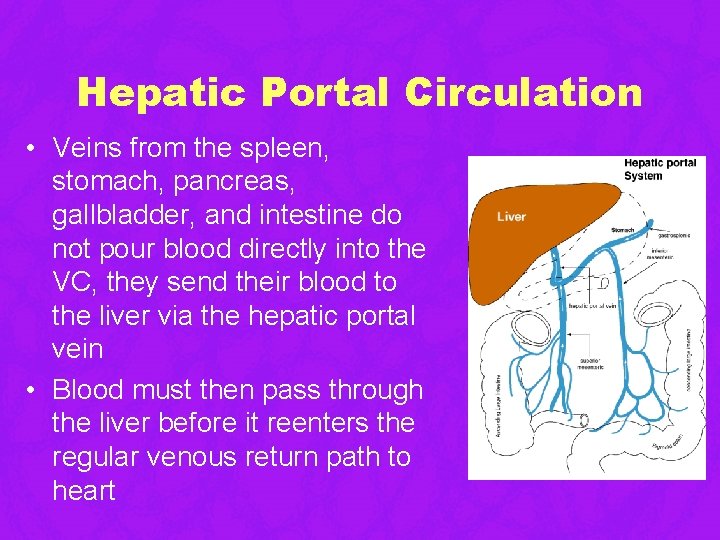
Hepatic Portal Circulation • Veins from the spleen, stomach, pancreas, gallbladder, and intestine do not pour blood directly into the VC, they send their blood to the liver via the hepatic portal vein • Blood must then pass through the liver before it reenters the regular venous return path to heart
Hepatic Circulation con’t: • Blood leaves the liver by way of the hepatic veins which drain into the inferior VC • This detour through the liver serves a valuable purpose: – When a meal is being absorbed, the blood in the portal vein has higher than normal glucose levels. The liver cells remove the excess glucose and store it as glycogen. – Liver cells also remove and detoxify various toxins in blood
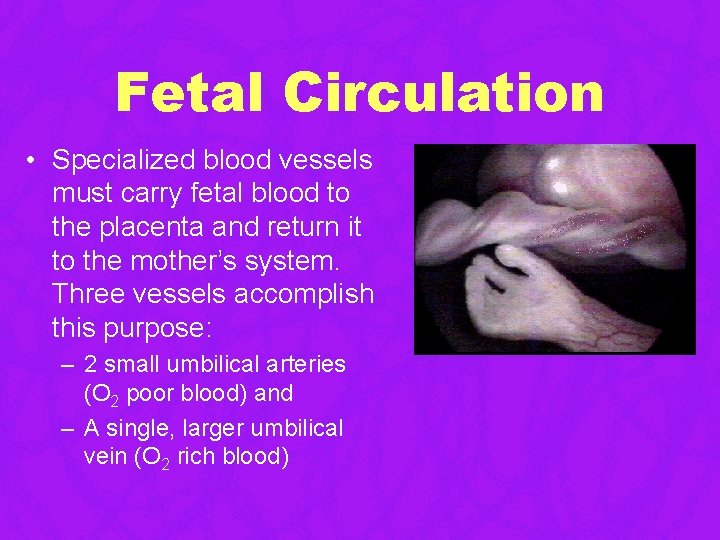
Fetal Circulation • Specialized blood vessels must carry fetal blood to the placenta and return it to the mother’s system. Three vessels accomplish this purpose: – 2 small umbilical arteries (O 2 poor blood) and – A single, larger umbilical vein (O 2 rich blood)
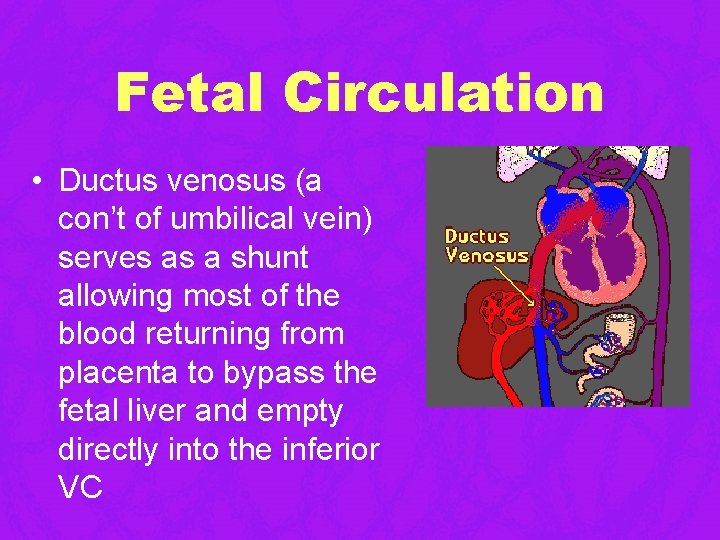
Fetal Circulation • Ductus venosus (a con’t of umbilical vein) serves as a shunt allowing most of the blood returning from placenta to bypass the fetal liver and empty directly into the inferior VC
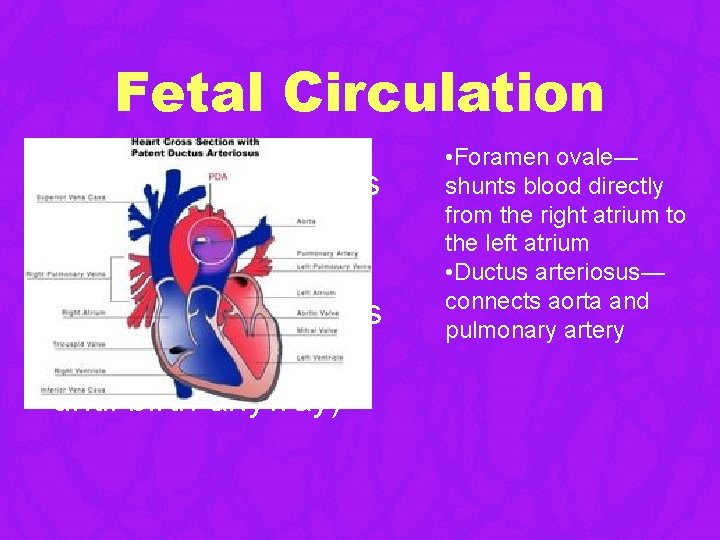
Fetal Circulation • Two other structures allow most of the blood to bypass developing lungs (as they are collapsed until birth anyway) • Foramen ovale— shunts blood directly from the right atrium to the left atrium • Ductus arteriosus— connects aorta and pulmonary artery
Fetal Circulation • At birth, as baby takes its first deep breaths, the cardiovascular system is subjected to increased pressure. The result is the closure of the foramen ovale and the rapid collapse of the umbilical bvs, ductus venosus and ductus arteriosus
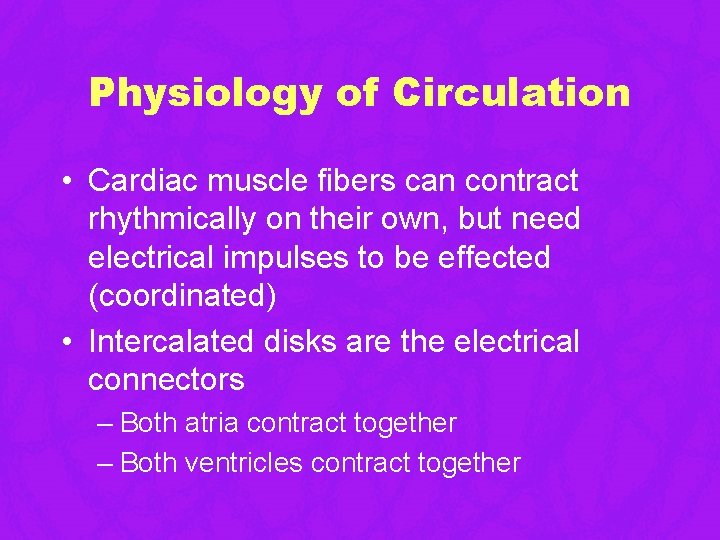
Physiology of Circulation • Cardiac muscle fibers can contract rhythmically on their own, but need electrical impulses to be effected (coordinated) • Intercalated disks are the electrical connectors – Both atria contract together – Both ventricles contract together
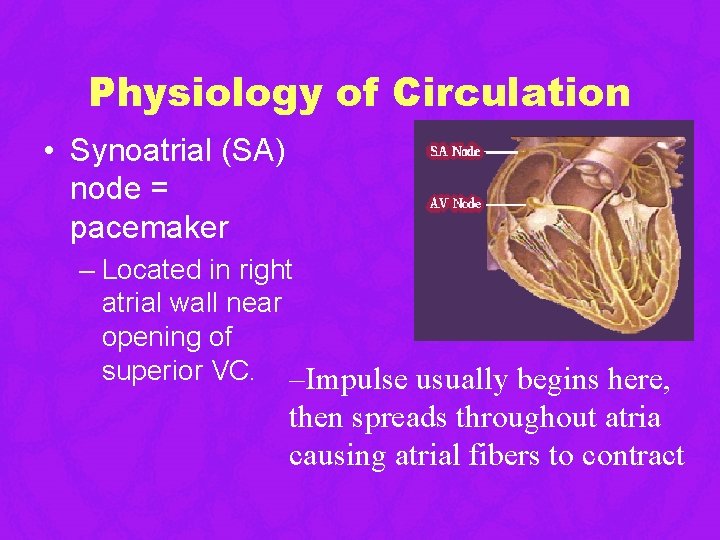
Physiology of Circulation • Synoatrial (SA) node = pacemaker – Located in right atrial wall near opening of superior VC. –Impulse usually begins here, then spreads throughout atria causing atrial fibers to contract
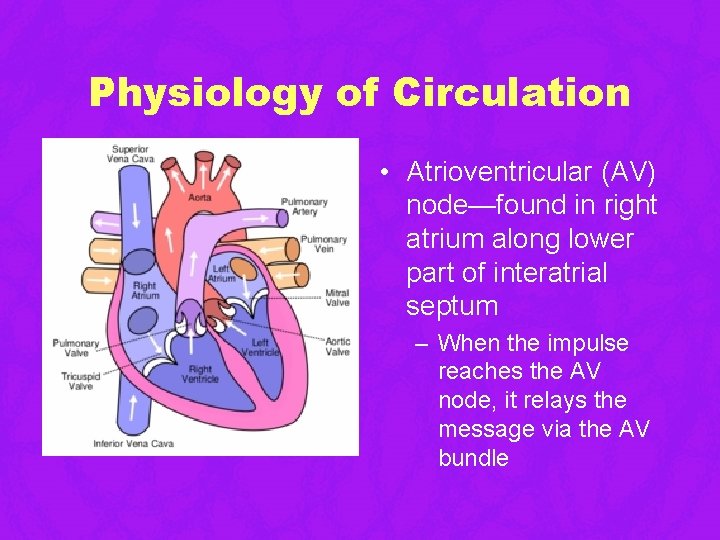
Physiology of Circulation • Atrioventricular (AV) node—found in right atrium along lower part of interatrial septum – When the impulse reaches the AV node, it relays the message via the AV bundle
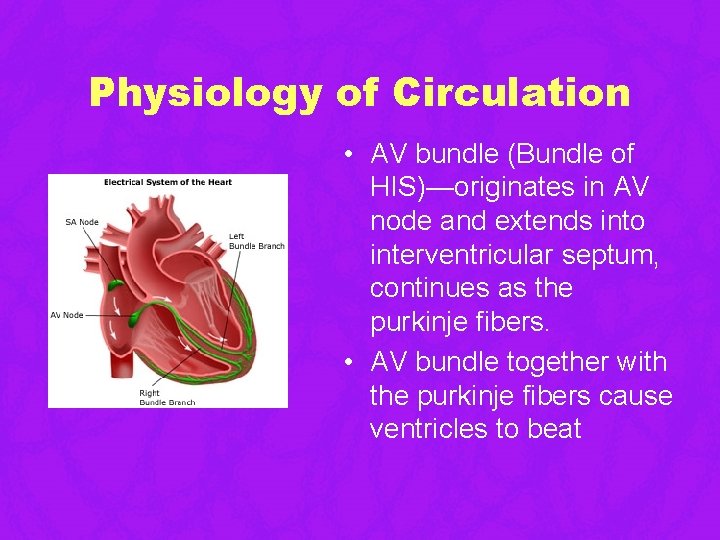
Physiology of Circulation • AV bundle (Bundle of HIS)—originates in AV node and extends into interventricular septum, continues as the purkinje fibers. • AV bundle together with the purkinje fibers cause ventricles to beat
Physiology of Circulation • Normally, the ventricular beat follows the atrial beat…however endocarditis, myocardial infarction or other infections can cause disruptions to this cycle.
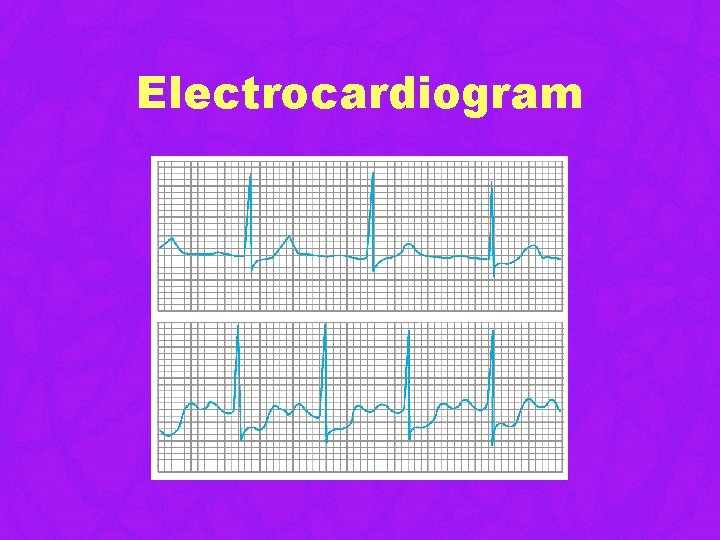
Electrocardiogram • An ECG is a measurement of the electrical current in graphic form…made up of three main waves – P Wave—occurs with depolarization of atria, it’s the electrical activity that triggers contraction – QRS Wave—occurs during depolarization of the ventricles (masks the repolarization wave for atria) – T Wave—occurs during repolarization of the ventricles —just before the relaxation of the ventricles • Damage to the cardiac muscle causes skewed ECG and will point to diagnosis and/or treatment.
Electrocardiogram
Blood pressure • General Info – Pressure of blood occurs in all blood vessels, it is higher in the arteries than the veins – This pressure is necessary for circulation—otherwise blood wouldn’t move.
Blood pressure • Factors influencing BP: – Blood volume—the higher the volume of blood in the arteries, the higher the pressure on the artery walls. – Strength of heart contractions—each time the heart contracts, a certain volume of blood is released. The stronger the contraction, more blood sent = higher pressure
Blood pressure • Factors con’t: – Heart rate—if the heat rate is up, it usually means the blood volume is down…so instead of 70 ml x 70 beats (4900 ml/min) you have 40 ml x 100 beats (4000 ml/min) = less blood pressure – Blood viscosity—thinner blood will result in lower blood pressure – Normal bp is 115/75
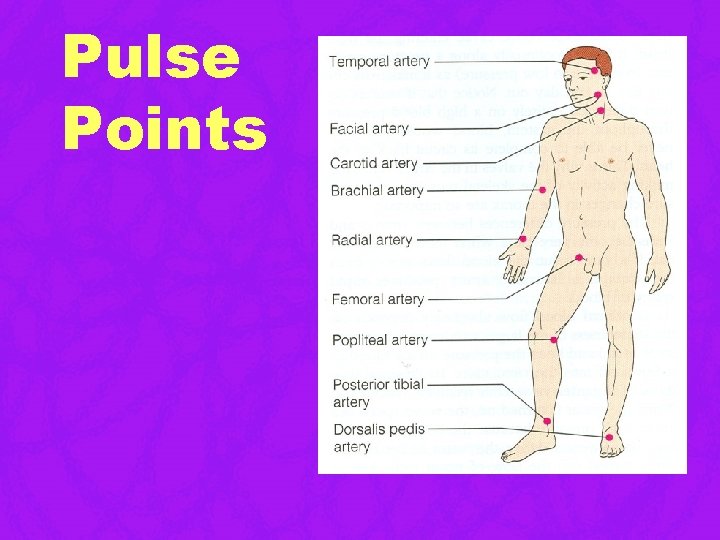
Pulse Points
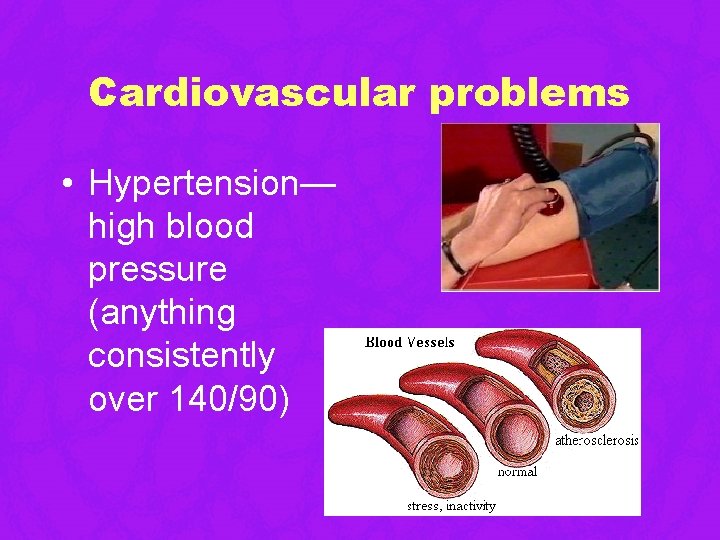
Cardiovascular problems • Hypertension— high blood pressure (anything consistently over 140/90)
Cardiovascular problems • Fibrillation—rapid uncoordinated beating of heart muscle • Tachycardia—rapid heart rate (over 100 beats/minute) • Bradycardia—slow heart rate (less than 60 beats/minute)
Cardiovascular problems • Congestive heart failure—heart in such bad shape that circulation is totally inadequate to maintain body systems • Angina pectoris—chest pain caused by lack of oxygen to heart • Myocardial infarction—heart attack —death of a part of the heart
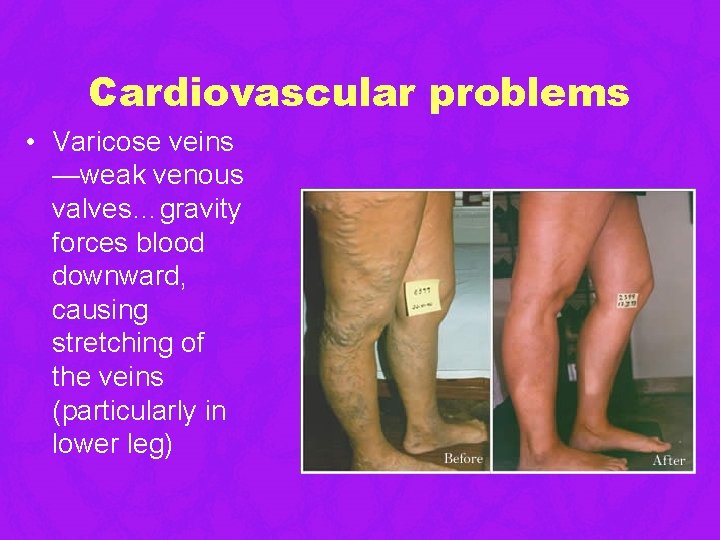
Cardiovascular problems • Varicose veins —weak venous valves…gravity forces blood downward, causing stretching of the veins (particularly in lower leg)
Cardiovascular problems • Incompetent valve —heart valve that isn’t closing properly • Murmur— abnormal heart sounds caused by valve problems
Cardiovascular problems • Pericarditis—inflammation of the pericardium • Endocarditis—inflammation of the endocardium. Endocarditis is abrasive to RBCs and can cause a clot. • Thrombosis—blood clot • Coronary thrombosis—blood clot in the coronary arteries
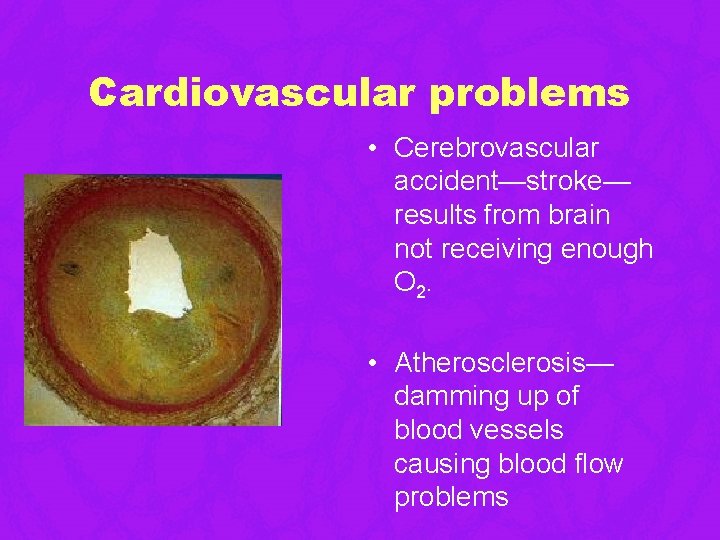
Cardiovascular problems • Cerebrovascular accident—stroke— results from brain not receiving enough O 2. • Atherosclerosis— damming up of blood vessels causing blood flow problems
Cardiovascular problems • Angioplasty—opening of blood vessels using small balloons and/or stents and not requiring surgery • Cardiopulmonary Resuscitation (CPR) – Procedure used to circulate blood in a person whose heart has stopped.