
Cardiovascular System Functions of the Cardiovascular System Transport
- Slides: 54
Cardiovascular System
Functions of the Cardiovascular System § § § Transport nutrients and O 2 to body Transport waste Distribute hormones & antibodies Help control body temp Help maintain homeostasis
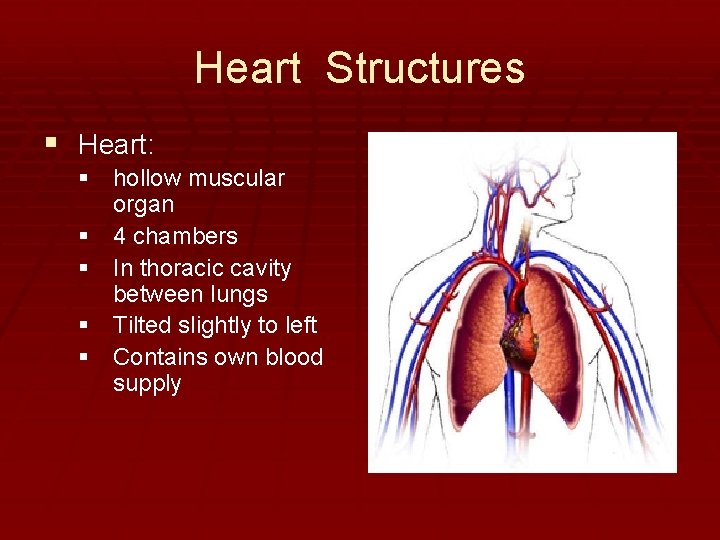
Heart Structures § Heart: § hollow muscular organ § 4 chambers § In thoracic cavity between lungs § Tilted slightly to left § Contains own blood supply
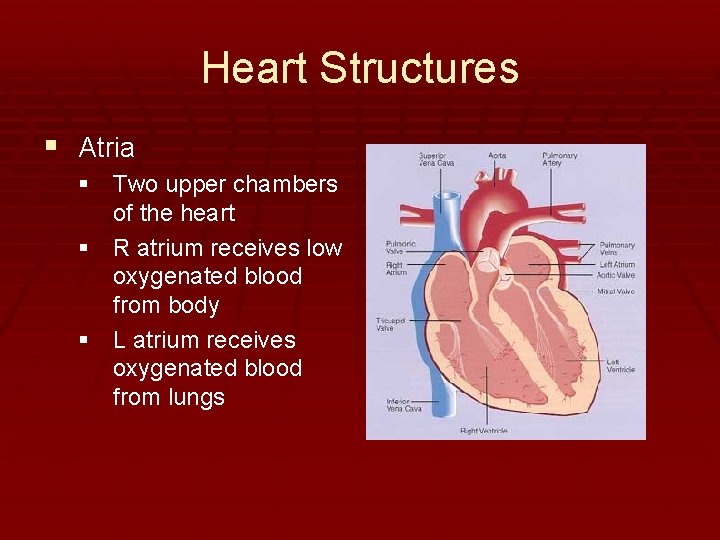
Heart Structures § Atria § Two upper chambers of the heart § R atrium receives low oxygenated blood from body § L atrium receives oxygenated blood from lungs
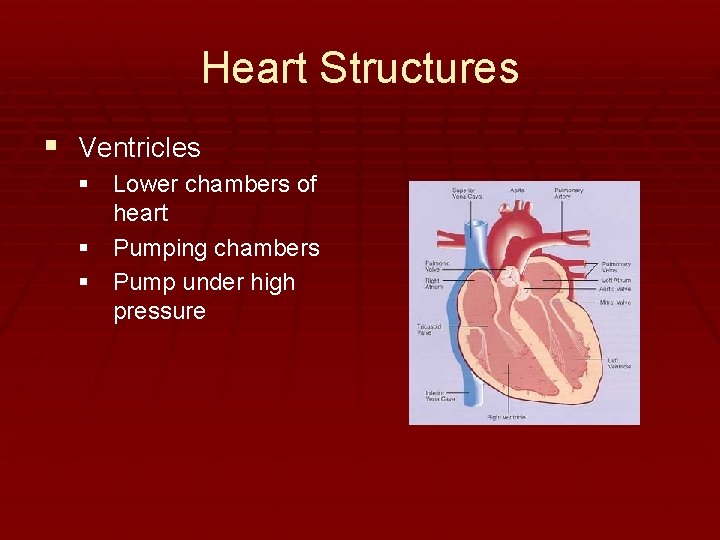
Heart Structures § Ventricles § Lower chambers of heart § Pumping chambers § Pump under high pressure
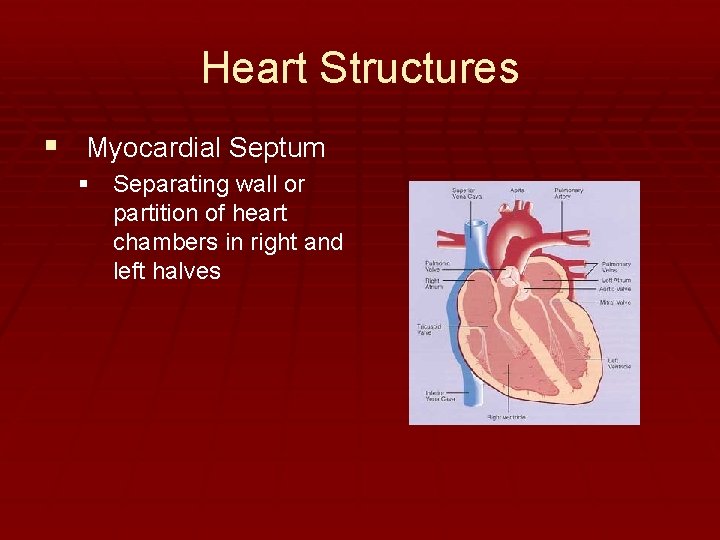
Heart Structures § Myocardial Septum § Separating wall or partition of heart chambers in right and left halves
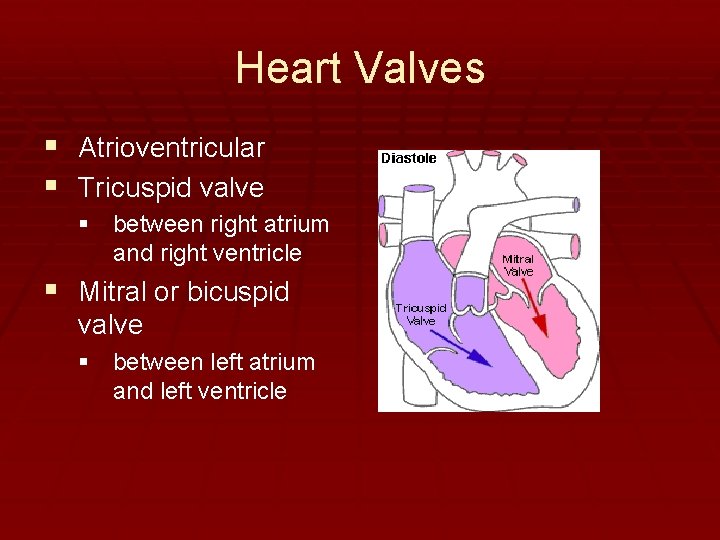
Heart Valves § Atrioventricular § Tricuspid valve § between right atrium and right ventricle § Mitral or bicuspid valve § between left atrium and left ventricle
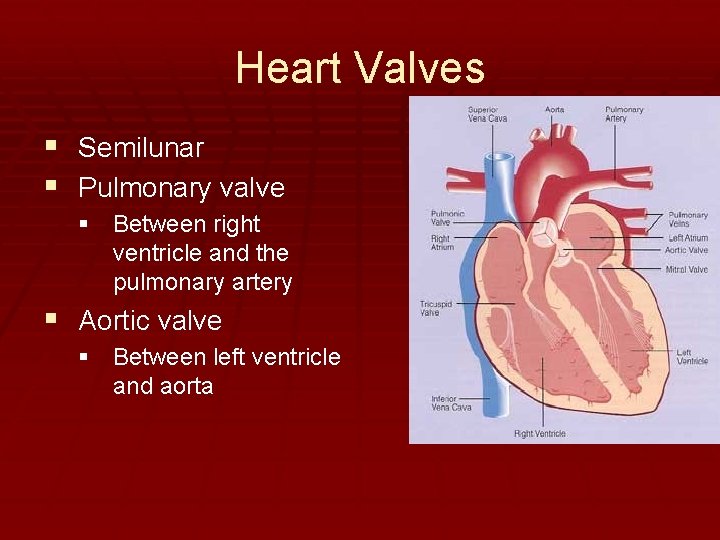
Heart Valves § Semilunar § Pulmonary valve § Between right ventricle and the pulmonary artery § Aortic valve § Between left ventricle and aorta
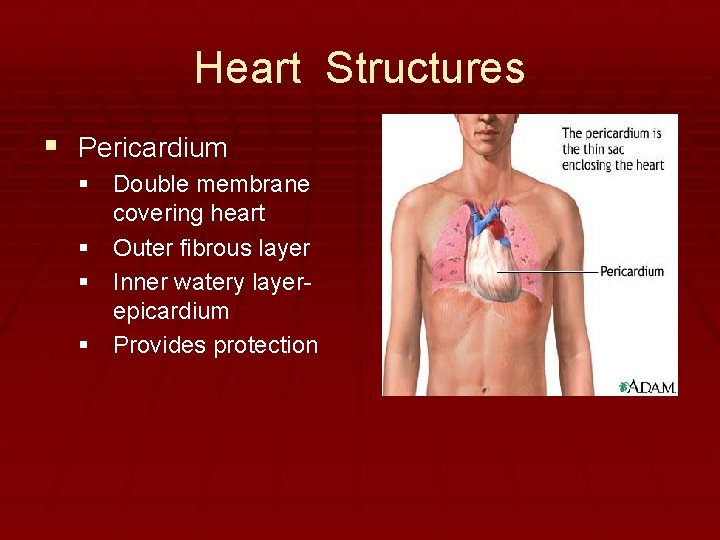
Heart Structures § Pericardium § Double membrane covering heart § Outer fibrous layer § Inner watery layerepicardium § Provides protection
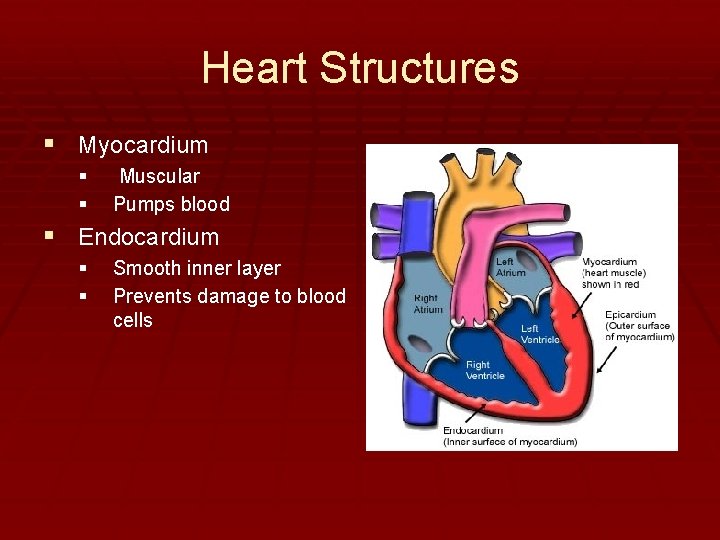
Heart Structures § Myocardium § § Muscular Pumps blood § Endocardium § § Smooth inner layer Prevents damage to blood cells
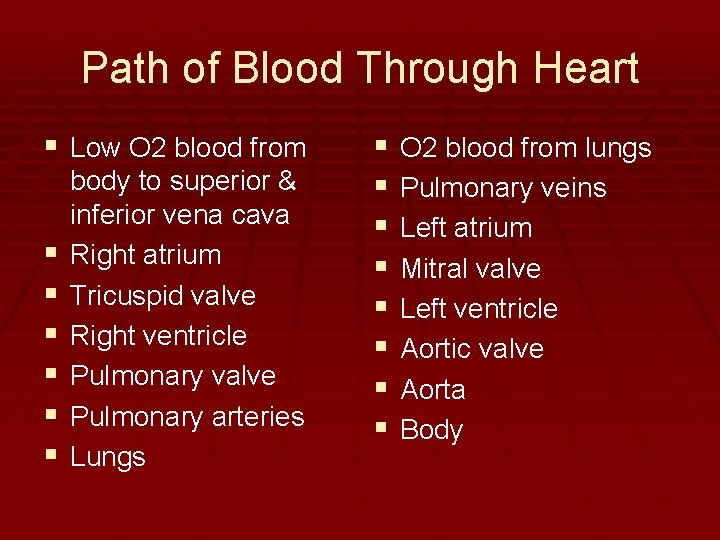
Path of Blood Through Heart § Low O 2 blood from § § § body to superior & inferior vena cava Right atrium Tricuspid valve Right ventricle Pulmonary valve Pulmonary arteries Lungs § § § § O 2 blood from lungs Pulmonary veins Left atrium Mitral valve Left ventricle Aortic valve Aorta Body
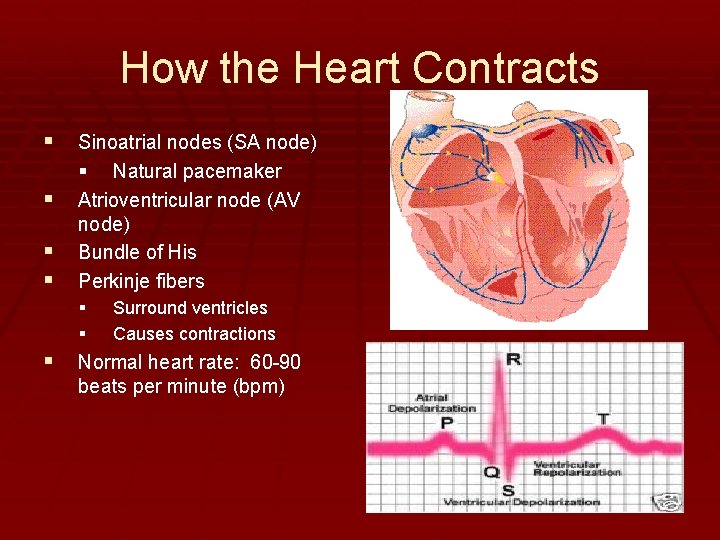
How the Heart Contracts § § Sinoatrial nodes (SA node) § Natural pacemaker Atrioventricular node (AV node) Bundle of His Perkinje fibers § § § Surround ventricles Causes contractions Normal heart rate: 60 -90 beats per minute (bpm)
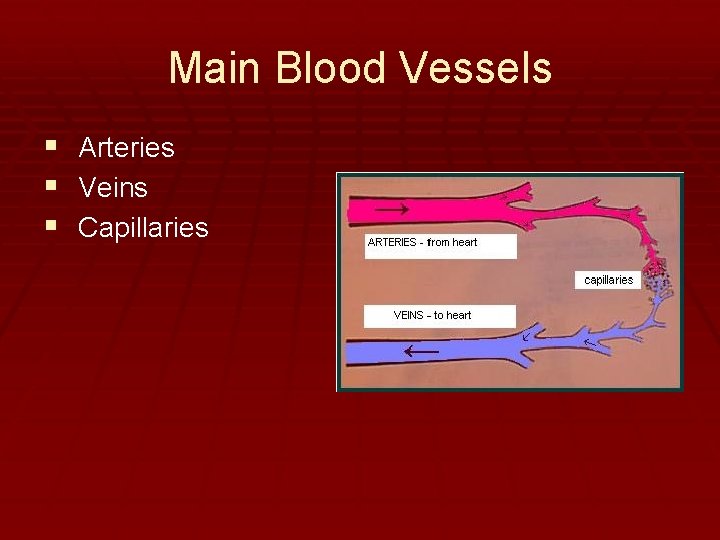
Main Blood Vessels § Arteries § Veins § Capillaries
Circulation § Arteries § § § Carry blood AWAY from the heart Largest artery: Aorta Carry O 2 blood except pulmonary arteries Muscular layers withstand high pressure Divide into smaller branches called arterioles which connect to capillaries
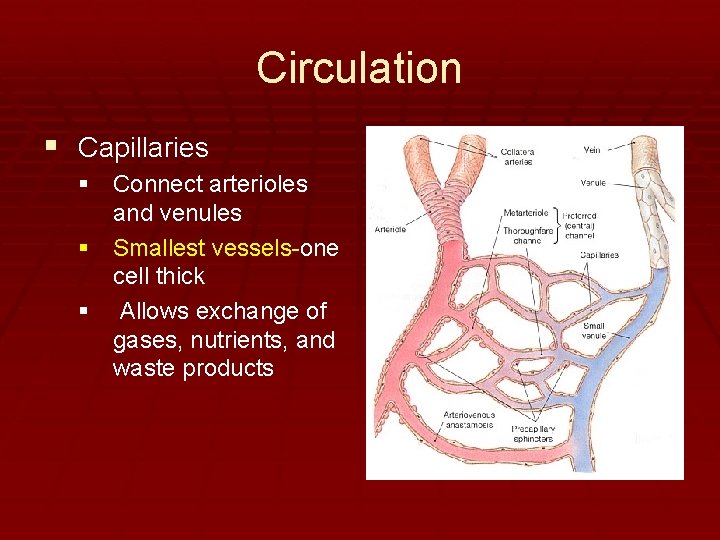
Circulation § Capillaries § Connect arterioles and venules § Smallest vessels-one cell thick § Allows exchange of gases, nutrients, and waste products
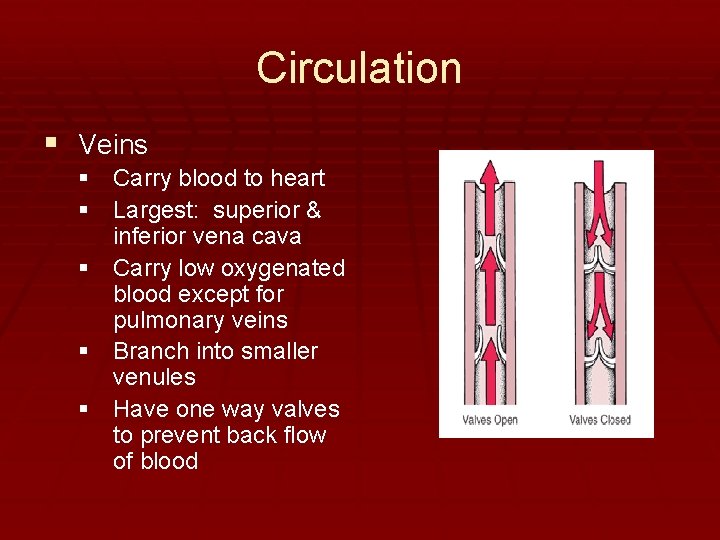
Circulation § Veins § Carry blood to heart § Largest: superior & inferior vena cava § Carry low oxygenated blood except for pulmonary veins § Branch into smaller venules § Have one way valves to prevent back flow of blood
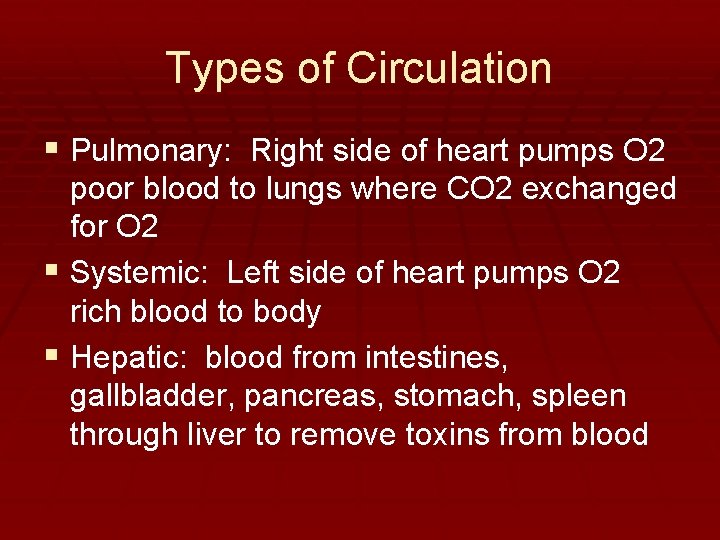
Types of Circulation § Pulmonary: Right side of heart pumps O 2 poor blood to lungs where CO 2 exchanged for O 2 § Systemic: Left side of heart pumps O 2 rich blood to body § Hepatic: blood from intestines, gallbladder, pancreas, stomach, spleen through liver to remove toxins from blood
Assessment Techniques
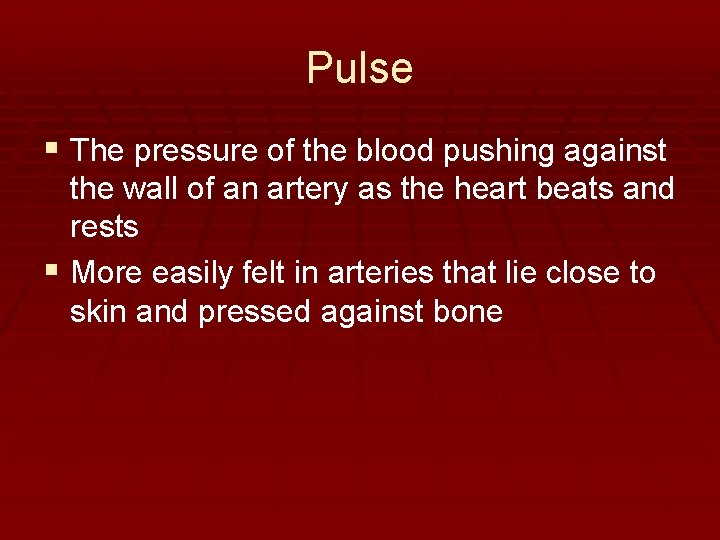
Pulse § The pressure of the blood pushing against the wall of an artery as the heart beats and rests § More easily felt in arteries that lie close to skin and pressed against bone
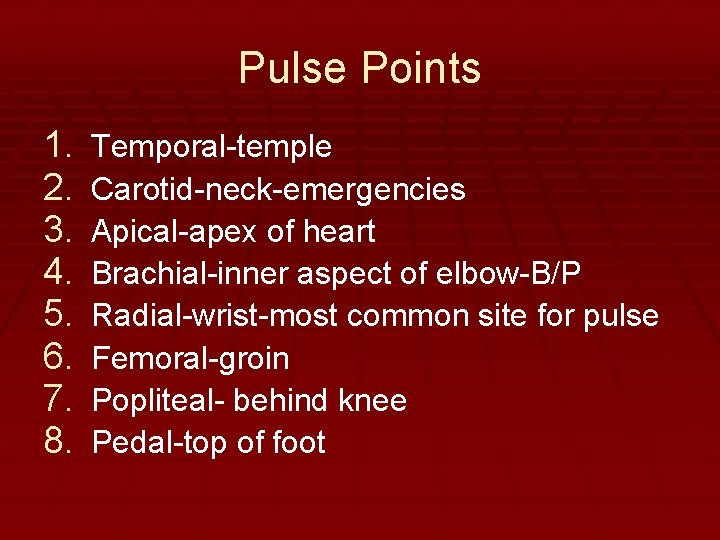
Pulse Points 1. 2. 3. 4. 5. 6. 7. 8. Temporal-temple Carotid-neck-emergencies Apical-apex of heart Brachial-inner aspect of elbow-B/P Radial-wrist-most common site for pulse Femoral-groin Popliteal- behind knee Pedal-top of foot
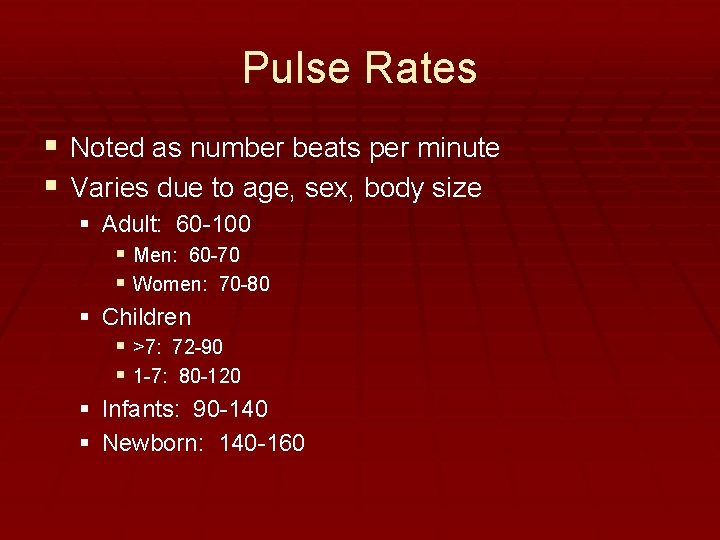
Pulse Rates § Noted as number beats per minute § Varies due to age, sex, body size § Adult: 60 -100 § Men: 60 -70 § Women: 70 -80 § Children § >7: 72 -90 § 1 -7: 80 -120 § Infants: 90 -140 § Newborn: 140 -160
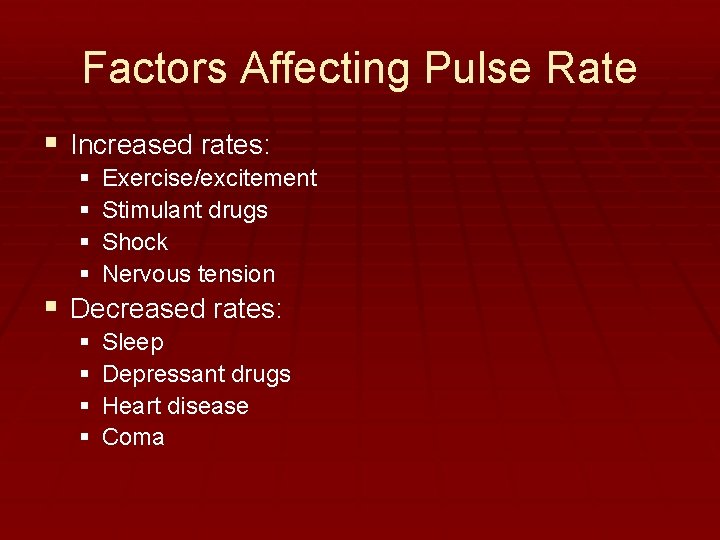
Factors Affecting Pulse Rate § Increased rates: § § Exercise/excitement Stimulant drugs Shock Nervous tension § Decreased rates: § § Sleep Depressant drugs Heart disease Coma
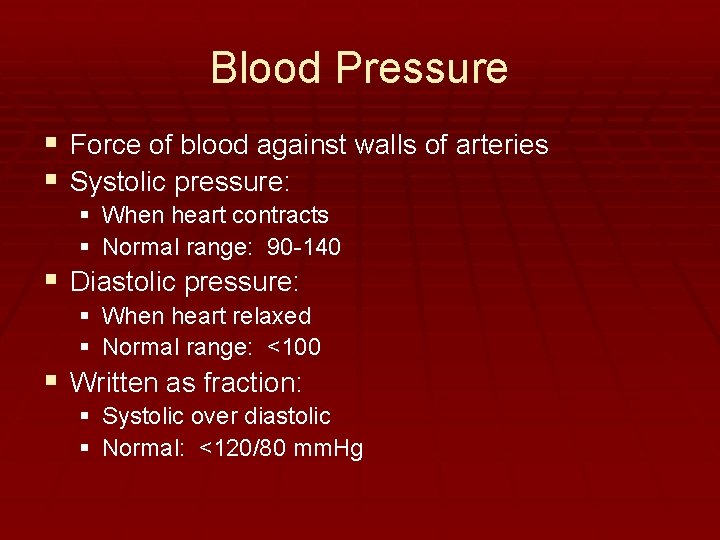
Blood Pressure § Force of blood against walls of arteries § Systolic pressure: § § When heart contracts Normal range: 90 -140 § Diastolic pressure: § § When heart relaxed Normal range: <100 § Written as fraction: § Systolic over diastolic § Normal: <120/80 mm. Hg
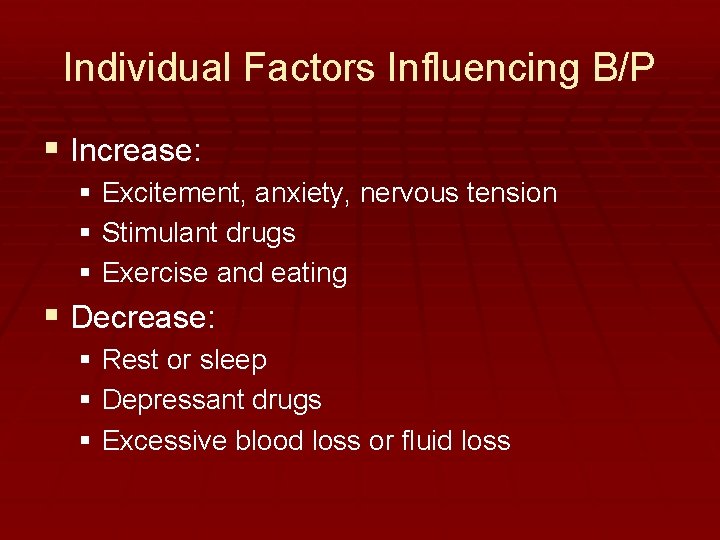
Individual Factors Influencing B/P § Increase: § Excitement, anxiety, nervous tension § Stimulant drugs § Exercise and eating § Decrease: § Rest or sleep § Depressant drugs § Excessive blood loss or fluid loss
Disorders of CV System
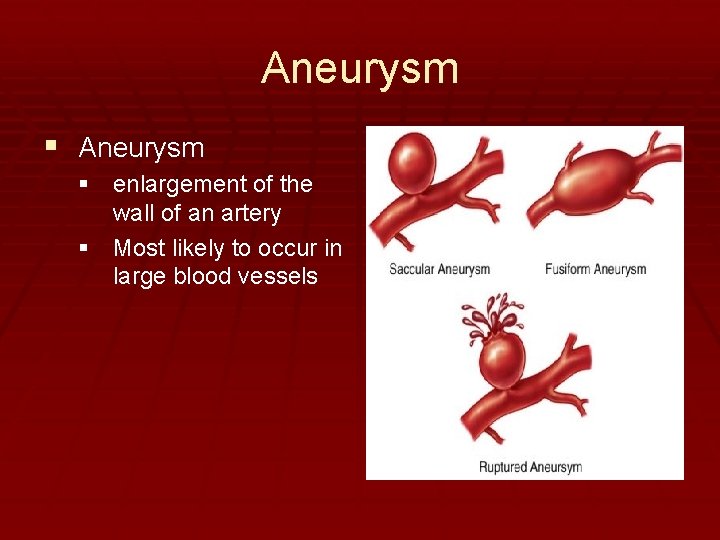
Aneurysm § enlargement of the wall of an artery § Most likely to occur in large blood vessels
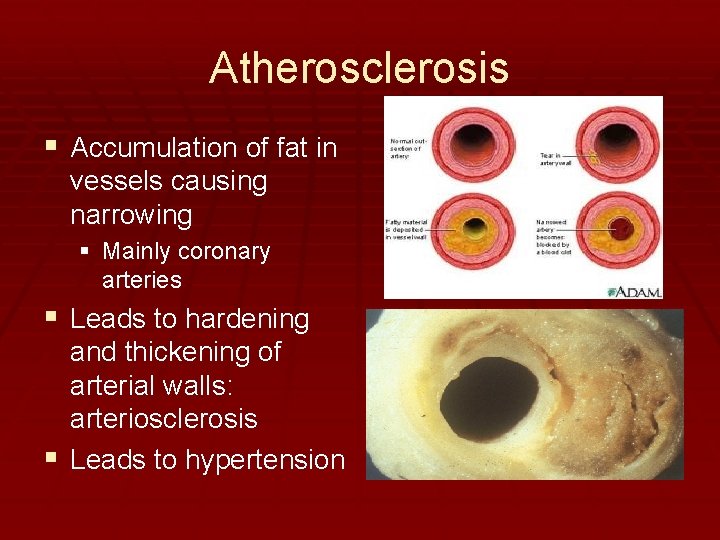
Atherosclerosis § Accumulation of fat in vessels causing narrowing § Mainly coronary arteries § Leads to hardening and thickening of arterial walls: arteriosclerosis § Leads to hypertension
Hypertension § AKA: high blood pressure; the silent killer § Causes: § § § Unknown Hereditary CAD § Symptoms: § § None Headaches Dizziness Shortness of breath
Cardiovascular Disease § AKA: Coronary Artery Disease § Combined effects of arteriosclerosis, atherosclerosis, hypertension
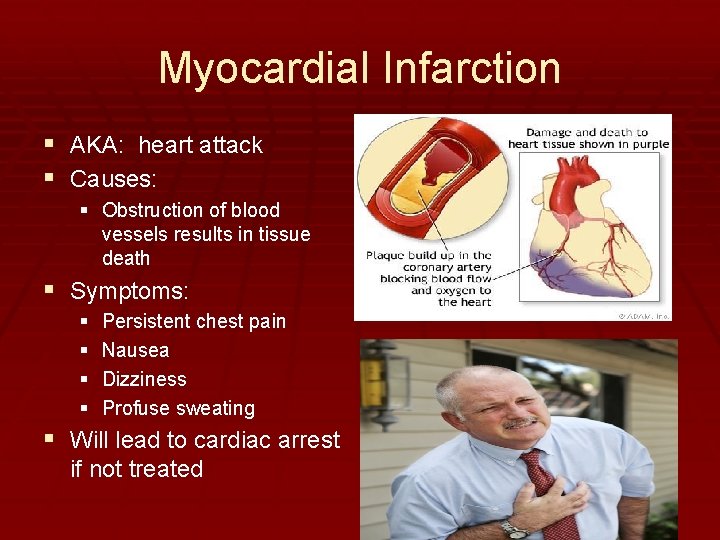
Myocardial Infarction § AKA: heart attack § Causes: § Obstruction of blood vessels results in tissue death § Symptoms: § § Persistent chest pain Nausea Dizziness Profuse sweating § Will lead to cardiac arrest if not treated
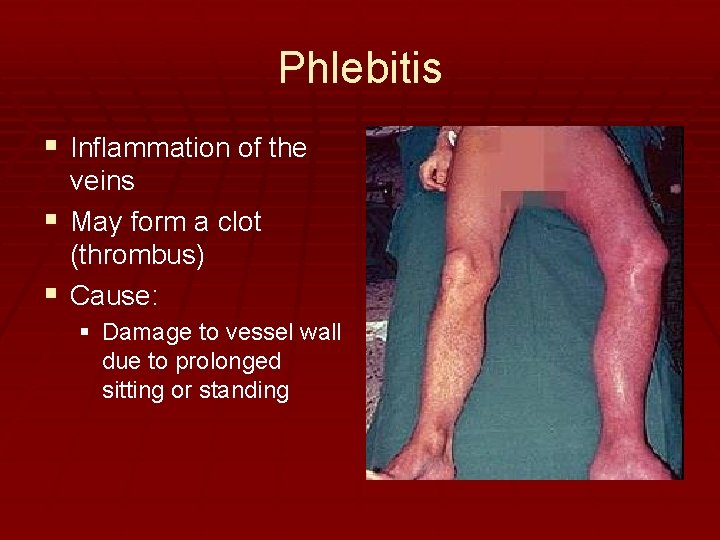
Phlebitis § Inflammation of the veins § May form a clot (thrombus) § Cause: § Damage to vessel wall due to prolonged sitting or standing
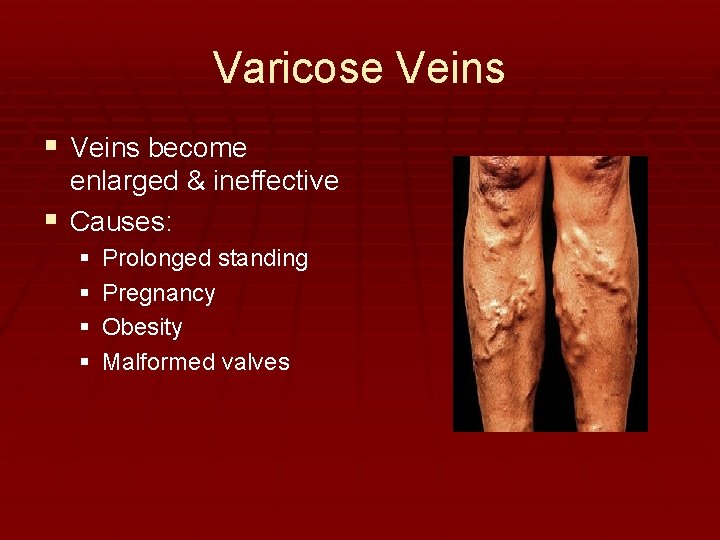
Varicose Veins § Veins become enlarged & ineffective § Causes: § § Prolonged standing Pregnancy Obesity Malformed valves
Blood and Blood cells
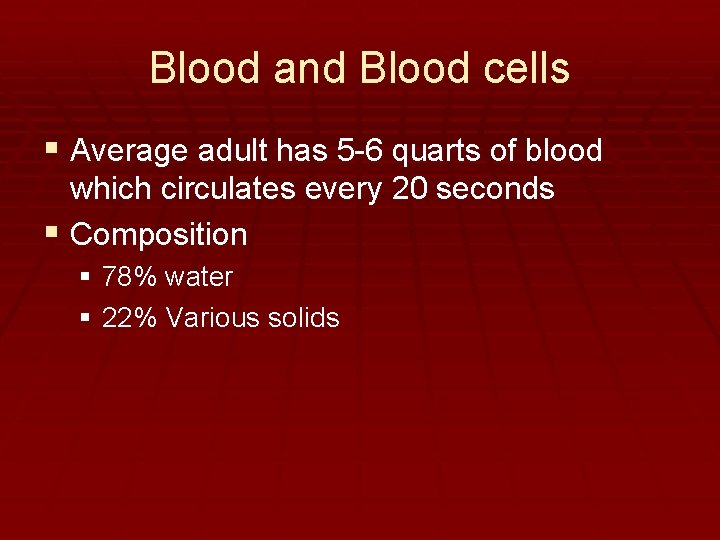
Blood and Blood cells § Average adult has 5 -6 quarts of blood which circulates every 20 seconds § Composition § 78% water § 22% Various solids
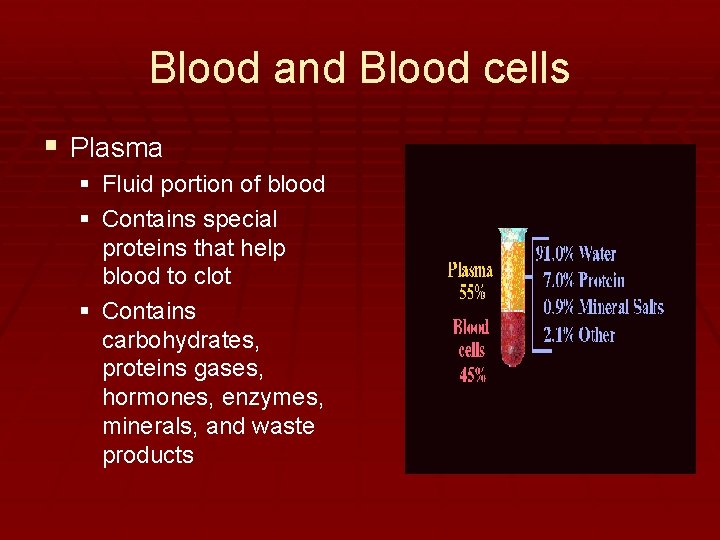
Blood and Blood cells § Plasma § Fluid portion of blood § Contains special proteins that help blood to clot § Contains carbohydrates, proteins gases, hormones, enzymes, minerals, and waste products
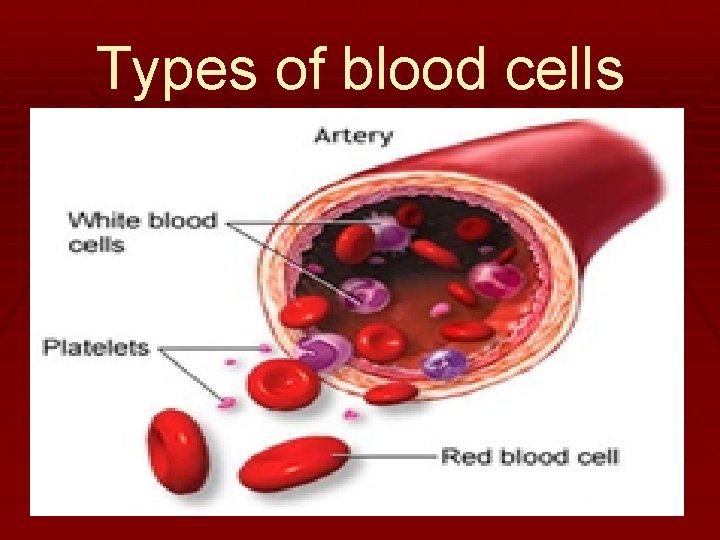
Types of blood cells
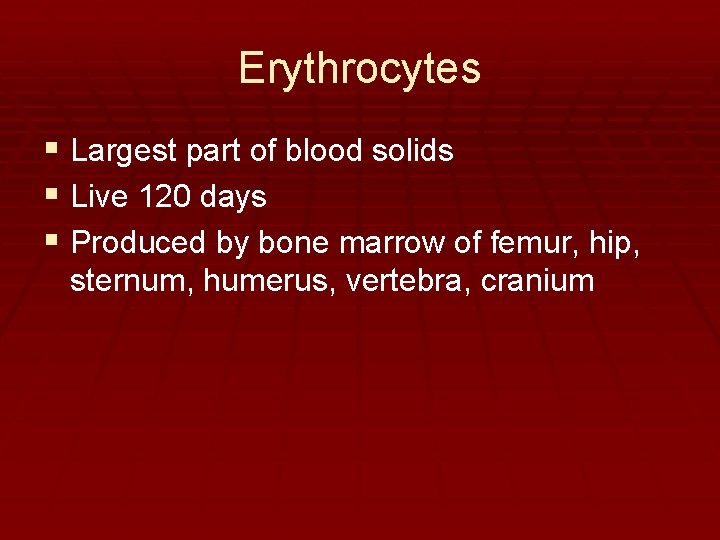
Erythrocytes § Largest part of blood solids § Live 120 days § Produced by bone marrow of femur, hip, sternum, humerus, vertebra, cranium
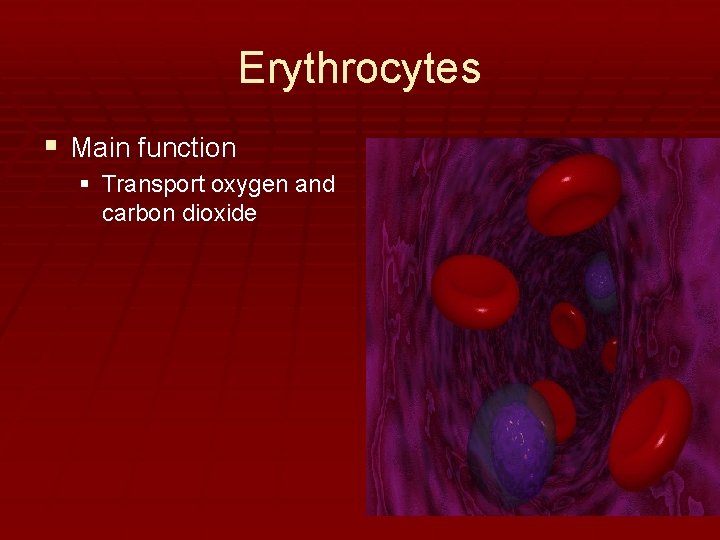
Erythrocytes § Main function § Transport oxygen and carbon dioxide
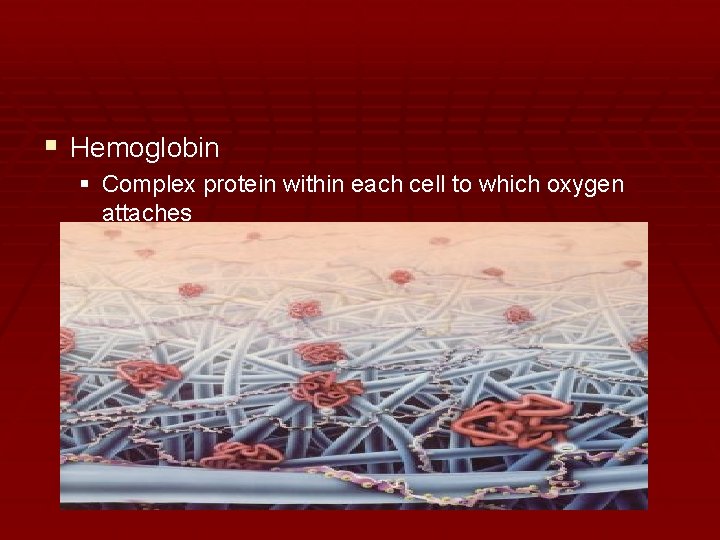
§ Hemoglobin § Complex protein within each cell to which oxygen attaches
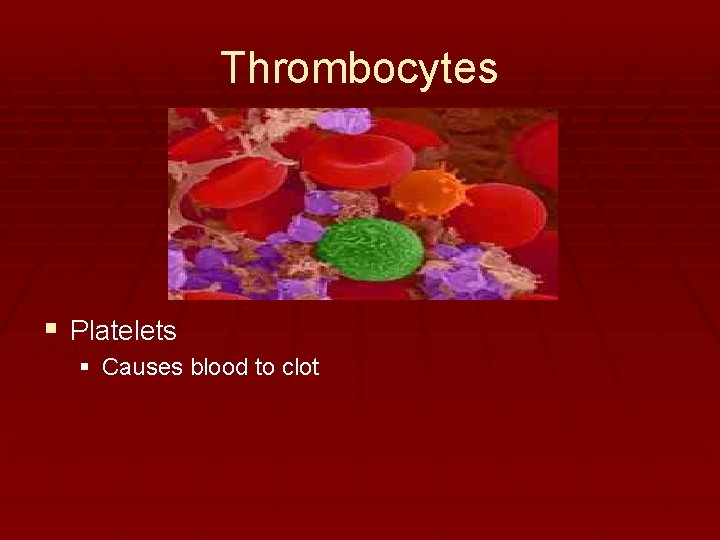
Thrombocytes § Platelets § Causes blood to clot
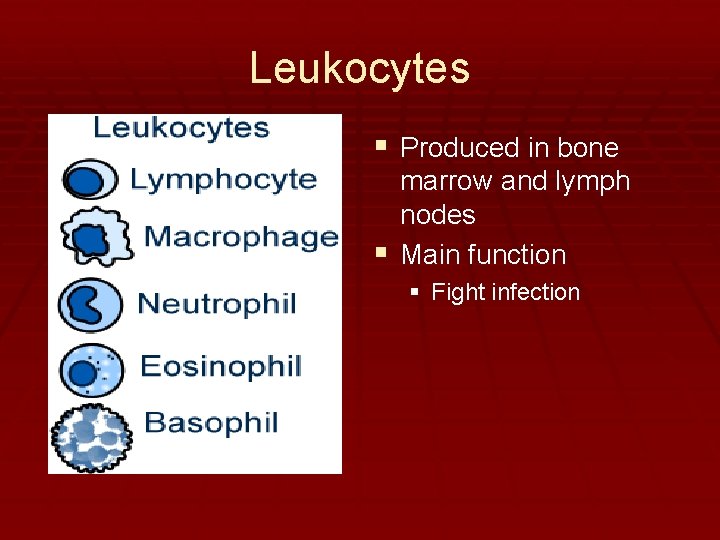
Leukocytes § Produced in bone marrow and lymph nodes § Main function § Fight infection
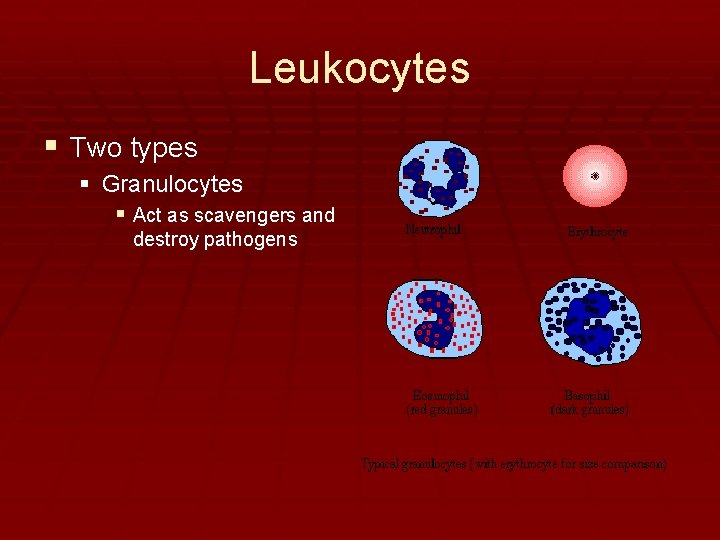
Leukocytes § Two types § Granulocytes § Act as scavengers and destroy pathogens
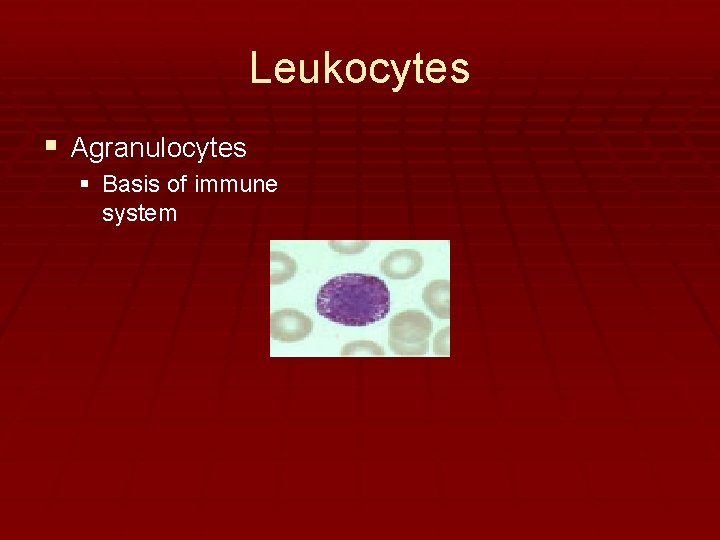
Leukocytes § Agranulocytes § Basis of immune system
Pathology of the Circulatory System
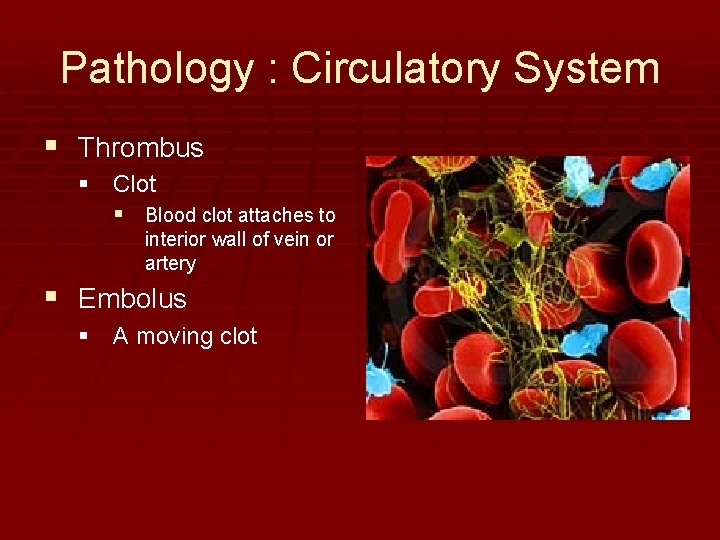
Pathology : Circulatory System § Thrombus § Clot § Blood clot attaches to interior wall of vein or artery § Embolus § A moving clot
Pathology : Circulatory System § Leukemia § Malignancy characterized by a progressive increase of abnormal leukocytes § Anemia § Disorder characterized by lower than normal levels of red blood cells in the blood
Pathology : Circulatory System § Polycythemia § Abnormal increase in number of red cells § Makes blood thicker & slower flowing § Septicemia § AKA: blood poisoning § Pathogens in blood
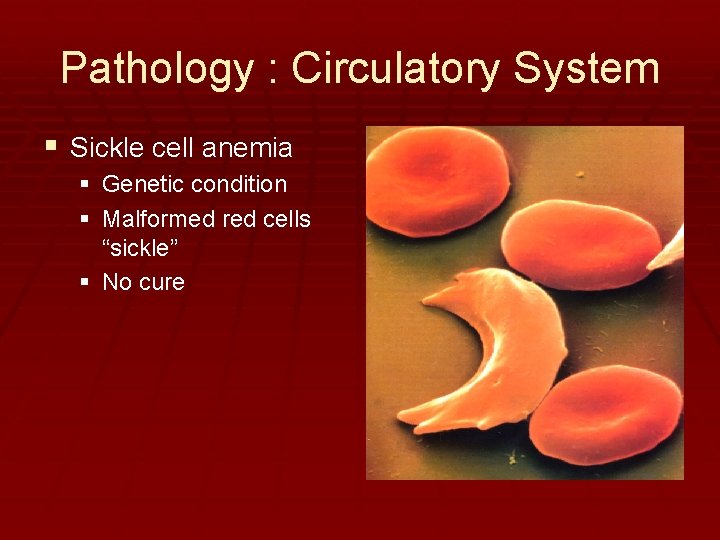
Pathology : Circulatory System § Sickle cell anemia § Genetic condition § Malformed red cells “sickle” § No cure
Pathology : Circulatory System § Thrombocytopenia § Decreased platelets § Due to: § Drugs § Radiation § chemo
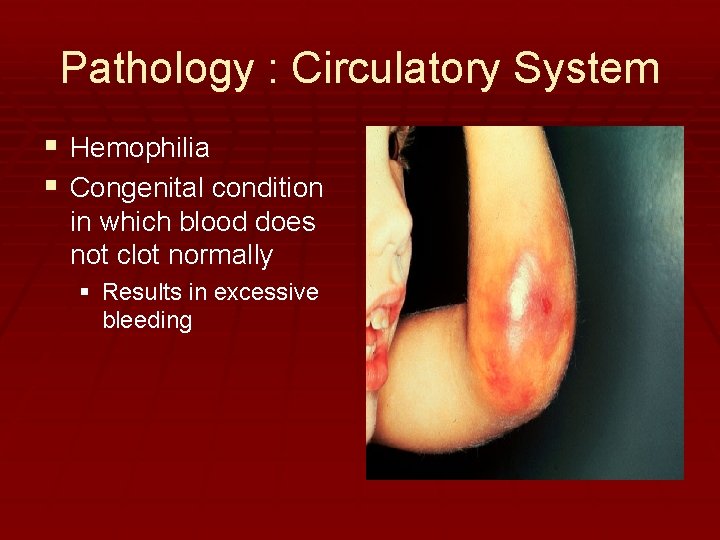
Pathology : Circulatory System § Hemophilia § Congenital condition in which blood does not clot normally § Results in excessive bleeding
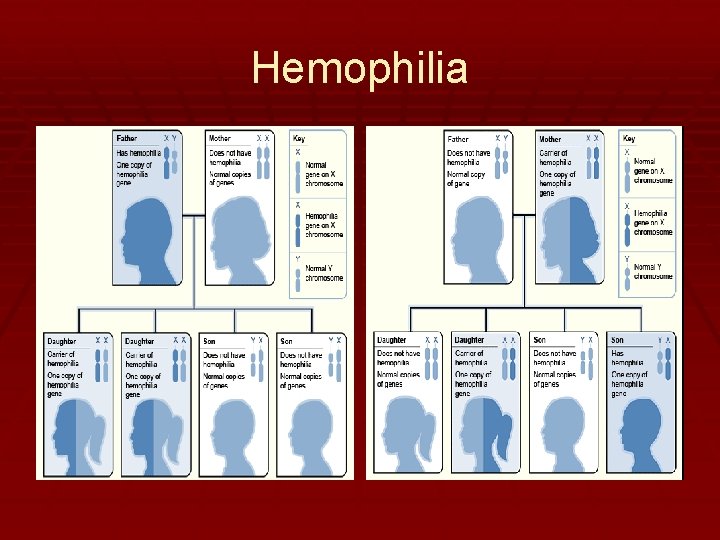
Hemophilia
The End
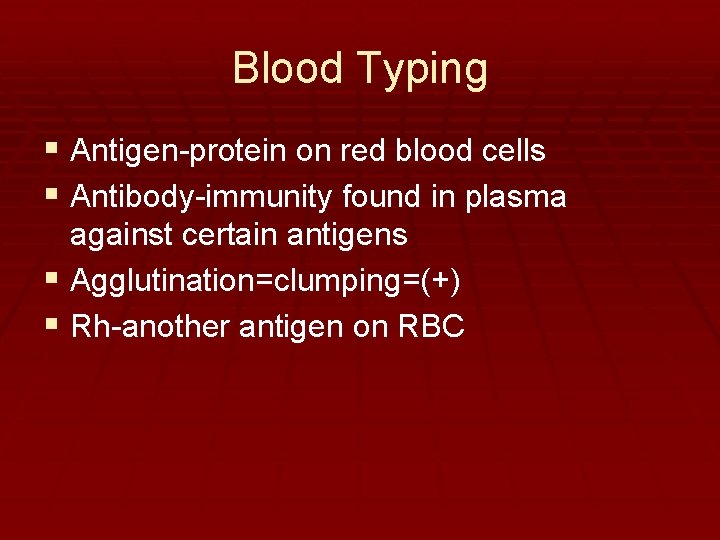
Blood Typing § Antigen-protein on red blood cells § Antibody-immunity found in plasma against certain antigens § Agglutination=clumping=(+) § Rh-another antigen on RBC
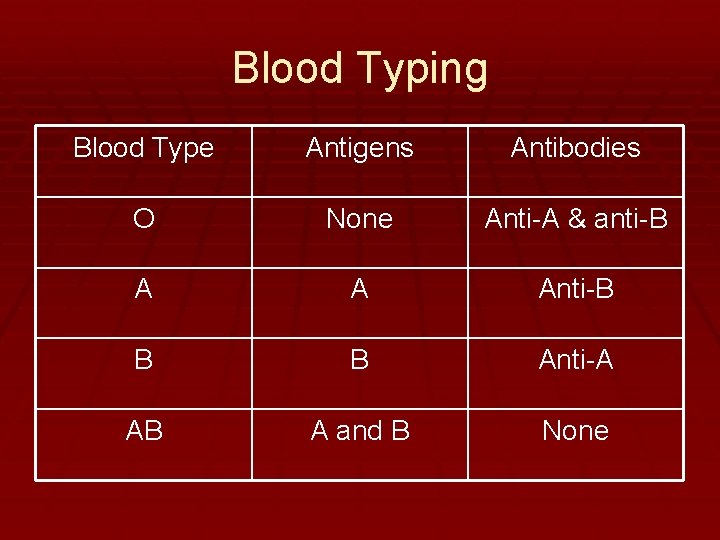
Blood Typing Blood Type Antigens Antibodies O None Anti-A & anti-B A A Anti-B B B Anti-A AB A and B None