
Cardiovascular System CNA 2 OSBN Curriculum Overview Anatomy
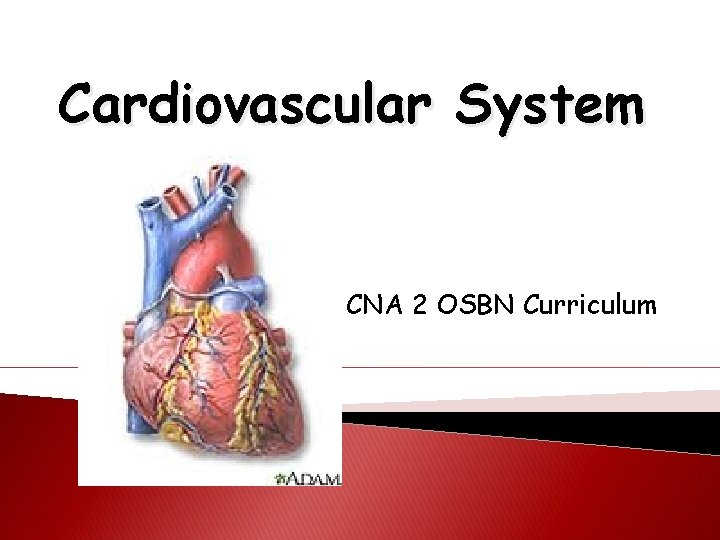
Cardiovascular System CNA 2 OSBN Curriculum
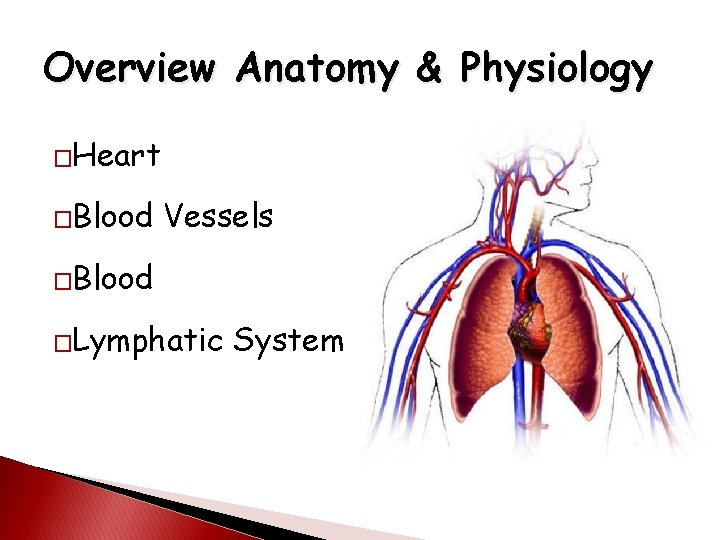
Overview Anatomy & Physiology �Heart �Blood Vessels �Blood �Lymphatic System
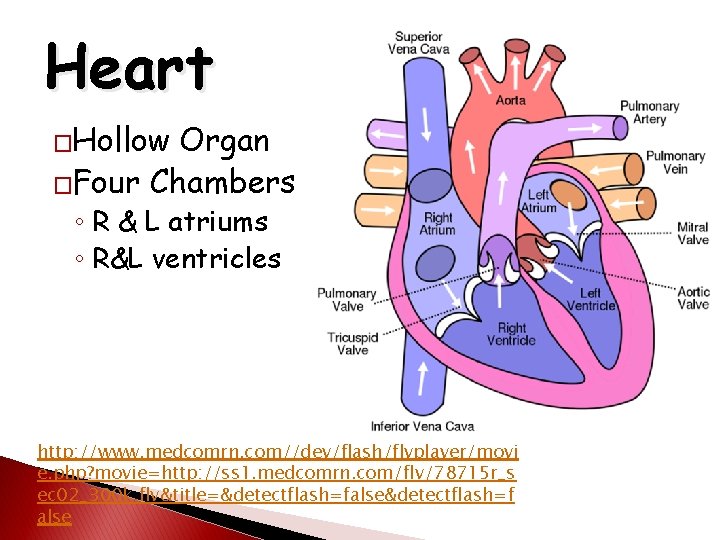
Heart �Hollow Organ �Four Chambers ◦ R & L atriums ◦ R&L ventricles http: //www. medcomrn. com//dev/flash/flvplayer/movi e. php? movie=http: //ss 1. medcomrn. com/flv/78715 r_s ec 02_300 k. flv&title=&detectflash=false&detectflash=f alse
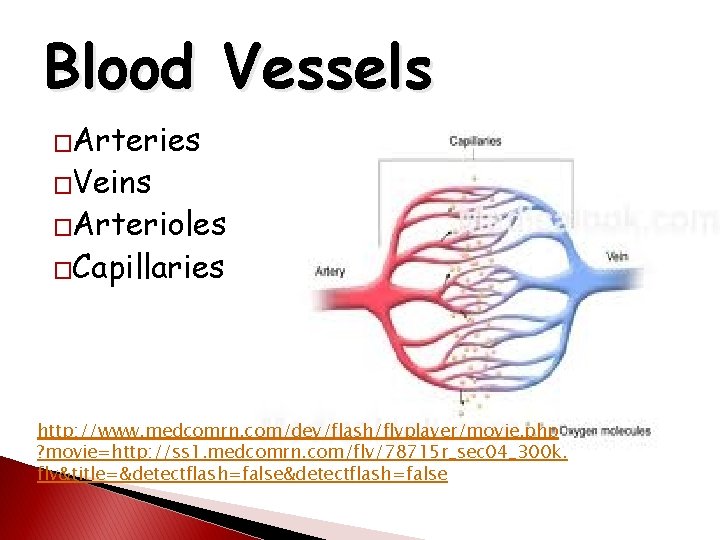
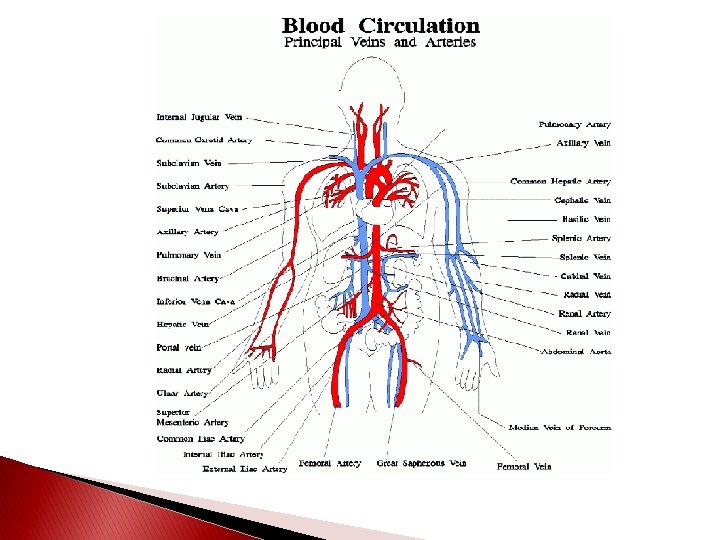
Blood Vessels �Arteries �Veins �Arterioles �Capillaries http: //www. medcomrn. com/dev/flash/flvplayer/movie. php ? movie=http: //ss 1. medcomrn. com/flv/78715 r_sec 04_300 k. flv&title=&detectflash=false
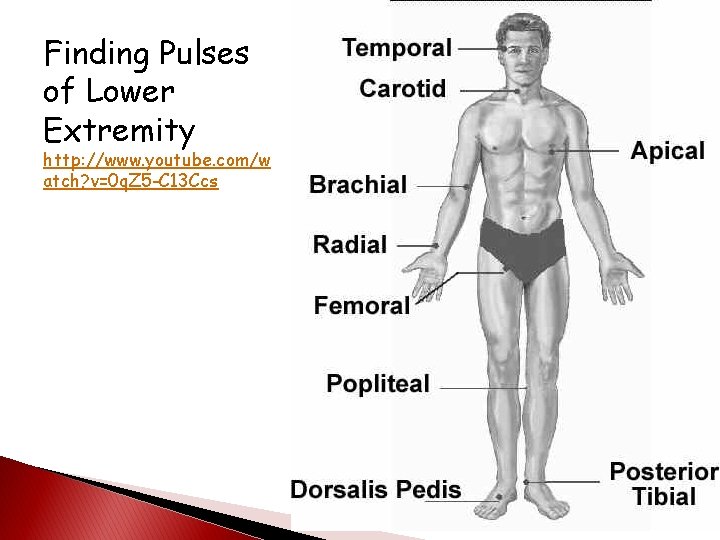
Finding Pulses of Lower Extremity http: //www. youtube. com/w atch? v=0 q. Z 5 -C 13 Ccs
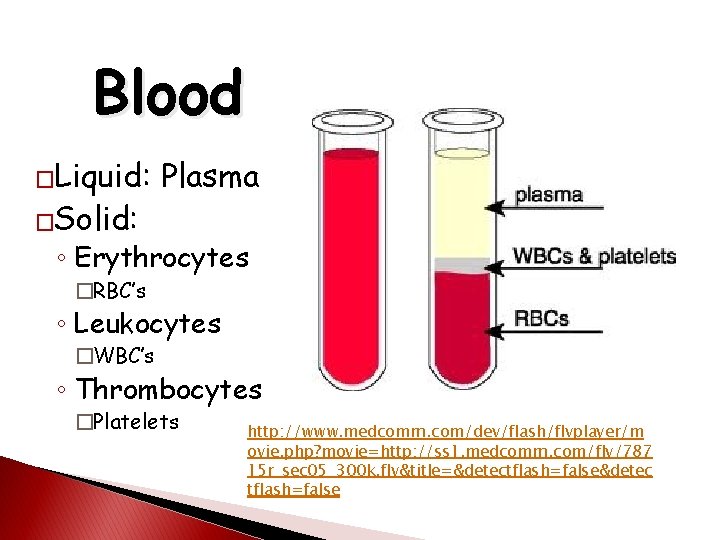
Blood �Liquid: �Solid: Plasma ◦ Erythrocytes �RBC’s ◦ Leukocytes �WBC’s ◦ Thrombocytes �Platelets http: //www. medcomrn. com/dev/flash/flvplayer/m ovie. php? movie=http: //ss 1. medcomrn. com/flv/787 15 r_sec 05_300 k. flv&title=&detectflash=false&detec tflash=false
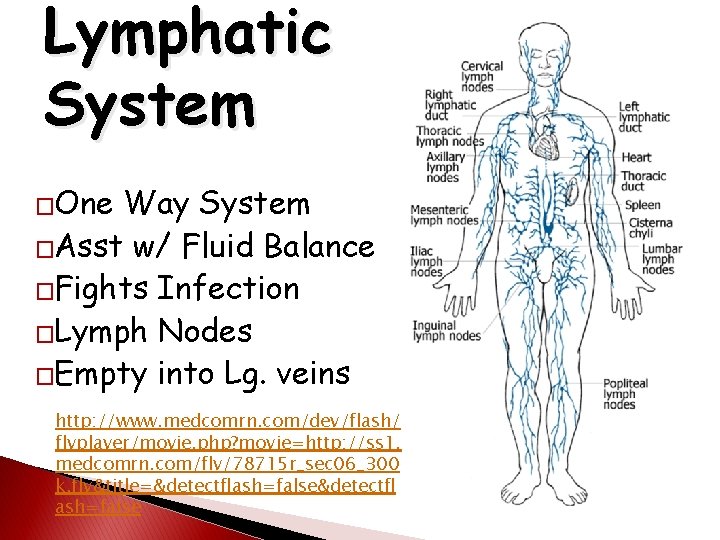
Lymphatic System �One Way System �Asst w/ Fluid Balance �Fights Infection �Lymph Nodes �Empty into Lg. veins http: //www. medcomrn. com/dev/flash/ flvplayer/movie. php? movie=http: //ss 1. medcomrn. com/flv/78715 r_sec 06_300 k. flv&title=&detectflash=false&detectfl ash=false
Cardiovascular System Conclusion: Takes food and oxygen in, takes away waste. It seems so simple, but as we've seen, it's really a complex task that takes four body parts - the heart, blood vessels, blood, and lymph vessels - all working together to do this "simple" job, that keeps us alive. Cardiac Terminology: �Coronary Artery Disease (CAD) ◦ Acute Coronary syndrome (ACS) �Angina �Myocardial Infarction (MI)
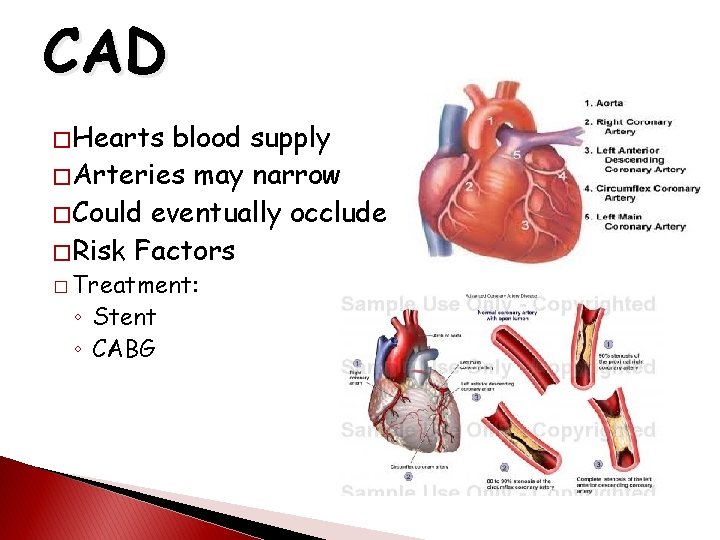
CAD � Hearts blood supply � Arteries may narrow � Could eventually occlude � Risk Factors � Treatment: ◦ Stent ◦ CABG
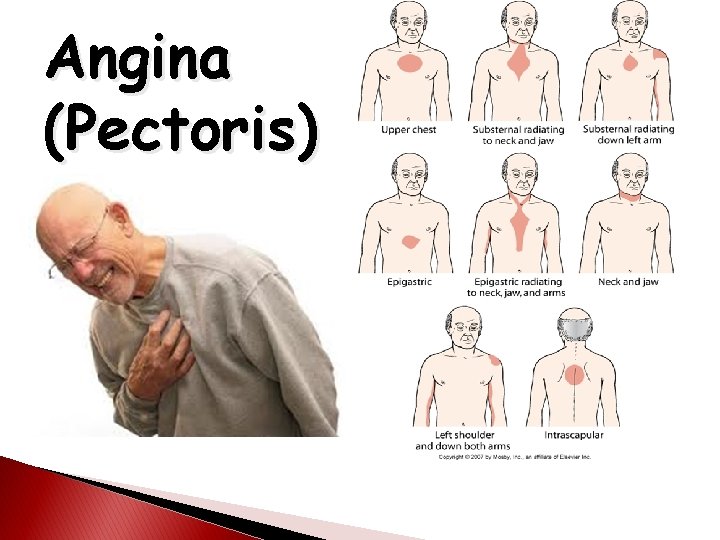
Angina (Pectoris)
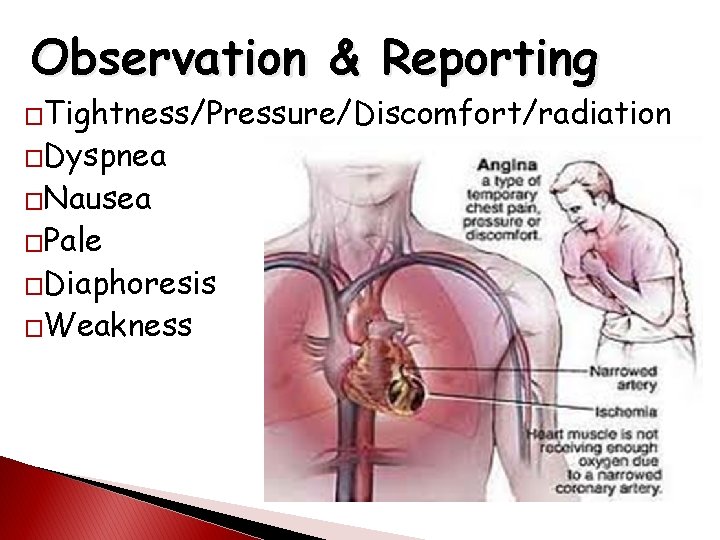
Observation & Reporting �Tightness/Pressure/Discomfort/radiation �Dyspnea �Nausea �Pale �Diaphoresis �Weakness
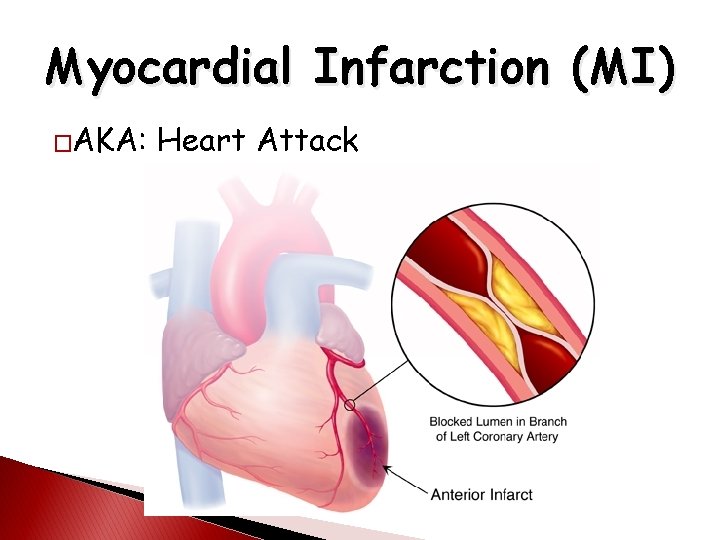
Myocardial Infarction (MI) �AKA: Heart Attack
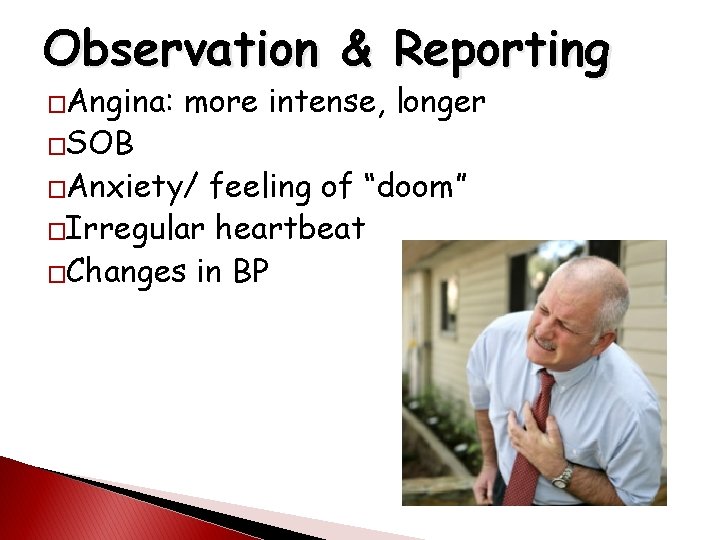
Observation & Reporting �Angina: �SOB more intense, longer �Anxiety/ feeling of “doom” �Irregular heartbeat �Changes in BP
CNA 2 Actions �Report c/o of angina to RN STAT �VS STAT or as directed �Stay w/patient & call for help �Calm patient �Stop/Limit physical activity
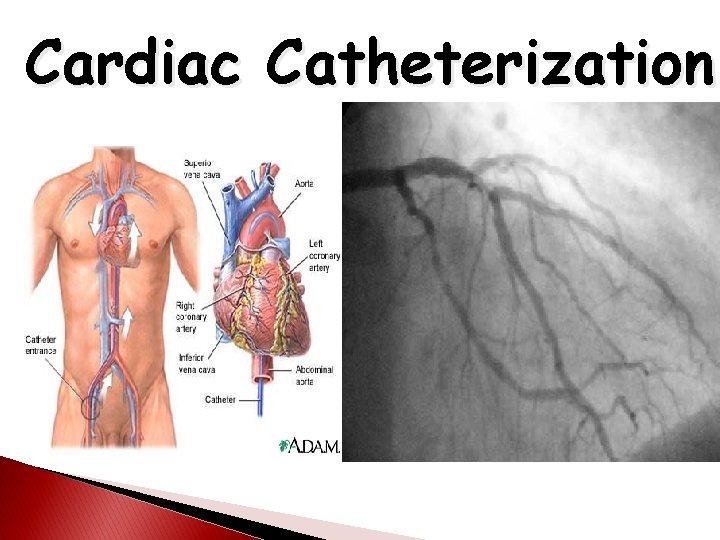
Cardiac Catheterization

Stent & CABG �Diagnostic �Treatment ◦ Stent �Femoral dressing ◦ CABG �Sternal Precautions �Post-care ◦ Care of the Surgical Patient”
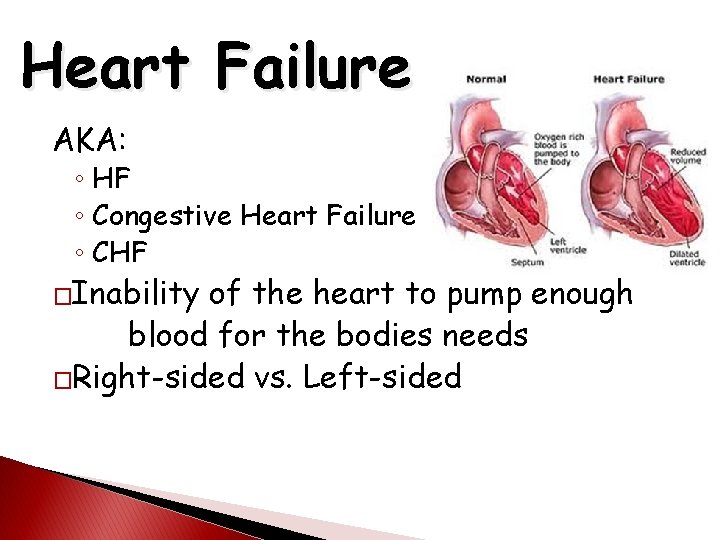
Heart Failure AKA: ◦ HF ◦ Congestive Heart Failure ◦ CHF �Inability of the heart to pump enough blood for the bodies needs �Right-sided vs. Left-sided
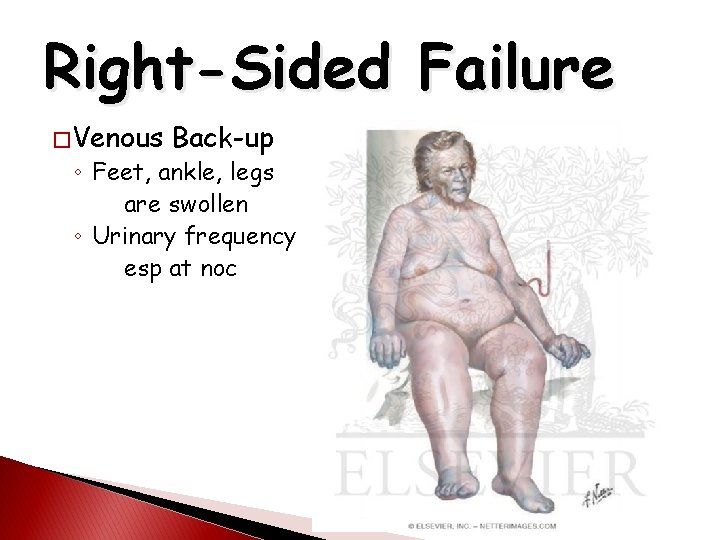
Right-Sided Failure � Venous Back-up ◦ Feet, ankle, legs are swollen ◦ Urinary frequency esp at noc
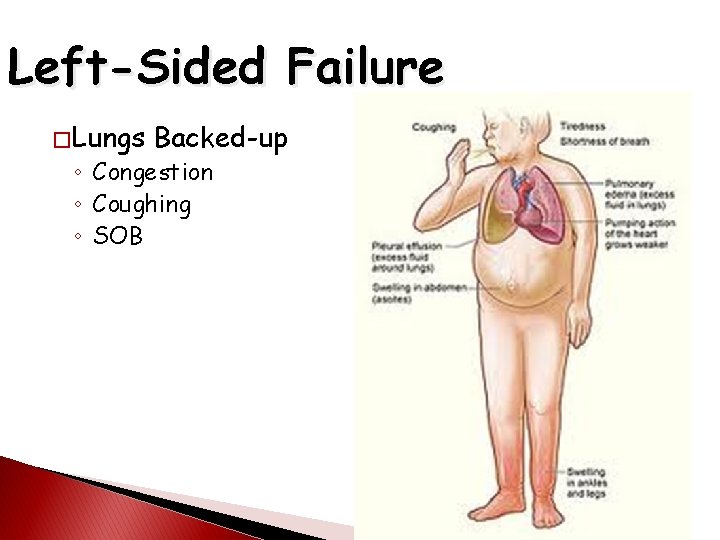
Left-Sided Failure � Lungs Backed-up ◦ Congestion ◦ Coughing ◦ SOB
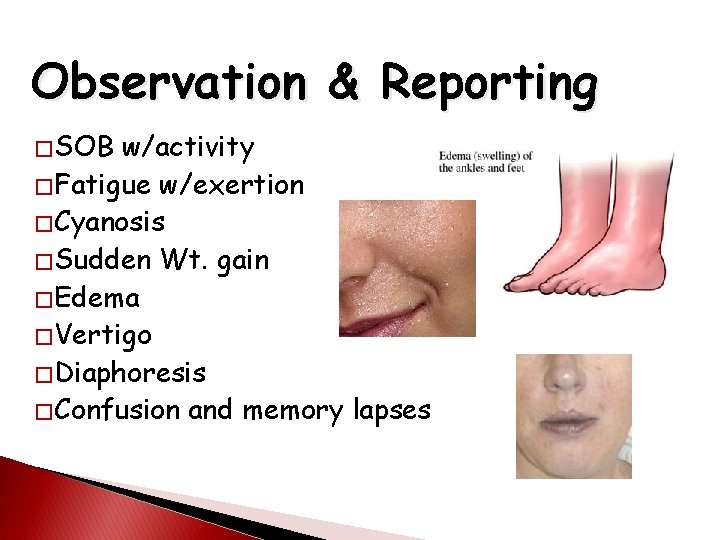
Observation & Reporting � SOB w/activity � Fatigue w/exertion � Cyanosis � Sudden Wt. gain � Edema � Vertigo � Diaphoresis � Confusion and memory lapses
CNA 2 Actions �Report to nurse �Accurate I&O �Daily weights as ordered �Low sodium diet restrictions �Fluid restrictions as ordered �Prevent fatigue

Dysrhythmia �Abnormal Heart beat �Electrical Condition �May be life-threatening �Treatment depends on type �EKG/ECG: ◦ Electrical activity of the heart
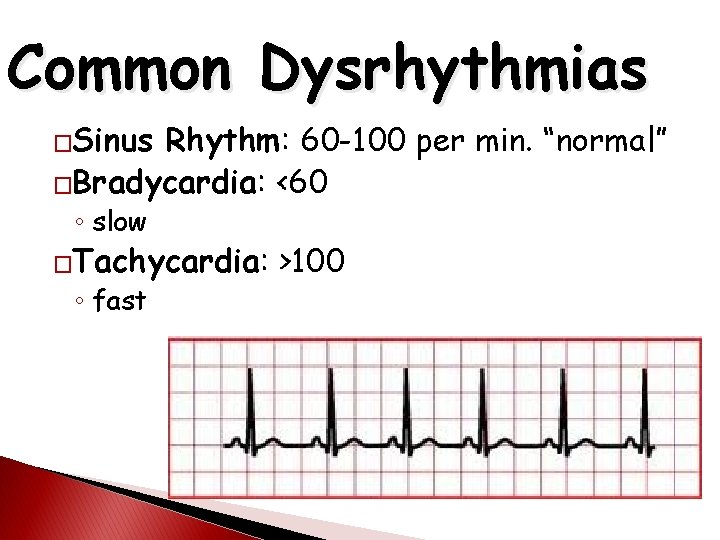
Common Dysrhythmias �Sinus Rhythm: 60 -100 per min. “normal” �Bradycardia: <60 ◦ slow �Tachycardia: ◦ fast >100
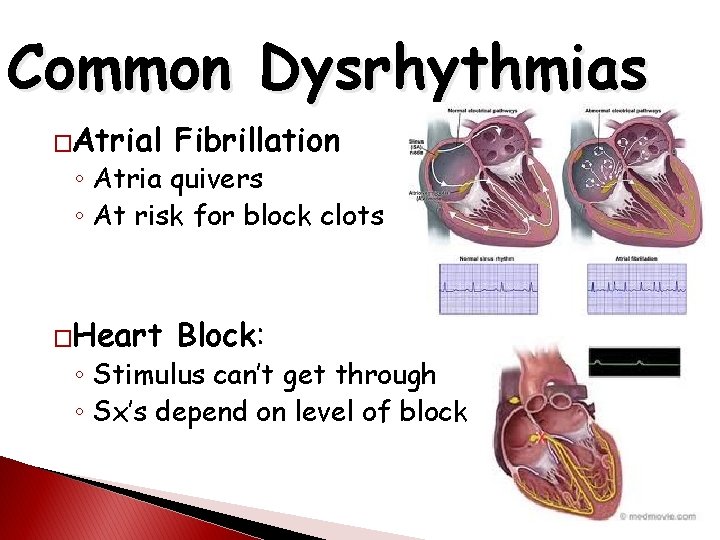
Common Dysrhythmias �Atrial Fibrillation �Heart Block: ◦ Atria quivers ◦ At risk for block clots ◦ Stimulus can’t get through ◦ Sx’s depend on level of block
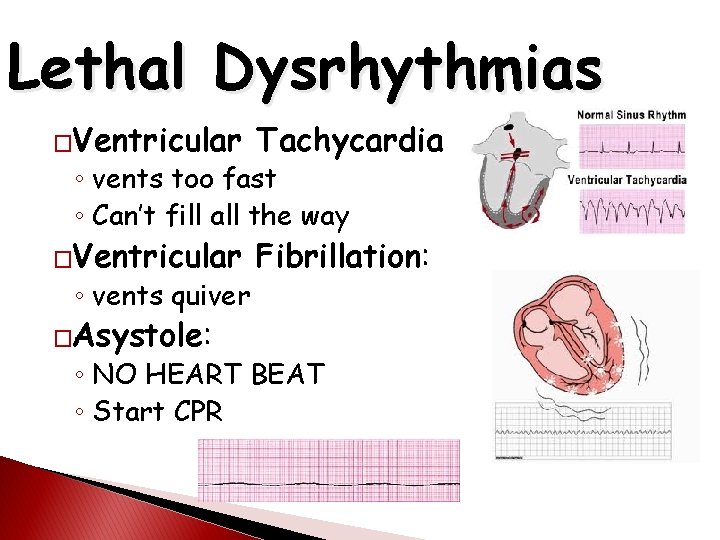
Lethal Dysrhythmias �Ventricular Tachycardia �Ventricular Fibrillation: ◦ vents too fast ◦ Can’t fill all the way ◦ vents quiver �Asystole: ◦ NO HEART BEAT ◦ Start CPR
Observation & Reporting �Palpitations �c/o pounding chest �Dizziness �Light-headedness �Fainting/weakness �SOB �Chest discomfort �Slow pulse
CNA 2 Actions �Report S/S to nurse NOW �If S/S severe call RRT or CODE and stay with patient.
CARDIAC LAB � Bedside � � http: //www. medcomrn. com/dev/flash/flvplayer/movie. php? movie=http: //ss 1. medcomrn. com/flv/m 109_sec 09_300 k. flv&title=&detectflash=fal se&detectflash=false � 12 � Lead video: http: //www. medcomrn. com/dev/flash/flvplayer/movie. php? movie=http: //ss 1. medcomrn. com/flv/m 109_sec 07_300 k. flv&title=&detectflash=fal se � � EKG � � Education video: http: //www. youtube. com/watch? v=MSc 0 Trc_d 88 � EKG � Tele: lead placement video http: //www. youtube. com/watch? v=1 n 5 f 0 qt. QOp 8
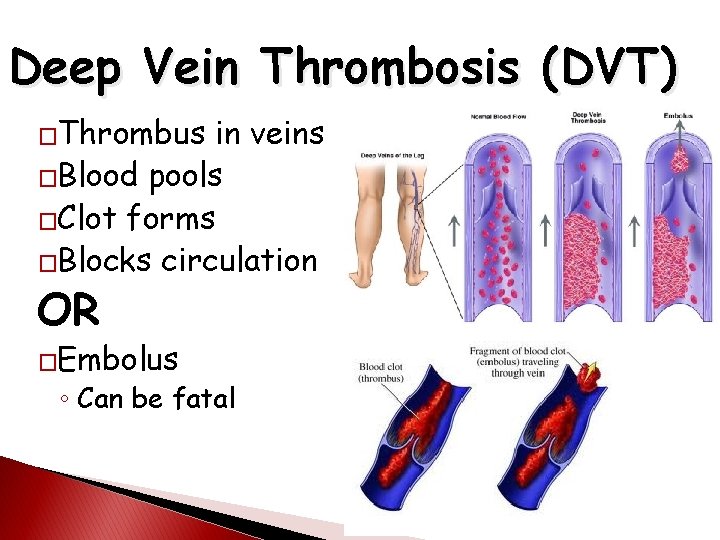
Deep Vein Thrombosis (DVT) �Thrombus in veins �Blood pools �Clot forms �Blocks circulation OR �Embolus ◦ Can be fatal
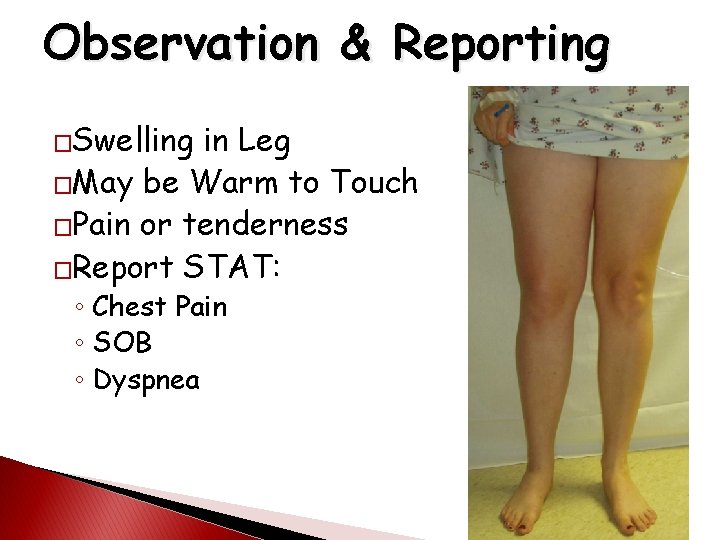
Observation & Reporting �Swelling in Leg �May be Warm to Touch �Pain or tenderness �Report STAT: ◦ Chest Pain ◦ SOB ◦ Dyspnea

CNA 2 Actions Prevention: �TEDS �SCDS �ROM �Ambulation Present �All activity directed by nurse �Elevate extremity if directed Do not massage leg

Hypertension (HTN) Classificatio SBP mm. Hg n DBP mm. Hg Normal <120 or <80 Prehypertension 120 -139 or 80 -89 Stage 1 HTN 140 -159 or 90 -99 Stage 2 HTN > 160 or > 100
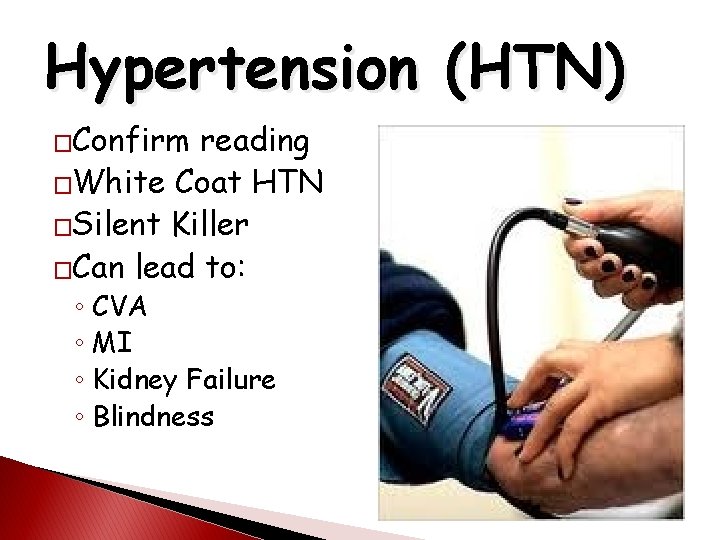
Hypertension (HTN) �Confirm reading �White Coat HTN �Silent Killer �Can lead to: ◦ CVA ◦ MI ◦ Kidney Failure ◦ Blindness
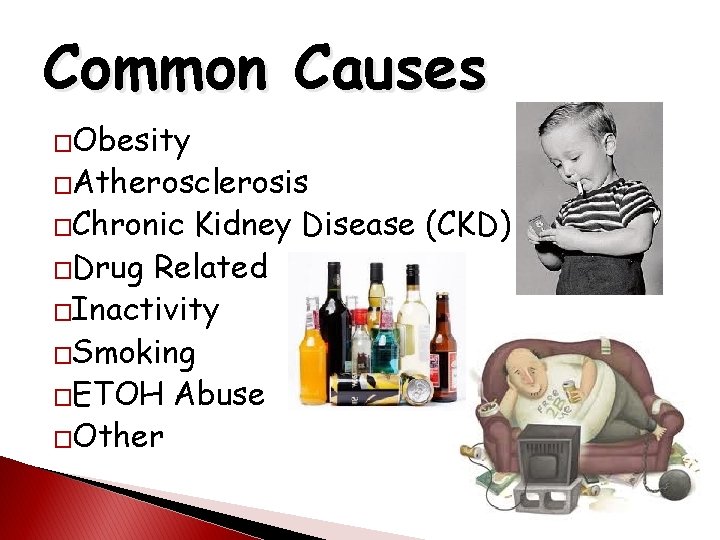
Common Causes �Obesity �Atherosclerosis �Chronic Kidney Disease (CKD) �Drug Related �Inactivity �Smoking �ETOH Abuse �Other
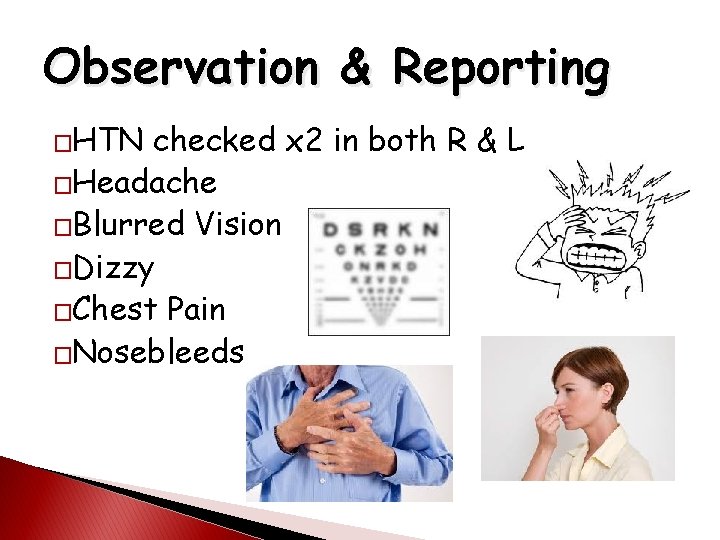
Observation & Reporting �HTN checked x 2 in both R & L �Headache �Blurred Vision �Dizzy �Chest Pain �Nosebleeds
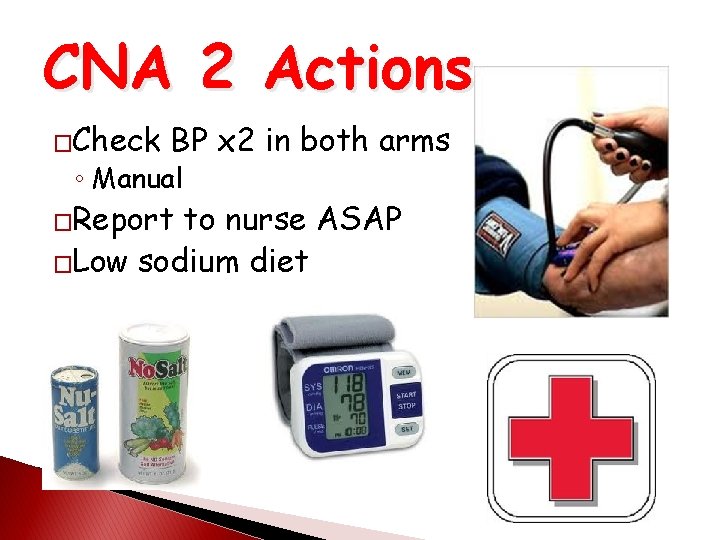
CNA 2 Actions �Check BP x 2 in both arms ◦ Manual �Report to nurse ASAP �Low sodium diet
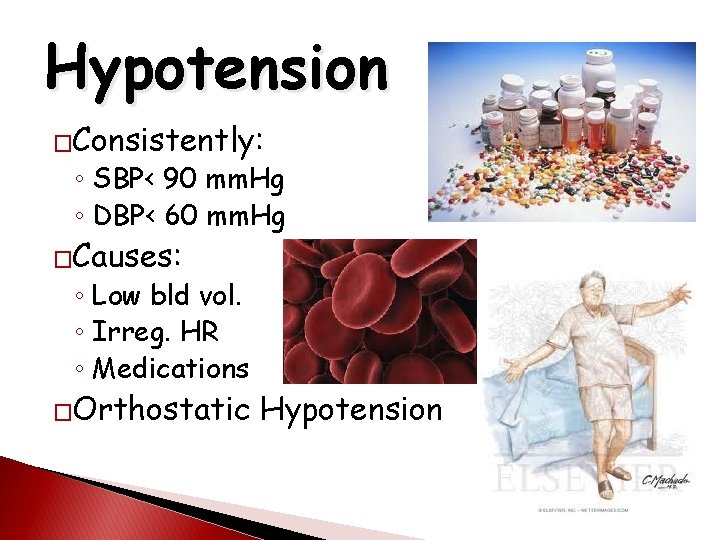
Hypotension �Consistently: ◦ SBP< 90 mm. Hg ◦ DBP< 60 mm. Hg �Causes: ◦ Low bld vol. ◦ Irreg. HR ◦ Medications �Orthostatic Hypotension
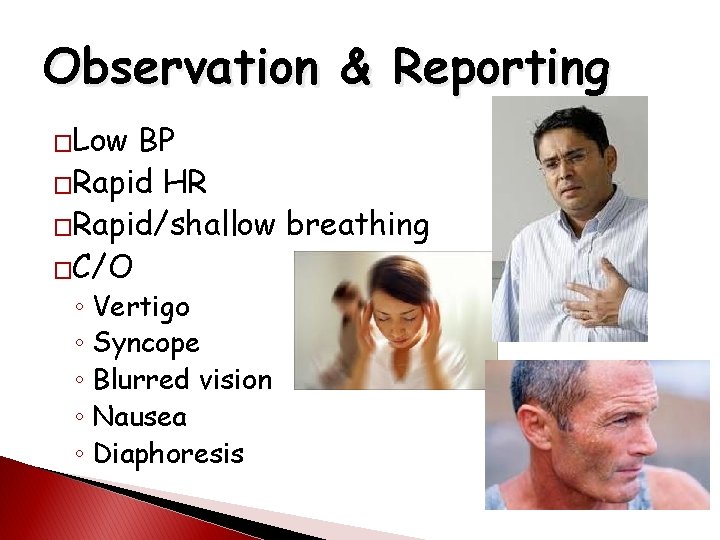
Observation & Reporting �Low BP �Rapid HR �Rapid/shallow breathing �C/O ◦ Vertigo ◦ Syncope ◦ Blurred vision ◦ Nausea ◦ Diaphoresis
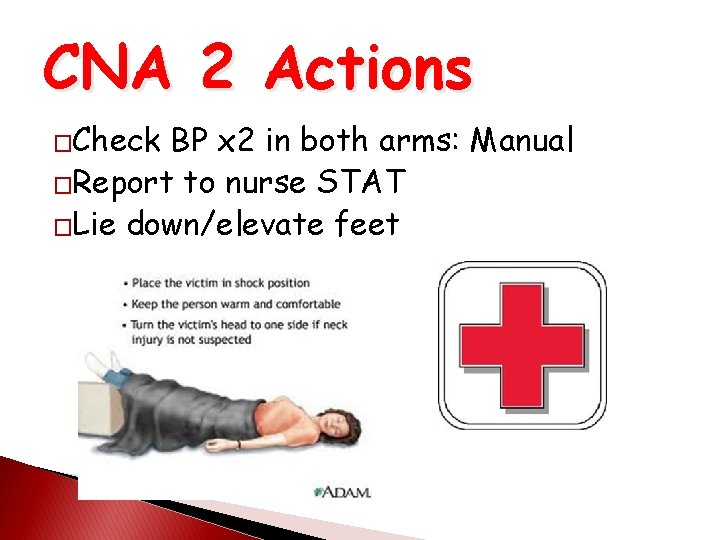
CNA 2 Actions �Check BP x 2 in both arms: Manual �Report to nurse STAT �Lie down/elevate feet
Technical Skills �Discontinue saline lock (Does not have fluids running)https: //www. youtube. com/watc h? v=73 t. Yv. Gur. GE 4
- Slides: 43