
CARDIOVASCULAR SYSTEM CARDIOVASCULAR SYSTEM n Also known as
- Slides: 17
CARDIOVASCULAR SYSTEM
CARDIOVASCULAR SYSTEM n Also known as the Circulatory System. n CARDIO = HEART n VASCULAR = VESSELS n Vessels carry blood through the body.
PURPOSE OF THE CARDIOVASCULAR SYSTEM n 1. Blood carries needed substances to the bodies cells. – Oxygen – Glucose – Other needed nutrients n 2. Blood picks up waste from cells. – Carbon Dioxide – Other wastes n 3. Blood transports disease-fighting cells.
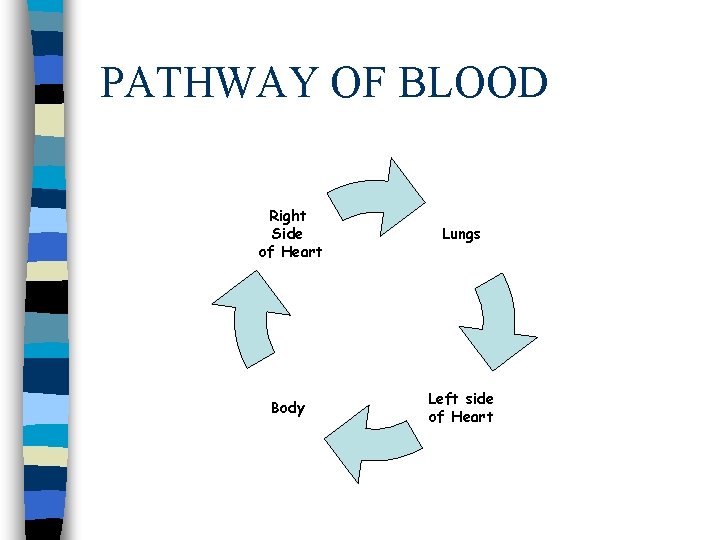
PATHWAY OF BLOOD Right Side of Heart Lungs Body Left side of Heart
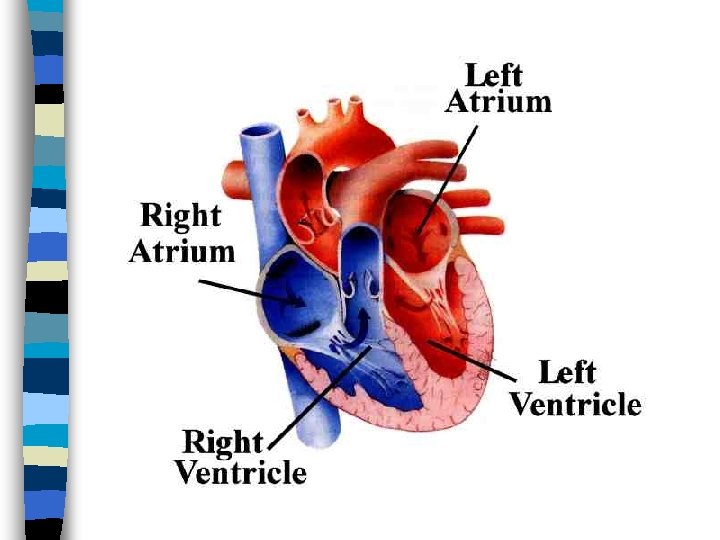
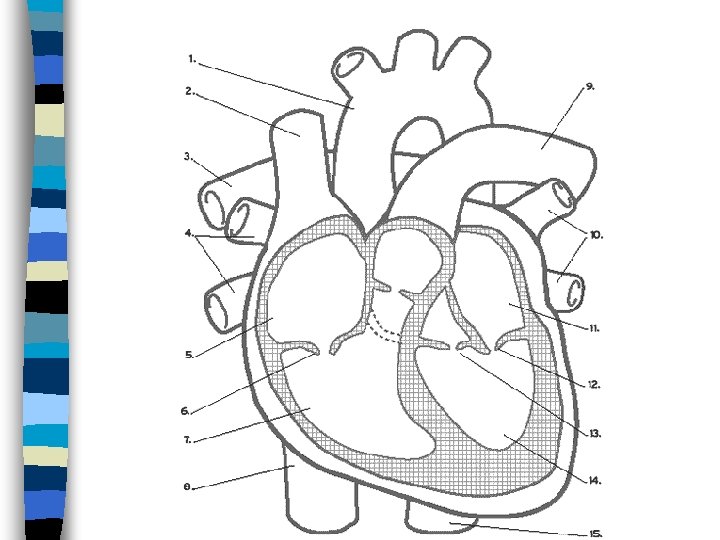
THE HEART n Hollow, muscular organ that pumps blood throughout the body. n Heart Structure: – Heart has two sides…. • Right side • Left side – Each side has two compartments… • Upper chamber Atrium • Lower chamber Ventricle
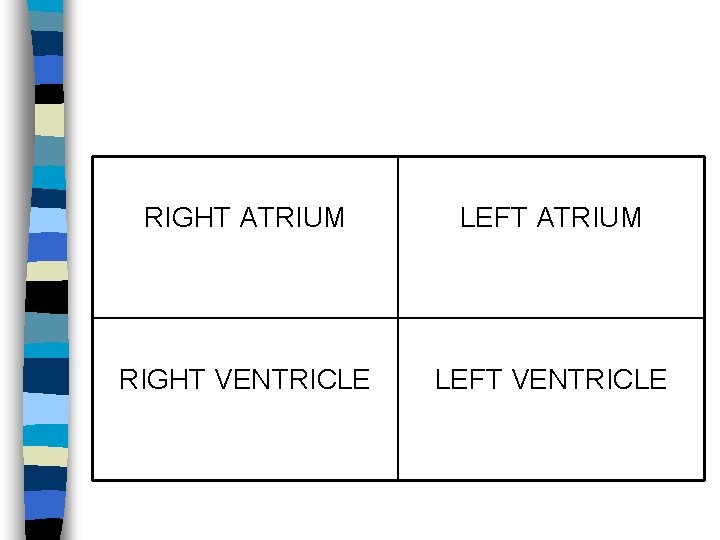
RIGHT ATRIUM LEFT ATRIUM RIGHT VENTRICLE LEFT VENTRICLE
ATRIUM n Upper chambers of the heart. n Receives blood that comes into the heart. n Left Atrium – Receives oxygenated blood from the LUNGS n Right Atrium – Receives deoxygenated blood from the BODY
VENTRICLE n Lower chambers of the heart. n Sends blood out of heart. n Left Ventricle – Pumps oxygen-rich blood to BODY n Right Ventricle – Pumps oxygen-poor blood to LUNGS
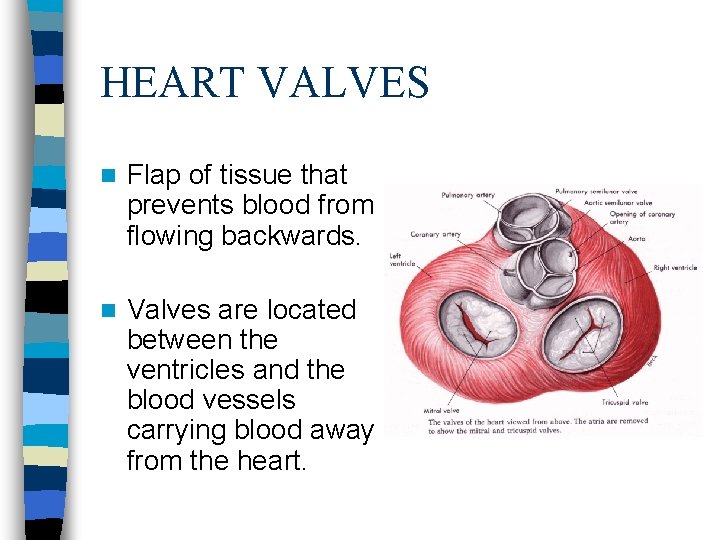
HEART VALVES n Flap of tissue that prevents blood from flowing backwards. n Valves are located between the ventricles and the blood vessels carrying blood away from the heart.
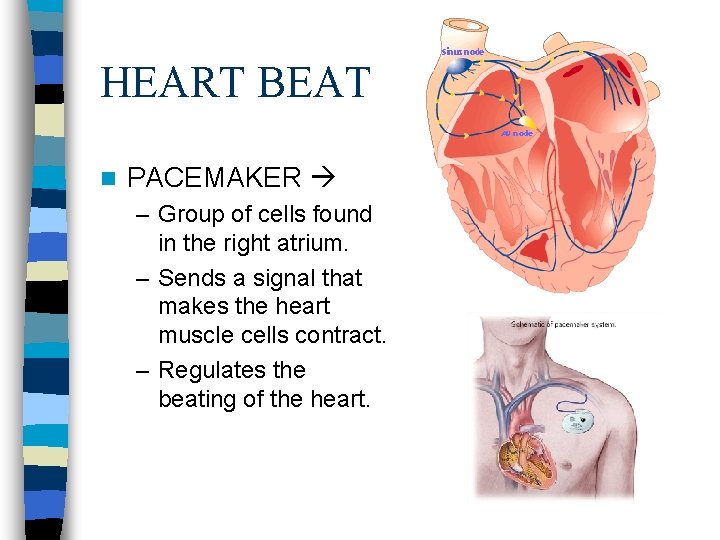
HEART BEAT n PACEMAKER – Group of cells found in the right atrium. – Sends a signal that makes the heart muscle cells contract. – Regulates the beating of the heart.
CIRCULATION n Coronary Circulation n Pulmonary Circulation n Systematic Circulation
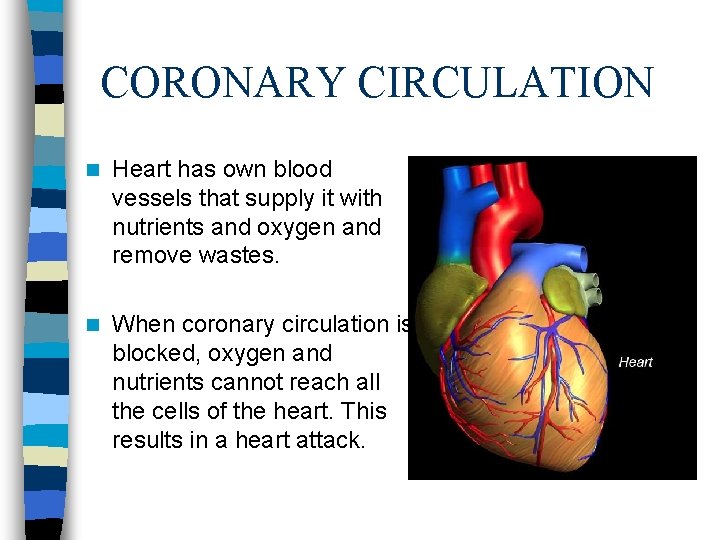
CORONARY CIRCULATION n Heart has own blood vessels that supply it with nutrients and oxygen and remove wastes. n When coronary circulation is blocked, oxygen and nutrients cannot reach all the cells of the heart. This results in a heart attack.
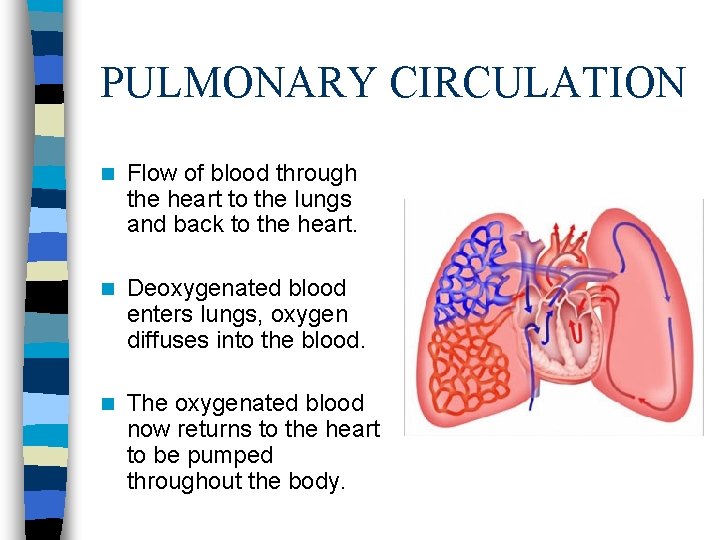
PULMONARY CIRCULATION n Flow of blood through the heart to the lungs and back to the heart. n Deoxygenated blood enters lungs, oxygen diffuses into the blood. n The oxygenated blood now returns to the heart to be pumped throughout the body.
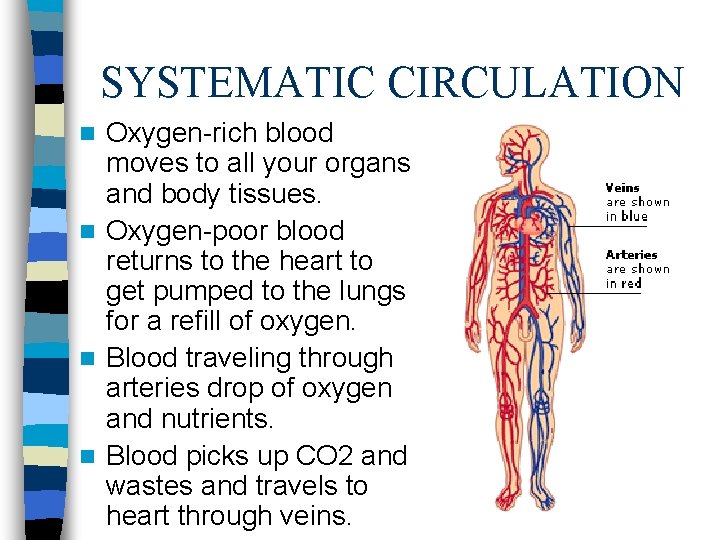
SYSTEMATIC CIRCULATION Oxygen-rich blood moves to all your organs and body tissues. n Oxygen-poor blood returns to the heart to get pumped to the lungs for a refill of oxygen. n Blood traveling through arteries drop of oxygen and nutrients. n Blood picks up CO 2 and wastes and travels to heart through veins. n