
Cardiovascular System 2 types of circulation systems 1
- Slides: 11
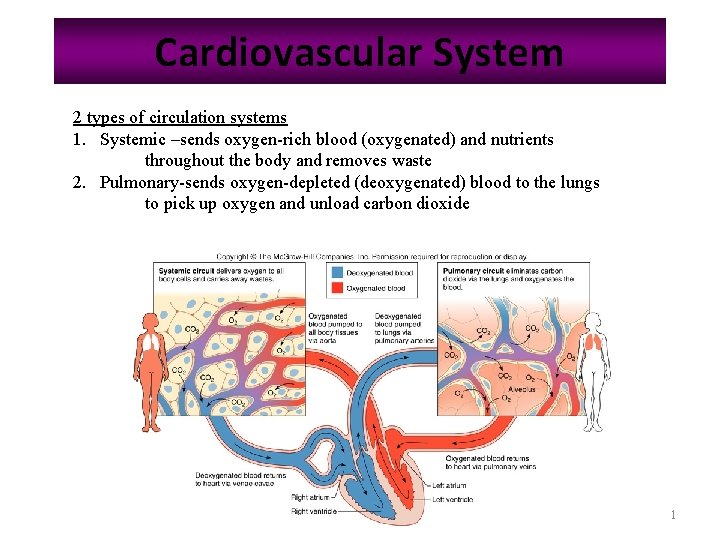
Cardiovascular System 2 types of circulation systems 1. Systemic –sends oxygen-rich blood (oxygenated) and nutrients throughout the body and removes waste 2. Pulmonary-sends oxygen-depleted (deoxygenated) blood to the lungs to pick up oxygen and unload carbon dioxide 1
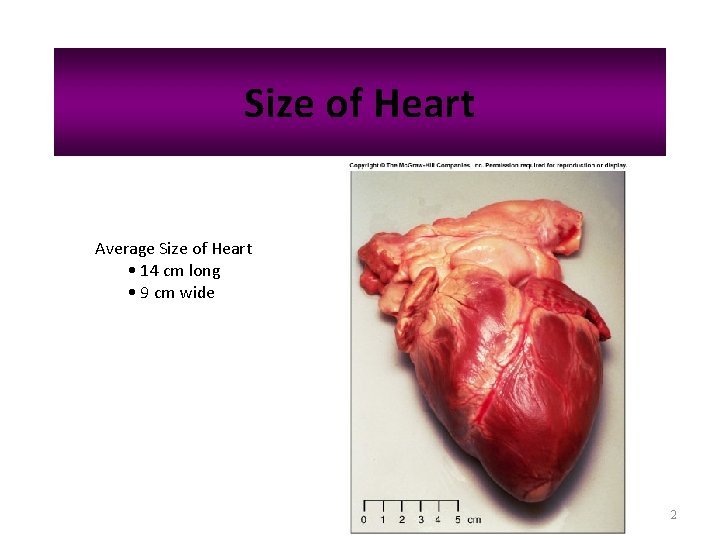
Size of Heart Average Size of Heart • 14 cm long • 9 cm wide 2
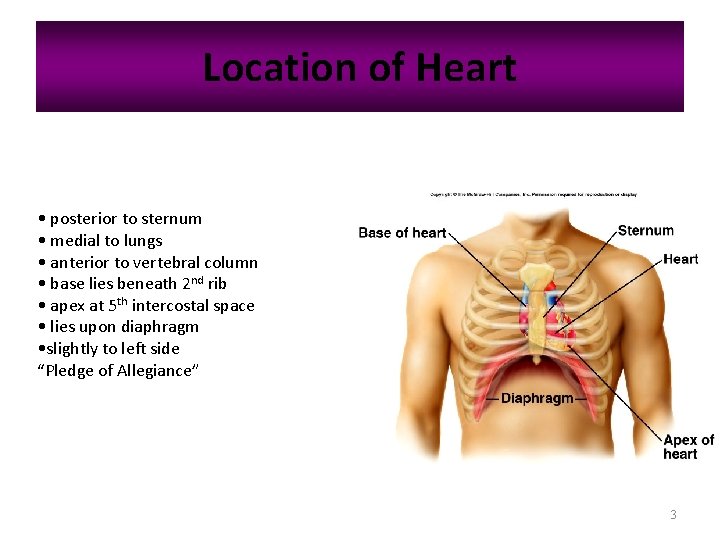
Location of Heart • posterior to sternum • medial to lungs • anterior to vertebral column • base lies beneath 2 nd rib • apex at 5 th intercostal space • lies upon diaphragm • slightly to left side “Pledge of Allegiance” 3
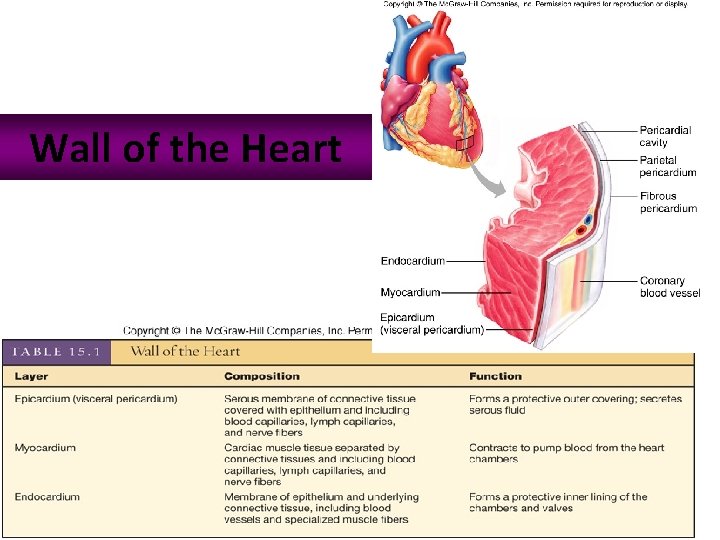
Covering of Heart Pericardium -also called pericardial sac -membrane that surrounds heart for protection and reduce friction 2 layers Fibrous pericardium -protects the heart and anchors it to surrounding structures like the diaphragm and sternum Serous pericardium -secretes a lubricating fluid around heart which helps to reduce friction to allow the heart to beat easily. Pericarditits -condition that results in a decrease in serous fluid -cause the pericardial layers to bind and stick together forming painful adhesions that interfere with heart movements. 4
Wall of the Heart 5
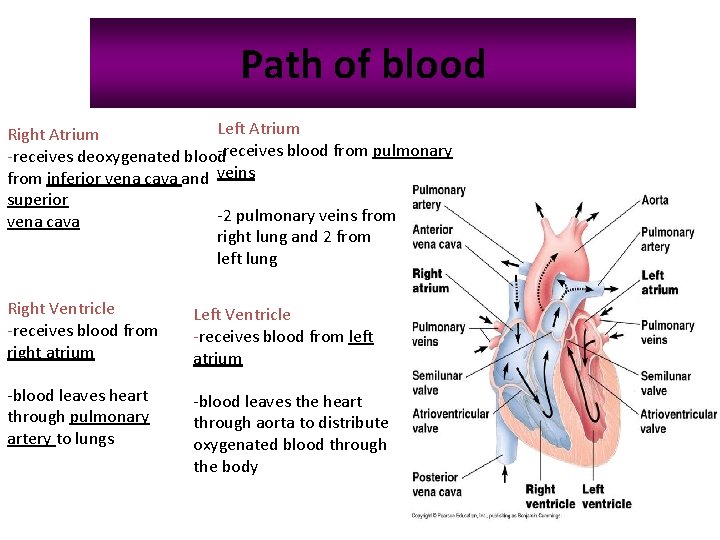
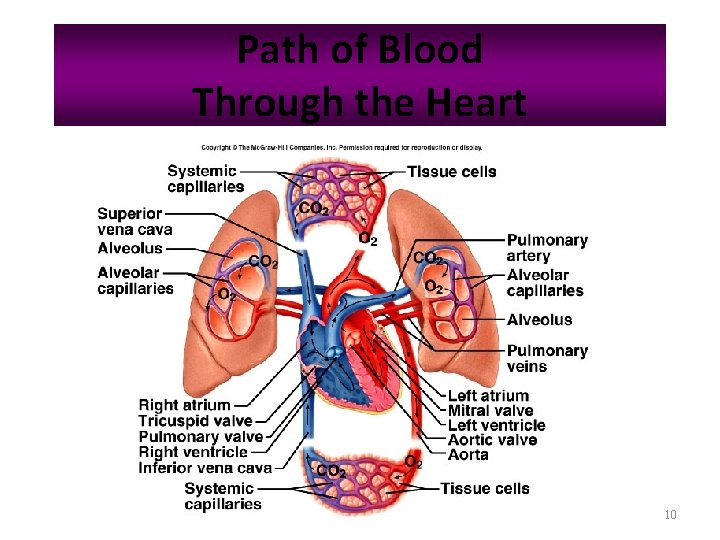
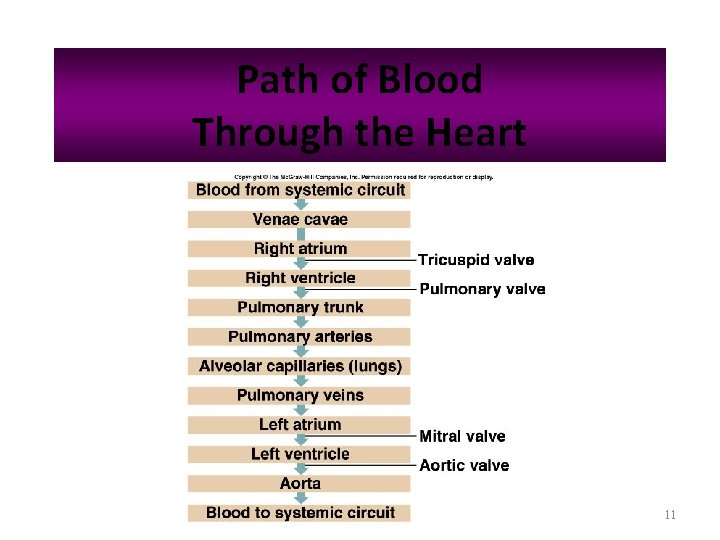
Path of blood Left Atrium Right Atrium -receives blood from pulmonary -receives deoxygenated blood from inferior vena cava and veins superior -2 pulmonary veins from vena cava right lung and 2 from left lung Right Ventricle -receives blood from right atrium Left Ventricle -receives blood from left atrium -blood leaves heart through pulmonary artery to lungs -blood leaves the heart through aorta to distribute oxygenated blood through the body 6
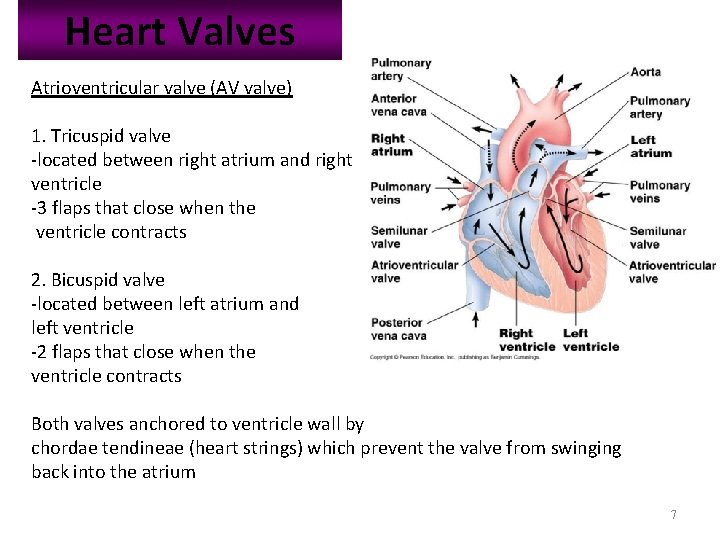
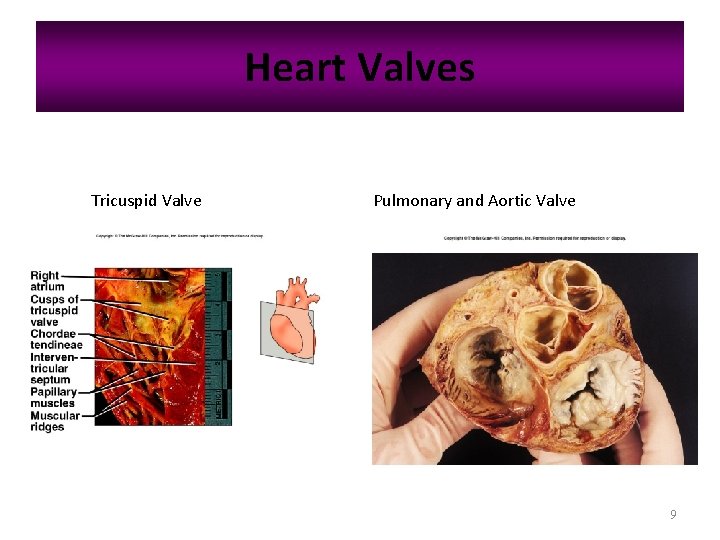
Heart Valves Atrioventricular valve (AV valve) 1. Tricuspid valve -located between right atrium and right ventricle -3 flaps that close when the ventricle contracts 2. Bicuspid valve -located between left atrium and left ventricle -2 flaps that close when the ventricle contracts Both valves anchored to ventricle wall by chordae tendineae (heart strings) which prevent the valve from swinging back into the atrium 7
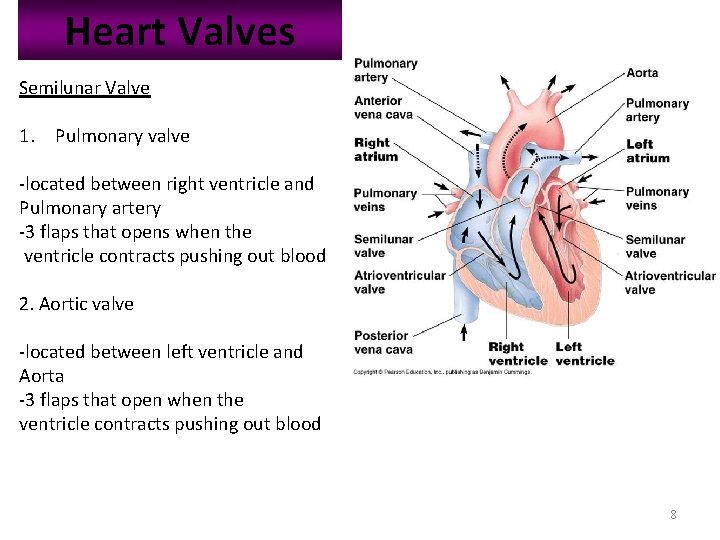
Heart Valves Semilunar Valve 1. Pulmonary valve -located between right ventricle and Pulmonary artery -3 flaps that opens when the ventricle contracts pushing out blood 2. Aortic valve -located between left ventricle and Aorta -3 flaps that open when the ventricle contracts pushing out blood 8
Heart Valves Tricuspid Valve Pulmonary and Aortic Valve 9
Path of Blood Through the Heart 10
Path of Blood Through the Heart 11