
Cardiovascular Rehabilitation Exercise and Physical Activity Part 1
Cardiovascular Rehabilitation Exercise and Physical Activity Part 1
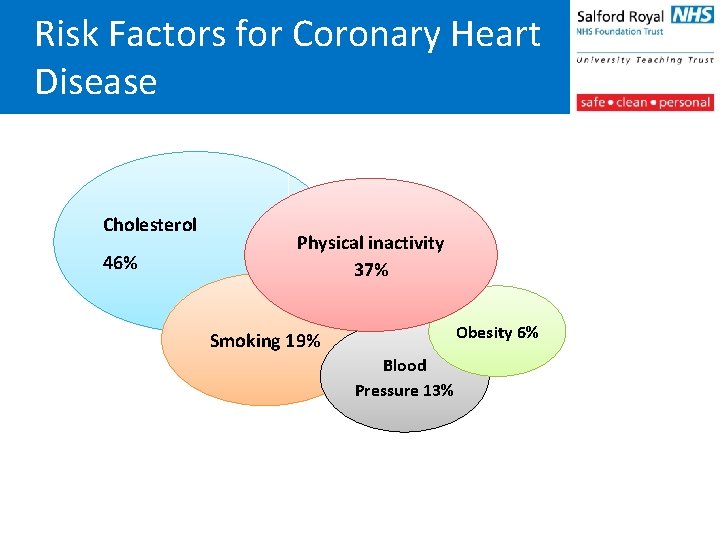
Risk Factors for Coronary Heart Disease Cholesterol 46% Physical inactivity 37% Obesity 6% Smoking 19% Blood Pressure 13%
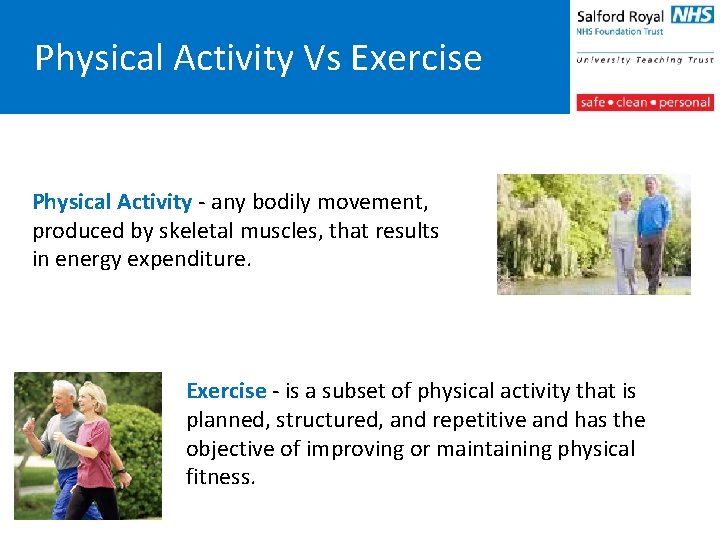
Physical Activity Vs Exercise Physical Activity - any bodily movement, produced by skeletal muscles, that results in energy expenditure. Exercise - is a subset of physical activity that is planned, structured, and repetitive and has the objective of improving or maintaining physical fitness.
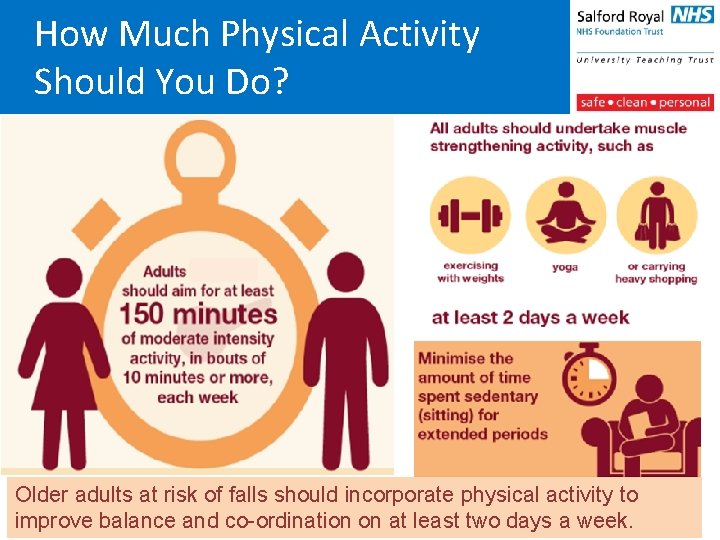
How Much Physical Activity Should You Do? Older adults at risk of falls should incorporate physical activity to improve balance and co-ordination on at least two days a week.
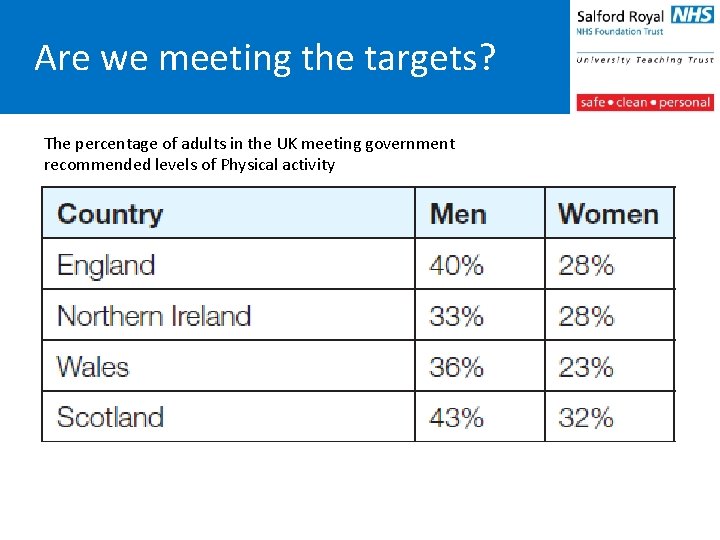
Are we meeting the targets? The percentage of adults in the UK meeting government recommended levels of Physical activity
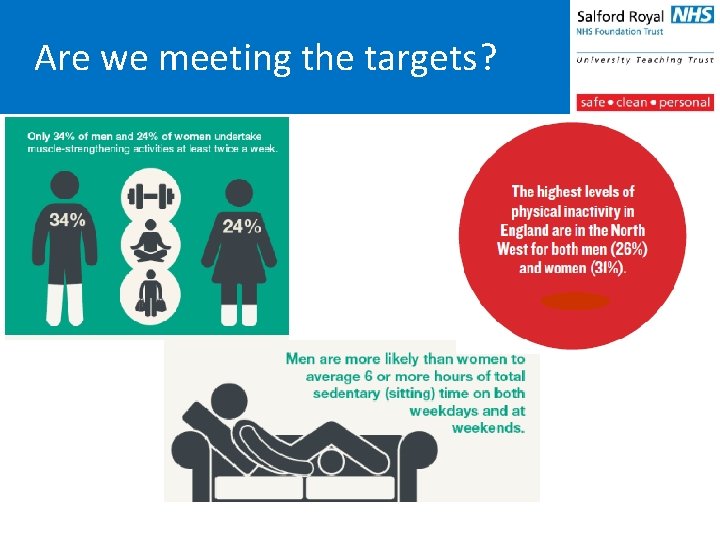
Are we meeting the targets?
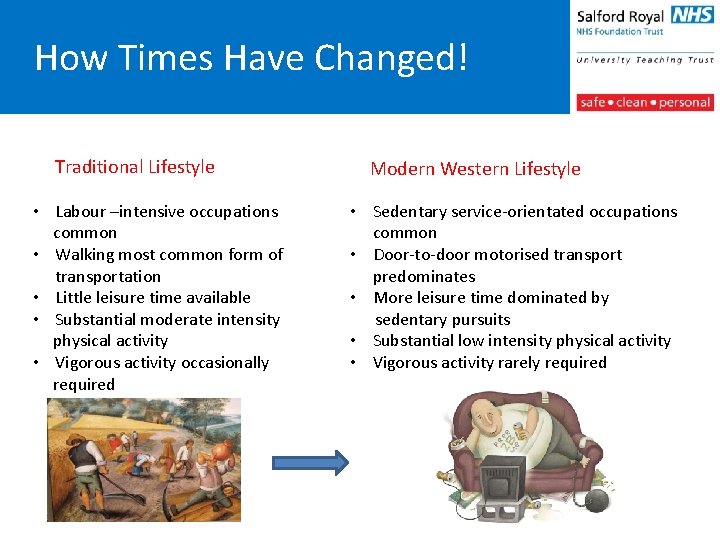
How Times Have Changed! Traditional Lifestyle • Labour –intensive occupations common • Walking most common form of transportation • Little leisure time available • Substantial moderate intensity physical activity • Vigorous activity occasionally required Modern Western Lifestyle • Sedentary service-orientated occupations common • Door-to-door motorised transport predominates • More leisure time dominated by sedentary pursuits • Substantial low intensity physical activity • Vigorous activity rarely required
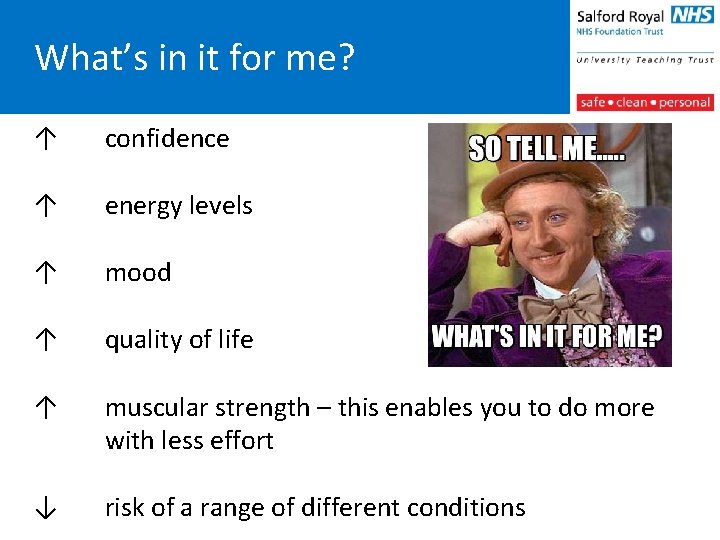
What’s in it for me? ↑ confidence ↑ energy levels ↑ mood ↑ quality of life ↑ muscular strength – this enables you to do more with less effort ↓ risk of a range of different conditions
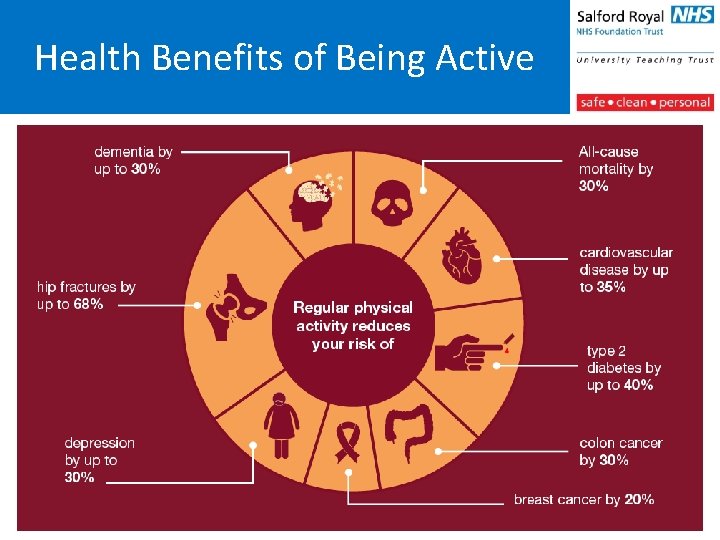
Health Benefits of Being Active
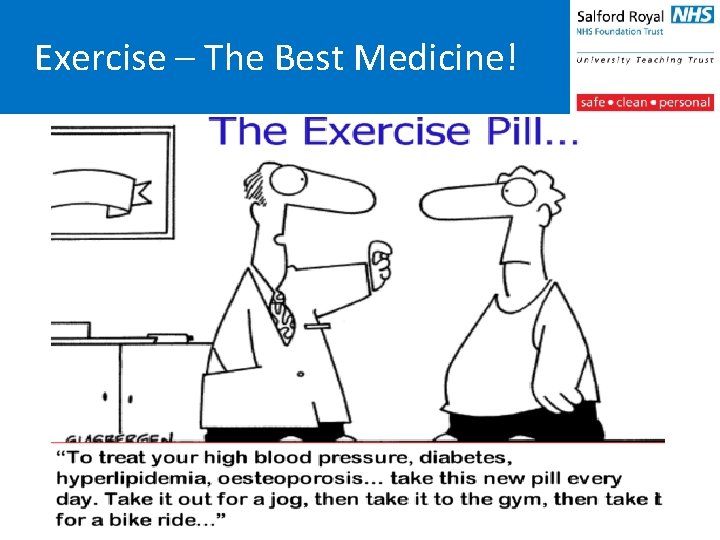
Exercise – The Best Medicine!
Benefits To My Heart ↑ elasticity of blood vessels + number of capillaries ↓ or stabilise blood pressure ↑ Blood volume – able to deliver more oxygen ↑ Pumping ability of the heart ↑ “good” cholesterol ↓ or stabilise blood sugar levels
Normal Responses to Activity • Breathing heavier and deeper, but still able to hold a conversation (“comfortably puffed”) • Warm/sweaty/ rosy cheeks • Muscles- mild burning sensation • Mild muscle soreness after the activity • Some fatigue after exercise or even the day after
Other Normal Responses To Activity • People with peripheral artery disease (PAD) are likely to experience much higher levels of leg muscle discomfort during exercise. • People with lung related conditions are likely to experience higher levels of breathlessness during exercise. Know what is normal for YOU!
Abnormal Responses If you are unwell or experience any of the symptoms list below you must STOP EXERCISING and tell a member of staff immediately : • • • Angina type symptoms Excessive shortness of breath Dizziness Nausea Palpitations Feeling cold and clammy
Cardiovascular Rehabilitation Exercise and Physical Activity Part 2
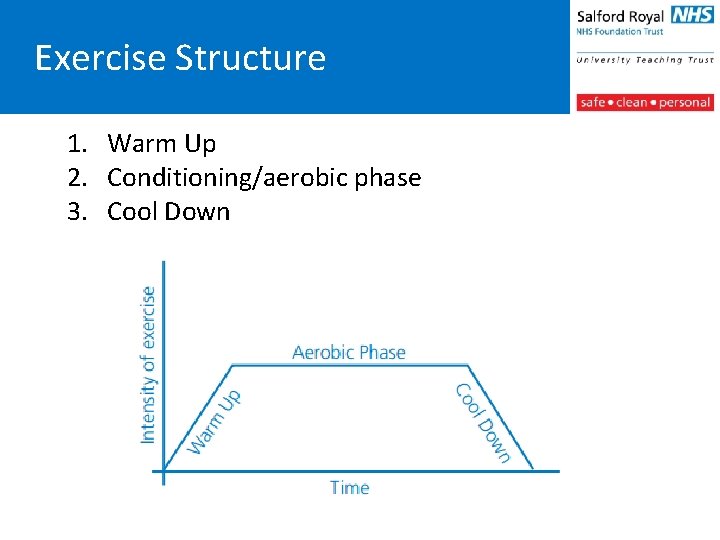
Exercise Structure 1. Warm Up 2. Conditioning/aerobic phase 3. Cool Down
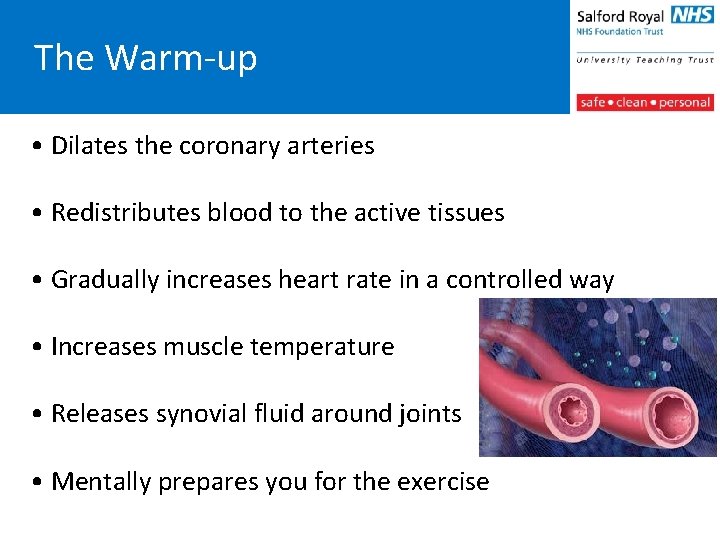
The Warm-up • Dilates the coronary arteries • Redistributes blood to the active tissues • Gradually increases heart rate in a controlled way • Increases muscle temperature • Releases synovial fluid around joints • Mentally prepares you for the exercise
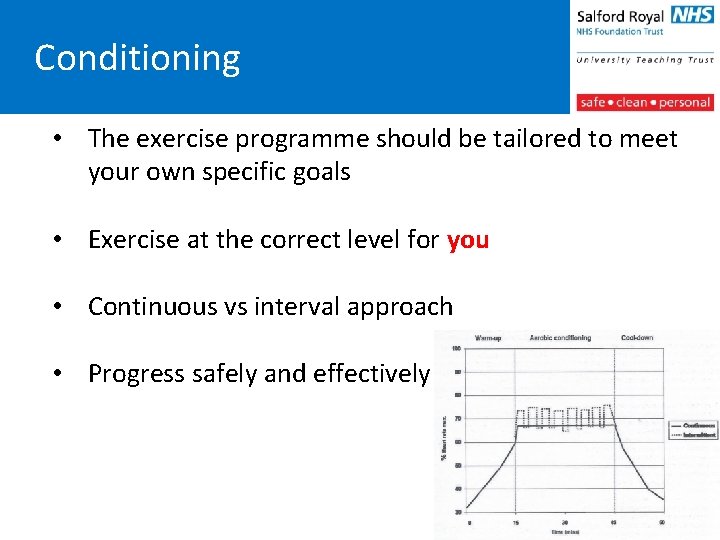
Conditioning • The exercise programme should be tailored to meet your own specific goals • Exercise at the correct level for you • Continuous vs interval approach • Progress safely and effectively
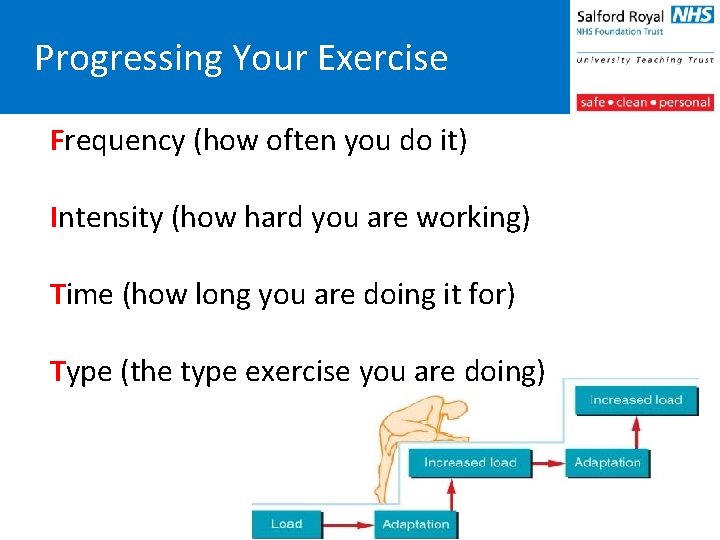
Progressing Your Exercise Frequency (how often you do it) Intensity (how hard you are working) Time (how long you are doing it for) Type (the type exercise you are doing)
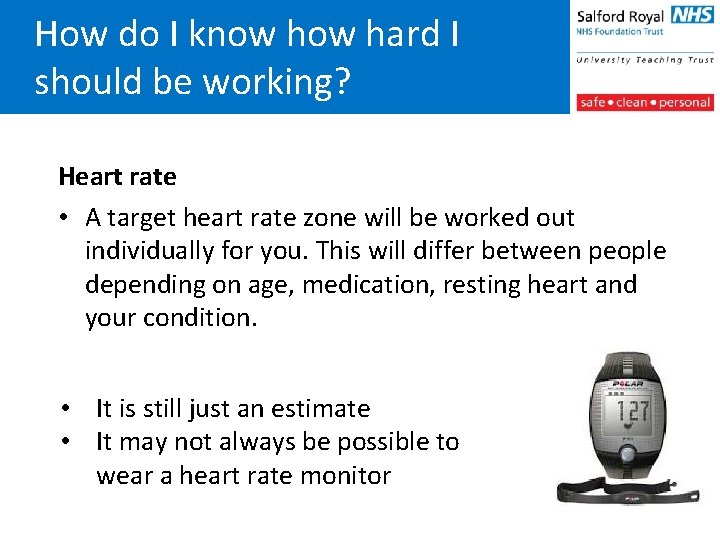
How do I know hard I should be working? Heart rate • A target heart rate zone will be worked out individually for you. This will differ between people depending on age, medication, resting heart and your condition. • It is still just an estimate • It may not always be possible to wear a heart rate monitor
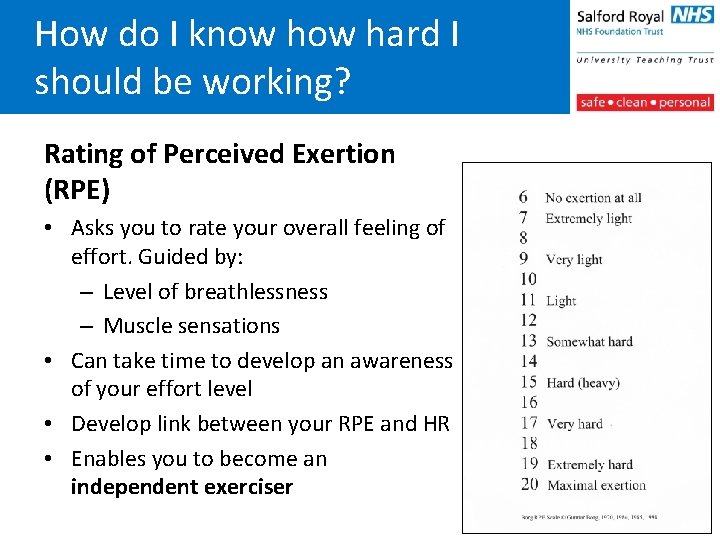
How do I know hard I should be working? Rating of Perceived Exertion (RPE) • Asks you to rate your overall feeling of effort. Guided by: – Level of breathlessness – Muscle sensations • Can take time to develop an awareness of your effort level • Develop link between your RPE and HR • Enables you to become an independent exerciser
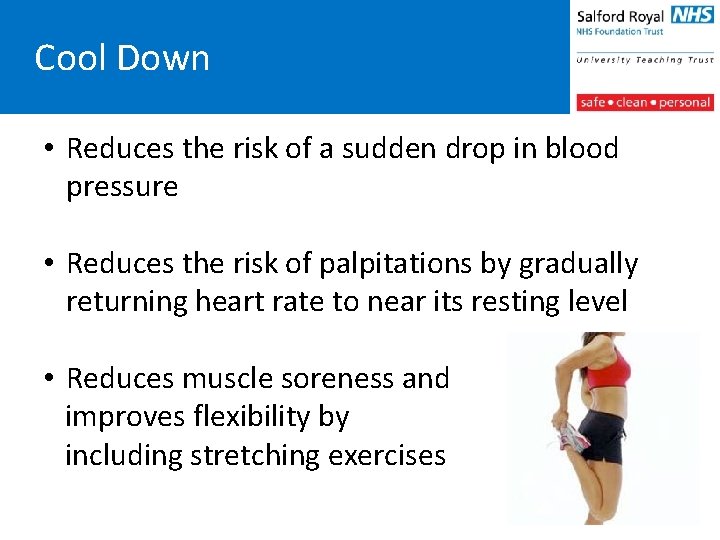
Cool Down • Reduces the risk of a sudden drop in blood pressure • Reduces the risk of palpitations by gradually returning heart rate to near its resting level • Reduces muscle soreness and improves flexibility by including stretching exercises
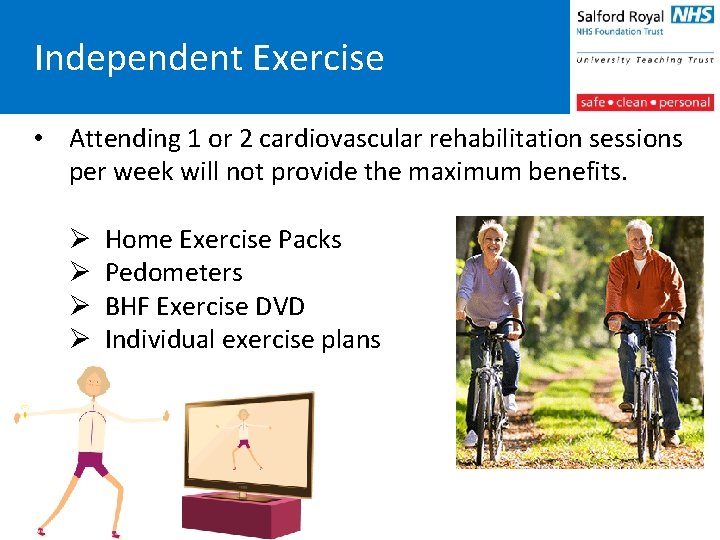
Independent Exercise • Attending 1 or 2 cardiovascular rehabilitation sessions per week will not provide the maximum benefits. Ø Ø Home Exercise Packs Pedometers BHF Exercise DVD Individual exercise plans
After Cardiovascular Rehabilitation • Healthy @ Hearts • Salford Heart Care • Fit City • Community Programmes • Continue with your own regime
Long-Term Independent Exerciser • To gain the benefits of exercise it must be performed regularly • If you enjoy the activity then your more likely to do it http: //www. youtube. com/watch? v=2 l. Xh 2 n 0 a. Pyw
The Evidence (23 ½ hours) http: //www. youtube. com/watch? v=3 F 5 Sly 9 JQ ao
- Slides: 26