
CARDIOVASCULAR PHYSIOLOGY CAPILLARY CIRCULATION DR SYED SHAHID HABIB
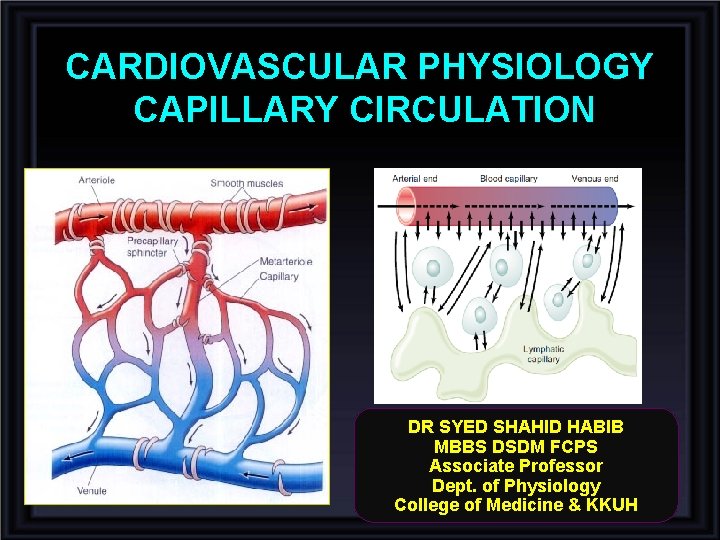
CARDIOVASCULAR PHYSIOLOGY CAPILLARY CIRCULATION DR SYED SHAHID HABIB MBBS DSDM FCPS Associate Professor Dept. of Physiology College of Medicine & KKUH
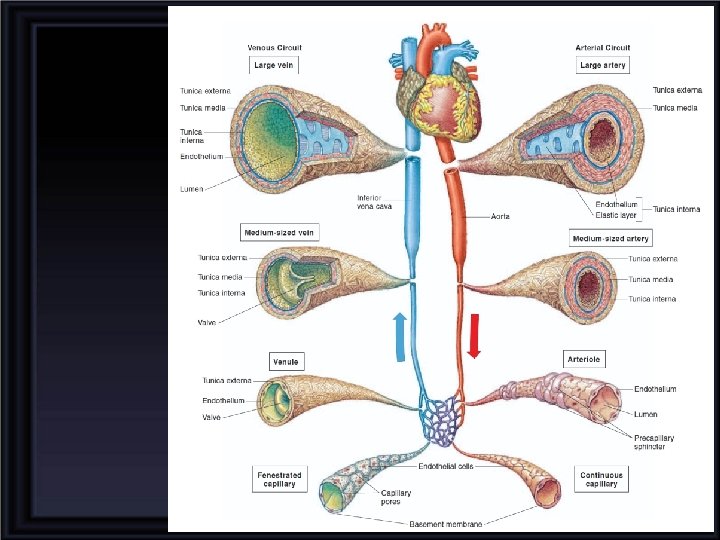
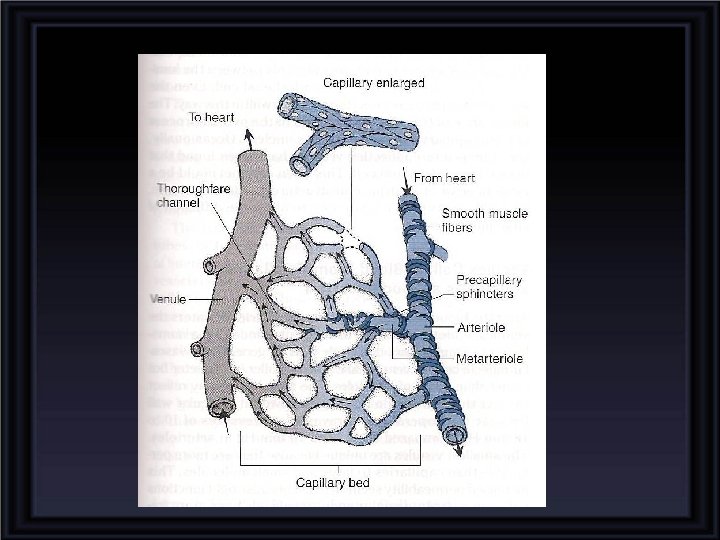
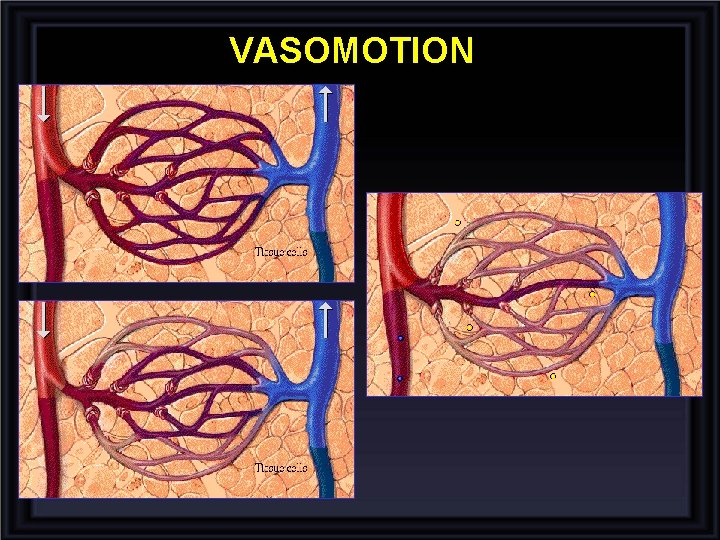
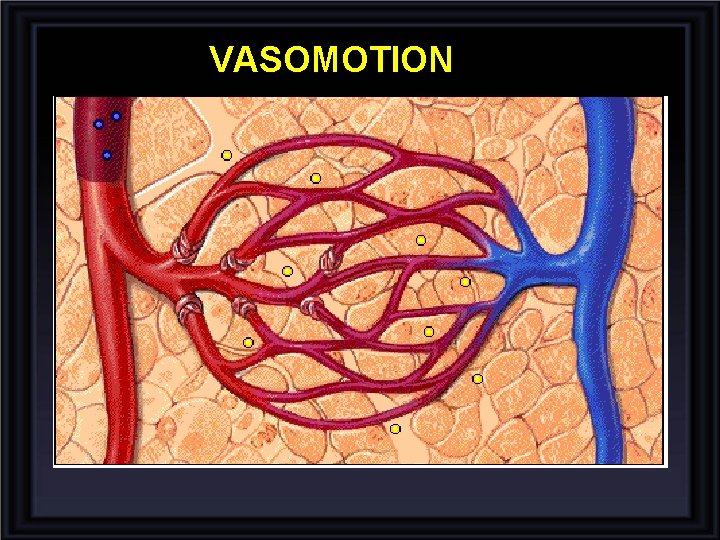
OBJECTIVES At the end of this lecture you should be able to • Describe the structure of the Microcirculation and Capillary System • Explain type of Blood Flow in the Capillaries (Vasomotion) and its regulation • Know Four Primary Hydrostatic and Colloid Osmotic Forces that Determine Fluid Movement Through the Capillary Membrane • Role of the Lymphatic System • List Causes of Extracellular Edema and factors that Increase Capillary Filtration
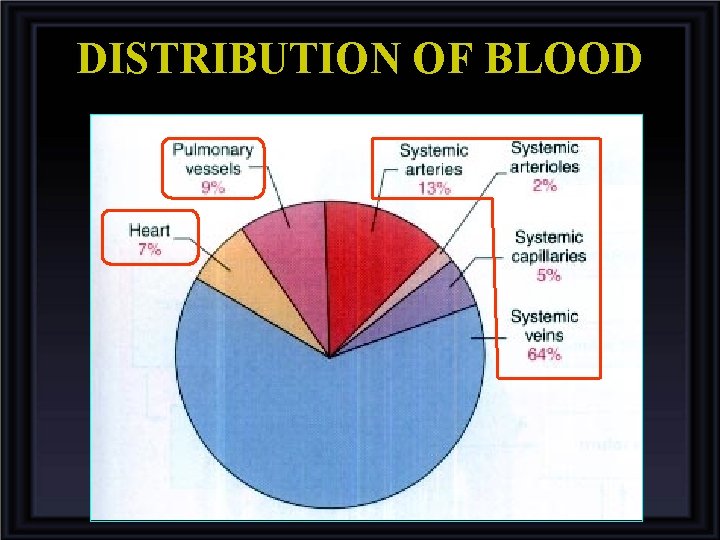
DISTRIBUTION OF BLOOD
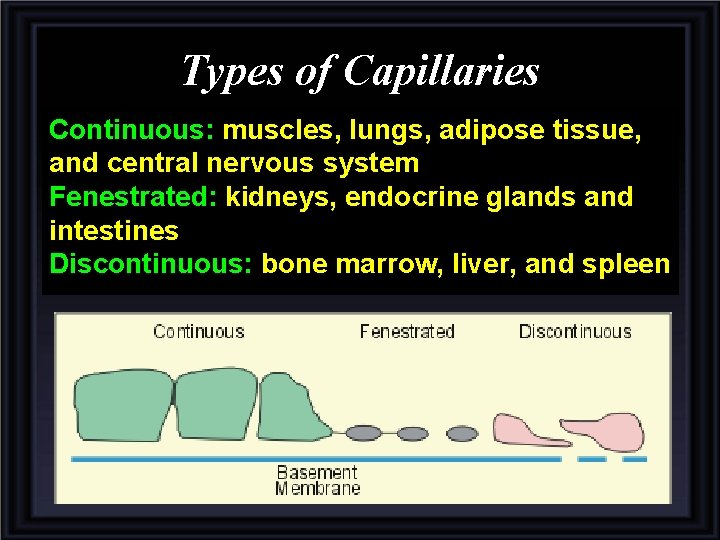
Types of Capillaries Continuous: muscles, lungs, adipose tissue, and central nervous system Fenestrated: kidneys, endocrine glands and intestines Discontinuous: bone marrow, liver, and spleen
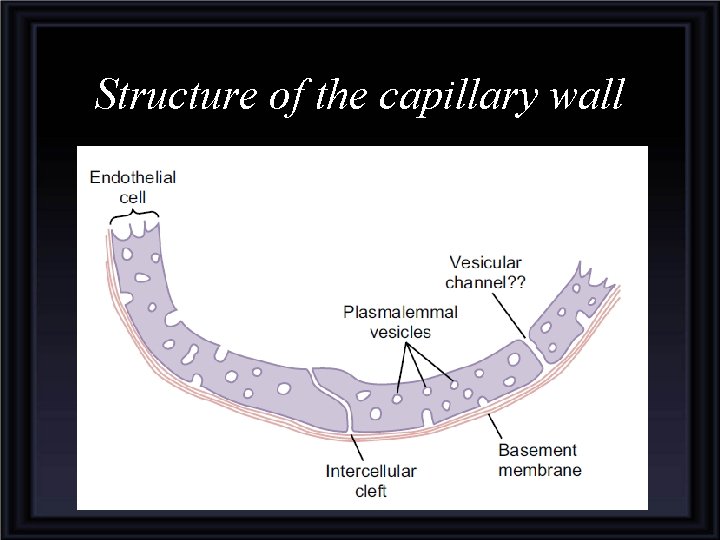
Structure of the capillary wall
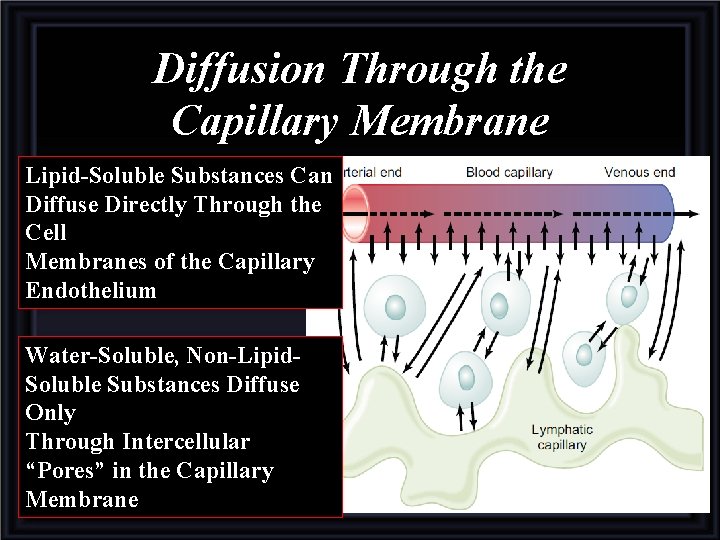
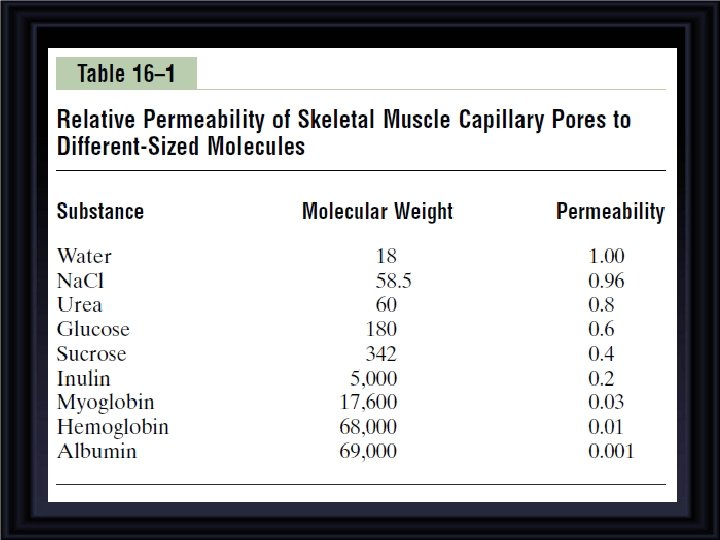
Diffusion Through the Capillary Membrane Lipid-Soluble Substances Can Diffuse Directly Through the Cell Membranes of the Capillary Endothelium Water-Soluble, Non-Lipid. Soluble Substances Diffuse Only Through Intercellular “Pores” in the Capillary Membrane
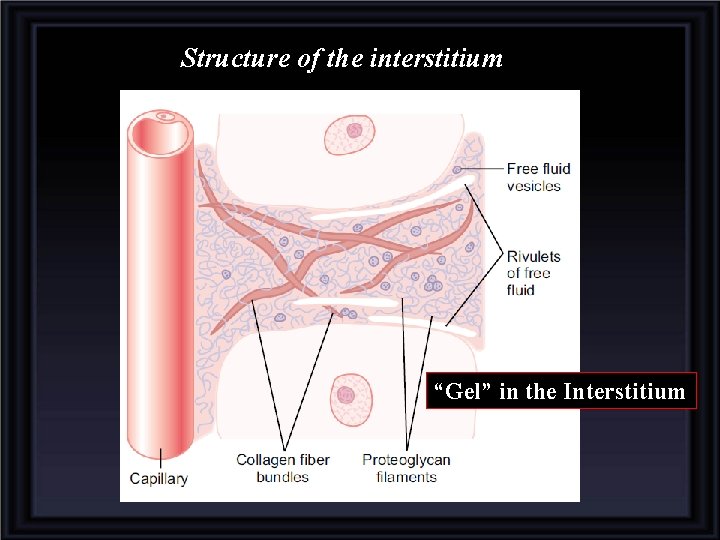
Structure of the interstitium “Gel” in the Interstitium
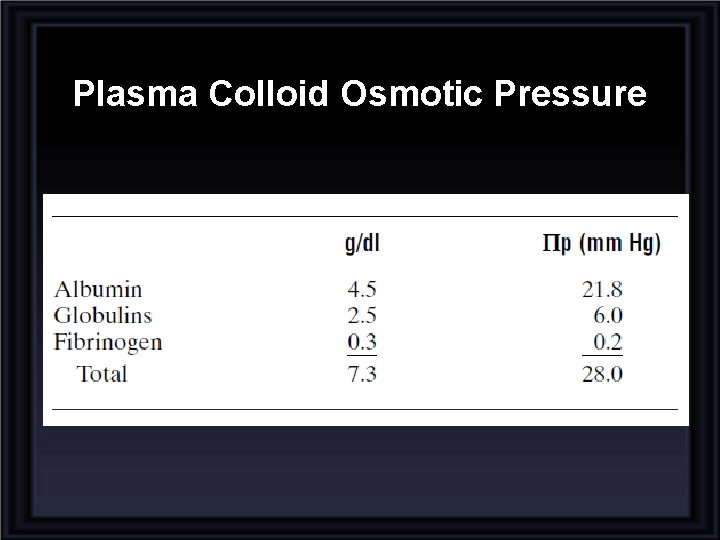
Plasma Colloid Osmotic Pressure
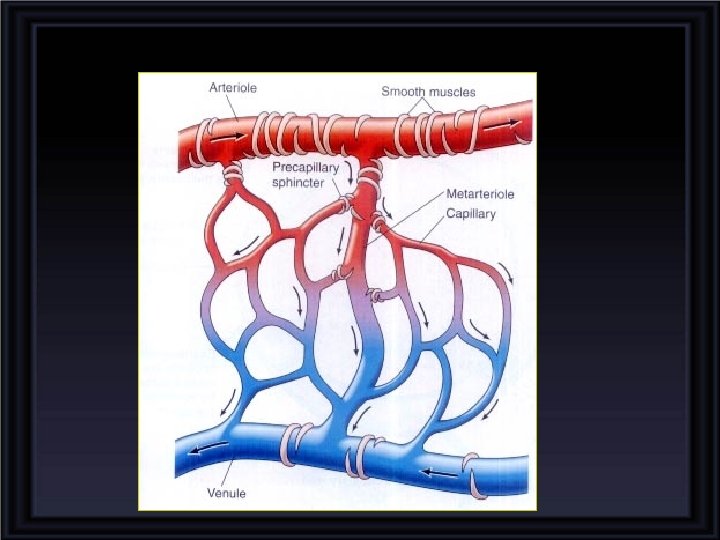
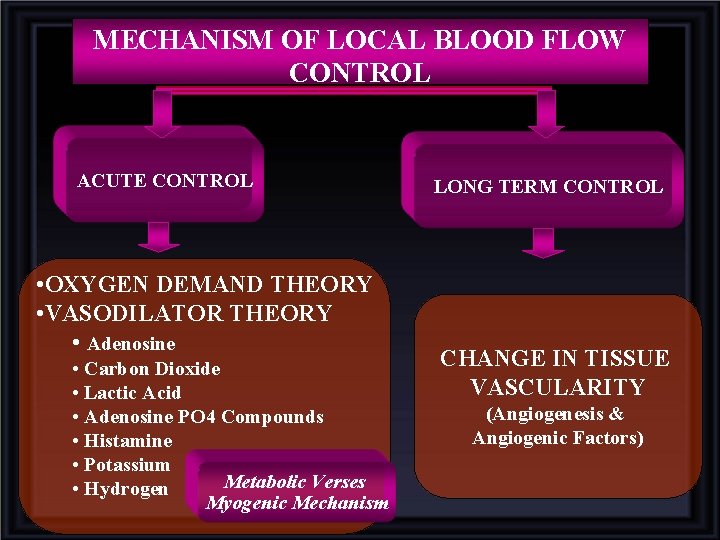
MECHANISM OF LOCAL BLOOD FLOW CONTROL ACUTE CONTROL • OXYGEN DEMAND THEORY • VASODILATOR THEORY • Adenosine • Carbon Dioxide • Lactic Acid • Adenosine PO 4 Compounds • Histamine • Potassium Metabolic Verses • Hydrogen Myogenic Mechanism LONG TERM CONTROL CHANGE IN TISSUE VASCULARITY (Angiogenesis & Angiogenic Factors)
VASOMOTION
VASOMOTION
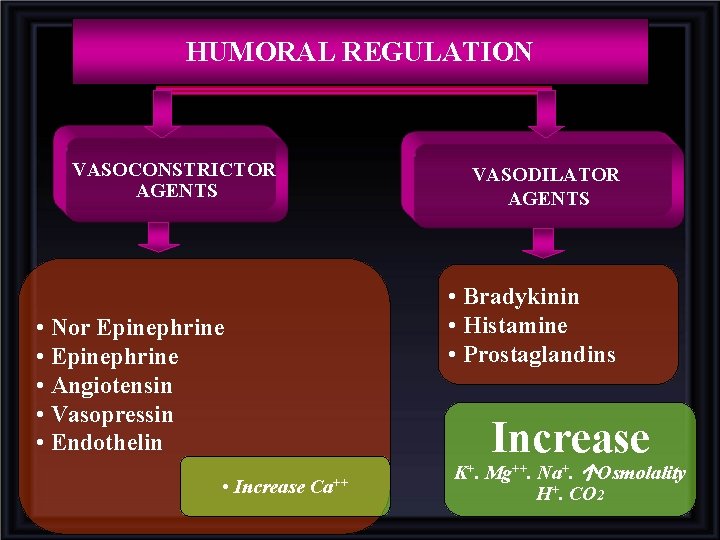
HUMORAL REGULATION VASOCONSTRICTOR AGENTS VASODILATOR AGENTS • Bradykinin • Histamine • Prostaglandins • Nor Epinephrine • Angiotensin • Vasopressin • Endothelin • Increase Ca++ K+. Mg++. Na+. Osmolality H+. CO 2
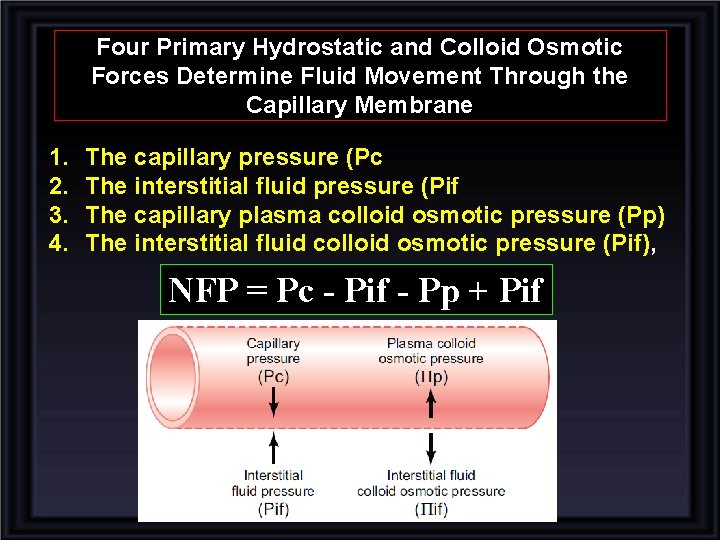
Four Primary Hydrostatic and Colloid Osmotic Forces Determine Fluid Movement Through the Capillary Membrane 1. 2. 3. 4. The capillary pressure (Pc The interstitial fluid pressure (Pif The capillary plasma colloid osmotic pressure (Pp) The interstitial fluid colloid osmotic pressure (Pif), NFP = Pc - Pif - Pp + Pif
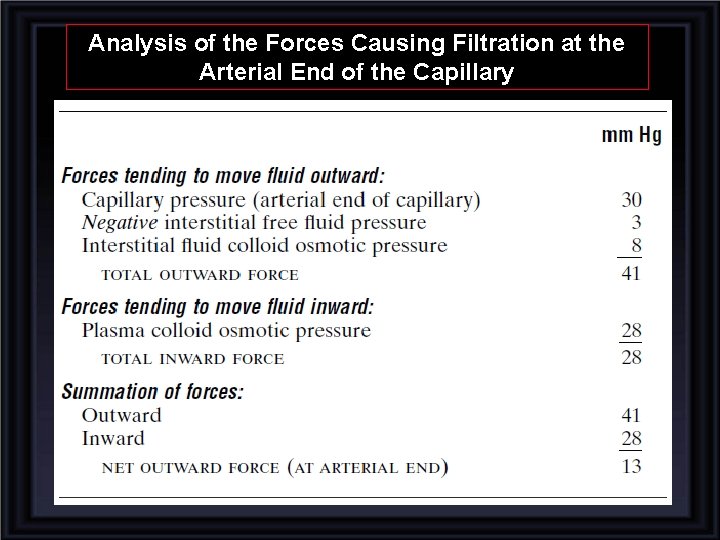
Analysis of the Forces Causing Filtration at the Arterial End of the Capillary
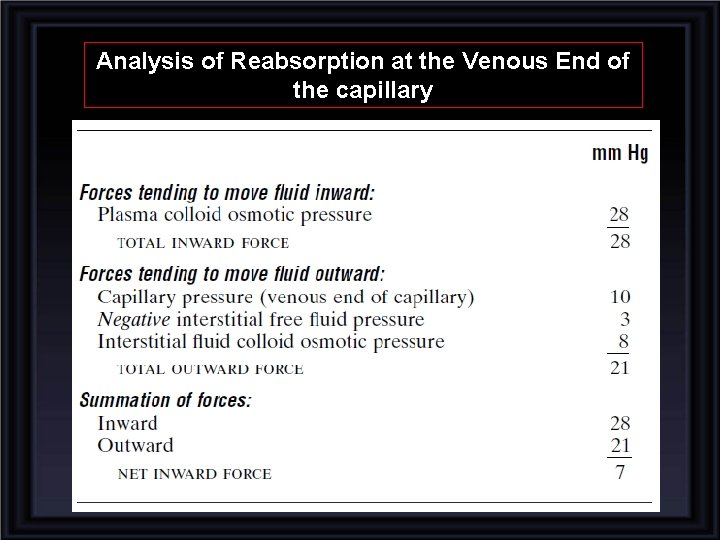
Analysis of Reabsorption at the Venous End of the capillary
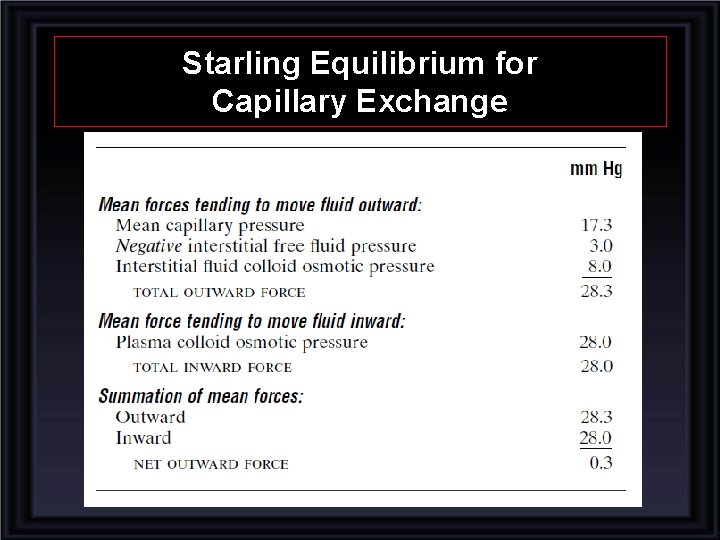
Starling Equilibrium for Capillary Exchange
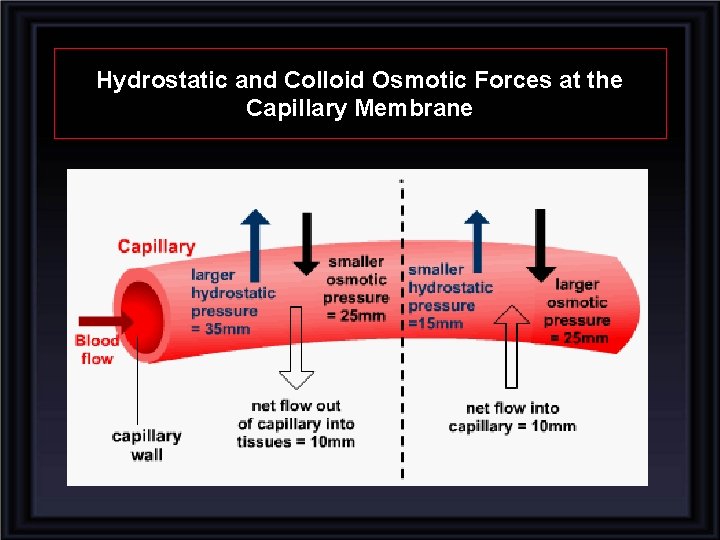
Hydrostatic and Colloid Osmotic Forces at the Capillary Membrane
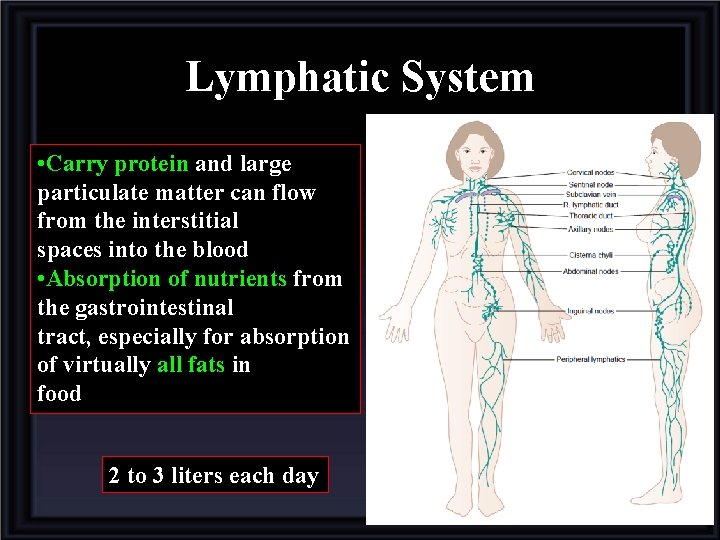
Lymphatic System • Carry protein and large particulate matter can flow from the interstitial spaces into the blood • Absorption of nutrients from the gastrointestinal tract, especially for absorption of virtually all fats in food 2 to 3 liters each day
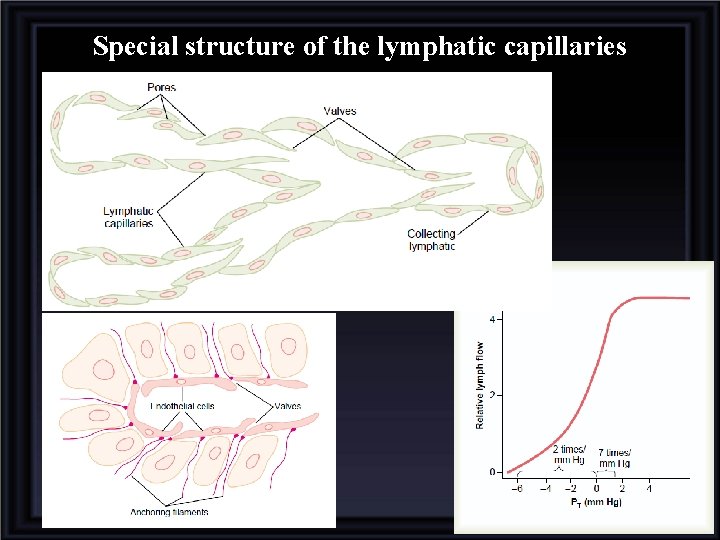
Special structure of the lymphatic capillaries
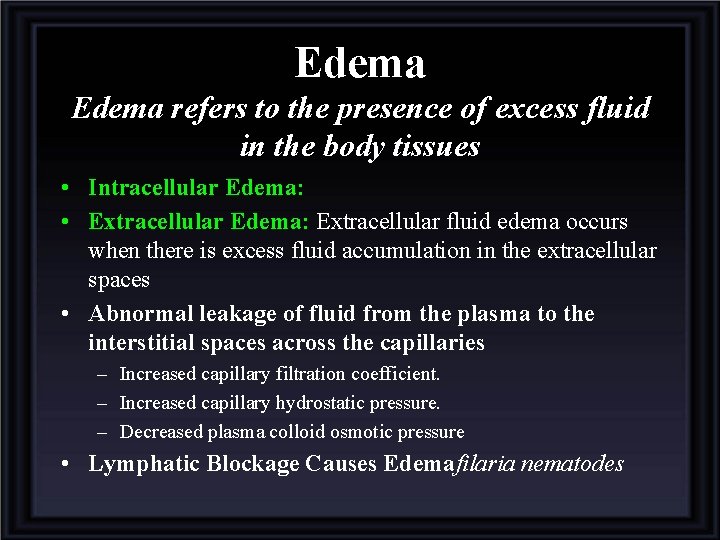
Edema refers to the presence of excess fluid in the body tissues • Intracellular Edema: • Extracellular Edema: Extracellular fluid edema occurs when there is excess fluid accumulation in the extracellular spaces • Abnormal leakage of fluid from the plasma to the interstitial spaces across the capillaries – Increased capillary filtration coefficient. – Increased capillary hydrostatic pressure. – Decreased plasma colloid osmotic pressure • Lymphatic Blockage Causes Edemafilaria nematodes
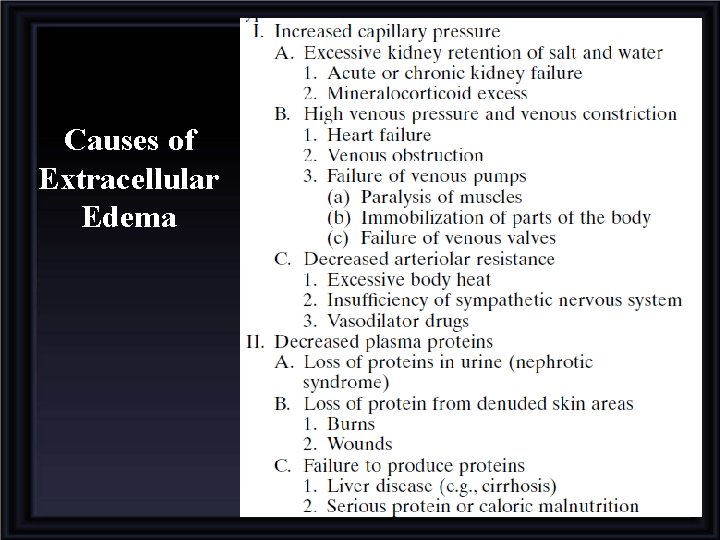
Causes of Extracellular Edema
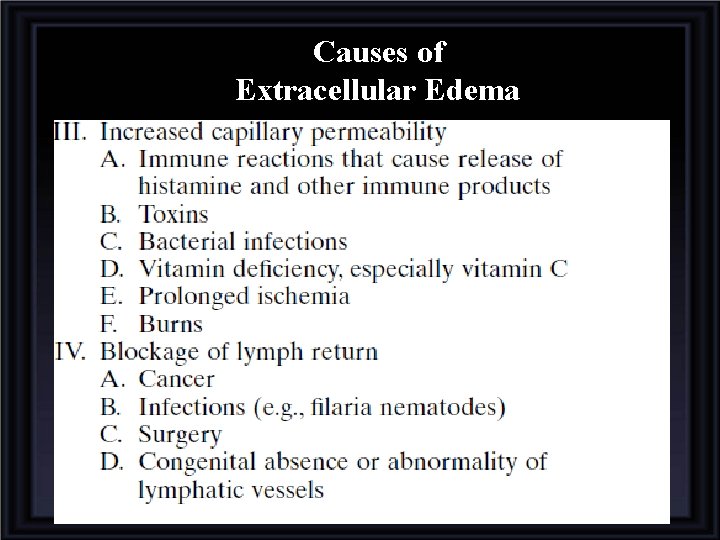
Causes of Extracellular Edema

THANKS
- Slides: 28