
Cardiovascular Pharmacology ChiFeng Hung Ph D Drugs That
- Slides: 48
Cardiovascular Pharmacology Chi-Feng Hung Ph. D
Drugs That Affect The Cardiovascular System ¢ ¢ ¢ ¢ Introduction Antihypertensive drugs Drugs used in angina Antiarrhythmic Drugs Used in Heart Failure Drugs That Improve Cardiac Contractility Drugs That Affect Blood Lipid-Lowering Drugs
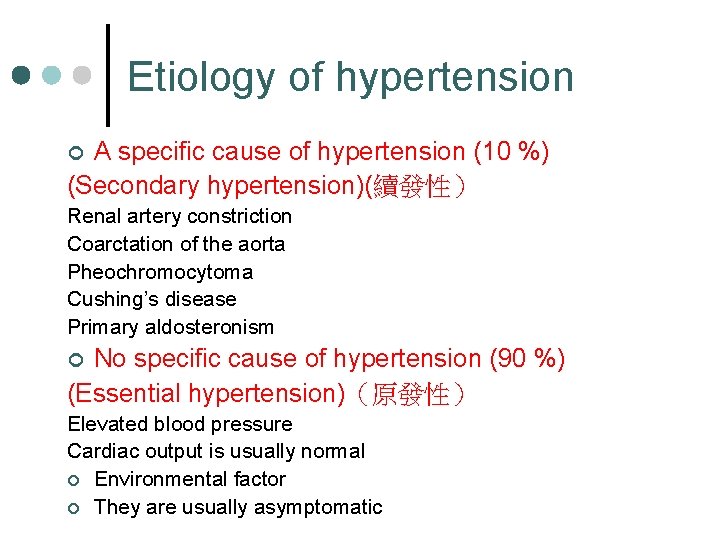
Etiology of hypertension A specific cause of hypertension (10 %) (Secondary hypertension)(續發性) ¢ Renal artery constriction Coarctation of the aorta Pheochromocytoma Cushing’s disease Primary aldosteronism No specific cause of hypertension (90 %) (Essential hypertension)(原發性) ¢ Elevated blood pressure Cardiac output is usually normal ¢ Environmental factor ¢ They are usually asymptomatic
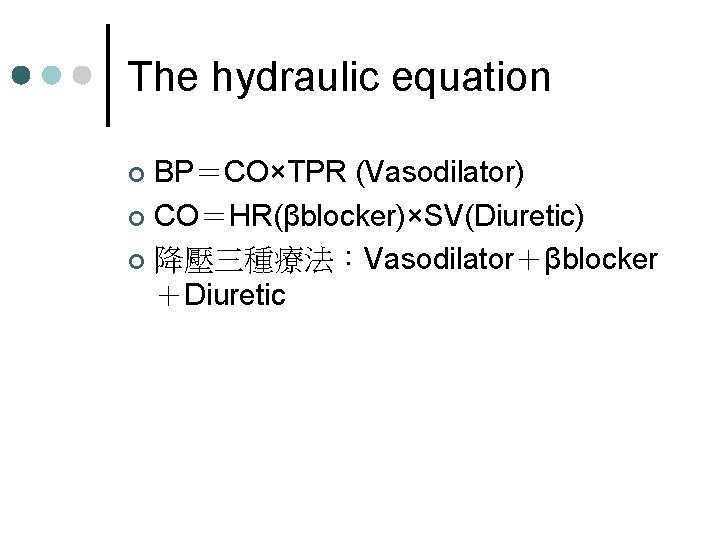
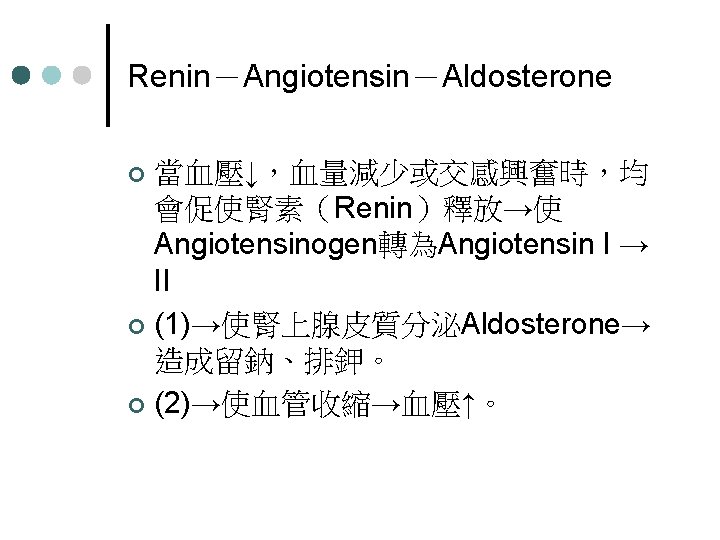
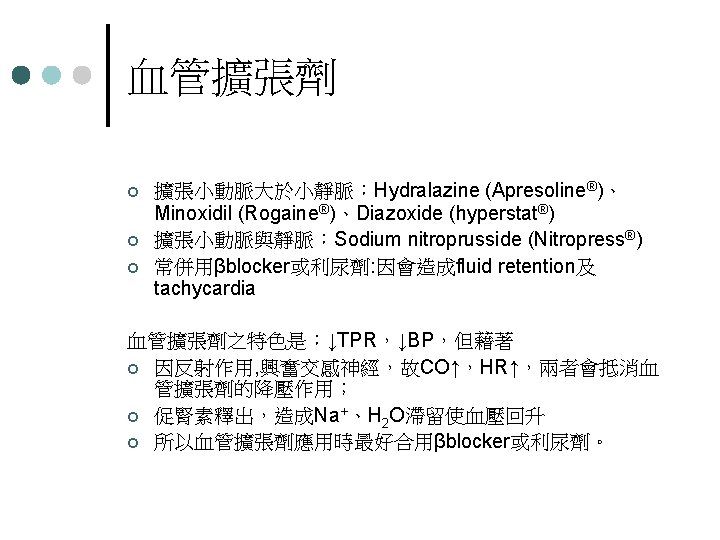
The hydraulic equation BP=CO×TPR (Vasodilator) ¢ CO=HR(βblocker)×SV(Diuretic) ¢ 降壓三種療法:Vasodilator+βblocker +Diuretic ¢
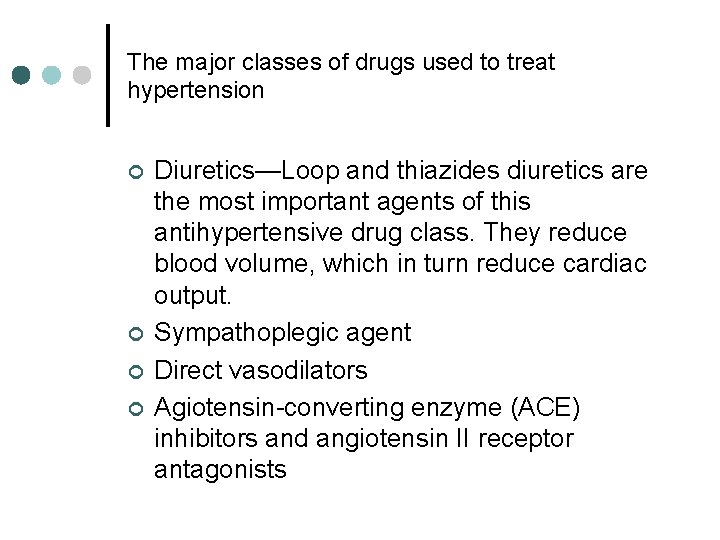
The major classes of drugs used to treat hypertension ¢ ¢ Diuretics—Loop and thiazides diuretics are the most important agents of this antihypertensive drug class. They reduce blood volume, which in turn reduce cardiac output. Sympathoplegic agent Direct vasodilators Agiotensin-converting enzyme (ACE) inhibitors and angiotensin II receptor antagonists
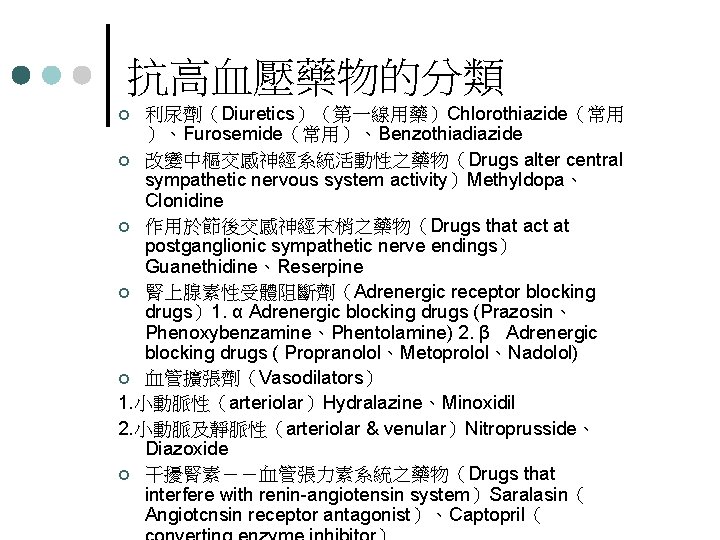
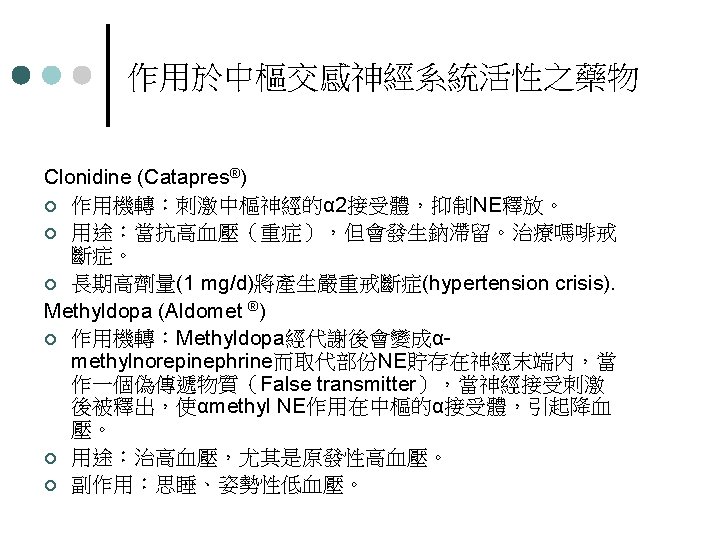
抗高血壓藥物的分類 利尿劑(Diuretics)(第一線用藥)Chlorothiazide(常用 )、Furosemide(常用)、Benzothiadiazide ¢ 改變中樞交感神經系統活動性之藥物(Drugs alter central sympathetic nervous system activity)Methyldopa、 Clonidine ¢ 作用於節後交感神經末梢之藥物(Drugs that act at postganglionic sympathetic nerve endings) Guanethidine、Reserpine ¢ 腎上腺素性受體阻斷劑(Adrenergic receptor blocking drugs)1. α Adrenergic blocking drugs (Prazosin、 Phenoxybenzamine、Phentolamine) 2. β Adrenergic blocking drugs ( Propranolol、Metoprolol、Nadolol) ¢ 血管擴張劑(Vasodilators) 1. 小動脈性(arteriolar)Hydralazine、Minoxidil 2. 小動脈及靜脈性(arteriolar & venular)Nitroprusside、 Diazoxide ¢ 干擾腎素--血管張力素系統之藥物(Drugs that interfere with renin-angiotensin system)Saralasin( Angiotcnsin receptor antagonist)、Captopril( ¢
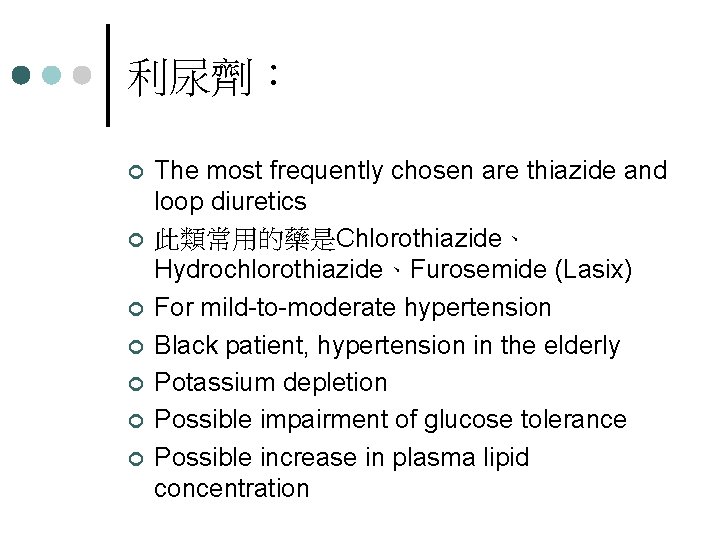
利尿劑: ¢ ¢ ¢ ¢ The most frequently chosen are thiazide and loop diuretics 此類常用的藥是Chlorothiazide、 Hydrochlorothiazide、Furosemide (Lasix) For mild-to-moderate hypertension Black patient, hypertension in the elderly Potassium depletion Possible impairment of glucose tolerance Possible increase in plasma lipid concentration
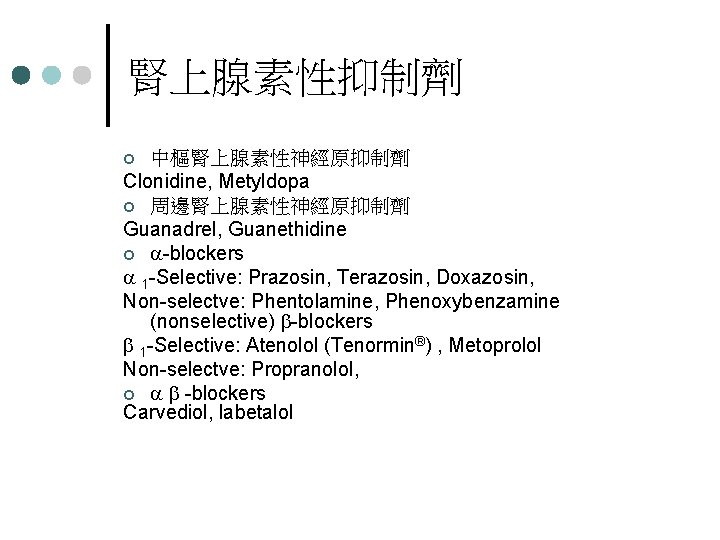
腎上腺素性抑制劑 中樞腎上腺素性神經原抑制劑 Clonidine, Metyldopa ¢ 周邊腎上腺素性神經原抑制劑 Guanadrel, Guanethidine ¢ -blockers 1 -Selective: Prazosin, Terazosin, Doxazosin, Non-selectve: Phentolamine, Phenoxybenzamine (nonselective) -blockers 1 -Selective: Atenolol (Tenormin®) , Metoprolol Non-selectve: Propranolol, ¢ -blockers Carvediol, labetalol ¢
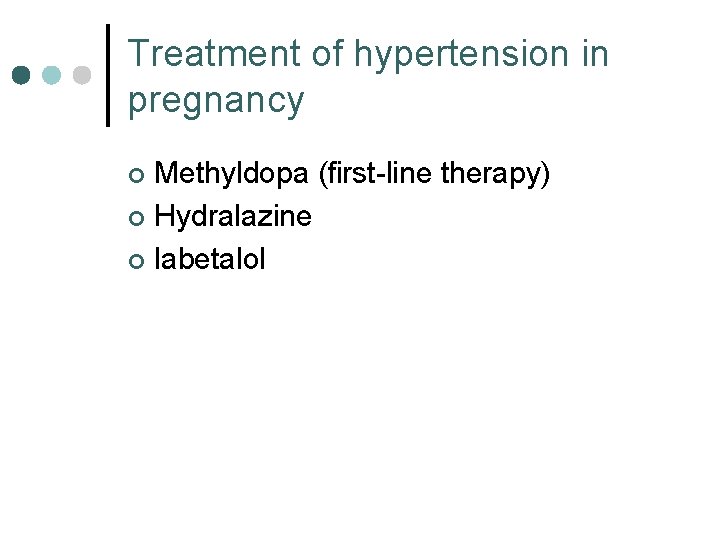
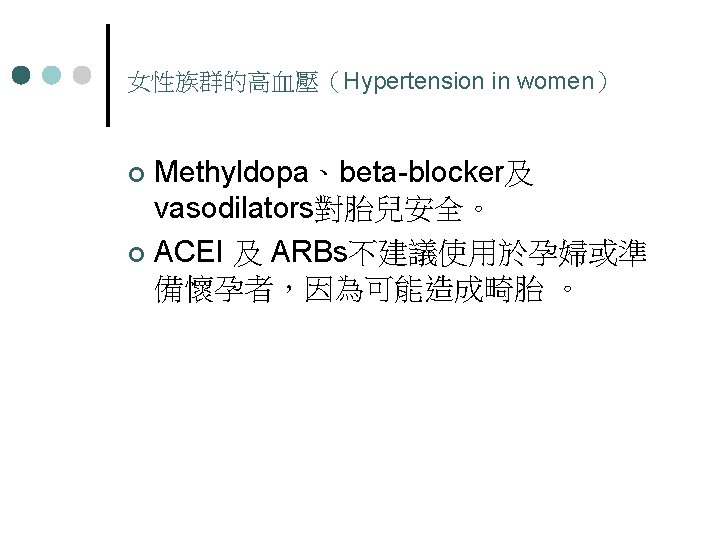
Treatment of hypertension in pregnancy Methyldopa (first-line therapy) ¢ Hydralazine ¢ labetalol ¢
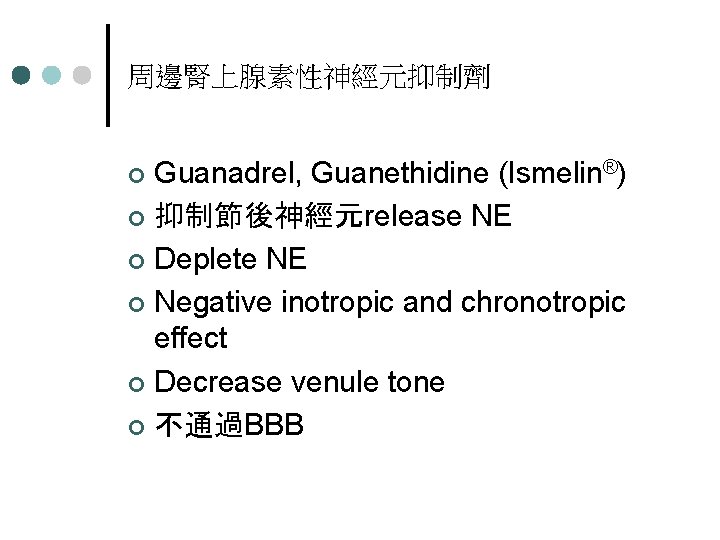
周邊腎上腺素性神經元抑制劑 Guanadrel, Guanethidine (Ismelin®) ¢ 抑制節後神經元release NE ¢ Deplete NE ¢ Negative inotropic and chronotropic effect ¢ Decrease venule tone ¢ 不通過BBB ¢
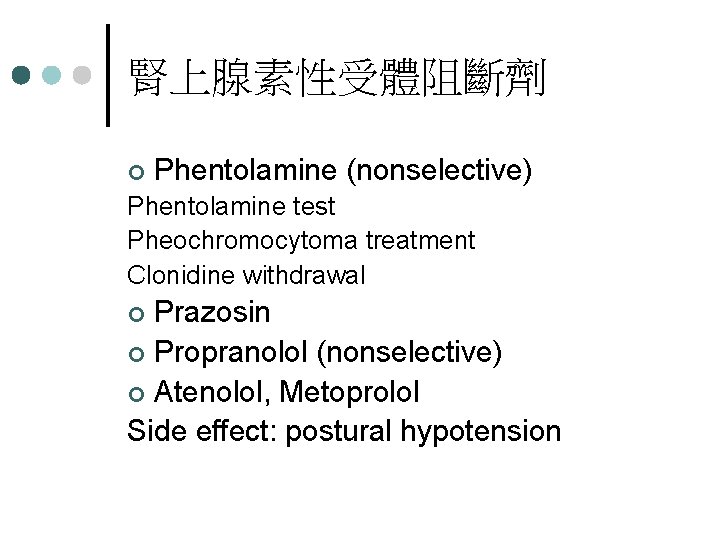
腎上腺素性受體阻斷劑 ¢ Phentolamine (nonselective) Phentolamine test Pheochromocytoma treatment Clonidine withdrawal Prazosin ¢ Propranolol (nonselective) ¢ Atenolol, Metoprolol Side effect: postural hypotension ¢
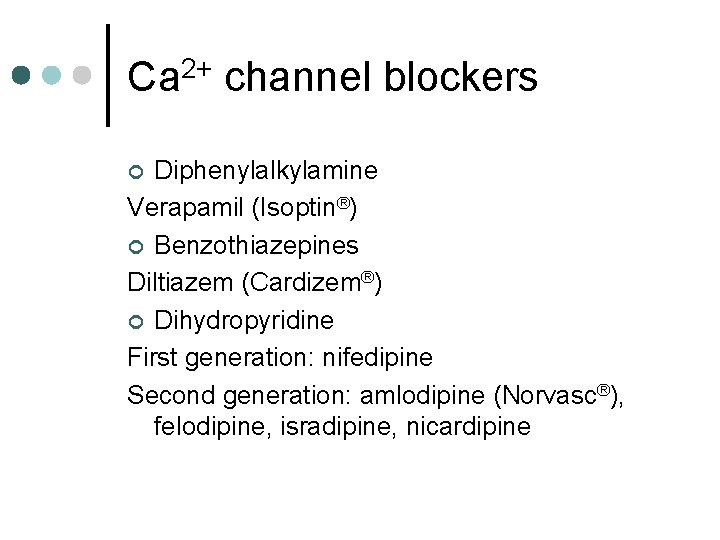
Ca 2+ channel blockers Diphenylalkylamine Verapamil (Isoptin®) ¢ Benzothiazepines Diltiazem (Cardizem®) ¢ Dihydropyridine First generation: nifedipine Second generation: amlodipine (Norvasc®), felodipine, isradipine, nicardipine ¢
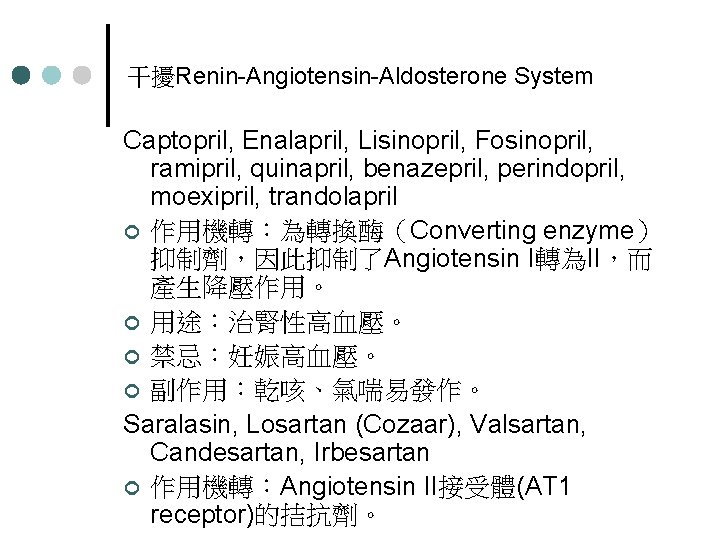
干擾Renin-Angiotensin-Aldosterone System Captopril, Enalapril, Lisinopril, Fosinopril, ramipril, quinapril, benazepril, perindopril, moexipril, trandolapril ¢ 作用機轉:為轉換酶(Converting enzyme) 抑制劑,因此抑制了Angiotensin I轉為II,而 產生降壓作用。 ¢ 用途:治腎性高血壓。 ¢ 禁忌:妊娠高血壓。 ¢ 副作用:乾咳、氣喘易發作。 Saralasin, Losartan (Cozaar), Valsartan, Candesartan, Irbesartan ¢ 作用機轉:Angiotensin II接受體(AT 1 receptor)的拮抗劑。
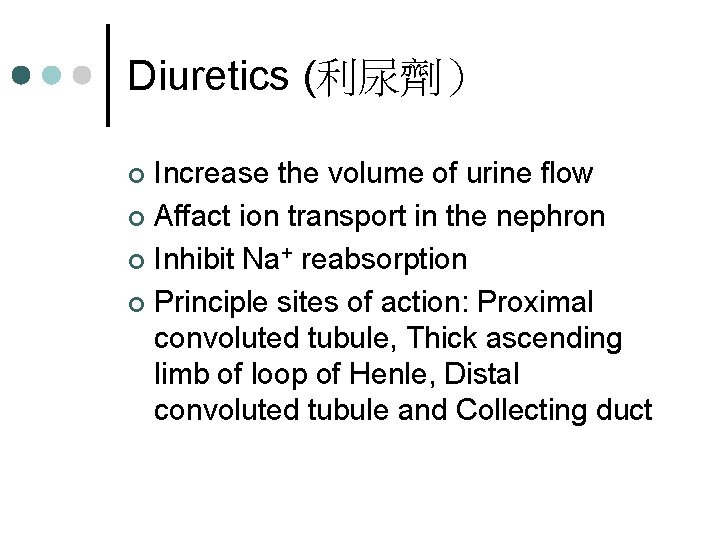
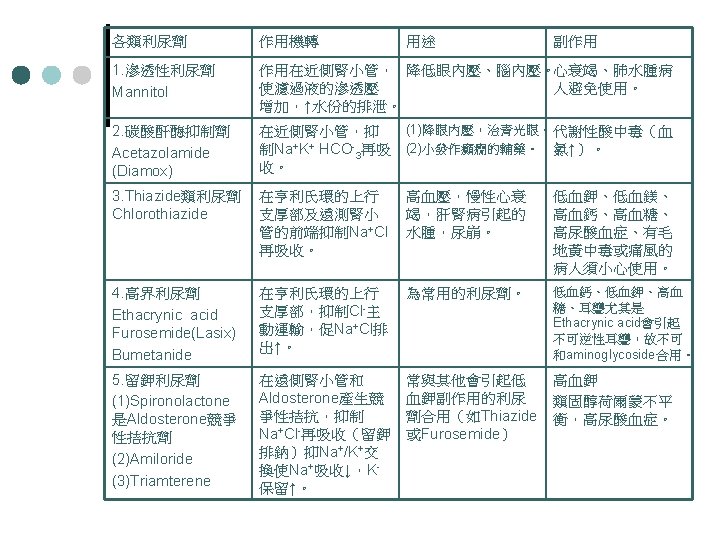
Diuretics (利尿劑) Increase the volume of urine flow ¢ Affact ion transport in the nephron ¢ Inhibit Na+ reabsorption ¢ Principle sites of action: Proximal convoluted tubule, Thick ascending limb of loop of Henle, Distal convoluted tubule and Collecting duct ¢
Five major classes of diuretics Carbonic anhydrase inhibitors ¢ Loop diuretics ¢ Thiazide diuretics ¢ Osmotic diuretics ¢ Potassium-sparing diuretics ¢
Pharmacotherapy Stable angina Organic nitrates, -adrenoceptor antagonist or calcium antagonist together with statin, antipletelet drug ¢ Unstable angina Aspirin, heparin or platelet glycoprotein receptor antagonists ¢ Variant angina Organic nitrates, calcium antagonists ¢
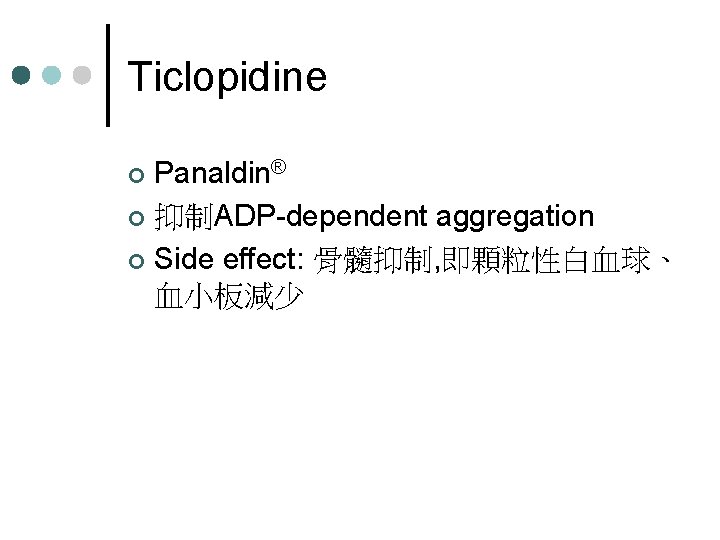
Ticlopidine Panaldin® ¢ 抑制ADP-dependent aggregation ¢ Side effect: 骨髓抑制, 即顆粒性白血球、 血小板減少 ¢
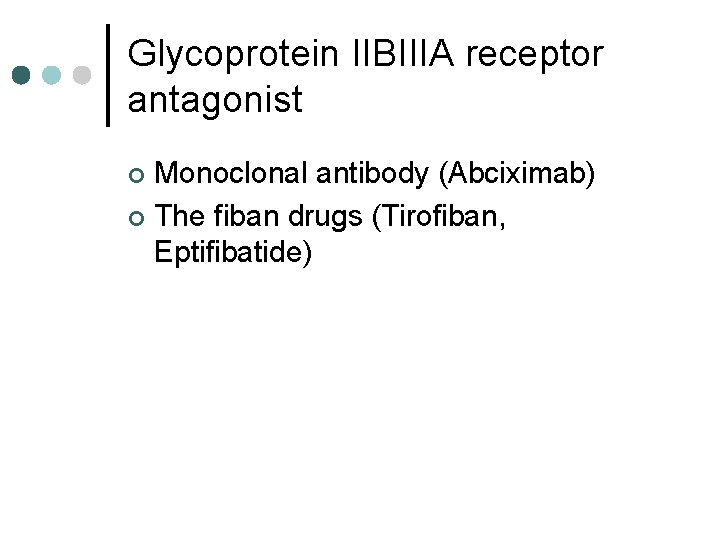
Glycoprotein IIBIIIA receptor antagonist Monoclonal antibody (Abciximab) ¢ The fiban drugs (Tirofiban, Eptifibatide) ¢
Drugs That Affect The Cardiovascular System ¢ ¢ ¢ ¢ Introduction Antihypertensive drugs Drugs used in angina Antiarrhythmic Drugs Used in Heart Failure Drugs That Improve Cardiac Contractility Drugs That Affect Blood Lipid-Lowering Drugs
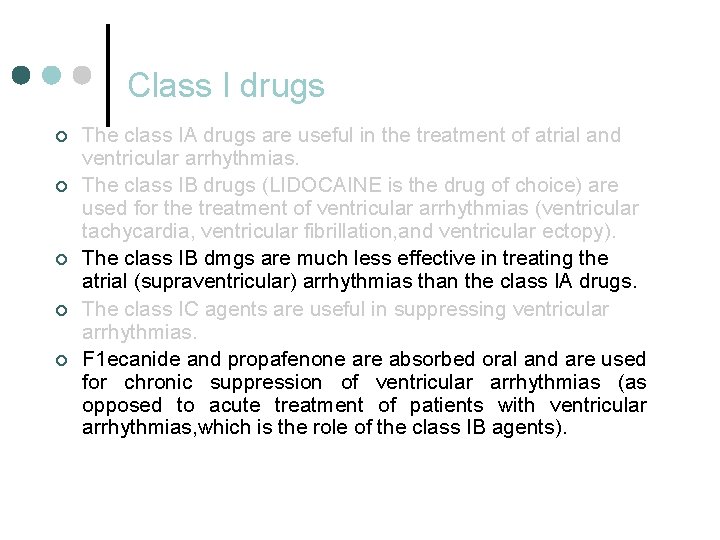
Class I drugs ¢ ¢ ¢ The class IA drugs are useful in the treatment of atrial and ventricular arrhythmias. The class IB drugs (LIDOCAINE is the drug of choice) are used for the treatment of ventricular arrhythmias (ventricular tachycardia, ventricular fibrillation, and ventricular ectopy). The class IB dmgs are much less effective in treating the atrial (supraventricular) arrhythmias than the class IA drugs. The class IC agents are useful in suppressing ventricular arrhythmias. F 1 ecanide and propafenone are absorbed oral and are used for chronic suppression of ventricular arrhythmias (as opposed to acute treatment of patients with ventricular arrhythmias, which is the role of the class IB agents).
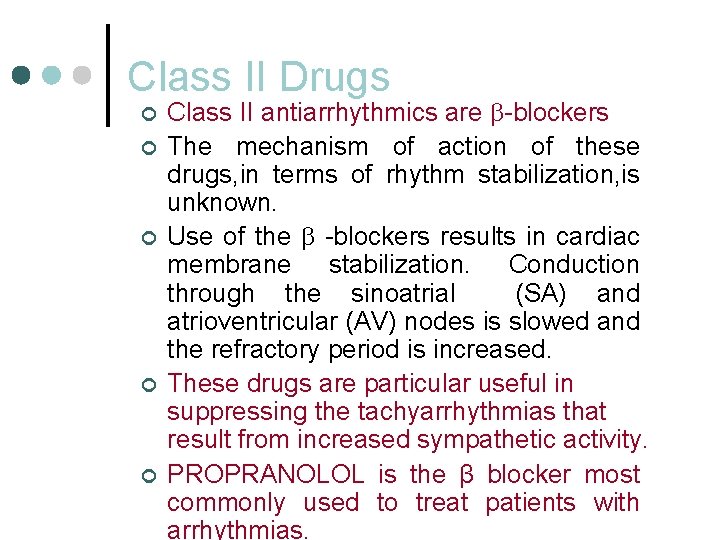
Class II Drugs ¢ ¢ ¢ Class II antiarrhythmics are -blockers The mechanism of action of these drugs, in terms of rhythm stabilization, is unknown. Use of the -blockers results in cardiac membrane stabilization. Conduction through the sinoatrial (SA) and atrioventricular (AV) nodes is slowed and the refractory period is increased. These drugs are particular useful in suppressing the tachyarrhythmias that result from increased sympathetic activity. PROPRANOLOL is the β blocker most commonly used to treat patients with arrhythmias.
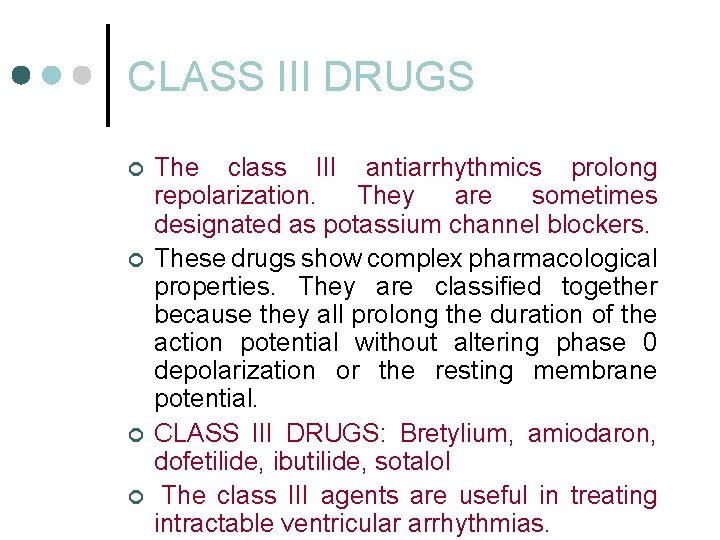
CLASS III DRUGS ¢ ¢ The class III antiarrhythmics prolong repolarization. They are sometimes designated as potassium channel blockers. These drugs show complex pharmacological properties. They are classified together because they all prolong the duration of the action potential without altering phase 0 depolarization or the resting membrane potential. CLASS III DRUGS: Bretylium, amiodaron, dofetilide, ibutilide, sotalol The class III agents are useful in treating intractable ventricular arrhythmias.
CLASS IV DRUGS (CALCIUM CHANNEL BLOCKER) ¢ ¢ ¢ The class IV antiarrhythmics are the calcium channel blockers. These dugs slow conduction through the AV node and increase the effective refractory period in the AV node. These actions may terminate reentrant arrhythmias that require the AV node for conduction. Some calcium channel blockers have a greater effect on the heart than on the vascular smooth muscle. These drugs block the slow inward calcium current during phases 0 and 2 of the cardiac cycle. By slowing the inward calcium current, these drugs slow conduction and prolong the effective refractory pedod, especially in the AV node. The calcium channel blockers are more efrective against atrial than ventricular arrhythmias. The side effects of these drugs are the result of their other actions, such as vasodilation.
OTHER ANTIARRHYTHMIC DRUGS ¢ ¢ ADENOSINE is the drug of choice for the treatment of paroxysmal supraventricular tachycardia (PSVT). Adenosine is given intravenously and has an exceedingly shod half-life (seconds). It depresses AV and sinus node activity. Because the most common form of paroxysmal supraventdcular tachycardia involves a reentrant pathway, adenosine is effective terminating the arrhythmia. DIGOXIN is used to control the ventricular rate in atrial fibrillation or flutter. Digoxin slows conduction through the AV node and increases the refractory period of the AV node. This decreases the number and frequency of impulses that pass from the atria into ventricles. That's important when the atria are out control, as in flutter or fibrillation.
DRUGS THAT INCREASE HEART RATE ¢ Drug that can be used to increase head rate include ATROPINE, ISOPROTERENOL, and EPINEPHRINE.
Drugs That Affect The Cardiovascular System ¢ ¢ ¢ ¢ Introduction Antihypertensive drugs Drugs used in angina Antiarrhythmic Drugs Used in Heart Failure Drugs That Improve Cardiac Contractility Drugs That Affect Blood Lipid-Lowering Drugs
Etiology of Heart Failure Ischemic cardiomyopathy ¢ Hypertension ¢ Valvular disease ¢ Congenital abnormalities ¢
Pathophysiological Changes in Heart Failure ¢ ¢ ¢ ¢ Activation of Renin-Angiotensin- Vasopressin System Congestion of Blood Volume in Venous System Pulmonary Edema Increase in End Diastolic Pressure Hypertrophy & Cardiac Remodelling Tissue Perfusion ↓ Exercise Tolerance ↓
Goals of Therapy Reduce Symptom of Dyspnea and Fatigue ¢ Arrest Ventricular Hypertrophy or Remodellimg ¢ Increase Survival ¢
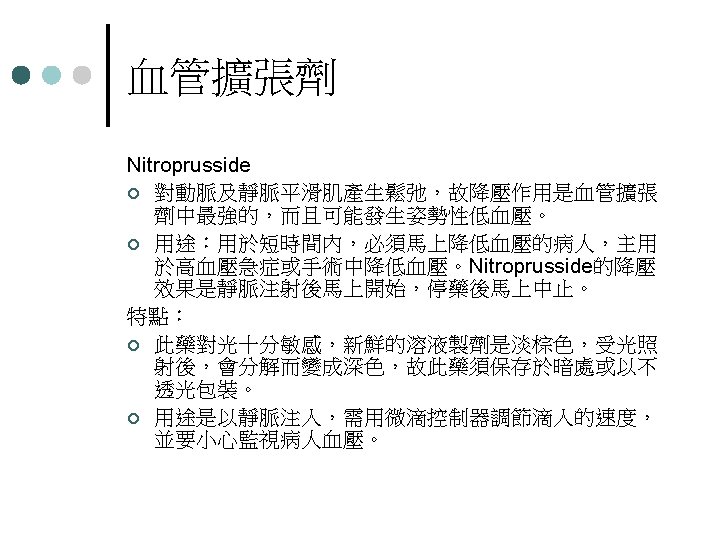
General Measures for Treatment of Patients with Chronic Heart Failure Obese patient → loss weight ¢ Diet Na+ Restriction ¢ Drugs for Reducing Preroad: Na + Nitroprusside, diuretic ¢ Drugs for Reducing Afterload: Vasodilators ¢ Drugs Preventing Cellular Hypertrophy ¢ Neurohormonal Antagonists: ACE inhibitor or Angiotensin II receptor blocker (ARB) ¢ -Adrenoceptor blockers: such as carvedilol, bisoprolol and metoprolol for class II and class III heart failure ¢
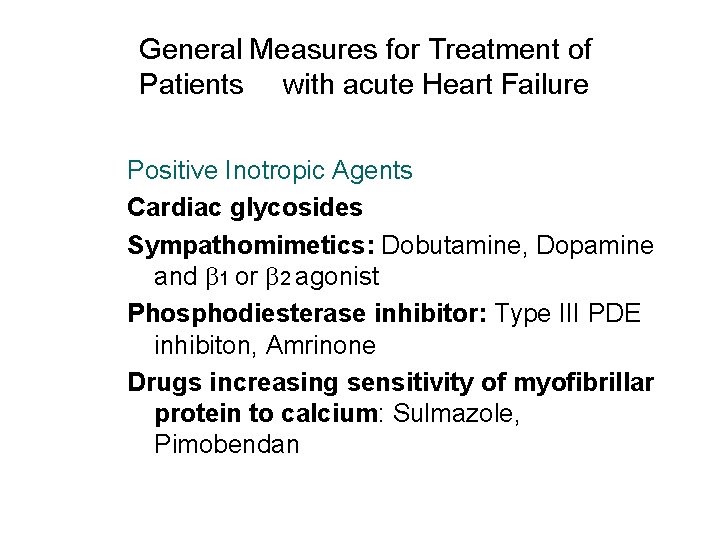
General Measures for Treatment of Patients with acute Heart Failure Positive Inotropic Agents Cardiac glycosides Sympathomimetics: Dobutamine, Dopamine and 1 or 2 agonist Phosphodiesterase inhibitor: Type III PDE inhibiton, Amrinone Drugs increasing sensitivity of myofibrillar protein to calcium: Sulmazole, Pimobendan
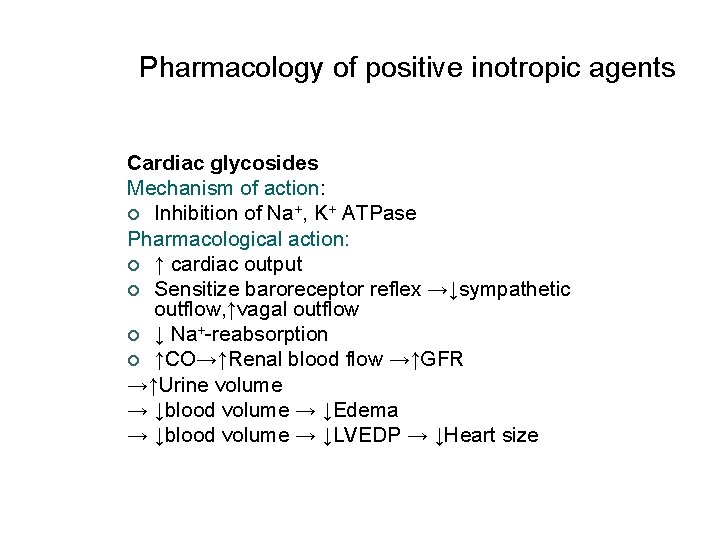
Pharmacology of positive inotropic agents Cardiac glycosides Mechanism of action: ¢ Inhibition of Na+, K+ ATPase Pharmacological action: ¢ ↑ cardiac output ¢ Sensitize baroreceptor reflex →↓sympathetic outflow, ↑vagal outflow ¢ ↓ Na+-reabsorption ¢ ↑CO→↑Renal blood flow →↑GFR →↑Urine volume → ↓blood volume → ↓Edema → ↓blood volume → ↓LVEDP → ↓Heart size
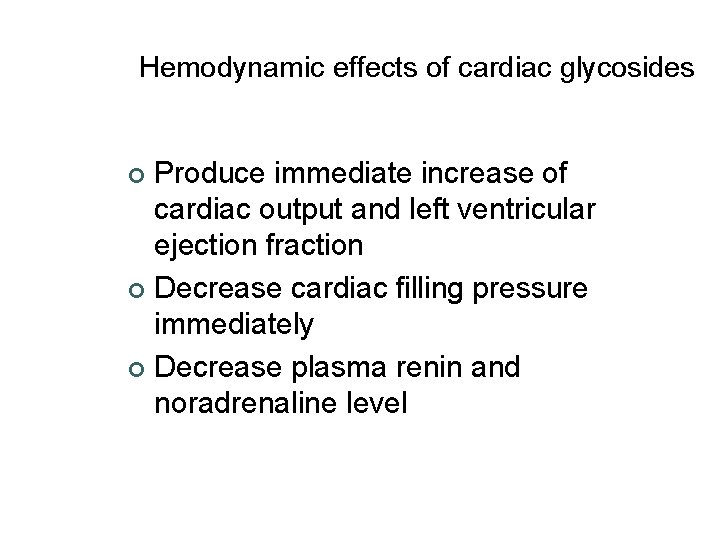
Hemodynamic effects of cardiac glycosides Produce immediate increase of cardiac output and left ventricular ejection fraction ¢ Decrease cardiac filling pressure immediately ¢ Decrease plasma renin and noradrenaline level ¢
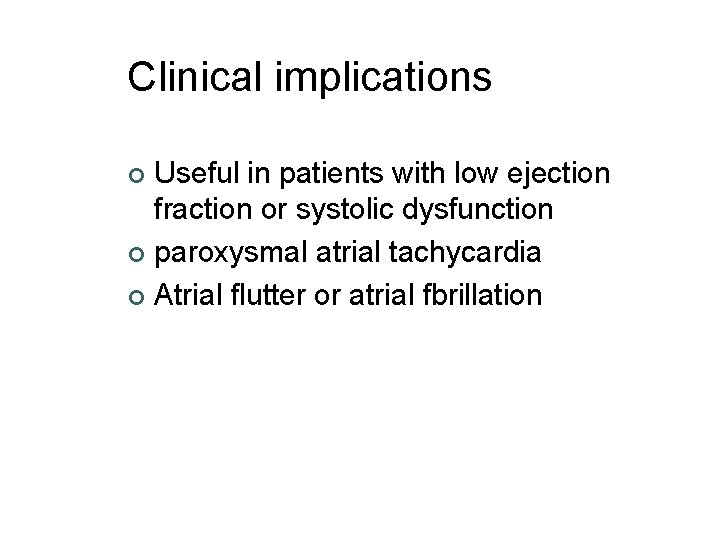
Clinical implications Useful in patients with low ejection fraction or systolic dysfunction ¢ paroxysmal atrial tachycardia ¢ Atrial flutter or atrial fbrillation ¢
Adverse effects of cardiac glycosides GI discomfort: nausea and vomiting ¢ Neurologic complaints: visual disturbance (green or yellow vision), confusion, disorientation ¢ Ventricular tachycardia or fibrillation ¢ Gynecomastia ¢
Factors influencing the effect of CG ¢ ¢ ¢ Hemodialysis →↑ K+ loss and Mg 2 + loss →↑ toxicity ↑ [Ca 2 +]o level →↑ toxicity Hypomagnesemia →↑ toxicity Hypothyroidism →↓ elimination of CG →↑ CG toxicity Thiazide & Furosemide →↑ K+ loss →↑ CG spironolactone →↑ K+ sparing →↓ CG toxicity
Antidote for CG K+ salt ¢ Cholestyramine ¢ Lidocaine or dilantin ¢ Digoxin-specific antibodies ¢ Electric shock ¢
Pharmacology of positive inotropic agents ¢ ¢ 1 -agonist (Prenalterol & Xamoterol) 2 -agonist (Pirbuterol , Salbutamol, Terbutaline) Dobutamine( 1> 2= α 1), Dopamine Phosphodiesterase inhibitor: Amrinone, milrinone Drugs that increase the sensitivity of myofibrillar protein to calcium: sulmazole, pimobendan