
CARDIOVASCULAR IMAGING Radiological Anatomy of the Chest Lung


- Slides: 59
CARDIOVASCULAR IMAGING
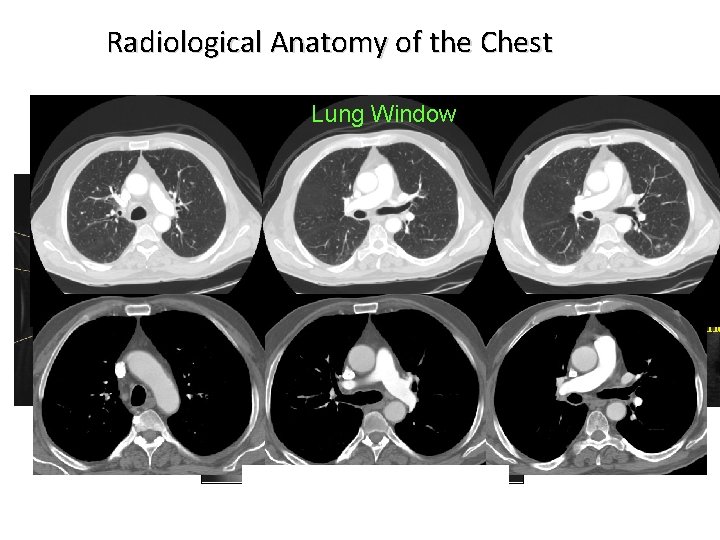
Radiological Anatomy of the Chest Lung Window Sagittal Axial Mediastinal Window Coronal
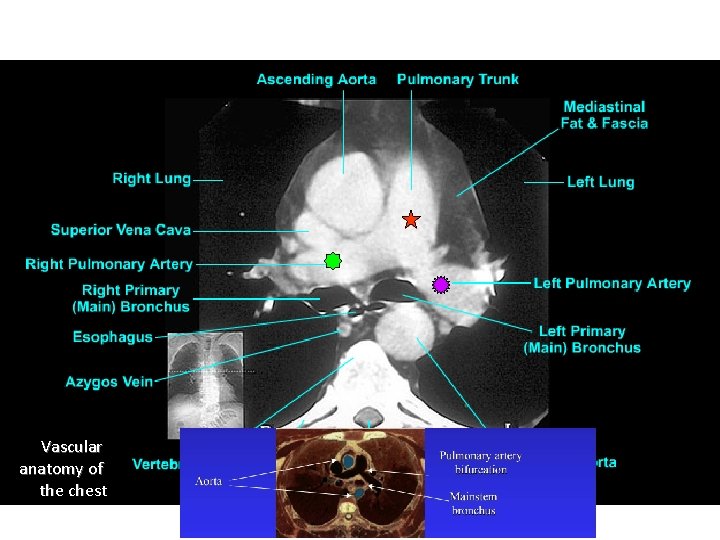
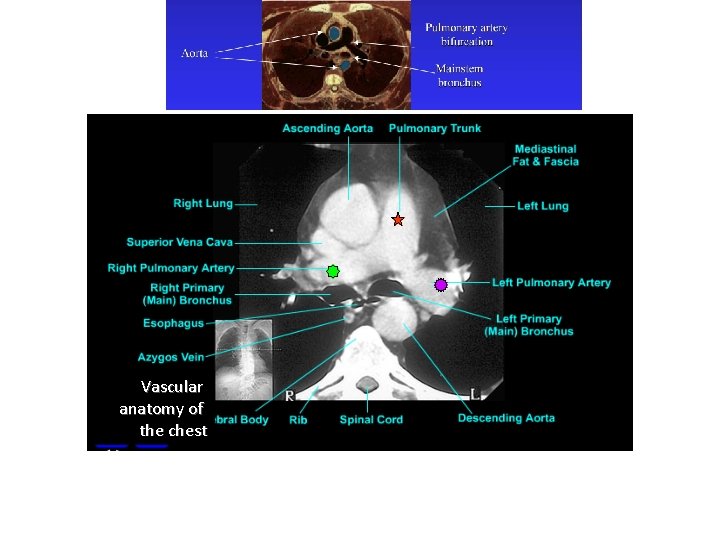
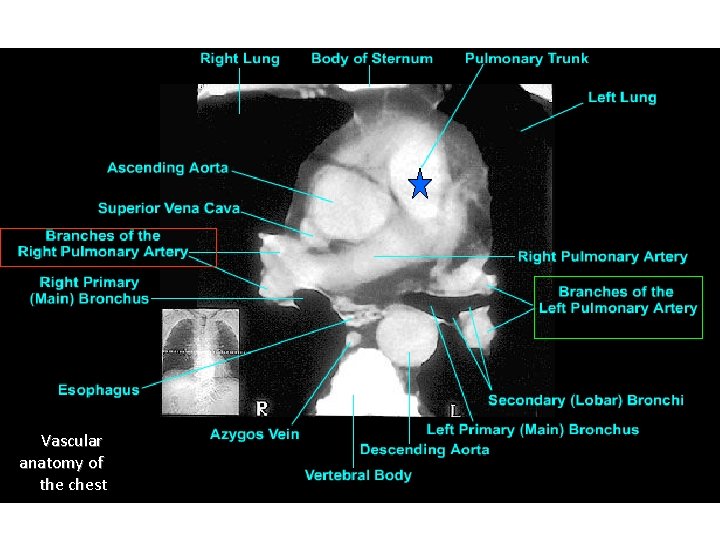
Vascular anatomy of the chest
Vascular anatomy of the chest
Vascular anatomy of the chest
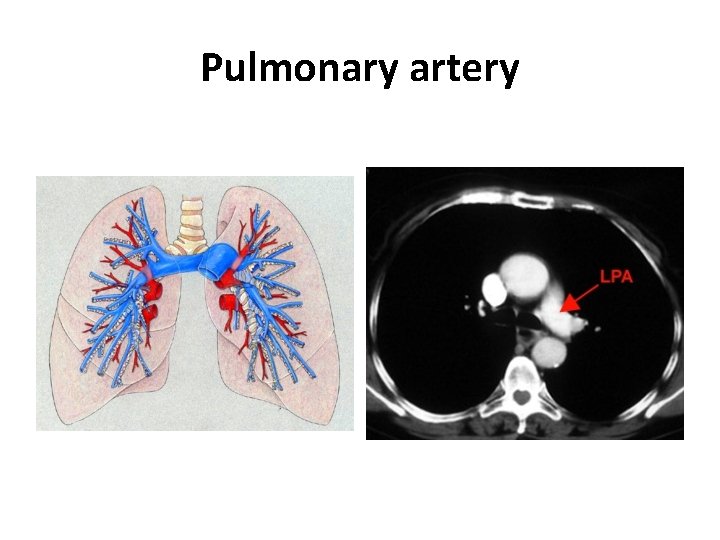
Pulmonary artery
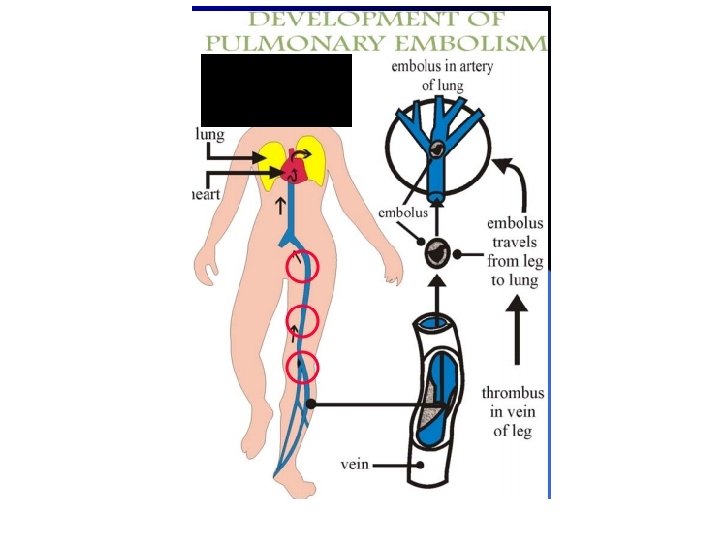
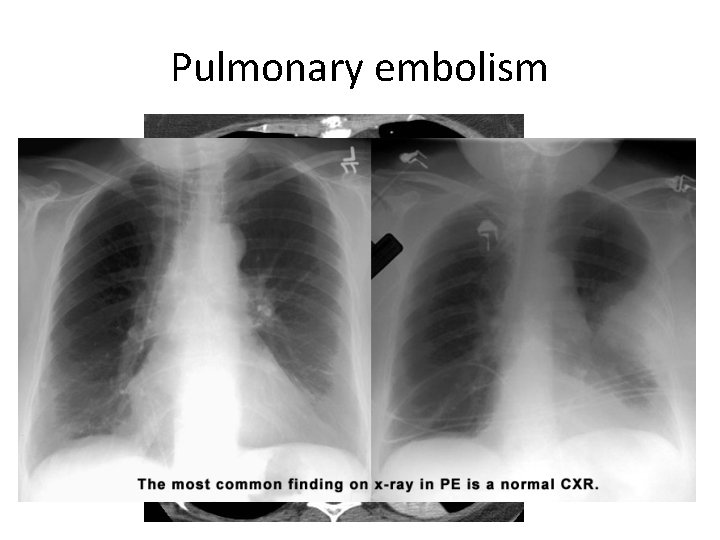
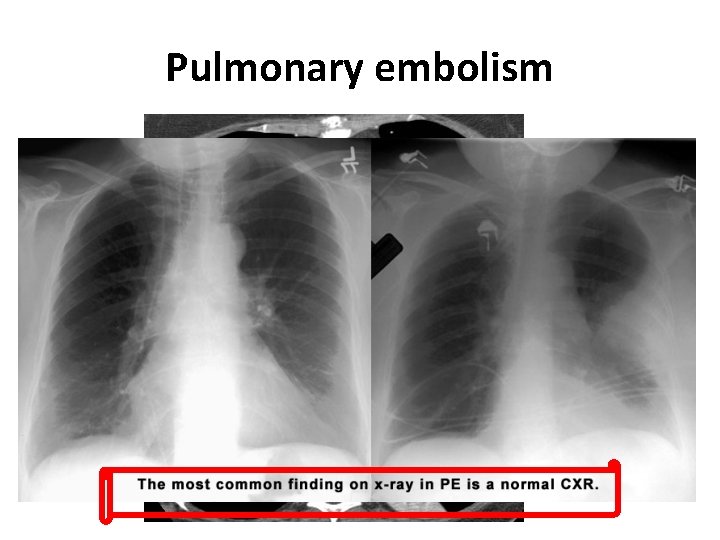
Pulmonary embolism
Pulmonary embolism
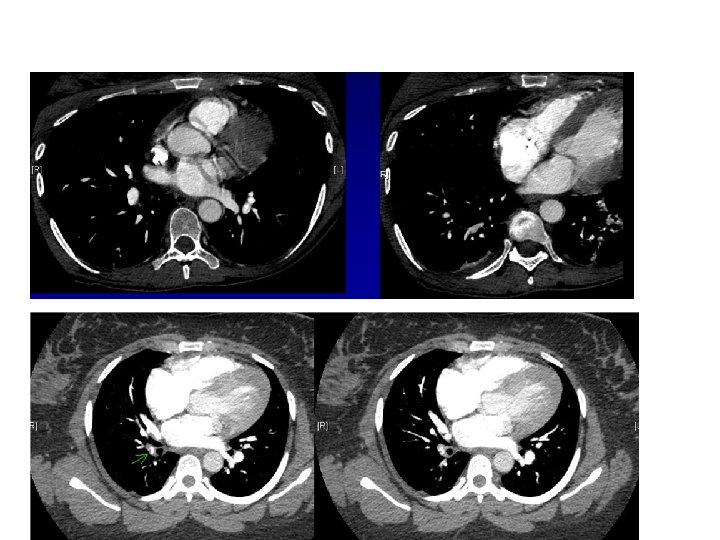
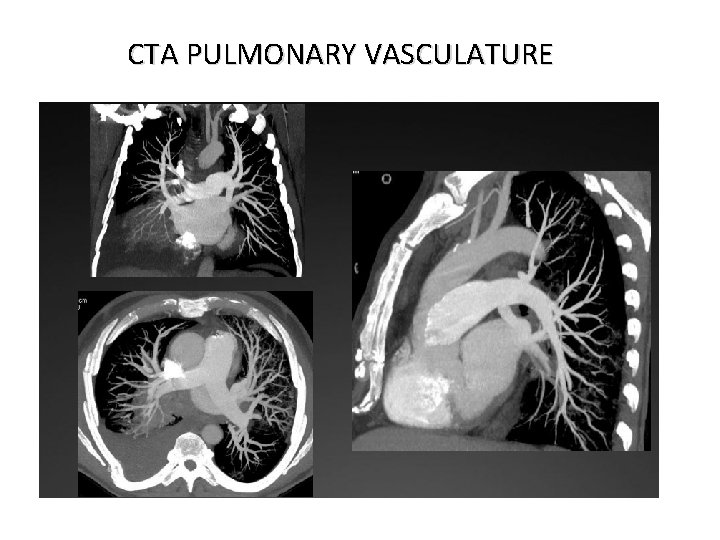
THE GOLD STANDARD FOR DIAGNOSIS OF PE IS CTA
CTA PULMONARY VASCULATURE
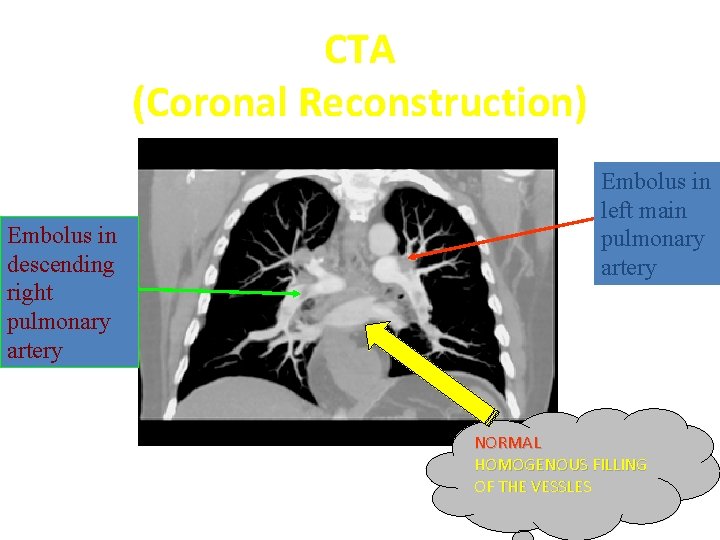
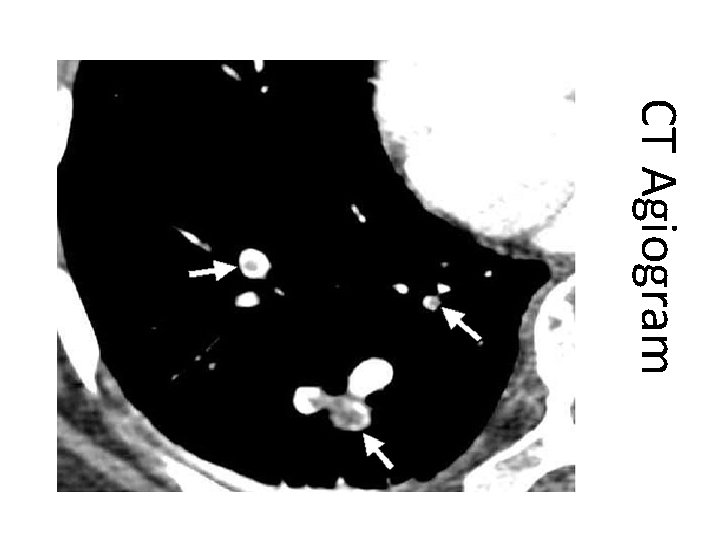
CTA (Coronal Reconstruction) Embolus in descending right pulmonary artery Embolus in left main pulmonary artery NORMAL HOMOGENOUS FILLING OF THE VESSLES
CT Agiogram
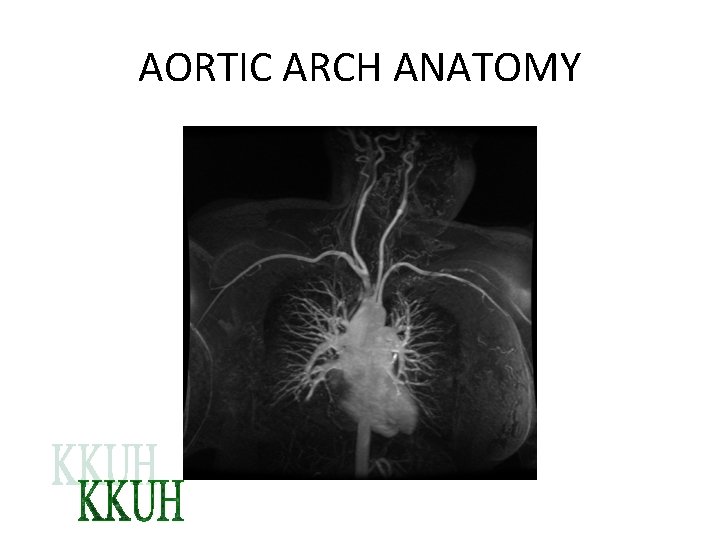
AORTIC ARCH ANATOMY
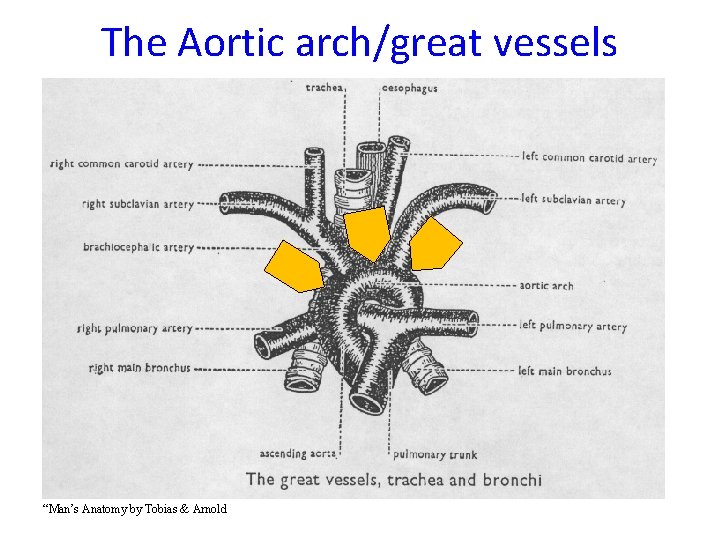
The Aortic arch/great vessels “Man’s Anatomy by Tobias & Arnold
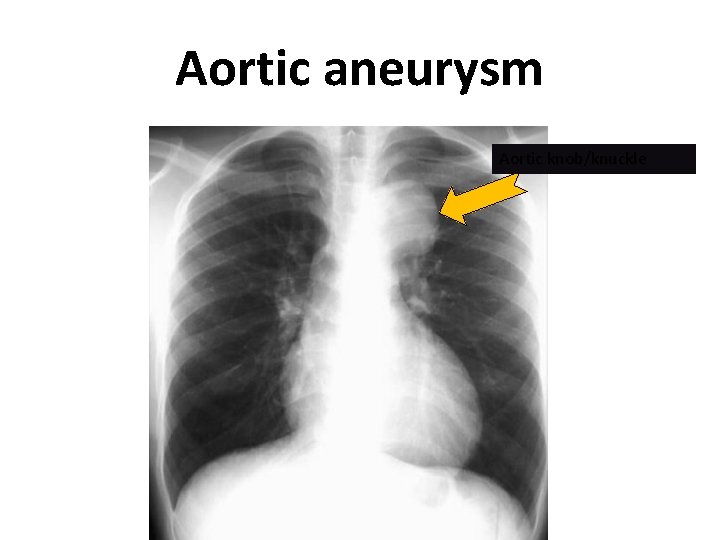
Aortic aneurysm Aortic knob/knuckle
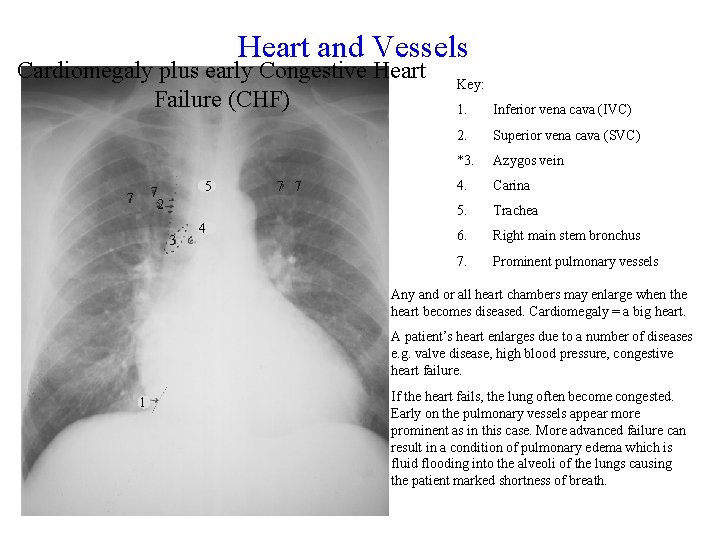
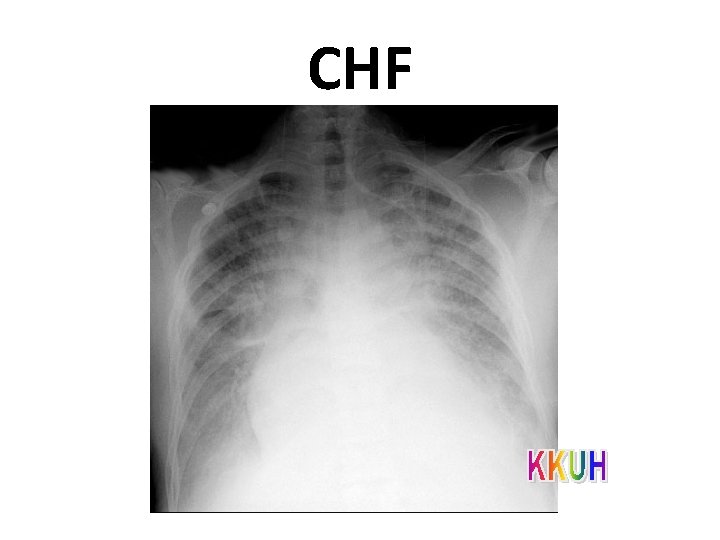
Heart and Vessels Cardiomegaly plus early Congestive Heart Failure (CHF) 5 7 2 7 3 4 7 7 Key: 1. Inferior vena cava (IVC) 2. Superior vena cava (SVC) *3. Azygos vein 4. Carina 5. Trachea 6. Right main stem bronchus 7. Prominent pulmonary vessels Any and or all heart chambers may enlarge when the heart becomes diseased. Cardiomegaly = a big heart. A patient’s heart enlarges due to a number of diseases e. g. valve disease, high blood pressure, congestive heart failure. 1 If the heart fails, the lung often become congested. Early on the pulmonary vessels appear more prominent as in this case. More advanced failure can result in a condition of pulmonary edema which is fluid flooding into the alveoli of the lungs causing the patient marked shortness of breath.
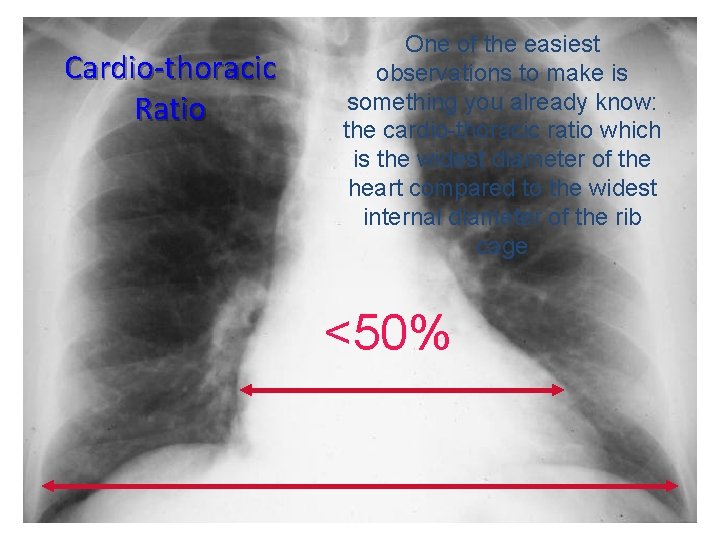
Cardio-thoracic Ratio One of the easiest observations to make is something you already know: the cardio-thoracic ratio which is the widest diameter of the heart compared to the widest internal diameter of the rib cage <50%
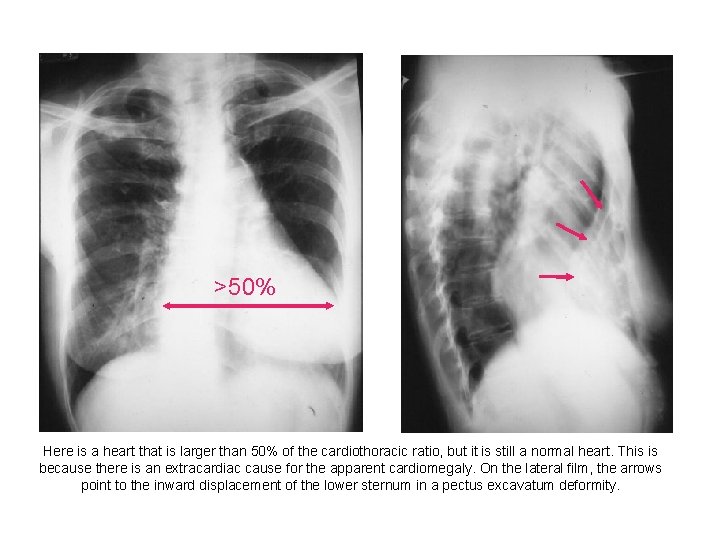
Sometimes, CTR is more than 50% But Heart is Normal • Extracardiac causes of cardiac enlargement –Portable AP films –Obesity –Pregnant –Ascites –Straight back syndrome –Pectus excavatum
>50% Here is a heart that is larger than 50% of the cardiothoracic ratio, but it is still a normal heart. This is because there is an extracardiac cause for the apparent cardiomegaly. On the lateral film, the arrows point to the inward displacement of the lower sternum in a pectus excavatum deformity.
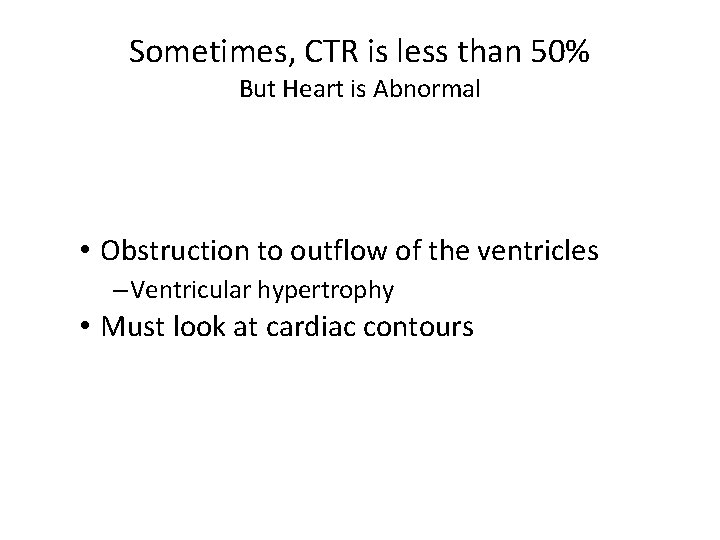
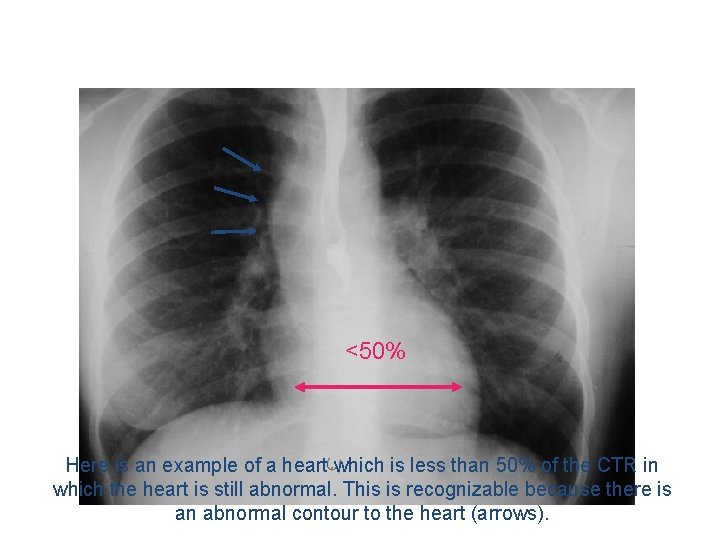
Sometimes, CTR is less than 50% But Heart is Abnormal • Obstruction to outflow of the ventricles – Ventricular hypertrophy • Must look at cardiac contours
<50% Here is an example of a heart which is less than 50% of the CTR in which the heart is still abnormal. This is recognizable because there is an abnormal contour to the heart (arrows).
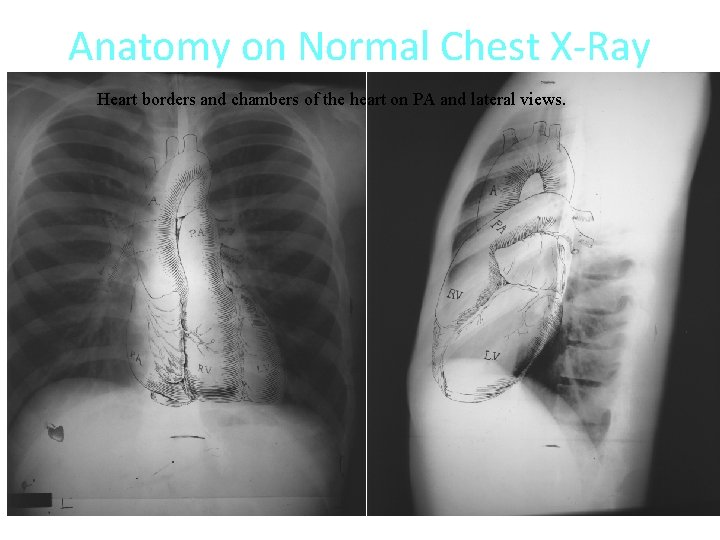
Anatomy on Normal Chest X-Ray Heart borders and chambers of the heart on PA and lateral views.
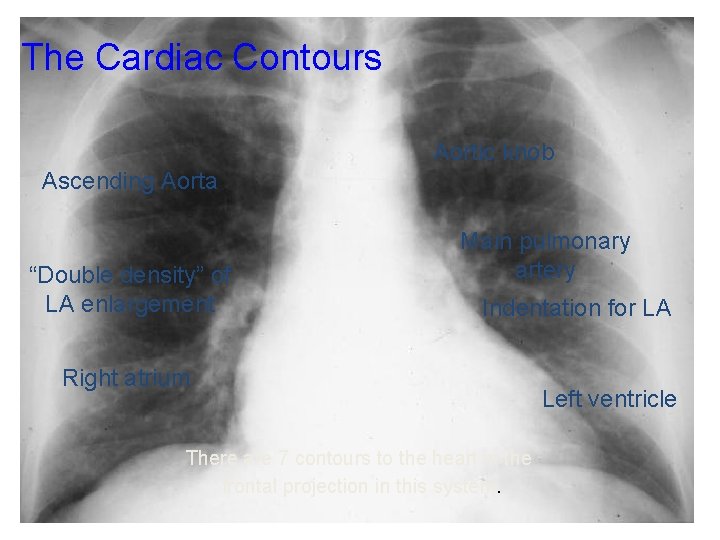
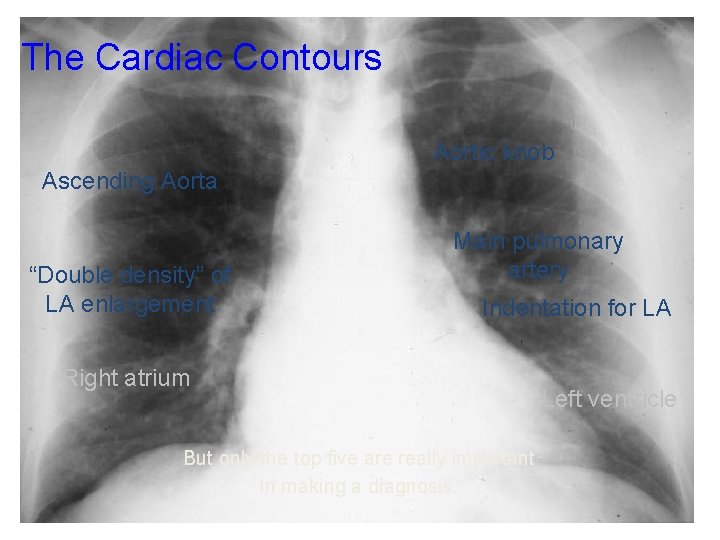
The Cardiac Contours Aortic knob Ascending Aorta “Double density” of LA enlargement Main pulmonary artery Indentation for LA Right atrium There are 7 contours to the heart in the frontal projection in this system. Left ventricle
The Cardiac Contours Aortic knob Ascending Aorta “Double density” of LA enlargement Main pulmonary artery Indentation for LA Right atrium But only the top five are really important in making a diagnosis. Left ventricle
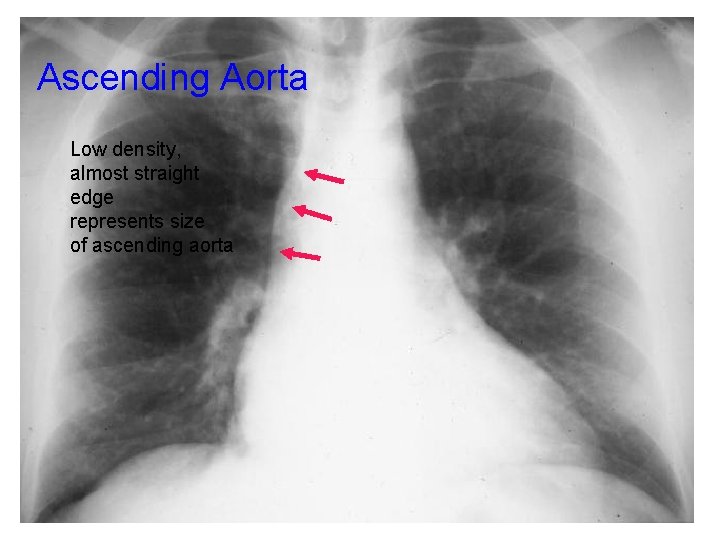
Ascending Aorta Low density, almost straight edge represents size of ascending aorta
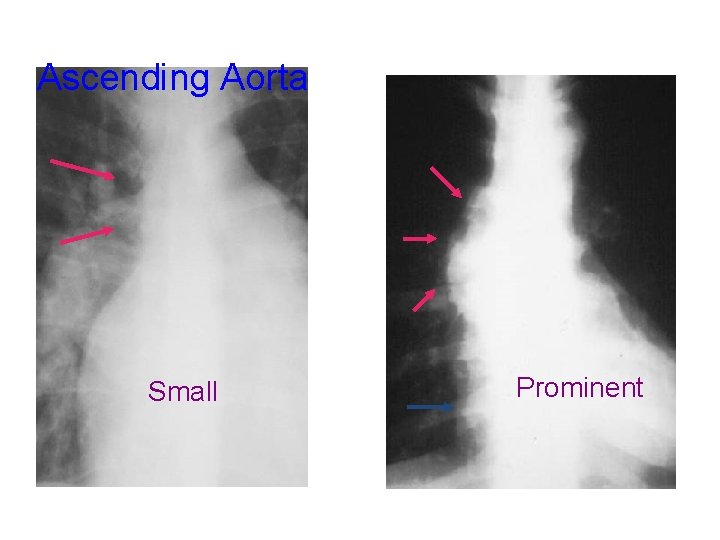
Ascending Aorta Small Prominent
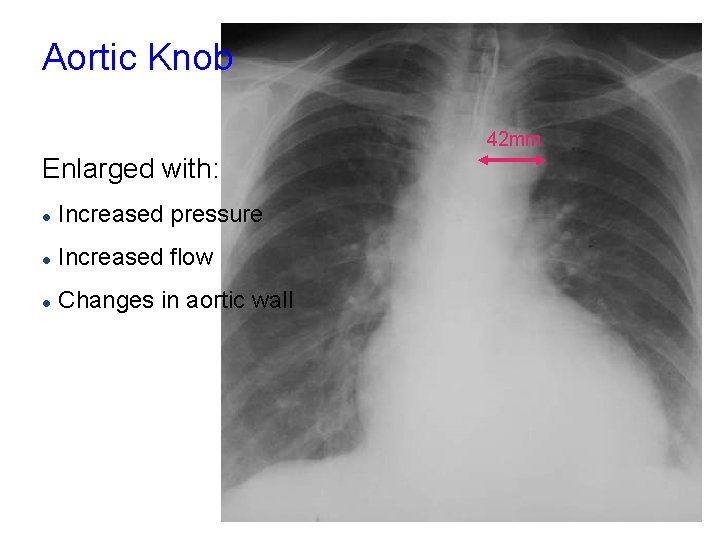
Aortic Knob 42 mm Enlarged with: l Increased pressure l Increased flow l Changes in aortic wall
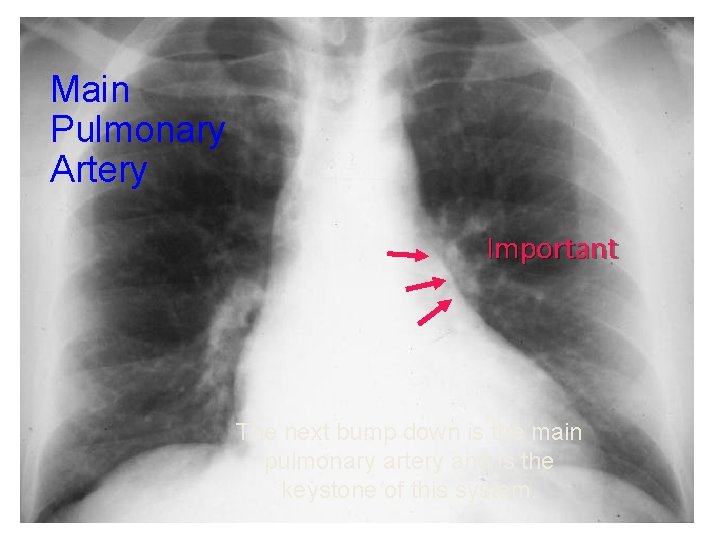
Main Pulmonary Artery Important The next bump down is the main pulmonary artery and is the keystone of this system.
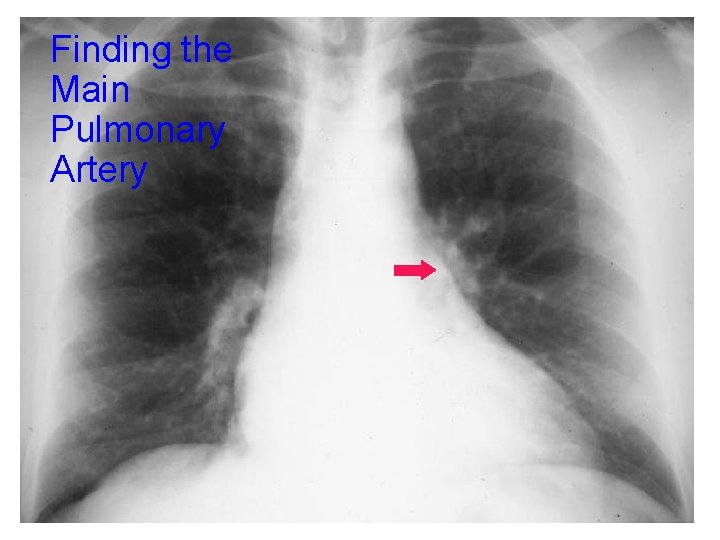
Finding the Main Pulmonary Artery
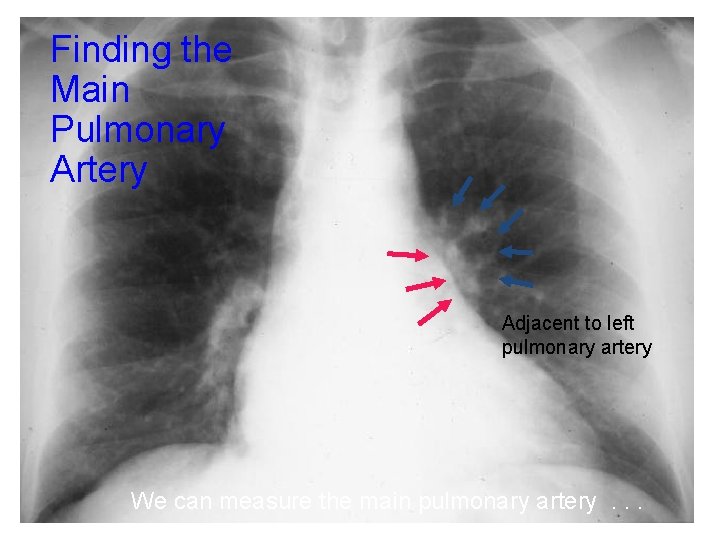
Finding the Main Pulmonary Artery Adjacent to left pulmonary artery We can measure the main pulmonary artery. . .
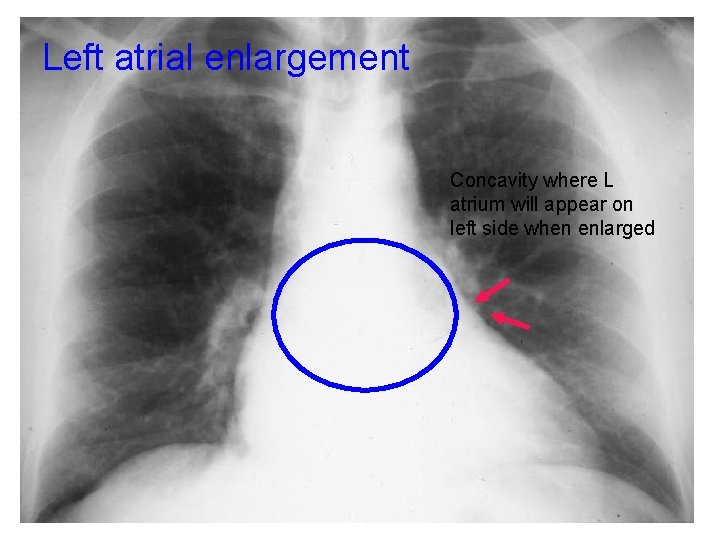
Left atrial enlargement Concavity where L atrium will appear on left side when enlarged
The Pulmonary Vasculature
Five States of the Pulmonary Vasculature • • • Normal Pulmonary venous hypertension Pulmonary arterial hypertension Increased flow Decreased flow
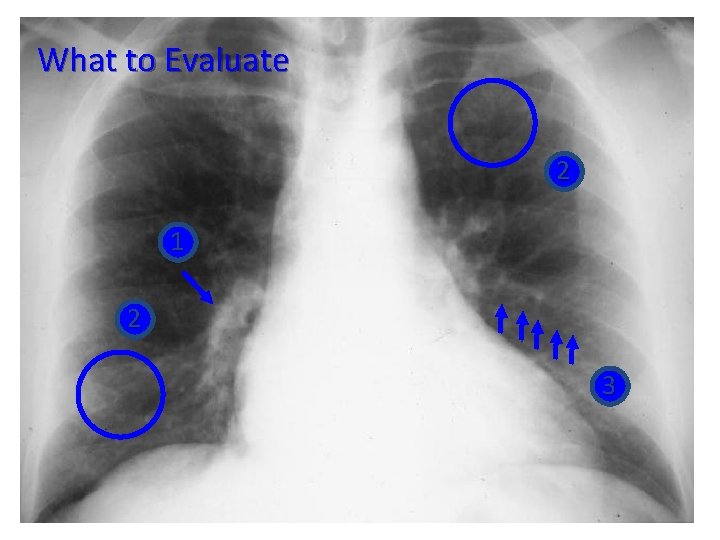
What to Evaluate 2 1 2 3
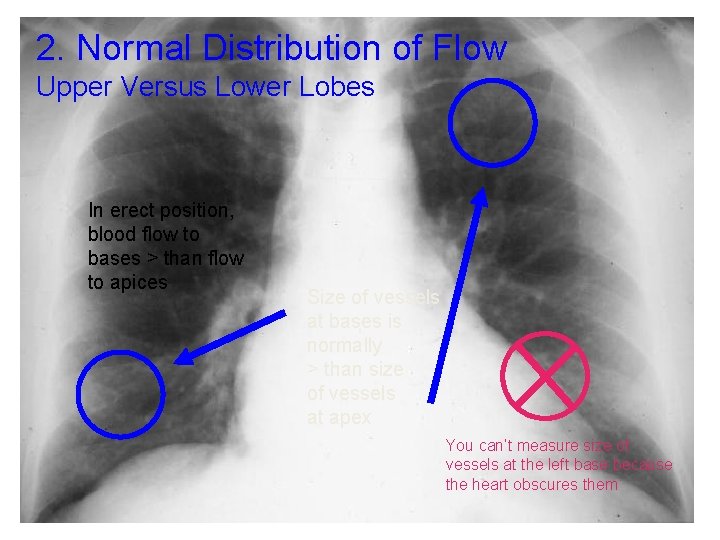
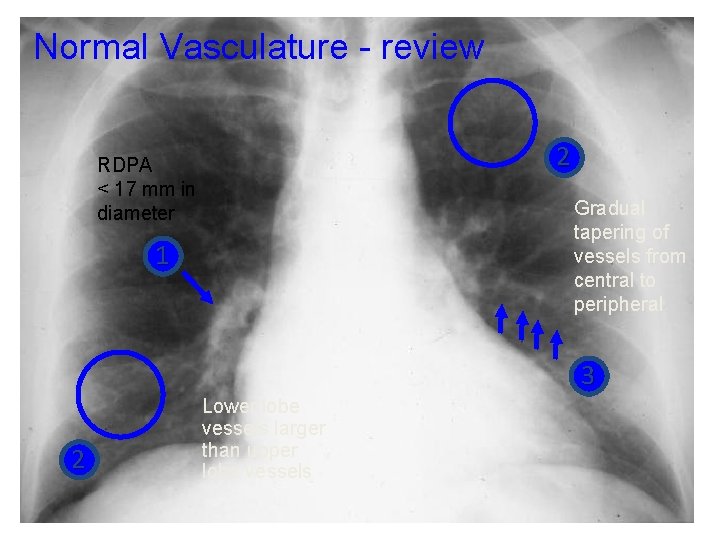
2. Normal Distribution of Flow Upper Versus Lower Lobes In erect position, blood flow to bases > than flow to apices Size of vessels at bases is normally > than size of vessels at apex You can’t measure size of vessels at the left base because the heart obscures them
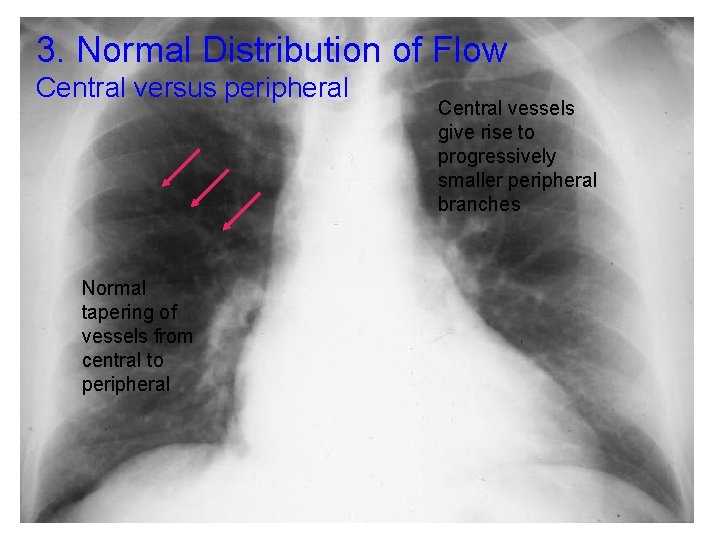
3. Normal Distribution of Flow Central versus peripheral Normal tapering of vessels from central to peripheral Central vessels give rise to progressively smaller peripheral branches
Normal Vasculature - review 2 RDPA < 17 mm in diameter Gradual tapering of vessels from central to peripheral 1 3 2 Lower lobe vessels larger than upper lobe vessels
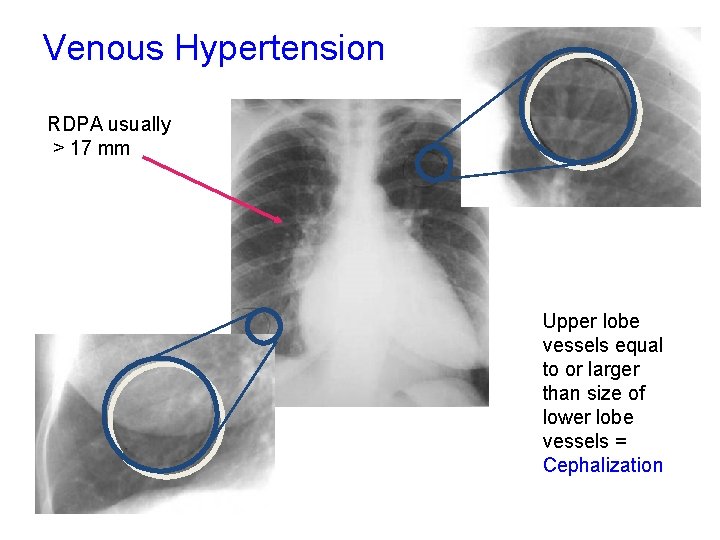
Venous Hypertension RDPA usually > 17 mm Upper lobe vessels equal to or larger than size of lower lobe vessels = Cephalization
The Pulmonary Vasculature l l l Normal Pulmonary venous hypertension Pulmonary arterial hypertension Increased flow Decreased flow - mostly unrecognizable even when it is present
CHF
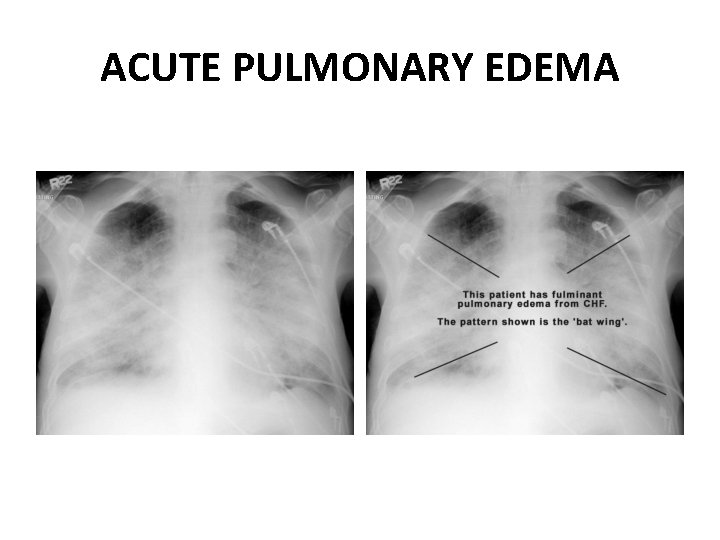
ACUTE PULMONARY EDEMA
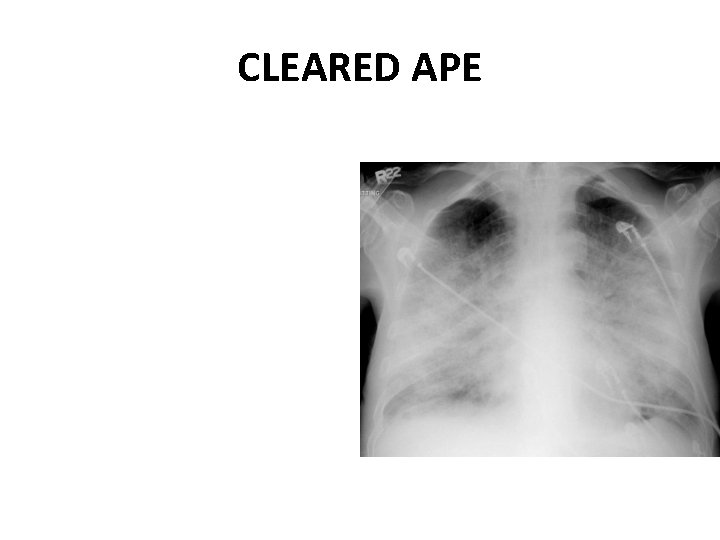
CLEARED APE
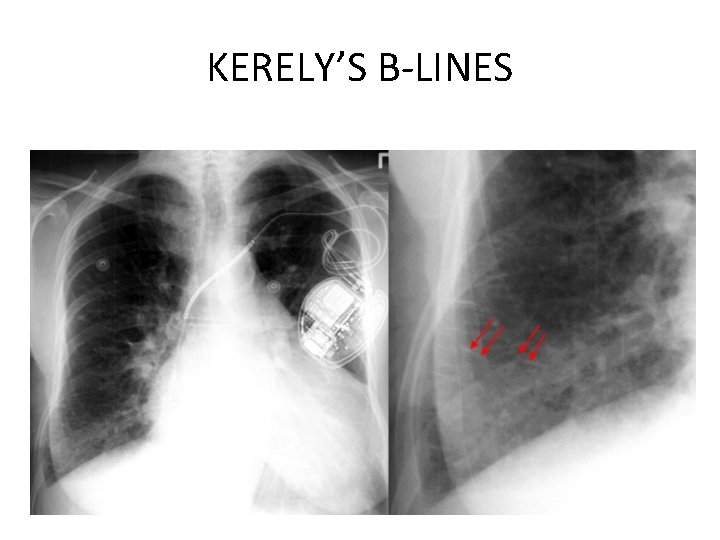
KERELY’S B-LINES
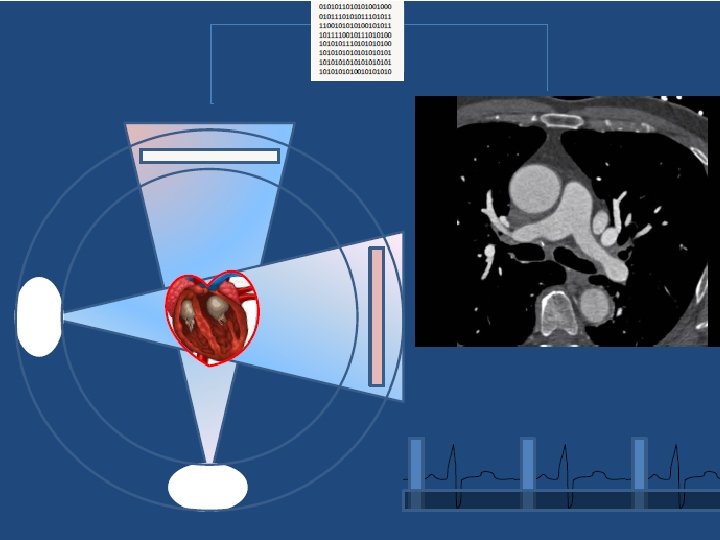
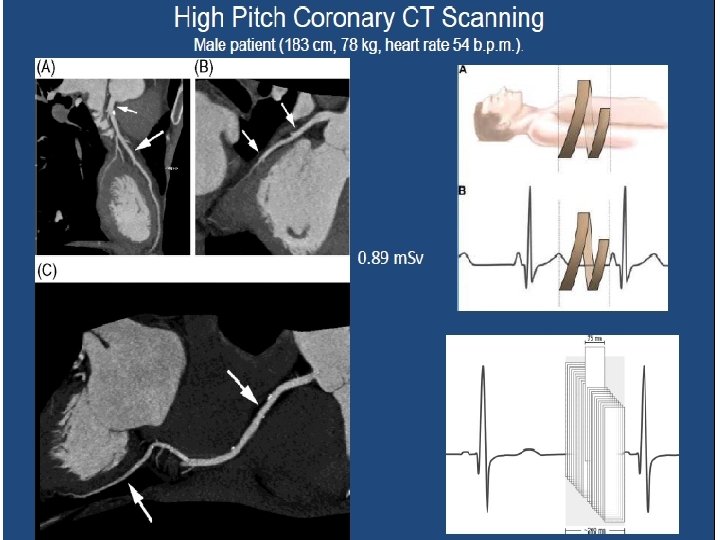
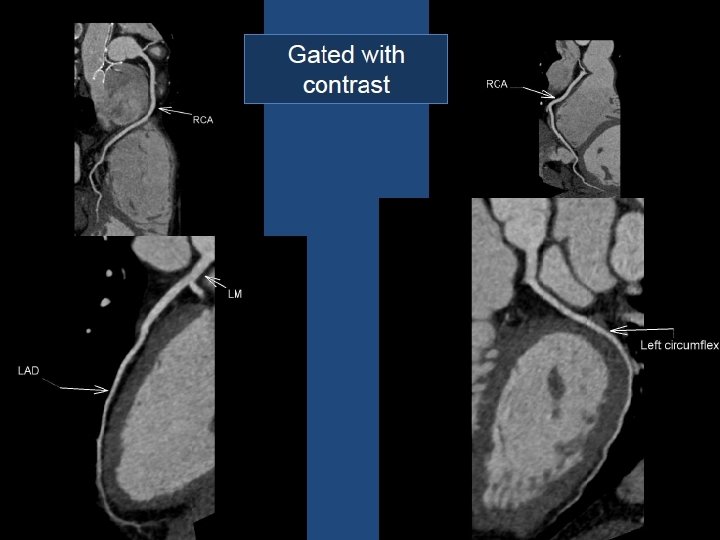
CARDIAC CT FOR THE HEART AND CRONARY VESSLES
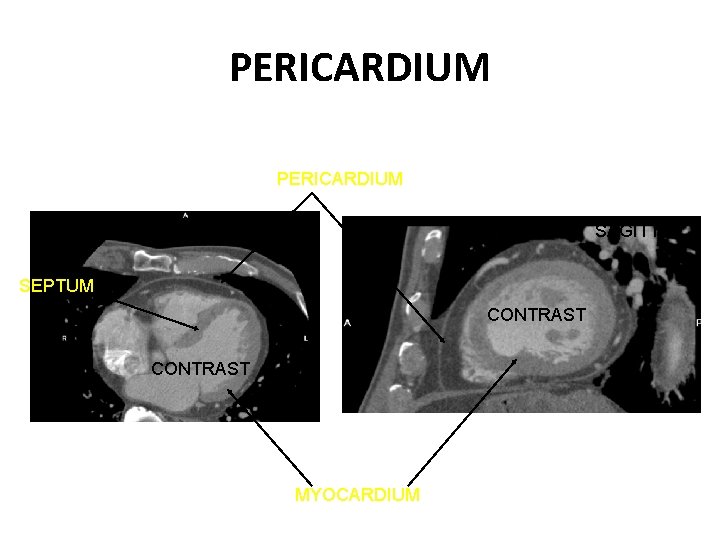
PERICARDIUM AXIAL SAGITTAL SEPTUM CONTRAST MYOCARDIUM
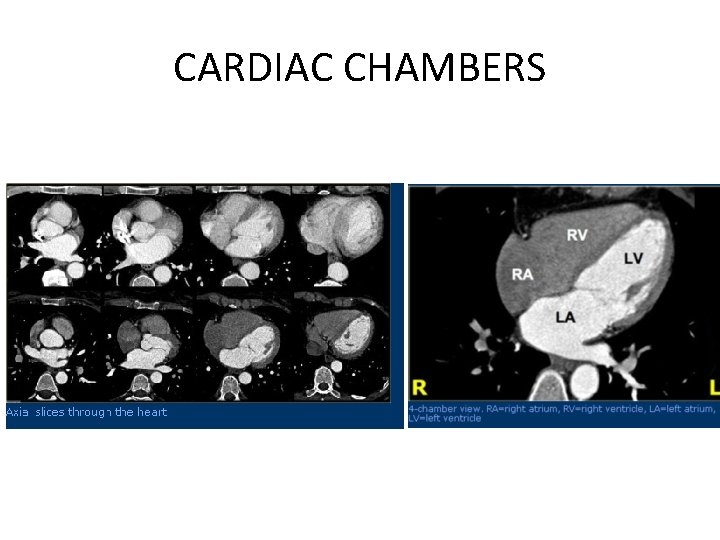
CARDIAC CHAMBERS
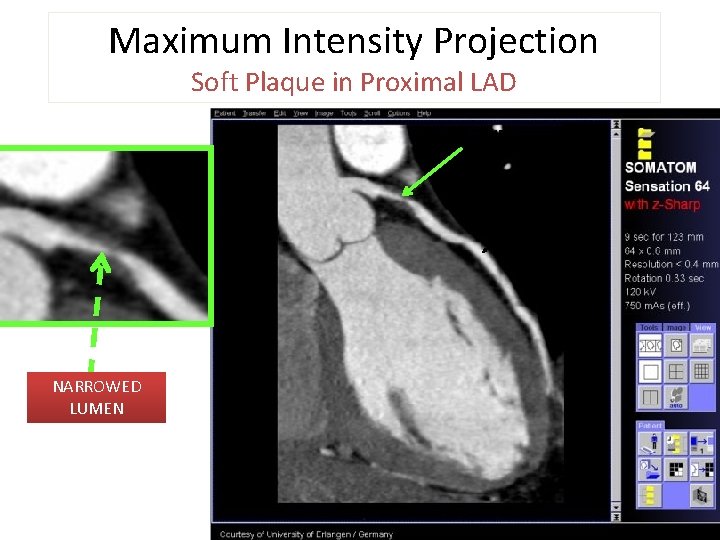
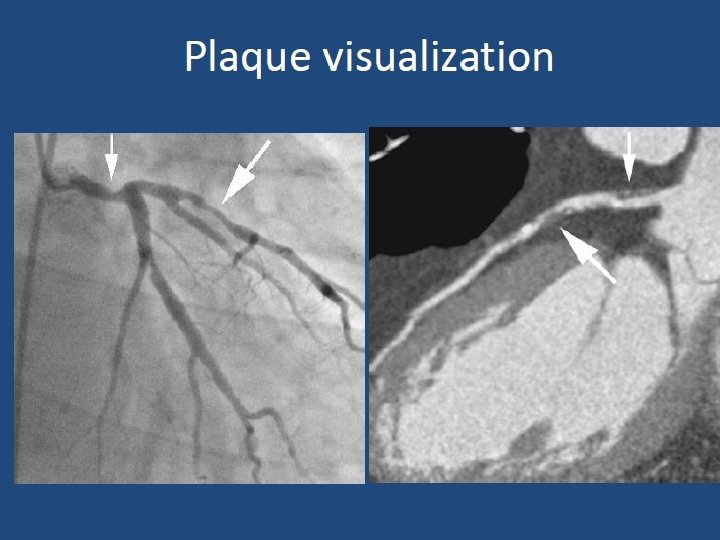
Maximum Intensity Projection Soft Plaque in Proximal LAD PLAQUE NORMAL NARROWED LUMEN
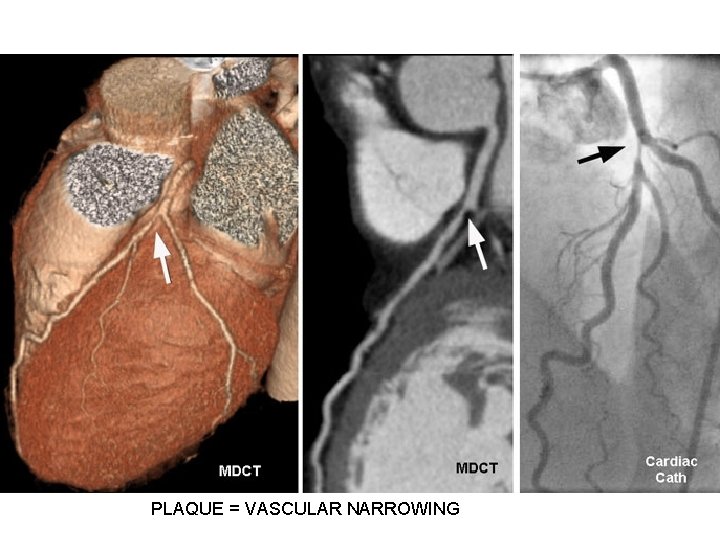
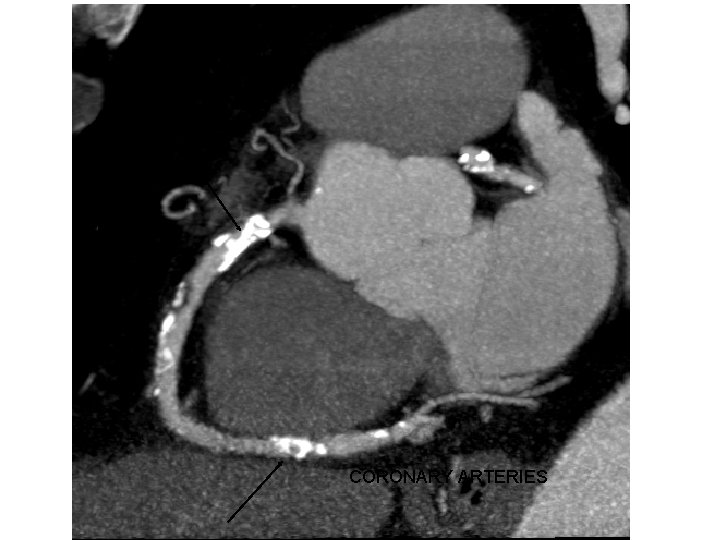
PLAQUE = VASCULAR NARROWING
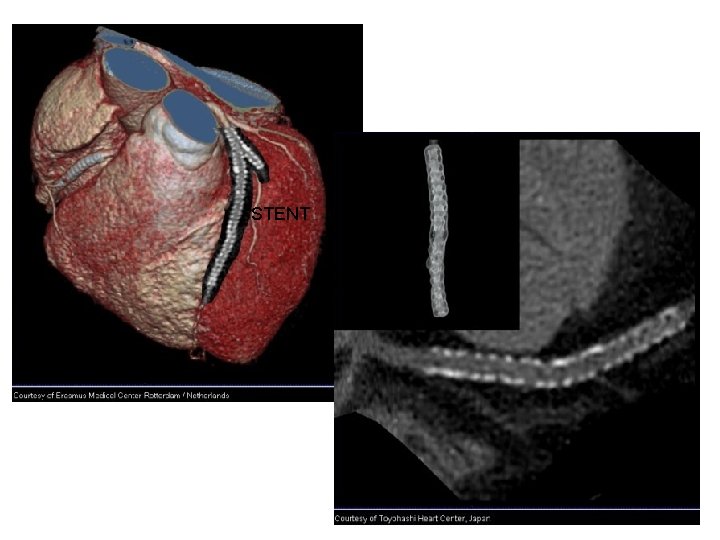
STENT
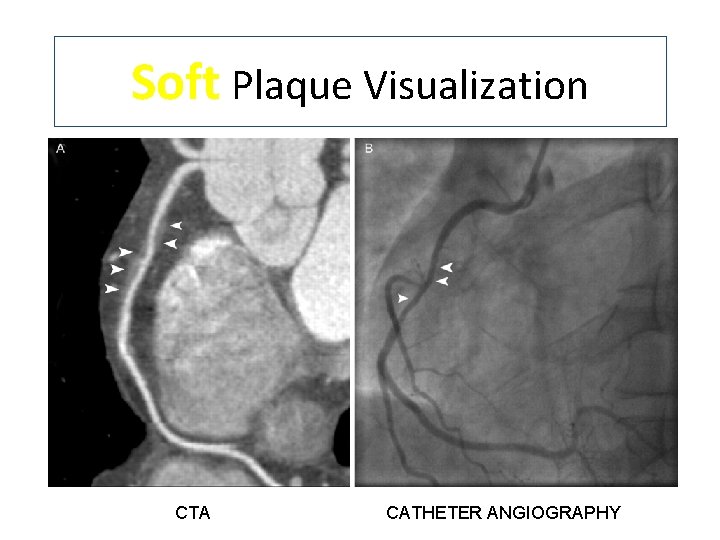
Soft Plaque Visualization CTA CATHETER ANGIOGRAPHY
CALCIFIC PLAQUES CORONARY ARTERIES