
Cardiovascular Drugs Part lll ASSIST LECT HAIDER RAHEEM

- Slides: 57
Cardiovascular Drugs Part lll ASSIST. LECT. HAIDER RAHEEM
Digoxin is most useful for controlling ventricular response in persistent and permanent atrial fibrillation and atrial flutter. Digoxin also has a role in heart failure. For management of atrial fibrillation the maintenance dose of digoxin can usually be determined by the ventricular rate at rest, which should not usually be allowed to fall persistently below 60 beats per minute. Digoxin has a long half-life and maintenance doses need to be given only once daily (although higher doses may be divided to avoid nausea); renal function is the most important determinant of digoxin dosage.
Digoxin It can sometimes be difficult to distinguish between toxic effects and clinical deterioration because symptoms of both are similar. Regular monitoring of plasma-digoxin concentration during maintenance treatment is not necessary unless problems are suspected. Digoxin should be used with special care in the elderly, who may be particularly susceptible to digitalis toxicity. Hypokalaemia predisposes the patient to digitalis toxicity; If toxicity occurs, digoxin should be withdrawn; serious manifestations require urgent specialist management. Digoxinspecific antibody fragments are available for reversal of lifethreatening overdosage.
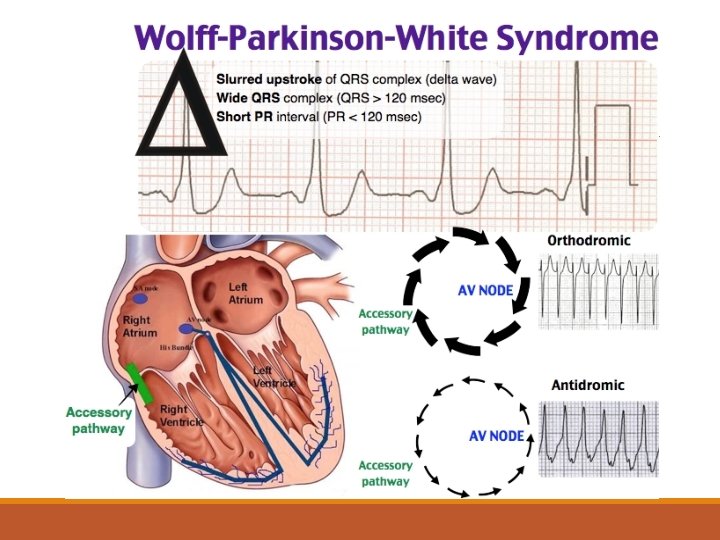
Digoxin Side-effects (Common or very common): Arrhythmias. blurred vision. conduction disturbances. diarrhoea. dizziness. eosinophilia. nausea. rash. vomiting. yellow vision. Contra-indications: Constrictive pericarditis. hypertrophic cardiomyopathy. intermittent complete heart block. myocarditis. second degree AV block. Wolff-Parkinson-White syndrome (although can be used in infancy). ventricular tachycardia or fibrillation. Dose may need to be reduced if digoxin (or another cardiac glycoside) has been given in the preceding 2 weeks.
Digoxin Rapid digitalisation, for atrial fibrillation or flutter by mouth Adult: 0. 75– 1. 5 mg in divided doses, dose to be given over 24 hours, reduce dose in the elderly. Maintenance, for atrial fibrillation or flutter by mouth Adult: Maintenance 125– 250 micrograms daily, dose according to renal function and initial loading dose, reduce dose in the elderly. Heart failure (for patients in sinus rhythm) by mouth Adult: 62. 5– 125 micrograms once daily, reduce dose in the elderly. When switching from intravenous to oral route may need to increase dose by 20– 33% to maintain the same plasma-digoxin concentration.
Amiodarone hydrochloride is used in the treatment of arrhythmias, particularly when other drugs are ineffective or contra-indicated. It can be used for paroxysmal supraventricular, nodal and ventricular tachycardias, atrial fibrillation and flutter, and ventricular fibrillation. has the advantage of causing little or no myocardial depression. Unlike oral amiodarone hydrochloride, intravenous amiodarone hydrochloride acts relatively rapidly. Intravenous injection of amiodarone hydrochloride can be used in cardiopulmonary resuscitation for ventricular fibrillation or pulseless tachycardia unresponsive to other interventions. Amiodarone hydrochloride has a very long half-life (extending to several weeks) and only needs to be given once daily (but high doses can cause nausea unless divided).
Amiodarone Corneal microdeposits: Most patients taking amiodarone develop corneal microdeposits (reversible on withdrawal of treatment); these rarely interfere with vision, but drivers may be dazzled by headlights at night. However, if vision is impaired or if optic neuritis or optic neuropathy occur, amiodarone must be stopped to prevent blindness and expert advice sought. Pulmonary toxicity: Pneumonitis should always be suspected if new or progressive shortness of breath or cough develops in a patient taking amiodarone. Peripheral neuropathy: Fresh neurological symptoms should raise the possibility of peripheral neuropathy.
Amiodarone Thyroid function: Amiodarone contains iodine and can cause disorders of thyroid function; both hypothyroidism and hyperthyroidism can occur. Thyrotoxicosis may be very refractory, and amiodarone should usually be withdrawn at least temporarily to help achieve control; treatment with carbimazole may be required. Hypothyroidism can be treated with replacement therapy without withdrawing amiodarone if it is essential; careful supervision is required. Hepatotoxicity: Amiodarone is also associated with hepatotoxicity and treatment should be discontinued if severe liver function abnormalities or clinical signs of liver disease develop.
Amiodarone Other side-effects (Common or very common): Bradycardia. jaundice. nausea. persistent slate grey skin discoloration. phototoxicity. sleep disorders. taste disturbances. tremor. Vomiting. Contra-indications: Avoid in severe conduction disturbances (unless pacemaker fitted). avoid in sinus node disease (unless pacemaker fitted). iodine sensitivity. sino-atrial heart block (except in cardiac arrest). sinus bradycardia (except in cardiac arrest). thyroid dysfunction. Pregnancy: Possible risk of neonatal goitre; use only if no alternative. Breast feeding: Avoid; present in milk in significant amounts; theoretical risk of neonatal hypothyroidism from release of iodine.
Amiodarone-induced pigmentation
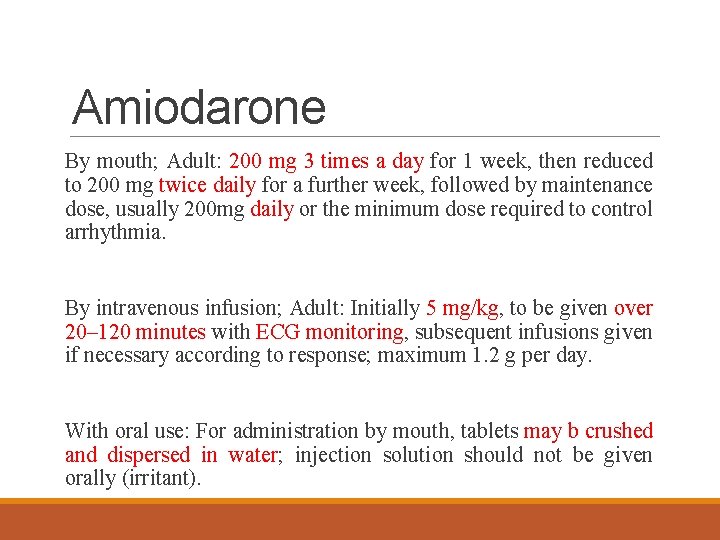
Amiodarone By mouth; Adult: 200 mg 3 times a day for 1 week, then reduced to 200 mg twice daily for a further week, followed by maintenance dose, usually 200 mg daily or the minimum dose required to control arrhythmia. By intravenous infusion; Adult: Initially 5 mg/kg, to be given over 20– 120 minutes with ECG monitoring, subsequent infusions given if necessary according to response; maximum 1. 2 g per day. With oral use: For administration by mouth, tablets may b crushed and dispersed in water; injection solution should not be given orally (irritant).
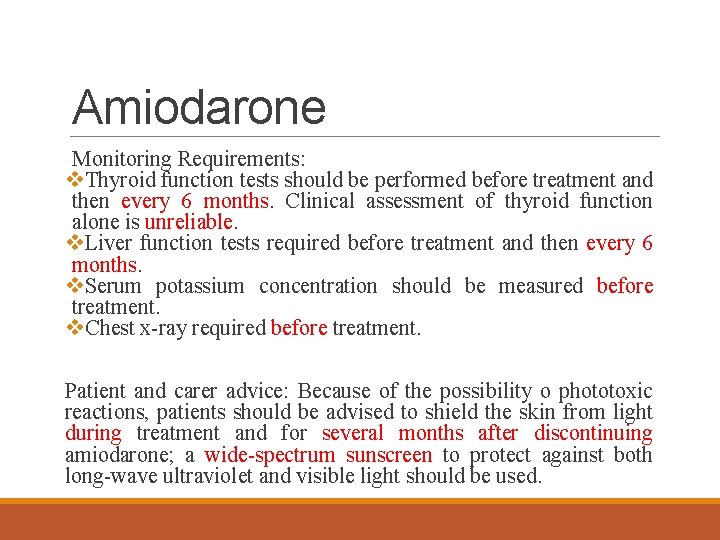
Amiodarone Monitoring Requirements: v. Thyroid function tests should be performed before treatment and then every 6 months. Clinical assessment of thyroid function alone is unreliable. v. Liver function tests required before treatment and then every 6 months. v. Serum potassium concentration should be measured before treatment. v. Chest x-ray required before treatment. Patient and carer advice: Because of the possibility o phototoxic reactions, patients should be advised to shield the skin from light during treatment and for several months after discontinuing amiodarone; a wide-spectrum sunscreen to protect against both long-wave ultraviolet and visible light should be used.
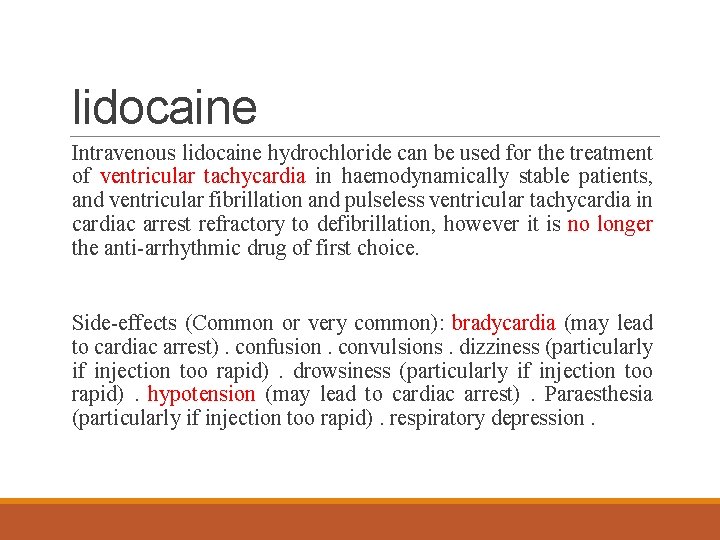
lidocaine Intravenous lidocaine hydrochloride can be used for the treatment of ventricular tachycardia in haemodynamically stable patients, and ventricular fibrillation and pulseless ventricular tachycardia in cardiac arrest refractory to defibrillation, however it is no longer the anti-arrhythmic drug of first choice. Side-effects (Common or very common): bradycardia (may lead to cardiac arrest). confusion. convulsions. dizziness (particularly if injection too rapid). drowsiness (particularly if injection too rapid). hypotension (may lead to cardiac arrest). Paraesthesia (particularly if injection too rapid). respiratory depression.
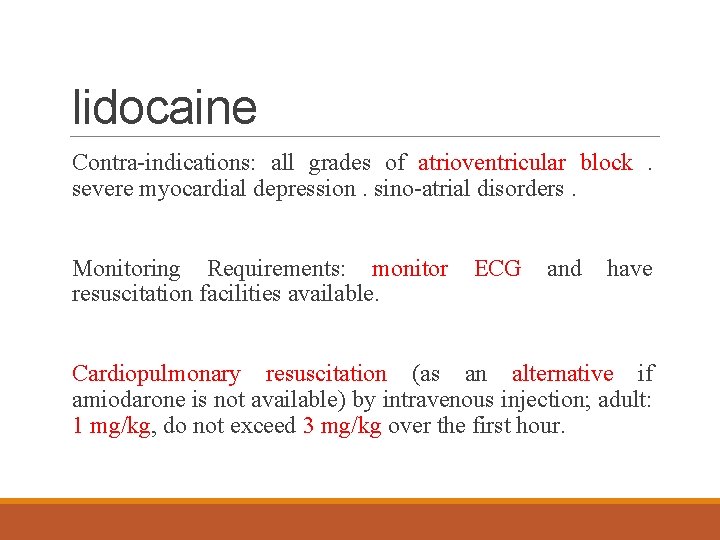
lidocaine Contra-indications: all grades of atrioventricular block. severe myocardial depression. sino-atrial disorders. Monitoring Requirements: monitor resuscitation facilities available. ECG and have Cardiopulmonary resuscitation (as an alternative if amiodarone is not available) by intravenous injection; adult: 1 mg/kg, do not exceed 3 mg/kg over the first hour.
lidocaine Ventricular arrhythmias, especially after myocardial infarction in patients without gross circulatory Impairment initially by intravenous injection: Adult: 100 mg, to be given as a bolus dose over a few minutes (50 mg in lighter patients or those whose circulation is severely impaired), followed immediately by (by intravenous infusion) 4 mg/minute for 30 minutes, then (by intravenous infusion) 2 mg/minute for 2 hours, then (by intravenous infusion) 1 mg/minute, reduce concentration further if infusion continued beyond 24 hours (ECG monitoring and specialist advice for infusion), following intravenous injection lidocaine has a short duration of action (lasting for 15– 20 minutes). If an intravenous infusion is not immediately available the initial intravenous injection of 100 mg can be repeated if necessary once or twice at intervals of not less than 10 minutes.
Inotropic sympathomimetics Shock is a medical emergency associated with a high mortality. The underlying causes of shock such as haemorrhage, sepsis, or myocardial insufficiency should be corrected. The profound hypotension of shock must be treated promptly to prevent tissue hypoxia and organ failure. Depending on haemodynamic status, cardiac output may be improved by the use of sympathomimetic inotropes such as adrenaline/epinephrine, dobutamine or dopamine hydrochloride. The use of sympathomimetic inotropes and vasoconstrictors should preferably be confined to the intensive care setting and undertaken with invasive haemodynamic monitoring.
Dopamine Drug action: Dopamine is a cardiac stimulant which acts on beta 1 receptors in cardiac muscle, and increases contractility with little effect on rate. Side-effects (Common or very common): Chest pain. dyspnoea. headache. hypotension. nausea. palpitation. tachycardia. vasoconstriction. vomiting. Caution: Correct hypovolaemia. hyperthyroidism. low dose in shock due to acute myocardial infarction. Contra-indications: Phaeochromocytoma. tachyarrhythmia.
Dopamine Cardiogenic shock in infarction or cardiac surgery by intravenous infusion; Adult (Dopamine 200 mg/5 ml solution for infusion ampoules): Initially 2– 5 micrograms/kg/minute. Directions for administration: Dopamine concentrate for intravenous infusion to be diluted before use. For intravenous infusion give continuously in Glucose 5% or Sodium chloride 0. 9%. Dilute to max. concentration of 3. 2 mg/m. L; incompatible with bicarbonate.
Dobutamine Drug action: Dobutamine is a cardiac stimulant which acts on beta 1 receptors in cardiac muscle, and increases contractility with little effect on rate. Side-effects (Frequency not known): Anxiety. arrhythmias. bronchospasm. cerebral haemorrhage. chest pain. dyspnoea. hypertension (marked increase in systolic blood pressure indicates overdose). hypotension. increased urinary urgency. myoclonic spasm. palpitation. paraesthesia. pulmonary oedema. Contra-indications: Phaeochromocytoma. Cautions: Acute heart failure. acute myocardial infarction. arrhythmias. correct hypovolaemia before starting and during treatment.
Dobutamine Inotropic support in infarction, cardiac surgery, cardiomyopathies, septic shock, cardiogenic shock, and during positive end expiratory pressure ventilation by intravenous infusion; Adult (Dobutamine 250 mg/50 ml solution for infusion vials): Usual dose 2. 5– 10 micrograms/kg/minute, adjusted according to response, alternatively 0. 5– 40 micrograms/kg/minute. Directions for administration: Dobutamine injection should be diluted before use or given undiluted with syringe pump. For intravenous infusion, give continuously in Glucose 5% or Sodium chloride 0. 9%. Dilute to a concentration of 0. 5– 1 mg/m. L and give via an infusion pump; give higher concentration (max. 5 mg/m. L) through central venous catheter; incompatible with bicarbonate and other strong alkaline solutions.
Nitrates have a useful role in angina. Although they are potent coronary vasodilators, their principal benefit follows from a reduction in venous return which reduces left ventricular work. Side-effects (Common or very common): Dizziness. postural hypotension. tachycardia. throbbing headache. (Uncommon): Flushing. heartburn. nausea. rash. syncope. temporary hypoxaemia. vomiting. Contra-indications: Nitrate hypersensitivity. aortic stenosis. cardiac tamponade. constrictive pericarditis. hypertrophic cardiomyopathy. hypotensive conditions. hypovolaemia. marked anaemia. mitral stenosis. raised intracranial pressure due to cerebral haemorrhage.
Nitrates Tolerance: Many patients on long-acting or transdermal nitrates rapidly develop tolerance (with reduced therapeutic effects). Reduction of blood-nitrate concentrations to low levels for 4 to 12 hours each day usually maintains effectiveness in such patients. If tolerance is suspected during the use of transdermal patches they should be left off for 8– 12 hours (usually overnight) in each 24 hours. In the case of modified-release tablets of isosorbide dinitrate, the second of the two daily doses should be given after about 8 hours rather than after 12 hours. Conventional formulations of isosorbide mononitrate should not usually be given more than twice daily.
Glyceryl trinitrate Sublingual glyceryl trinitrate is one of the most effective drugs for providing rapid symptomatic relief of angina, but its effect lasts only for 20 to 30 minutes; the 300 -microgram tablet is often appropriate when glyceryl trinitrate is first used. The aerosol spray provides an alternative method of rapid relief of symptoms for those who find difficulty in dissolving sublingual preparations. Duration of action may be prolonged by transdermal preparations (but tolerance may develop). Glyceryl trinitrate may be tried by intravenous injection when the sublingual form is ineffective in patients with chest pain due to myocardial infarction or severe ischaemia. Intravenous injections are also useful in the treatment of congestive heart failure.
Nitroglycerin patch allergy
Glyceryl trinitrate Prescribing and dispensing information: With sublingual use; Glyceryl trinitrate tablets should be supplied in glass containers of not more than 100 tablets, closed with a foil-lined cap, and containing no cotton wool wadding; they should be discarded after 8 weeks in use. Patient and carer advice: Rectal ointment should be discarded 8 weeks after first opening. Cautionary and advisory labels 16 (for sublingual tablet): Allow to dissolve under the tongue. Do not transfer from this container. Keep tightly close. Discard eight weeks after opening. Cautionary and advisory labels 15 (for sublingual spray): Caution flammable: keep away from fire or flames.
Glyceryl trinitrate Prophylaxis and treatment of angina: by sublingual tablets; adult (300, 500 or 600 micrograms): 0. 3– 1 mg, dose may be repeated as required. Treatment and prophylaxis of angina: by aerosol spray; adults (400 micrograms/dose): 1– 2 sprays, dose be administered under tongue and then close mouth. Prophylaxis of angina: by transdermal application; adult: One ‘ 5’ (releasing approx. 5 mg/24 hours) or one ‘ 10’ patch (releasing approx. 10 mg/24 hours) to be applied to lateral chest wall, upper arm, thigh, abdomen, or shoulder; increase to two ‘ 10’ patches every 24 hours if necessary, to be replaced every 24 hours, siting replacement patch on different area.
Isosorbide dinitrate is active sublingually and is a more stable preparation for those who only require nitrates infrequently. It is also effective by mouth for prophylaxis; although the effect is slower in onset, it may persist for several hours. Duration of action of up to 12 hours is claimed for modified-release preparations. Prophylaxis and treatment of angina: by mouth using immediaterelease medicines; adult (10 or 20 mg): 30– 120 mg daily in divided doses. Left ventricular failure: by mouth using immediate-release medicines; adult (10 or 20 mg): 40– 160 mg daily in divided doses, increased if necessary up to 240 mg daily in divided doses
Isosorbide mononitrate The activity of isosorbide dinitrate may depend on the production of active metabolites, the most important of which is isosorbide mononitrate. Isosorbide mononitrate itself is also licensed for angina prophylaxis; modified-release formulations (for once daily administration) are available. Prophylaxis of angina; Adjunct in congestive heart failure: by mouth using immediate-release medicines; adult (10, 20 or 40 mg): Initially 20 mg 2– 3 times a day, alternatively initially 40 mg twice daily (initially 10 mg twice daily for patients who have not previously had a nitrate), increased if necessary up to 120 mg daily in divided doses.
Antiplatelet drugs decrease platelet aggregation and inhibit thrombus formation in the arterial circulation, because in fasterflowing vessels, thrombi are composed mainly of platelets with little fibrin. Patients selected for percutaneous coronary intervention, with the placement of a coronary stent, will require dual antiplatelet therapy with aspirin and either cangrelor, clopidogrel, prasugrel, or ticagrelor. Aspirin therapy should continue indefinitely. Clopidogrel is recommended for 1 month following elective percutaneous coronary intervention with placement of a bare-metal stent, and for 12 months if percutaneous coronary intervention with placement of a bare-metal stent was for an acute coronary syndrome; clopidogrel should be given for 12 months following placement of a drug-eluting stent.
Aspirin Use of aspirin in primary prevention of cardiovascular events, in patients with or without diabetes, is of unproven benefit. Longterm use of aspirin is of benefit in established cardiovascular disease (secondary prevention); unduly high blood pressure must be controlled before aspirin is given. If the patient is at a high risk of gastro-intestinal bleeding, a proton pump inhibitor can be added. Aspirin is given following coronary bypass surgery. It is also used in atrial fibrillation, for intermittent claudication, for stable angina and acute coronary syndromes, for use following placement of coronary stents and for use in stroke. Allergy and cross-sensitivity: Aspirin is contraindicated in history of hypersensitivity to aspirin or any other NSAID—which includes those in whom attacks of asthma, angioedema, urticaria, or rhinitis have been precipitated by aspirin or any other NSAID.
Aspirin Side-effects: Blood disorders (with analgesic doses). bronchospasm. confusion (with analgesic doses). gastrointestinal haemorrhage (occasionally major). gastrointestinal irritation. haemorrhage including subconjunctival haemorrhage (reported with antiplatelet doses). increased bleeding time. tinnitus (with analgesic doses). Cautions: Allergic disease. anaemia. asthma. dehydration. elderly. G 6 PD deficiency. preferably avoid during fever or viral infection in children (risk of Reye’s syndrome). previous peptic ulceration. thyrotoxicosis. uncontrolled hypertension. Contra-indications: Active peptic ulceration. Bleeding disorders (antiplatelet dose). children under 16 years (risk of Reye’s syndrome). haemophilia. previous peptic ulceration (analgesic dose). severe cardiac failure (analgesic dose)
Aspirin Pregnancy: Use antiplatelet doses with caution during third trimester; impaired platelet function and risk of haemorrhage; delayed onset and increased duration of labour with increased blood loss; avoid analgesic doses if possible in last few weeks (low doses probably not harmful); high doses may be related to intra-uterine growth restriction, teratogenic effects, closure of fetal ductus arteriosus in utero and possibly persistent pulmonary hypertension of newborn; kernicterus may occur in jaundiced neonates. Breast feeding: Avoid—possible risk of Reye’s syndrome; regular use of high doses could impair platelet function and produce hypoprothrombinaemia in infant if neonatal vitamin K stores low.
Aspirin Cardiovascular disease (secondary prevention): by mouth; adult (75 mg tab. ): 75 mg daily. Management of unstable angina and non-ST-segment elevation myocardial infarction (NSTEMI) | Management of ST-segment elevation myocardial infarction (STEMI): by mouth; adult (300 mg tab. ): 300 mg, chewed or dispersed in water. Acute ischaemic stroke: by mouth; adult: 300 mg once daily for 14 days, to be initiated 24 hours after thrombolysis or as soon as possible within 48 hours of symptom onset in patients not receiving thrombolysis. Following coronary by-pass surgery: by mouth; adult: 75– 300 mg daily.
Clopidogrel is licensed for the prevention of atherothrombotic events in patients with a history of symptomatic ischaemic disease. Clopidogrel, in combination with low-dose aspirin, is also licensed for acute coronary syndrome without ST-segment elevation; in these circumstances the combination is given for up to 12 months (most benefit occurs during the first 3 months; there is no evidence of benefit beyond 12 months). Clopidogrel, in combination with low-dose aspirin, is also licensed for acute myocardial infarction with ST-segment elevation; the combination is licensed for at least 4 weeks, but the optimum treatment duration has not been established.
Clopidogrel Use of clopidogrel with aspirin increases the risk of bleeding. Clopidogrel monotherapy may be an alternative when aspirin is contra-indicated, for example in those with aspirin hypersensitivity, or when aspirin is not tolerated despite the addition of a proton pump inhibitor. NICE technology appraisals (December 2010): Clopidogrel monotherapy is recommended as an option to prevent occlusive vascular events in patients who have had: v an ischaemic stroke, or who have peripheral arterial disease or multivascular disease, or v a myocardial infarction, only if aspirin is contraindicated or not tolerated.
Clopidogrel Unlicensed use: 600 mg loading dose prior to percutanous coronary intervention is an unlicensed dose. Side-effects (Common or very common): Abdominal pain. Bleeding disorders (including gastro-intestinal and intracranial). diarrhoea. dyspepsia. Cautions: Discontinue 7 days before elective surgery if antiplatelet effect not desirable. patients at risk of increased bleeding from trauma, surgery, or other pathological conditions. Contra-indications: Active bleeding.
Clopidogrel Prevention of atherothrombotic events in percutaneous coronary intervention (adjunct with aspirin) in patients not already on clopidogrel: by mouth; adult (75 & 300 mg): Loading dose 300 mg, to be taken prior to the procedure, alternatively loading dose 600 mg, higher dose may produce a greater and more rapid inhibition of platelet aggregation. Prevention of atherothrombotic events in peripheral arterial disease or within 35 days of myocardial infarction, or within 6 months of ischaemic stroke: by mouth; adult: 75 mg once daily. Prevention of artherothrombotic events in acute coronary syndrome without ST-segment elevation (given with aspirin): by mouth; adult: Initially 300 mg, then 75 mg daily for up to 12 months.
Parenteral anticoagulants The main use of anticoagulants is to prevent thrombus formation or extension of an existing thrombus in the slower-moving venous side of the circulation, where thrombus consists of a fibrin web enmeshed with platelets and red cells. Heparin initiates anticoagulation rapidly but has a short duration of action. It is often referred to as ‘standard’ or heparin (unfractionated) to distinguish it from the low molecular weight heparins, which have a longer duration of action. Although a low molecular weight heparin is generally preferred for routine use, heparin (unfractionated) can be used in those at high risk of bleeding because its effect can be terminated rapidly by stopping the infusion.
Parenteral anticoagulants Low molecular weight heparins (dalteparin sodium, enoxaparin sodium, and tinzaparin sodium) are usually preferred over heparin (unfractionated) in the prevention of Venous thromboembolism because they are as effective and they have a lower risk of heparin -induced thrombocytopenia. The standard prophylactic regimen does not require anticoagulant monitoring. The duration of action of low molecular weight heparins is longer than that of heparin (unfractionated) and oncedaily subcutaneous administration is possible for some indications, making them convenient to use. Low molecular weight heparins are generally preferred over heparin (unfractionated) in the treatment of deep vein thrombosis and pulmonary embolism, and are also used in the treatment of myocardial infarction and unstable coronary artery disease.
Heparins Side-effects (Frequency not known): Haemorrhage. thrombocytopenia. (Rare): Alopecia (on prolonged use). anaphylaxis. angioedema. hyperkalaemia. hypersensitivity reactions. injection-site reactions. osteoporosis (risk lower with low molecular weight heparins). priapism. Rebound hyperlipidaemia (following unfractionated heparin withdrawal). skin necrosis. Urticaria. Allergy and cross-sensitivity: Hypersensitivity to unfractionated or low molecular weight heparin. Inhibition of aldosterone secretion by unfractionated or low molecular weight heparin can result in hyperkalaemia; patients with diabetes mellitus, chronic renal failure, acidosis, raised plasma potassium or those taking potassium-sparing drugs seem to be more susceptible. The risk appears to increase with duration of therapy.
Heparins If haemorrhage occurs it is usually sufficient to withdraw unfractionated or low molecular weight heparin, but if rapid reversal of the effects of the heparin is required, protamine sulfate is a specific antidote (but only partially reverses the effects of low molecular weight heparins). Clinically important heparin-induced thrombocytopenia is immune-mediated and does not usually develop until after 5– 10 days; it can be complicated by thrombosis. Signs of heparin-induced thrombocytopenia include a 30% reduction of platelet count, thrombosis, or skin allergy. If heparininduced thrombocytopenia is strongly suspected or confirmed, the heparin should be stopped an alternative anticoagulant, such as danaparoid, should be given. Ensure platelet counts return to normal range in those who require warfarin.
Heparins Contra-indications: Acute bacterial endocarditis. after major trauma. haemophilia and other haemorrhagic disorders. peptic ulcer. recent cerebral haemorrhage. recent surgery to eye. recent surgery to nervous system. severe hypertension. thrombocytopenia (including history of heparin-induced thrombocytopenia). Monitoring Requirements: Platelet counts should be measured just before treatment with unfractionated or low molecular weight heparin, and regular monitoring of platelet counts may be required if given for longer than 4 days. Monitoring Requirements: Plasma-potassium concentration should be measured in patients at risk of hyperkalaemia before starting the heparin and monitored regularly thereafter, particularly if treatment is to be continued for longer than 7 days.
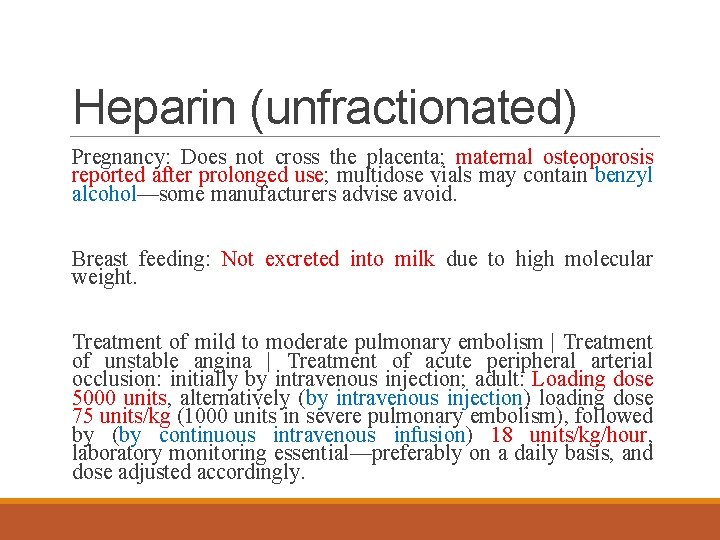
Heparin (unfractionated) Pregnancy: Does not cross the placenta; maternal osteoporosis reported after prolonged use; multidose vials may contain benzyl alcohol—some manufacturers advise avoid. Breast feeding: Not excreted into milk due to high molecular weight. Treatment of mild to moderate pulmonary embolism | Treatment of unstable angina | Treatment of acute peripheral arterial occlusion: initially by intravenous injection; adult: Loading dose 5000 units, alternatively (by intravenous injection) loading dose 75 units/kg (1000 units in severe pulmonary embolism), followed by (by continuous intravenous infusion) 18 units/kg/hour, laboratory monitoring essential—preferably on a daily basis, and dose adjusted accordingly.
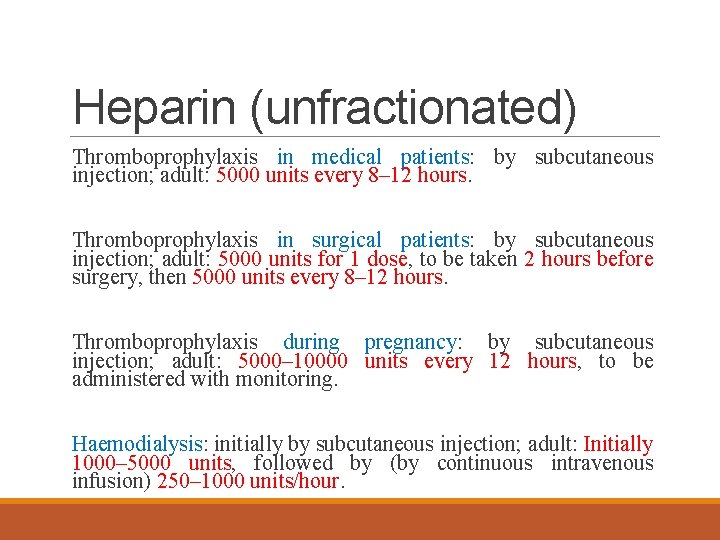
Heparin (unfractionated) Thromboprophylaxis in medical patients: by subcutaneous injection; adult: 5000 units every 8– 12 hours. Thromboprophylaxis in surgical patients: by subcutaneous injection; adult: 5000 units for 1 dose, to be taken 2 hours before surgery, then 5000 units every 8– 12 hours. Thromboprophylaxis during pregnancy: by subcutaneous injection; adult: 5000– 10000 units every 12 hours, to be administered with monitoring. Haemodialysis: initially by subcutaneous injection; adult: Initially 1000– 5000 units, followed by (by continuous intravenous infusion) 250– 1000 units/hour.
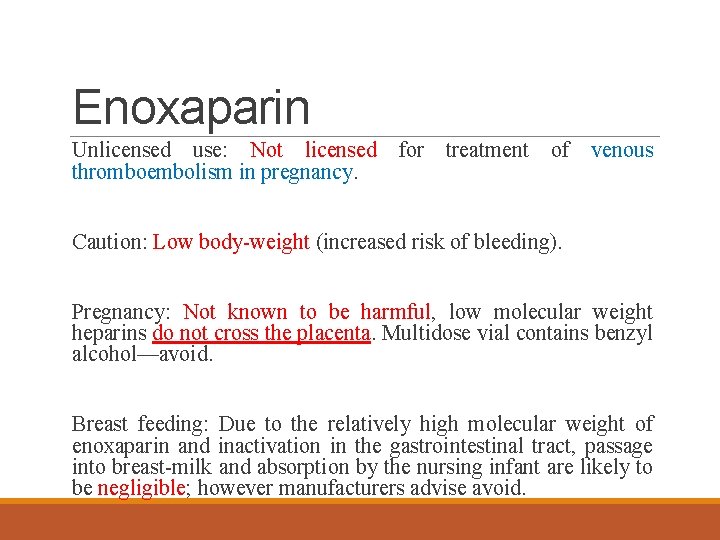
Enoxaparin Unlicensed use: Not licensed for treatment of venous thromboembolism in pregnancy. Caution: Low body-weight (increased risk of bleeding). Pregnancy: Not known to be harmful, low molecular weight heparins do not cross the placenta. Multidose vial contains benzyl alcohol—avoid. Breast feeding: Due to the relatively high molecular weight of enoxaparin and inactivation in the gastrointestinal tract, passage into breast-milk and absorption by the nursing infant are likely to be negligible; however manufacturers advise avoid.
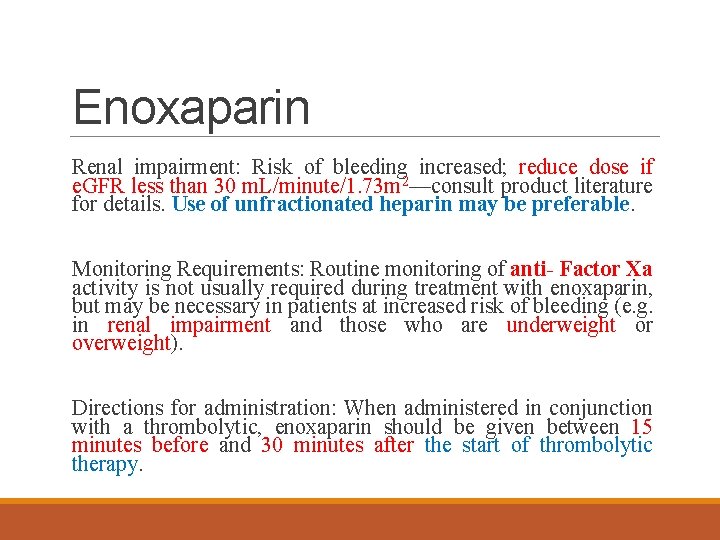
Enoxaparin Renal impairment: Risk of bleeding increased; reduce dose if e. GFR less than 30 m. L/minute/1. 73 m 2—consult product literature for details. Use of unfractionated heparin may be preferable. Monitoring Requirements: Routine monitoring of anti- Factor Xa activity is not usually required during treatment with enoxaparin, but may be necessary in patients at increased risk of bleeding (e. g. in renal impairment and those who are underweight or overweight). Directions for administration: When administered in conjunction with a thrombolytic, enoxaparin should be given between 15 minutes before and 30 minutes after the start of thrombolytic therapy.
Enoxaparin Prophylaxis of deep-vein thrombosis, especially in surgical patients—moderate risk: by subcutaneous injection; adult: 20 mg for 1 dose, dose to be given approximately 2 hours before surgery, then 20 mg every 24 hours. Prophylaxis of deep-vein thrombosis, especially surgical patients —high risk (e. g. orthopaedic surgery): by subcutaneous injection; adult: 40 mg for 1 dose, dose to be given 12 hours before surgery, then 40 mg every 24 hours. Prophylaxis of deep-vein thrombosis in medical patients: by subcutaneous injection; adult: 40 mg every 24 hours. Treatment of deep-vein thrombosis | Treatment of pulmonary embolism: by subcutaneous injection; adult: 1. 5 mg/kg every 24 hours until adequate oral anticoagulation established.
Fibrinolytic drugs act as thrombolytics by activating plasminogen to form plasmin, which degrades fibrin and so breaks up thrombi. The value of thrombolytic drugs for the treatment of myocardial infarction has been established. Streptokinase and alteplase have been shown to reduce mortality. Reteplase and tenecteplase are also licensed for acute myocardial infarction. Trials have shown that the benefit is greatest in those with ECG changes that include ST segment elevation (especially in those with anterior infarction) and in patients with bundle branch block.
Fibrinolytic drugs Patients should not be denied thrombolytic treatment on account of age alone because mortality in the elderly is high and the reduction in mortality is the same as in younger patients. Alteplase should be given within 6– 12 hours of symptom onset, reteplase and streptokinase within 12 hours of symptom onset, but ideally all should be given within 1 hour; use after 12 hours requires specialist advice. Tenecteplase should be given as early as possible and usually within 6 hours of symptom onset. Alteplase, streptokinase and urokinase can be used for other thromboembolic disorders such as deep-vein thrombosis and pulmonary embolism. Alteplase is also used for acute ischaemic stroke.
Fibrinolytic drugs Side-effects: Allergic reactions. anaphylaxis. angina (when used in myocardial infarction). back pain. bleeding. cerebral oedema (caused by reperfusion). convulsions. fever. flushing. hypotension. intracerebral haemorrhage. nausea. pulmonary oedema (caused by reperfusion). rash. recurrent ischaemia (when used in myocardial infarction). reperfusion arrhythmias (when used in myocardial infarction). uveitis. vomiting. Serious bleeding calls for discontinuation of the thrombolytic and may require administration of coagulation factors and antifibrinolytic drugs (e. g. tranexamic acid). Hypotension can usually be controlled by elevating the patient’s legs, or by reducing the rate of infusion or stopping it temporarily.
Fibrinolytic drugs Cautions: Conditions in which thrombolysis might give rise to embolic complications such as enlarged left atrium with atrial fibrillation. elderly. external chest compression. hypertension. risk of bleeding. Contra-indications: Recent haemorrhage. recent surgery (including dental extraction). recent symptoms of possible peptic ulceration. recent trauma. severe hypertension. bleeding diatheses. coagulation defects. coma. heavy vaginal bleeding. history of cerebrovascular disease. oesophageal varices. active pulmonary disease with cavitation. acute pancreatitis. bacterial endocarditis. Pregnancy: Thrombolytic drugs can possibly lead to premature separation of the placenta in the first 18 weeks of pregnancy. There is also a risk of maternal haemorrhage throughout pregnancy and post-partum.
Alteplase (rt-PA; Tissue-type plasminogen activator) Side-effects: Risk of cerebral bleeding increased in acute stroke. Contra-indications: When used for acute ischaemic stroke Convulsion accompanying stroke. history of stroke in patients with diabetes. hyperglycemia. hypoglycemia. severe stroke in last 3 months. Allergy and cross-sensitivity: Contra-indicated if history of hypersensitivity to gentamicin (residue from manufacturing process). Monitoring Requirements: When used for acute ischaemic stroke: Monitor for intracranial haemorrhage, and monitor blood pressure (antihypertensive recommended if systolic above 180 mm. Hg or diastolic above 105 mm. Hg).
Alteplase (rt-PA; Tissue-type plasminogen activator) Acute myocardial infarction, accelerated regimen: initially by intravenous injection; adult (body-weight 65 kg and above): I. Initially 15 mg, to be initiated within 6 hours of symptom onset, II. followed by (by intravenous infusion) 50 mg, to be given over 30 minutes, III. then (by intravenous infusion) 35 mg, to be given over 60 minutes, maximum total dose of 100 mg administered over 90 minutes. Acute myocardial infarction: initially by intravenous injection; adult: I. Initially 10 mg, to be initiated within 6– 12 hours of symptom onset, II. followed by (by intravenous infusion) 50 mg, to be given over 60 minutes, III. then (by intravenous infusion) 10 mg for 4 infusions, each 10 mg infusion dose to be given over 30 minutes, total dose of 100 mg over 3 hours; maximum 1. 5 mg/kg in patients less than 65 kg.
Alteplase (rt-PA; Tissue-type plasminogen activator) The National Institute for Health and Care Excellence (NICE) technology appraisals (September 2012): Alteplase is recommended for the treatment of acute ischaemic stroke in adults in accordance with its licensed indication if: Ø treatment is started as early as possible within 4. 5 hours of onset of stroke symptoms, and Ø intracranial haemorrhage has been excluded by appropriate imaging techniques. Acute ischaemic stroke (under specialist neurology physician only): by intravenous infusion; adult 18– 79 years: Initially 900 micrograms/kg (max. per dose 90 mg), treatment must begin within 4. 5 hours of symptom onset, to be given over 60 minutes, the initial 10% of dose is to be administered by intravenous injection and the remainder by intravenous infusion.