
Cardiovalve Device Attributes Implant Procedure and Early Results
Cardiovalve Device Attributes Implant Procedure and Early Results Francesco Maisano, MD University Hospital Zurich - Switzerland
Disclosure Statement of Financial Interest I, Francesco Maisano, have a financial interest/arrangement or affiliation with one or more organizations that could be perceived as a real or apparent conflict of interest in the context of the subject of this presentation Grant and/or Research Support Abbott Vascular; Medtronic; Edwards Lifesciences; Biotronik; Boston Scientific Corporation Consulting fees, Honoraria Abbott Vascular; Medtronic; Edwards Lifesciences; Perifect; Xeltis; Transseptal solutions; Cardiovalve Royalty Income/IP Rights Edwards Lifesciences; 4 Tech 7

Cardiovalve TMVR: 1, 2, 3… 3 Steps 1 Valve Leaflets grasping + Atrial flange delivery + Full release 2 Frames Atrial + Ventricular

Cardiovalve TMVR: 1, 2, 3… • Transfemoral Venous Access and Transseptal approach, 28 Fr • Multi-steerable catheter for coaxial implantation • No AV loop required - Single step TF implantation • Echo main guidance, Fluoro assistance • 3 -steps procedure 1. Leaflet grasping 2. Atrial flange delivery 3. Full release

Cardiovalve TMVR: 1, 2, 3… Cardiovalve follows a proven surgical design adapted for transcatheter use: • Low ventricular profile, no atrial protruding • Robust frame and classic leaflet design for durability • 3 sizes to fit all anatomies • Proprietary anchoring and sealing element Surgical gold-standard Edwards Perimount Magna Transcatheter Solution Cardiovalve
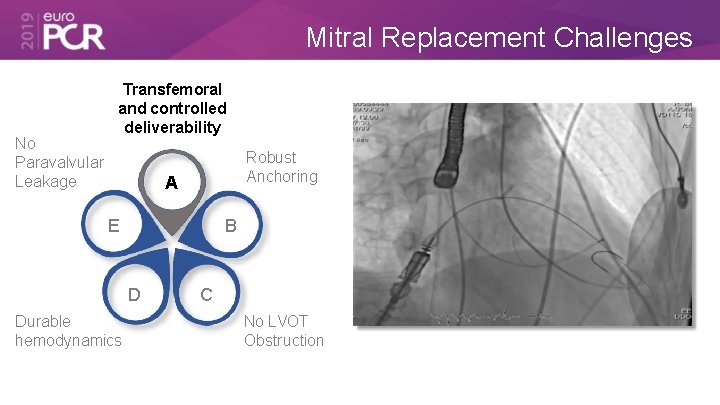
Mitral Replacement Challenges No Paravalvular Leakage Transfemoral and controlled deliverability Robust Anchoring A E B D Durable hemodynamics C No LVOT Obstruction
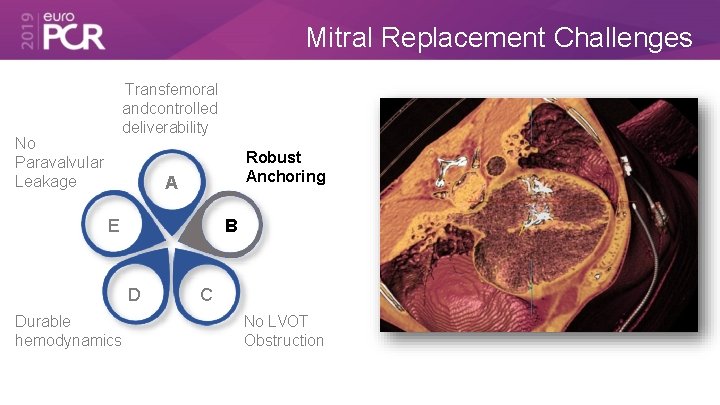
Mitral Replacement Challenges Transfemoral and controlled deliverability No Paravalvular Leakage Robust Anchoring A E B D Durable hemodynamics C No LVOT Obstruction

Mitral Replacement Challenges Transfemoral and controlled deliverability No Paravalvular Leakage Robust Anchoring A E B D Durable hemodynamics C No LVOT Obstructio n
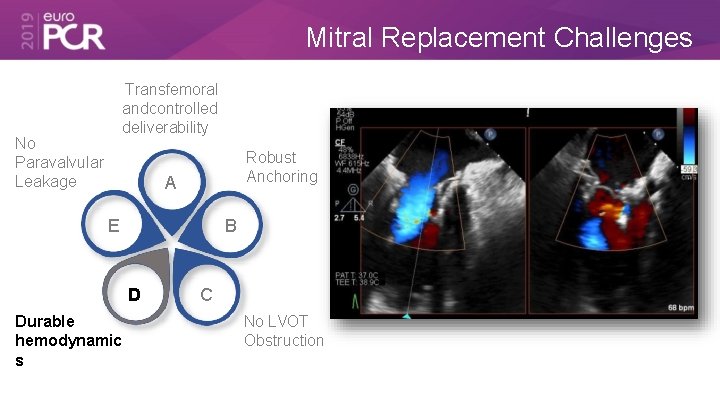
Mitral Replacement Challenges Transfemoral and controlled deliverability No Paravalvular Leakage Robust Anchoring A E B D Durable hemodynamic s C No LVOT Obstruction
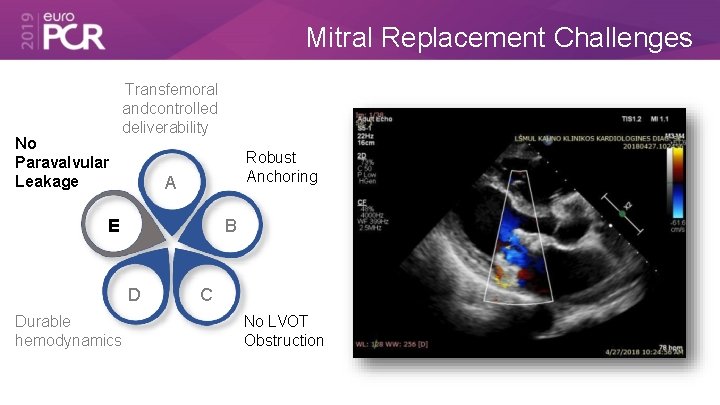
Mitral Replacement Challenges No Paravalvular Leakage Transfemoral and controlled deliverability Robust Anchoring A E B D Durable hemodynamics C No LVOT Obstruction

Mitral Replacement Challenges Transfemoral and controlled deliverability No Paravalvular Leakage Robust Anchoring A E B D Durable hemodynamics C No LVOT Obstruction
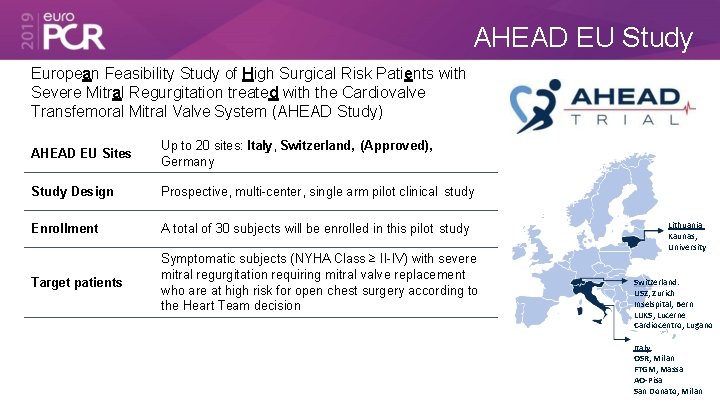
AHEAD EU Study European Feasibility Study of High Surgical Risk Patients with Severe Mitral Regurgitation treated with the Cardiovalve Transfemoral Mitral Valve System (AHEAD Study) AHEAD EU Sites Up to 20 sites: Italy, Switzerland, (Approved), Germany Study Design Prospective, multi-center, single arm pilot clinical study Enrollment A total of 30 subjects will be enrolled in this pilot study Target patients Symptomatic subjects (NYHA Class ≥ II-IV) with severe mitral regurgitation requiring mitral valve replacement who are at high risk for open chest surgery according to the Heart Team decision Lithuania Kaunas, University Switzerland: USZ, Zurich Inselspital, Bern LUKS, Lucerne Cardiocentro, Lugano Italy: OSR, Milan FTGM, Massa AO-Pisa San Donato, Milan

Controllable, Repeatable and Reproducible 12
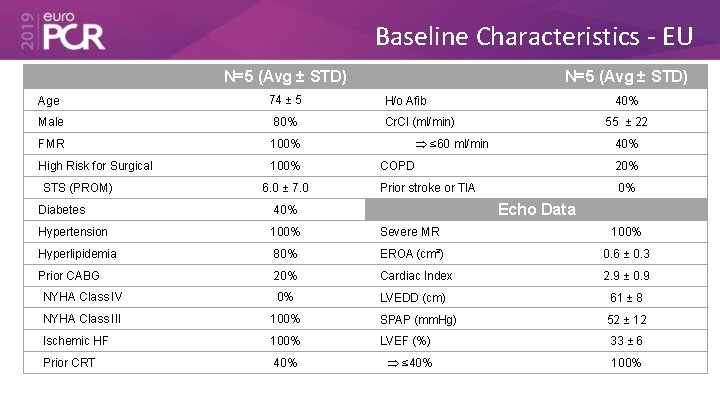
Baseline Characteristics - EU N=5 (Avg ± STD) Age 74 ± 5 Male 80% FMR 100% High Risk for Surgical 100% STS (PROM) 6. 0 ± 7. 0 N=5 (Avg ± STD) H/o Afib 40% 55 ± 22 Cr. Cl (ml/min) ≤ 60 ml/min 40% COPD 20% Prior stroke or TIA 0% Echo Data Diabetes 40% Hypertension 100% Severe MR 100% Hyperlipidemia 80% EROA (cm²) 0. 6 ± 0. 3 Prior CABG 20% Cardiac Index 2. 9 ± 0. 9 NYHA Class IV 0% LVEDD (cm) 61 ± 8 NYHA Class III 100% SPAP (mm. Hg) 52 ± 12 Ischemic HF 100% LVEF (%) 33 ± 6 Prior CRT 40% ≤ 40% 100%
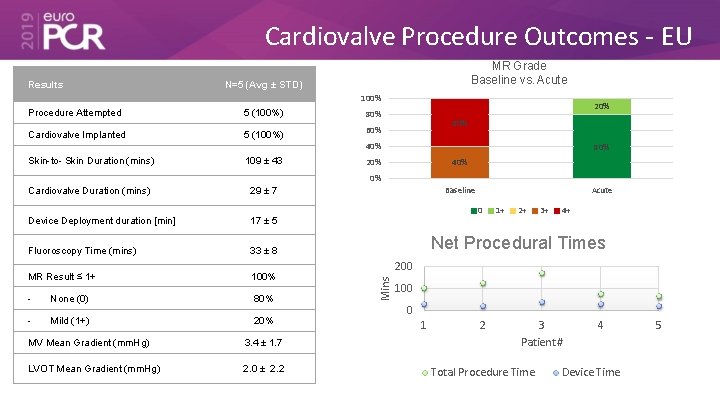
Cardiovalve Procedure Outcomes - EU Results MR Grade Baseline vs. Acute N=5 (Avg ± STD) 100% Procedure Attempted 5 (100%) Cardiovalve Implanted 5 (100%) Skin-to- Skin Duration (mins) 109 ± 43 Cardiovalve Duration (mins) 29 ± 7 Device Deployment duration [min] 17 ± 5 Fluoroscopy Time (mins) 33 ± 8 MR Result ≤ 1+ 100% - None (0) 80% - Mild (1+) 20% 80% 60% 40% 80% 20% 40% 0% MV Mean Gradient (mm. Hg) 3. 4 ± 1. 7 LVOT Mean Gradient (mm. Hg) 2. 0 ± 2. 2 Baseline Acute 0 1+ 2+ 3+ 4+ Net Procedural Times Mins 200 100 0 1 2 3 Patient # Total Procedure Time 4 Device Time 5
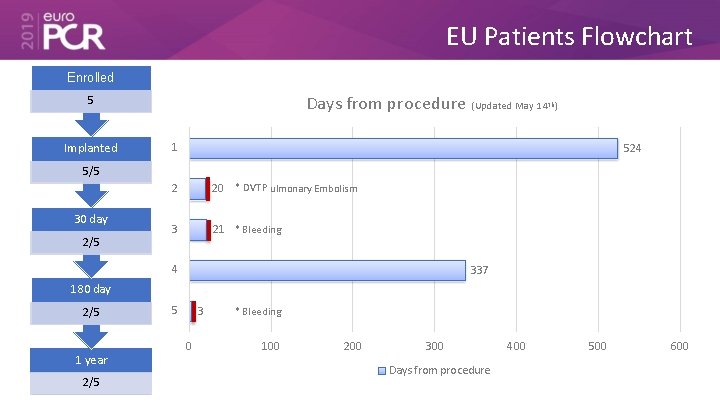
EU Patients Flowchart Enrolled Days from procedure (Updated May 14 5 Implanted th ) 1 524 5/5 30 day 2/5 2 20 * DVT P ulmonary Embolism 3 21 * Bleeding 4 337 180 day 2/5 1 year 2/5 5 3 0 * Bleeding 100 200 300 Days from procedure 400 500 600
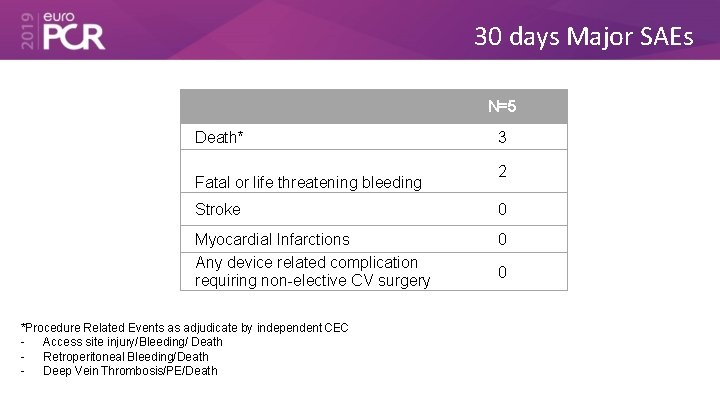
30 days Major SAEs N=5 Death* Fatal or life threatening bleeding 3 2 Stroke 0 Myocardial Infarctions Any device related complication requiring non-elective CV surgery 0 *Procedure Related Events as adjudicate by independent CEC - Access site injury/Bleeding/ Death - Retroperitoneal Bleeding/Death - Deep Vein Thrombosis/PE/Death 0
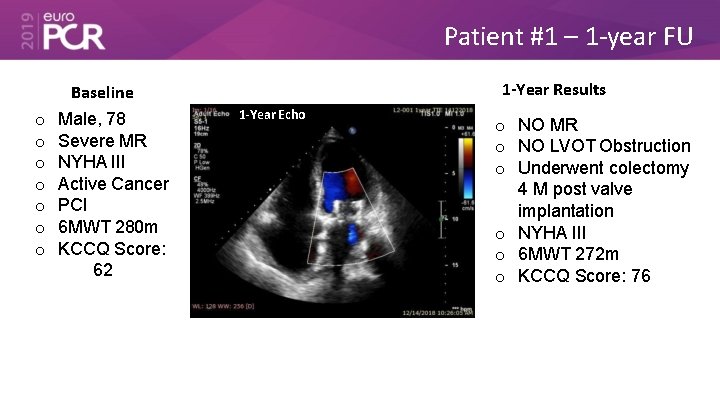
Patient #1 – 1 -year FU o o o o Baseline Male, 78 Severe MR NYHA III Active Cancer PCI 6 MWT 280 m KCCQ Score: 62 1 -Year Results 1 -Year Echo o NO MR o NO LVOT Obstruction o Underwent colectomy 4 M post valve implantation o NYHA III o 6 MWT 272 m o KCCQ Score: 76
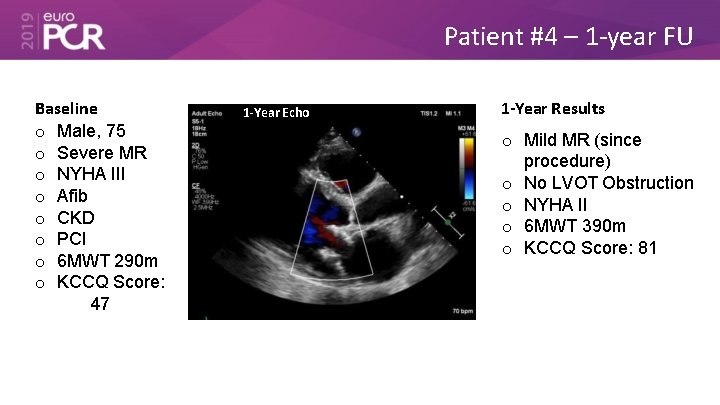
Patient #4 – 1 -year FU Baseline o Male, 75 o Severe MR o NYHA III o Afib o CKD o PCI o 6 MWT 290 m o KCCQ Score: 47 1 -Year Echo 1 -Year Results o Mild MR (since procedure) o No LVOT Obstruction o NYHA II o 6 MWT 390 m o KCCQ Score: 81
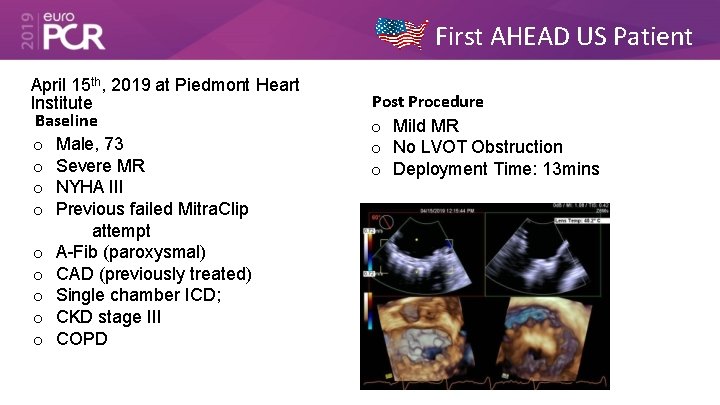
First AHEAD US Patient April 15 th, 2019 at Piedmont Heart Institute Baseline o Male, 73 o Severe MR o NYHA III o Previous failed Mitra. Clip attempt o A-Fib (paroxysmal) o CAD (previously treated) o Single chamber ICD; o CKD stage III o COPD Post Procedure o Mild MR o No LVOT Obstruction o Deployment Time: 13 mins
Take home message Cardiovalve offers a classical durable bovine pericardial tri-leaflets valve Delivered transfemorally Low number of anatomical screening failures Further investigation should be carried for fine tuning patients selection Improve access site management and standardize the post-procedural care 20
- Slides: 21