
Cardiotropic Drugs Cardiotropic Drugs l used for Congestive
- Slides: 16
Cardiotropic Drugs
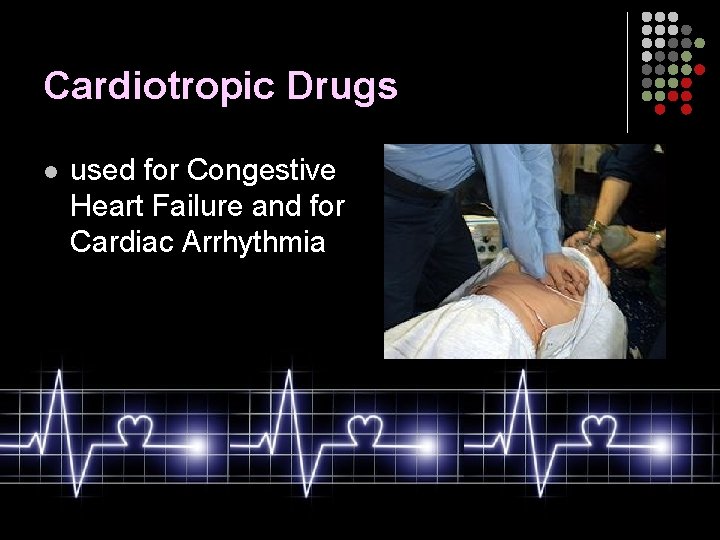
Cardiotropic Drugs l used for Congestive Heart Failure and for Cardiac Arrhythmia
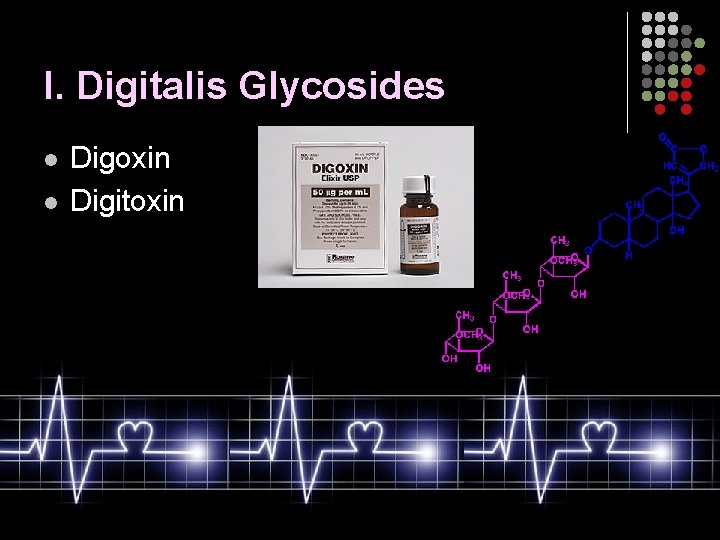
I. Digitalis Glycosides l l Digoxin Digitoxin
Digoxin § § § l l Half-life 35 – 40 h Therapeutic Range 0. 5 – 2 ng/m. L Toxic Level >2 ng/m. L Mechanism of Action Functions by inhibiting membrane Na+, K+ -ATPase (causes a decrease in intracellular potassium, resulting in increased intracellular calcium in cardiac contractility)
l Toxic Adverse Effects l l l Nausea Vomiting Visual disturbances Cardiac effects (premature ventricular contractions – PVC and atrioventricular node blockage) Route of Administration (oral)
l Important comments l l elimination of digoxin occurs primarily by renal filtration of the plasma free form in circulation, 25% is protein-bound and the rest is sequestered into muscle cells its therapeutic actions and toxicities is influenced by the concentration of serum electrolytes (low serum potassium and magnesium potentiate digoxin actions) Thyroid status also influence the action of digoxin: § Hyperthyroid patients: resistance § Hypothyroid patients: more sensitive
Digitoxin § § § l Half-life 4– 6 h Therapeutic Range 9 -25 ng/m. L Toxic Level >25 ng/m. L Important comments § Converted to active metabolite (digoxin) in the liver
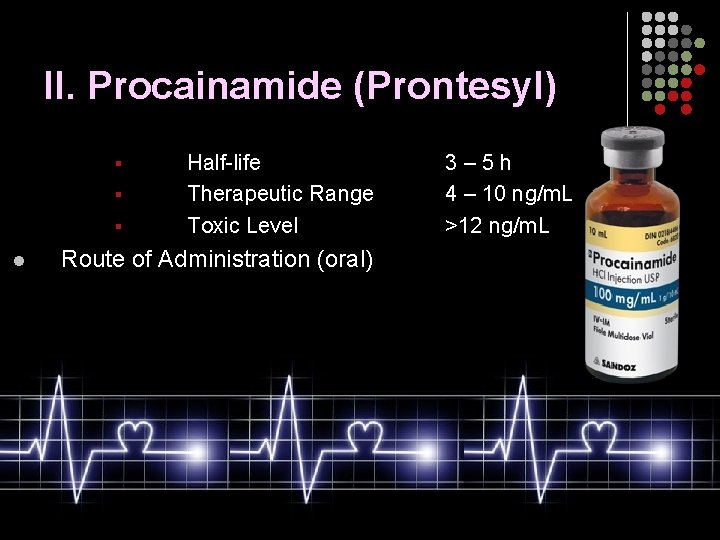
II. Procainamide (Prontesyl) § § § l Half-life Therapeutic Range Toxic Level Route of Administration (oral) 3– 5 h 4 – 10 ng/m. L >12 ng/m. L
l Important comments l l l Undergoes N-acetylation in the liver to form Nacetylprocainamide (NAPA) which is the active metabolite Toxic side effects related to Systemic Lupus Erythematosus (SLE) Gastrointestinal absorption is rapid and complete Absorbed procainamide is about 20% bound to plasma proteins Its active metabolite can be measured by immunoassay
III. Quinidine § § § l Toxic Adverse Effects l l Half-life 5 – 12 h Therapeutic Range 2. 3 – 5 ng/m. L Toxic Level >5 ng/m. L Nausea Vomiting Abdominal discomfort Route of Administration (oral)
l Important comments l l Measured fluorometrically (common) May also be determined by chromatography and immunoassay Undergoes hydroxylation in the liver Two most common formulations: Quinidine sulfate (gastrointestinal absorption is complete and rapid) § Quinidine gluconate § l l Absorbed quinidine is 70 – 80% bound to serum proteins Elimination is through hepatic metabolism
IV. Lidocaine (Xylocaine) § § § l Half-life 2 h Therapeutic Range 1. 2 – 5. 5 µg/m. L Toxic Level >5. 5 µg/m. L Important comments l l A local anesthetic Undergoes N-dealkylation in the liver Not protein-bound Not stored in tissues
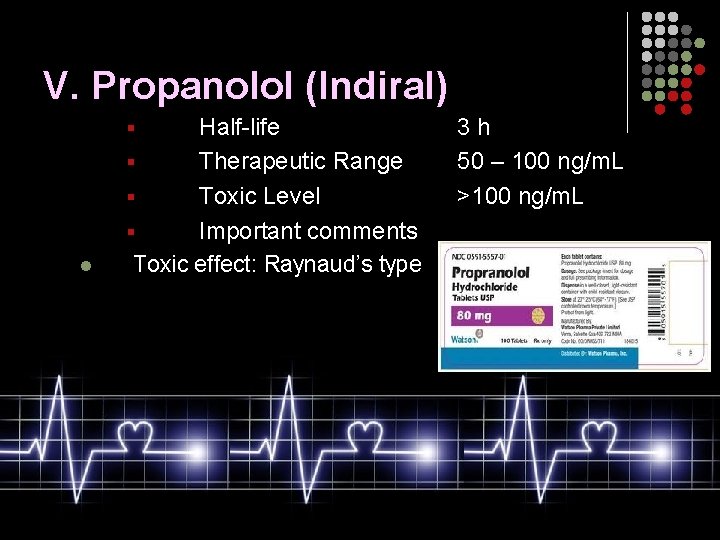
V. Propanolol (Indiral) Half-life § Therapeutic Range § Toxic Level § Important comments Toxic effect: Raynaud’s type § l 3 h 50 – 100 ng/m. L >100 ng/m. L
VI. Disopyramide l Important comments l l Commonly used as quinidine substitute when quinidine adverse effects are excessive Orally administered Gastrointestinal is complete and rapid Eliminated by renal filtration, and to a lesser extent, by hepatic metabolism
l Toxic Adverse Effects l Anticholinergic effects (>4. 5 µg/m. L) l l l Dry mouth Constipation Cardiac Effects (>10 µg/m. L) l l Bradycardia Atrioventricular node blockage
Thank you for listening!