
CardioRespiratory Symptoms Marwa Ahmed Salah Lecturer of internal

- Slides: 27
Cardio-Respiratory Symptoms Marwa Ahmed Salah Lecturer of internal medicine
Cardio-Respiratory Symptoms • • • Dyspnea Chest pain Palpitation Syncope Cough Hemoptysis
Dyspnea • It is a subjective feeling of difficulty breathing.
Dyspnea • Grades of dyspnea: • Grade I: Dyspnea on doing more than the usual daily effort. • Grade II: Dyspnea on doing the usual daily effort. • Grade III: Dyspnea on doing less than the usual daily effort. • Grade IV: Dyspnea at rest.
Pathogenesis of dyspnea • I. Increased ventilation – A. Chemical factors – B. Reflex stimulation from pulmonary vessels, lung tissues, pulmonary veins or right atrium. • II. Decreased vital capacity of the lung – A. Mechanical factors – B. Disturbed V/Q ratio
Pathogenesis of dyspnea • I. Increased ventilation • This is due to stimulation of the respiratory centre either by: • A. Chemical factors: Hypoxia , hypercapnea or acidosis. .
• B. Reflex stimulation from pulmonary vessels, lung tissues, pulmonary veins or right atrium. • Activation of Hering-Breuer reflex due to interstitial pulmonary oedema result into tachypnea and dyspnea. • Activation of Churchill-Cope reflex; due to pulmonary venous congestion.
Pathogenesis of dyspnea II. Decreased vital capacity of the lung A. Mechanical factors: Pulmonary congestion Low cardiac output leads to fatigue and weakness of respiratory muscles. • Hydrothorax leads to mechanical compression of the lungs. • Ascites and enlarged tender liver which may elevate the diaphragm and decreases its mobility. • Massive pericardial effusion and huge cardiomegaly occasionally compress the lungs and bronchi. • •
• B. Disturbed V/Q ratio: • The well ventilated areas of the lung should be well perfused with blood and vice versa. • This keeps the V/Q ratio within the normal range. • If this is disturbed dyspnea occurs.
Causes of dyspnea • Non-cardiorespiratory: – anemia, metabolic acidosis, Psychogenic. • Cardiac: – Left ventricular failure, mitral valve disease, massive pericardial effusion.
Causes of dyspnea • Respiratory: • Chronic Obstructive Pulmonary Diseases(emphysema • • • , asthma) Parenchymal lung diseases (Interstitial pulmonary fibrosis, TB, Pneumonia) Pleural diseases (effusion, pneumothorax, fibrosis) Pulmonary embolism. Bronchogenic carcinoma. Diseases of the chest wall (Kyphoscoliosis) Neuromuscular diseases (Myasthenia Gravis)
Other forms of dyspnea • Paroxysmal nocturnal dyspnea: (PND) • It is a paroxysmal attack of dyspnea that usually occurs at night, awake the patient 2 -3 hours after sleep with marked inspiratory dyspnea, cough with frothy expectoration, fighting for air. • It occurs in patients with congestive heart failure. • The main mechanism is aggravation of pulmonary venous congestion due to absorption of edema fluid from ECS to the circulation increasing the venous return to the heart. • When it is associated with wheezes due to bronchospasm it is known as “Cardiac Asthma”.
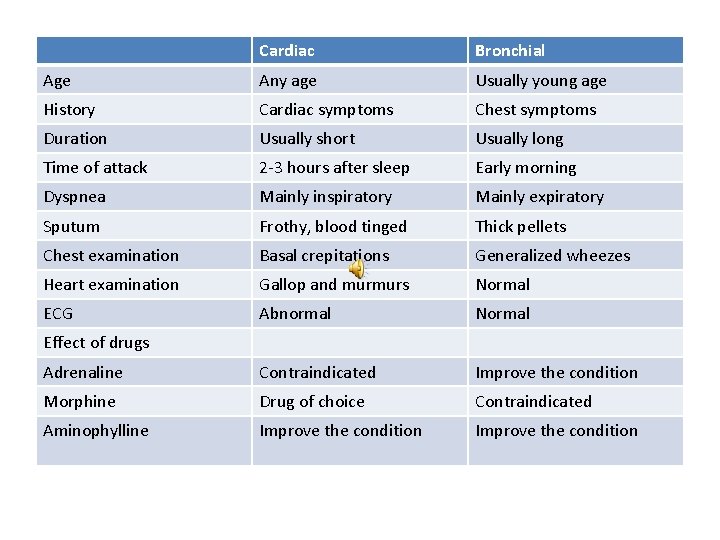
Cardiac Bronchial Age Any age Usually young age History Cardiac symptoms Chest symptoms Duration Usually short Usually long Time of attack 2 -3 hours after sleep Early morning Dyspnea Mainly inspiratory Mainly expiratory Sputum Frothy, blood tinged Thick pellets Chest examination Basal crepitations Generalized wheezes Heart examination Gallop and murmurs Normal ECG Abnormal Normal Adrenaline Contraindicated Improve the condition Morphine Drug of choice Contraindicated Aminophylline Improve the condition Effect of drugs
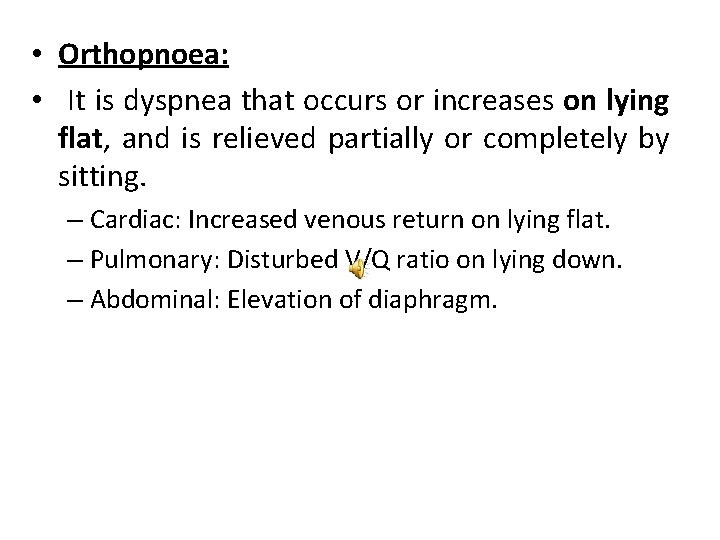
• Orthopnoea: • It is dyspnea that occurs or increases on lying flat, and is relieved partially or completely by sitting. – Cardiac: Increased venous return on lying flat. – Pulmonary: Disturbed V/Q ratio on lying down. – Abdominal: Elevation of diaphragm.
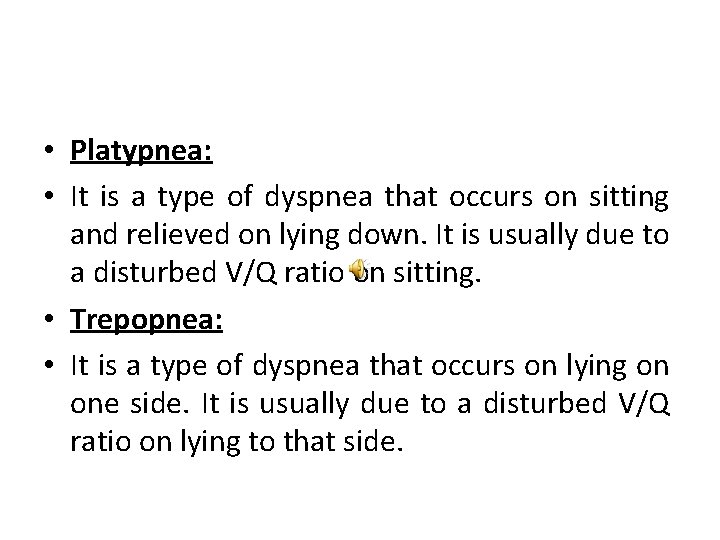
• Platypnea: • It is a type of dyspnea that occurs on sitting and relieved on lying down. It is usually due to a disturbed V/Q ratio on sitting. • Trepopnea: • It is a type of dyspnea that occurs on lying on one side. It is usually due to a disturbed V/Q ratio on lying to that side.
Cough & hemoptysis • It is a characteristic sound caused by a forced expulsion against an initially closed glottis.
• Acute cough • Is one lasting less than 3 weeks. • The most common cause of acute cough is acute upper respiratory tract viral infection. • Acute cough is usually self-limiting and benign, but may occurin more serious conditions.
• Chronic cough • Lasts more than 8 weeks. • Chronic cough in anon-smoker with a normal chest X-ray is usually caused by gastroesophageal reflux disease, chronic sinus disease with postnasal drip or angiotensinconvertingenzyme inhibitors.
• Dry cough • Tracheitis and pneumonia cause dry, centrally painful and nonproductive cough. Chronic dry cough occurs in interstitial lung disease, e. g. idiopathic pulmonary fibrosis.
Productive cough It is mucus produced from the respiratory tract. Types of sputum: Clear or ‘mucoid’ sputum is produced in chronic bronchitis and COPD with no active infection. • Yellow sputum occurs in acute lower respiratory tract infection (live neutrophils) and in asthma (eosinophils). • Green purulent sputum (dead neutrophils) indicates chronic infection, e. g. in COPD or bronchiectasis. • Rusty red sputum can occur in early pneumococcal pneumonia, as pneumonic inflammation causes lysis of red cells. • •
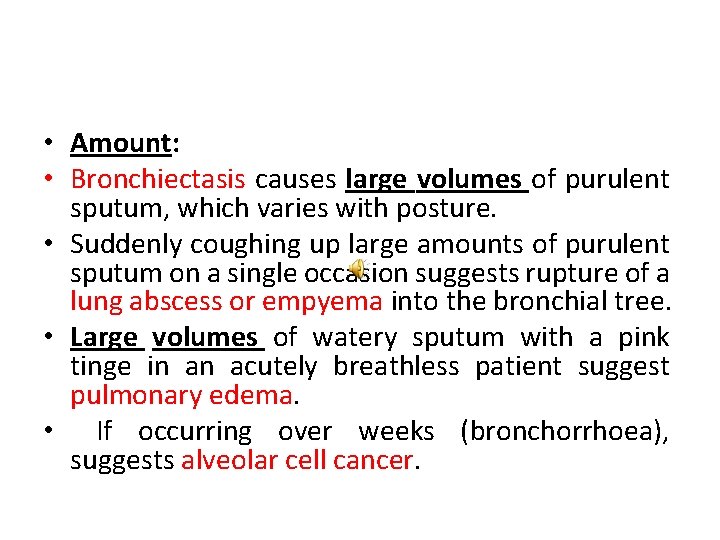
• Amount: • Bronchiectasis causes large volumes of purulent sputum, which varies with posture. • Suddenly coughing up large amounts of purulent sputum on a single occasion suggests rupture of a lung abscess or empyema into the bronchial tree. • Large volumes of watery sputum with a pink tinge in an acutely breathless patient suggest pulmonary edema. • If occurring over weeks (bronchorrhoea), suggests alveolar cell cancer.
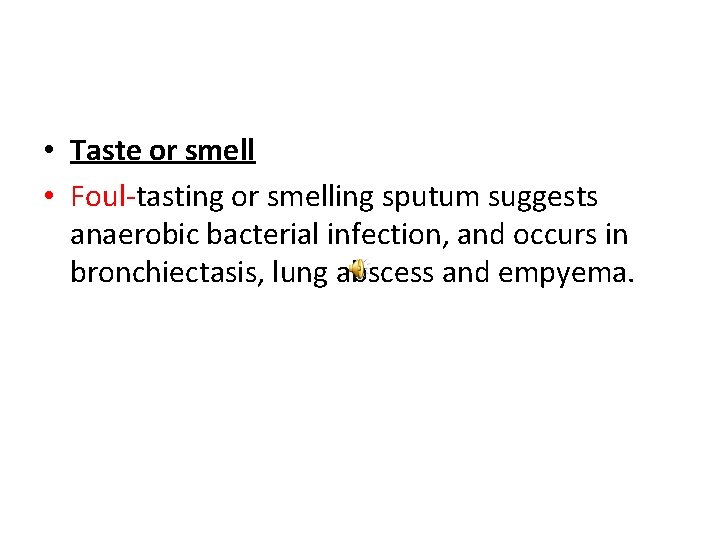
• Taste or smell • Foul-tasting or smelling sputum suggests anaerobic bacterial infection, and occurs in bronchiectasis, lung abscess and empyema.
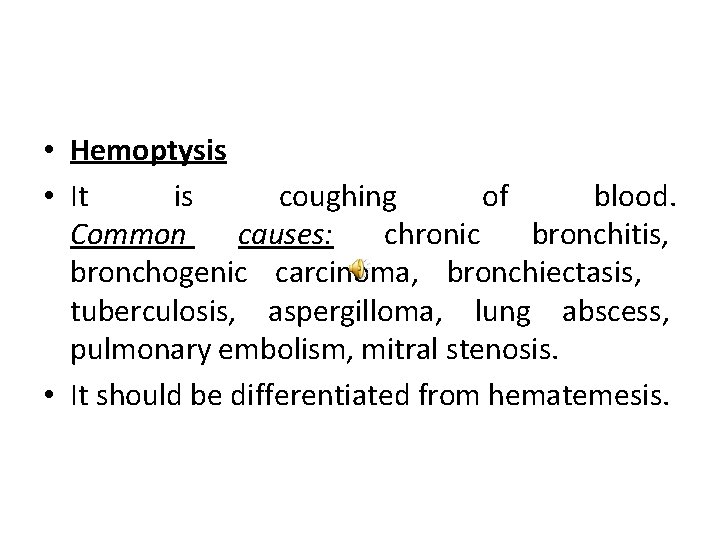
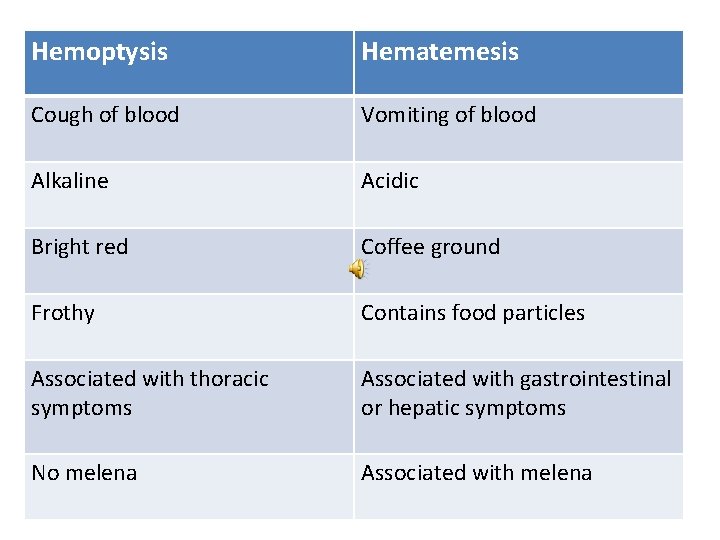
• Hemoptysis • It is coughing of blood. Common causes: chronic bronchitis, bronchogenic carcinoma, bronchiectasis, tuberculosis, aspergilloma, lung abscess, pulmonary embolism, mitral stenosis. • It should be differentiated from hematemesis.
Hemoptysis Hematemesis Cough of blood Vomiting of blood Alkaline Acidic Bright red Coffee ground Frothy Contains food particles Associated with thoracic symptoms Associated with gastrointestinal or hepatic symptoms No melena Associated with melena
• Hoarseness of voice • It is most commonly caused by laryngitis. Damage to the left recurrent laryngeal nerveby lung cancer at the left hilum causes hoarseness witha prolonged, low-pitched, ‘bovine’ cough as the left vocal cord cannot adduct to the midline.
• Wheezy chest • It is a high-pitched whistling sound produced by air passing through narrowed small airways. • It occurs with expiration. • Wheeze on exercise is common in asthma and COPD. • Night wakening with wheeze suggests asthma or paroxysmal nocturnal dyspnea, but wheeze after wakening in the morning suggests COPD.
Thank you