
Cardinal Manifestation of Disease EDEMA Dr Megangela Christi

- Slides: 22
Cardinal Manifestation of Disease: EDEMA Dr. Meg-angela Christi Amores
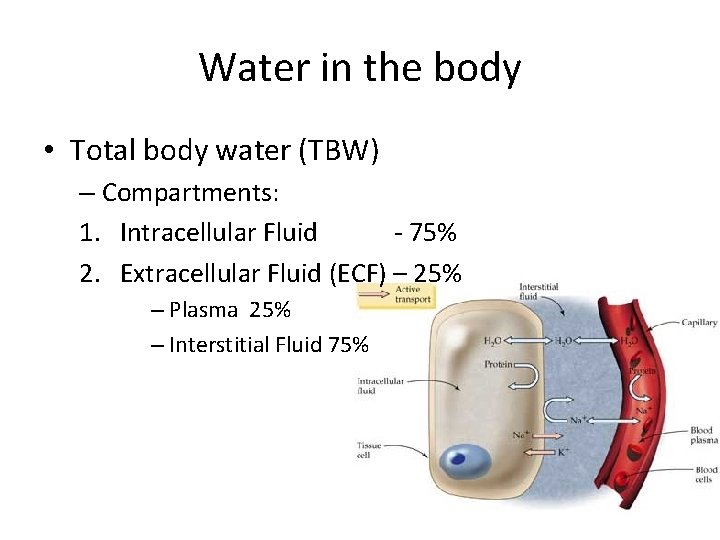
Water in the body • Total body water (TBW) – Compartments: 1. Intracellular Fluid - 75% 2. Extracellular Fluid (ECF) – 25% – Plasma 25% – Interstitial Fluid 75%
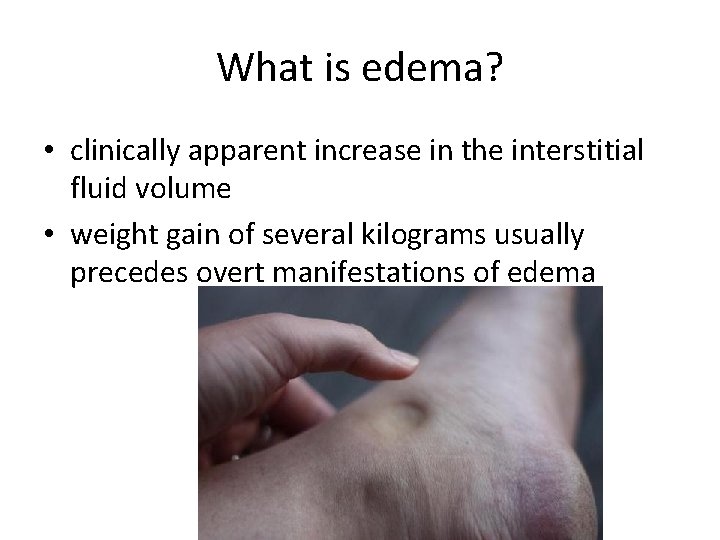
What is edema? • clinically apparent increase in the interstitial fluid volume • weight gain of several kilograms usually precedes overt manifestations of edema
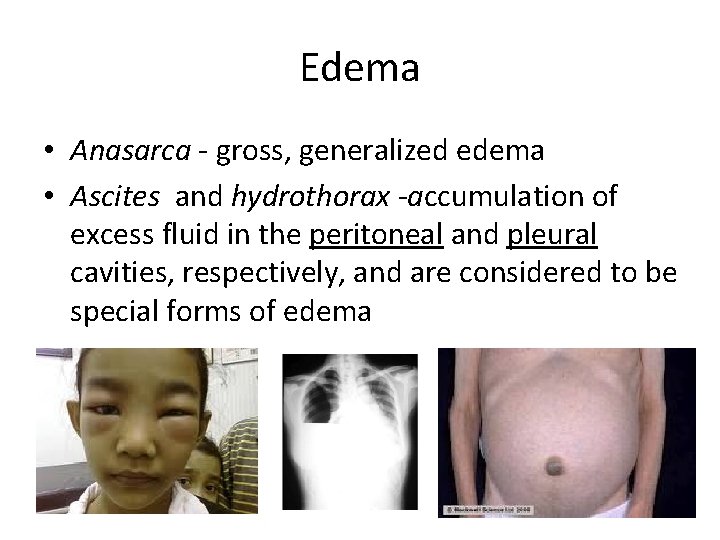
Edema • Anasarca - gross, generalized edema • Ascites and hydrothorax -accumulation of excess fluid in the peritoneal and pleural cavities, respectively, and are considered to be special forms of edema
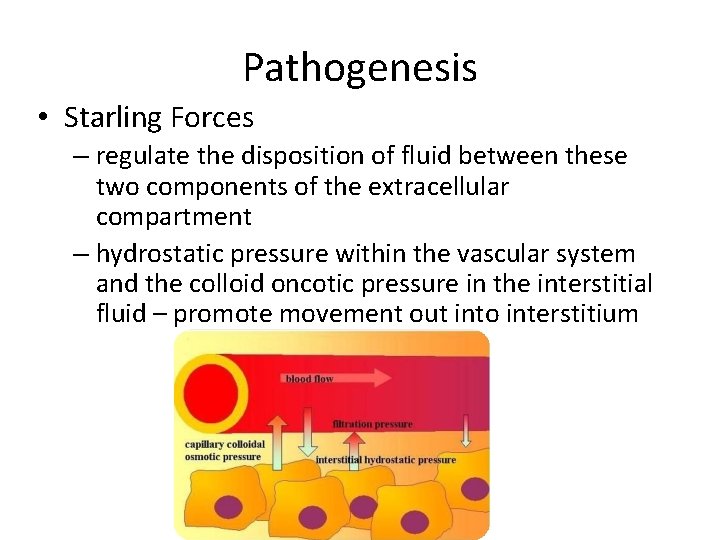
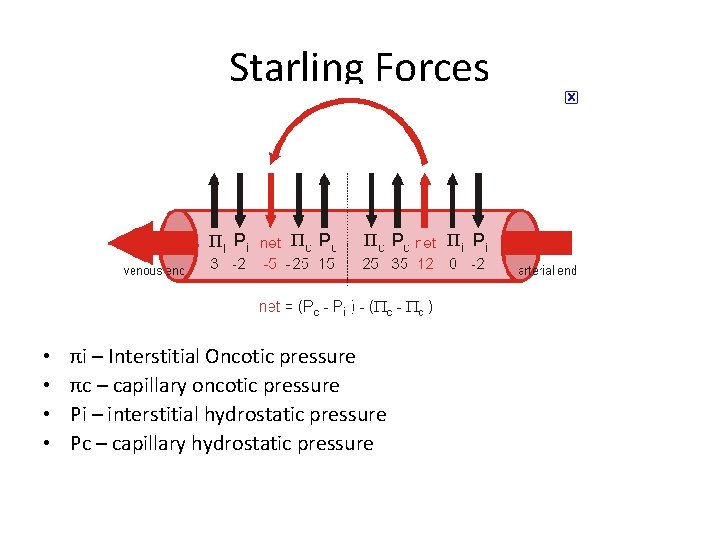
Pathogenesis • Starling Forces – regulate the disposition of fluid between these two components of the extracellular compartment – hydrostatic pressure within the vascular system and the colloid oncotic pressure in the interstitial fluid – promote movement out into interstitium
Starling Forces • • πi – Interstitial Oncotic pressure πc – capillary oncotic pressure Pi – interstitial hydrostatic pressure Pc – capillary hydrostatic pressure
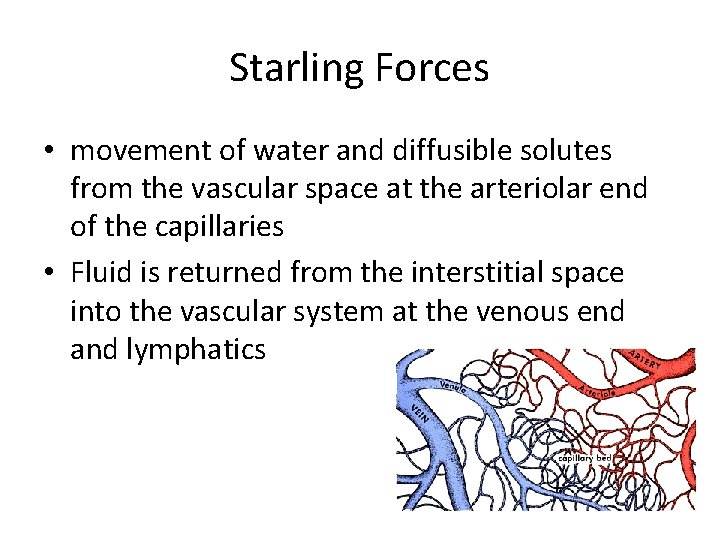
Starling Forces • movement of water and diffusible solutes from the vascular space at the arteriolar end of the capillaries • Fluid is returned from the interstitial space into the vascular system at the venous end and lymphatics
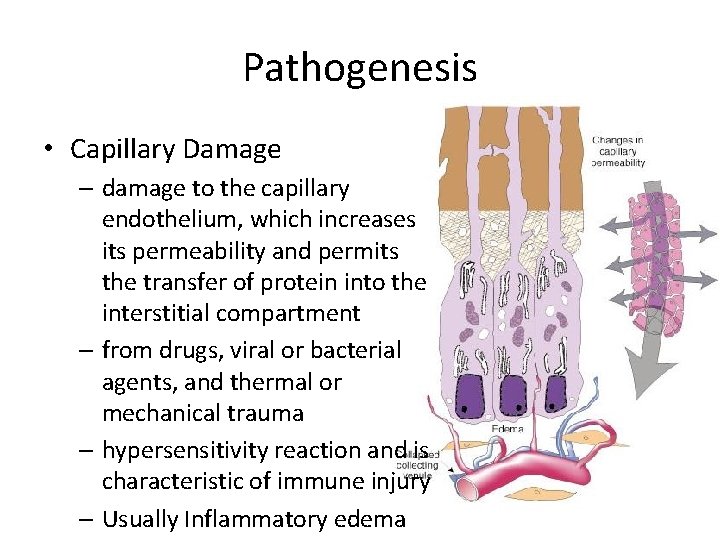
Pathogenesis • Capillary Damage – damage to the capillary endothelium, which increases its permeability and permits the transfer of protein into the interstitial compartment – from drugs, viral or bacterial agents, and thermal or mechanical trauma – hypersensitivity reaction and is characteristic of immune injury – Usually Inflammatory edema
Pathogenesis • Reduction of Effective Arterial Volume – by a reduction of cardiac output and/or systemic vascular resistance – retention of salt and, therefore, of water, ultimately leading to edema • Renal Factors and RAA System – renal retention of Na+ is central – Diminished renal blood flow = renin release – Renin = release angiotensin I = angiotensin II – Angiotensin II - enhancing salt and water reabsorption
Pathogenesis • Others: – Argininine Vasopressin – Endothelin – Natriuretic peptides
Clinical Causes of Edema • • • Obstruction of Venous Drainage of a limb Congestive Heart Failure Nephrotic Syndrome and Hypoalbuminemia Cirrhosis Drug-induced Edema Idiopathic Edema
Obstruction of Venous Return • hydrostatic pressure in the capillary bed upstream (proximal) to the obstruction increases • Alternative route may also be blocked (lymph) • there is trapping of fluid in the extremity • displacement of fluid into a limb occur at the expense of the blood volume in the remainder of the body = dec arterial blood volume retention of Na. Cl and H 2 O
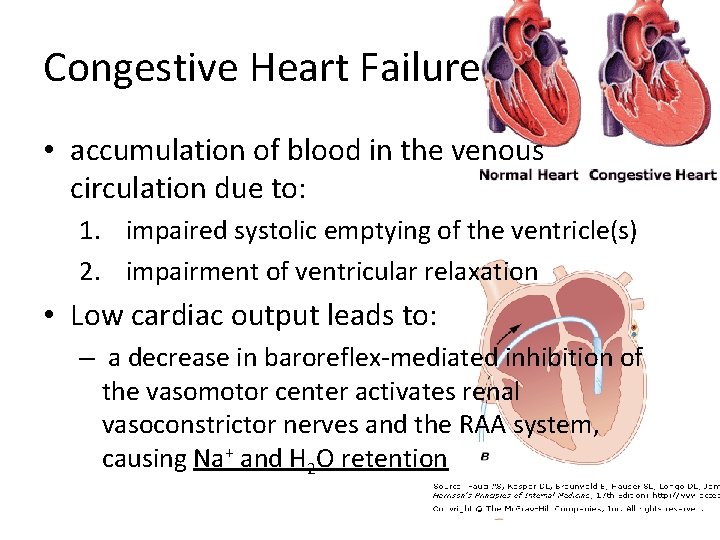
Congestive Heart Failure • accumulation of blood in the venous circulation due to: 1. impaired systolic emptying of the ventricle(s) 2. impairment of ventricular relaxation • Low cardiac output leads to: – a decrease in baroreflex-mediated inhibition of the vasomotor center activates renal vasoconstrictor nerves and the RAA system, causing Na+ and H 2 O retention
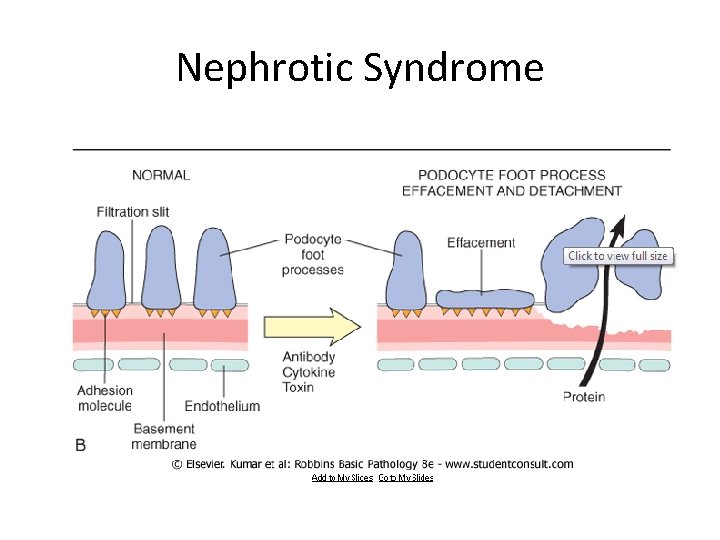
Nephrotic Syndrome • Proteinuria • Hypoalbuminemia • diminished colloid oncotic pressure due to losses of large quantities of protein into the urine • Na. Cl and H 2 O that are retained cannot be restrained within the vascular compartment • Impaired renal function contributes further to the formation of edema
Nephrotic Syndrome
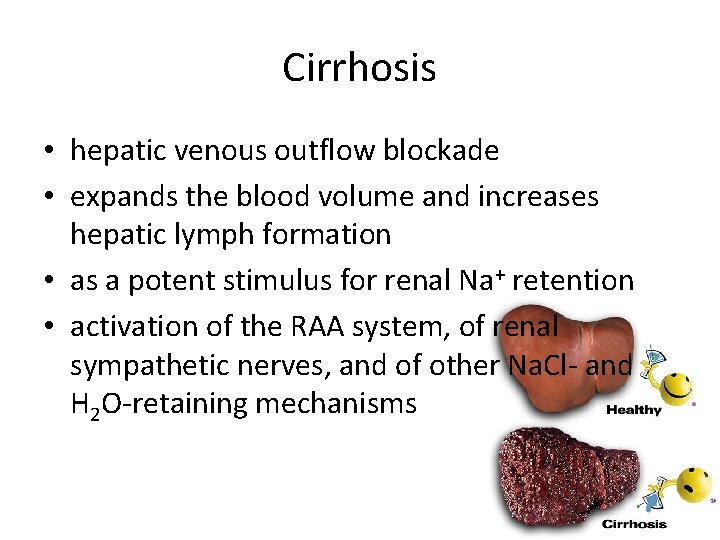
Cirrhosis • hepatic venous outflow blockade • expands the blood volume and increases hepatic lymph formation • as a potent stimulus for renal Na+ retention • activation of the RAA system, of renal sympathetic nerves, and of other Na. Cl- and H 2 O-retaining mechanisms
Drug-Induced • • Nonsteroidal anti-inflammatory drugs Antihypertensive agents Direct arterial/arteriolar vasodilators Calcium channel antagonists A -Adrenergic antagonists Steroid hormones Cyclosporine Growth hormone
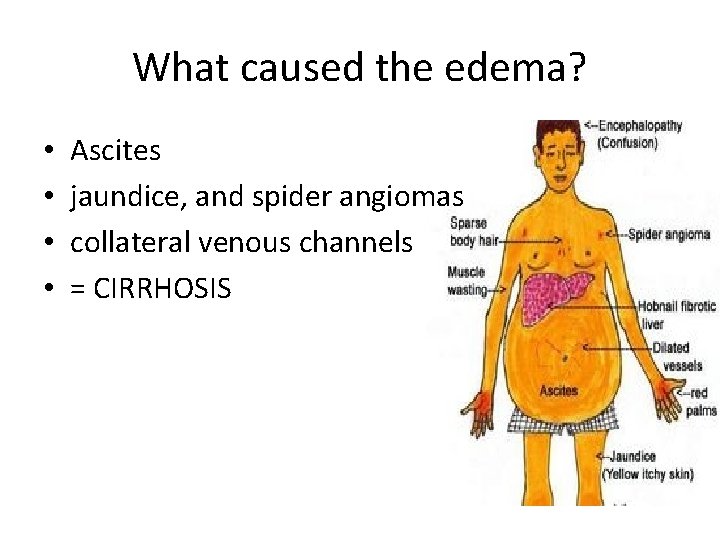
What caused the edema? • • Ascites jaundice, and spider angiomas collateral venous channels = CIRRHOSIS
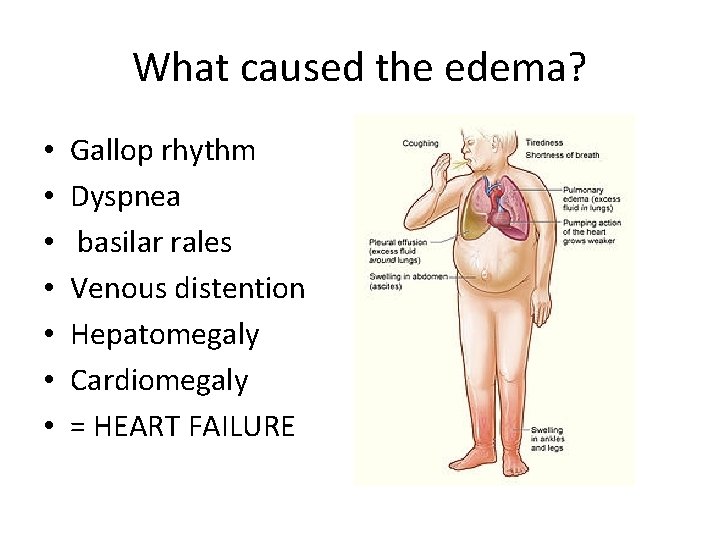
What caused the edema? • • Gallop rhythm Dyspnea basilar rales Venous distention Hepatomegaly Cardiomegaly = HEART FAILURE
What caused the edema? • • Blood in urine Proteinuria Hypoalbuminemia = NEPHROTIC SYNDROME
Distribution • thrombophlebitis, chronic lymphangitis, resection of regional lymph nodes, filariasis • =LOCALIZED • Heart failure, nephrotic syndrome, cirrhosis • =GENERALIZED
• For the next meeting, read on Stroke Syndromes • Harrison’s Principles of Internal Medicine 17 th edition