
Cardiac Resuscitation Critical Care and Paramedic Levels Chest
- Slides: 14
Cardiac / Resuscitation Critical Care and Paramedic Levels
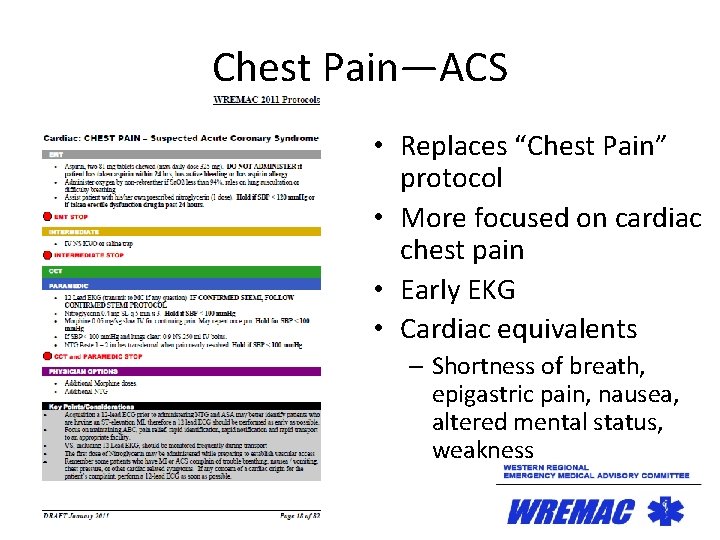
Chest Pain—ACS • Replaces “Chest Pain” protocol • More focused on cardiac chest pain • Early EKG • Cardiac equivalents – Shortness of breath, epigastric pain, nausea, altered mental status, weakness
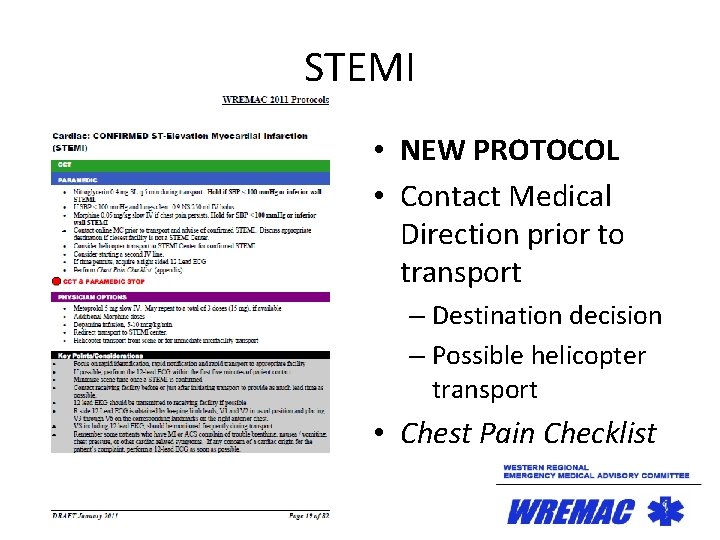
STEMI • NEW PROTOCOL • Contact Medical Direction prior to transport – Destination decision – Possible helicopter transport • Chest Pain Checklist
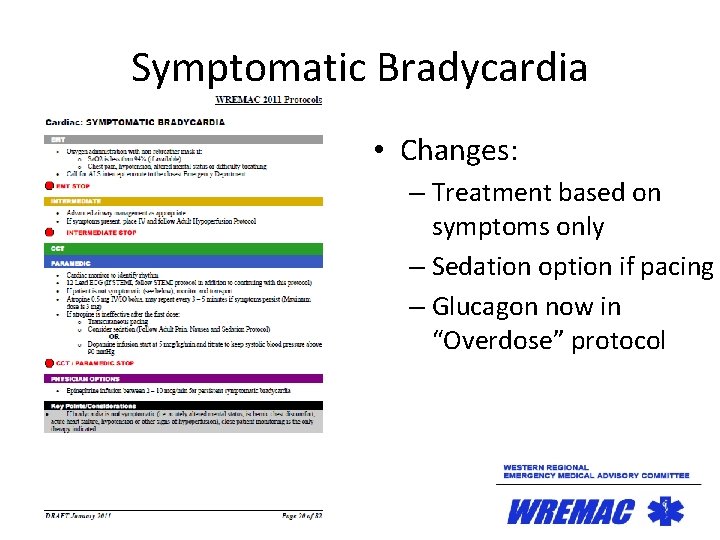
Symptomatic Bradycardia • Changes: – Treatment based on symptoms only – Sedation option if pacing – Glucagon now in “Overdose” protocol
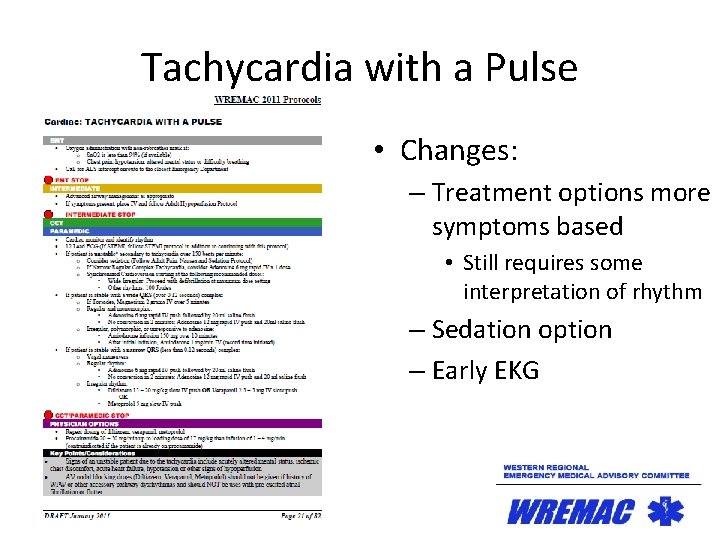
Tachycardia with a Pulse • Changes: – Treatment options more symptoms based • Still requires some interpretation of rhythm – Sedation option – Early EKG
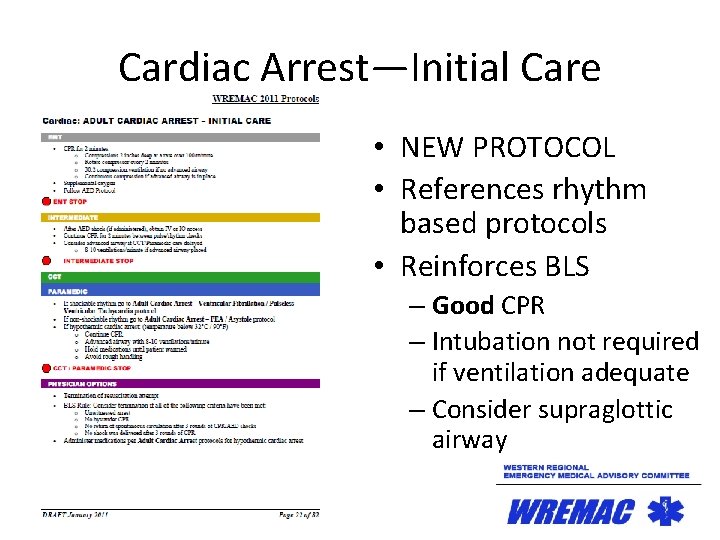
Cardiac Arrest—Initial Care • NEW PROTOCOL • References rhythm based protocols • Reinforces BLS – Good CPR – Intubation not required if ventilation adequate – Consider supraglottic airway
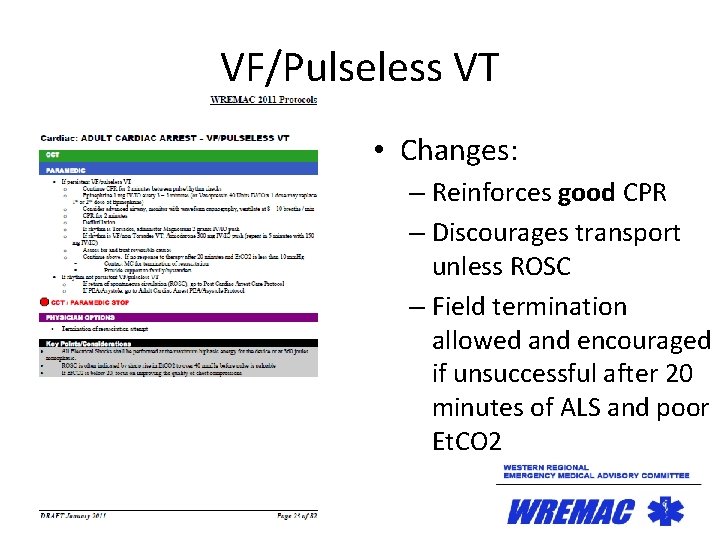
VF/Pulseless VT • Changes: – Reinforces good CPR – Discourages transport unless ROSC – Field termination allowed and encouraged if unsuccessful after 20 minutes of ALS and poor Et. CO 2
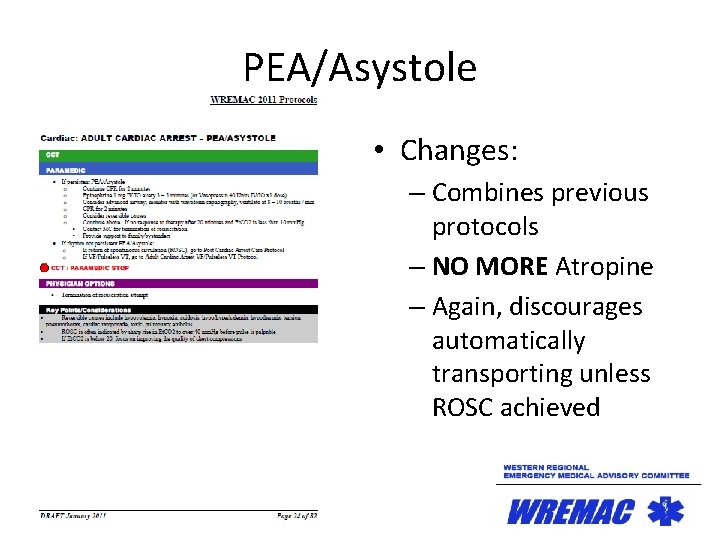
PEA/Asystole • Changes: – Combines previous protocols – NO MORE Atropine – Again, discourages automatically transporting unless ROSC achieved
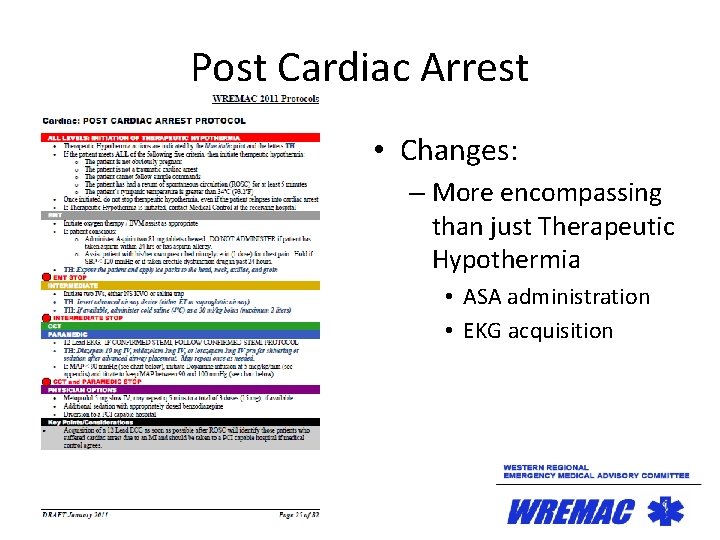
Post Cardiac Arrest • Changes: – More encompassing than just Therapeutic Hypothermia • ASA administration • EKG acquisition
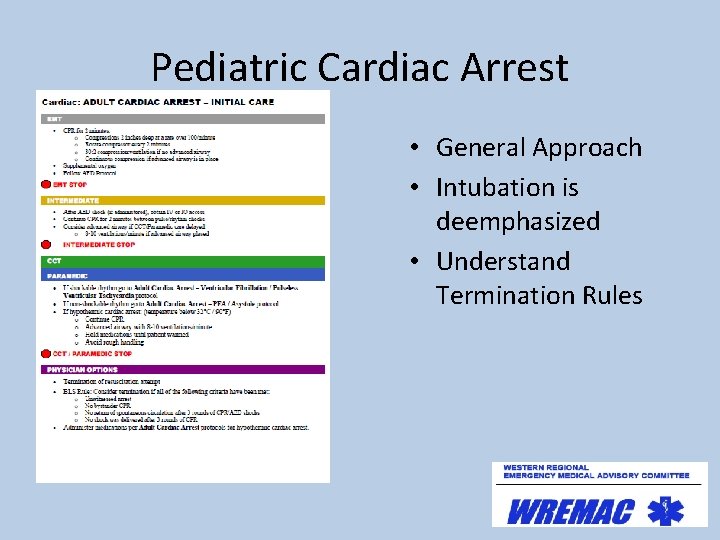
Pediatric Cardiac Arrest • General Approach • Intubation is deemphasized • Understand Termination Rules
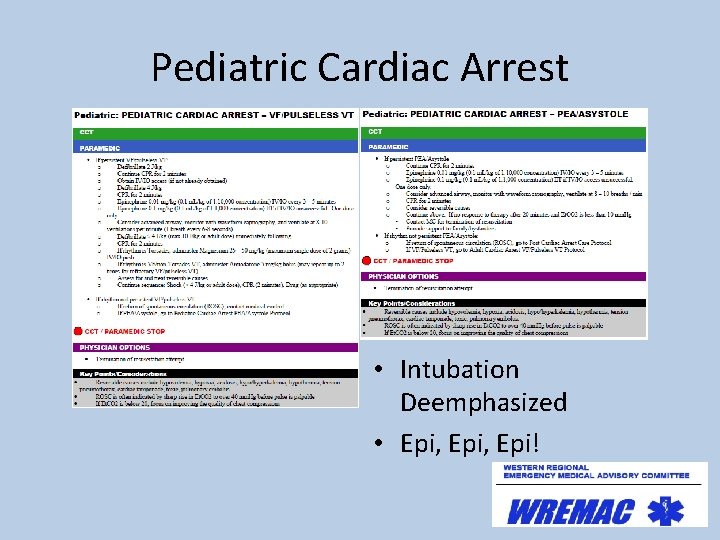
Pediatric Cardiac Arrest • Intubation Deemphasized • Epi, Epi!
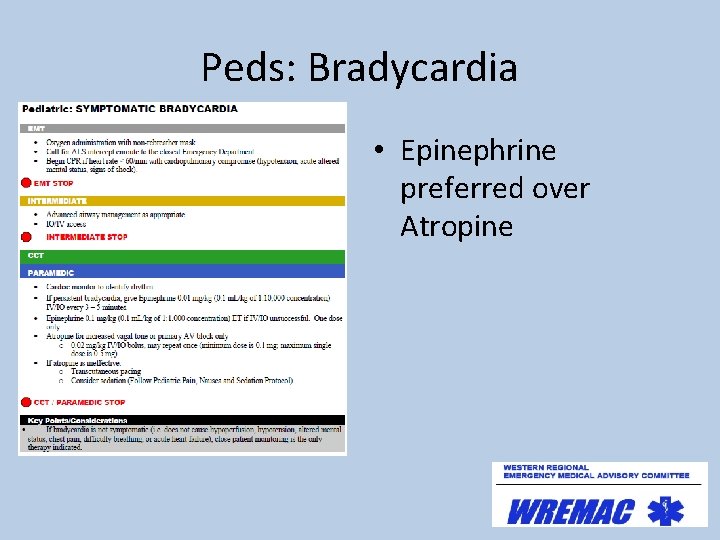
Peds: Bradycardia • Epinephrine preferred over Atropine
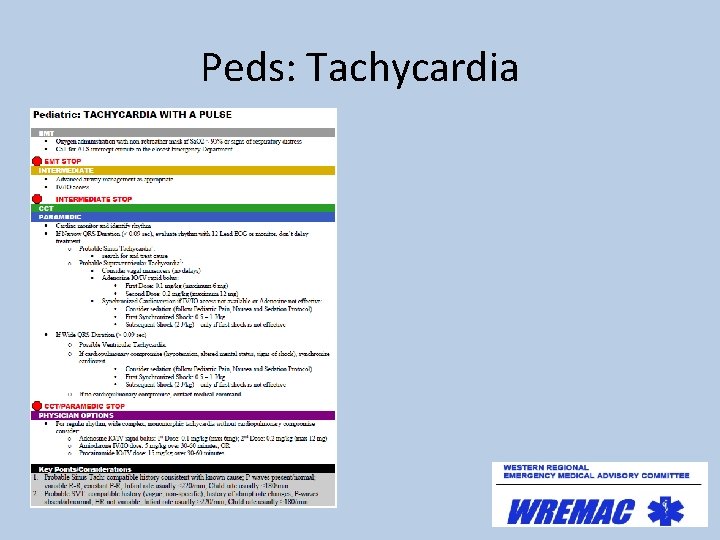
Peds: Tachycardia
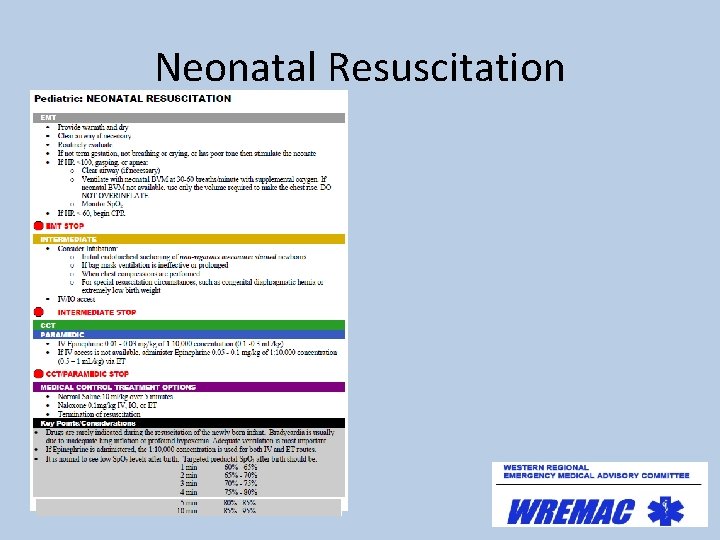
Neonatal Resuscitation