
Cardiac Psychiatry Review and Updates Scott R Beach
Cardiac Psychiatry: Review and Updates Scott R. Beach, MD, FAPM Avery D. Weisman Psychiatric Consultation Service Program Director, Adult Psychiatry Residency Massachusetts General Hospital MGH Cardiac Psychiatry Research Group Assistant Professor in Psychiatry, Harvard Medical School Version of March 15, 2019 ACADEMY OF CONSULTATION-LIAISON PSYCHIATRY Psychiatrists Providing Collaborative Care Bridging Physical and Mental Health
Outline § QT Interval and Psychiatric Medications – Defining and calculating the QT and QTc intervals – Antidepressants and QT prolongation – Antipsychotics and QT prolongation § Cardiotoxicity with Clozapine § Depression in Cardiac Patients Academy of Consultation-Liaison Psychiatry 2
Goals of this Update § Antidepressants and antipsychotics can have some effect on QTc – Is citalopram different than other SSRIs? – Has the citalopram warning had unexpected negative consequences? – Which antipsychotic has the greatest risk of increasing QTc? § Clozapine has various forms of cardiotoxicity – What are the current recommendations for screening and treatment? § Depression is associated with multiple forms of heart disease – Is depression a risk factor for cardiac disease? – What about depression and cardiac outcomes? – What about depression in heart failure? Academy of Consultation-Liaison Psychiatry 3
What is the QT Interval? § QT interval - ventricular depolarization and repolarization § Depolarization – Rapid influx of sodium ions – Measured by QRS interval – A small handful of psychiatric medications block Na channels § TCAs, carbamazepine, lithium, loxapine, trifluoperazine § Repolarization – Potassium channels are the most important – Also involves calcium and sodium channels – Almost all drugs (including most psychiatric medications) that prolong QT do so by blocking Ikr § Duration of repolarization is inversely related to heart rate Academy of Consultation-Liaison Psychiatry

Normal ECG Recording Voltage (m. V) 0. 04 sec Time (sec) Academy of Consultation-Liaison Psychiatry
How Do You Measure QT and Correct for Rate? § ECG uses Bazett’s formula: QTc = QT / RR 1/2 – RR and QT are measured in seconds – Not accurate at heart rates significantly different than 60 bpm § AHA recommends linear formula – Hodge’s: QTc = QT + 1. 75(HR-60) – Framingham: QTc = QT + 0. 154(1 -RR) § Most reliable method of measuring the QT is by hand – Should be measured in lead with the longest interval (often V 2 or V 3) § QT interval not useful measure of risk in LBBB and paced ventricular rhythm - depolarization increased at baseline – Use JT Index; JT = QT – QRS; JTI = [JT(HR+100)/518] § Prolonged JTI >112 ms § For atrial fibrillation, there is really no good method Academy of Consultation-Liaison Psychiatry

Example of Calculation of QTc using Bazetts vs. Hodges § Using Bazett, § If the QT interval derived by hand is 420 ms, § And the HR is 120 bpm, § Then the R-R interval is 60 seconds * 1000/HR = 500 ms = 0. 5 s § And the QTc is. 420/√ 0. 5 =. 594 s = 594 ms § Using Hodges, § QTc = 420 ms + 1. 75(120 -60) = 525 ms Academy of Consultation-Liaison Psychiatry 7
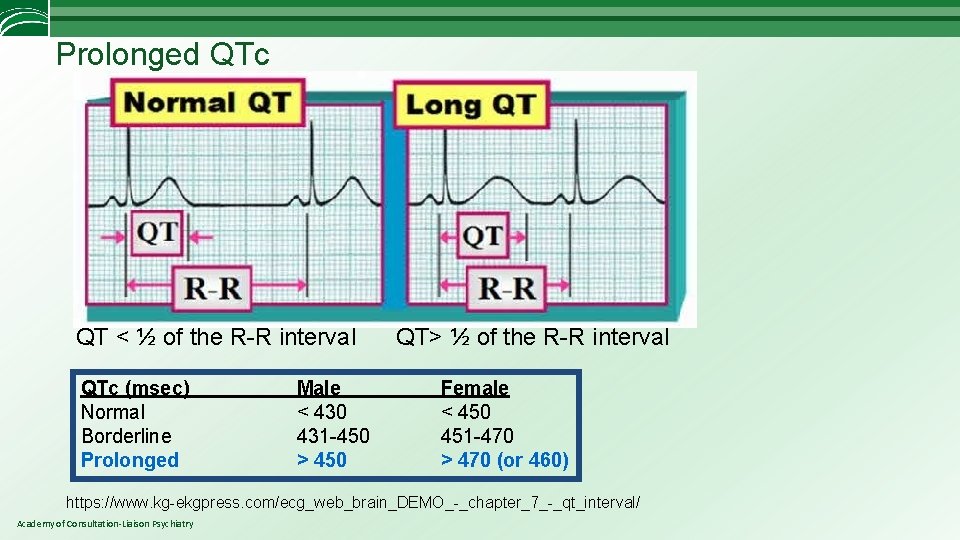
Prolonged QTc QT < ½ of the R-R interval QTc (msec) Normal Borderline Prolonged Male < 430 431 -450 > 450 QT> ½ of the R-R interval Female < 450 451 -470 > 470 (or 460) https: //www. kg-ekgpress. com/ecg_web_brain_DEMO_-_chapter_7_-_qt_interval/ Academy of Consultation-Liaison Psychiatry
What is Clinically Relevant QTc Change? § FDA 1 § Threshold level of regulatory concern: Increase of 5 ms above baseline § Clinical Consensus § QTc >500 ms (others say >450 or >480) § Change from baseline: ≥ 30 ms OR ≥ 60 ms 1) US Department of Health and Human Services; www. fda. gov/downloads/Regulatory. Information/guidances/ucm 129357. pdf Academy of Consultation-Liaison Psychiatry
Risk Factors for QT Prolongation – Congenital Long QT Syndrome § 12% of patients with LQTS have QTc in the “normal range” § 5 -10% of patients who develop Td. P may be silent carriers of gene mutations – Increased age – Female sex (between adolescence and elderly) § Normal QTc interval <460 ms for women and <450 ms for men – Bradycardia, frequent ectopy – Hypokalemia, hypocalcemia, and hypomagnesemia – Multiple medical conditions – Diurnal variation up to 75 -100 ms - sleep is a risk factor – Alcohol, cocaine – Medications (partial list) § Macrolide and quinolone antibiotics, methadone, antifungals (enzyme inhibition), antimalarials, cisapride Academy of Consultation-Liaison Psychiatry
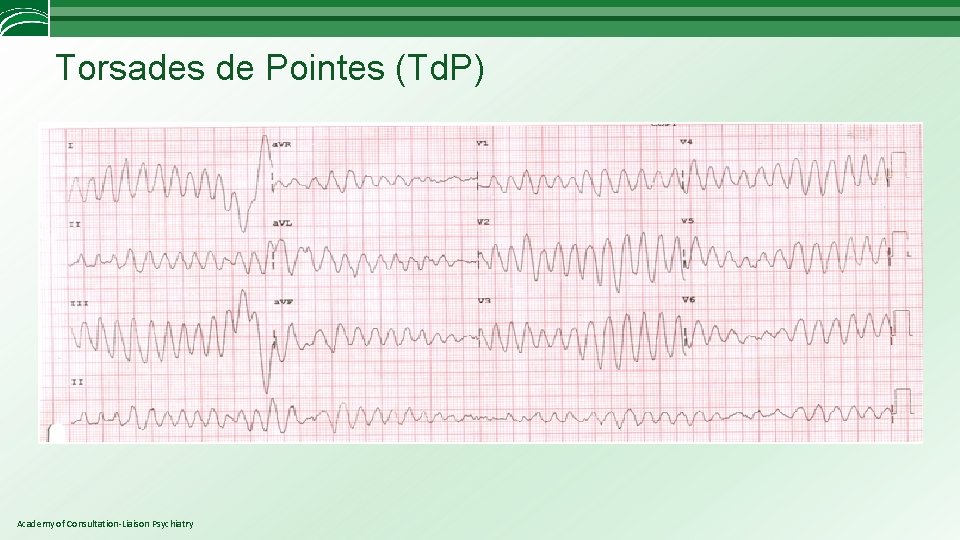
Torsades de Pointes (Td. P) Academy of Consultation-Liaison Psychiatry
What is the Relationship between QTc and Torsades de Pointes (Td. P)? § QT prolongation is a surrogate marker, but not always associated with Td. P § Risk for cardiac event is 1. 052 x; “x” is the 10 msec increase in QTc over 400 – 500 msec = 1. 66 -fold increase compared to 400 msec – 525 msec = 1. 88 -fold increase compared to 400 msec – 550 msec= 2. 14 -fold increase compared to 400 msec – 600 msec = 2. 76 -fold increase compared to 400 msec Academy of Consultation-Liaison Psychiatry
Antidepressants and QT Prolongation § Tricyclics – Sodium channel blockers – Pose danger at therapeutic doses, primarily in patients with pre-existing bundle branch disease or ischemic heart disease – Amitriptyline and Maprotiline most commonly implicated; clomipramine may be least likely § SSRIs – – Had been considering safe; overall magnitude of QTc increase with most SSRIs is small Most studied in cardiac populations Case reports for all agents except paroxetine linked to QT prolongation or Td. P existed prior to 2011 New data to suggest that citalopram appears to be the worst offender (and escitalopram to a lesser extent) Academy of Consultation-Liaison Psychiatry 13
The Citalopram Controversy § 8/24/11: FDA Drug Safety Communication – Citalopram should not be prescribed at doses greater than 40 mg – Citalopram should not be used at doses >20 mg in those with liver dysfunction or over age 60 § 3/28/12: FDA Revised Recommendation – Citalopram is not recommended at doses greater than 40 mg – Citalopram should be discontinued in anyone with QTc>500 msec § Recommendations based on a single study showing increase of 8. 5 msec at 20 mg and 18. 5 msec at 60 mg § Actual QTc prolongation remains minimal (~6 ms per 20 mg citalopram) § Similar study conducted with escitalopram (4. 5 msec at 10 mg and 10. 7 msec at 30 mg) but no FDA recommendations Academy of Consultation-Liaison Psychiatry 14
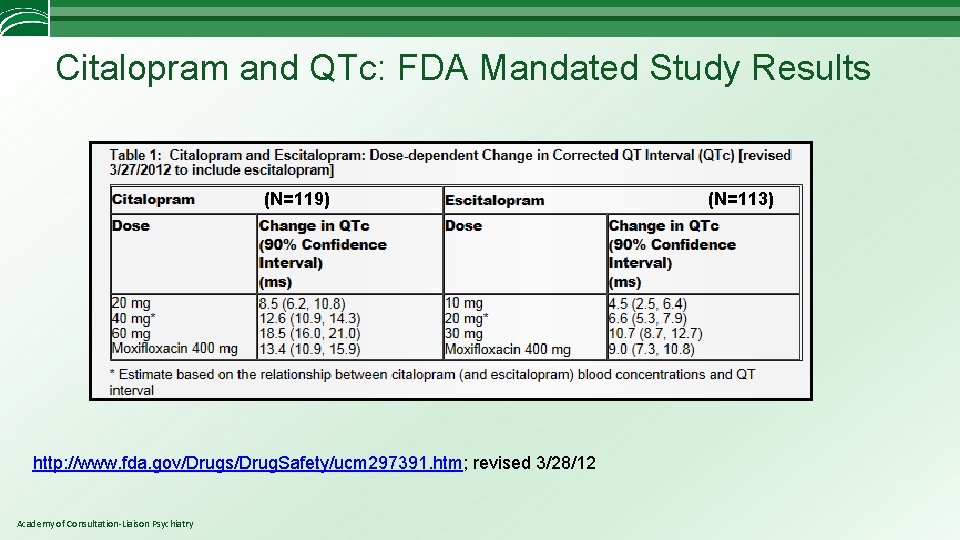
Citalopram and QTc: FDA Mandated Study Results (N=119) http: //www. fda. gov/Drugs/Drug. Safety/ucm 297391. htm; revised 3/28/12 Academy of Consultation-Liaison Psychiatry (N=113)
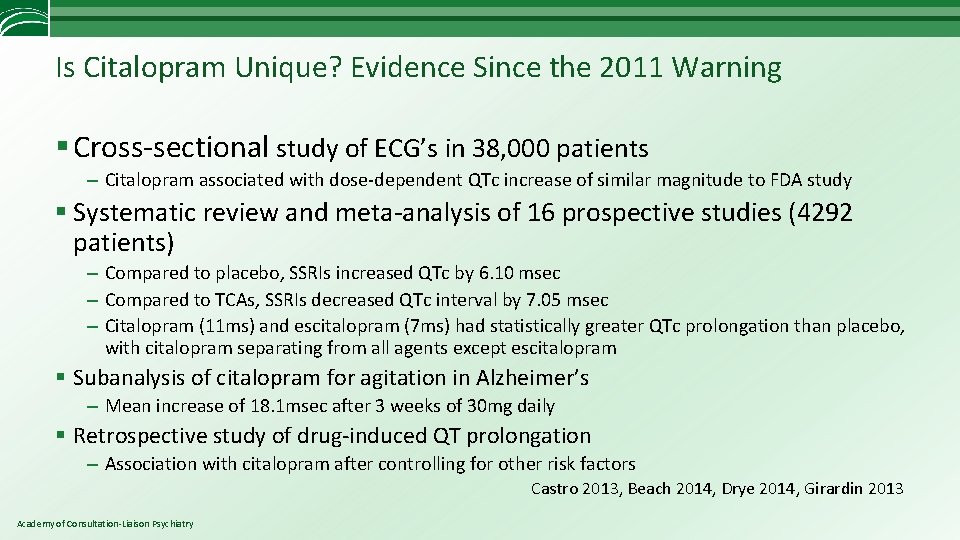
Is Citalopram Unique? Evidence Since the 2011 Warning § Cross-sectional study of ECG’s in 38, 000 patients – Citalopram associated with dose-dependent QTc increase of similar magnitude to FDA study § Systematic review and meta-analysis of 16 prospective studies (4292 patients) – Compared to placebo, SSRIs increased QTc by 6. 10 msec – Compared to TCAs, SSRIs decreased QTc interval by 7. 05 msec – Citalopram (11 ms) and escitalopram (7 ms) had statistically greater QTc prolongation than placebo, with citalopram separating from all agents except escitalopram § Subanalysis of citalopram for agitation in Alzheimer’s – Mean increase of 18. 1 msec after 3 weeks of 30 mg daily § Retrospective study of drug-induced QT prolongation – Association with citalopram after controlling for other risk factors Castro 2013, Beach 2014, Drye 2014, Girardin 2013 Academy of Consultation-Liaison Psychiatry
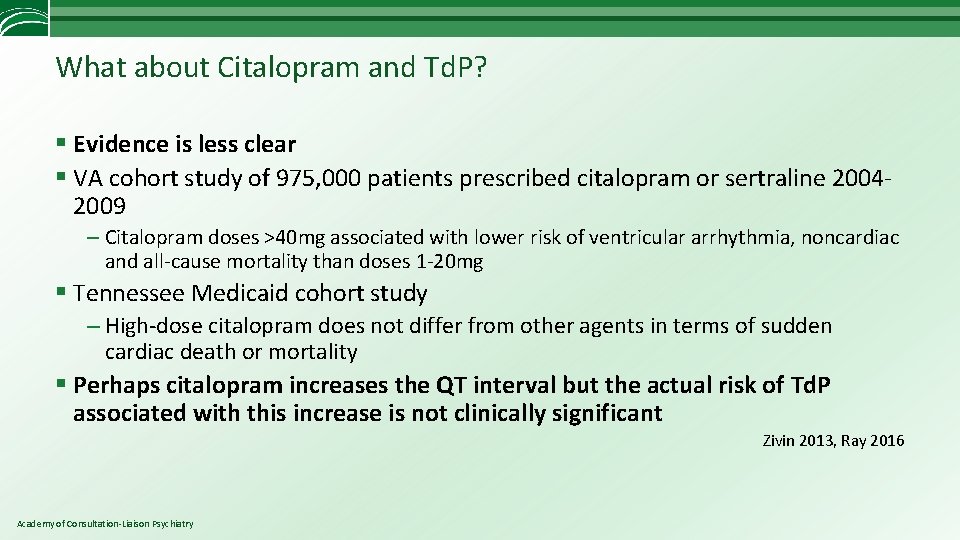
What about Citalopram and Td. P? § Evidence is less clear § VA cohort study of 975, 000 patients prescribed citalopram or sertraline 20042009 – Citalopram doses >40 mg associated with lower risk of ventricular arrhythmia, noncardiac and all-cause mortality than doses 1 -20 mg § Tennessee Medicaid cohort study – High-dose citalopram does not differ from other agents in terms of sudden cardiac death or mortality § Perhaps citalopram increases the QT interval but the actual risk of Td. P associated with this increase is not clinically significant Zivin 2013, Ray 2016 Academy of Consultation-Liaison Psychiatry
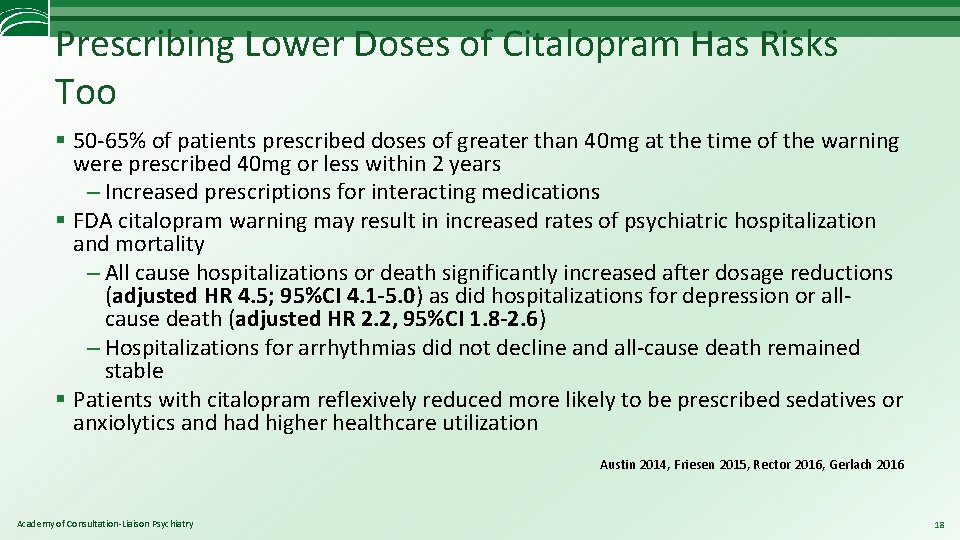
Prescribing Lower Doses of Citalopram Has Risks Too § 50 -65% of patients prescribed doses of greater than 40 mg at the time of the warning were prescribed 40 mg or less within 2 years – Increased prescriptions for interacting medications § FDA citalopram warning may result in increased rates of psychiatric hospitalization and mortality – All cause hospitalizations or death significantly increased after dosage reductions (adjusted HR 4. 5; 95%CI 4. 1 -5. 0) as did hospitalizations for depression or allcause death (adjusted HR 2. 2, 95%CI 1. 8 -2. 6) – Hospitalizations for arrhythmias did not decline and all-cause death remained stable § Patients with citalopram reflexively reduced more likely to be prescribed sedatives or anxiolytics and had higher healthcare utilization Austin 2014, Friesen 2015, Rector 2016, Gerlach 2016 Academy of Consultation-Liaison Psychiatry 18
What about Escitalopram? § Similar pattern of dose-related QT-lengthening in thorough QT study, but no FDA warning § Escitalopram does separate out in some studies § Meta-analysis of patient level data – – 2407 patients prescribed escitalopram compared to 1952 patients on placebo Mean QTc increase of 3. 5 msec 1 patient had QTc >500 msec and baseline change >60 msec Incidence and types of cardiac adverse events similar between escitalopram and placebo § Not associated with greater mortality in Tennessee Medicaid cohort Thase ME, et al. 2013, Ray 2016 Academy of Consultation-Liaison Psychiatry 19
Other Antidepressants § Bupropion – Reports of QT prolongation in setting of overdose but confounded by tachycardia § Venlafaxine – Two case reports of QT prolongation at therapeutic dose – In overdose, 1% of 223 patients had QTc>500 ms § Duloxetine – One report of QT prolongation (but only to 460 msec) § Mirtazapine – In overdose, 0 of 103 patients had QTc>500 ms § Vilazodone – No association with QTc prolongation Academy of Consultation-Liaison Psychiatry 20
How Should I Use Antidepressants in Patients at Risk for QT Prolongation? § Overall magnitude of QTc increase with SSRIs is small § Citalopram appears to be worst offender (and escitalopram to lesser extent) but actual QTc prolongation still minimal § Citalopram may not be first choice for patients with pre-existing cardiac disease § Do not reflexively reduce citalopram dose without careful risk/benefit evaluation § Compelling case can be made for using higher doses of citalopram in specific patients, but needs to be done judiciously and employing ECG monitoring § Not significant evidence separating citalopram from escitalopram to recommend switching all patients taking citalopram to escitalopram § No indication for baseline ECG with all antidepressant initiation § Consider baseline ECG and electrolytes before starting Citalopram in a patient with significant Td. P risk factors Academy of Consultation-Liaison Psychiatry 21
What About Other Psychiatric Medications? § Lithium – Can prolong QTc at concentrations >1. 2 mmol/L, but no cases of Td. P § Most anticonvulsant mood stabilizers have no QTc effect – Carbamazepine rarely associated with QT prolongation § Trazodone has been associated with mild QTc prolongation, usually in overdose § Stimulants not linked to QTc prolongation or Td. P § Benzodiazepines not linked to QTc prolongation or Td. P Academy of Consultation-Liaison Psychiatry 22
Antipsychotics and QT Prolongation § Pre-2002: Low-potency phenothiazines (thioridazine, chlorpromazine, mesoridazine) most associated with QTc prolongation § 2002: FDA issues Black Box Warning for Ziprasidone – Avoid in combination with other QT-prolonging agents, history of arrhythmia § 2007: FDA issues warning for IV Haldol – 70 cases total; 58 of QT prolongation, 54 of Td. P; most had other risk factors (cardiac, meds) – Often-quoted study conferring greater risk with IV vs PO haldol failed to control for medical problems and other risk factors § 2011: FDA strengthens Quetiapine warning – Avoid use in combination with other QT-prolonging agents, history of arrhythmias, metabolic deficits – Based on 12 post-marketing reports (incl. 4 Td. P), mostly in OD or in combination with other agents § 2016: Cumulative antipsychotic dose appears to mediate the association between multiple antipsychotics prescribed and QTc § Significant evidence for Td. P with thioridazine, droperidol and haloperidol (especially IV) Academy of Consultation-Liaison Psychiatry Howland 2014 23
Head to Head Comparison of Antipsychotics § Head to head comparison #1: Healthy volunteers (similar study done in patients with schizophrenia); FDA requested of Pfizer – – Olanzapine performed best Quetiapine, risperidone and haloperidol moderate Thioridazine and ziprasidone longest No cases of Td. P § Head to head comparison #2: 2013 Meta-analysis of 15 agents – Ziprasidone and iloperidone worst for QTc prolongation – Aripiprazole and lurasidone best Harrigan 2004, Leucht 2013 Academy of Consultation-Liaison Psychiatry 24
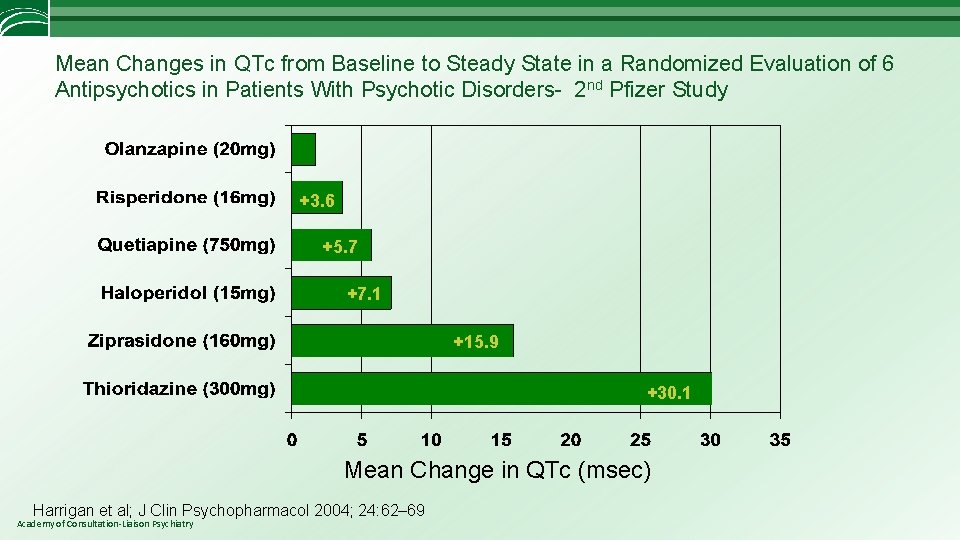
Mean Changes in QTc from Baseline to Steady State in a Randomized Evaluation of 6 Antipsychotics in Patients With Psychotic Disorders- 2 nd Pfizer Study +3. 6 +5. 7 +7. 1 +15. 9 +30. 1 Mean Change in QTc (msec) Harrigan et al; J Clin Psychopharmacol 2004; 24: 62– 69 Academy of Consultation-Liaison Psychiatry
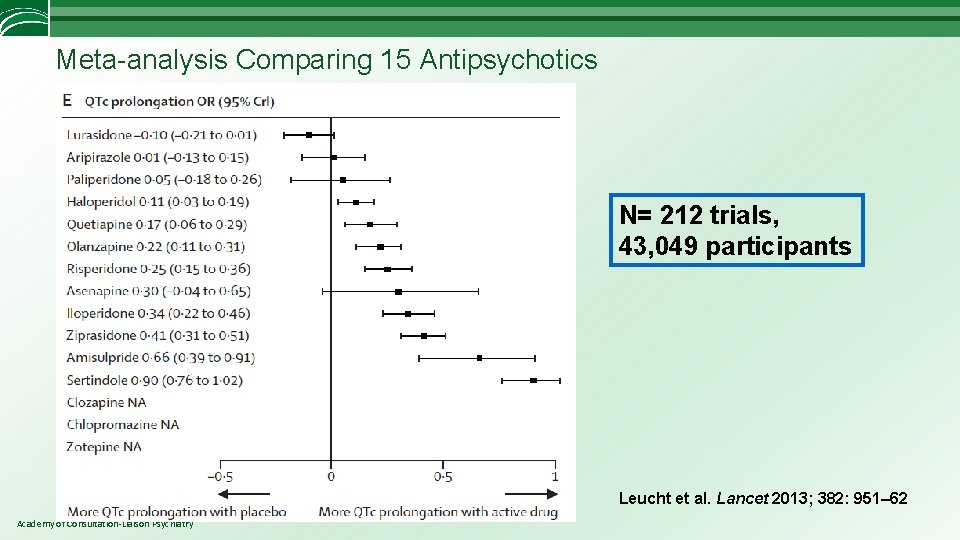
Meta-analysis Comparing 15 Antipsychotics N= 212 trials, 43, 049 participants Leucht et al. Lancet 2013; 382: 951– 62 Academy of Consultation-Liaison Psychiatry
Antipsychotics and QT Prolongation § Overall risk based on this and related data: – Minimal: Aripiprazole, Lurasidone – Low: Haloperidol (oral), Olanzapine – Moderate: Risperidone, Quetiapine – High: Ziprasidone, Iloperidone, low-potency phenothiazines (Thioridazine), IV Haloperidol (? ) Academy of Consultation-Liaison Psychiatry FDA 2000; Leucht 2013 27
How Should I Use Antipsychotics in Patients at Risk for QT Prolongation? § Using antipsychotics in the inpatient medical setting – Check baseline ECG and at least one follow-up (although there is not clinical data to support this, and it may be unnecessary if the dose and risk has not changed, some recommend daily ECG or telemetry for IV Haloperidol) – Ensure repletion of electrolytes – Minimize other risk factors – For QTc > 500 msec, consider adjunctive/alternative agents § Using antipsychotics in outpatient setting – No monitoring for patients without risk factors unless prescribing Thioridazine, Ziprasidone, or Iloperidone – For patients with QTc risk factors, obtain ECG at baseline and intermittently after initiation of any antipsychotic Academy of Consultation-Liaison Psychiatry 28
Cardiotoxicity with Clozapine § Tachycardia (occurs in 10% of patients) § Orthostatic hypotension § Hypertension § ECG abnormalities (less than 1%) § Early myocarditis § Cardiomyopathy § At least two studies suggests 30 -50% of patients treated with clozapine may have subclinical cardiac dysfunction (asymptomatic subnormal output from both ventricles) Curto et al. 2016 Academy of Consultation-Liaison Psychiatry 29
Clozapine-induced Myocarditis § More than 250 cases reported since 1980; Rates of 0. 01 -3% § Likely acute Type I reaction (Ig-E mediated hypersensitivity) § Most cases in first 2 -3 months in previously healthy, non-geriatric patients § Tachycardia, SOB, fever, flu-like symptoms, nausea, dizziness – **Chest discomfort only occurs sometimes § Mortality 10 -30% § No association with dose or rate of increase § Treatment involves stopping clozapine and supportive care – Some cases of successful re-challenging have been reported Academy of Consultation-Liaison Psychiatry 30
Clozapine-induced Myocarditis § Proposed Diagnostic Considerations 1. Onset of symptoms within 45 days of starting clozapine 2. Absence of other cause or cardiac history 3. New signs of cardiac dysfunction (tachycardia, peripheral edema, etc) 4. At least one of the following a. Peripheral eosinophilia b. Elevated Troponin or CK-MB c. ECG changes including ST-segment depression or T-wave inversion d. Radiographic evidence of pulmonary congestion or heart failure e. Echocardiographic evidence of ventricular dysfunction 5. MRI evidence of myocarditis 6. Definitive histologic findings from cardiac tissue biopsy Academy of Consultation-Liaison Psychiatry Ronaldson, et al. 2010 31
Clozapine-induced Myocarditis § Recommendations for clinical monitoring – Clinical monitoring and symptom evaluation – Routine vital signs, including temperature, weekly for the first month – Add markers of inflammation (CRP, ESR) and cardiac damage (troponin or CK-MB) to weekly lab monitoring for the first 4 weeks – Consider baseline ECG – Repeat ECG with any clinical concern § ECG may be of limited value owing to low specificity, but some studies recommend weekly monitoring for first month, nonetheless – Pay attention to eosinophil count on blood monitoring – Routine baseline and follow-up echo not currently recommended § Cardiology consult should precede echocardiogram Academy of Consultation-Liaison Psychiatry Freudenreich, 2015 32
Clozapine-induced Cardiomyopathy § Reported incidence is 1/2000 but may be much higher § Most cases diagnosed in first 6 -9 months in patients without cardiac history – Latency has ranged from 1 month to 6 years § Clinical symptoms consistent with heart failure (dyspnea, tachycardia, palpitations, chest pain, fatigue), but 40 -83% of reported cases have been asymptomatic § Diagnosis depends on echo evidence of reduced LVEF (<50% of normal) – BNP is also typically elevated § Mortality rate is 12. 5 -24% § Treatment involves immediate suspension of clozapine and supportive care § Cessation of clozapine has improved cardiac functioning in those with EF >25% – Those with more impairment have high rates of sustained disability and fatal outcome § Rechallenge not recommended (1 of 3 cases had recurrence) Academy of Consultation-Liaison Psychiatry 33
What is the Relationship between Depression and Heart Disease? § Pathophysiological links exist – Platelet dysfunction – Autonomic dysfunction – Inflammation § Health behaviors may also play a key role – Poor medication adherence – Lower rates of smoking cessation – Poor diet and exercise regimens Academy of Consultation-Liaison Psychiatry 34
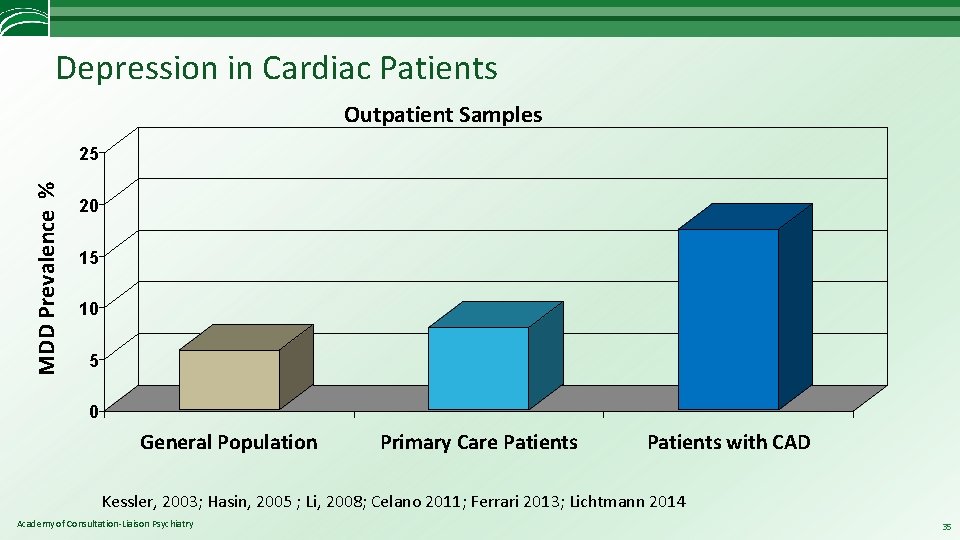
Depression in Cardiac Patients Outpatient Samples MDD Prevalence % 25 20 15 10 5 0 General Population Primary Care Patients with CAD Kessler, 2003; Hasin, 2005 ; Li, 2008; Celano 2011; Ferrari 2013; Lichtmann 2014 Academy of Consultation-Liaison Psychiatry 35
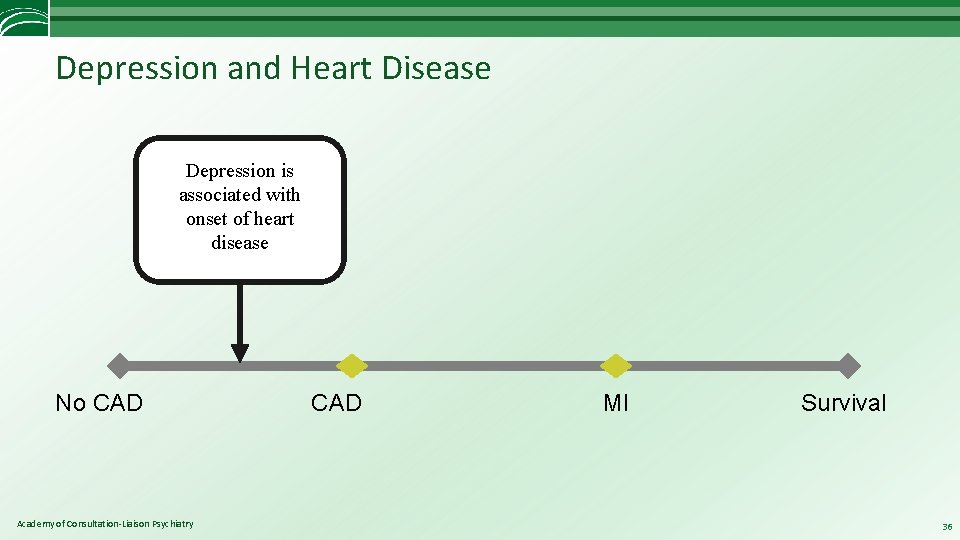
Depression and Heart Disease Depression is associated with onset of heart disease No CAD Academy of Consultation-Liaison Psychiatry CAD MI Survival 36
Depression and Heart Disease – What’s New? § 2014 AHA Statement: Depression is now considered an independent risk factor for adverse medical outcomes in patients with ACS – In that statement, authors highlighted that depression was not conclusively an independent risk factor for incident heart disease § New evidence for depression as risk factor for incident heart disease – 18 -year longitudinal study of 860 Australian women § Baseline depression predicted incident coronary heart disease, adjusting for anxiety, typical and atypical risk factors – The addition of depression to the Framingham Risk Equation improves accuracy for detecting 10 -year coronary heart disease in women Lichtman 2014, O’Neil 2016 Academy of Consultation-Liaison Psychiatry 37
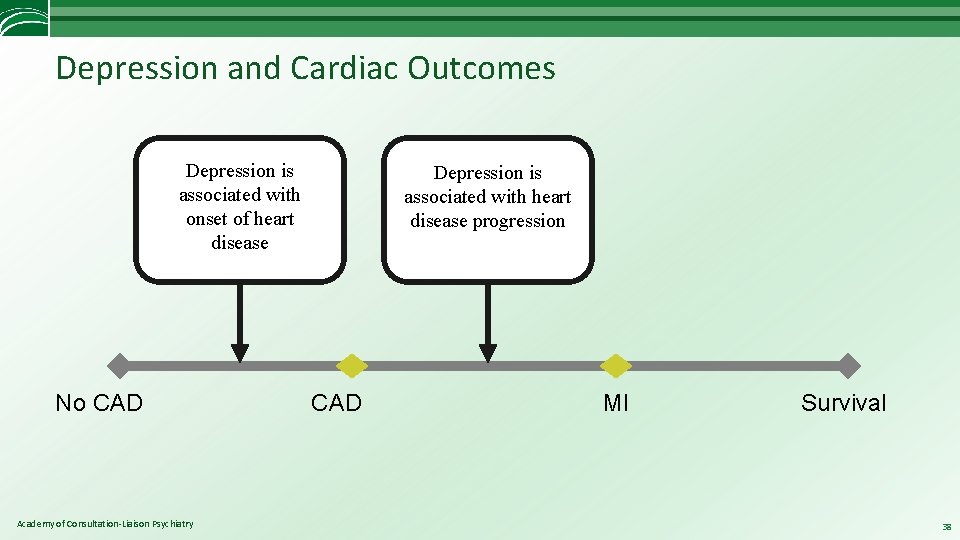
Depression and Cardiac Outcomes Depression is associated with onset of heart disease No CAD Academy of Consultation-Liaison Psychiatry Depression is associated with heart disease progression CAD MI Survival 38
Depression and Cardiac Outcomes § Baseline quality of life and depressive symptoms are the biggest predictors of unplanned rehospitalization after ACS within the first 30 days – 12, 312 patients; 1, 326 patients had 1, 483 unplanned readmissions – Depression defined as PHQ-2 > 3 – Depressive symptoms are a better predictor than index length of stay § Cardiac patients with severe depression and those with significant life stressors during treatment do not respond as well to evidence-based treatments for depression – 157 patients who met DSM-IV criteria for MDD; 16 weeks – All received 12 weeks of CBT – Those on antidepressants at start continued; those not on antidepressants were placed on sertraline 50 mg daily at Week 5 or 8 if insufficient improvement Hess 2015, Carney 2016 Academy of Consultation-Liaison Psychiatry
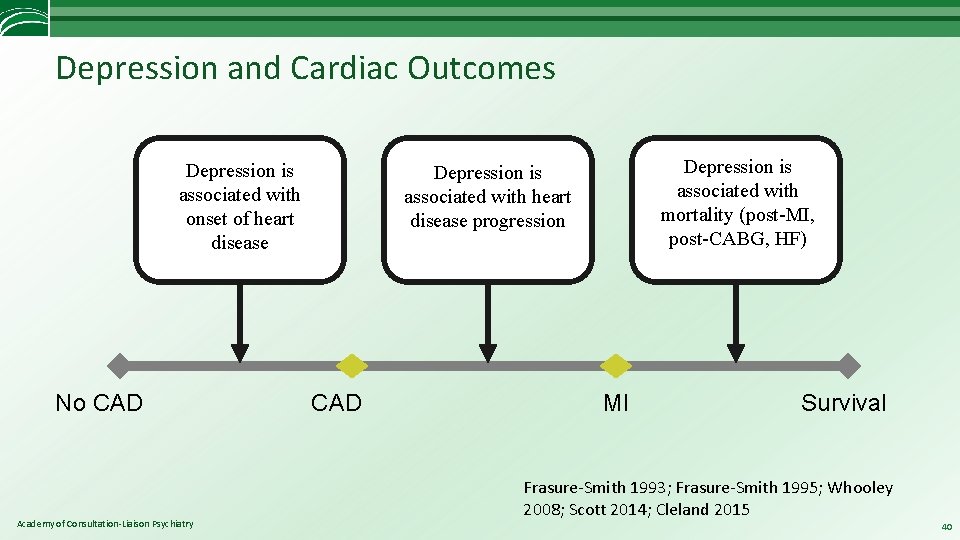
Depression and Cardiac Outcomes Depression is associated with onset of heart disease No CAD Academy of Consultation-Liaison Psychiatry Depression is associated with mortality (post-MI, post-CABG, HF) Depression is associated with heart disease progression CAD MI Survival Frasure-Smith 1993; Frasure-Smith 1995; Whooley 2008; Scott 2014; Cleland 2015 40
Clinical Care Tips § Diagnosing Depression – Use standard criteria—just be sure of cardinal symptoms § Assessing Comorbidities – Be sure to assess for anxiety disorders, especially GAD § Initiating Treatment – Sertraline is the simplest choice in nearly all cases § Best studied, most established cardiac safety – Can start low, but keep going and provide stepped care – Encourage: exercise, social support, cardiac rehabilitation – Consider social stressors and utilize problem-solving therapies if available Academy of Consultation-Liaison Psychiatry 41
Treatment of Depression Post-MI § SADHART: Sertraline cardiac safe and effective in treating depression post-MI – Not powered to detect morbidity or mortality – Secondary analysis show some advantage in subgroup with recurrent depression – Subanalysis of SADHART data suggested that onset of depression before ACS, hx of MDD, baseline severity predicted sertraline response § CREATE: Citalopram effective in treating depression in patients with CAD – Interpersonal therapy not superior to placebo – Not designed to test effects on cardiac outcomes, mortality § ENRICHD: CBT reduced depression post-MI modestly at 6 months, but did not reduce mortality – No benefit of CBT at 30 months § MIND-IT: Mirtazapine safe for post-MI depression, and showed efficacy vs placebo on some primary and secondary outcome measures at 24 weeks § Tricyclic anti-depressants are not considered safe post-MI Academy of Consultation-Liaison Psychiatry 42
Treatment of Depression in Heart Failure § Depression is very common in HF – 15 -20% point prevalence § Depression is associated with mortality in HF – Historically—an independent risk factor for mortality – Elevated depression associated with 5 x risk of mortality – Major depression (but not minor depression) may be strongest predictor of mortality in HF over 20 -year follow-up period § Treating depression in HF is very challenging (SADHART-HF) – SADHART-CHF: Sertraline fails to treat depression in HF patients – MOOD-HF: Escitalopram for 18 months fails to treat depression in HF patients or reduce all-cause mortality or hospitalization Gustad 2014; Cleland 2015, Freedland 2016, Jiang 2011 Angermann 2016 Academy of Consultation-Liaison Psychiatry 43
Treatment of Depression in Heart Failure § What does this tell us? – Depression in HF is harder to treat – Single trials of SSRI monotherapy and lighter care management approaches will not be enough § Probably requires § § § Multiple trials, dose adjustments Multiple modalities of treatment Social support Physical activity and self-care focus Additional approaches: behavioral activation, strengths focus, reframing Academy of Consultation-Liaison Psychiatry 44
Recommended Reading Rector TS, Adabag S, Cunningham F, et al. Outcomes of Citalopram Dosage Risk Mitigation in a Veteran Population. Am J Psychiatry. 2016 Sep 1; 173(9): 896 -902. Leucht S, Cipriani A, Spineli L, et al. Comparative efficacy and tolerability of 15 antipsychotic drugs in schizophrenia: a multiple-treatments meta-analysis. Lancet. 2013; 382(9896): 951 -62. Curto M, Girardi N, Lionetto L, et al. Systematic Review of Clozapine Cardiotoxicity. Curr Psychiatry Rep. 2016 Jul; 18(7): 68. Lichtman JH, Froelicher ES, Blumenthal JA, et al. Depression as a risk factor for poor prognosis among patients with acute coronary syndrome: systematic review and recommendations: a scientific statement from the American Heart Association. Circulation. 2014; 129(12): 1350 -69. Beach SR, Celano CM, Noseworthy PA, et al. QTc prolongation, torsades de pointes, and psychotropic medications. Psychosomatics. 2013 Jan-Feb; 54(1): 1 -13. Carney RM, Freedland KE, Steinmeyer BC, et al. Clinical predictors of depression treatment outcomes in patients with coronary heart disease. J Psychosom Res. 2016 Sep; 88: 36 -41. Angermann CE, Gelbrich G, Stork S, et al. Effect of Escitalopram on All-Cause Mortality and Hospitalization in Patients With Heart Failure and Depression: The MOOD-HF Randomized Clinical Trial. JAMA. 2016 Jun 28; 315(24): 2683 -93. Academy of Consultation-Liaison Psychiatry 45
All References § Angermann CE, Gelbrich G, Stork S, et al. Effect of Escitalopram on All-Cause Mortality and Hospitalization in Patients With Heart Failure and Depression: The MOOD-HF Randomized Clinical Trial. JAMA. 2016 Jun 28; 315(24): 2683 -93. § Austin J, Yi K, Agius M, et al: The impact of guidance on citalopram's effects on the QT period on the practice of clinicians. Psychiatr Danub. 2014; 26 Suppl 1: 226 -30. § Beach SR, et al. QTc prolongation, torsades de pointes and psychotropic medications. Psychosomatics. 2013 Jan-Feb; 54(1): 1 -13. § Barbui C, Bighelli I, Carra G, et al. Antipsychotic Dose Mediates the Association between Polypharmacy and Corrected QT Interval. PLo. S One. 2016 Feb 3; 11(2): e 0148212. § Carney RM, Freedland KE, Steinmeyer BC, et al. Clinical predictors of depression treatment outcomes in patients with coronary heart disease. J Psychosom Res. 2016 Sep; 88: 36 -41. § Castro VM, et al. QT interval and antidepressant use: a cross sectional study of electronic health records. BMJ. 2013 Jan 29; 346: f 288. § Celano CM, Mastromauro CA, Lenihan EC, Januzzi JL, Rollman BL, Huffman JC. Association of baseline anxiety with depression persistence at 6 months in patients with acute cardiac illness. Psychosom Med. 2012; 74(1): 93 -9. § Cleland J. Depression associated with 5 -fold increased mortality risk in heart failure patients. Presented at Second World Congress on Acute Heart Failure, Seville, Spain, May 23, 2015. § Curto M, Girardi N, Lionetto L, et al. Systematic Review of Clozapine Cardiotoxicity. Curr Psychiatry Rep. 2016 Jul; 18(7): 68. § Drye LT, Spragg D, Devanand DP, et al: Changes in QTc interval in the citalopram for agitation in Alzheimer's disease (Cit. AD) randomized trial. PLo. S One. 2014; 9(6): e 98426. § Ferrari AJ, Charlson FJ, Norman RE, et al. Burden of Depressive Disorders by Country, Sex, Age, and Year: Findings from the Global Burden of Disease Study 2010. Hay PJ, ed. PLo. S Medicine. 2013; 10(11): e 1001547. § Frasure-Smith N, Lesperance F, Talajic M. Depression following myocardial infarction. Impact on 6 -month survival. JAMA. 1993; 270(15): 1819 -25. § Frasure-Smith N, Lesperance F, Talajic M. Depression and 18 -month prognosis after myocardial infarction. Circulation. 1995 Feb 15; 91(4): 999 -1005. § Freedland KE, Hesseler MJ, Carney RM, et al. Major Depression and Long-Term Survival of Patients With Heart Failure. Psychosom Med. 2016 May 16. § Freudenreich O. Clozapine-induced myocarditis: prescribe safely but do prescribe. Acta Psychiatr Scand. 2015 Oct; 132(4): 240 -1. § Friesen KJ, Bugden SC: The effectiveness and limitations of regulatory warnings for the safe prescribing of citalopram. Drug Healthc Patient Saf. 2015; 7: 139 -45. § Gerlach LB, Kales HC, Maust DT, et al: Unintended Consequences of Adjusting Citalopram Prescriptions Following the 2011 FDA Warning. Am J Geriatr Psychiatry. 2016. § Girardin FR, Gex-Fabry M, Berney P, et al: Drug-induced long QT in adult psychiatric inpatients: the 5 -year cross-sectional ECG Screening Outcome in Psychiatry study. Am J Psychiatry. 2013; 170(12): 1468 -76. § Gustad LT, Laugsand LE, Janszky I, Dalen H, Bjerkeset O. Symptoms of anxiety and depression and risk of heart failure: the HUNT Study. European Journal of Heart Failure. 2014; 16(8): 861 -870. § Hasin DS, Goodwin RD, Stinson FS, Grant BF. Epidemiology of major depressive disorder: results from the National Epidemiologic Survey on Alcoholism and Related Conditions. Arch Gen Psychiatry. 2005; 62(10): 1097 -106 Academy of Consultation-Liaison Psychiatry 46
All References § Hess CN, Wang TY, Mc. Coy LA, et al. Unplanned Inpatient and Observation Rehospitalizations After Acute Myocardial Infarction: Insights From the Treatment With Adenosine Diphosphate Receptor Inhibitors: Longitudinal Assessment of Treatment Patterns and Events After Acute Coronary Syndrome (TRANSLATE-ACS) Study. Circulation. 2016 Feb 2; 133(5): 493 -501. § Howland RH. QTc prolongation and haloperidol: just how risky is this drug? Psychosomatics. 2014 Nov-Dec; 55(6): 741 -2. § Jiang W, Oken H, Fiuzat M, et al. Plasma omega-3 polyunsaturated fatty acids and survival in patients with chronic heart failure and major depressive disorder. J Cardiovasc Transl Res. 2012; 5(1): 92 -9. § Kessler RC, Berglund P, Demler O, et al. The epidemiology of major depressive disorder: results from the National Comorbidity Survey Replication (NCS-R). JAMA 2003; 289(23): 3095105. § Leucht S, Cipriani A, Spineli L, et al. Comparative efficacy and tolerability of 15 antipsychotic drugs in schizophrenia: a multiple-treatments meta-analysis. Lancet. 2013; 382(9896): 95162. § Li Y, Glance LG, Cai X, Mukamel DB. Mental illness and hospitalization for ambulatory care sensitive medical conditions. Med Care. 2008; 46(12): 1249 -56 § Lichtman JH, Froelicher ES, Blumenthal JA, et al. Depression as a risk factor for poor prognosis among patients with acute coronary syndrome: systematic review and recommendations: a scientific statement from the American Heart Association. Circulation. 2014; 129(12): 1350 -69. § Maljuric NM, Noordam R, Aarts N, et al. Use of selective serotonin re-uptake inhibitors and the heart rate corrected QT interval in a real-life setting: the population-based Rotterdam Study. Br J Clin Pharmacol. 2015 Oct; 80(4): 698 -705. § O’Neil A, Fisher AJ, Kibbey KJ, et al. Depression is a risk factor for incident coronary heart disease in women: An 18 -year longitudinal study. J Affect Disord. 2016 May 15; 196: 117 -24. § O’Neil A, Fisher AJ, Kibbey KJ, et al. The addition of depression to the Framingham Risk Equation model for predicting coronary heart disease risk in women. Prev Med. 2016 Jun; 87: 115 -20. § Ray WA, Chung CP, Murray KT, et al: High-Dose Citalopram and Escitalopram and the Risk of Out-of-Hospital Death. J Clin Psychiatry. 2016. § Rector TS, Adabag S, Cunningham F, et al. Outcomes of Citalopram Dosage Risk Mitigation in a Veteran Population. Am J Psychiatry. 2016 Sep 1; 173(9): 896 -902. § Ronaldson KJ, Taylor AJ, Fitzgerald PB, et al. Diagnostic characteristics of clozapine-induced myocarditis identified by an analysis of 38 cases and 47 controls. J Clin Psychiatry. 2010 Aug; 71(8): 976 -81. § Scott KM. Depression, anxiety and incident cardiometabolic diseases. Curr Opin Psychiatry. 2014; 27(4): 289 -93. doi: 10. 1097/YCO. 000000067 § Thase M, Larsen KG, Reines E, et al. The cardiovascular safety profile of escitalopram. Eur Neuropsychopharmacol. 2013 Nov; 23(11): 1391 -400. § Tully PJ, Turnbull DA, Beltrame J, et al. Panic disorder and incident coronary heart disease: a systematic review and meta-regression in 1 131 612 persons and 58 111 cardiac events. Psychol Med. 2015; 45(14): 2909 -20 § Whooley MA, de Jonge P, Vittinghoff E, et al. Depressive Symptoms, Health Behaviors, and Risk of Cardiovascular Events in Patients With Coronary Heart Disease. JAMA. 2008; 300(20): 2379 -2388. doi: 10. 1001/jama. 2008. 711. Academy of Consultation-Liaison Psychiatry 47
- Slides: 47