
Cardiac profile test Cardiac profile test The heart


- Slides: 26
Cardiac profile test
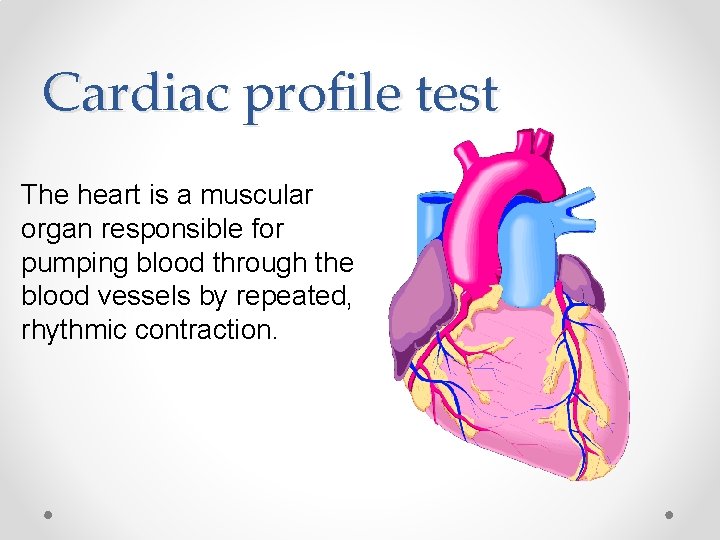
Cardiac profile test The heart is a muscular organ responsible for pumping blood through the blood vessels by repeated, rhythmic contraction.
Role of laboratory: 1. Assess cardiac disease such as AMI 2. Offer body chemistry information to aid supportive cardiac therapy Note: Single diagnostic laboratory test that assess cardiac function does not exist
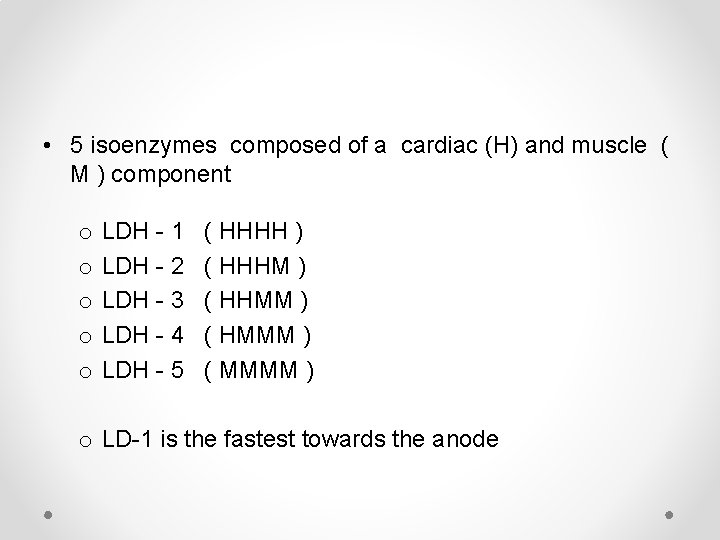
Cardiac marker: Enzyme markers • Aspartate transaminase (AST; SGOT) • Lactate dehydrogenase o Five isoenzymes, composed of combinations of H (heart) and M (muscle) subunits • Creatine kinase o Three isoenzymes, composed of combinations of M (muscle) and B (brain) subunits
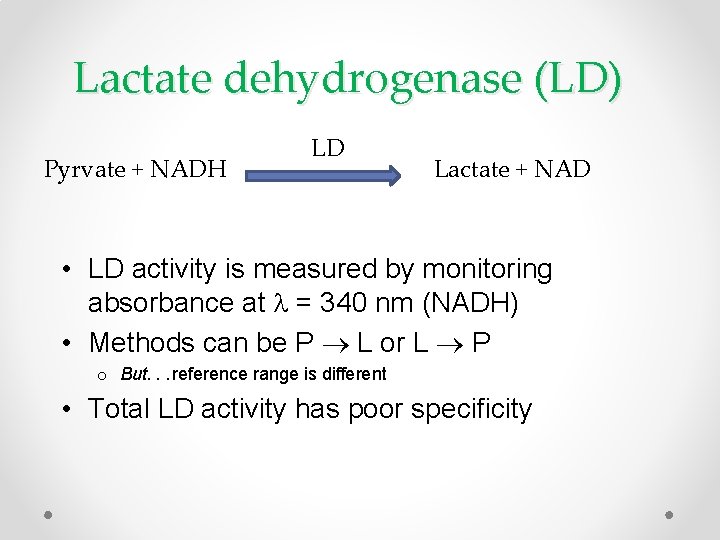
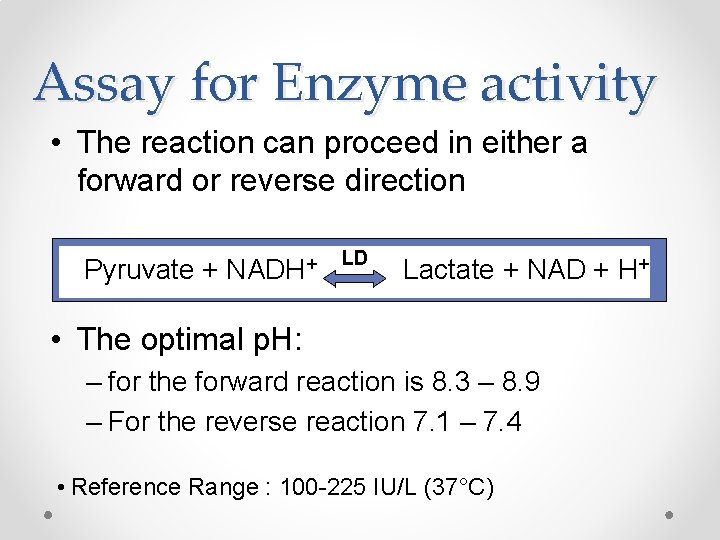
Lactate dehydrogenase (LD) Pyrvate + NADH LD Lactate + NAD • LD activity is measured by monitoring absorbance at = 340 nm (NADH) • Methods can be P L or L P o But. . . reference range is different • Total LD activity has poor specificity
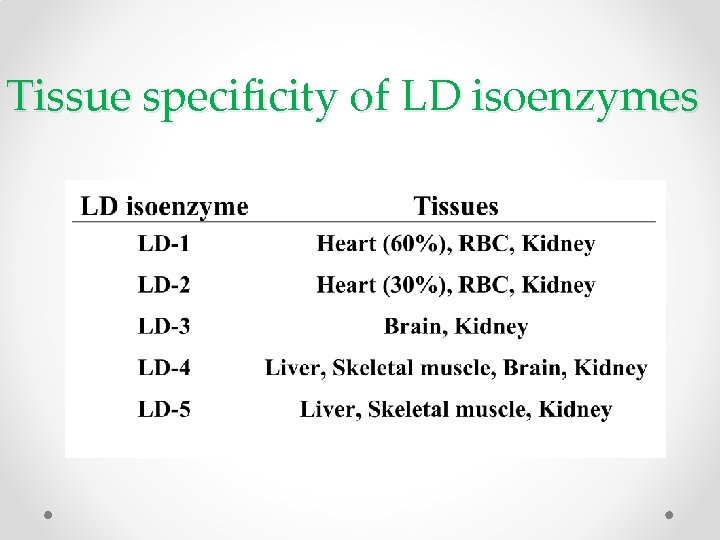
Tissue specificity of LD isoenzymes
• 5 isoenzymes composed of a cardiac (H) and muscle ( M ) component o o o LDH - 1 LDH - 2 LDH - 3 LDH - 4 LDH - 5 ( HHHH ) ( HHHM ) ( HHMM ) ( HMMM ) ( MMMM ) o LD-1 is the fastest towards the anode
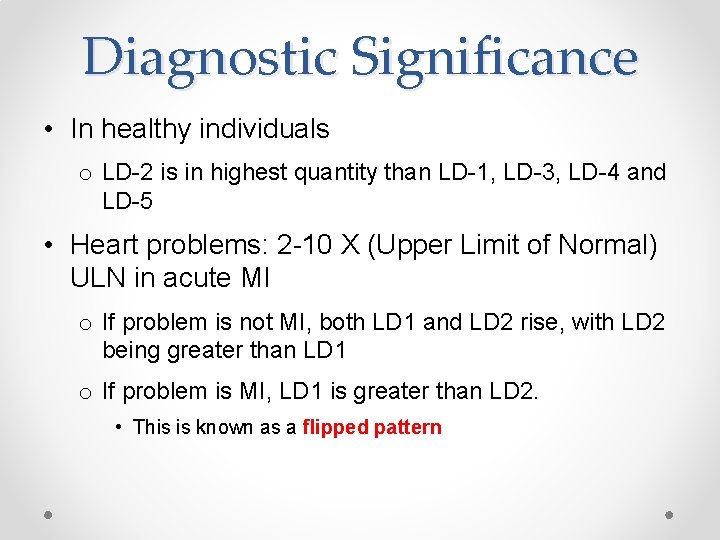
Diagnostic Significance • In healthy individuals o LD-2 is in highest quantity than LD-1, LD-3, LD-4 and LD-5 • Heart problems: 2 -10 X (Upper Limit of Normal) ULN in acute MI o If problem is not MI, both LD 1 and LD 2 rise, with LD 2 being greater than LD 1 o If problem is MI, LD 1 is greater than LD 2. • This is known as a flipped pattern
Assay for Enzyme activity • The reaction can proceed in either a forward or reverse direction Pyruvate + NADH+ LD Lactate + NAD + H+ • The optimal p. H: – for the forward reaction is 8. 3 – 8. 9 – For the reverse reaction 7. 1 – 7. 4 • Reference Range : 100 -225 IU/L (37°C)
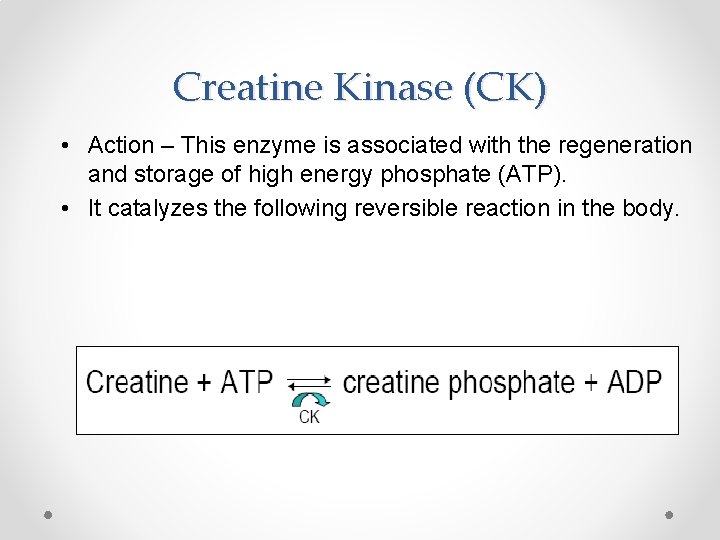
Creatine Kinase (CK) • Action – This enzyme is associated with the regeneration and storage of high energy phosphate (ATP). • It catalyzes the following reversible reaction in the body.
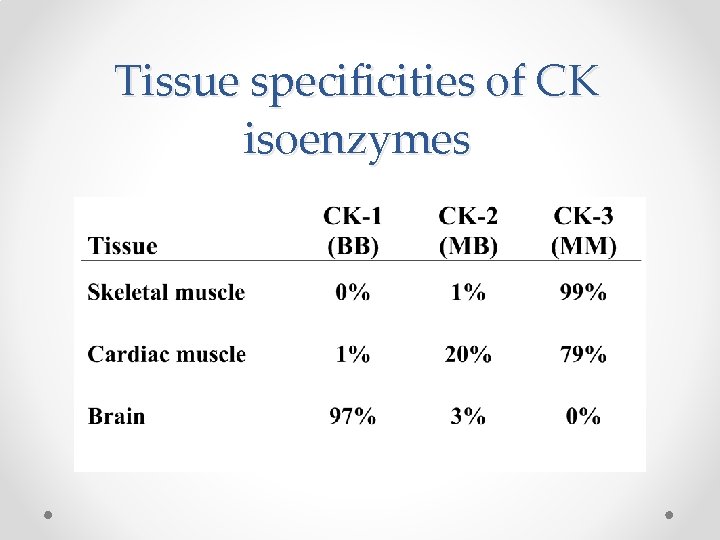
Tissue specificities of CK isoenzymes
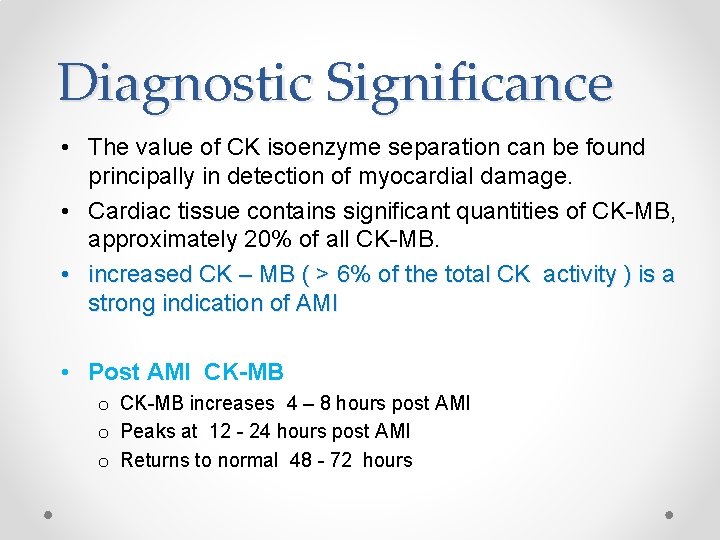
Diagnostic Significance • The value of CK isoenzyme separation can be found principally in detection of myocardial damage. • Cardiac tissue contains significant quantities of CK-MB, approximately 20% of all CK-MB. • increased CK – MB ( > 6% of the total CK activity ) is a strong indication of AMI • Post AMI CK-MB o CK-MB increases 4 – 8 hours post AMI o Peaks at 12 - 24 hours post AMI o Returns to normal 48 - 72 hours
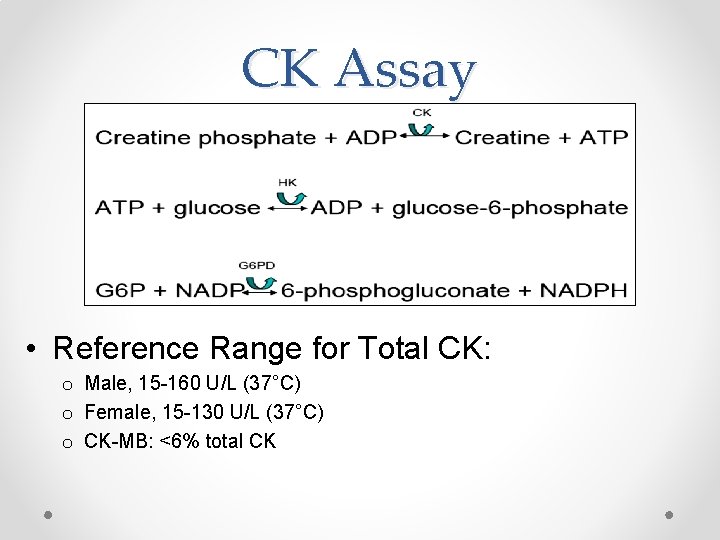
CK Assay • Reference Range for Total CK: o Male, 15 -160 U/L (37°C) o Female, 15 -130 U/L (37°C) o CK-MB: <6% total CK
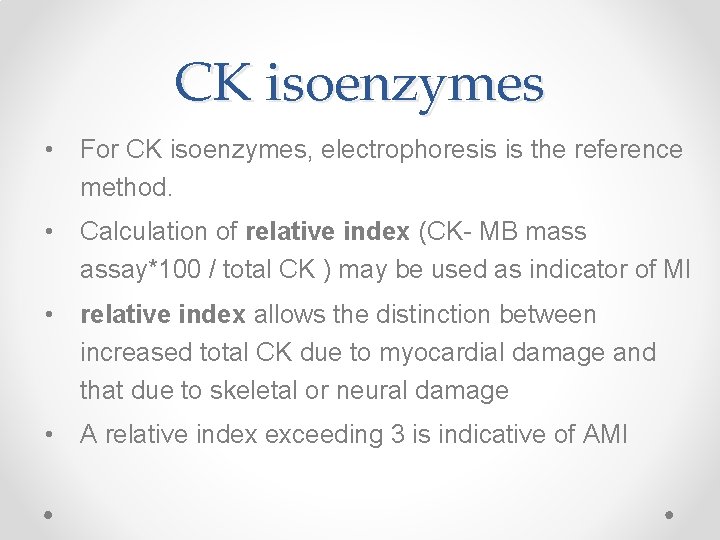
CK isoenzymes • For CK isoenzymes, electrophoresis is the reference method. • Calculation of relative index (CK- MB mass assay*100 / total CK ) may be used as indicator of MI • relative index allows the distinction between increased total CK due to myocardial damage and that due to skeletal or neural damage • A relative index exceeding 3 is indicative of AMI
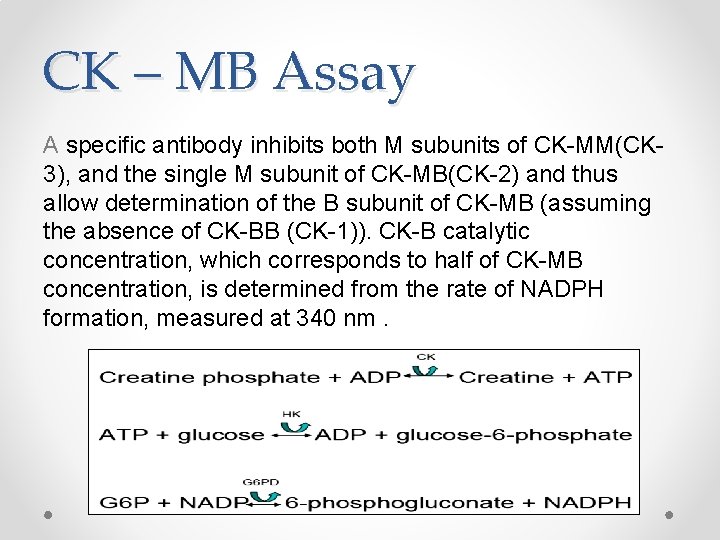
CK – MB Assay A specific antibody inhibits both M subunits of CK-MM(CK 3), and the single M subunit of CK-MB(CK-2) and thus allow determination of the B subunit of CK-MB (assuming the absence of CK-BB (CK-1)). CK-B catalytic concentration, which corresponds to half of CK-MB concentration, is determined from the rate of NADPH formation, measured at 340 nm.
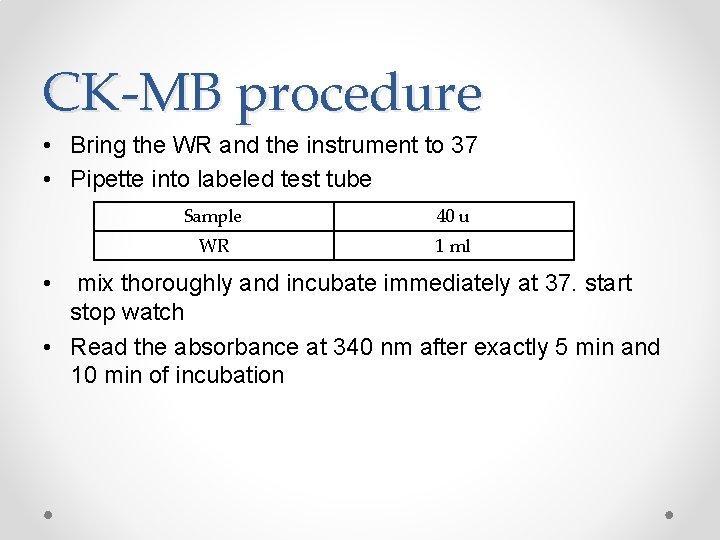
CK-MB procedure • Bring the WR and the instrument to 37 • Pipette into labeled test tube • Sample 40 u WR 1 ml mix thoroughly and incubate immediately at 37. start stop watch • Read the absorbance at 340 nm after exactly 5 min and 10 min of incubation
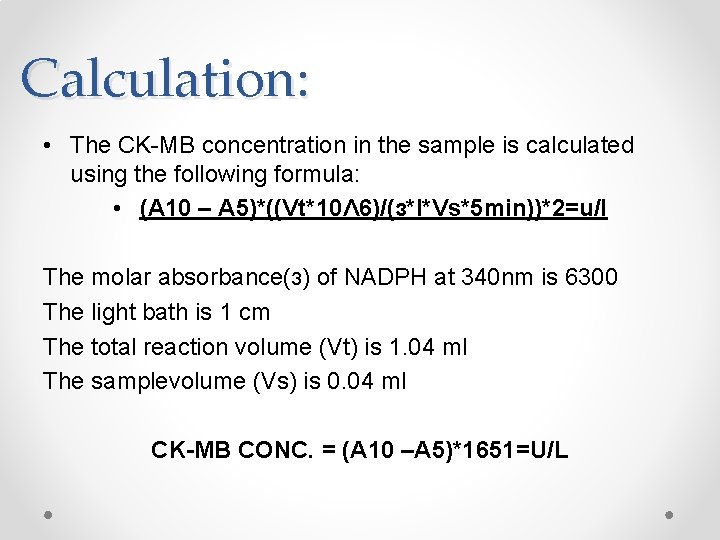
Calculation: • The CK-MB concentration in the sample is calculated using the following formula: • (A 10 – A 5)*((Vt*10Λ 6)/(з*l*Vs*5 min))*2=u/l The molar absorbance(з) of NADPH at 340 nm is 6300 The light bath is 1 cm The total reaction volume (Vt) is 1. 04 ml The samplevolume (Vs) is 0. 04 ml CK-MB CONC. = (A 10 –A 5)*1651=U/L
Reference value • The discrimination value for myocardial infarction is around 25 U/L. however, an index higher than 6%the total CK conc. Discriminate better
Cardiac proteins Myoglobin • O 2 -binding cytosolic protein found in all muscle tissue (functional and structural analog of hemoglobin) • Low molecular weight (17, 800 daltons) • Elevations detected within 1 -4 hours after symptoms; returns to normal after 12 hours • Nonspecific but sensitive marker--primarily used for negative predictive value • Usually measured by sandwich, nephelometric, turbidimetric, or fluorescence immunoassay • Myoglobin should not be used for early diagnosis of AMI patients with renal disease because of its decreased clearance
Troponin • The preferred biomarker for assessment of myocardial necrosis • Complex of 3 proteins that bind to filaments of striated muscle ( cardiac and skeletal) Troponin T (Tn. T) Troponin I (Tn. I) Troponin C (Tn. C) • The major function of troponins is to bind Calcium and Regulate muscle contraction
Tissue specificity of Troponin subunits • Troponin C is the same in all muscle tissue • Troponins I and T have cardiac-specific forms, c. Tn. I and c. Tn. T • Circulating concentrations of c. Tn. I and c. Tn. T are very low • c. Tn. I and c. Tn. T remain elevated for several days • Hence, Troponins would seem to have the specificity of CK-MB (or better), and the long-term sensitivity of LD-1
Tn. T • It allows for both early and late diagnosis of AMI • Serum concentration begins to rise within 4 -10 hr of chest pain onset and peak by day 2, it remains elevated beyond 7 days before returning to reference values. • Unlike CK-MB, the serum troponins are not found in the serum of healthy individuals
Tn. I • Serum concentration begins to rise within 4 -6 hr of chest pain onset and peak at 12 -18 hr, it remains elevated beyond 6 days before returning to reference values. • Tn. T tends to remain elevated longer and maintain higher sensitivity after day 7 after infarct than Tn. I
Markers of Inflammation and coagulation disorder • Inflammation plays a role in atherosclerotic plaque formation, and acute coronary syndrome. • Several studies have identified such biomarkers of inflammation over recent years including high-sensitivity C- reactive protein (hs. CRP)
hs. CRP • CRP is an acute-phase reactant produced primarily by liver. • It increased rapidly with inflammation. • It rises response to injury, infection, or other inflammatory conditions, it is nonspecific • CRP may considered as a risk factor marker for cardiovascular disease.
s