
CARDIAC PERFUSION Brunner chapter 25 ABOUT PERFUSION The
CARDIAC PERFUSION Brunner, chapter 25
ABOUT PERFUSION • The essential function of the CV and pulmonary systems is to provide a continuous supply of oxygenated blood to every cell in the body (see next slide). • Changes in perfusion affect all human functions such as selfcare, mobility, FV, respiration, tissue integrity, elimination, and comfort.
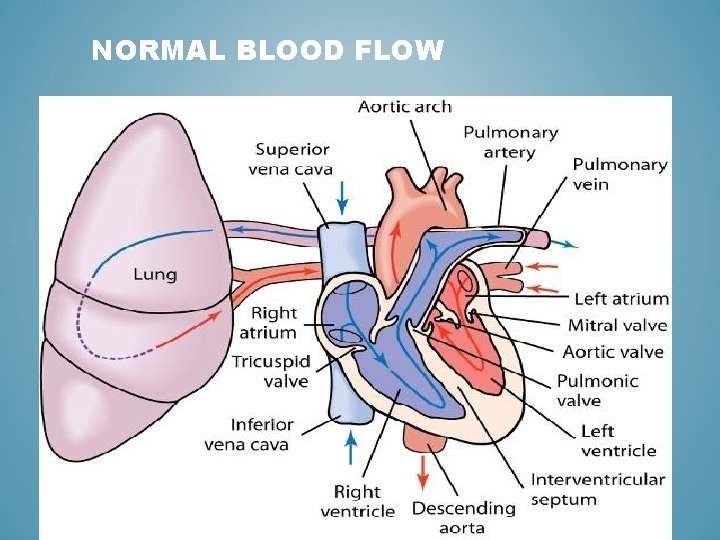
NORMAL BLOOD FLOW
PERFUSION AND THE HEART • The heart muscle receives it’s blood supply from the coronary arteries during diastole (resting phase—between beats) • The quality of heart perfusion depends on the condition of the coronary arteries. • The quality of perfusion to the body depends on the condition of the heart. • Therefore, if the heart does not have good perfusion, the body won’t either.
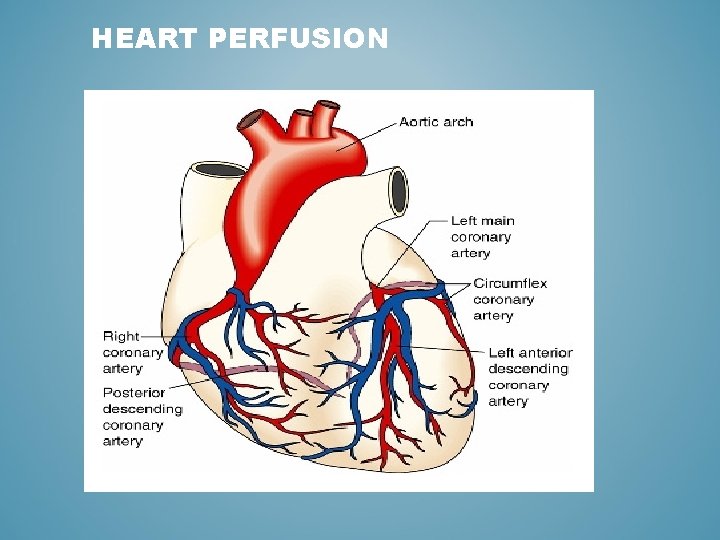
HEART PERFUSION
FACTORS AFFECTING PERFUSION • Cardiac output (SV x HR) • Preload, afterload, contractility • Peripheral vascular resistance • Blood volume • Blood viscosity • Artery elasticity • Oxygen saturation
ASSESSMENT OF PERFUSION: HISTORY • MI, valve disease, pacer • Hypertension • Diagnostic tests, hospitalizations, surgery • Rheumatic fever, strep • Cardiac meds • Risk factors—modifiable, nonmodifiable
HISTORY CONT’D • S/S—pain*, wt gain, swelling, palpitations, cough, dizziness, tingling • Problems with ADLs— DOE • Sleep problems—PND, pillows • Sexual concerns • Cultural influences • Problems with self image or relationships
CHEST PAIN ASSESSMENT* • • • P = Precipitating events Q = Quality R = Radiation S = Severity T = Timing
ASSESSMENT OF PERFUSION: PHYSICAL ASSESSMENT • Blood pressure • Pulse rate, quality, and rhythm (see slide) • Heart sounds (see next slide) • Lung sounds • Neck veins • Breathing pattern
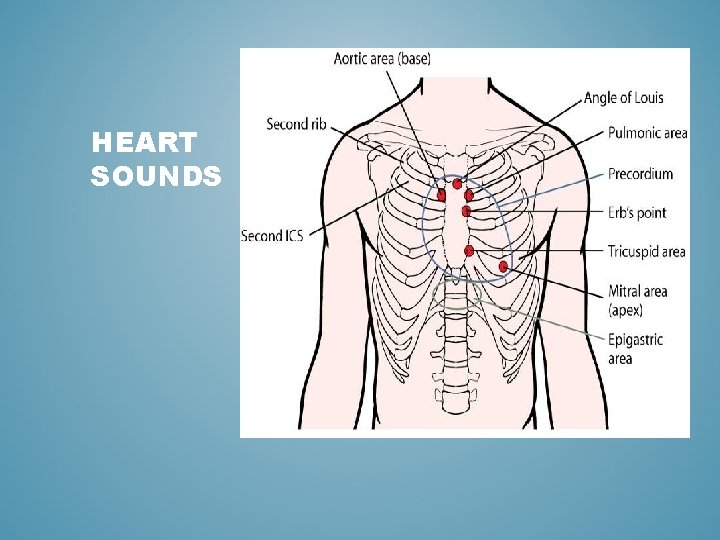
HEART SOUNDS
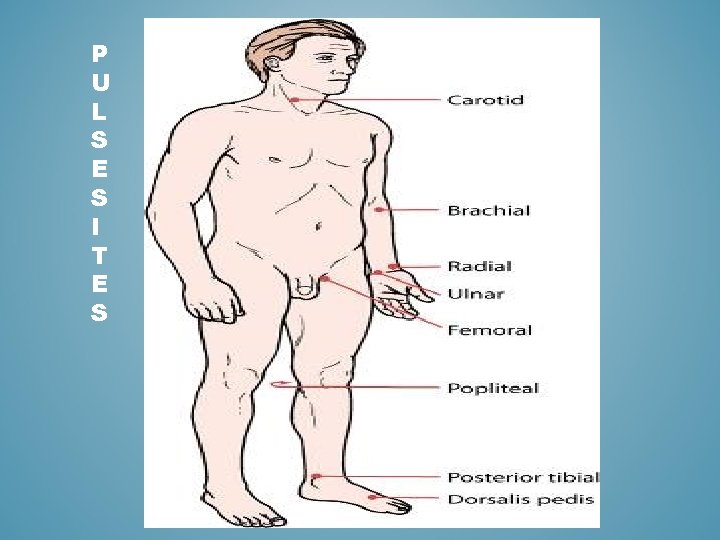
P U L S E S I T E S
ASSESSMENT CONT’D • Skin color and temperature • Ulcerations, edema • Color of mucous membranes, nail beds • Hair distribution on LEs • Nail texture & shape • Level of consciousness • Urine output
DIAGNOSTIC ASSESSMENT OF CARDIAC FUNCTION • • Electrocardiography (677) Echocardiography (680) Stress test/perfusion imaging (679, 681) CXR (675) Cardiac catheterization (683) Labs—troponin, CK-MB, lipids, BNP (675) Hemodynamic monitoring (686 -7) CT, MRI, PET scans (681 -2)
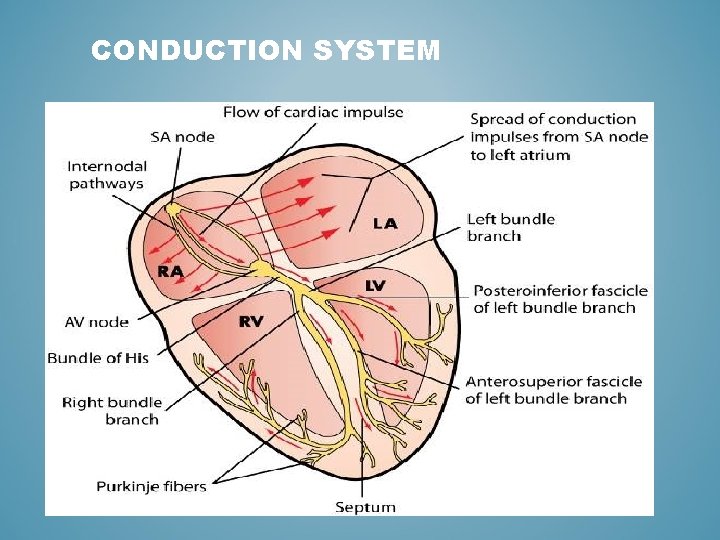
CONDUCTION SYSTEM
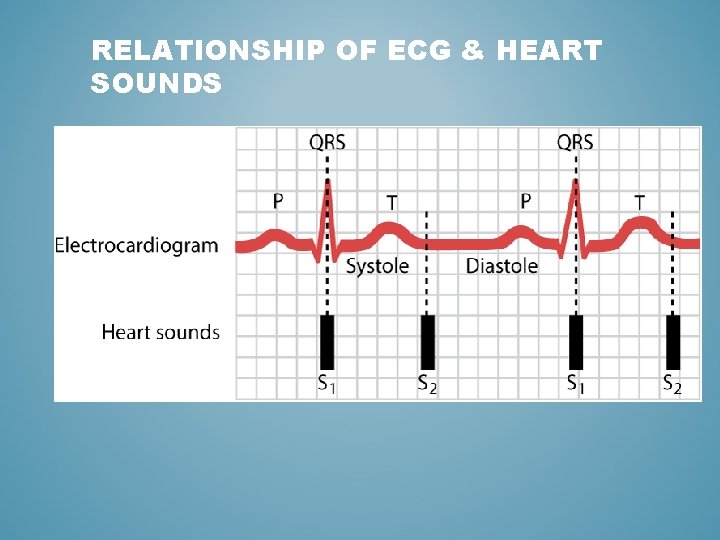
RELATIONSHIP OF ECG & HEART SOUNDS
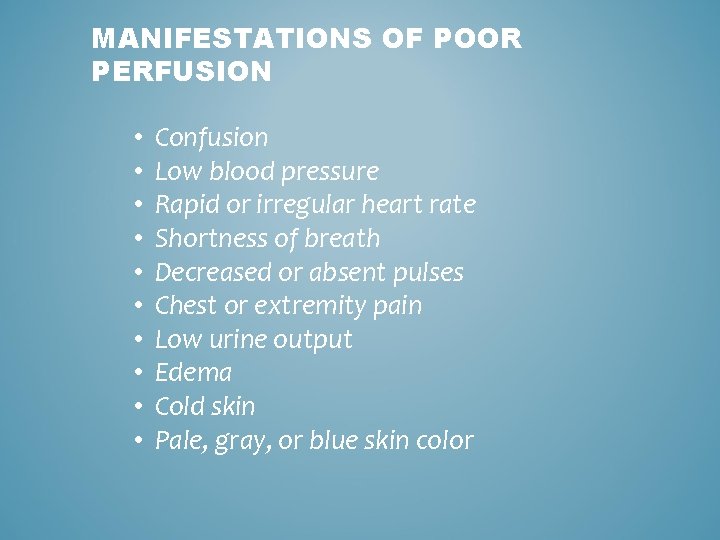
MANIFESTATIONS OF POOR PERFUSION • • • Confusion Low blood pressure Rapid or irregular heart rate Shortness of breath Decreased or absent pulses Chest or extremity pain Low urine output Edema Cold skin Pale, gray, or blue skin color
- Slides: 17