
Cardiac Pacemakers new 10 Oct 12 D Mc
- Slides: 16
Cardiac Pacemakers new 10 Oct 12 D Mc. Mahon
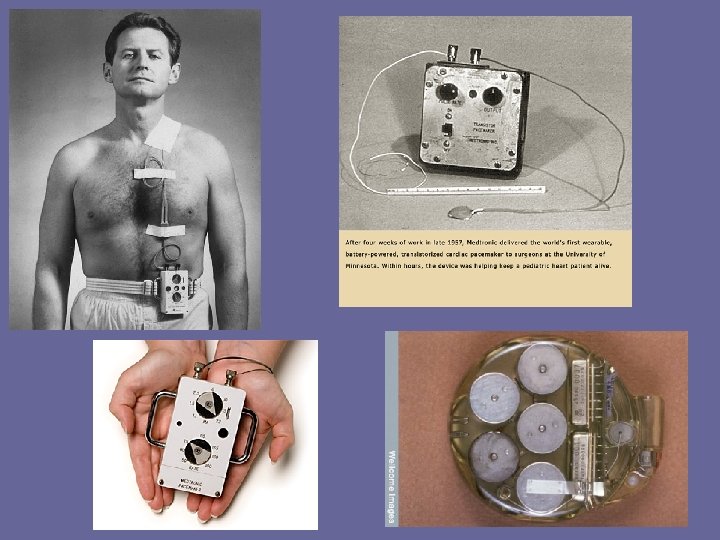
History – 1952 - Zoll: stimulation of heart thru chest wall 1957 - Lillehei: direct stimulation by leads on the heart from an external pacemaker 1958 - Greatbatch: made first fully implantable pacemaker 1986 - Medtronic Corp: first rate-responsive pacemaker
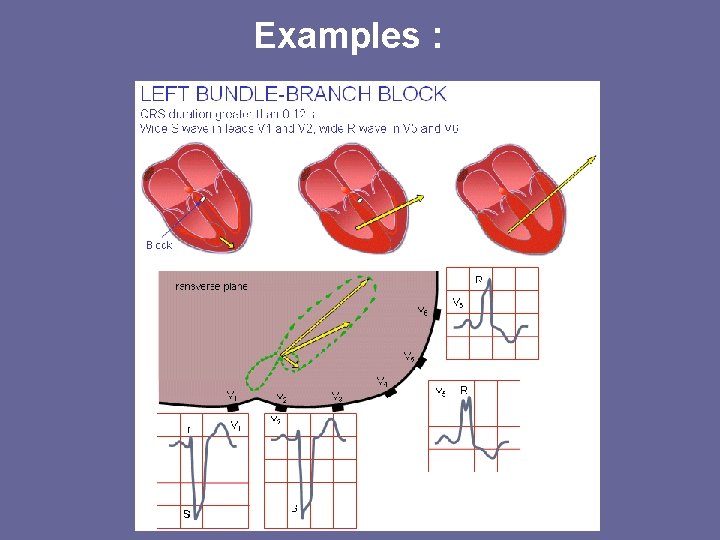
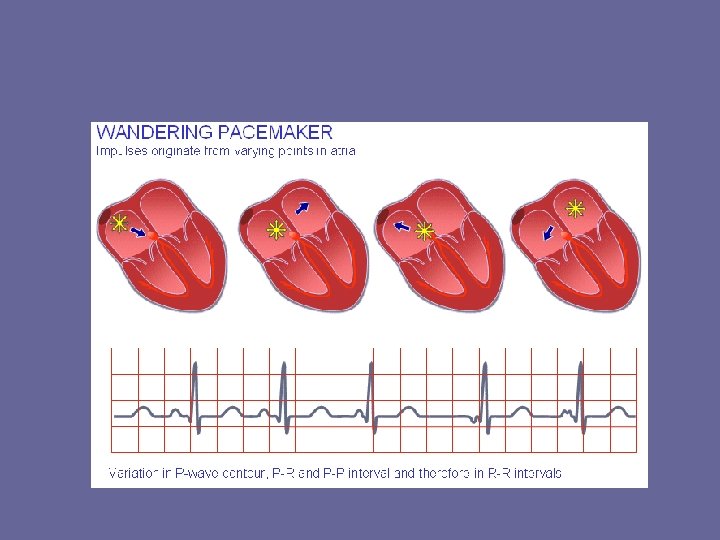
The problem: Arrhythmias Types of arrhythmia: > Conduction Problem - delay at the SA node pacemaker - deflected path of the signal - block of the path 1° Block: long delay 2° Block: intermittent block of the signal 3° Block: complete blockage of the signal > Problem at the Origin of the Signal - erratic rate at the SA node - multiple pacemaker sites - high rate (“sinus tachycardia”) - low rate (“sinus bradycardia”)
Examples :
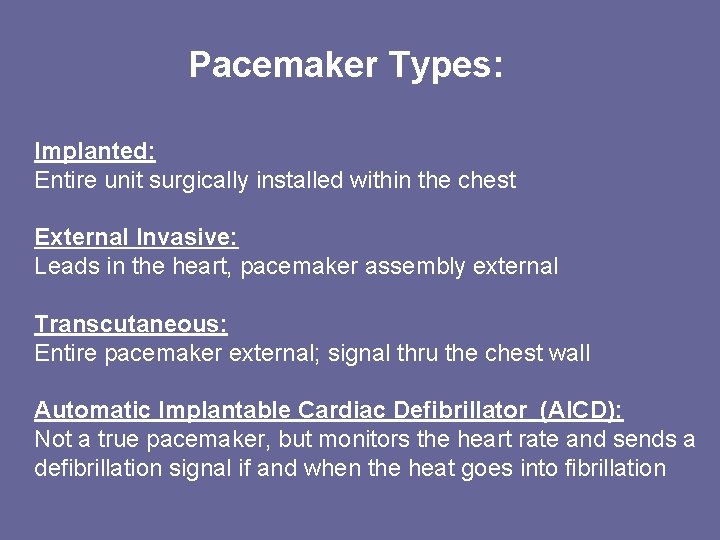
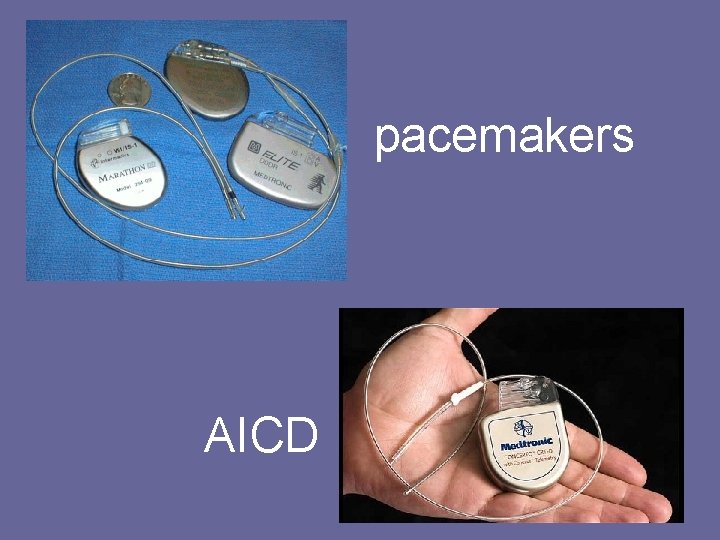
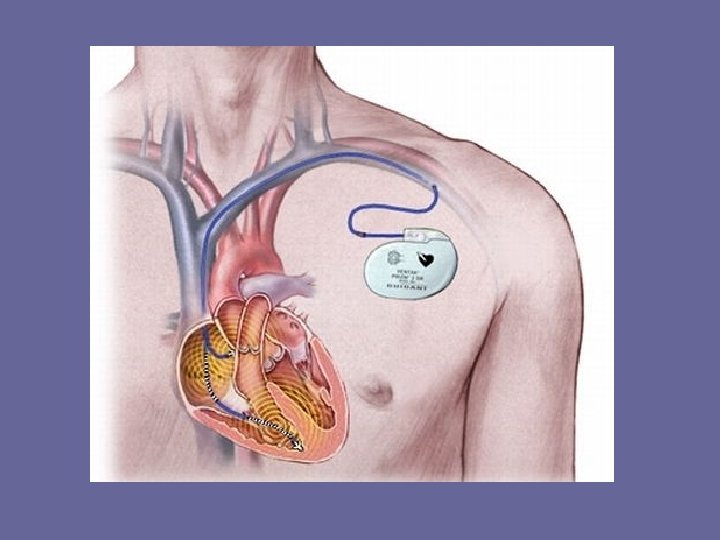
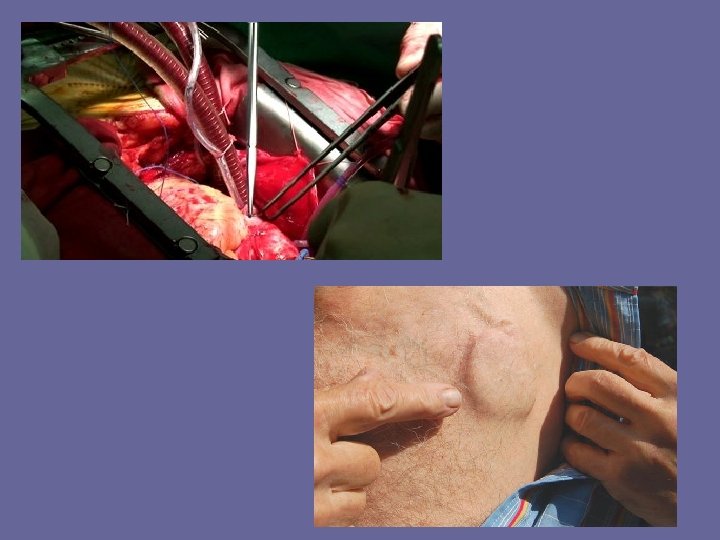
Pacemaker Types: Implanted: Entire unit surgically installed within the chest External Invasive: Leads in the heart, pacemaker assembly external Transcutaneous: Entire pacemaker external; signal thru the chest wall Automatic Implantable Cardiac Defibrillator (AICD): Not a true pacemaker, but monitors the heart rate and sends a defibrillation signal if and when the heat goes into fibrillation
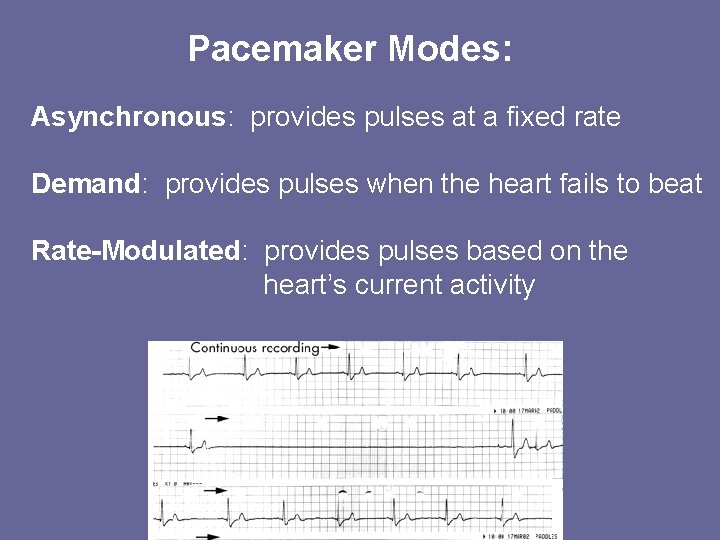
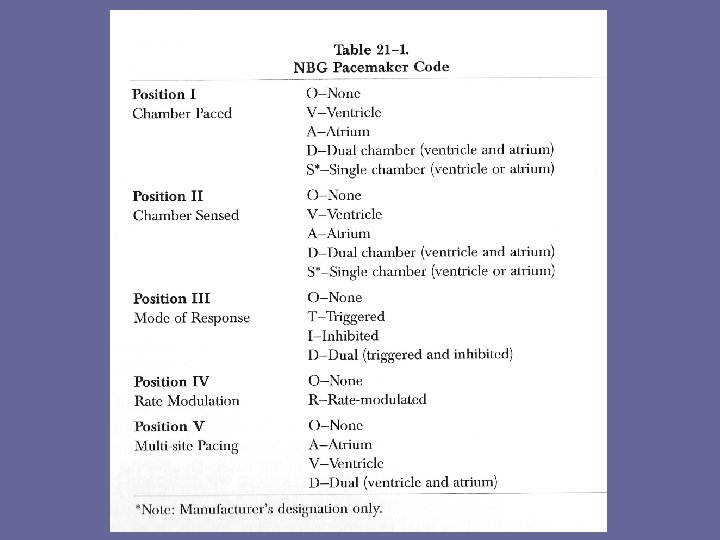
Pacemaker Modes: Asynchronous: provides pulses at a fixed rate Demand: provides pulses when the heart fails to beat Rate-Modulated: provides pulses based on the heart’s current activity
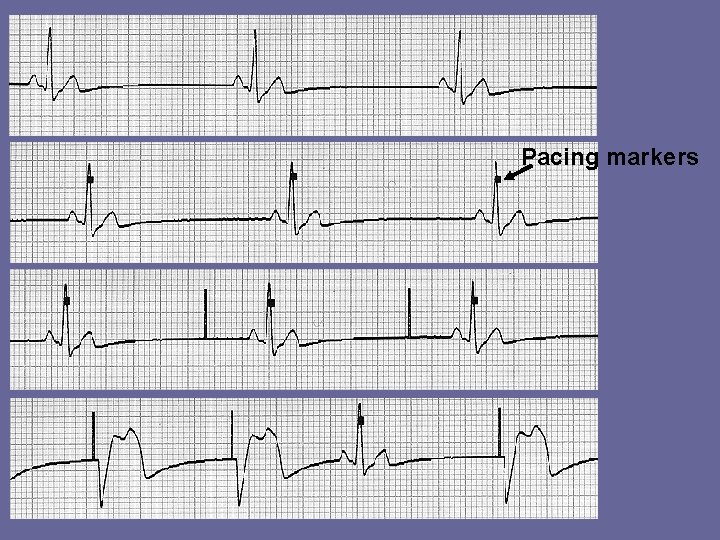
Pacing markers
pacemakers AICD
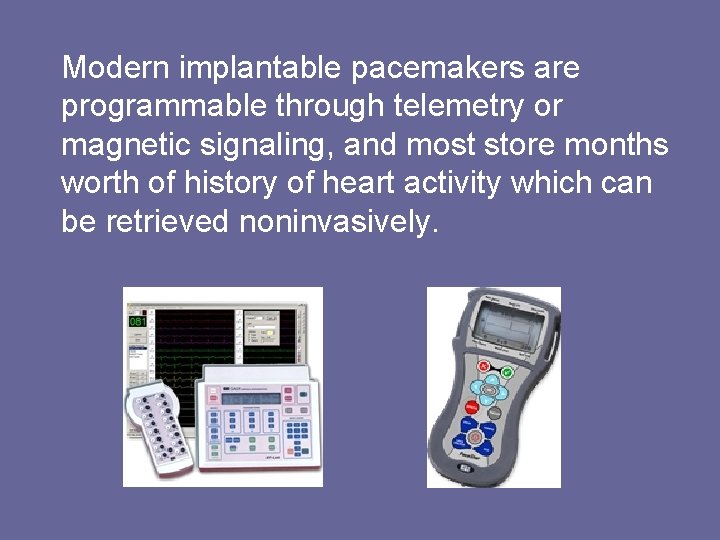
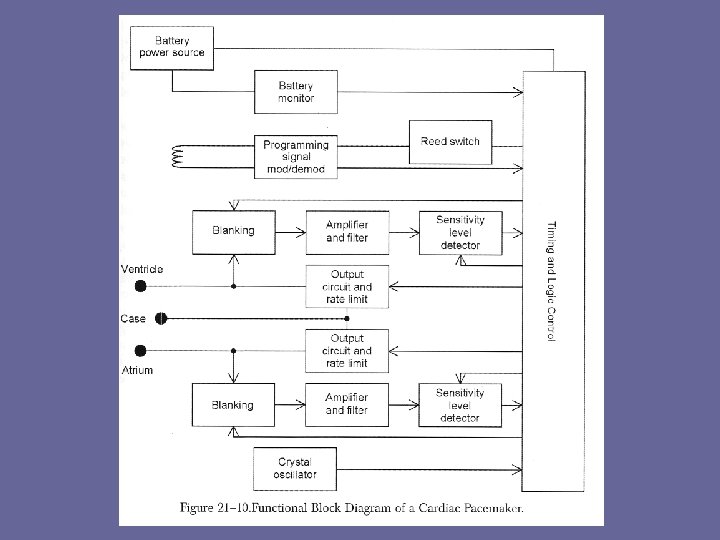
Modern implantable pacemakers are programmable through telemetry or magnetic signaling, and most store months worth of history of heart activity which can be retrieved noninvasively.