
CARDIAC MUSCLE Dr Mohammed Sharique Ahmed Quadri Assistant

- Slides: 17
ﺑﺴﻢ ﺍﻟﻠﻪ ﺍﻟﺮﺣﻤﻦ ﺍﻟﺮﺣﻴﻢ CARDIAC MUSCLE Dr. Mohammed Sharique Ahmed Quadri Assistant Professor Department Basic Medical Sciences Division of Physiology Faculty of Medicine Almaarefa Colleges
CARDIAC MUSCLE • ATRIAL MUSCLE • VENTRICULAR MUSCLE • SPECIALISES EXCITATORY &CONDUCTIVE MUSCLE FIBERS
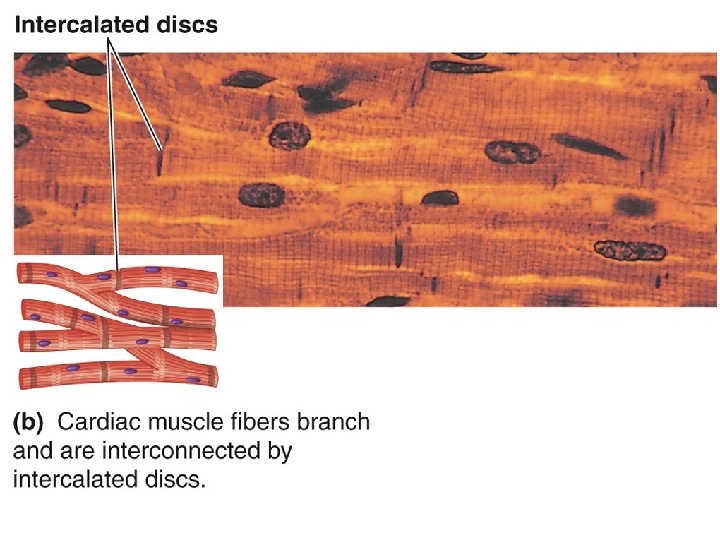
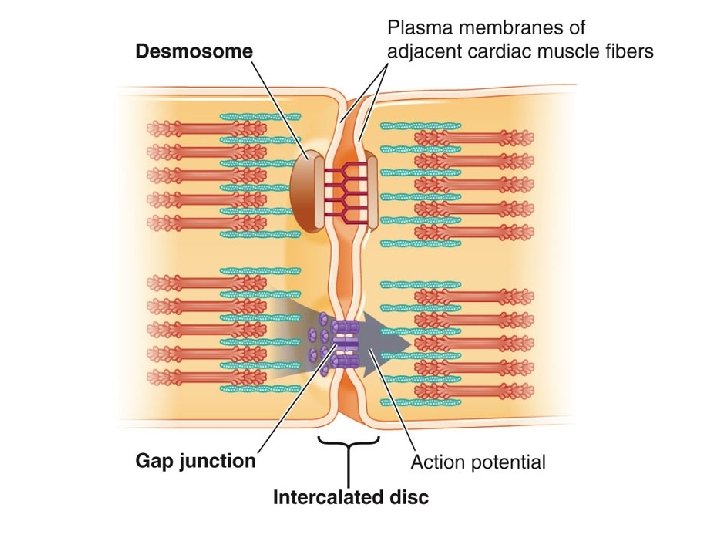
Cardiac Muscle Fibers • Interconnected by intercalated discs and form functional syncytia • Within intercalated discs – two kinds of membrane junctions – Desmosomes – Gap junctions
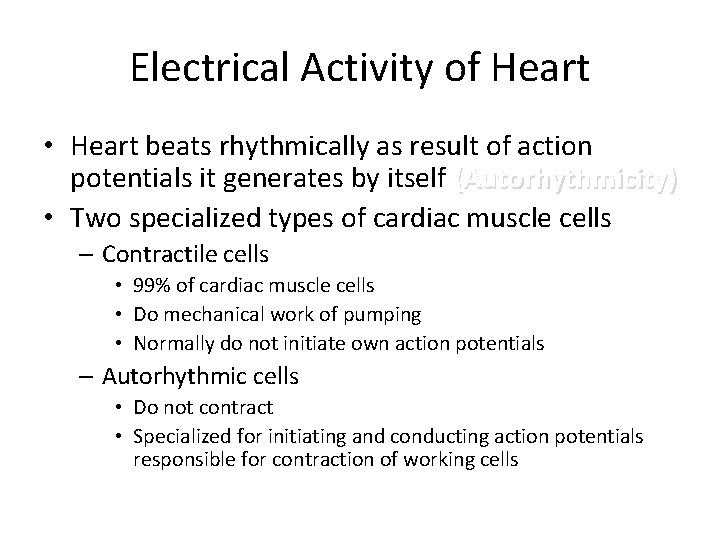
Electrical Activity of Heart • Heart beats rhythmically as result of action potentials it generates by itself (Autorhythmicity) • Two specialized types of cardiac muscle cells – Contractile cells • 99% of cardiac muscle cells • Do mechanical work of pumping • Normally do not initiate own action potentials – Autorhythmic cells • Do not contract • Specialized for initiating and conducting action potentials responsible for contraction of working cells
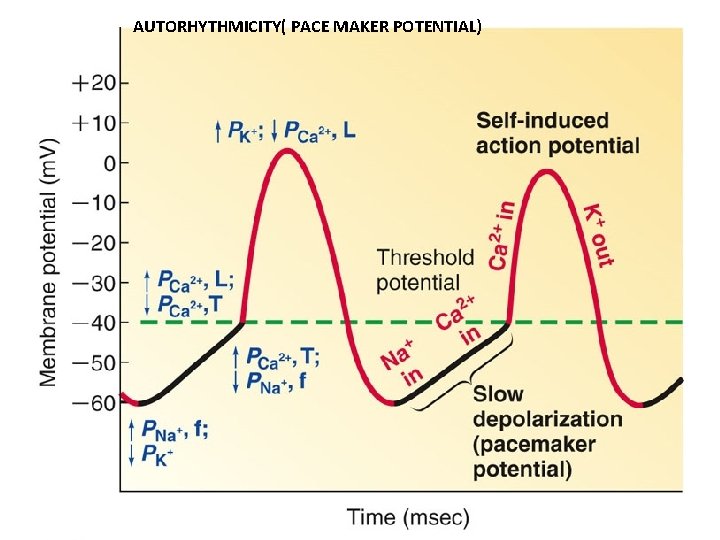
AUTORHYTHMICITY What is Auto. Rhythmicity? • Cardiac autorhythmic cells do not have resting potential instead they show PACE MAKER POTENTIAL • Membrane potential slowly depolarizes between action potential until threshold is reached. • This spontaneous depolarization to threshold is known as PACE MAKER POTENTIAL 7
AUTORHYTHMICITY( PACE MAKER POTENTIAL)
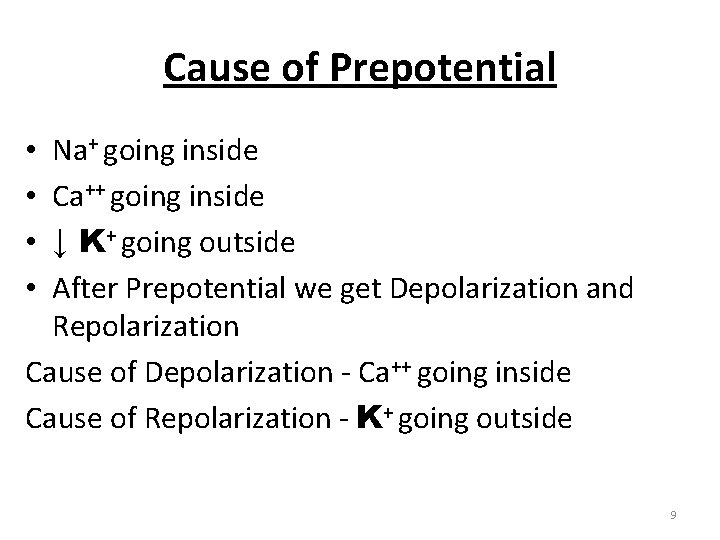
Cause of Prepotential Na+ going inside Ca++ going inside ↓ K+ going outside After Prepotential we get Depolarization and Repolarization Cause of Depolarization - Ca++ going inside Cause of Repolarization - K+ going outside • • 9
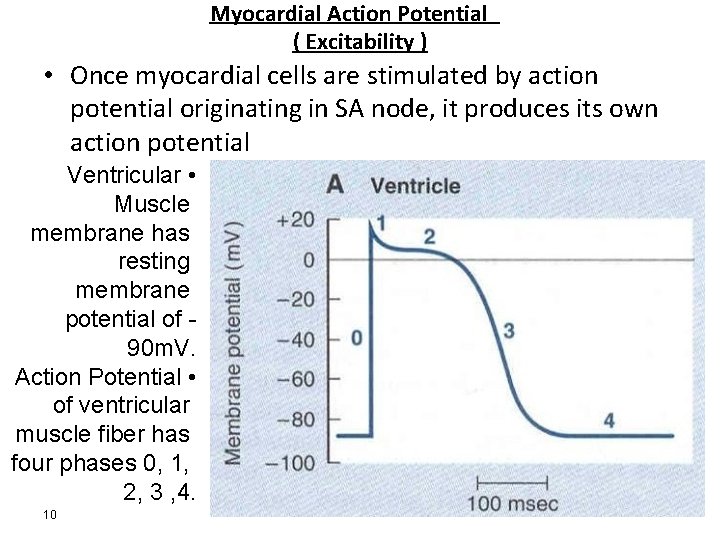
Myocardial Action Potential ( Excitability ) • Once myocardial cells are stimulated by action potential originating in SA node, it produces its own action potential Ventricular • Muscle membrane has resting membrane potential of 90 m. V. Action Potential • of ventricular muscle fiber has four phases 0, 1, 2, 3 , 4. 10
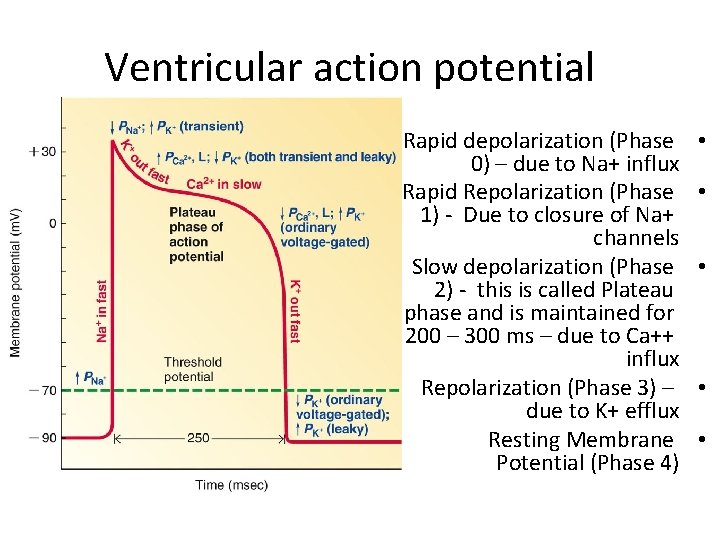
Ventricular action potential Rapid depolarization (Phase 0) – due to Na+ influx Rapid Repolarization (Phase 1) - Due to closure of Na+ channels Slow depolarization (Phase 2) - this is called Plateau phase and is maintained for 200 – 300 ms – due to Ca++ influx Repolarization (Phase 3) – due to K+ efflux Resting Membrane Potential (Phase 4) • • •
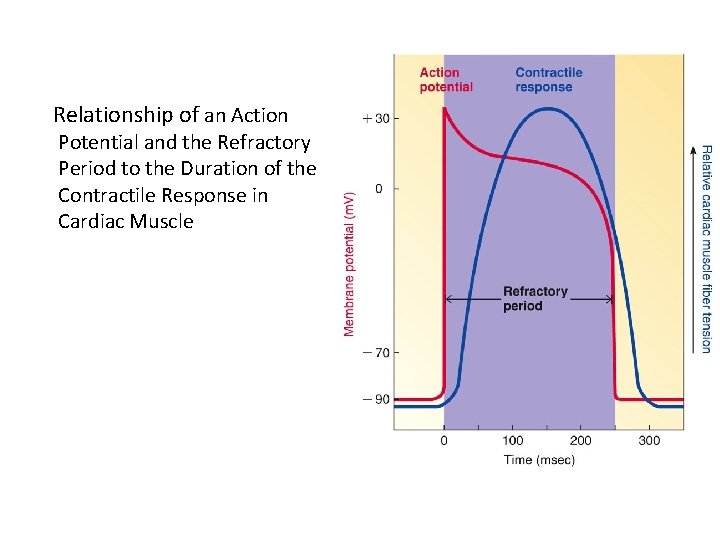
Electrical Activity of Heart • Because long refractory period occurs in conjunction with prolonged plateau phase, – Ensures alternate periods of contraction and relaxation which are essential for pumping blood
Relationship of an Action Potential and the Refractory Period to the Duration of the Contractile Response in Cardiac Muscle
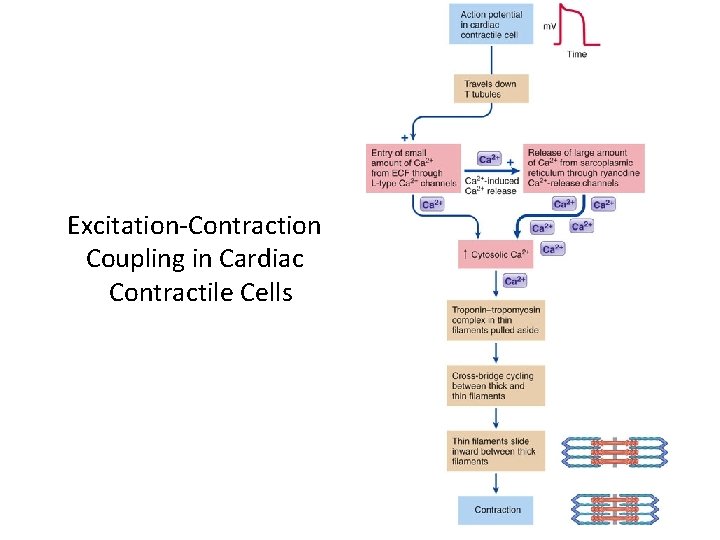
Source of calcium for cross bridge cycling • Ca 2+ entry through L-type channels in T tubules triggers larger release of Ca 2+ from sarcoplasmic reticulum – Ca 2+ induced Ca 2+ release leads to cross-bridge cycling and contraction – 90% of Ca 2+ needed for contraction comes from sarcoplasmic reticulum
Excitation-Contraction Coupling in Cardiac Contractile Cells
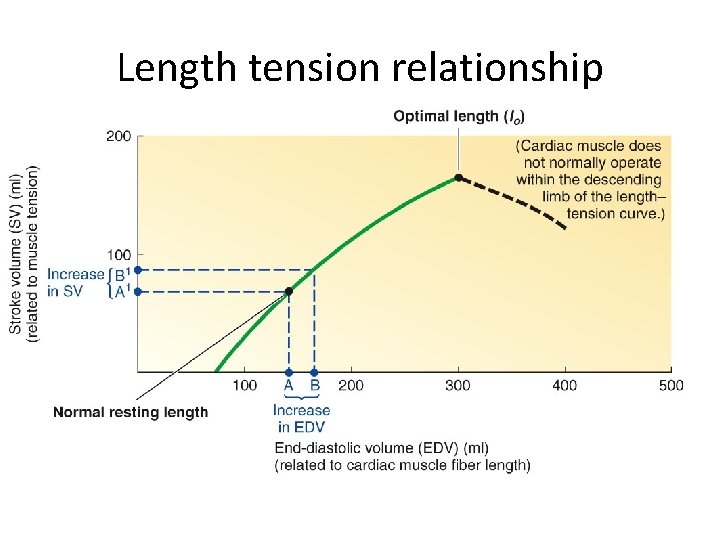
Length tension relationship
References • Human physiology by Lauralee Sherwood, 7 th edition • Text book physiology by Guyton &Hall, 12 th edition • Text book of physiology by Linda. s contanzo, third edition 17