
Cardiac glycosides Part 1 By Dr Darakhshan Rizvi
Cardiac glycosides Part 1 By: Dr Darakhshan Rizvi CIMS
OVERVIEW § § § § Definition Epidemiology Pathophysiology Signs and Symptoms Classification of HF Treatment of HF Digitalis & its pharmacological actions
“ Heart Failure Heart failure (HF) is a clinical syndrome that occurs in patients who, because of an inherited or acquired abnormality of cardiac structure and/or function, develop a constellation of clinical symptoms and signs that lead to frequent hospitalizations, a poor quality of life, and a shortened life expectancy. The heart is unable to pump sufficient amount of blood to meet the metabolic demands of the body. “

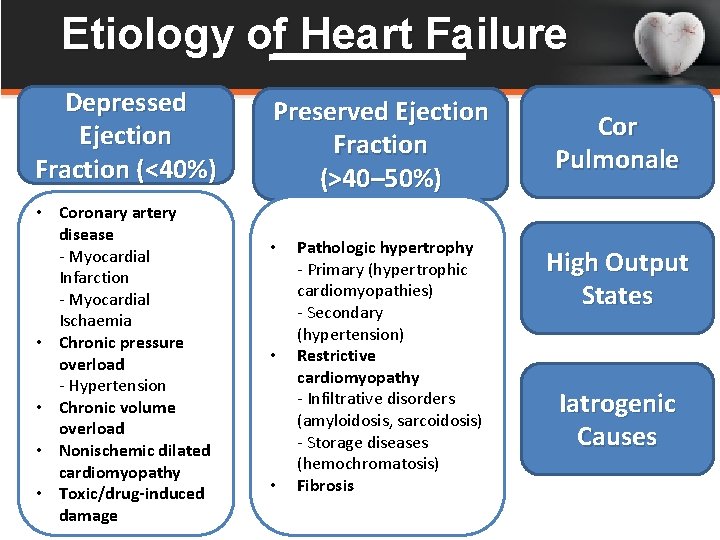
Etiology of Heart Failure Depressed Ejection Fraction (<40%) • Coronary artery disease - Myocardial Infarction - Myocardial Ischaemia • Chronic pressure overload - Hypertension • Chronic volume overload • Nonischemic dilated cardiomyopathy • Toxic/drug-induced damage Preserved Ejection Fraction (>40– 50%) • • • Pathologic hypertrophy - Primary (hypertrophic cardiomyopathies) - Secondary (hypertension) Restrictive cardiomyopathy - Infiltrative disorders (amyloidosis, sarcoidosis) - Storage diseases (hemochromatosis) Fibrosis Cor Pulmonale High Output States Iatrogenic Causes
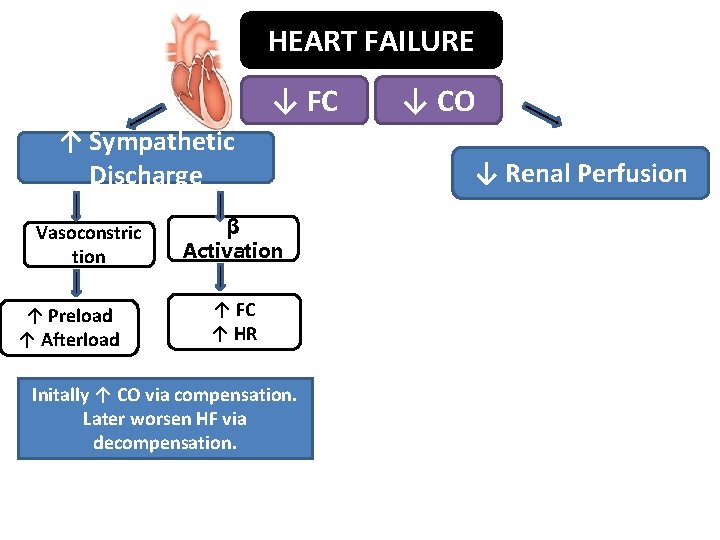
HEART FAILURE ↓ FC ↑ Sympathetic Discharge Vasoconstric tion ↑ Preload ↑ Afterload β Activation ↑ FC ↑ HR Initally ↑ CO via compensation. Later worsen HF via decompensation. ↓ CO ↓ Renal Perfusion
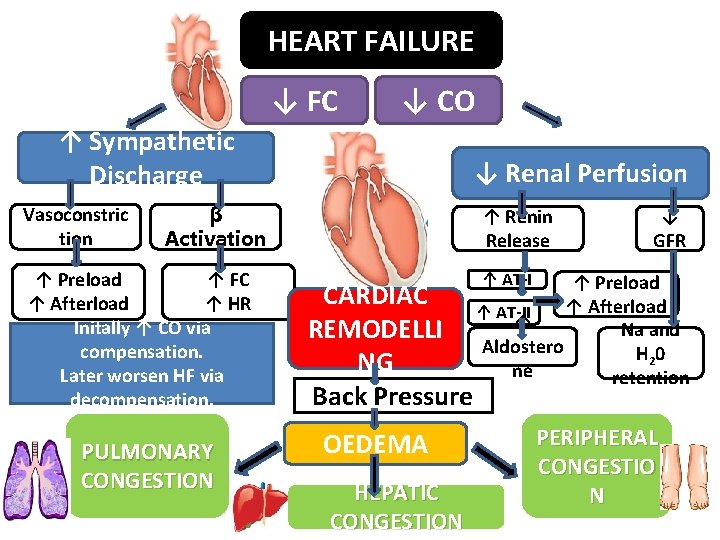
HEART FAILURE ↓ FC ↓ CO ↑ Sympathetic Discharge Vasoconstric tion ↓ Renal Perfusion β Activation ↑ Preload ↑ FC ↑ Afterload ↑ HR Initally ↑ CO via compensation. Later worsen HF via decompensation. PULMONARY CONGESTION ↑ Renin Release CARDIAC REMODELLI NG Back Pressure OEDEMA HEPATIC CONGESTION ↓ GFR ↑ AT-I ↑ Preload ↑ Afterload ↑ AT-II ↑ Na and Aldostero H 2 0 ne retention PERIPHERAL CONGESTIO N
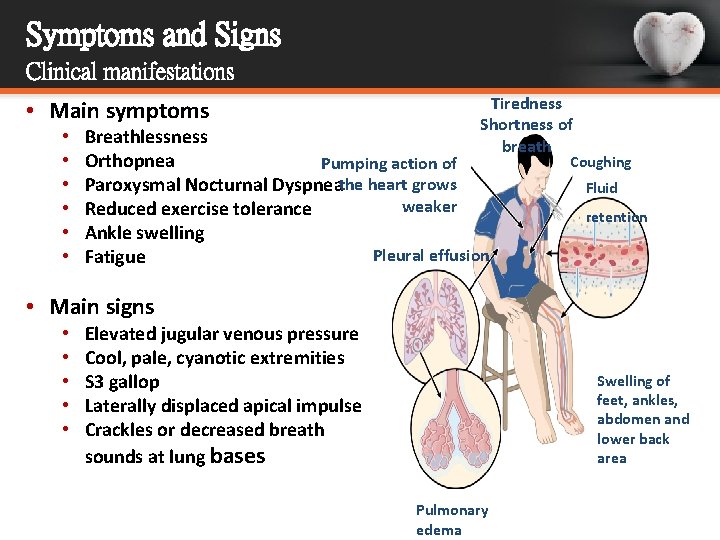
Symptoms and Signs Clinical manifestations • Main symptoms • • • Tiredness Shortness of breath Breathlessness Orthopnea Pumping action of Paroxysmal Nocturnal Dyspneathe heart grows weaker Reduced exercise tolerance Ankle swelling Pleural effusion Fatigue Coughing Fluid retention • Main signs • • • Elevated jugular venous pressure Cool, pale, cyanotic extremities S 3 gallop Laterally displaced apical impulse Crackles or decreased breath sounds at lung bases Swelling of feet, ankles, abdomen and lower back area Pulmonary edema
Types of Heart Failure Low Output Heart Failure • Decreased contractility of the heart → ↓Cardiac Output High Output Heart Failure • Demands of the body are high, which are not even met with increased cardiac output.
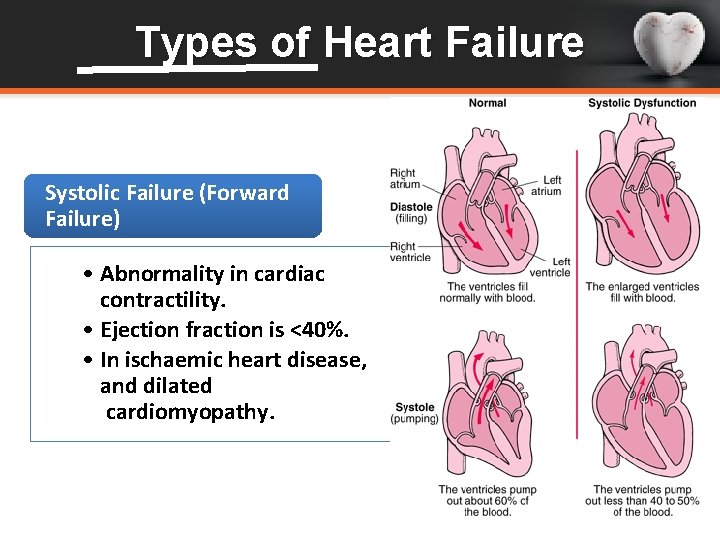
Types of Heart Failure Systolic Failure (Forward Failure) • Abnormality in cardiac contractility. • Ejection fraction is <40%. • In ischaemic heart disease, and dilated cardiomyopathy.
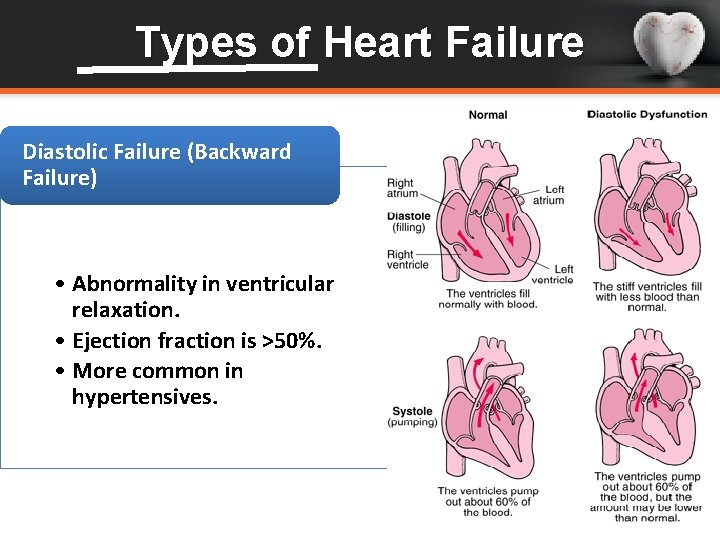
Types of Heart Failure Diastolic Failure (Backward Failure) • Abnormality in ventricular relaxation. • Ejection fraction is >50%. • More common in hypertensives.
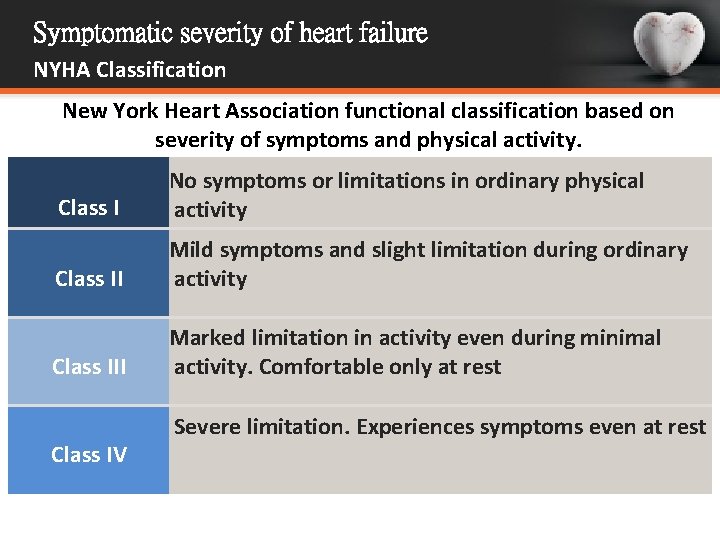
Symptomatic severity of heart failure NYHA Classification New York Heart Association functional classification based on severity of symptoms and physical activity. Class I No symptoms or limitations in ordinary physical activity Class II Mild symptoms and slight limitation during ordinary activity Class III Marked limitation in activity even during minimal activity. Comfortable only at rest Class IV Severe limitation. Experiences symptoms even at rest

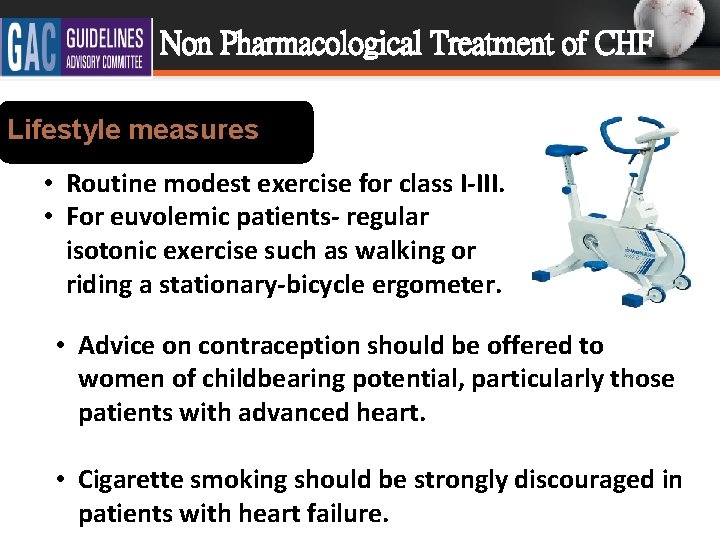
Non Pharmacological Treatment of CHF Lifestyle measures • Routine modest exercise for class I-III. • For euvolemic patients- regular isotonic exercise such as walking or riding a stationary-bicycle ergometer. • Advice on contraception should be offered to women of childbearing potential, particularly those patients with advanced heart. • Cigarette smoking should be strongly discouraged in patients with heart failure.
Non Pharmacological Treatment of CHF Dietary Modifications • Salt restriction: Mild heart failure (NYHA II) : 2 -3 gm/day Moderate to severe heart failure : <2 gm/day • Fluid restriction (<2 L/day) if hyponatremia (<130 meq/L). • Caloric supplementation- with advanced HF and unintentional weight loss or muscle wasting (cardiac cachexia)

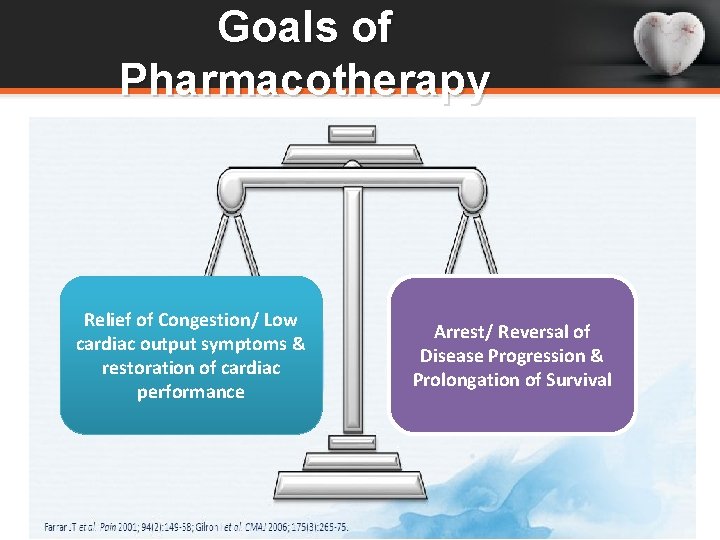
Goals of Pharmacotherapy Relief of Congestion/ Low cardiac output symptoms & restoration of cardiac performance Arrest/ Reversal of Disease Progression & Prolongation of Survival
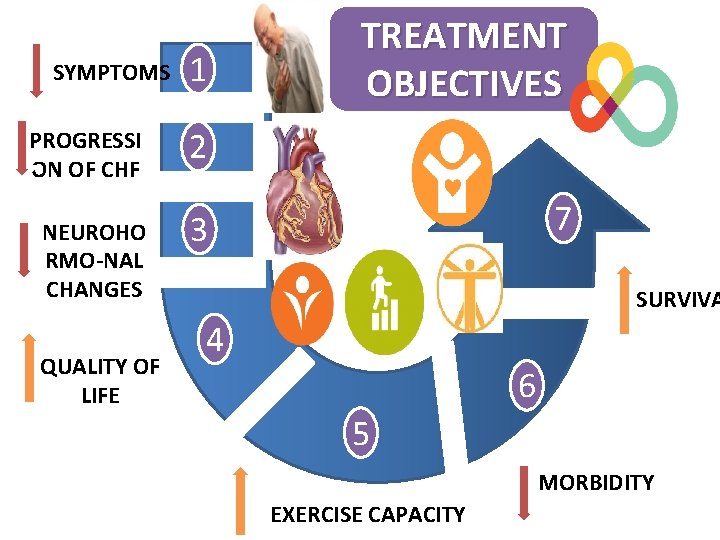
SYMPTOMS 1 PROGRESSI ON OF CHF 2 NEUROHO RMO-NAL CHANGES 3 QUALITY OF LIFE TREATMENT OBJECTIVES 7 SURVIVA 4 6 5 MORBIDITY EXERCISE CAPACITY
Treatment Of Acute Heart Failure Ionotropic Drugs • Cardiac Glycosides- Digoxin • β Rc and Dopaminergic Rc Agonists. Dopamine, Dobutamine, Dopexamine • Phosphodiesterase Inhibitors- Inamrinone, Milrinone, Levosimendan • BNP agonists- Nesiritide Diuretics
Treatment Of Chronic Heart Failure Vasodilators • ACE Inhibitors • Angiotensin Receptor Blockers • Direct Vasodilators • Calcium Channel Blockers Diuretics β Blockers Vasopeptide Inhibitors
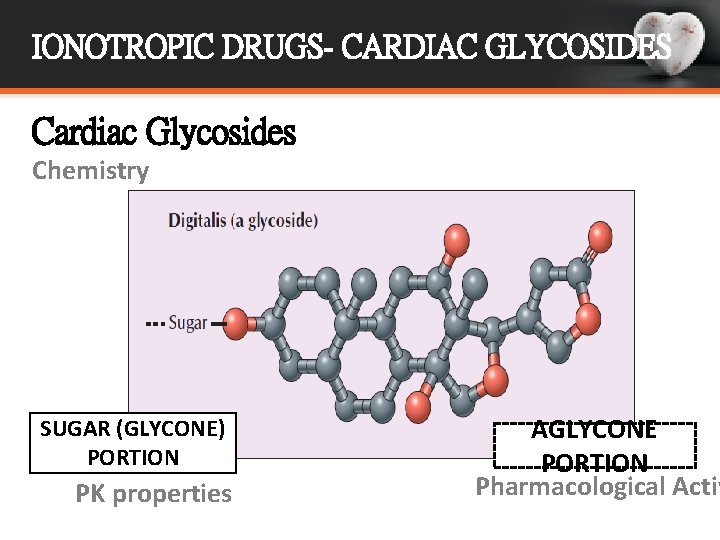
IONOTROPIC DRUGS- CARDIAC GLYCOSIDES Cardiac Glycosides Chemistry SUGAR (GLYCONE) PORTION PK properties AGLYCONE PORTION Pharmacological Activ
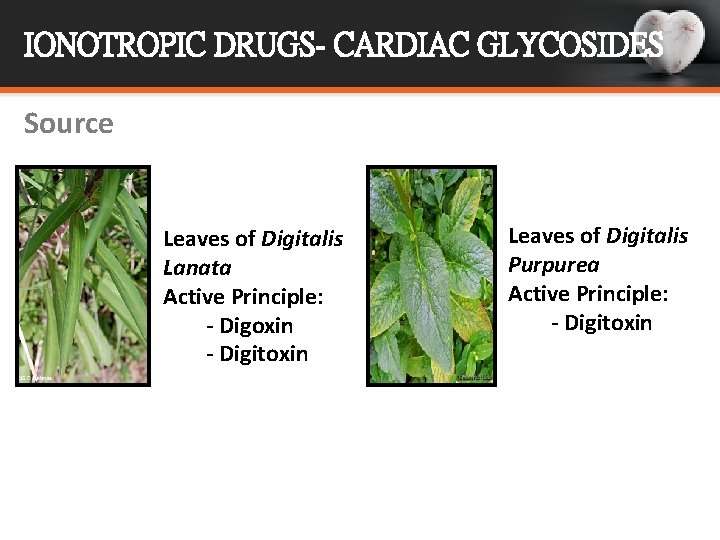
IONOTROPIC DRUGS- CARDIAC GLYCOSIDES Source Leaves of Digitalis Lanata Active Principle: - Digoxin - Digitoxin Leaves of Digitalis Purpurea Active Principle: - Digitoxin
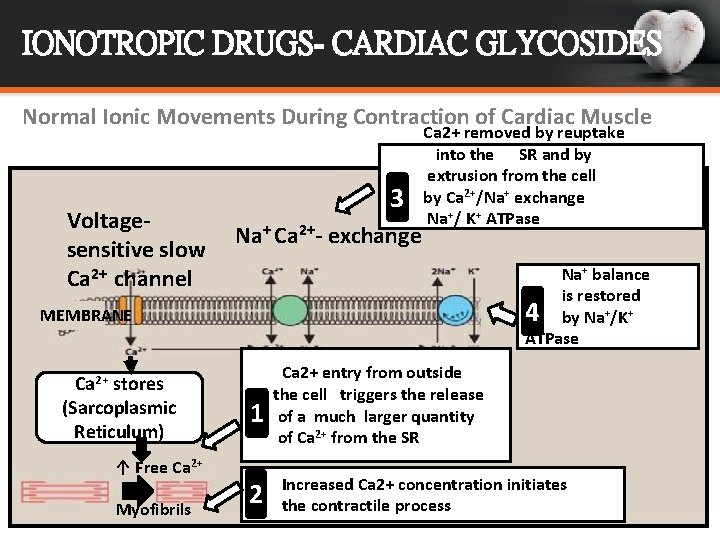
IONOTROPIC DRUGS- CARDIAC GLYCOSIDES Normal Ionic Movements During Contraction of Cardiac Muscle Voltagesensitive slow Ca 2+ channel 3 Na+ Ca 2+- exchange Ca 2+ removed by reuptake into the SR and by extrusion from the cell by Ca 2+/Na+ exchange Na+/ K+ ATPase Na+ balance is restored 4 by Na+/K+ ATPase MEMBRANE Ca 2+ stores (Sarcoplasmic Reticulum) ↑ Free Ca 2+ Myofibrils 1 2 Ca 2+ entry from outside the cell triggers the release of a much larger quantity of Ca 2+ from the SR Increased Ca 2+ concentration initiates the contractile process

IONOTROPIC DRUGS- CARDIAC GLYCOSIDES Cellular Mechanism of Digitalis 2 Digoxin inhibits Na+/K exchange Na+/K+ 1 by. ATPase The concentration of intracellular Na+ increases, and the concentratrion gradient across the membrane decreases. Increased Na+ decreases the driving force for the Na+/Ca 2+ exchanger, so there is 3 decreased extrusion of Ca 2+ into the extracellular space.

PHARMACOLOGICAL ACTIONS OF DIGITALIS POSITIVE IONOTROPIC EFFECT CARDIAC ACTIONS NEGATIVE CHRONOTROPIC EFFECT NEGATIVE DROMOTROPIC EFFECT
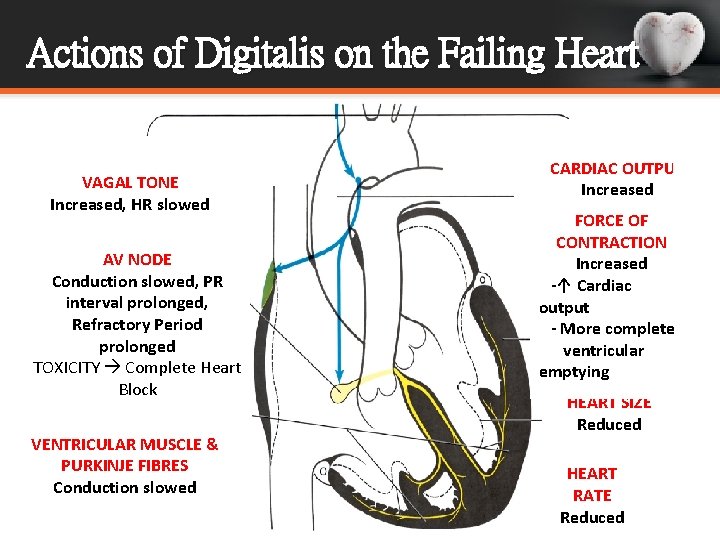
Actions of Digitalis on the Failing Heart VAGAL TONE Increased, HR slowed AV NODE Conduction slowed, PR interval prolonged, Refractory Period prolonged TOXICITY Complete Heart Block VENTRICULAR MUSCLE & PURKINJE FIBRES Conduction slowed CARDIAC OUTPUT Increased FORCE OF CONTRACTION Increased -↑ Cardiac output - More complete ventricular emptying HEART SIZE Reduced HEART RATE Reduced
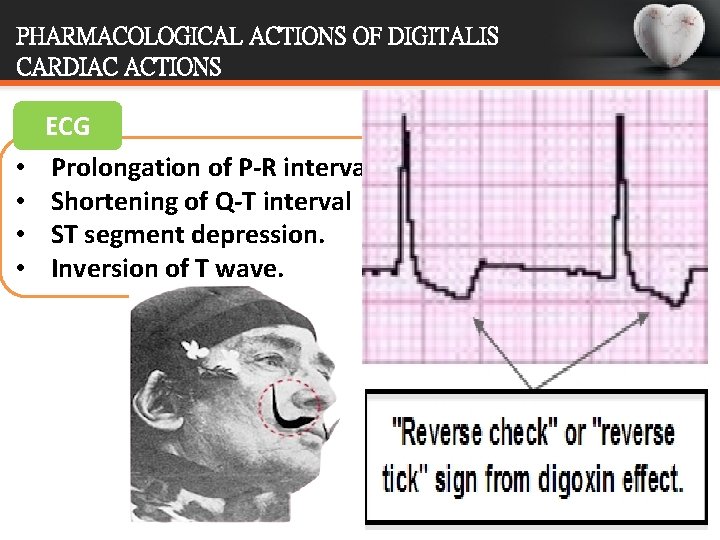
PHARMACOLOGICAL ACTIONS OF DIGITALIS CARDIAC ACTIONS • • ECG Prolongation of P-R interval Shortening of Q-T interval ST segment depression. Inversion of T wave.
PHARMACOLOGICAL ACTIONS OF DIGITALIS OTHER ACTIONS EFFECT ON KIDNEYS In patients of CHF, there is improved circulation and removal of excess salt and water. This leads to increased urine output and reduced oedema. EFFECT ON BLOOD VESSELS In cases of CHF there is reduced peripheral resistance due to increased cardiac output, and reduced venous tone.

Thankyou
- Slides: 30