
CARDIAC EMERGENCIES PREVENTING HEART DISEASE Heart disease is
- Slides: 6
CARDIAC EMERGENCIES
PREVENTING HEART DISEASE • Heart disease is one of the leading causes of death in both men and women. • Taking steps to prevent heart disease or to reduce your risk of heart disease is one of the most important things you can do for your health.
What is a heart attack? • When the heart muscle is damaged from a lack of oxygen and blood supply by either disease or trauma. • A heart attack can eventually lead to cardiac arrest, a condition in which the heart stops functioning altogether.
Signals of a Heart Attack • • • Persistent chest discomfort lasting more than 3 to 5 minutes Persistent chest discomfort that goes away and comes back Discomfort, pain or pressure in either arm, back or stomach Discomfort, pain or pressure that spreads to the shoulder, arm, neck or jaw Dizziness, lightheadedness or loss of consciousness Trouble breathing, including noisy breathing, shortness of breath and breathing that is faster than normal Nausea Pale or ashen-looking skin Sweating---face may be moist or person may be sweating profusely
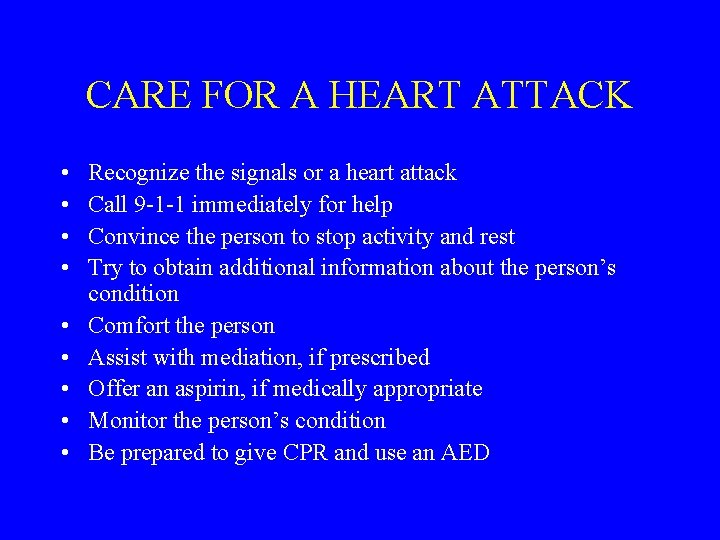
CARE FOR A HEART ATTACK • • • Recognize the signals or a heart attack Call 9 -1 -1 immediately for help Convince the person to stop activity and rest Try to obtain additional information about the person’s condition Comfort the person Assist with mediation, if prescribed Offer an aspirin, if medically appropriate Monitor the person’s condition Be prepared to give CPR and use an AED
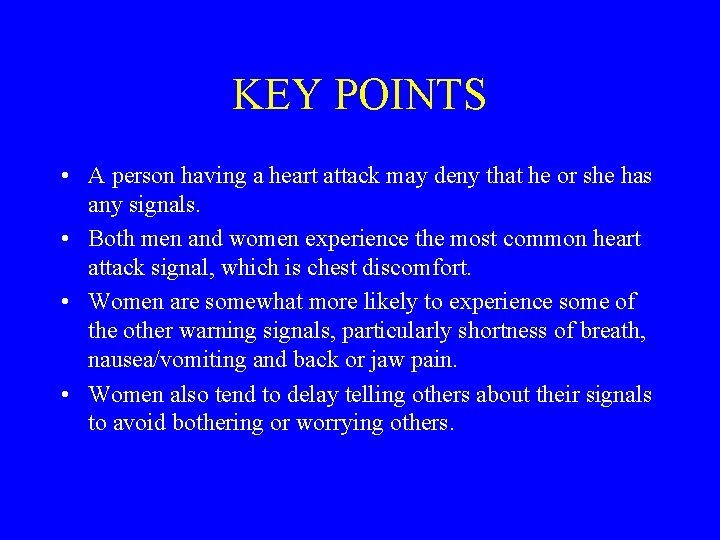
KEY POINTS • A person having a heart attack may deny that he or she has any signals. • Both men and women experience the most common heart attack signal, which is chest discomfort. • Women are somewhat more likely to experience some of the other warning signals, particularly shortness of breath, nausea/vomiting and back or jaw pain. • Women also tend to delay telling others about their signals to avoid bothering or worrying others.