
Cardiac Emergencies Chapter 7 Cardiovascular Disease Leading cause
- Slides: 19
Cardiac Emergencies Chapter 7
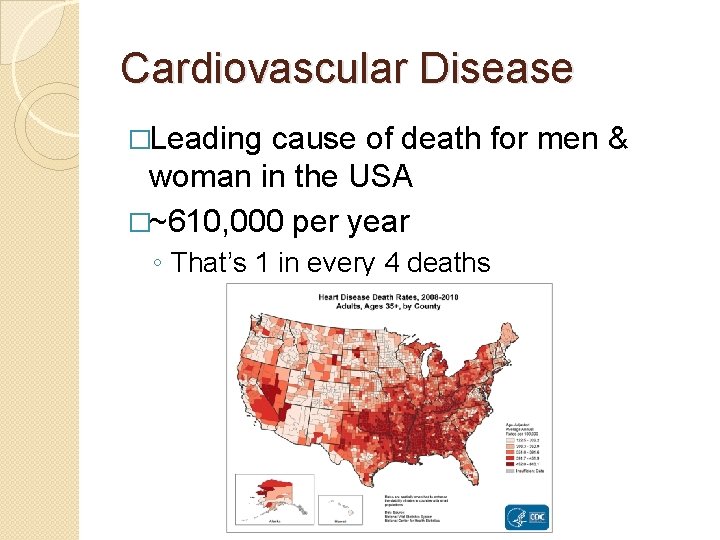
Cardiovascular Disease �Leading cause of death for men & woman in the USA �~610, 000 per year ◦ That’s 1 in every 4 deaths
Cardiovascular Disease �What ◦ ◦ ◦ puts you at higher risk? Diabetes Overweight Poor diet Physical inactivity Excessive alcohol use
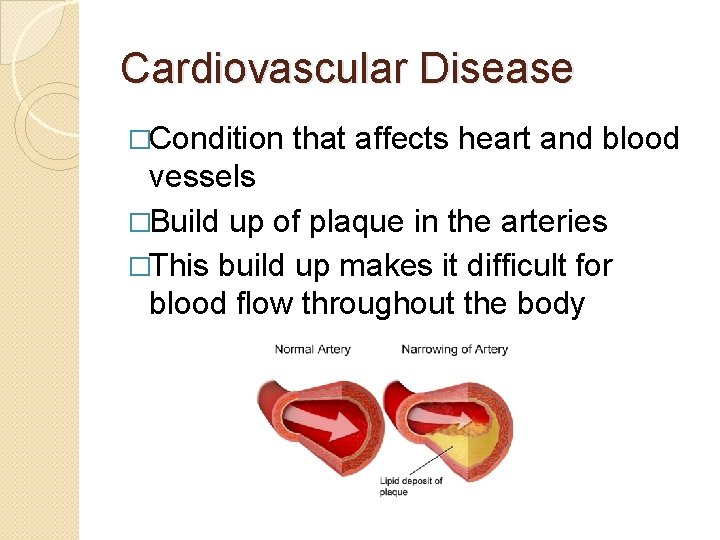
Cardiovascular Disease �Condition that affects heart and blood vessels �Build up of plaque in the arteries �This build up makes it difficult for blood flow throughout the body
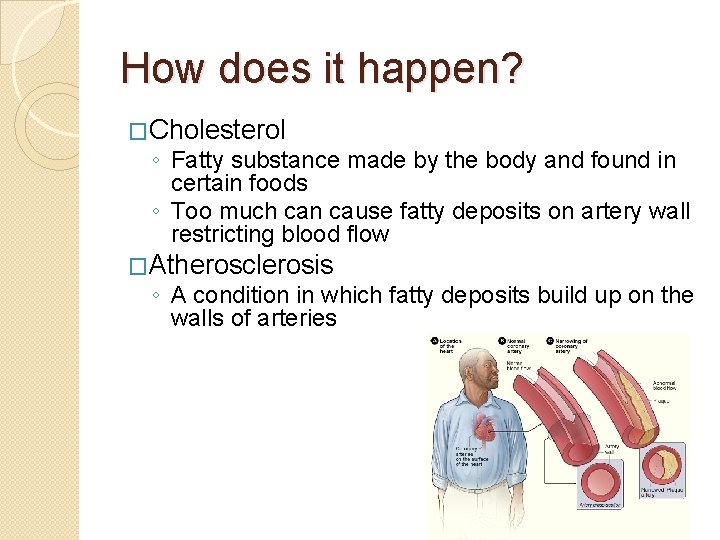
How does it happen? �Cholesterol ◦ Fatty substance made by the body and found in certain foods ◦ Too much can cause fatty deposits on artery wall restricting blood flow �Atherosclerosis ◦ A condition in which fatty deposits build up on the walls of arteries
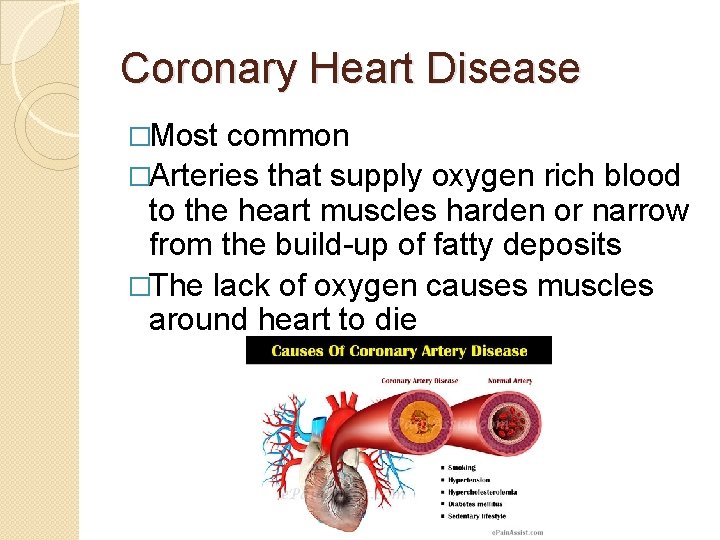
Coronary Heart Disease �Most common �Arteries that supply oxygen rich blood to the heart muscles harden or narrow from the build-up of fatty deposits �The lack of oxygen causes muscles around heart to die
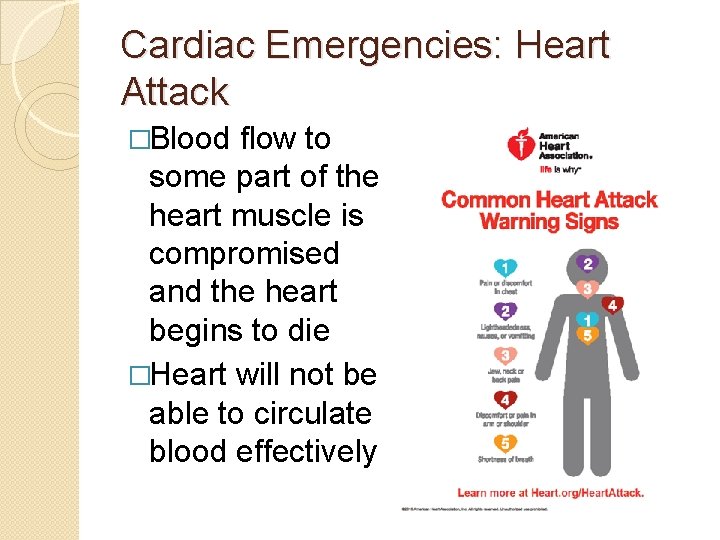
Cardiac Emergencies: Heart Attack �Blood flow to some part of the heart muscle is compromised and the heart begins to die �Heart will not be able to circulate blood effectively
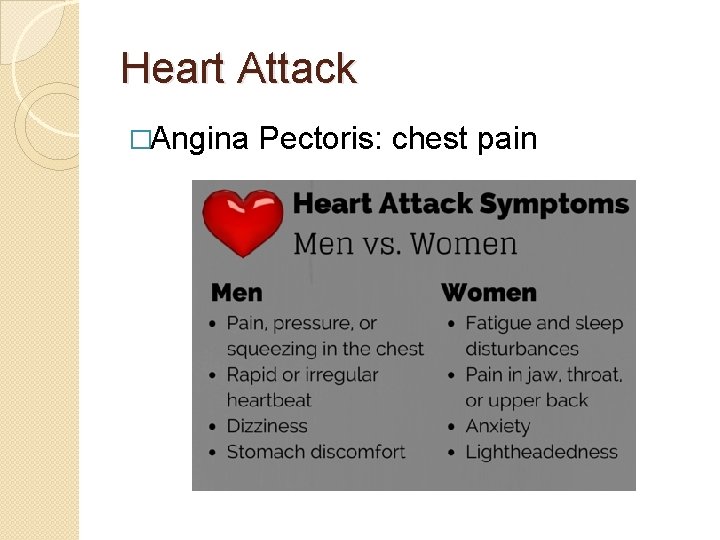
Heart Attack �Angina Pectoris: chest pain
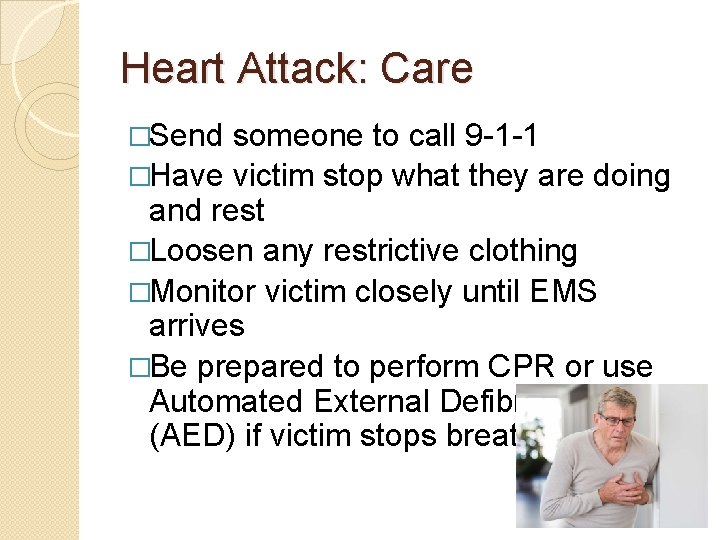
Heart Attack: Care �Send someone to call 9 -1 -1 �Have victim stop what they are doing and rest �Loosen any restrictive clothing �Monitor victim closely until EMS arrives �Be prepared to perform CPR or use Automated External Defibrillators (AED) if victim stops breathing
Cardiac Emergencies: Cardiac Arrest �Condition beating in which the heart stops
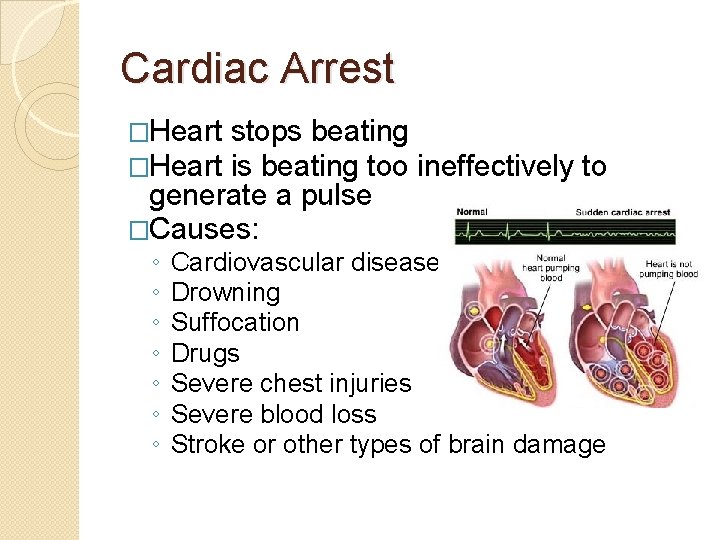
Cardiac Arrest �Heart stops beating is beating too ineffectively to generate a pulse �Causes: ◦ ◦ ◦ ◦ Cardiovascular disease Drowning Suffocation Drugs Severe chest injuries Severe blood loss Stroke or other types of brain damage
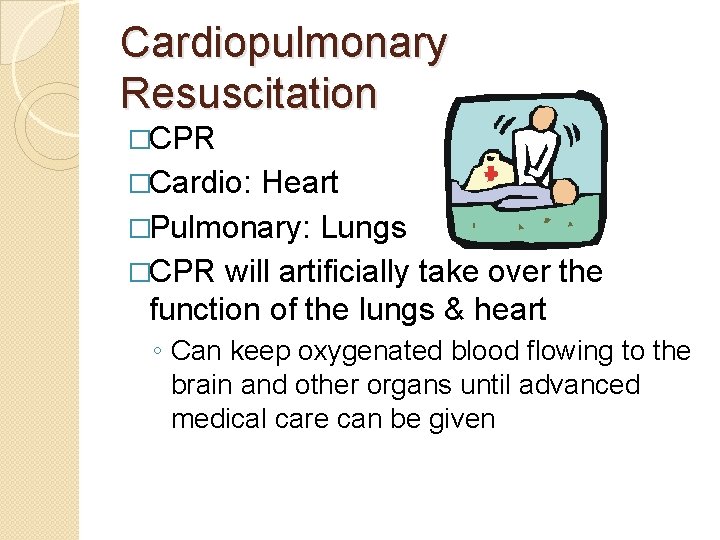
Cardiopulmonary Resuscitation �CPR �Cardio: Heart �Pulmonary: Lungs �CPR will artificially take over the function of the lungs & heart ◦ Can keep oxygenated blood flowing to the brain and other organs until advanced medical care can be given
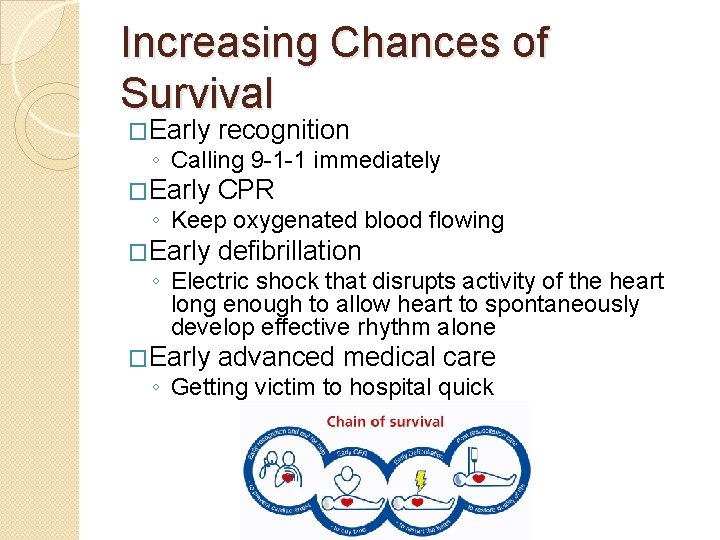
Increasing Chances of Survival �Early recognition �Early CPR �Early defibrillation �Early advanced medical care ◦ Calling 9 -1 -1 immediately ◦ Keep oxygenated blood flowing ◦ Electric shock that disrupts activity of the heart long enough to allow heart to spontaneously develop effective rhythm alone ◦ Getting victim to hospital quick
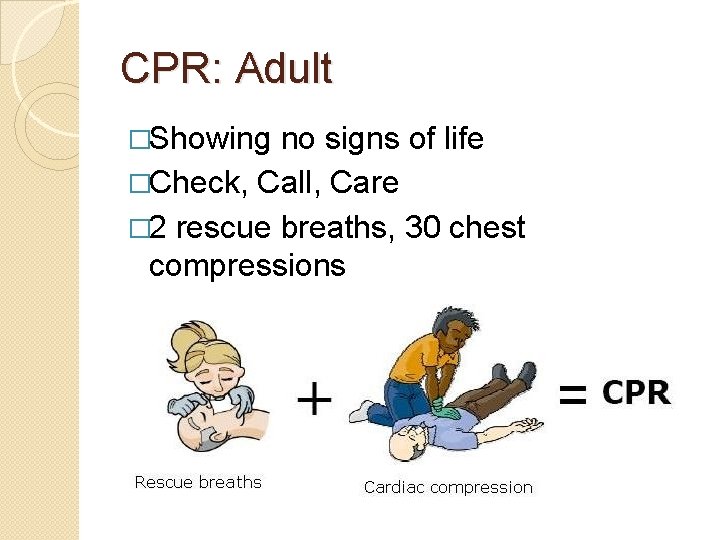
CPR: Adult �Showing no signs of life �Check, Call, Care � 2 rescue breaths, 30 chest compressions
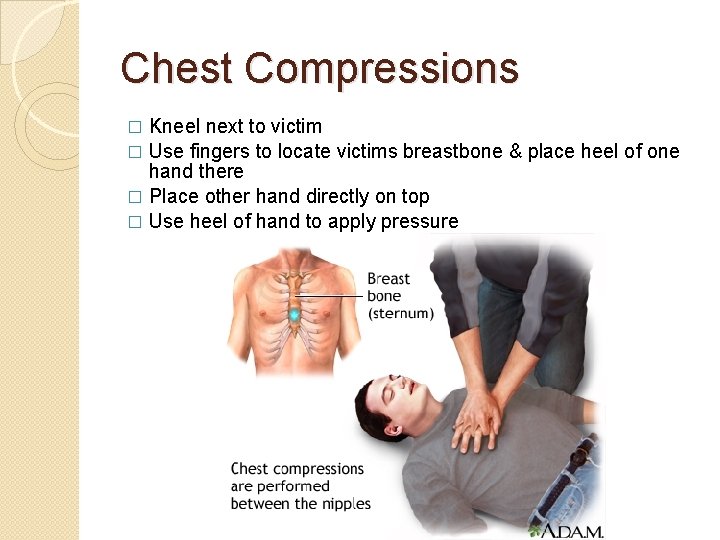
Chest Compressions Kneel next to victim � Use fingers to locate victims breastbone & place heel of one hand there � Place other hand directly on top � Use heel of hand to apply pressure �
Chest Compressions �Keep arms straight & lock elbows �Compress only 1. 5 -2 inches �Keep movements smoother, maintain a rhythm ◦ “One and two and three and four…” ◦ Bee Gees “Staying Alive” 30 chest compressions, 2 rescue breaths
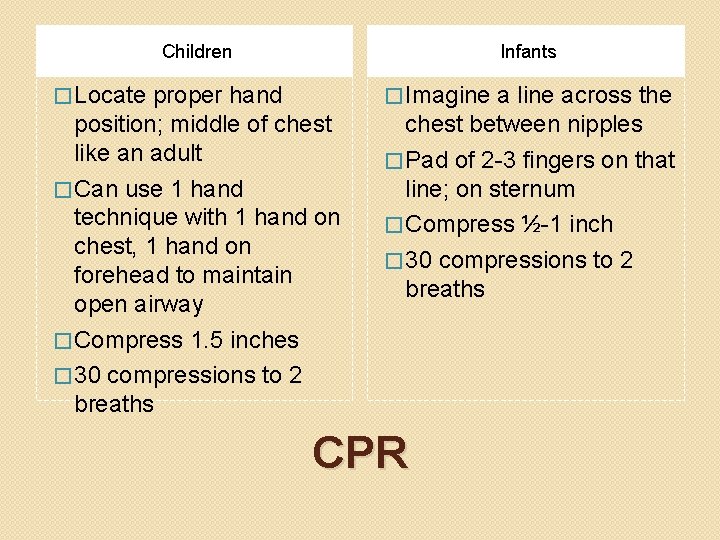
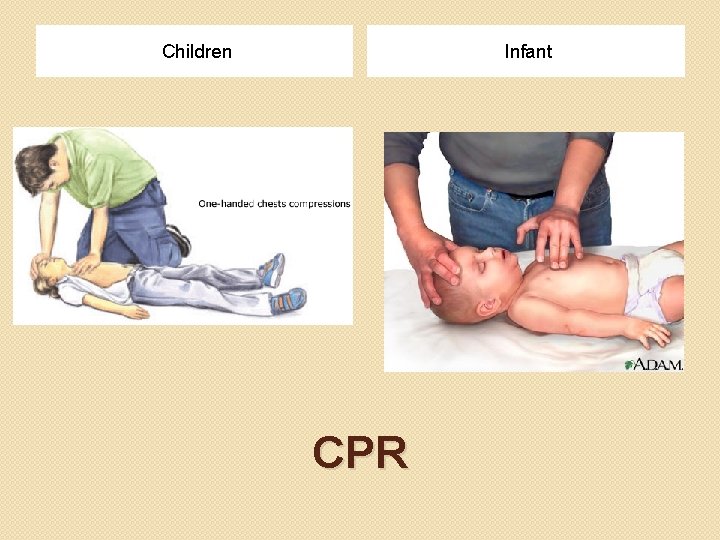
Children � Locate Infants proper hand position; middle of chest like an adult � Can use 1 hand technique with 1 hand on chest, 1 hand on forehead to maintain open airway � Compress 1. 5 inches � 30 compressions to 2 breaths � Imagine a line across the chest between nipples � Pad of 2 -3 fingers on that line; on sternum � Compress ½-1 inch � 30 compressions to 2 breaths CPR
Children Infant CPR
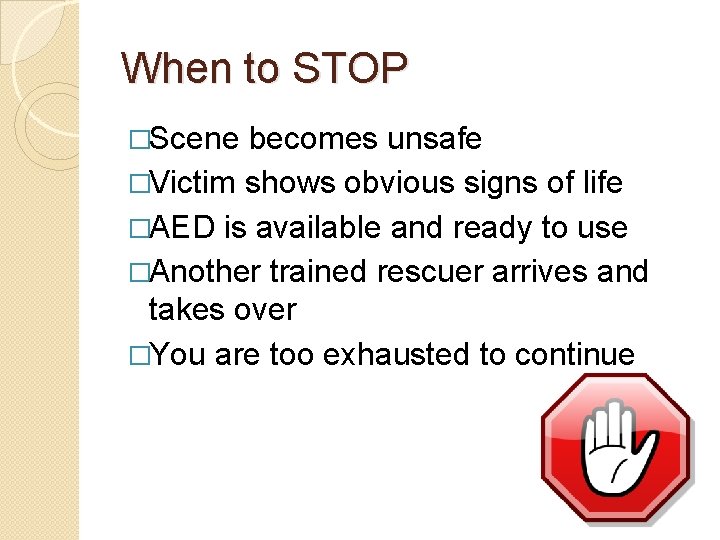
When to STOP �Scene becomes unsafe �Victim shows obvious signs of life �AED is available and ready to use �Another trained rescuer arrives and takes over �You are too exhausted to continue