
Cardiac Cycle The two atria contract at the
- Slides: 18
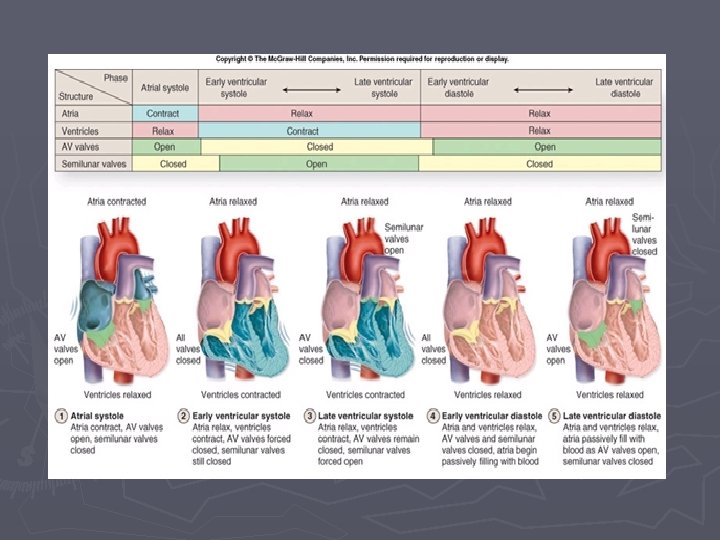
Cardiac Cycle ► The two atria contract at the same time, then they relax while the two ventricles simultaneously contract. ► The contraction phase of the ventricle chambers is called systole. ► The relaxation phase is called diastole. ► At a normal heart rate, one cardiac cycle last for 0. 8 seconds!
Cardiac Cycle Continued…. ► Cardiac Cycle = “events of one complete heart beat” ► Mid-to-late diastole (relaxation) = blood flows into ventricles ► Ventricular systole (contraction) = blood pressure builds before ventricles contract pushing blood out ► Early diastole = atria finish re-filling; ventricular pressure is low
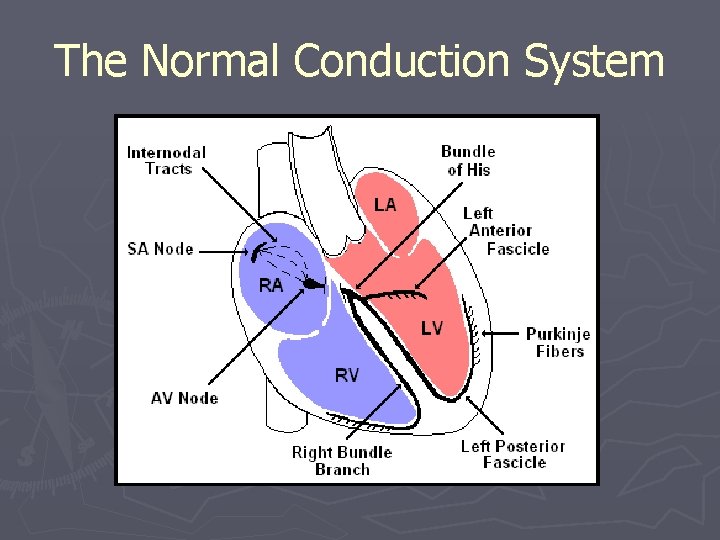
The Normal Conduction System
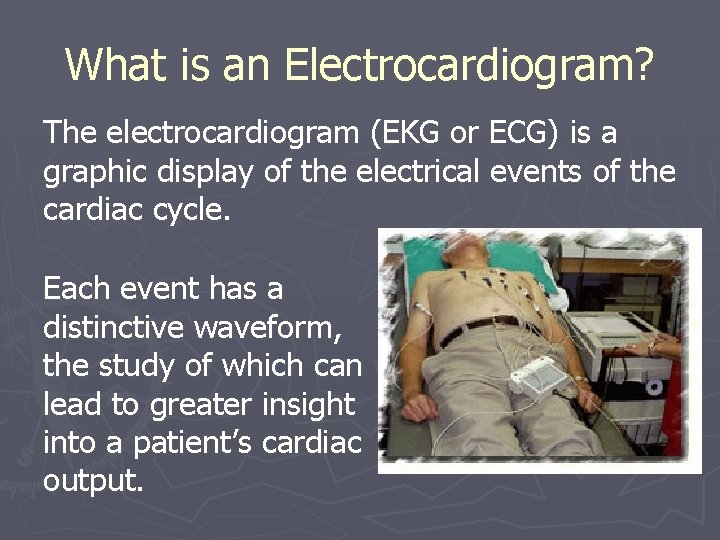
What is an Electrocardiogram? The electrocardiogram (EKG or ECG) is a graphic display of the electrical events of the cardiac cycle. Each event has a distinctive waveform, the study of which can lead to greater insight into a patient’s cardiac output.
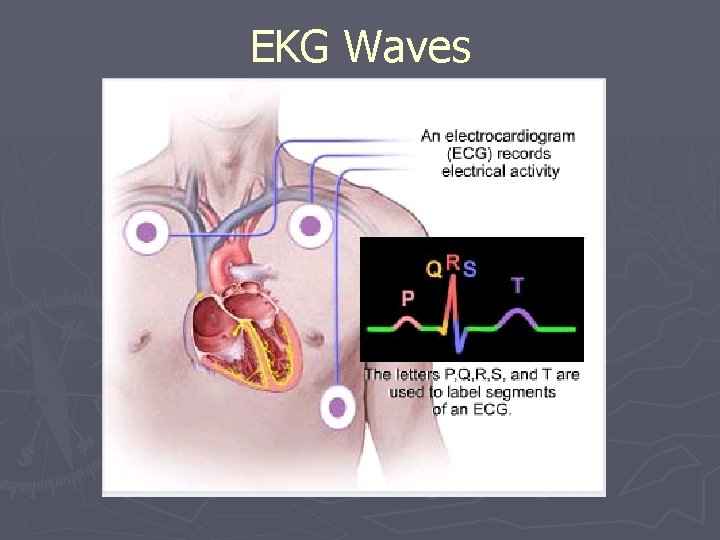
EKG Waves
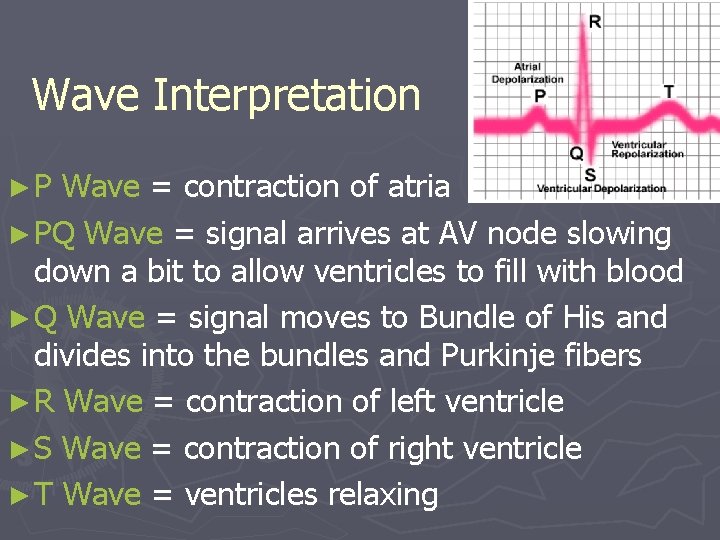
Wave Interpretation ►P Wave = contraction of atria ► PQ Wave = signal arrives at AV node slowing down a bit to allow ventricles to fill with blood ► Q Wave = signal moves to Bundle of His and divides into the bundles and Purkinje fibers ► R Wave = contraction of left ventricle ► S Wave = contraction of right ventricle ► T Wave = ventricles relaxing
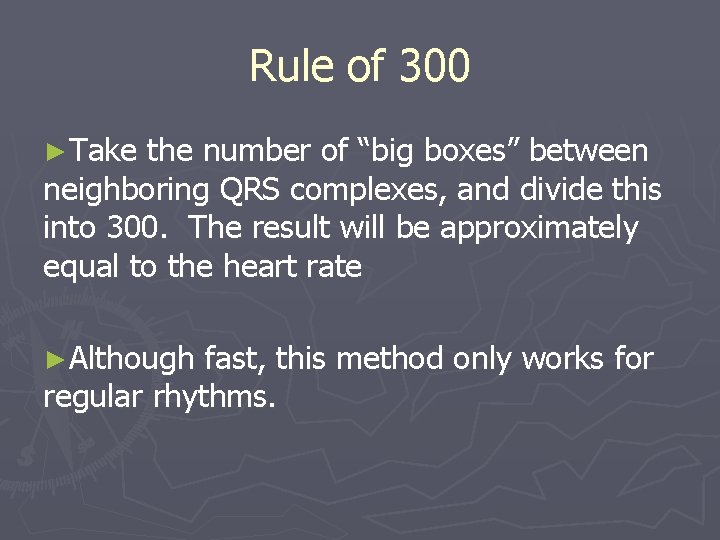
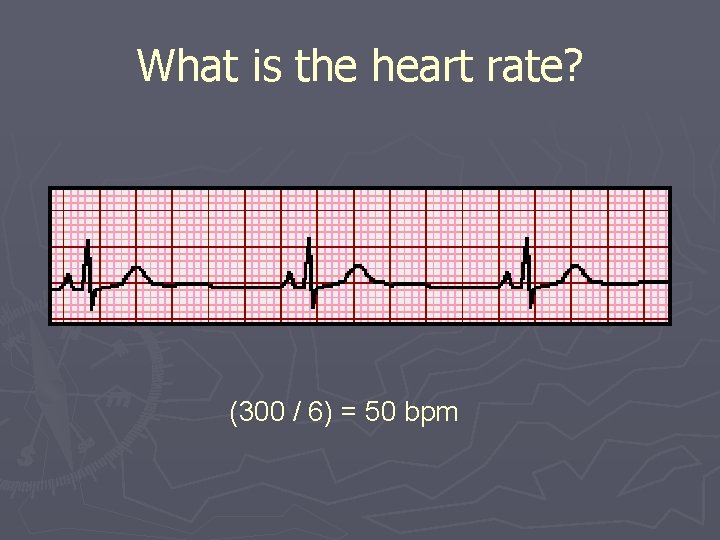
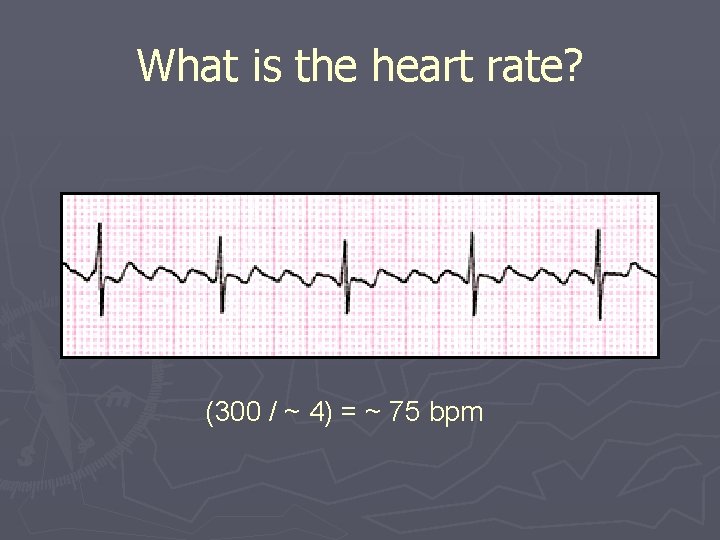
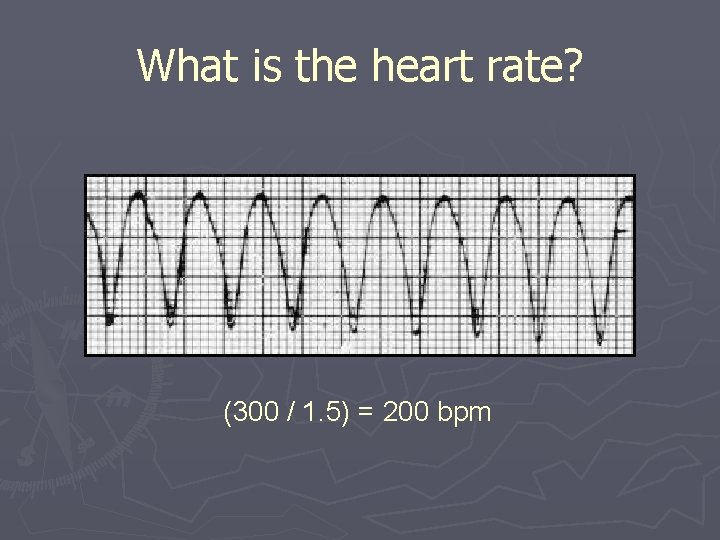
Rule of 300 ►Take the number of “big boxes” between neighboring QRS complexes, and divide this into 300. The result will be approximately equal to the heart rate ►Although fast, this method only works for regular rhythms.
What is the heart rate? (300 / 6) = 50 bpm
What is the heart rate? (300 / ~ 4) = ~ 75 bpm
What is the heart rate? (300 / 1. 5) = 200 bpm
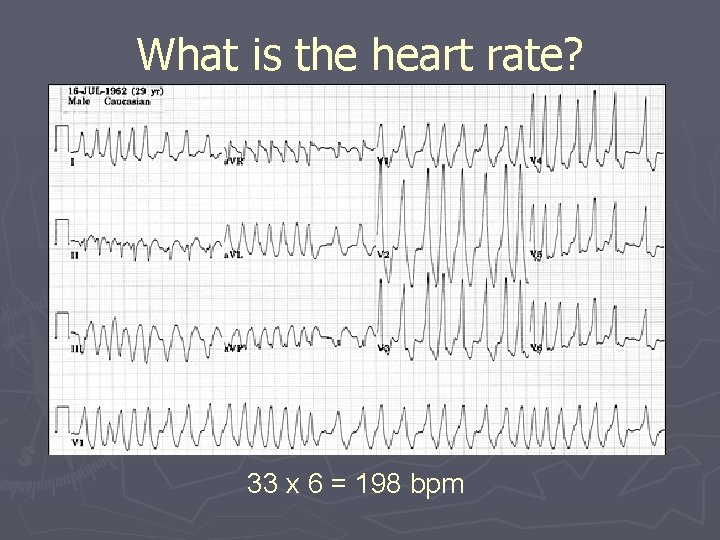
10 Second Rule ►As most EKGs record 10 seconds of rhythm per page, one can simply count the number of beats present on the EKG and multiply by 6 to get the number of beats per 60 seconds. ►This method works well for irregular rhythms.
What is the heart rate? 33 x 6 = 198 bpm
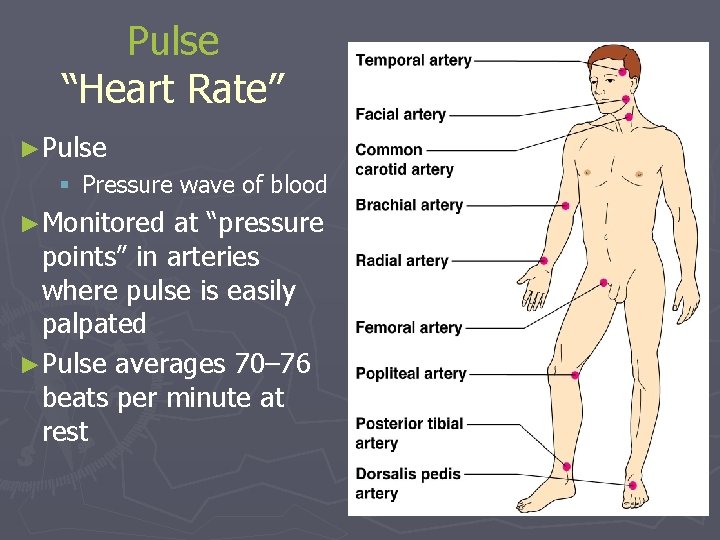
Pulse “Heart Rate” ►Pulse § Pressure wave of blood ►Monitored at “pressure points” in arteries where pulse is easily palpated ►Pulse averages 70– 76 beats per minute at rest
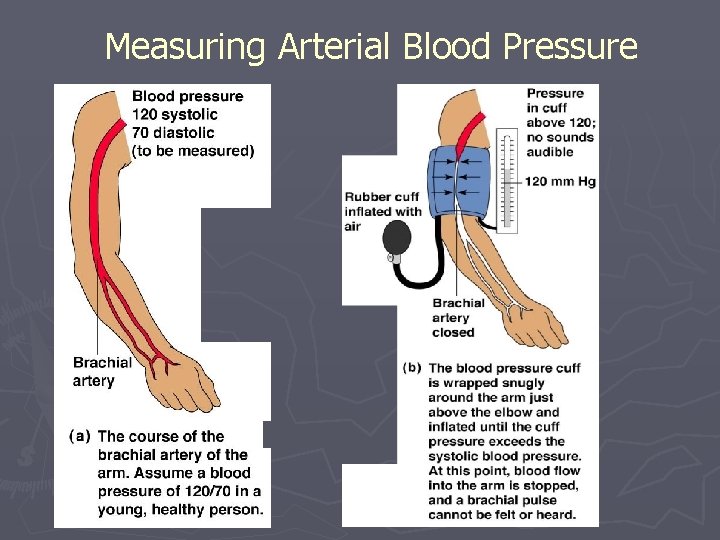
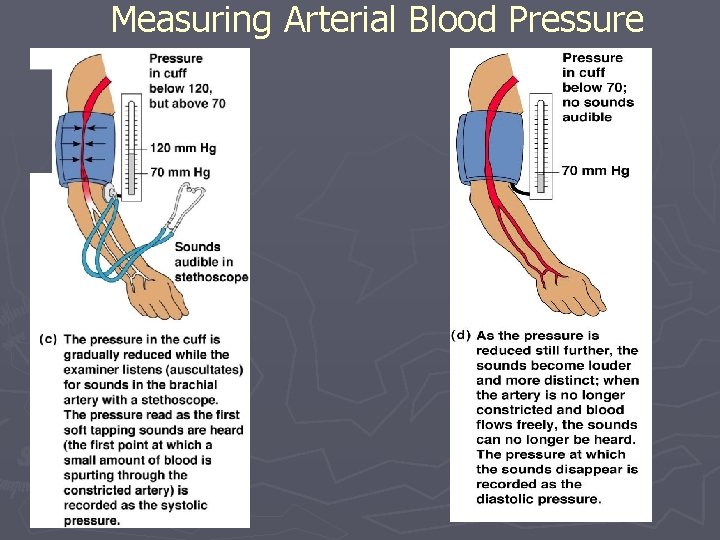
Blood Pressure ►Measurements by health professionals are made on the pressure in large arteries § Systolic—pressure at the peak of ventricular contraction § Diastolic—pressure when ventricles relax § Write systolic pressure first and diastolic last (120/80 mm Hg) ►Pressure in blood vessels decreases as distance from the heart increases
Measuring Arterial Blood Pressure
Measuring Arterial Blood Pressure