
CARDIAC CYCLE SYSTOLE AND DIASTOLE PHASES A RAPID
- Slides: 21
CARDIAC CYCLE SYSTOLE AND DIASTOLE • PHASES : • A. RAPID FILLING • B. DIASTASIS • C. ISOVOLUMETRIC CONTRACTION • D. RAPID EJECTION • E. ISOVOLUMIC RELAXATION •
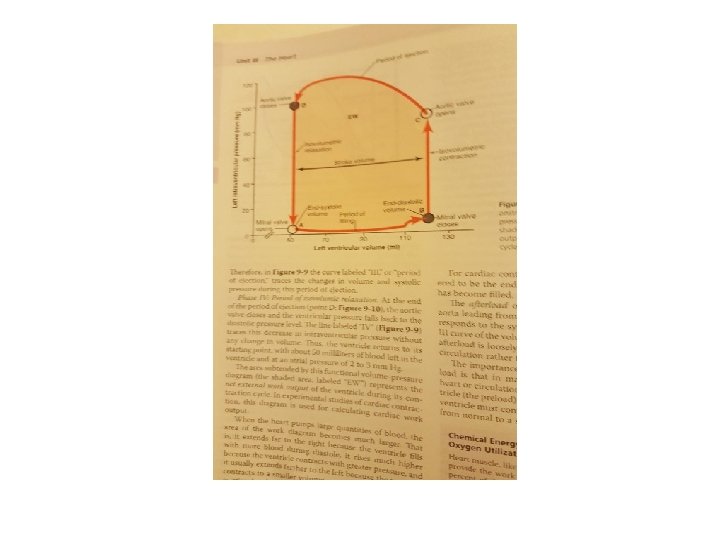
Cardiac Cycle Systole Muscle is Contracting A contracting “sphere” generates Pressure causes a change in Volume This is measured by CONTRACTILITY This is affected by Function of Muscle Initial Volume (PRELOAD) Initial Pressure (AFTERLOAD)
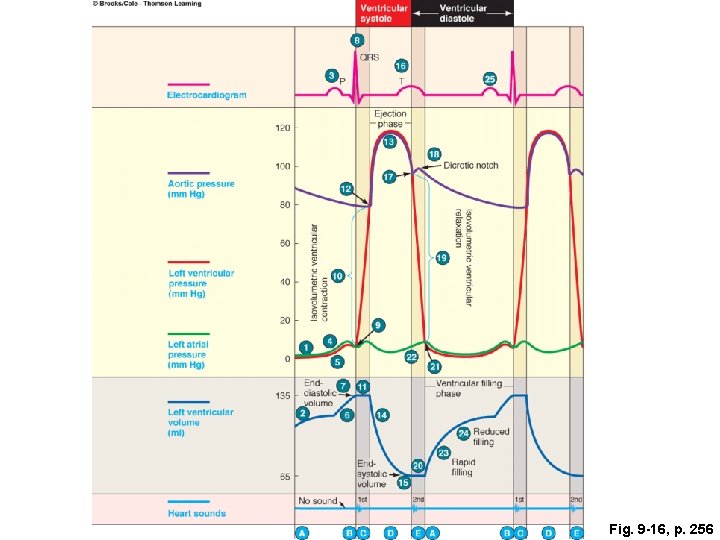
Fig. 9 -16, p. 256
Cardiac Cycle Diastole Muscle is Relaxing Veins return blood to the heart As the heart fills with blood, the absolute volume and pressure change This relationship is measured by COMPLIANCE This is affected by Connective Tissue Venous Pressure Venous Resistance
Cardiac Cycle Both systole and diastole can be divided • into early and late phase
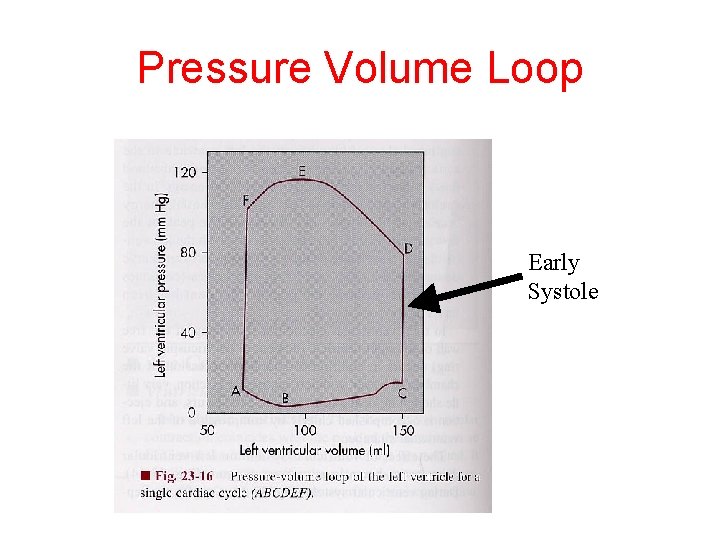
Cardiac Cycle Early Systole The Pressure in the Ventricle is the same as – in the great veins The Ventricle contracts – The AV valves close – Since the Aortic and Pulmonic valves were – already closed, the heart is a closed ball As the heart contracts, the pressure in the ball – rises at a fixed volume.
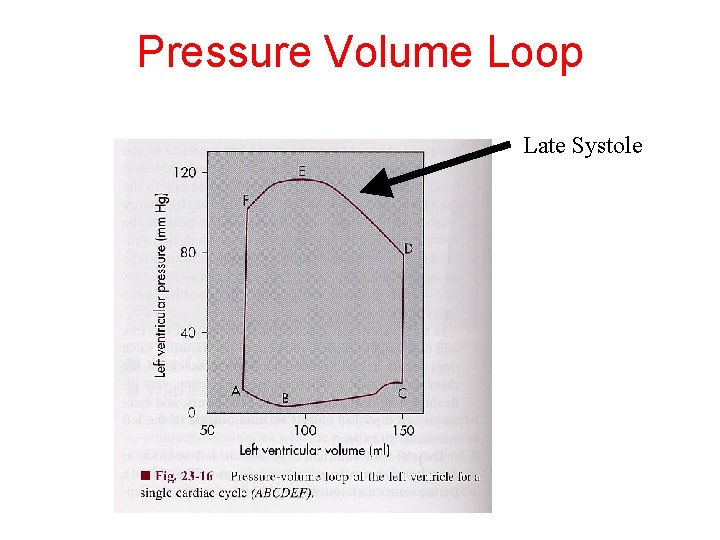
Cardiac Cycle Late Systole The Pressure in the Ventricles is the same as – in the great arteries The A/P valves open – Further contraction of the ventricles causes – blood flow at a relatively constant pressure (this is because the aorta is compliant as well – and increase in volume causes only a small increase in pressure)
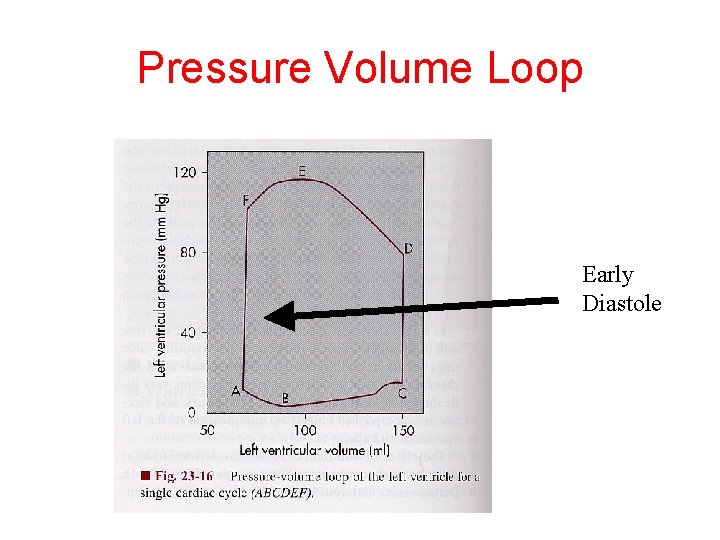
Cardiac Cycle Early Diastole • The Ventricles begin to relax – As the Ventricular pressure falls below the – great artery pressure, the A/P valves close Since the AV valves were already closed, the – heart is a closed ball As the heart relaxes, the pressure in the ball – falls at a fixed volume. ISOMETRIC RELAXATION –
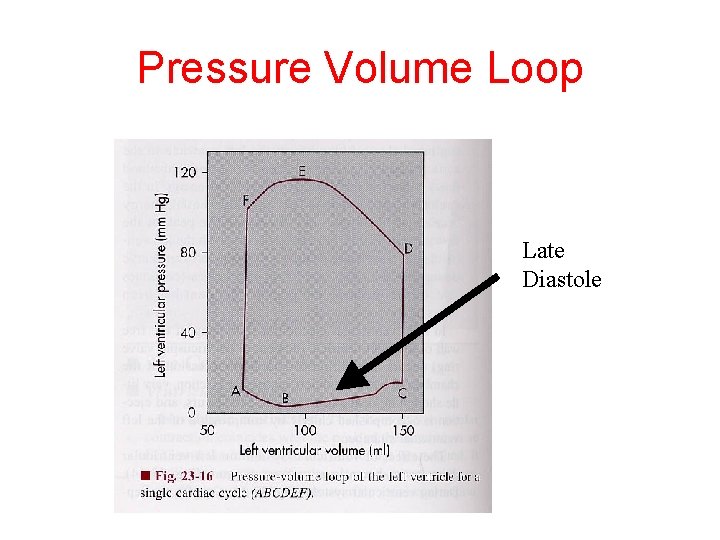
Cardiac Cycle Late Diastole When the pressure inside the heart falls below – the pressure of the great veins AND the papillary muscles have relaxed, the AV valves open The blood flows down its pressure gradient – and the ventricles fill passively at a fixed pressure (because the ventricle has compliance) ISTONIC RELAXATION –
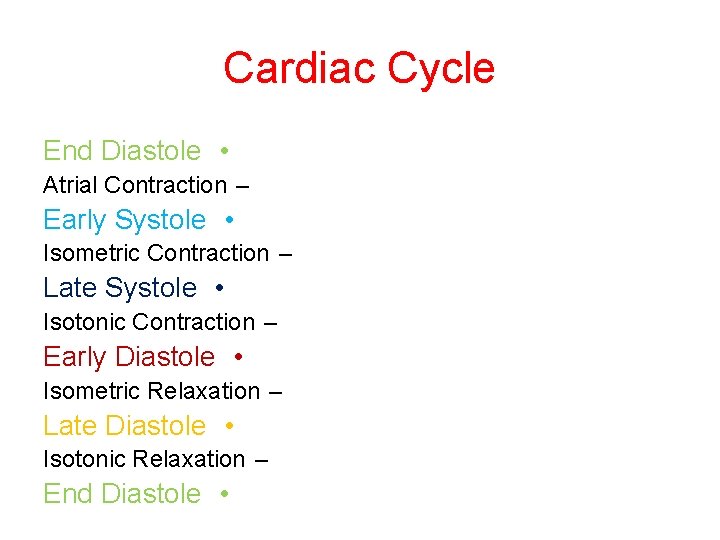
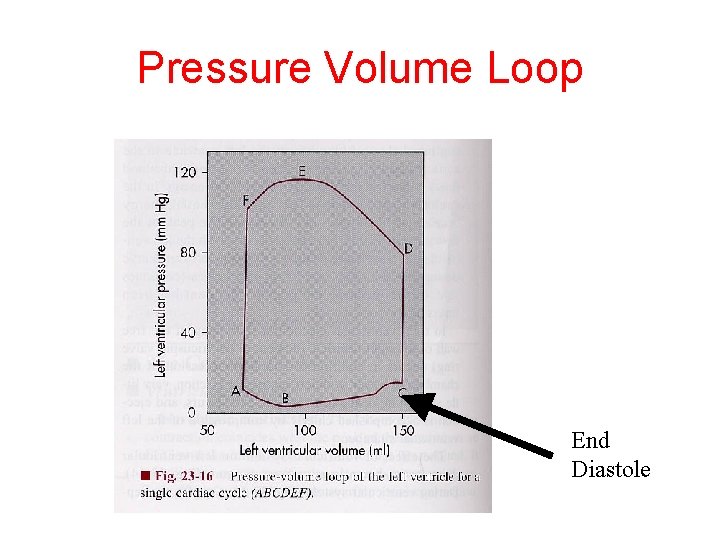
Cardiac Cycle End Diastole • Atrial Contraction – Early Systole • Isometric Contraction – Late Systole • Isotonic Contraction – Early Diastole • Isometric Relaxation – Late Diastole • Isotonic Relaxation – End Diastole •
Cardiac Cycle End Diastole • Is unique because the atria contract – This leads to an increase in pressure in three – places: The great veins • The atria • The ventricles •
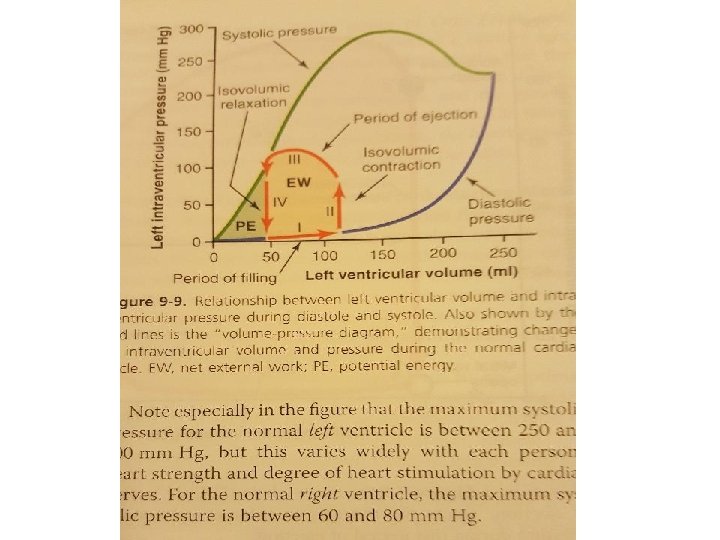
Pressure Volume Loop Early Systole
Pressure Volume Loop Late Systole
Pressure Volume Loop Early Diastole
Pressure Volume Loop Late Diastole
Pressure Volume Loop End Diastole
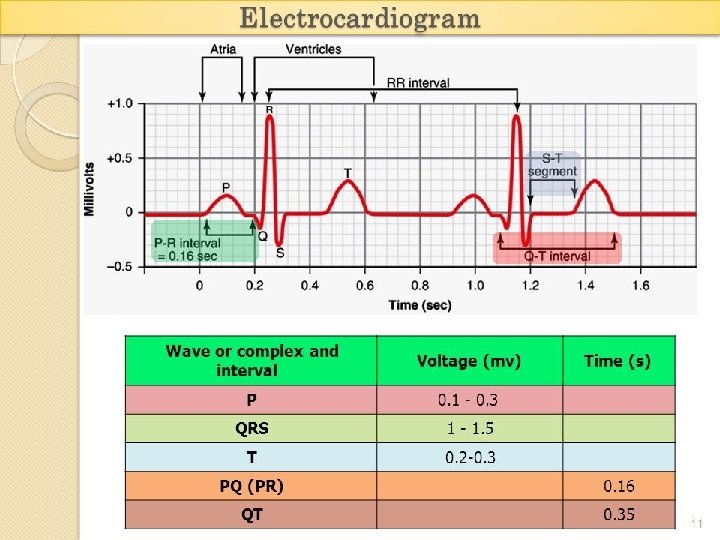
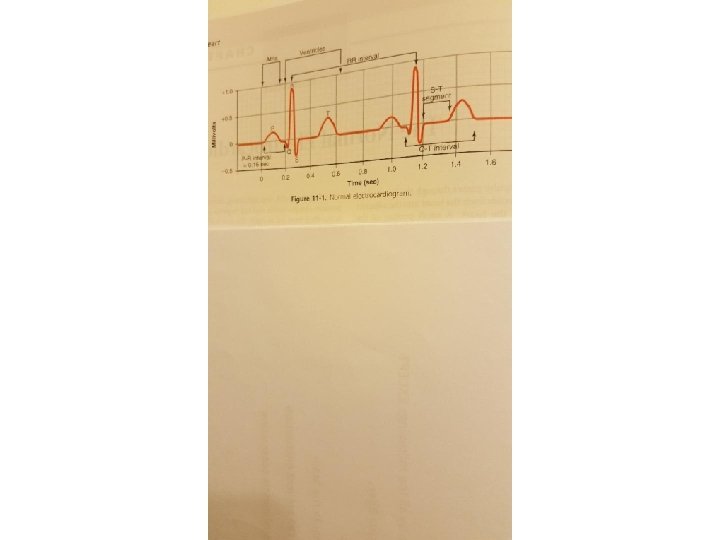
RELATIONSHIP OF ECG TO CARDIAC CYCLE