
Cardiac Arrest When Should a Coronary Angiography be
Cardiac Arrest: When Should a Coronary Angiography be Done ? Christian Spaulding, MD, FESC, FACC European Hospital Georges Pompidou, and Sudden Death Expert Center, Paris, France

Disclosures Grant/Research Support: CERC French Ministry of Health Consulting Fees/Honoraria: Abiomed Medtronic Terumo Medical Company Zoll Stentys Xeltis
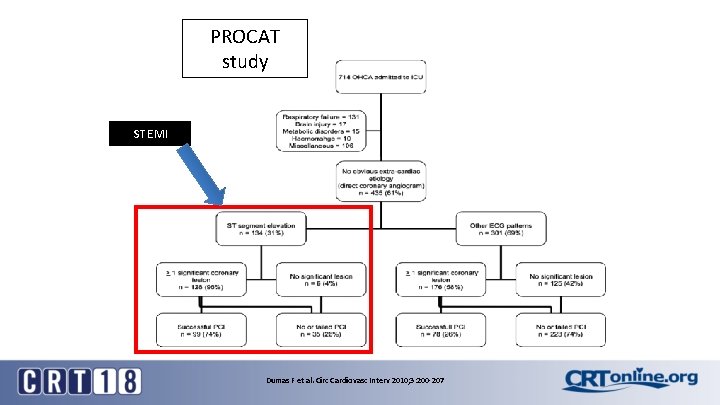
PROCAT study STEMI Dumas F et al. Circ Cardiovasc Interv 2010; 3: 200 -207
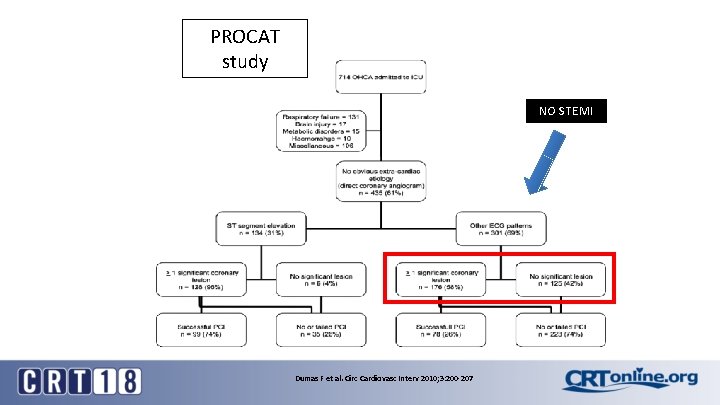
PROCAT study NO STEMI Dumas F et al. Circ Cardiovasc Interv 2010; 3: 200 -207
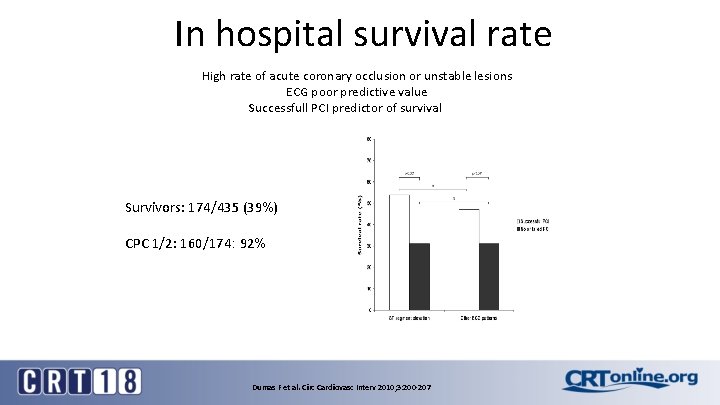
In hospital survival rate High rate of acute coronary occlusion or unstable lesions ECG poor predictive value Successfull PCI predictor of survival Survivors: 174/435 (39%) CPC 1/2: 160/174: 92% Dumas F et al. Circ Cardiovasc Interv 2010; 3: 200 -207
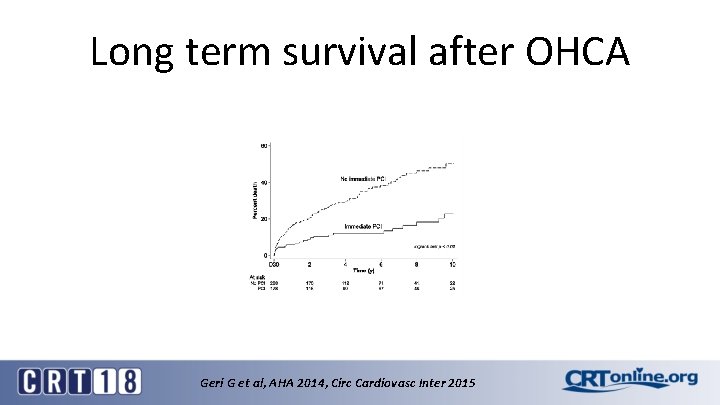
Long term survival after OHCA Geri G et al, AHA 2014, Circ Cardiovasc Inter 2015
So what should you tell the emergency physician when he wants an immediate cath for a survivor of OHCA?

But it isn’t that easy…. Experts debating during a guideline committee meeting No randomized data ++++
Invasive coronary treatment strategies for out-of-hospital cardiac arrest: a consensus statement from the European Association for Percutaneous Cardiovascular Interventions (EAPCI)/Stent for Life (SFL) groups Marko Noc 1, MD; Jean Fajadet 2, MD; Jens F. Lassen 3, MD; Petr Kala 4, MD; Philip Mac. Carthy 5, MD; Goran K. Olivecrona 6, MD; Stephan Windecker 7, MD; Christian Spaulding 8*, MD 1. Center for Intensive Internal Medicine, University Medical Center, Ljubljana, Slovenia; 2. Clinique Pasteur, Toulouse, France; 3. Department of Cardiology, Aarhus University Hospital, Aarhus, Denmark; 4. Department of Internal Medicine and Cardiology, Masaryk University and University Hospital Brno, Czech Republic; 5. Department of Cardiology, King’s College Hospital, London, United Kingdom; 6. Department of Cardiology, Skane University Hospital, Lund, Sweden; 7. Clinic of Cardiology, Bern University Hospital, Bern, Switzerland; 8. Cardiology Department, European Hospital Georges Pompidou, Assistance Publique. Hôpitaux de Paris, Paris Descartes University, Sudden Death Expert Center, Paris, France The references can be found in the online version of this paper at the following website: http: //www. pcronline. com/eurointervention/72 nd_issue/? ? Eurointervention 2014; 10: 31 -7
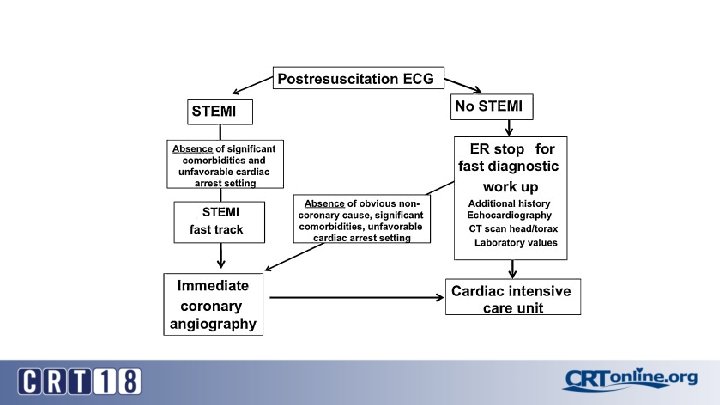
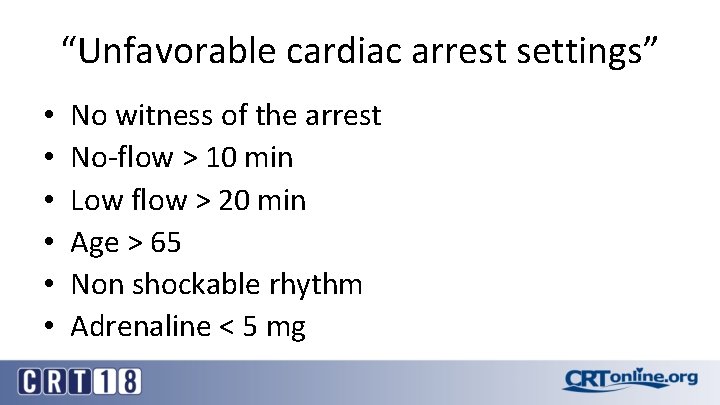
“Unfavorable cardiac arrest settings” • • • No witness of the arrest No-flow > 10 min Low flow > 20 min Age > 65 Non shockable rhythm Adrenaline < 5 mg
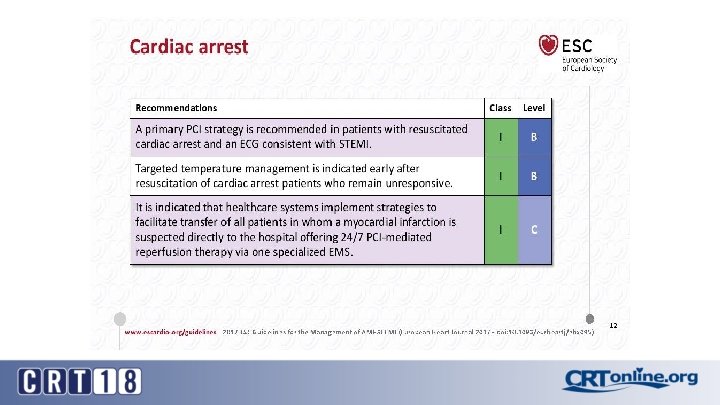
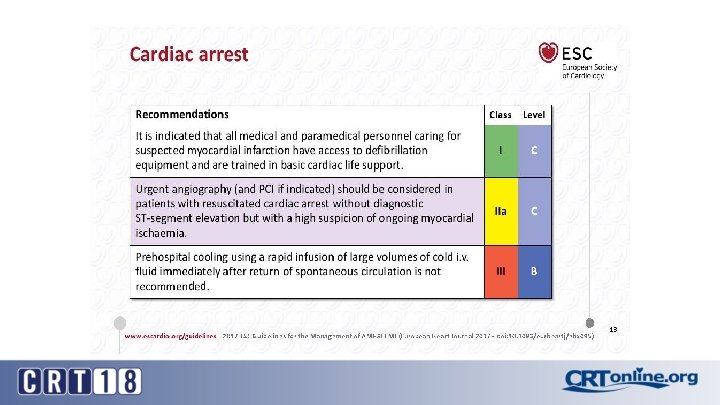

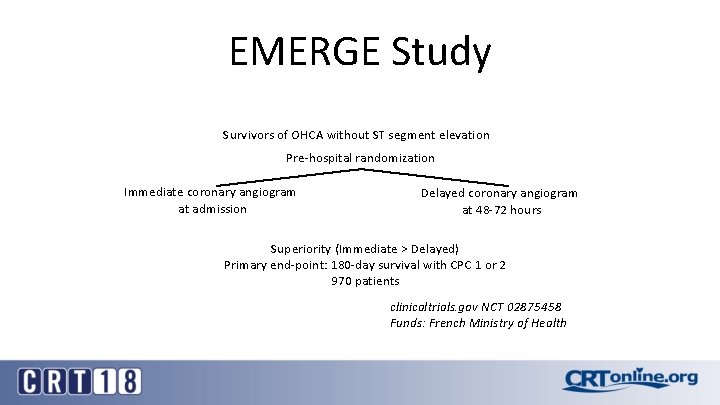
EMERGE Study Survivors of OHCA without ST segment elevation Pre-hospital randomization Immediate coronary angiogram at admission Delayed coronary angiogram at 48 -72 hours Superiority (Immediate > Delayed) Primary end-point: 180 -day survival with CPC 1 or 2 970 patients clinicaltrials. gov NCT 02875458 Funds: French Ministry of Health
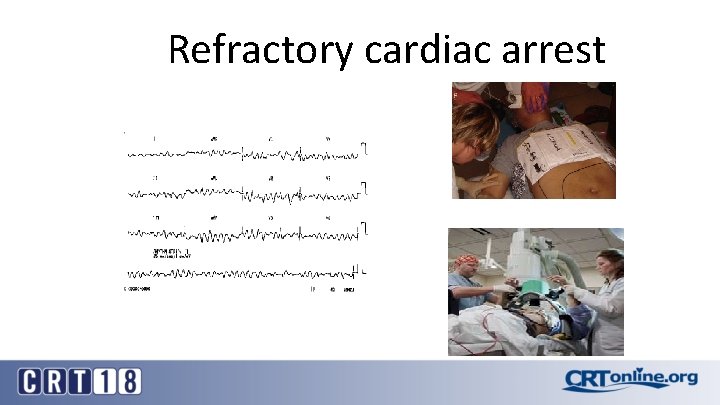
Refractory cardiac arrest
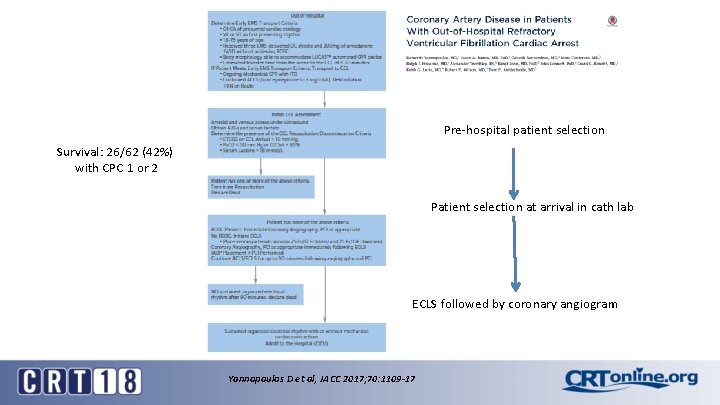
Pre-hospital patient selection Survival: 26/62 (42%) with CPC 1 or 2 Patient selection at arrival in cath lab ECLS followed by coronary angiogram Yannopoulos D et al, JACC 2017; 70: 1109 -17
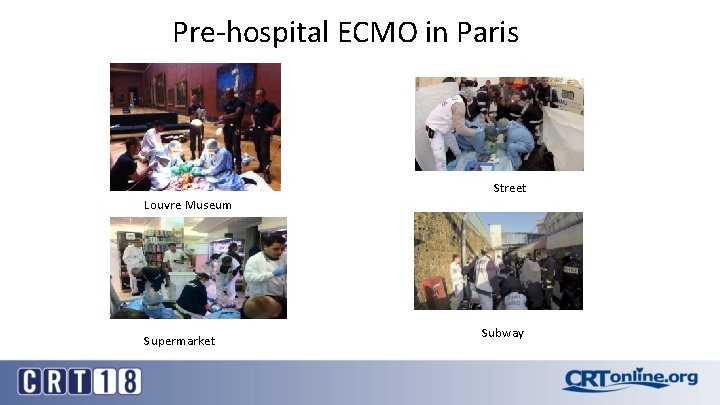
Pre-hospital ECMO in Paris Streett Louvre Museum Supermarket Subway
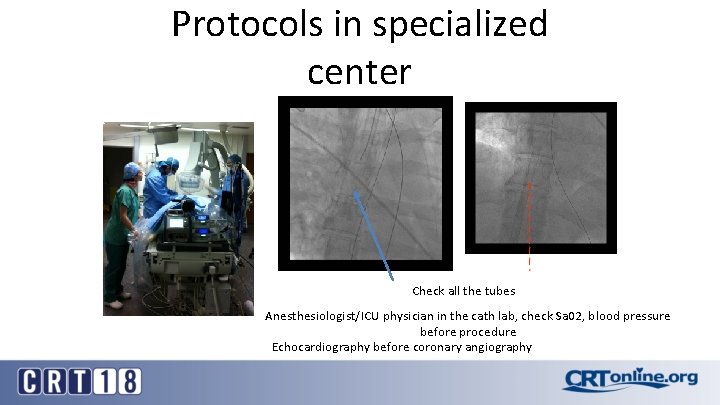
Protocols in specialized center Check all the tubes Anesthesiologist/ICU physician in the cath lab, check Sa 02, blood pressure before procedure Echocardiography before coronary angiography
Conclusion • OHCA and ST segment elevation: immediate coronary angiogram based on registry data • OHCA and no ST segment elevation: “EMS or ICU stop” If no non cardiac cause of arrest: coronary angiogram < 2 hours, very low level of evidence, randomized trials are on-going • Refractory cardiac arrest : ECLS and PCI in selected centers and highly selected patients
- Slides: 20