
CARCINOMA DE CLULAS RENAIS Como tratar as toxicidades

- Slides: 60
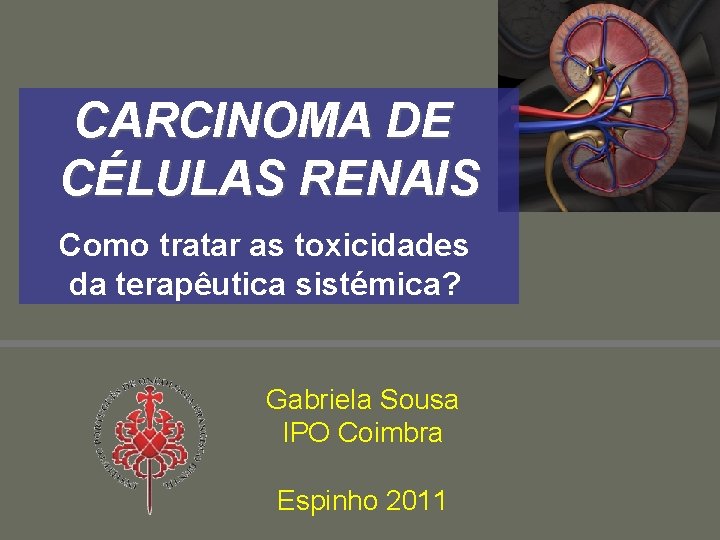
CARCINOMA DE CÉLULAS RENAIS Como tratar as toxicidades da terapêutica sistémica? Gabriela Sousa IPO Coimbra Espinho 2011
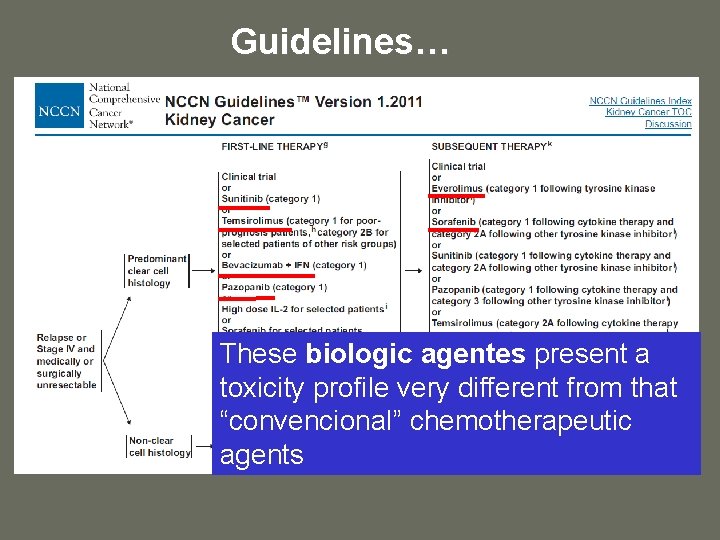
Guidelines… These biologic agentes present a toxicity profile very different from that “convencional” chemotherapeutic agents
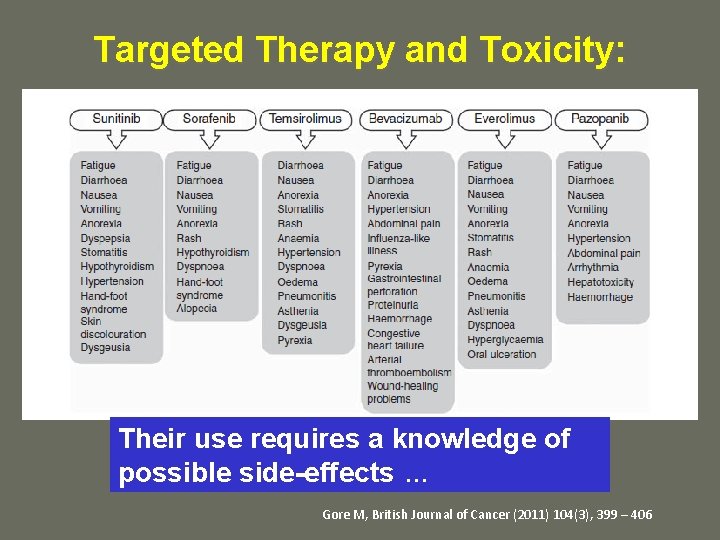
Targeted Therapy and Toxicity: Their use requires a knowledge of possible side-effects … Gore M, British Journal of Cancer (2011) 104(3), 399 – 406
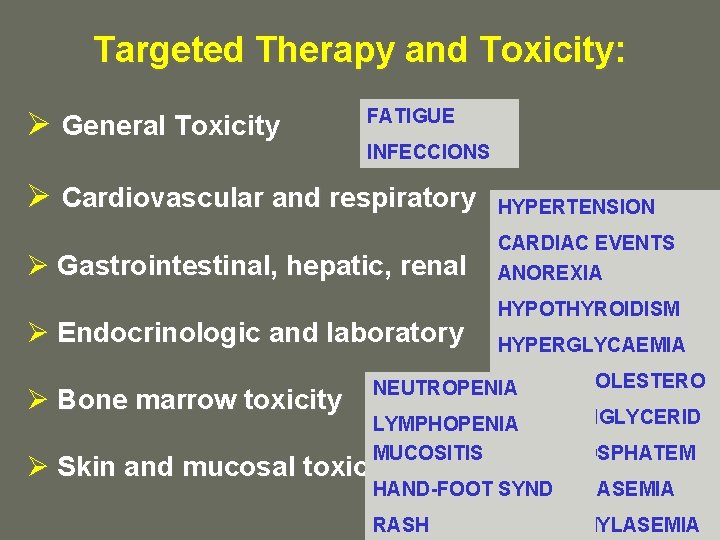
Targeted Therapy and Toxicity: FATIGUE Ø General Toxicity INFECCIONS Ø Cardiovascular and respiratory Ø Gastrointestinal, hepatic, renal Ø Endocrinologic and laboratory Ø Bone marrow toxicity Ø Skin and mucosal HYPERTENSION CARDIAC EVENTS ANOREXIA BLEEDING HYPOTHYROIDISM NAUSEA THROMBOEMBOLISM HYPERGLYCAEMIA VOMITING DYSPNOEA DIARRHOEA HYPERCHOLESTERO PNEUMONITIS NEUTROPENIA PROTEINURIA HYPERTRIGLYCERID LYMPHOPENIA MUCOSITIS HYPERCREATININ HYPOPHOSPHATEM ANAEMIA toxicity HAND-FOOT SYND HYPERBILIRUBIN HYPERLIPASEMIA THOMBOCYTOPENIA RASH ALT AND AST HYPERAMYLASEMIA
GENERAL TOXICITY: - FATIGUE - INFECTIONS
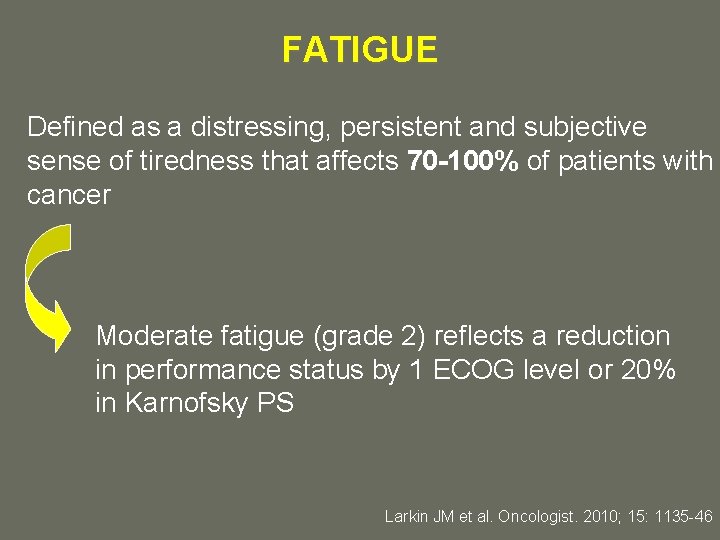
FATIGUE Defined as a distressing, persistent and subjective sense of tiredness that affects 70 -100% of patients with cancer Moderate fatigue (grade 2) reflects a reduction in performance status by 1 ECOG level or 20% in Karnofsky PS Larkin JM et al. Oncologist. 2010; 15: 1135 -46
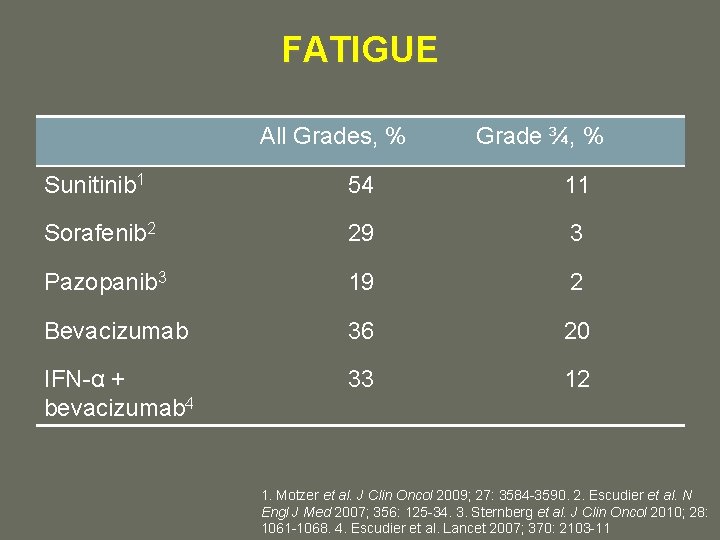
FATIGUE All Grades, % Grade ¾, % Sunitinib 1 54 11 Sorafenib 2 29 3 Pazopanib 3 19 2 Bevacizumab 36 20 IFN-α + bevacizumab 4 33 12 1. Motzer et al. J Clin Oncol 2009; 27: 3584 -3590. 2. Escudier et al. N Engl J Med 2007; 356: 125 -34. 3. Sternberg et al. J Clin Oncol 2010; 28: 1061 -1068. 4. Escudier et al. Lancet 2007; 370: 2103 -11
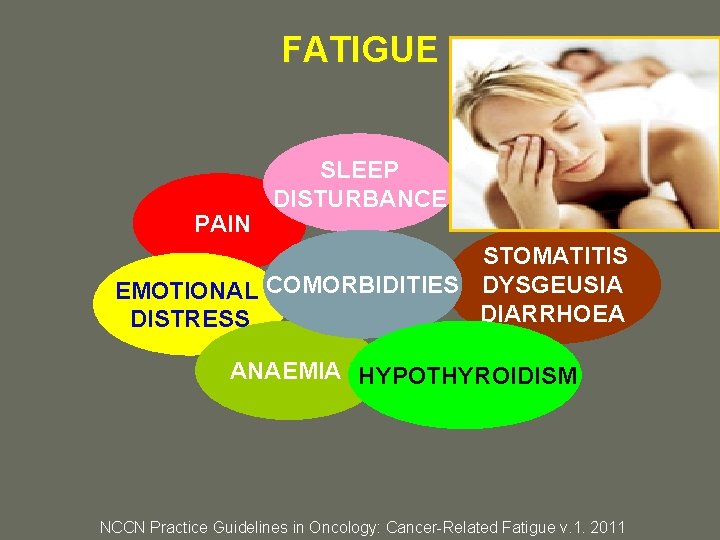
FATIGUE PAIN SLEEP DISTURBANCE STOMATITIS EMOTIONAL COMORBIDITIES DYSGEUSIA DIARRHOEA DISTRESS ANAEMIA HYPOTHYROIDISM Practice Guidelines in Oncology: Cancer-Related Fatigue v. 1. 2007 NCCN Practice Guidelines in Oncology: Cancer-Related Fatigue v. 1. 2011
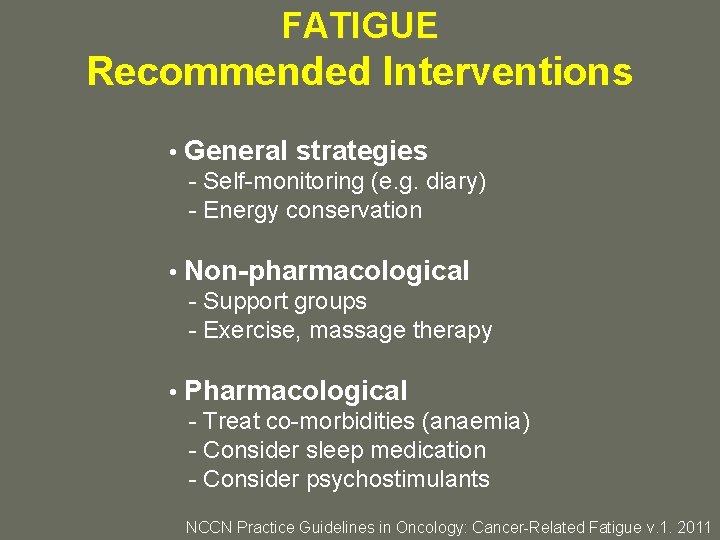
FATIGUE Recommended Interventions • General strategies - Self-monitoring (e. g. diary) - Energy conservation • Non-pharmacological - Support groups - Exercise, massage therapy • Pharmacological - Treat co-morbidities (anaemia) - Consider sleep medication - Consider psychostimulants NCCN Practice Guidelines in Oncology: Cancer-Related Fatigue v. 1. 2011
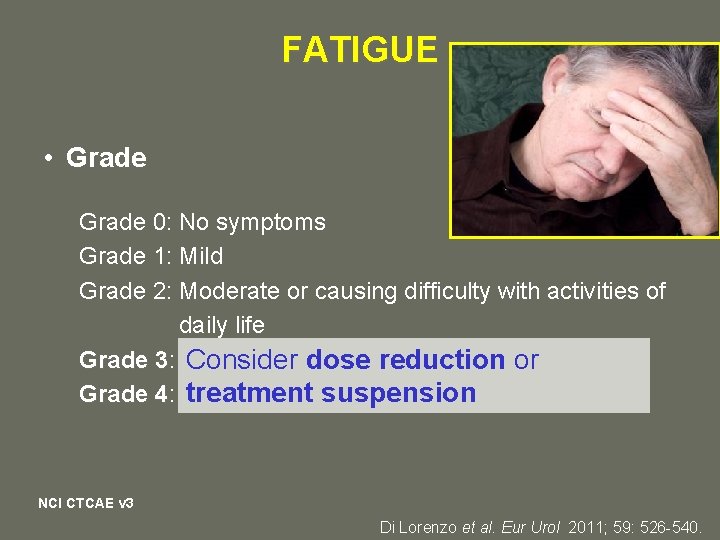
FATIGUE • Grade 0: No symptoms Grade 1: Mild Grade 2: Moderate or causing difficulty with activities of daily life Grade 3: interfering with activitiesorof daily life 3 Severe, Consider dose reduction Grade 4: treatment suspension 4 Disabling NCI CTCAE v 3 Di Lorenzo et al. Eur Urol 2011; 59: 526 -540.
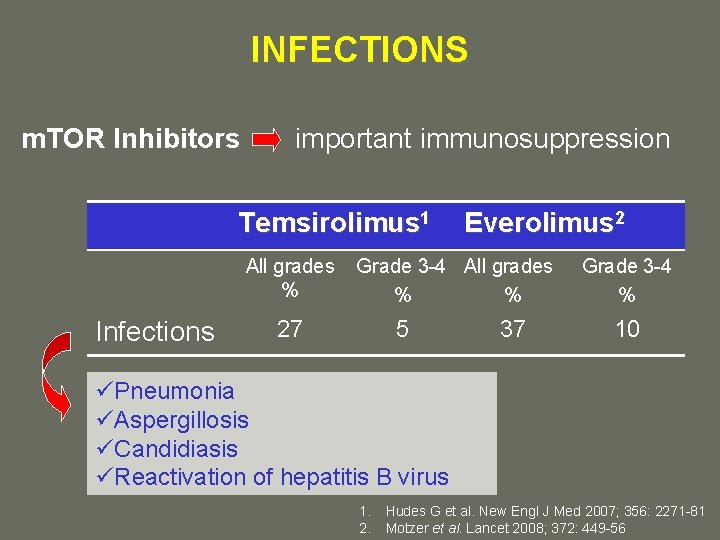
INFECTIONS m. TOR Inhibitors important immunosuppression Temsirolimus 1 All grades % Infections Everolimus 2 Grade 3 -4 All grades % % 27 5 37 Grade 3 -4 % 10 üPneumonia üAspergillosis üCandidiasis üReactivation of hepatitis B virus 1. 2. Hudes G et al. New Engl J Med 2007; 356: 2271 -81 Motzer et al. Lancet 2008; 372: 449 -56
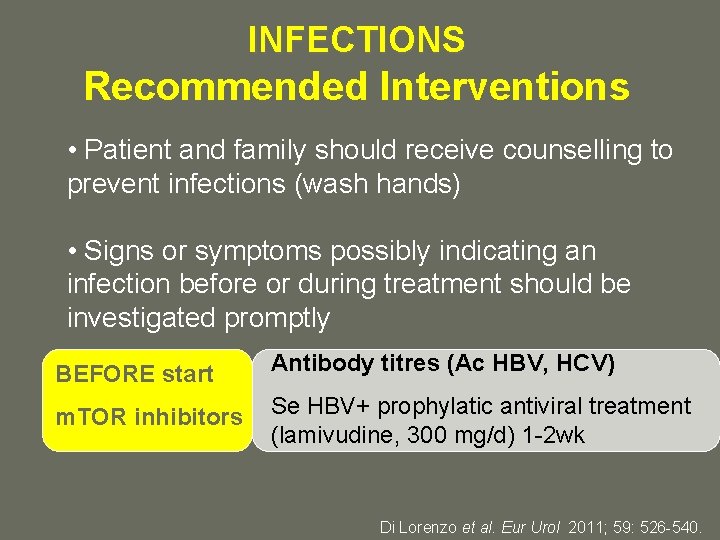
INFECTIONS Recommended Interventions • Patient and family should receive counselling to prevent infections (wash hands) • Signs or symptoms possibly indicating an infection before or during treatment should be investigated promptly BEFORE start Antibody titres (Ac HBV, HCV) m. TOR inhibitors Se HBV+ prophylatic antiviral treatment (lamivudine, 300 mg/d) 1 -2 wk Di Lorenzo et al. Eur Urol 2011; 59: 526 -540.
CARDIOVASCULAR AND RESPIRATORY TOXICITY
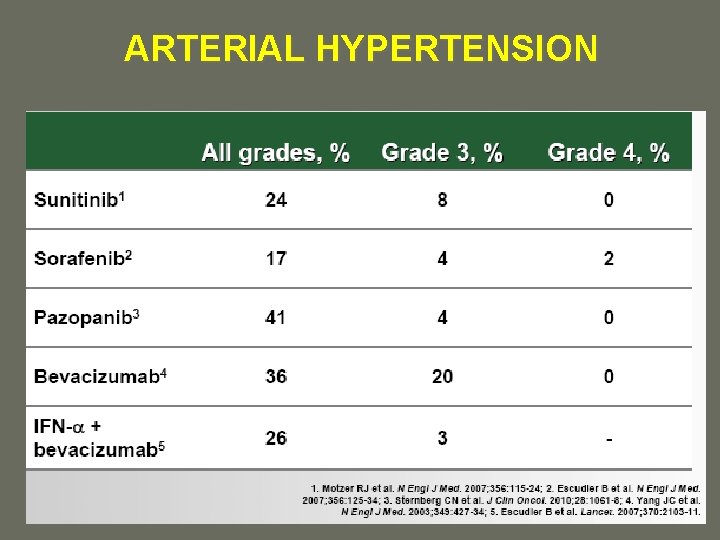
ARTERIAL HYPERTENSION
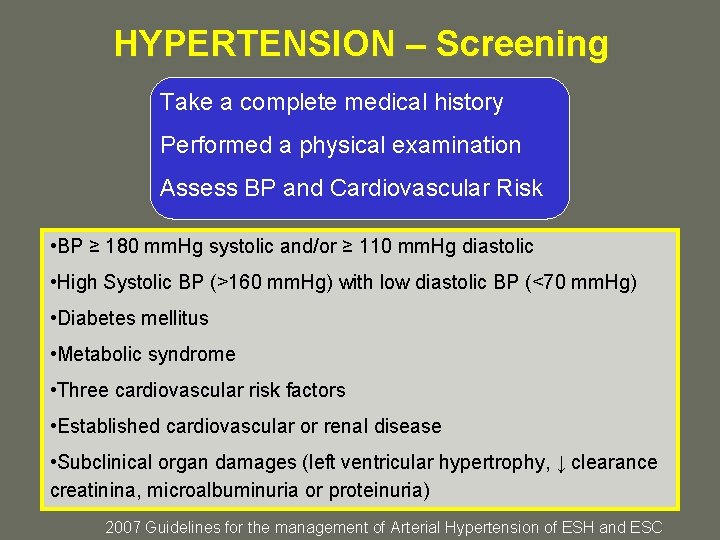
HYPERTENSION – Screening Take a complete medical history Performed a physical examination Assess BP and Cardiovascular Risk • BP ≥ 180 mm. Hg systolic and/or ≥ 110 mm. Hg diastolic • High Systolic BP (>160 mm. Hg) with low diastolic BP (<70 mm. Hg) • Diabetes mellitus • Metabolic syndrome • Three cardiovascular risk factors • Established cardiovascular or renal disease • Subclinical organ damages (left ventricular hypertrophy, ↓ clearance creatinina, microalbuminuria or proteinuria) 2007 Guidelines for the management of Arterial Hypertension of ESH and ESC
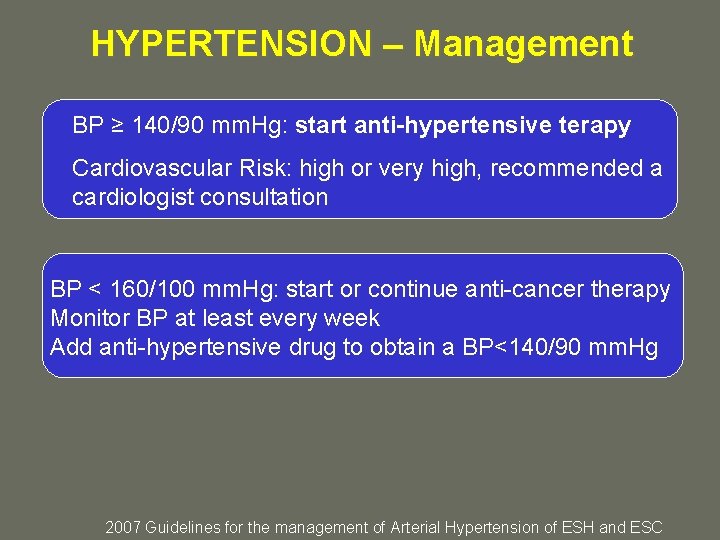
HYPERTENSION – Management BP ≥ 140/90 mm. Hg: start anti-hypertensive terapy Cardiovascular Risk: high or very high, recommended a cardiologist consultation BP < 160/100 mm. Hg: start or continue anti-cancer therapy Monitor BP at least every week Add anti-hypertensive drug to obtain a BP<140/90 mm. Hg 2007 Guidelines for the management of Arterial Hypertension of ESH and ESC
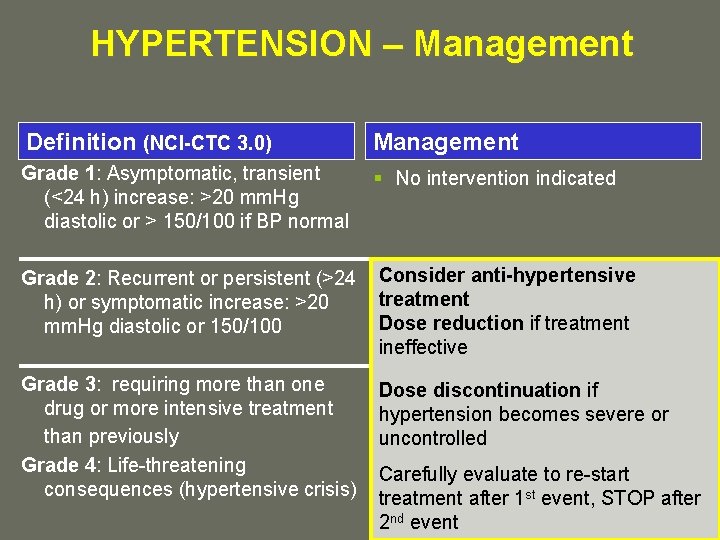
HYPERTENSION – Management Definition (NCI-CTC 3. 0) Management Grade 1: Asymptomatic, transient (<24 h) increase: >20 mm. Hg diastolic or > 150/100 if BP normal § No intervention indicated Grade 2: Recurrent or persistent (>24 h) or symptomatic increase: >20 mm. Hg diastolic or 150/100 Consider anti-hypertensive treatment Dose reduction if treatment 5. 4% ineffective Grade 3: requiring more than one drug or more intensive treatment than previously Grade 4: Life-threatening consequences (hypertensive crisis) Dose discontinuation if hypertension becomes severe or uncontrolled 14. 7% Carefully evaluate to re-start treatment after 1 st event, STOP after 2 nd event
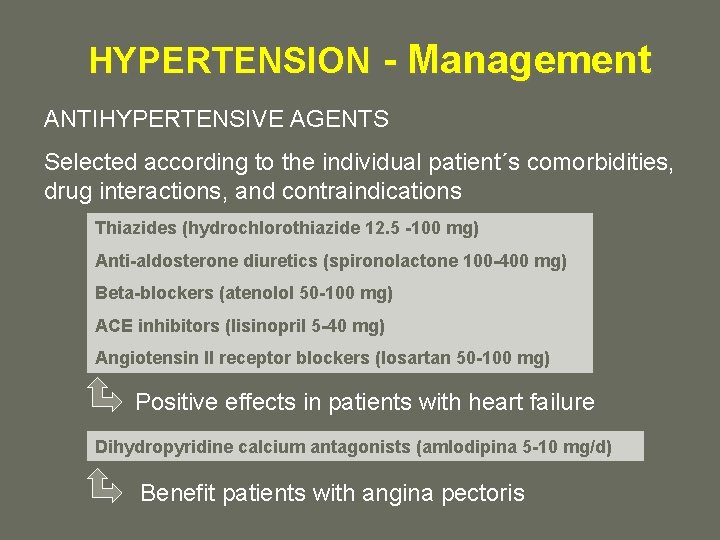
HYPERTENSION - Management ANTIHYPERTENSIVE AGENTS Selected according to the individual patient´s comorbidities, drug interactions, and contraindications Thiazides (hydrochlorothiazide 12. 5 -100 mg) Anti-aldosterone diuretics (spironolactone 100 -400 mg) Beta-blockers (atenolol 50 -100 mg) ACE inhibitors (lisinopril 5 -40 mg) Angiotensin II receptor blockers (losartan 50 -100 mg) Positive effects in patients with heart failure Dihydropyridine calcium antagonists (amlodipina 5 -10 mg/d) Benefit patients with angina pectoris
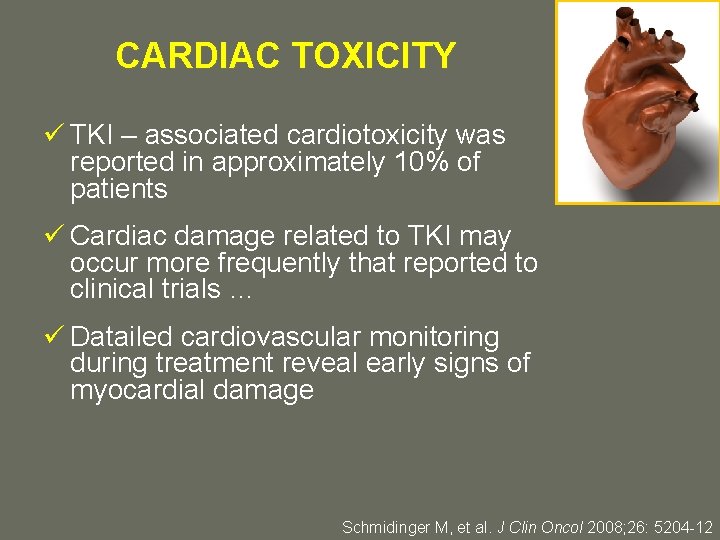
CARDIAC TOXICITY ü TKI – associated cardiotoxicity was reported in approximately 10% of patients ü Cardiac damage related to TKI may occur more frequently that reported to clinical trials … ü Datailed cardiovascular monitoring during treatment reveal early signs of myocardial damage Schmidinger M, et al. J Clin Oncol 2008; 26: 5204 -12
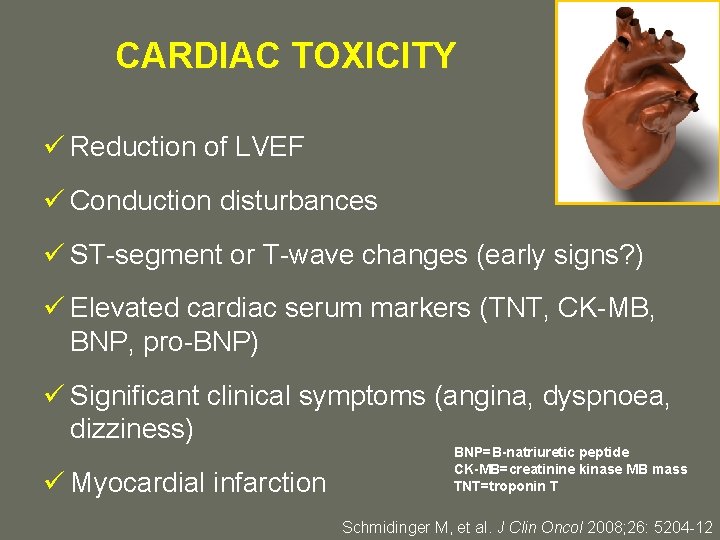
CARDIAC TOXICITY ü Reduction of LVEF ü Conduction disturbances ü ST-segment or T-wave changes (early signs? ) ü Elevated cardiac serum markers (TNT, CK-MB, BNP, pro-BNP) ü Significant clinical symptoms (angina, dyspnoea, dizziness) ü Myocardial infarction BNP=B-natriuretic peptide CK-MB=creatinine kinase MB mass TNT=troponin T Schmidinger M, et al. J Clin Oncol 2008; 26: 5204 -12
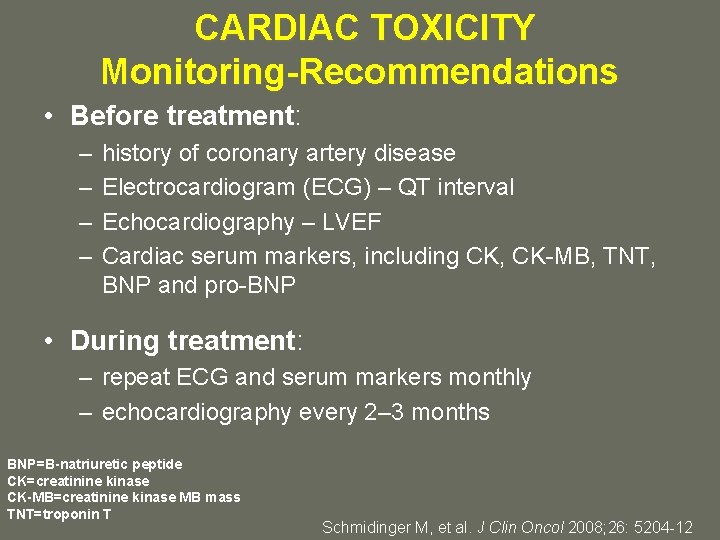
CARDIAC TOXICITY Monitoring-Recommendations • Before treatment: – – history of coronary artery disease Electrocardiogram (ECG) – QT interval Echocardiography – LVEF Cardiac serum markers, including CK, CK-MB, TNT, BNP and pro-BNP • During treatment: – repeat ECG and serum markers monthly – echocardiography every 2– 3 months BNP=B-natriuretic peptide CK=creatinine kinase CK-MB=creatinine kinase MB mass TNT=troponin T Schmidinger M, et al. J Clin Oncol 2008; 26: 5204 -12
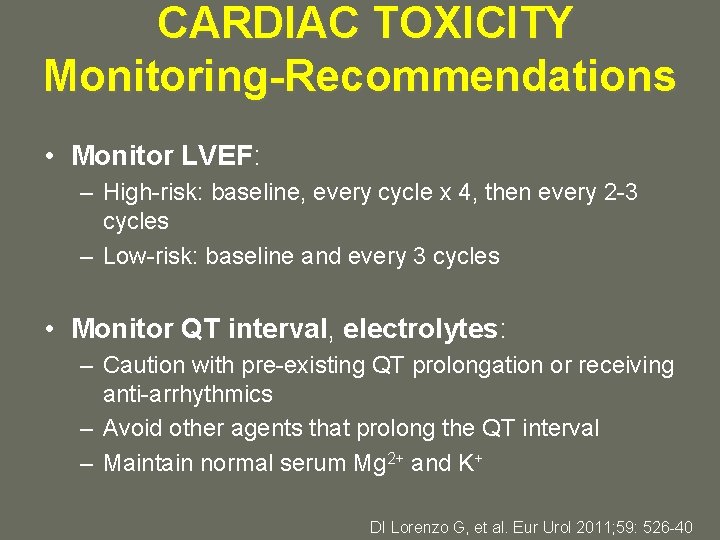
CARDIAC TOXICITY Monitoring-Recommendations • Monitor LVEF: – High-risk: baseline, every cycle x 4, then every 2 -3 cycles – Low-risk: baseline and every 3 cycles • Monitor QT interval, electrolytes: – Caution with pre-existing QT prolongation or receiving anti-arrhythmics – Avoid other agents that prolong the QT interval – Maintain normal serum Mg 2+ and K+ DI Lorenzo G, et al. Eur Urol 2011; 59: 526 -40
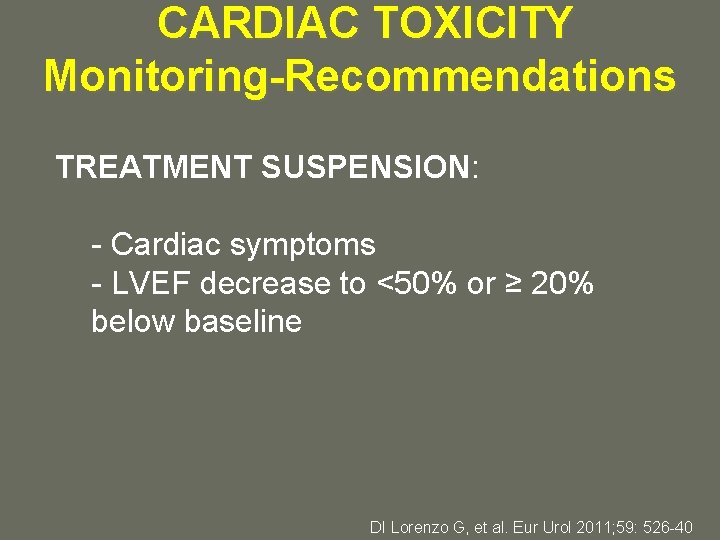
CARDIAC TOXICITY Monitoring-Recommendations TREATMENT SUSPENSION: - Cardiac symptoms - LVEF decrease to <50% or ≥ 20% below baseline DI Lorenzo G, et al. Eur Urol 2011; 59: 526 -40
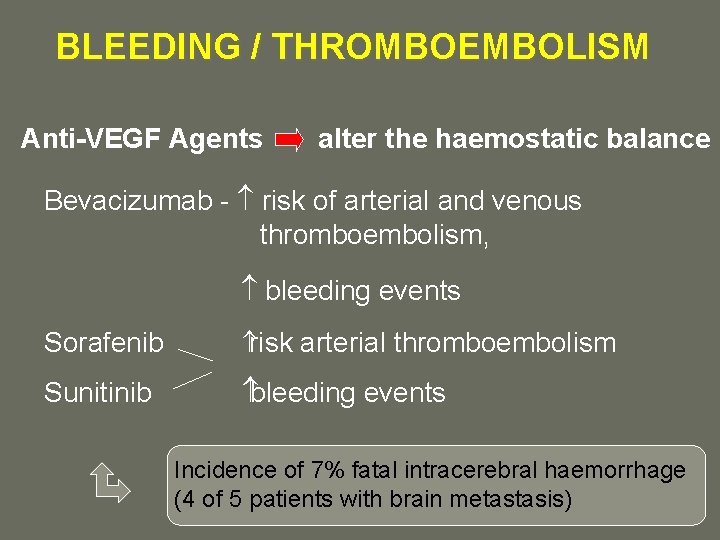
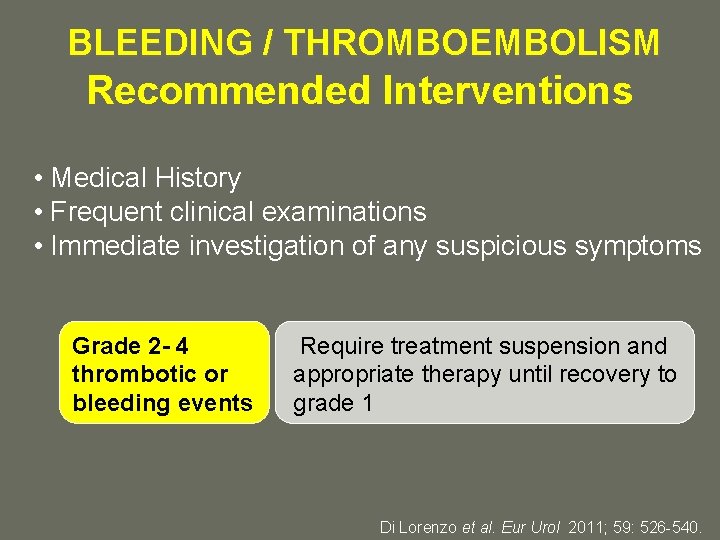
BLEEDING / THROMBOEMBOLISM Anti-VEGF Agents alter the haemostatic balance Bevacizumab - risk of arterial and venous thromboembolism, bleeding events Sorafenib risk arterial thromboembolism Sunitinib bleeding events Incidence of 7% fatal intracerebral haemorrhage (4 of 5 patients with brain metastasis)
BLEEDING / THROMBOEMBOLISM Recommended Interventions • Medical History • Frequent clinical examinations • Immediate investigation of any suspicious symptoms Grade 2 - 4 thrombotic or bleeding events Require treatment suspension and appropriate therapy until recovery to grade 1 Di Lorenzo et al. Eur Urol 2011; 59: 526 -540.
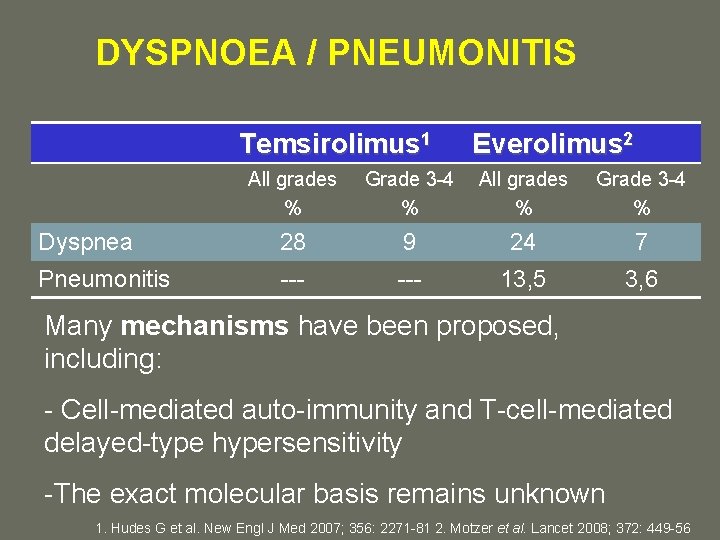
DYSPNOEA / PNEUMONITIS Temsirolimus 1 Everolimus 2 All grades % Grade 3 -4 % Dyspnea 28 9 24 7 Pneumonitis --- 13, 5 3, 6 Many mechanisms have been proposed, including: - Cell-mediated auto-immunity and T-cell-mediated delayed-type hypersensitivity -The exact molecular basis remains unknown 1. Hudes G et al. New Engl J Med 2007; 356: 2271 -81 2. Motzer et al. Lancet 2008; 372: 449 -56
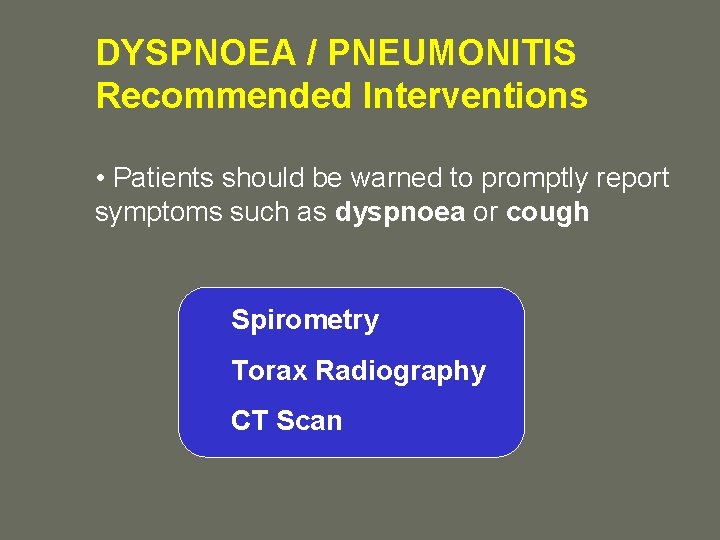
DYSPNOEA / PNEUMONITIS Recommended Interventions • Patients should be warned to promptly report symptoms such as dyspnoea or cough Spirometry Torax Radiography CT Scan
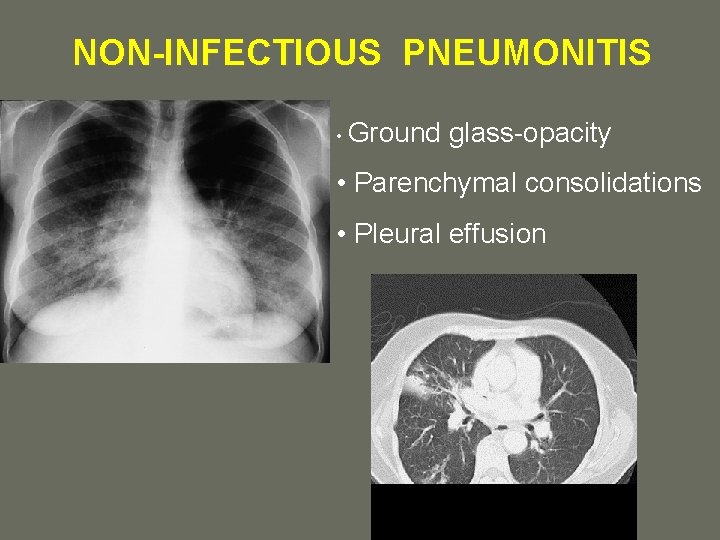
NON-INFECTIOUS PNEUMONITIS • Ground glass-opacity • Parenchymal consolidations • Pleural effusion
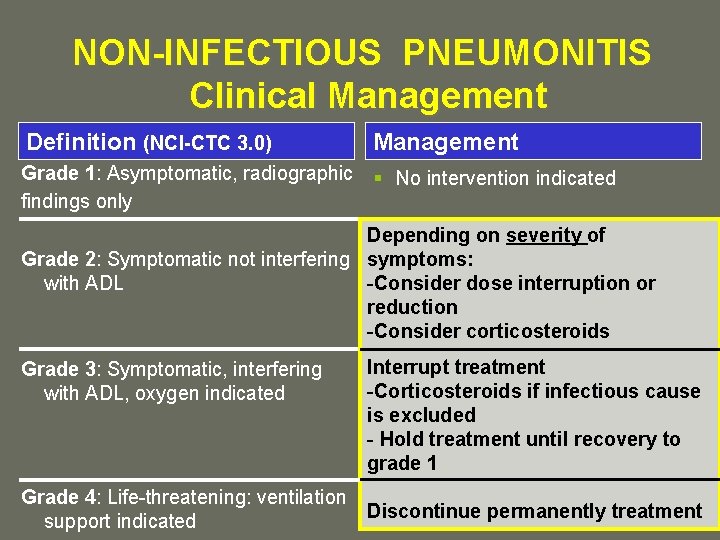
NON-INFECTIOUS PNEUMONITIS Clinical Management Definition (NCI-CTC 3. 0) Management Grade 1: Asymptomatic, radiographic § No intervention indicated findings only Depending on severity of 14. 7% Grade 2: Symptomatic not interfering symptoms: -Consider dose interruption or with ADL reduction -Consider corticosteroids 5. 4% Interrupt treatment Grade 3: Symptomatic, interfering -Corticosteroids if infectious cause with ADL, oxygen indicated is excluded - Hold treatment until recovery to grade 1 Grade 4: Life-threatening: ventilation support indicated Discontinue permanently treatment
GASTROINTESTINAL HEPATIC AND RENAL TOXICITY
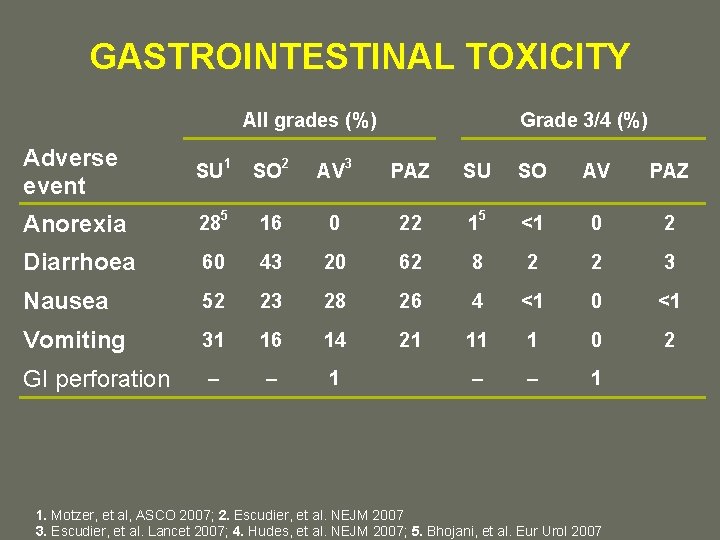
GASTROINTESTINAL TOXICITY All grades (%) Grade 3/4 (%) Adverse event SU 1 SO 2 AV 3 PAZ SU SO AV PAZ Anorexia 285 16 0 22 15 <1 0 2 Diarrhoea 60 43 20 62 8 2 2 3 Nausea 52 23 28 26 4 <1 0 <1 Vomiting 31 16 14 21 11 1 0 2 GI perforation – – 1 1. Motzer, et al, ASCO 2007; 2. Escudier, et al. NEJM 2007 3. Escudier, et al. Lancet 2007; 4. Hudes, et al. NEJM 2007; 5. Bhojani, et al. Eur Urol 2007
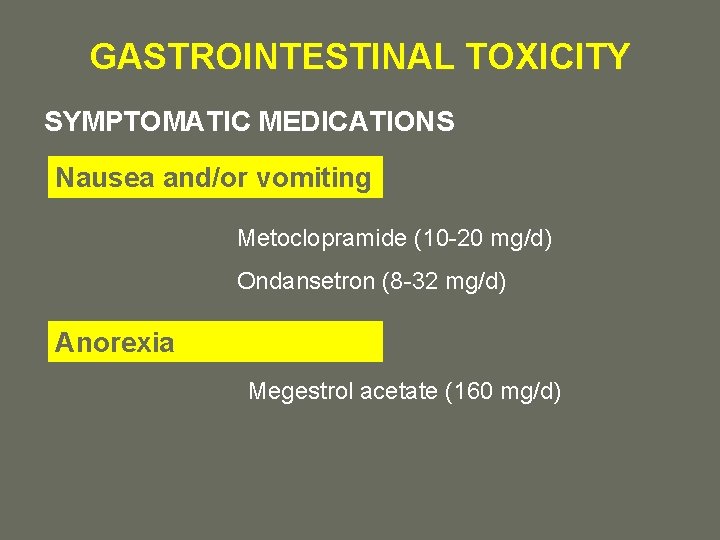
GASTROINTESTINAL TOXICITY SYMPTOMATIC MEDICATIONS Nausea and/or vomiting Metoclopramide (10 -20 mg/d) Ondansetron (8 -32 mg/d) Anorexia Megestrol acetate (160 mg/d)
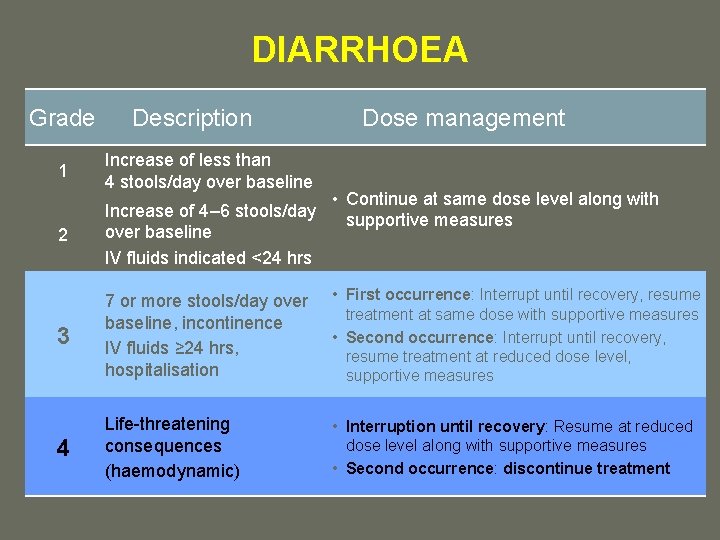
DIARRHOEA Grade Description Dose management 1 Increase of less than 4 stools/day over baseline 2 Increase of 4– 6 stools/day over baseline IV fluids indicated <24 hrs 3 7 or more stools/day over baseline, incontinence IV fluids ≥ 24 hrs, hospitalisation • First occurrence: Interrupt until recovery, resume treatment at same dose with supportive measures • Second occurrence: Interrupt until recovery, resume treatment at reduced dose level, supportive measures 4 Life-threatening consequences (haemodynamic) • Interruption until recovery: Resume at reduced dose level along with supportive measures • Second occurrence: discontinue treatment *NCI CTCAE v 3 • Continue at same dose level along with supportive measures
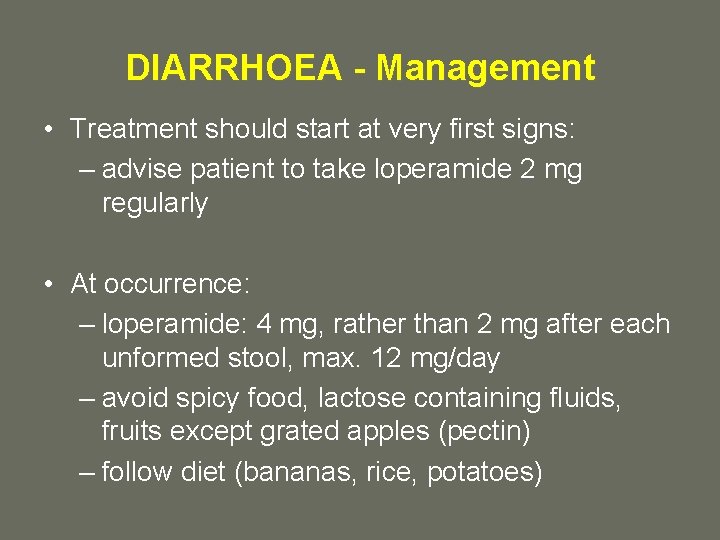
DIARRHOEA - Management • Treatment should start at very first signs: – advise patient to take loperamide 2 mg regularly • At occurrence: – loperamide: 4 mg, rather than 2 mg after each unformed stool, max. 12 mg/day – avoid spicy food, lactose containing fluids, fruits except grated apples (pectin) – follow diet (bananas, rice, potatoes)
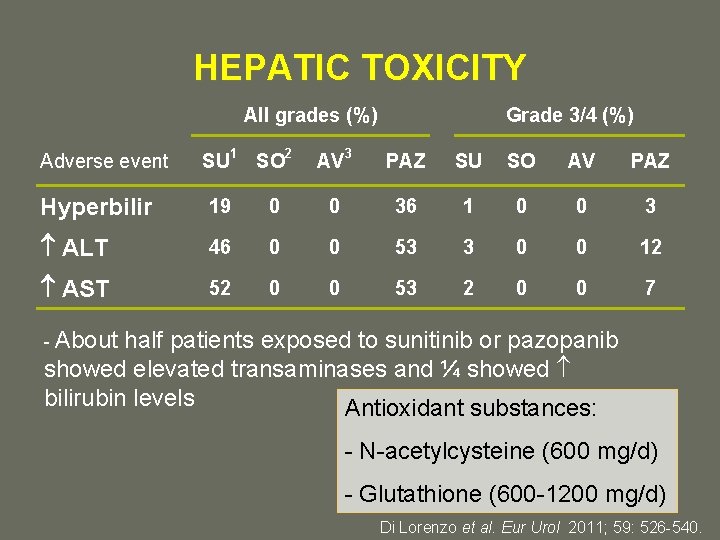
HEPATIC TOXICITY All grades (%) Adverse event SU 1 SO 2 Grade 3/4 (%) AV 3 PAZ SU SO AV PAZ Hyperbilir 19 0 0 36 1 0 0 3 ALT 46 0 0 53 3 0 0 12 AST 52 0 0 53 2 0 0 7 - About half patients exposed to sunitinib or pazopanib showed elevated transaminases and ¼ showed bilirubin levels Antioxidant substances: - N-acetylcysteine (600 mg/d) - Glutathione (600 -1200 mg/d) Di Lorenzo et al. Eur Urol 2011; 59: 526 -540.
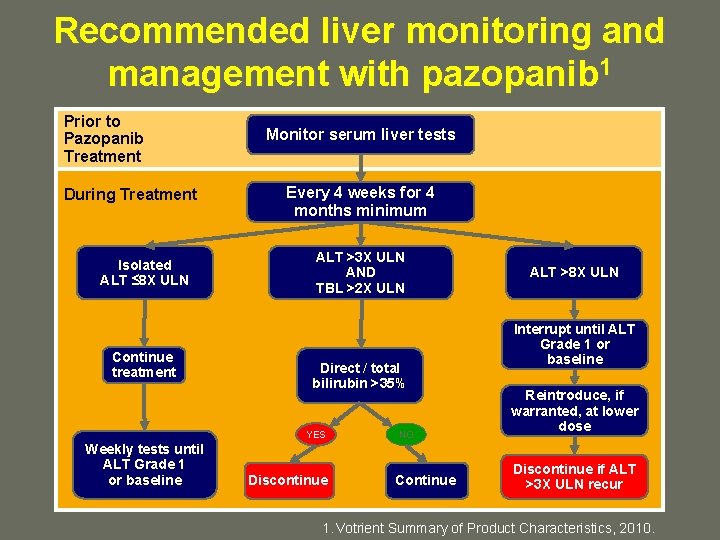
Recommended liver monitoring and management with pazopanib 1 Prior to Pazopanib Treatment During Treatment Isolated ALT ≤ 8 X ULN Continue treatment Monitor serum liver tests Every 4 weeks for 4 months minimum ALT >3 X ULN AND TBL >2 X ULN Direct / total bilirubin >35% YES Weekly tests until ALT Grade 1 or baseline Discontinue NO Continue ALT >8 X ULN Interrupt until ALT Grade 1 or baseline Reintroduce, if warranted, at lower dose Discontinue if ALT >3 X ULN recur 1. Votrient Summary of Product Characteristics, 2010.
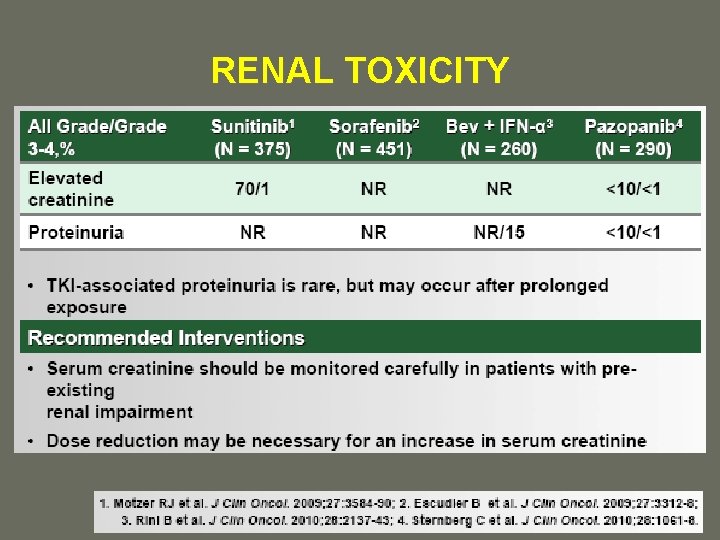
RENAL TOXICITY
MUCOSAL AND SKIN TOXICITY
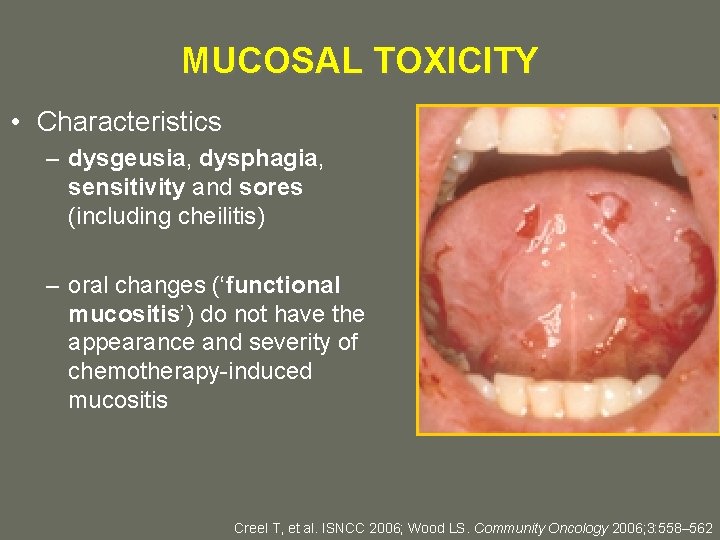
MUCOSAL TOXICITY • Characteristics – dysgeusia, dysphagia, sensitivity and sores (including cheilitis) – oral changes (‘functional mucositis’) do not have the appearance and severity of chemotherapy-induced mucositis Creel T, et al. ISNCC 2006; Wood LS. Community Oncology 2006; 3: 558– 562
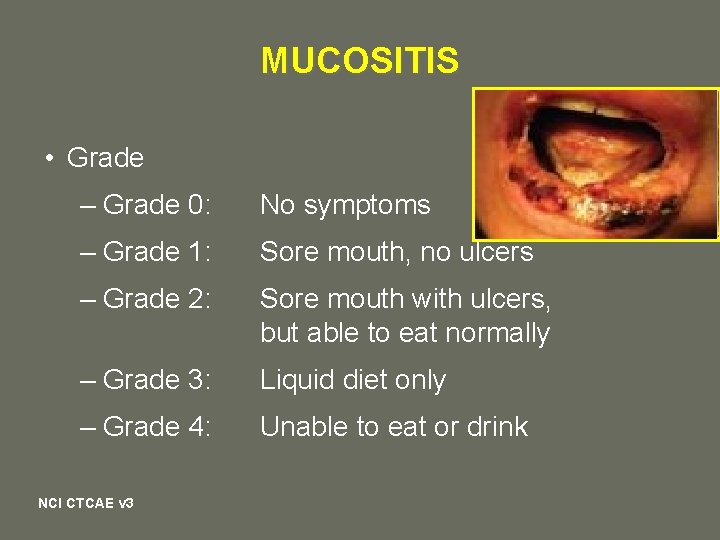
MUCOSITIS • Grade – Grade 0: No symptoms – Grade 1: Sore mouth, no ulcers – Grade 2: Sore mouth with ulcers, but able to eat normally – Grade 3: Liquid diet only – Grade 4: Unable to eat or drink NCI CTCAE v 3
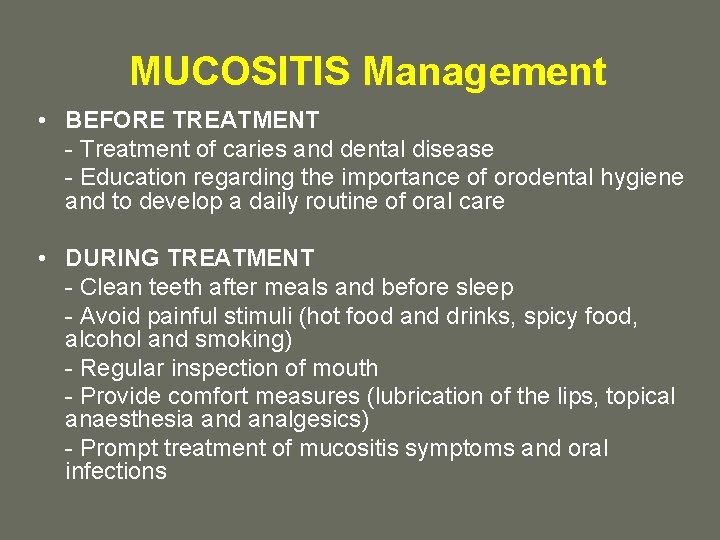
MUCOSITIS Management • BEFORE TREATMENT - Treatment of caries and dental disease - Education regarding the importance of orodental hygiene and to develop a daily routine of oral care • DURING TREATMENT - Clean teeth after meals and before sleep - Avoid painful stimuli (hot food and drinks, spicy food, alcohol and smoking) - Regular inspection of mouth - Provide comfort measures (lubrication of the lips, topical anaesthesia and analgesics) - Prompt treatment of mucositis symptoms and oral infections
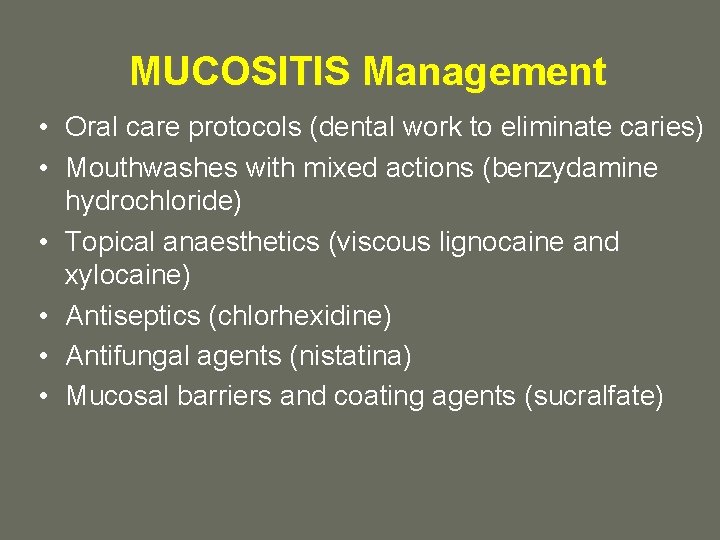
MUCOSITIS Management • Oral care protocols (dental work to eliminate caries) • Mouthwashes with mixed actions (benzydamine hydrochloride) • Topical anaesthetics (viscous lignocaine and xylocaine) • Antiseptics (chlorhexidine) • Antifungal agents (nistatina) • Mucosal barriers and coating agents (sucralfate)
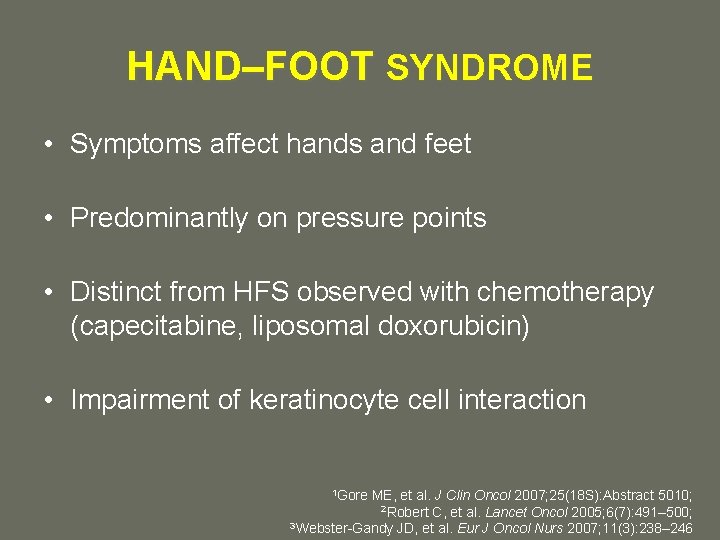
HAND–FOOT SYNDROME • Symptoms affect hands and feet • Predominantly on pressure points • Distinct from HFS observed with chemotherapy (capecitabine, liposomal doxorubicin) • Impairment of keratinocyte cell interaction 1 Gore ME, et al. J Clin Oncol 2007; 25(18 S): Abstract 5010; 2 Robert C, et al. Lancet Oncol 2005; 6(7): 491– 500; 3 Webster-Gandy JD, et al. Eur J Oncol Nurs 2007; 11(3): 238– 246
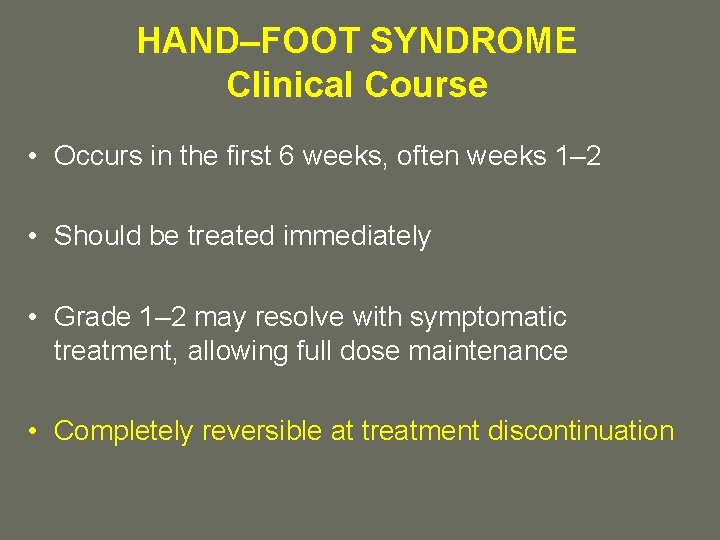
HAND–FOOT SYNDROME Clinical Course • Occurs in the first 6 weeks, often weeks 1– 2 • Should be treated immediately • Grade 1– 2 may resolve with symptomatic treatment, allowing full dose maintenance • Completely reversible at treatment discontinuation
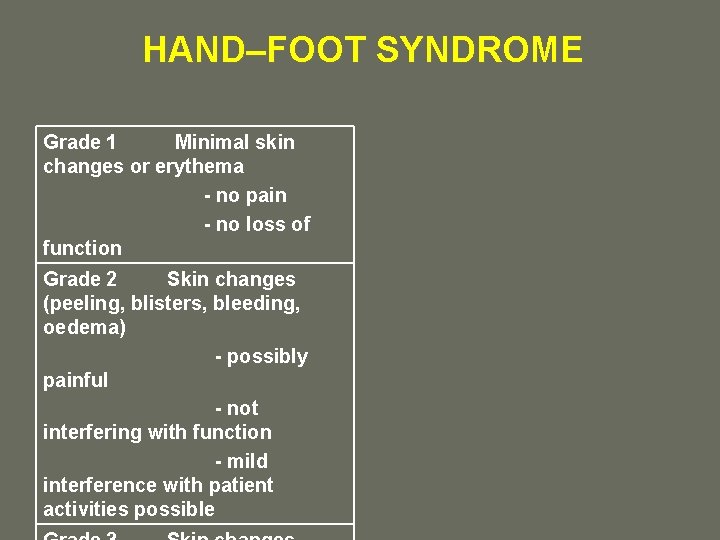
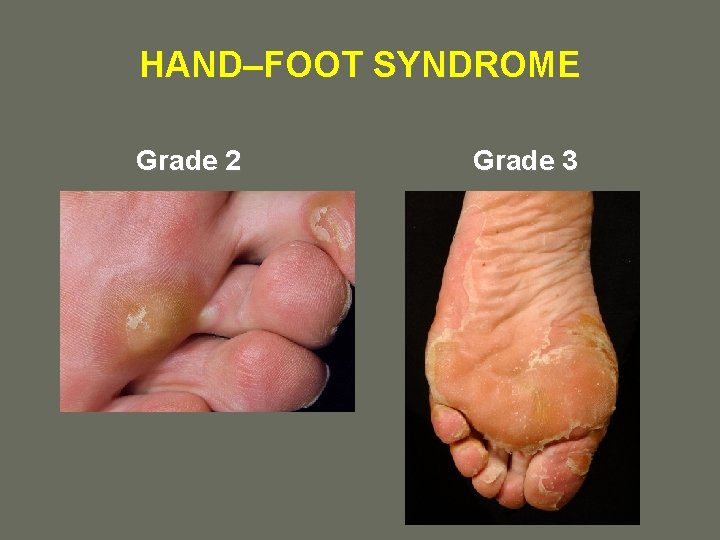
HAND–FOOT SYNDROME Grade 1 Minimal skin changes or erythema - no pain - no loss of function Grade 2 Skin changes (peeling, blisters, bleeding, oedema) - possibly painful - not interfering with function - mild interference with patient activities possible
HAND–FOOT SYNDROME Grade 2 Grade 3
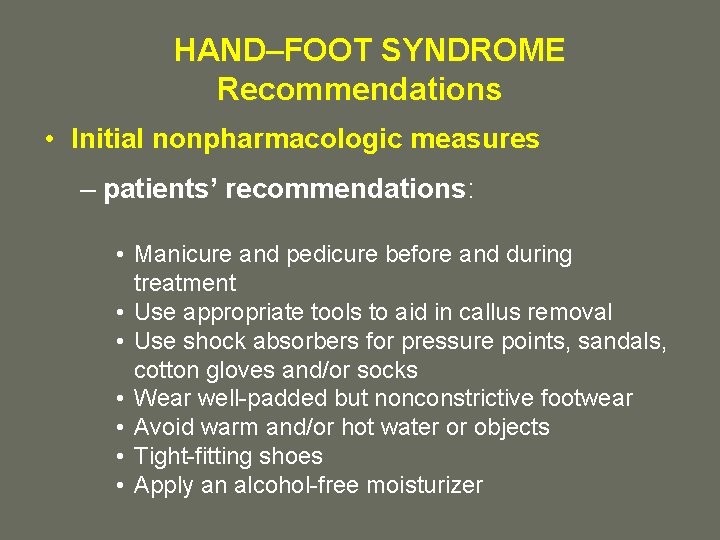
HAND–FOOT SYNDROME Recommendations • Initial nonpharmacologic measures – patients’ recommendations: • Manicure and pedicure before and during treatment • Use appropriate tools to aid in callus removal • Use shock absorbers for pressure points, sandals, cotton gloves and/or socks • Wear well-padded but nonconstrictive footwear • Avoid warm and/or hot water or objects • Tight-fitting shoes • Apply an alcohol-free moisturizer
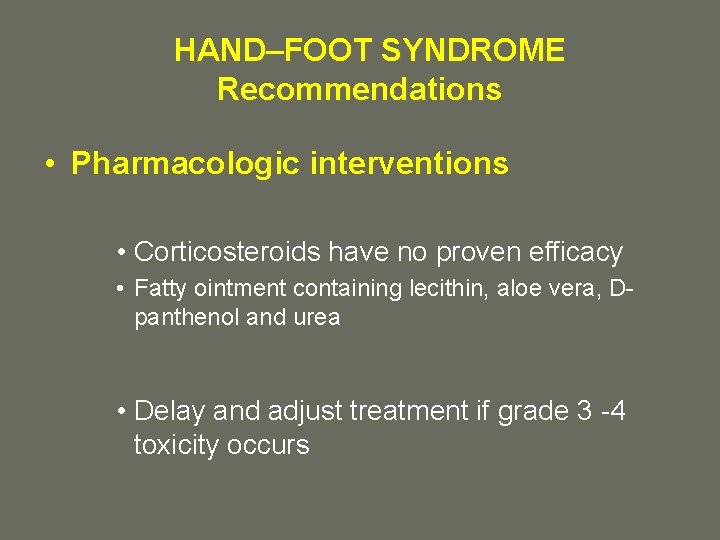
HAND–FOOT SYNDROME Recommendations • Pharmacologic interventions • Corticosteroids have no proven efficacy • Fatty ointment containing lecithin, aloe vera, Dpanthenol and urea • Delay and adjust treatment if grade 3 -4 toxicity occurs
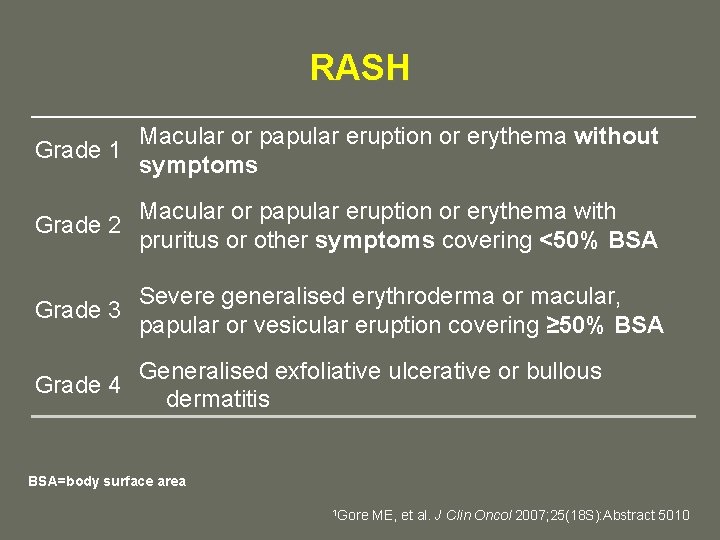
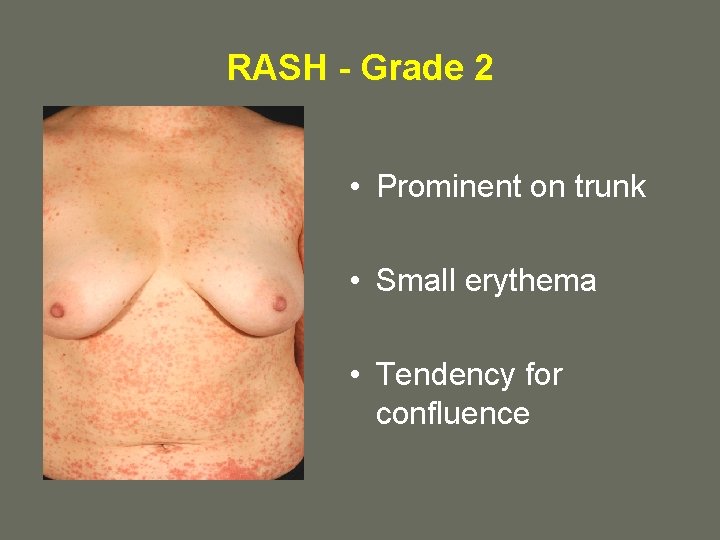
RASH Macular or papular eruption or erythema without Grade 1 symptoms Macular or papular eruption or erythema with Grade 2 pruritus or other symptoms covering <50% BSA Severe generalised erythroderma or macular, Grade 3 papular or vesicular eruption covering ≥ 50% BSA Generalised exfoliative ulcerative or bullous Grade 4 dermatitis BSA=body surface area 1 Gore ME, et al. J Clin Oncol 2007; 25(18 S): Abstract 5010
RASH - Grade 2 • Prominent on trunk • Small erythema • Tendency for confluence
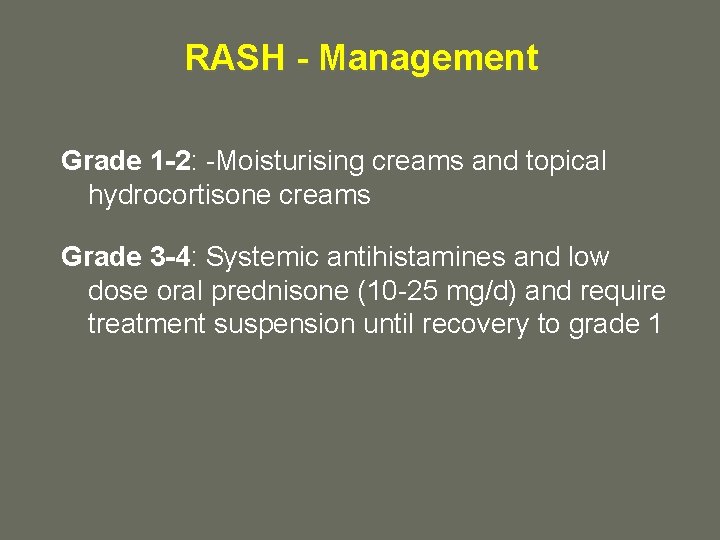
RASH - Management Grade 1 -2: -Moisturising creams and topical hydrocortisone creams Grade 3 -4: Systemic antihistamines and low dose oral prednisone (10 -25 mg/d) and require treatment suspension until recovery to grade 1
ENDOCRINOLOGIC AND METABOLIC TOXICITY
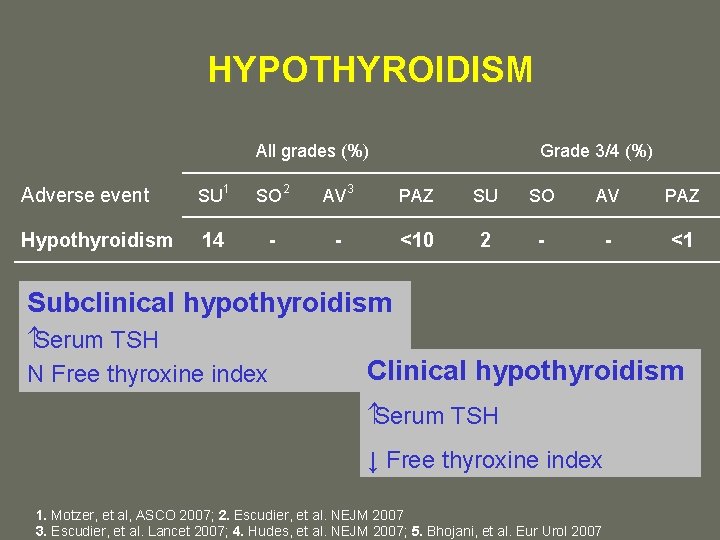
HYPOTHYROIDISM All grades (%) Grade 3/4 (%) Adverse event SU 1 SO 2 AV 3 PAZ SU SO AV PAZ Hypothyroidism 14 - - <10 2 - - <1 Subclinical hypothyroidism Serum TSH N Free thyroxine index Clinical hypothyroidism Serum TSH ↓ Free thyroxine index 1. Motzer, et al, ASCO 2007; 2. Escudier, et al. NEJM 2007 3. Escudier, et al. Lancet 2007; 4. Hudes, et al. NEJM 2007; 5. Bhojani, et al. Eur Urol 2007
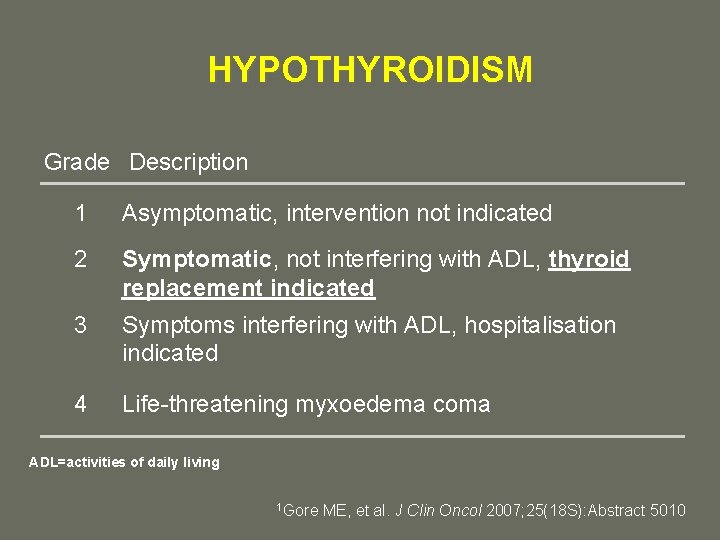
HYPOTHYROIDISM Grade Description 1 Asymptomatic, intervention not indicated 2 Symptomatic, not interfering with ADL, thyroid replacement indicated 3 Symptoms interfering with ADL, hospitalisation indicated 4 Life-threatening myxoedema coma ADL=activities of daily living 1 Gore ME, et al. J Clin Oncol 2007; 25(18 S): Abstract 5010
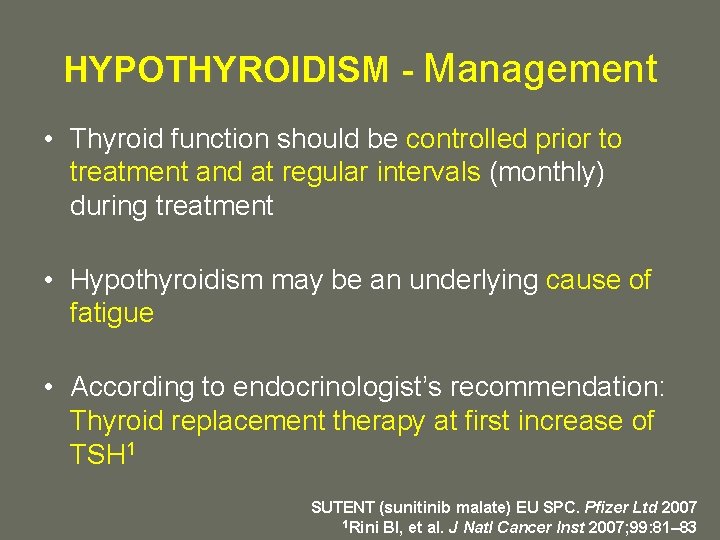
HYPOTHYROIDISM - Management • Thyroid function should be controlled prior to treatment and at regular intervals (monthly) during treatment • Hypothyroidism may be an underlying cause of fatigue • According to endocrinologist’s recommendation: Thyroid replacement therapy at first increase of TSH 1 SUTENT (sunitinib malate) EU SPC. Pfizer Ltd 2007 1 Rini BI, et al. J Natl Cancer Inst 2007; 99: 81– 83
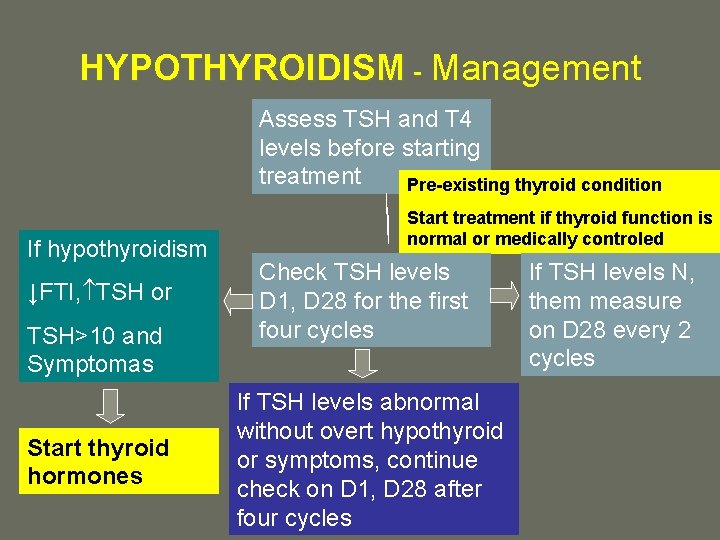
HYPOTHYROIDISM - Management Assess TSH and T 4 levels before starting treatment Pre-existing thyroid condition If hypothyroidism ↓FTI, TSH or TSH>10 and Symptomas Start thyroid hormones Start treatment if thyroid function is normal or medically controled Check TSH levels D 1, D 28 for the first four cycles If TSH levels abnormal without overt hypothyroid or symptoms, continue check on D 1, D 28 after four cycles If TSH levels N, them measure on D 28 every 2 cycles
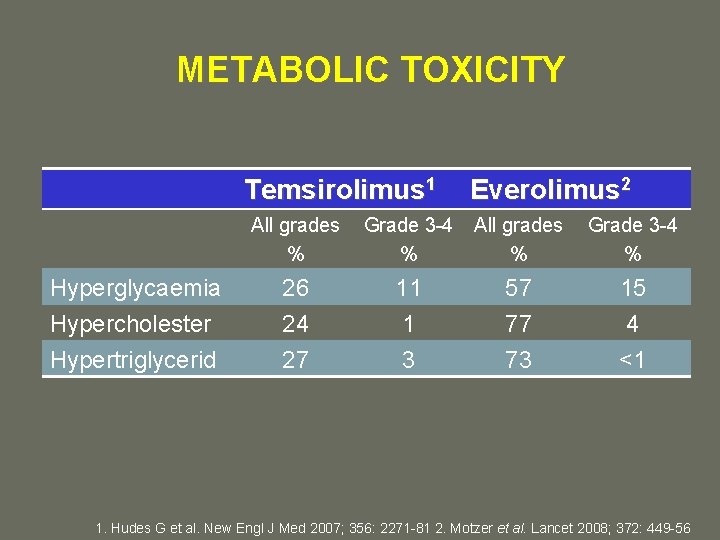
METABOLIC TOXICITY Temsirolimus 1 Hyperglycaemia Hypercholester Hypertriglycerid Everolimus 2 All grades % Grade 3 -4 % 26 24 27 11 1 3 57 77 73 15 4 <1 1. Hudes G et al. New Engl J Med 2007; 356: 2271 -81 2. Motzer et al. Lancet 2008; 372: 449 -56
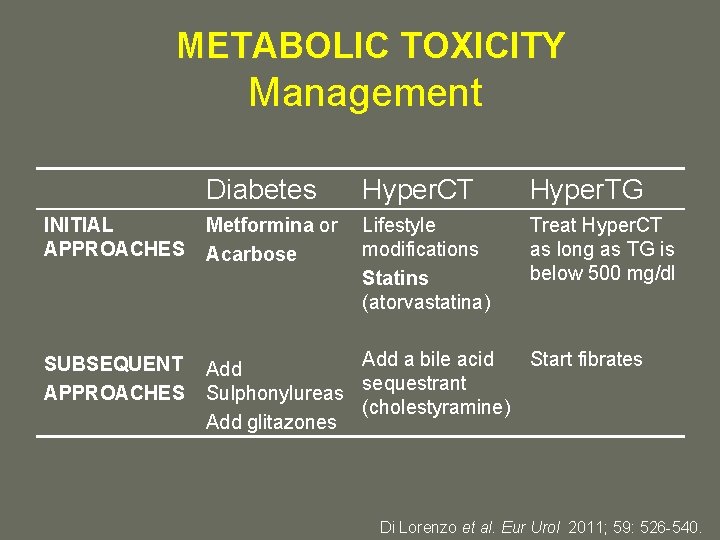
METABOLIC TOXICITY Management Diabetes Hyper. CT Hyper. TG INITIAL APPROACHES Metformina or Acarbose Lifestyle modifications Statins (atorvastatina) Treat Hyper. CT as long as TG is below 500 mg/dl SUBSEQUENT APPROACHES Add a bile acid Start fibrates Add Sulphonylureas sequestrant (cholestyramine) Add glitazones Di Lorenzo et al. Eur Urol 2011; 59: 526 -540.
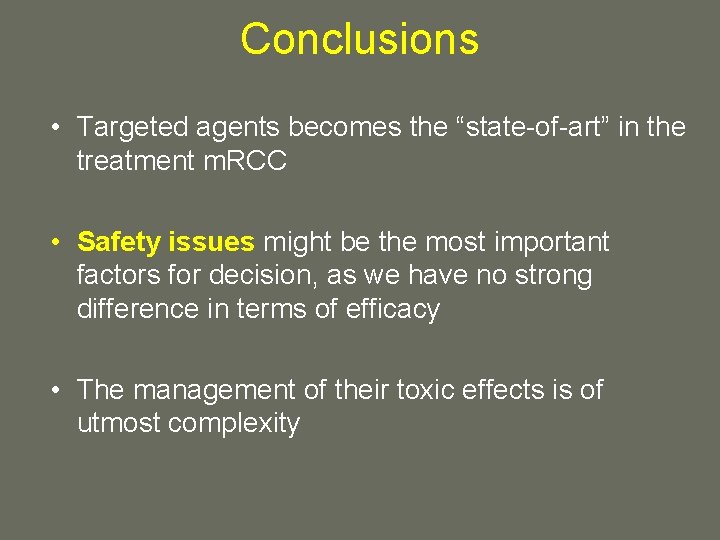
Conclusions • Targeted agents becomes the “state-of-art” in the treatment m. RCC • Safety issues might be the most important factors for decision, as we have no strong difference in terms of efficacy • The management of their toxic effects is of utmost complexity
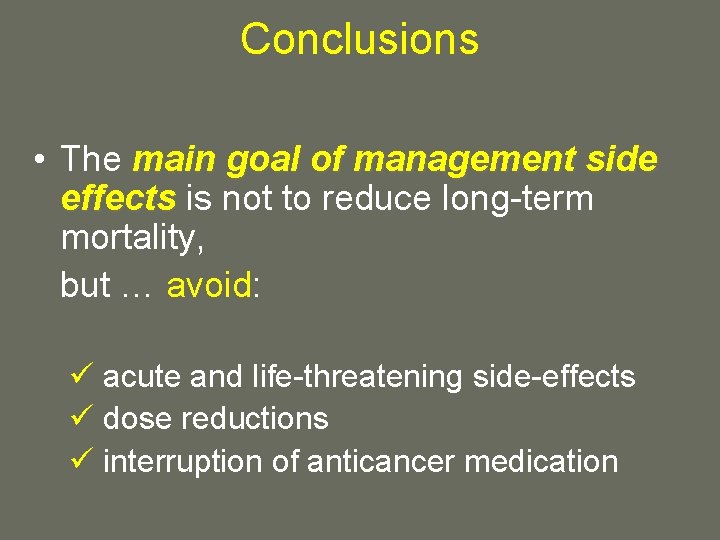
Conclusions • The main goal of management side effects is not to reduce long-term mortality, but … avoid: ü acute and life-threatening side-effects ü dose reductions ü interruption of anticancer medication