
Carbonbased Molecules Cells consist mostly of Carbon Organic
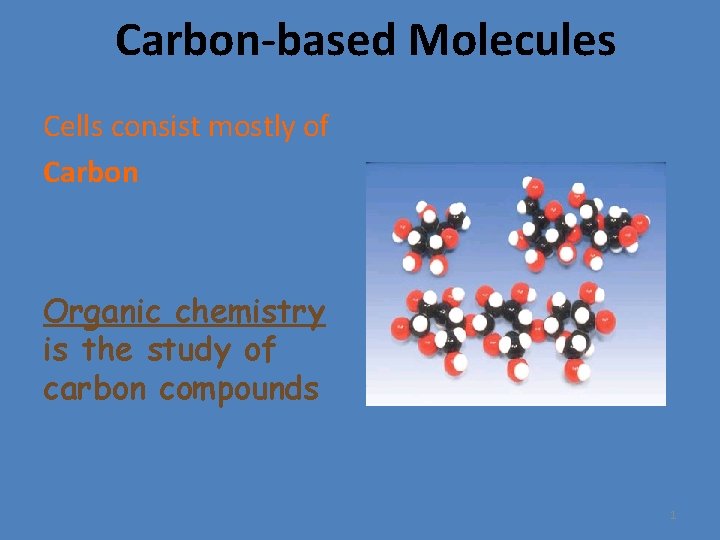
Carbon-based Molecules Cells consist mostly of Carbon Organic chemistry is the study of carbon compounds 1
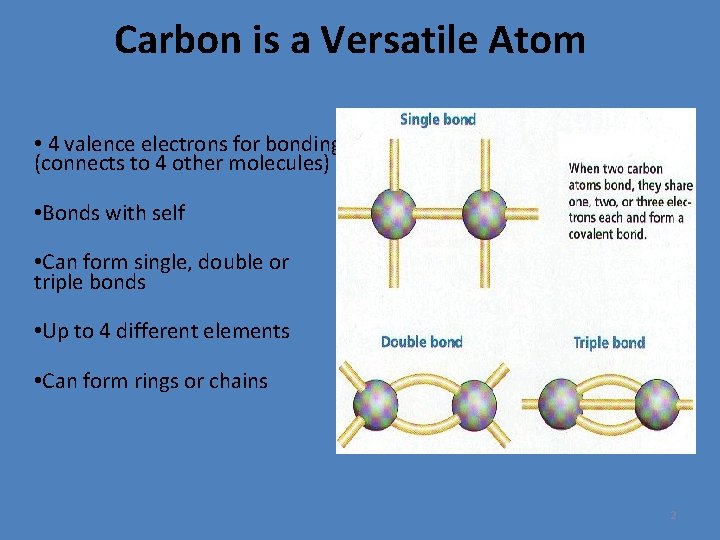
Carbon is a Versatile Atom • 4 valence electrons for bonding (connects to 4 other molecules) • Bonds with self • Can form single, double or triple bonds • Up to 4 different elements • Can form rings or chains 2
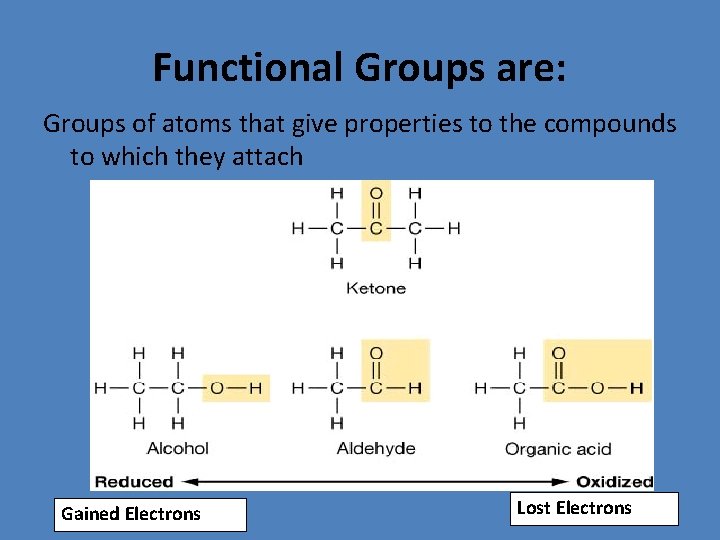
Functional Groups are: Groups of atoms that give properties to the compounds to which they attach Gained Electrons Lost Electrons 3
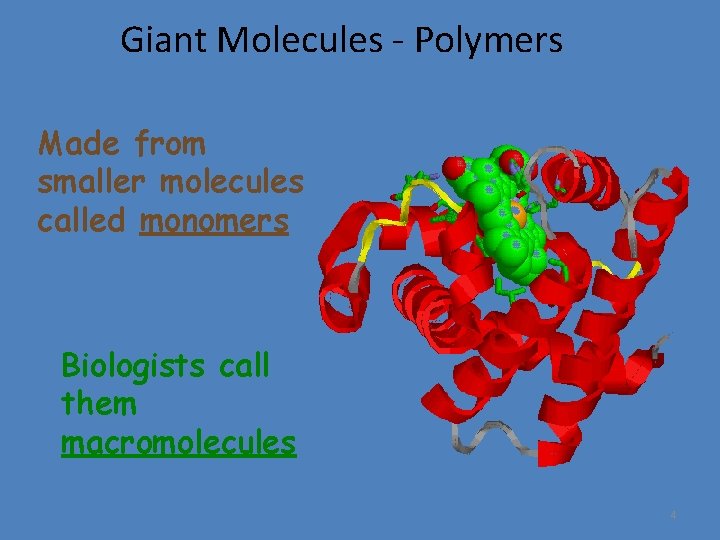
Giant Molecules - Polymers Made from smaller molecules called monomers Biologists call them macromolecules 4
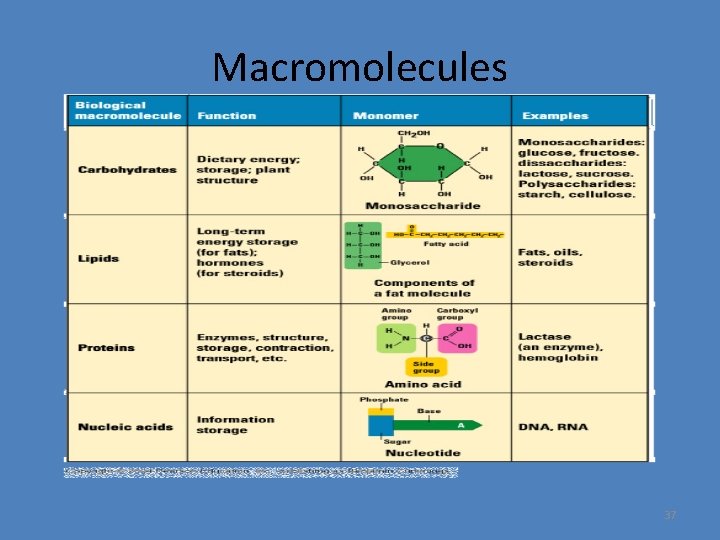
Macromolecules in Organisms There are four categories of large molecules in cells: Carbohydrates Lipids Proteins Nucleic Acids 5
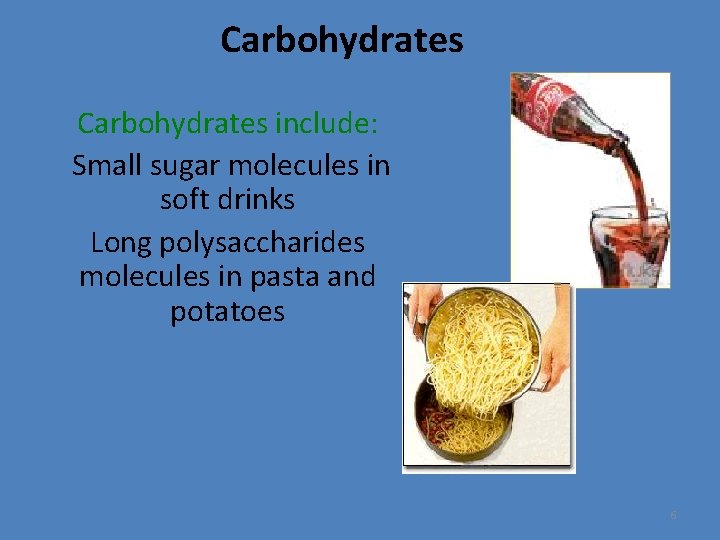
Carbohydrates include: Small sugar molecules in soft drinks Long polysaccharides molecules in pasta and potatoes 6
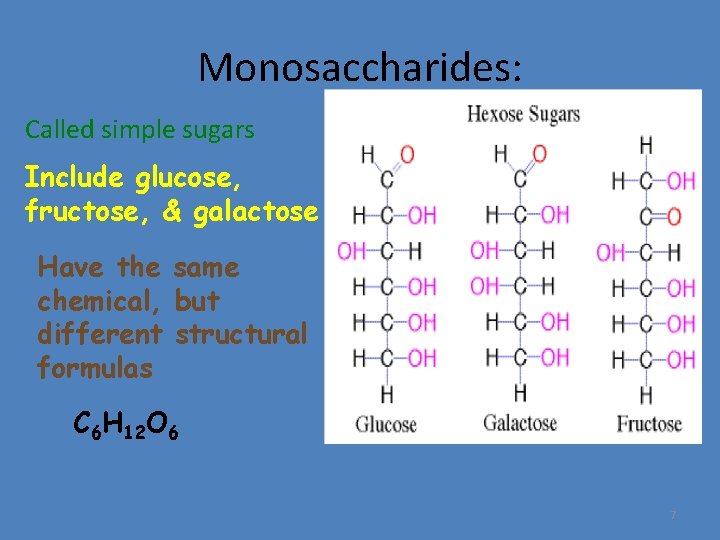
Monosaccharides: Called simple sugars Include glucose, fructose, & galactose Have the same chemical, but different structural formulas C 6 H 12 O 6 7
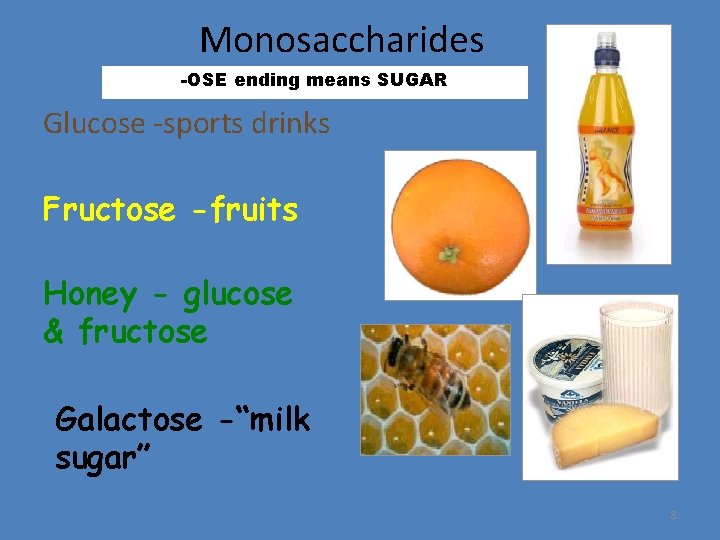
Monosaccharides -OSE ending means SUGAR Glucose -sports drinks Fructose -fruits Honey - glucose & fructose Galactose -“milk sugar” 8
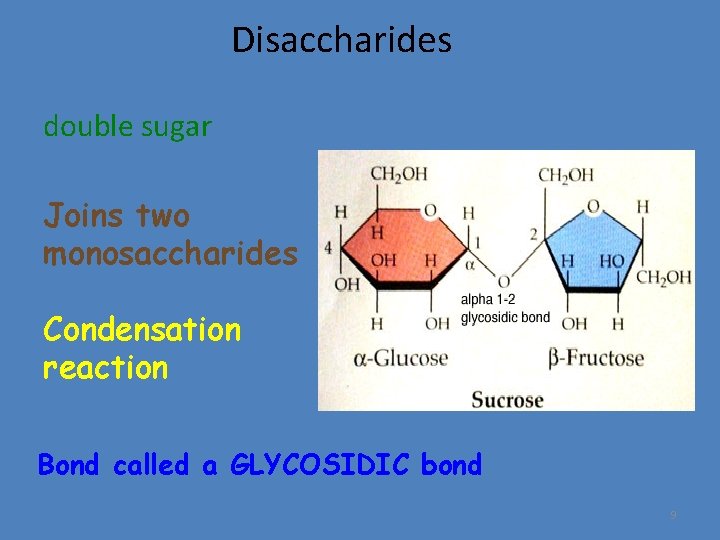
Disaccharides double sugar Joins two monosaccharides Condensation reaction Bond called a GLYCOSIDIC bond 9
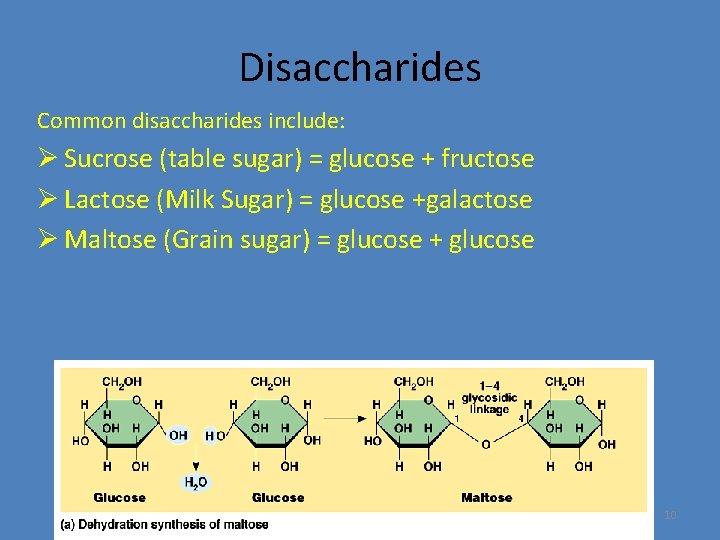
Disaccharides Common disaccharides include: Ø Sucrose (table sugar) = glucose + fructose Ø Lactose (Milk Sugar) = glucose +galactose Ø Maltose (Grain sugar) = glucose + glucose 10
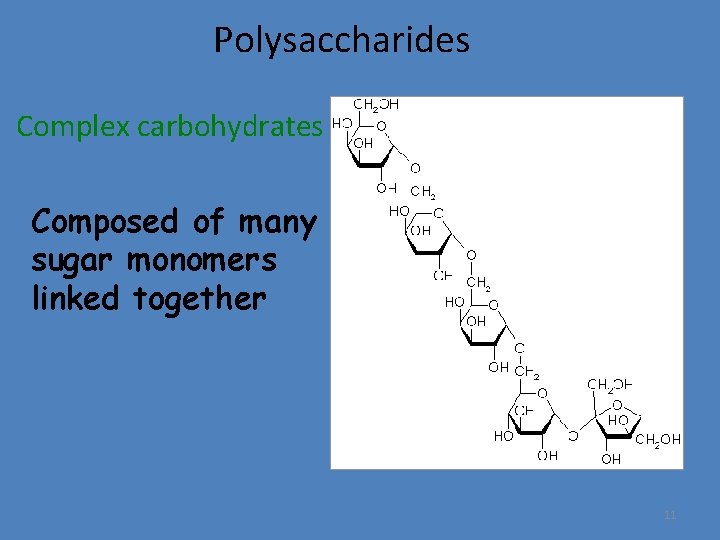
Polysaccharides Complex carbohydrates Composed of many sugar monomers linked together 11
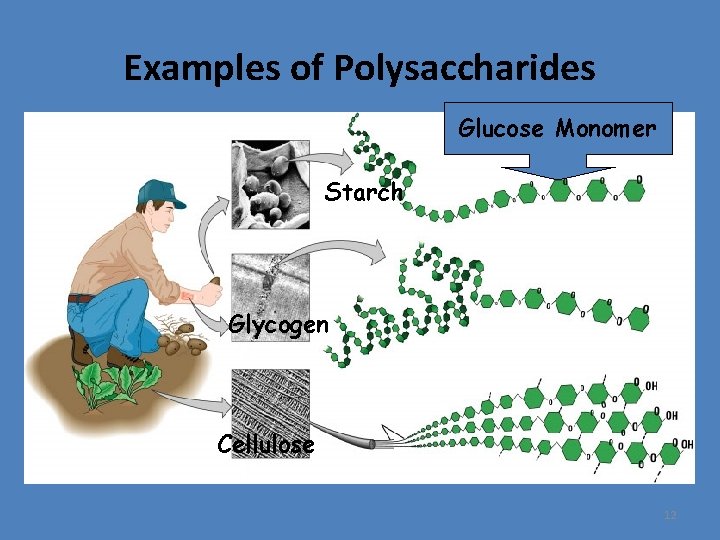
Examples of Polysaccharides Glucose Monomer Starch Glycogen Cellulose 12
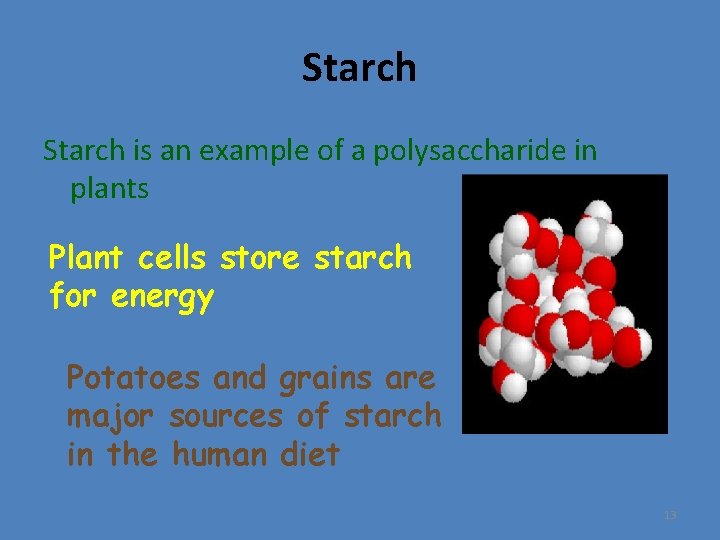
Starch is an example of a polysaccharide in plants Plant cells store starch for energy Potatoes and grains are major sources of starch in the human diet 13
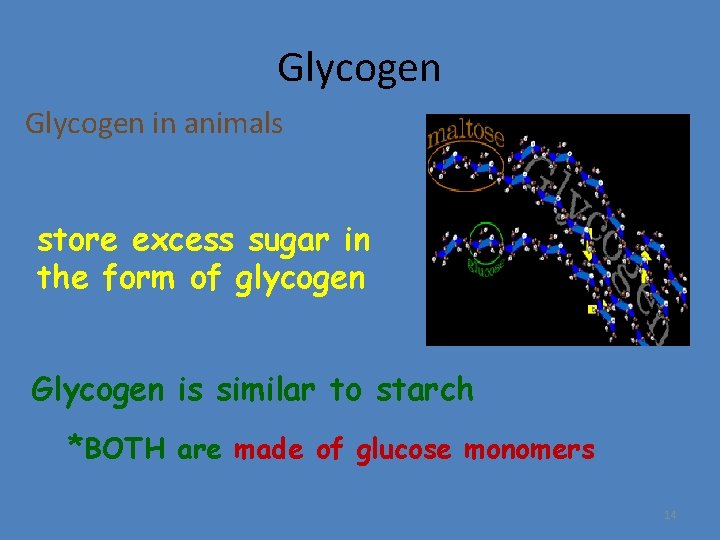
Glycogen in animals store excess sugar in the form of glycogen Glycogen is similar to starch *BOTH are made of glucose monomers 14
Cellulose is the most abundant organic compound on Earth It forms cable-like fibrils in the tough walls that enclose plants It is a major component of wood It is also known as dietary fiber 15
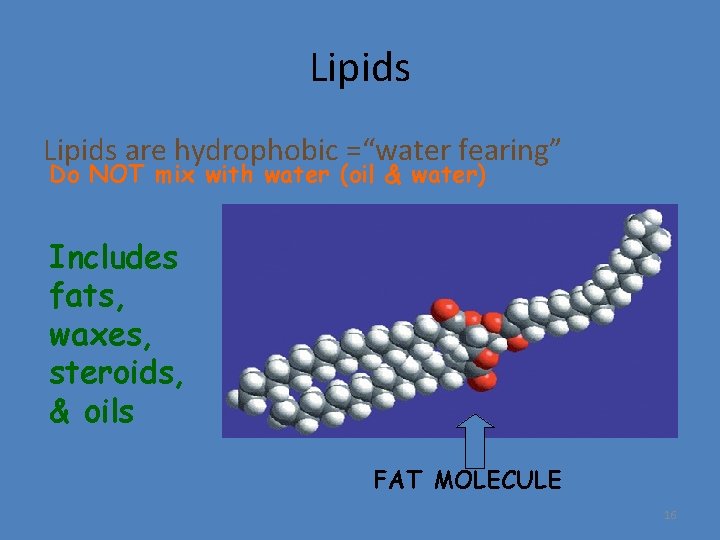
Lipids are hydrophobic =“water fearing” Do NOT mix with water (oil & water) Includes fats, waxes, steroids, & oils FAT MOLECULE 16
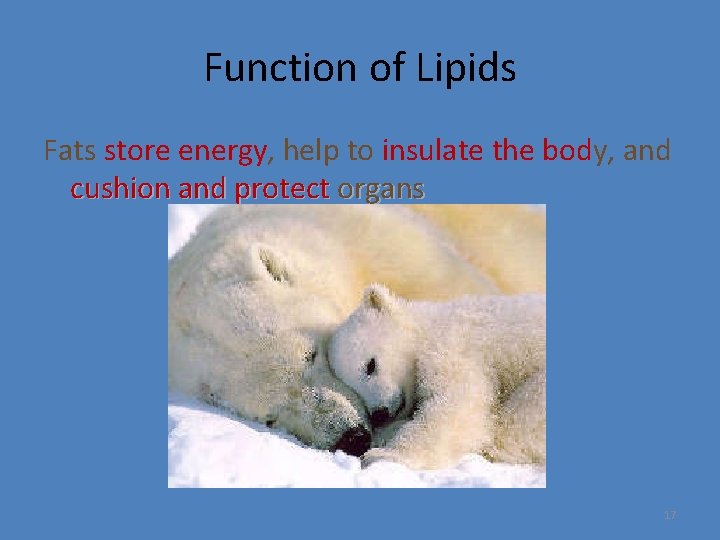
Function of Lipids Fats store energy, help to insulate the body, and cushion and protect organs 17
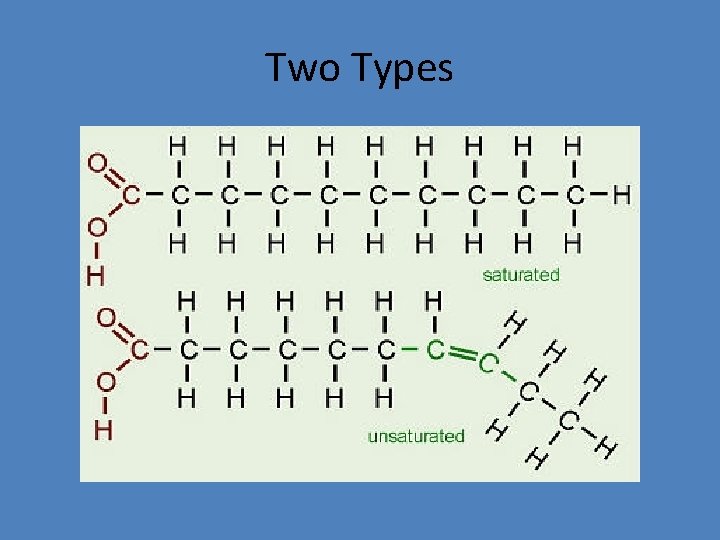
Two Types
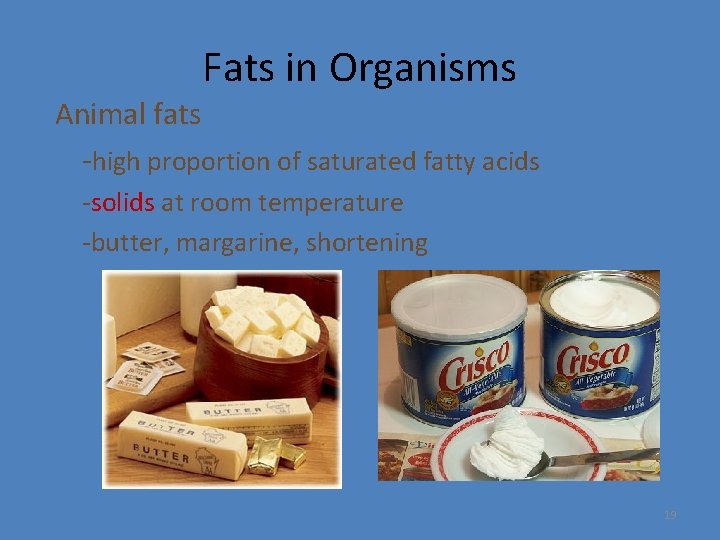
Fats in Organisms Animal fats -high proportion of saturated fatty acids -solids at room temperature -butter, margarine, shortening 19
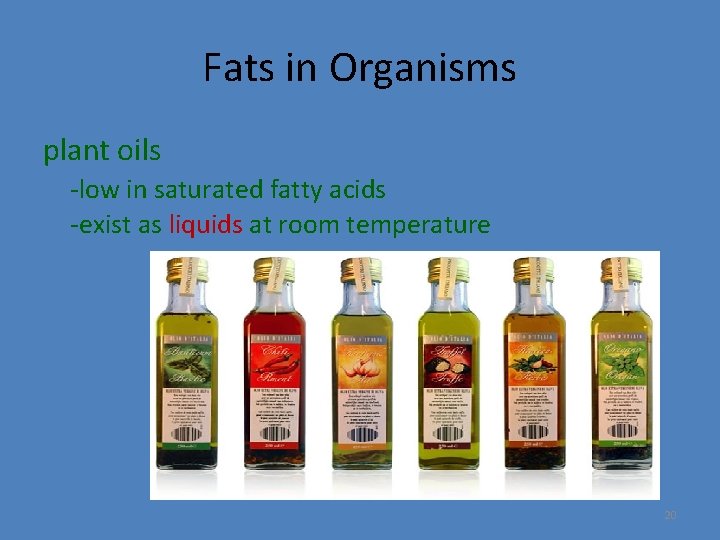
Fats in Organisms plant oils -low in saturated fatty acids -exist as liquids at room temperature 20
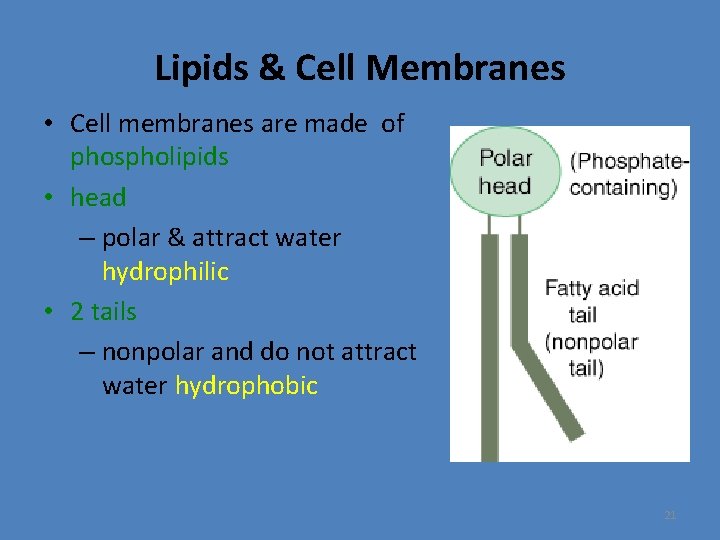
Lipids & Cell Membranes • Cell membranes are made of phospholipids • head – polar & attract water hydrophilic • 2 tails – nonpolar and do not attract water hydrophobic 21
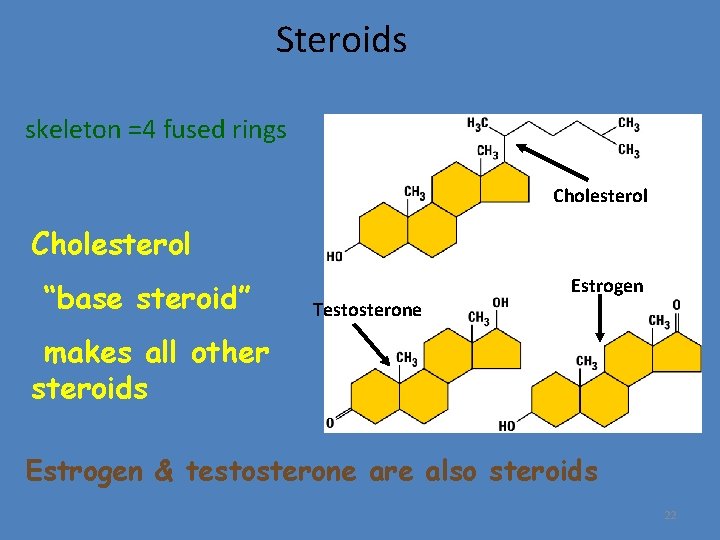
Steroids skeleton =4 fused rings Cholesterol “base steroid” Testosterone Estrogen makes all other steroids Estrogen & testosterone are also steroids 22
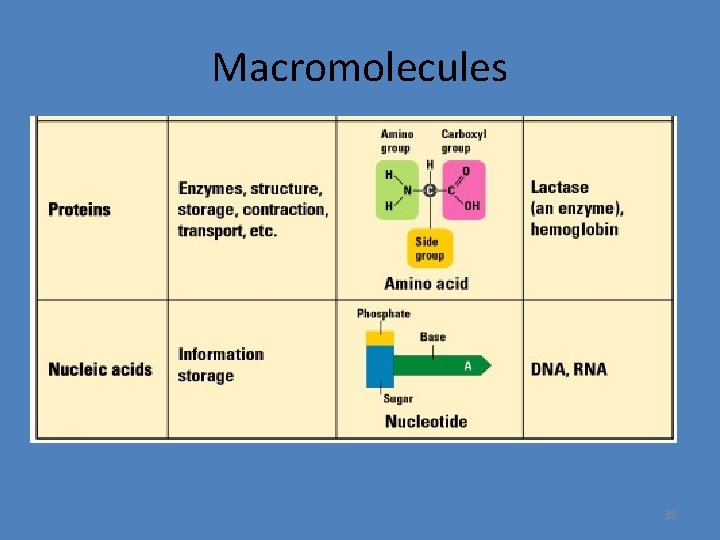
Proteins polymers made of monomers called amino acids only 20 different amino acids build cells, act as hormones & enzymes, Do most work in a cell 23
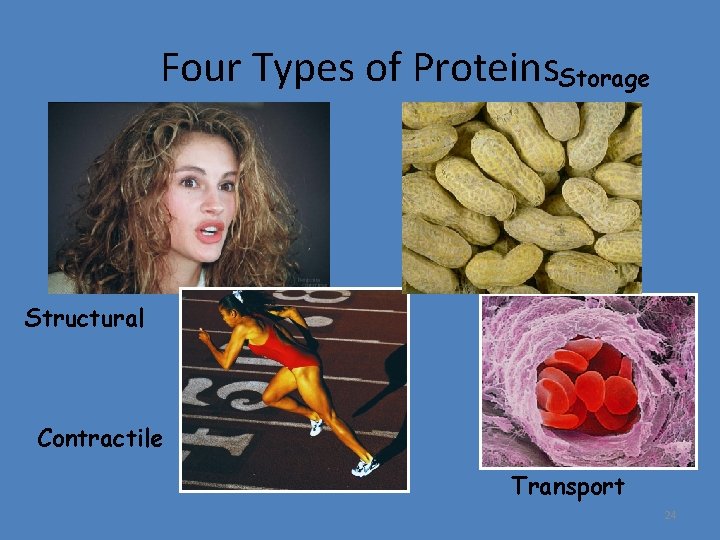
Four Types of Proteins. Storage Structural Contractile Transport 24
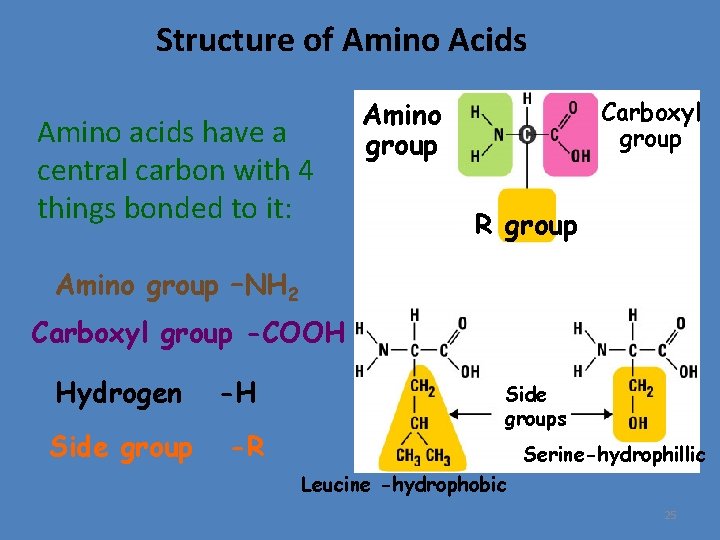
Structure of Amino Acids Amino acids have a central carbon with 4 things bonded to it: Amino group Carboxyl group R group Amino group –NH 2 Carboxyl group -COOH Hydrogen Side group -H -R Side groups Serine-hydrophillic Leucine -hydrophobic 25
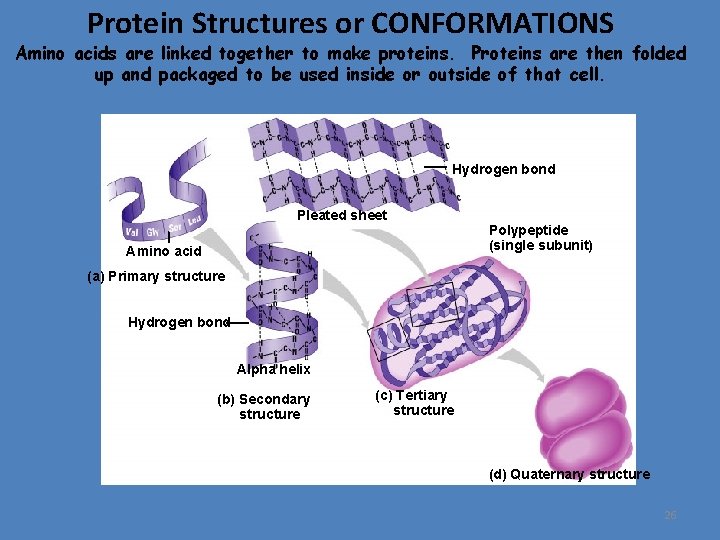
Protein Structures or CONFORMATIONS Amino acids are linked together to make proteins. Proteins are then folded up and packaged to be used inside or outside of that cell. Hydrogen bond Pleated sheet Amino acid Polypeptide (single subunit) (a) Primary structure Hydrogen bond Alpha helix (b) Secondary structure (c) Tertiary structure (d) Quaternary structure 26
Proteins as Enzymes Many proteins act as biological catalysts or enzymes Thousands of different enzymes exist in the body Enzymes control the rate of chemical reactions by weakening bonds, thus lowering the amount of activation energy needed for the reaction 27
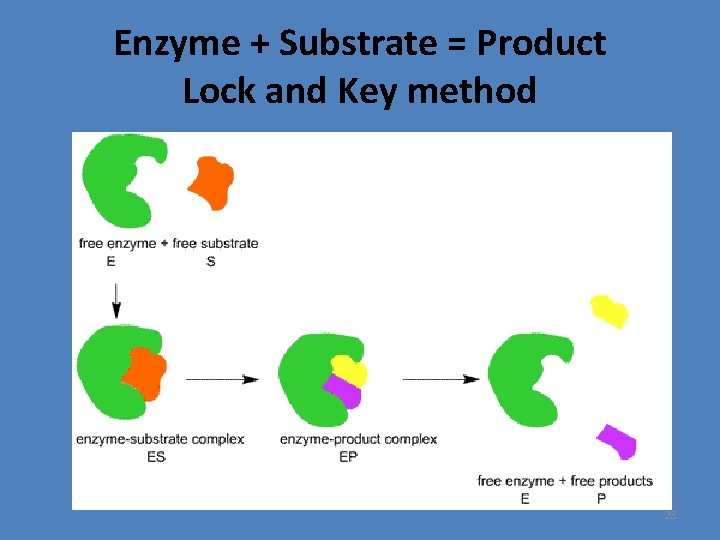
Enzyme + Substrate = Product Lock and Key method 28
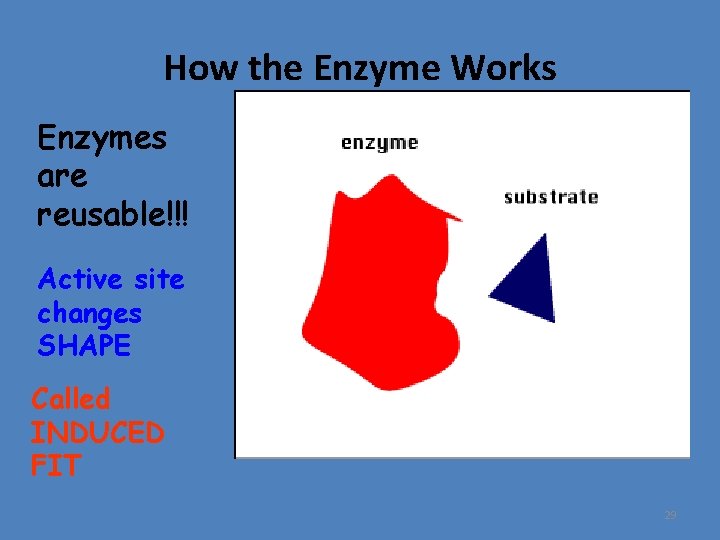
How the Enzyme Works Enzymes are reusable!!! Active site changes SHAPE Called INDUCED FIT 29
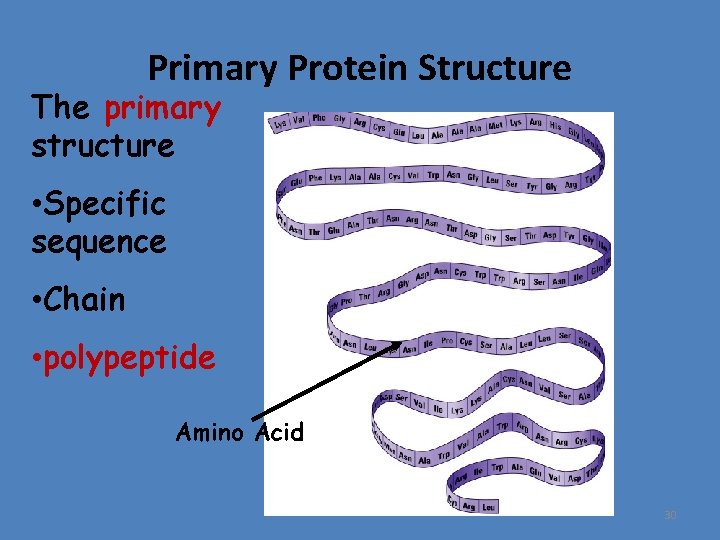
Primary Protein Structure The primary structure • Specific sequence • Chain • polypeptide Amino Acid 30
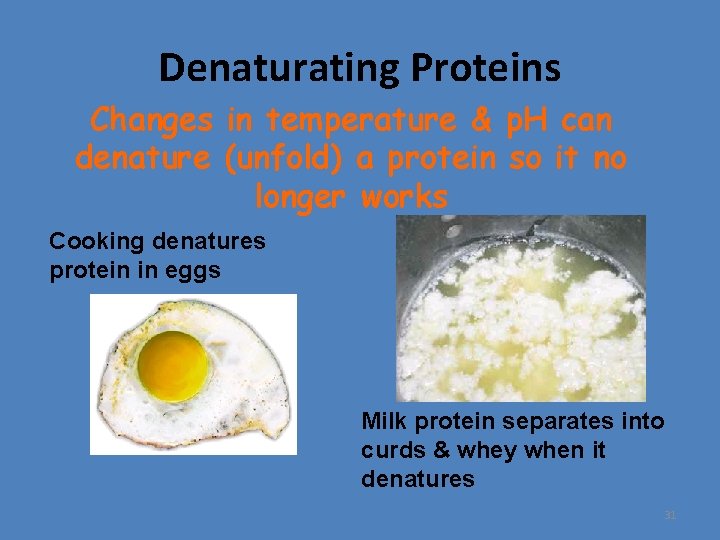
Denaturating Proteins Changes in temperature & p. H can denature (unfold) a protein so it no longer works Cooking denatures protein in eggs Milk protein separates into curds & whey when it denatures 31
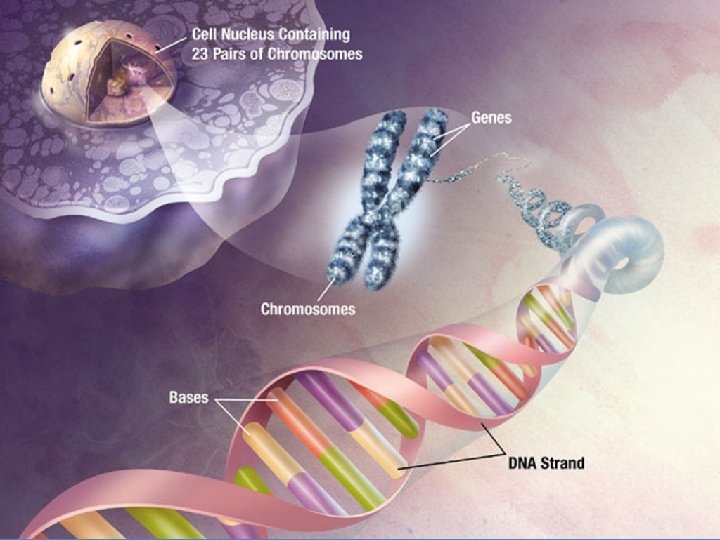
Nucleic Acids Store hereditary information Contain information for making all the body’s proteins Two types exist --- DNA & RNA 32
33
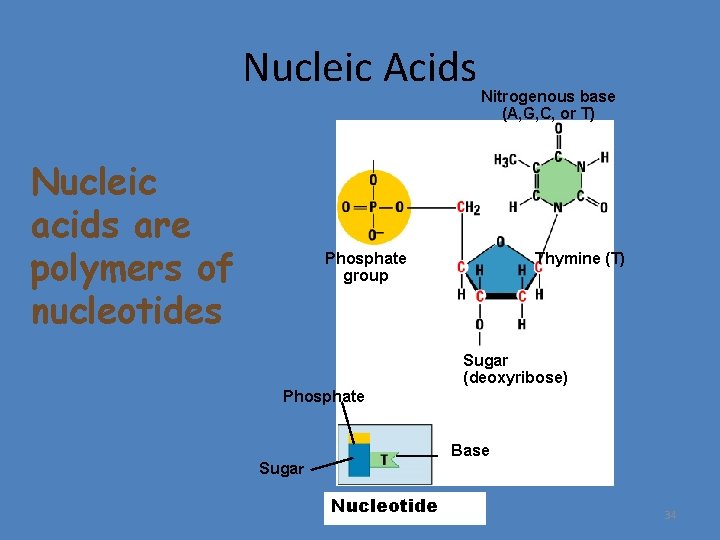
Nucleic Acids Nucleic acids are polymers of nucleotides Nitrogenous base (A, G, C, or T) Phosphate group Thymine (T) Sugar (deoxyribose) Phosphate Base Sugar Nucleotide 34
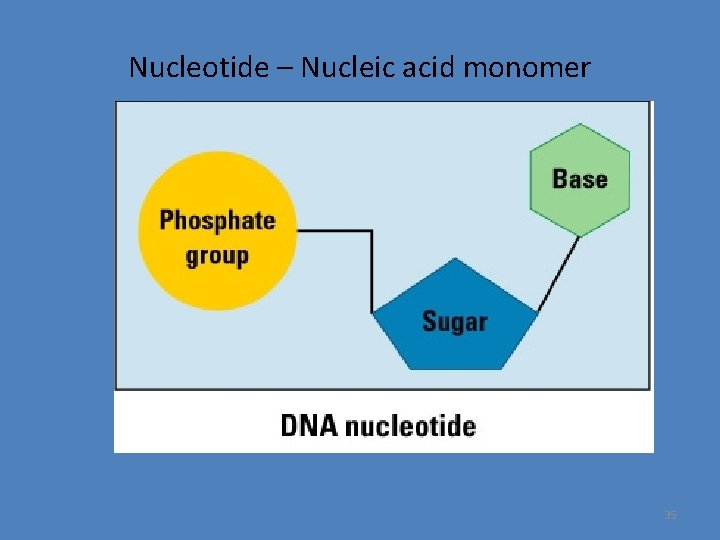
Nucleotide – Nucleic acid monomer 35
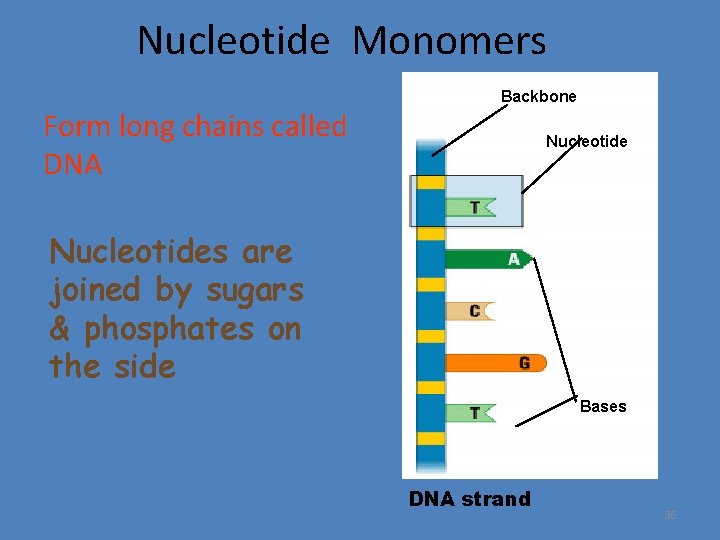
Nucleotide Monomers Backbone Form long chains called DNA Nucleotides are joined by sugars & phosphates on the side Bases DNA strand 36
Macromolecules 37
Macromolecules 38
- Slides: 38