
Carbon Transformations in Matter and Energy Environmental Literacy
Carbon: Transformations in Matter and Energy Environmental Literacy Project Michigan State University Animals Unit Activity 5. 1: Tracing the Processes of Cows Growing: Digestion and Biosynthesis 1
Unit Map You are here 2
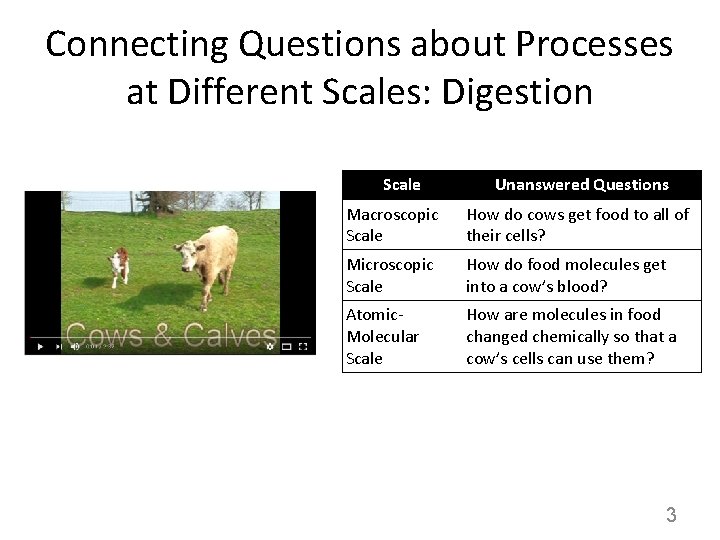
Connecting Questions about Processes at Different Scales: Digestion Scale Unanswered Questions Macroscopic Scale How do cows get food to all of their cells? Microscopic Scale How do food molecules get into a cow’s blood? Atomic. Molecular Scale How are molecules in food changed chemically so that a cow’s cells can use them? 3
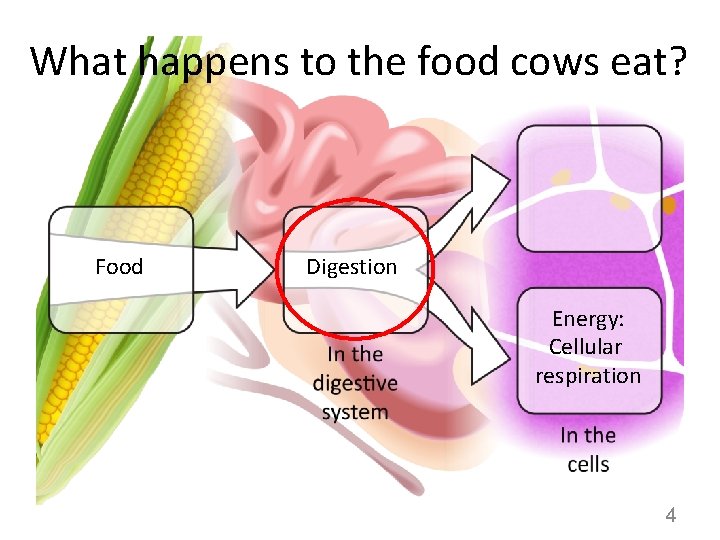
What happens to the food cows eat? Food Digestion Energy: Cellular respiration 4
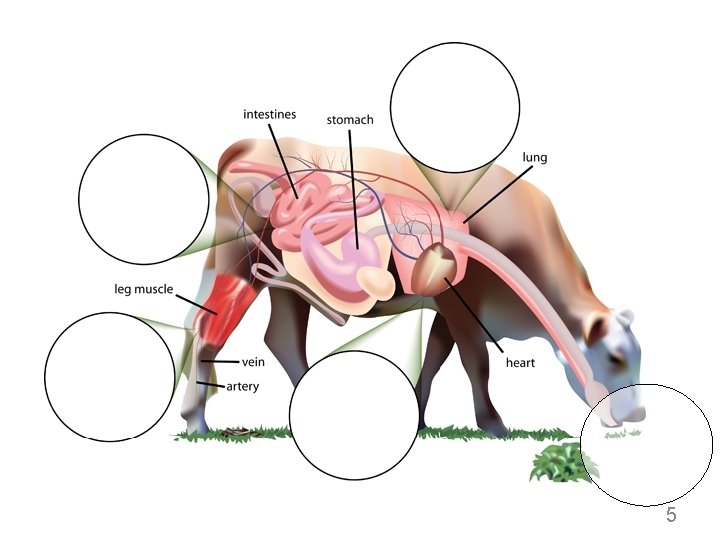
5
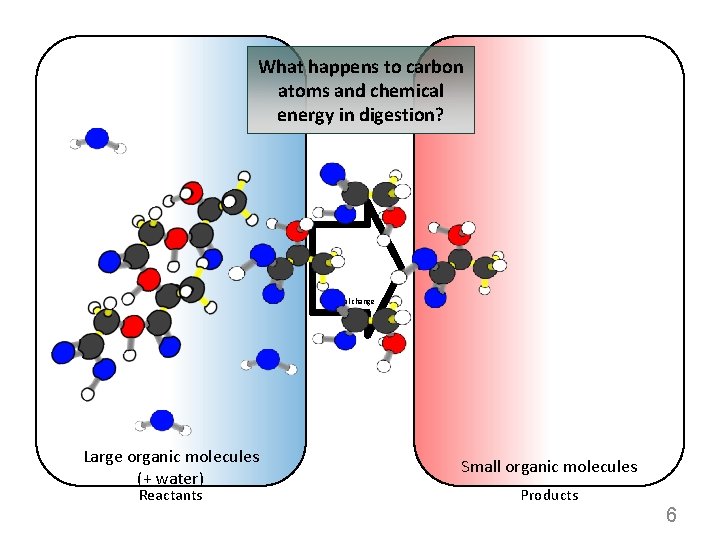
What happens to carbon atoms and chemical energy in digestion? Chemical change Large organic molecules (+ water) Reactants Small organic molecules Products 6
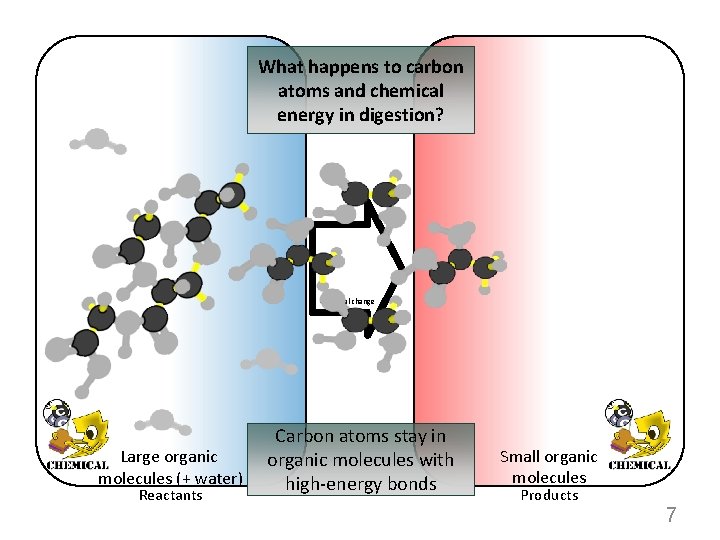
What happens to carbon atoms and chemical energy in digestion? Chemical change Large organic molecules (+ water) Reactants Carbon atoms stay in organic molecules with high-energy bonds Small organic molecules Products 7
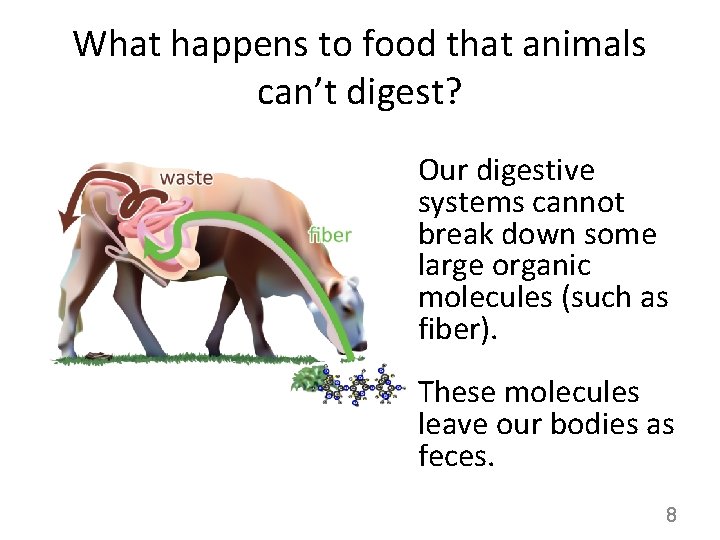
What happens to food that animals can’t digest? Our digestive systems cannot break down some large organic molecules (such as fiber). These molecules leave our bodies as feces. 8
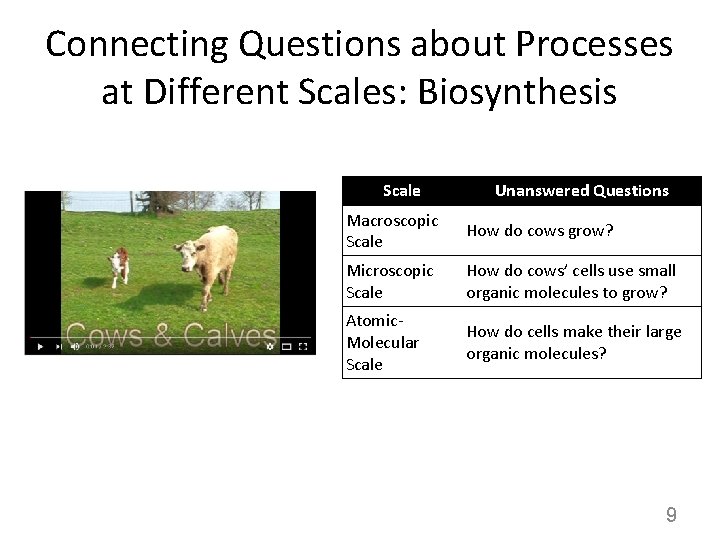
Connecting Questions about Processes at Different Scales: Biosynthesis Scale Unanswered Questions Macroscopic Scale How do cows grow? Microscopic Scale How do cows’ cells use small organic molecules to grow? Atomic. Molecular Scale How do cells make their large organic molecules? 9
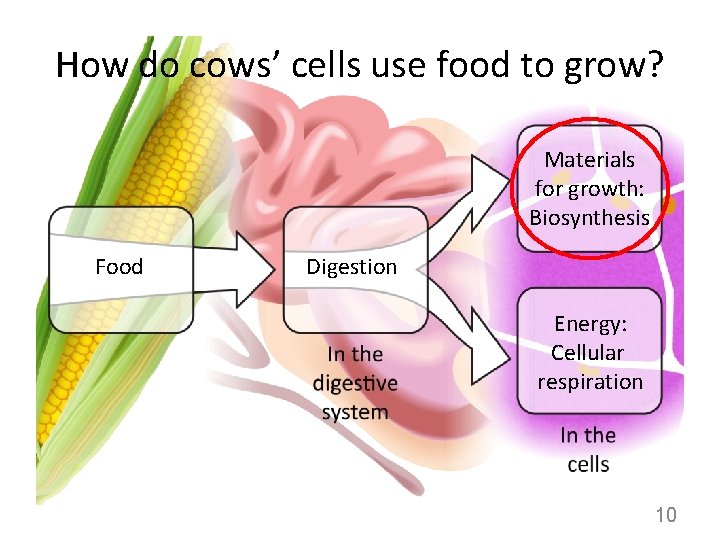
How do cows’ cells use food to grow? Materials for growth: Biosynthesis Food Digestion Energy: Cellular respiration 10
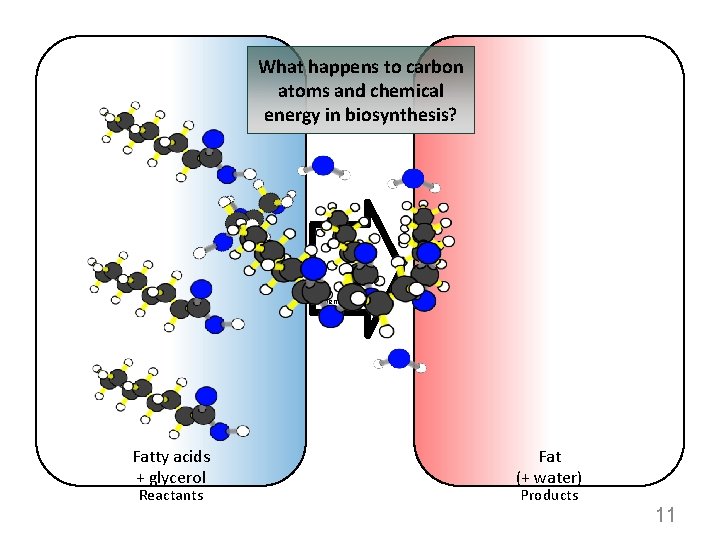
What happens to carbon atoms and chemical energy in biosynthesis? Chemical change Fatty acids + glycerol Reactants Fat (+ water) Products 11
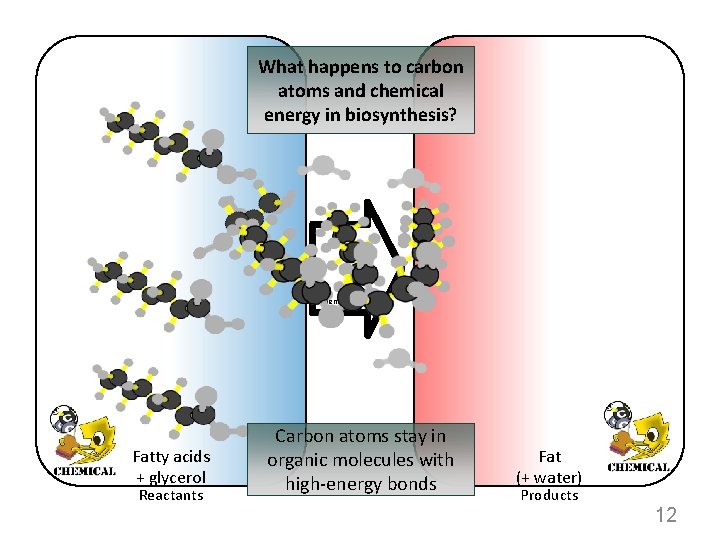
What happens to carbon atoms and chemical energy in biosynthesis? Chemical change Fatty acids + glycerol Reactants Carbon atoms stay in organic molecules with high-energy bonds Fat (+ water) Products 12
How do animal cells use glucose? • The diets of most animals—including mealworms, cows, and humans—include lots of carbohydrates made of glucose molecules bonded together (starch and cellulose/fiber) • This means that lots of glucose travels to animal cells in the blood. • BUT animal cells don’t make carbohydrates with glucose molecules bonded together (starch and cellulose/fiber) • How do they use the glucose? 13
Animal cells use glucose in two ways 1. Animal cells can combine glucose molecules with oxygen to release chemical energy in cellular respiration. – This is how all cells get the energy they need for their functions. 2. Animal cells can make fat molecules from glucose molecules. – Glycerol and fatty acids are made of the same atoms —C, H, and O—as glucose molecules – Animals use fats to store chemical energy in C-C and C-H bonds 14
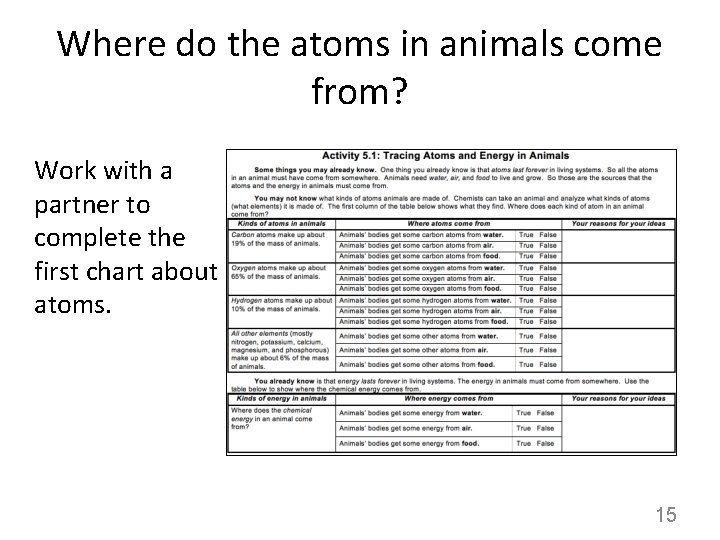
Where do the atoms in animals come from? Work with a partner to complete the first chart about atoms. 15
Remembering Nutrition Labels Animal cells are made of: • Water: around 60% (H 2 O) • Large organic molecules: less than 40% – Fats: Made of C, H, and O atoms – Proteins: Made of C, H, O, and N atoms – (Some other large organic molecules such as DNA, made from C, H, O, N, and P atoms) • Minerals: around 1% – Many kinds of atoms including sodium, and calcium, magnesium 16
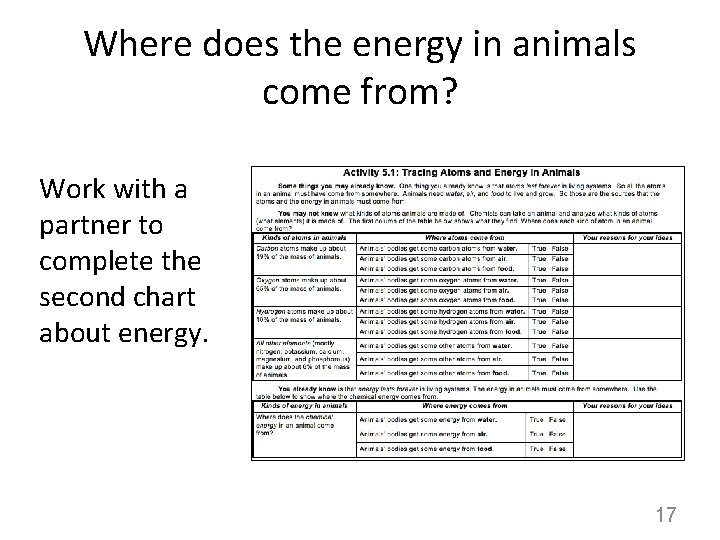
Where does the energy in animals come from? Work with a partner to complete the second chart about energy. 17

Chemical Energy • Chemical energy is stored in C-C and C-H bonds. • Does water have chemical energy? • Does air have chemical energy? • Does food have chemical energy? 18
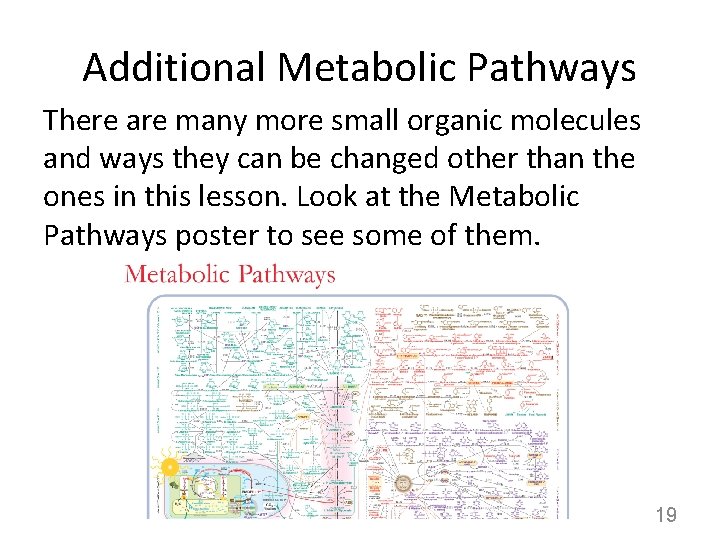
Additional Metabolic Pathways There are many more small organic molecules and ways they can be changed other than the ones in this lesson. Look at the Metabolic Pathways poster to see some of them. 19
- Slides: 19