
Carbon Transformations in Matter and Energy Environmental Literacy
Carbon: Transformations in Matter and Energy Environmental Literacy Project Michigan State University Ecosystems Unit Activity 2. 1 Predictions and Planning for the Meadow Simulation 1
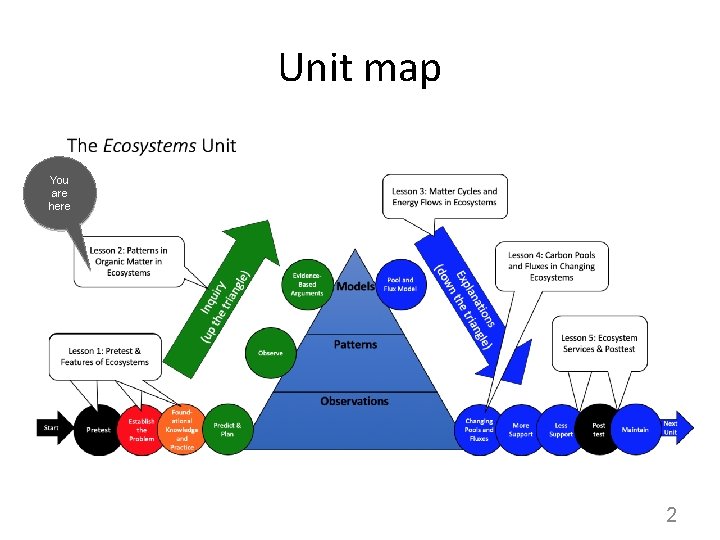
Unit map You are here 2
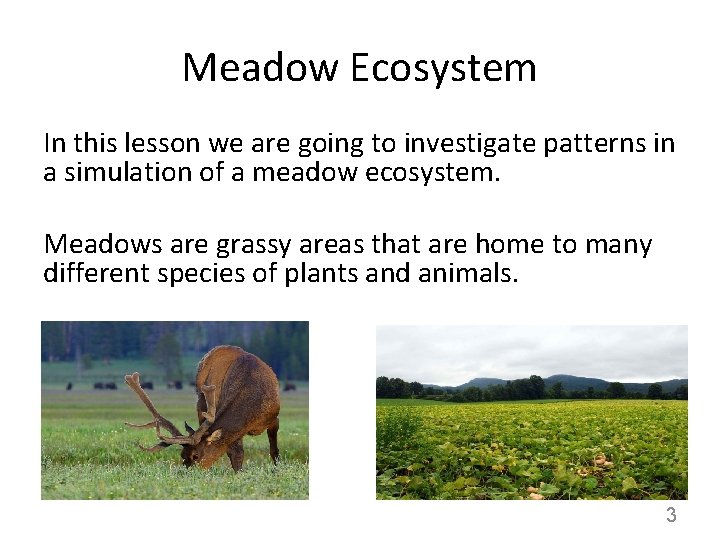
Meadow Ecosystem In this lesson we are going to investigate patterns in a simulation of a meadow ecosystem. Meadows are grassy areas that are home to many different species of plants and animals. 3
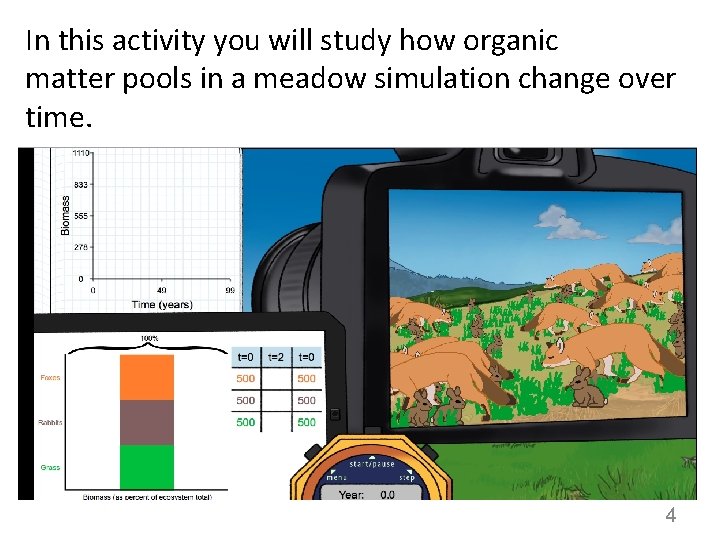
In this activity you will study how organic matter pools in a meadow simulation change over time. 4
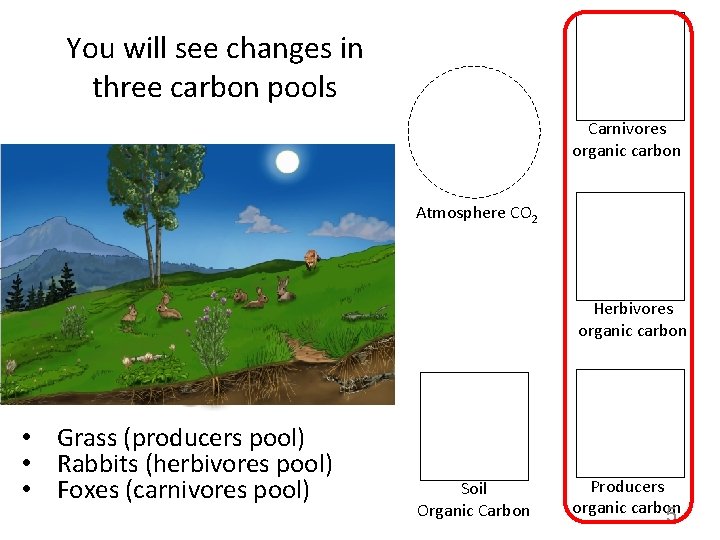
You will see changes in three carbon pools Carnivores organic carbon Atmosphere CO 2 Herbivores organic carbon • Grass (producers pool) • Rabbits (herbivores pool) • Foxes (carnivores pool) Soil Organic Carbon Producers organic carbon 5
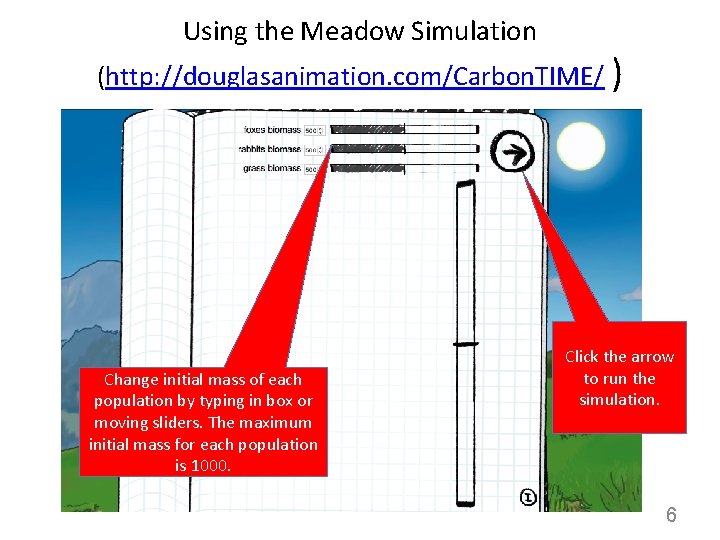
Using the Meadow Simulation (http: //douglasanimation. com/Carbon. TIME/ ) Change initial mass of each population by typing in box or moving sliders. The maximum initial mass for each population is 1000. Click the arrow to run the simulation. 6
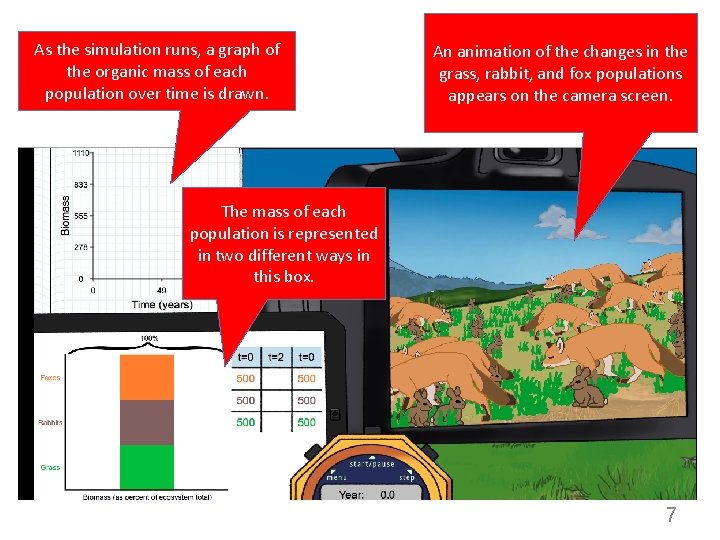
As the simulation runs, a graph of the organic mass of each population over time is drawn. An animation of the changes in the grass, rabbit, and fox populations appears on the camera screen. The mass of each population is represented in two different ways in this box. 7
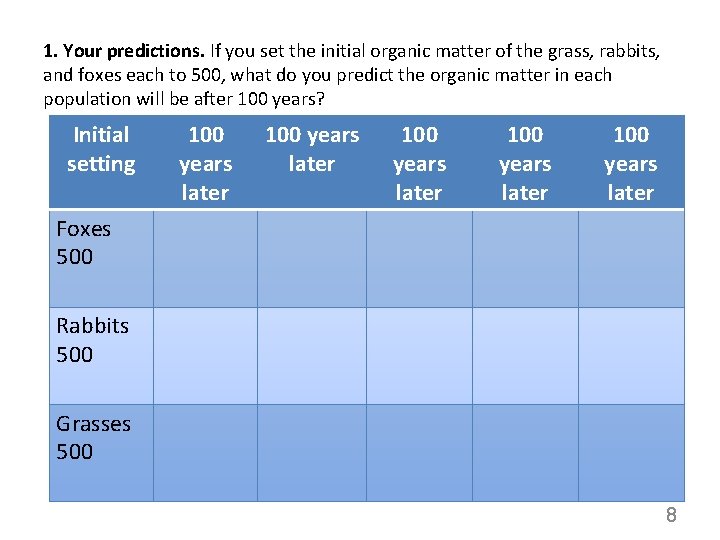
1. Your predictions. If you set the initial organic matter of the grass, rabbits, and foxes each to 500, what do you predict the organic matter in each population will be after 100 years? Initial setting 100 years later 100 years later Foxes 500 Rabbits 500 Grasses 500 8
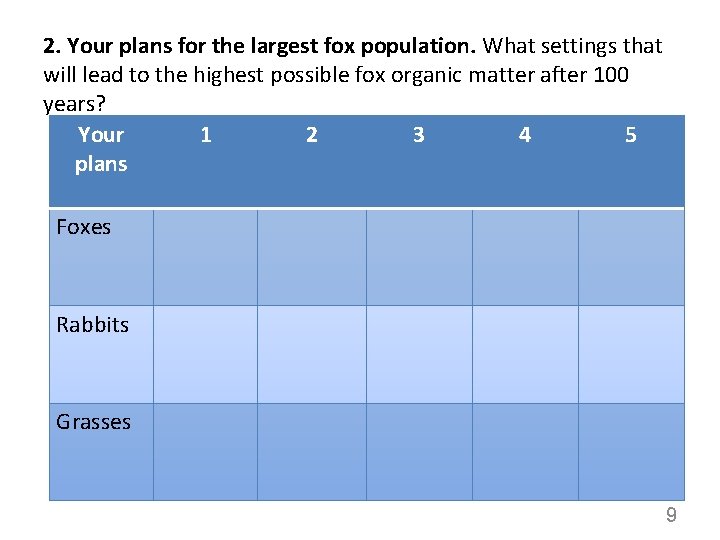
2. Your plans for the largest fox population. What settings that will lead to the highest possible fox organic matter after 100 years? Your 1 2 3 4 5 plans Foxes Rabbits Grasses 9
- Slides: 9