
Carbon The Molecular Diversity of Life I Importance

Carbon & The Molecular Diversity of Life
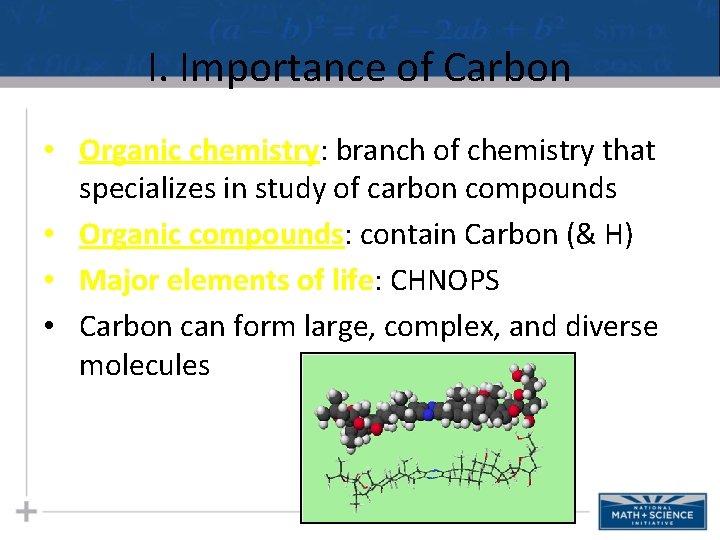
I. Importance of Carbon • Organic chemistry: branch of chemistry that specializes in study of carbon compounds • Organic compounds: contain Carbon (& H) • Major elements of life: CHNOPS • Carbon can form large, complex, and diverse molecules
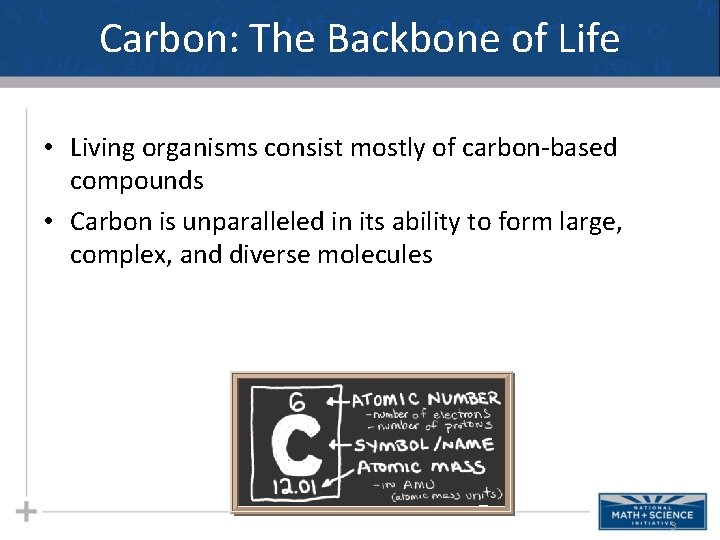
Carbon: The Backbone of Life • Living organisms consist mostly of carbon-based compounds • Carbon is unparalleled in its ability to form large, complex, and diverse molecules 3
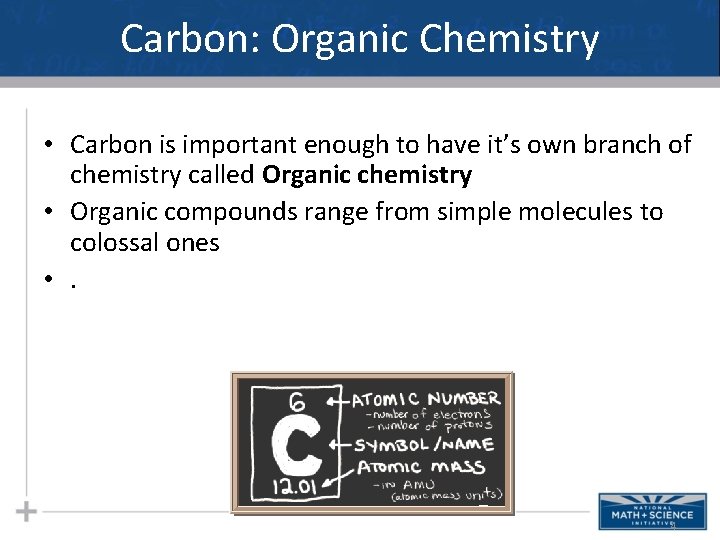
Carbon: Organic Chemistry • Carbon is important enough to have it’s own branch of chemistry called Organic chemistry • Organic compounds range from simple molecules to colossal ones • . 4
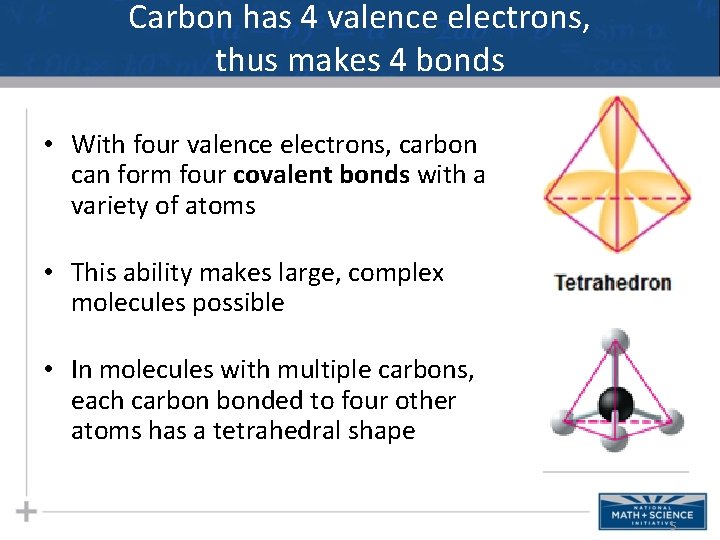
Carbon has 4 valence electrons, thus makes 4 bonds • With four valence electrons, carbon can form four covalent bonds with a variety of atoms • This ability makes large, complex molecules possible • In molecules with multiple carbons, each carbon bonded to four other atoms has a tetrahedral shape 5
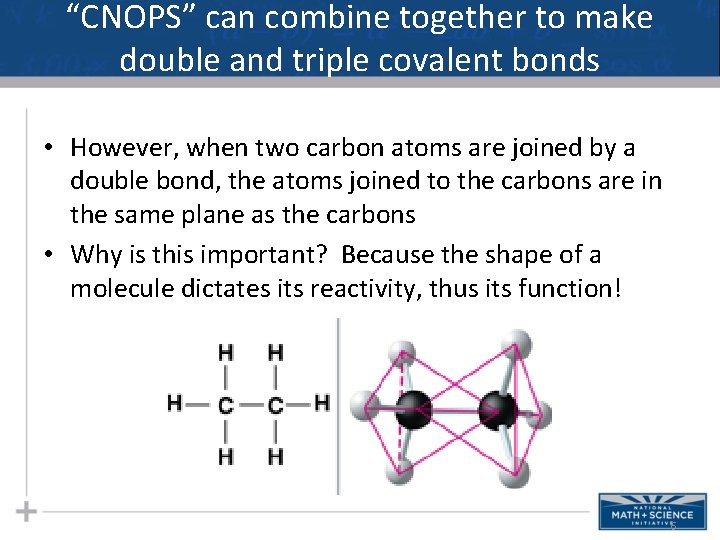
“CNOPS” can combine together to make double and triple covalent bonds • However, when two carbon atoms are joined by a double bond, the atoms joined to the carbons are in the same plane as the carbons • Why is this important? Because the shape of a molecule dictates its reactivity, thus its function! 6
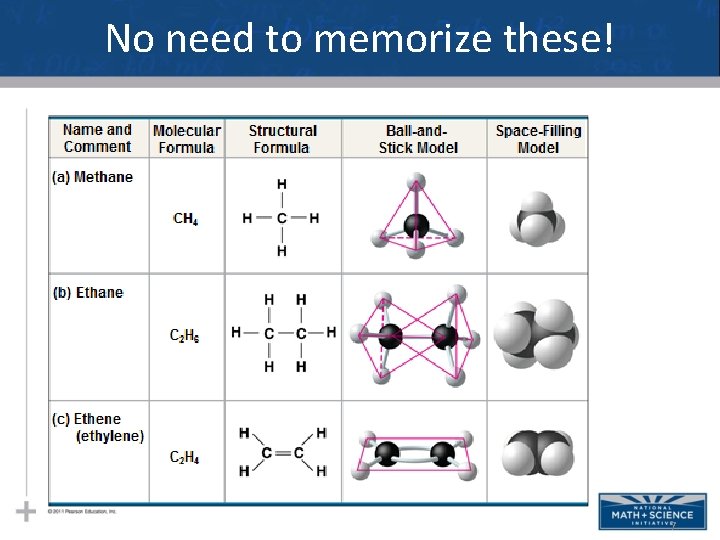
No need to memorize these! 7
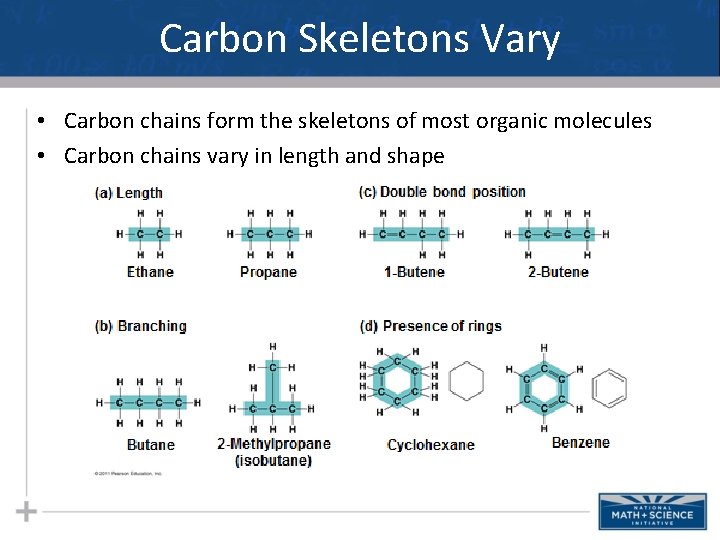
Carbon Skeletons Vary • Carbon chains form the skeletons of most organic molecules • Carbon chains vary in length and shape
Hydrocarbons • Hydrocarbons are organic molecules consisting of only carbon and hydrogen • Many organic molecules, such as fats, have hydrocarbon components • Hydrocarbons can undergo reactions that release a large amount of energy 9

Fats Nucleus Fat droplets 10 m (a) Part of a human adipose cell (b) A fat molecule
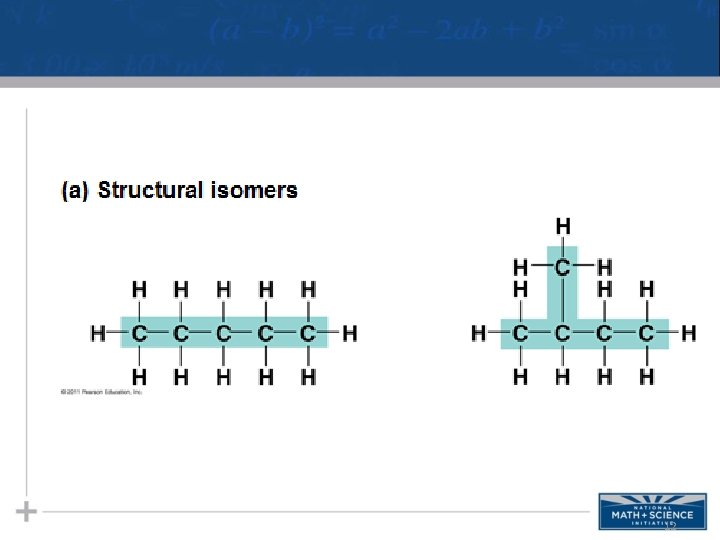
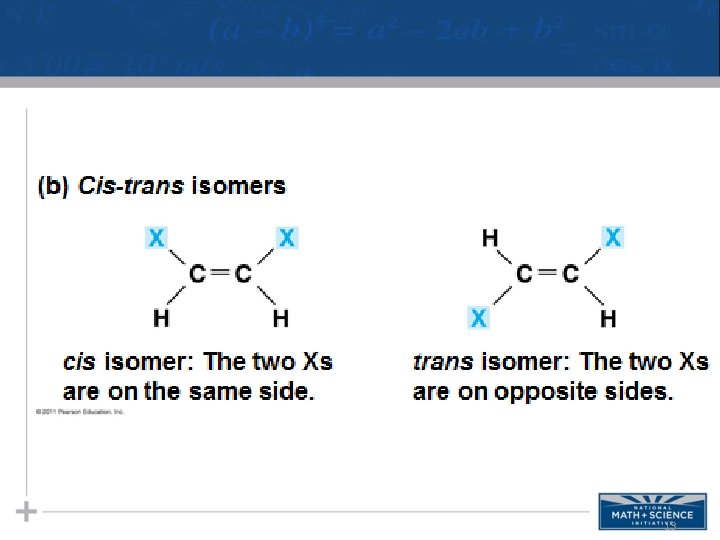
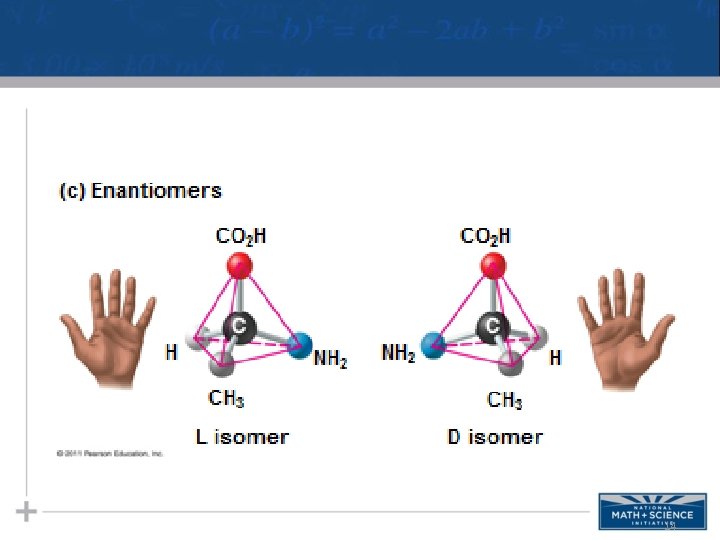
Isomers • Isomers are compounds with the same molecular formula but different structures, thus different properties. – Structural isomers have different covalent arrangements of their atoms – Cis-trans isomers have the same covalent bonds but differ in spatial arrangements – Enantiomers are isomers that are mirror images of each other & rotate light differently 11
12
13
14
More detail than you need, but cool none the less! • Enantiomers are important in the pharmaceutical industry • Two enantiomers of a drug may have different effects • Usually one isomer is biologically active • Differing effects of enantiomers demonstrate that organisms are sensitive to even subtle variations in molecules 15
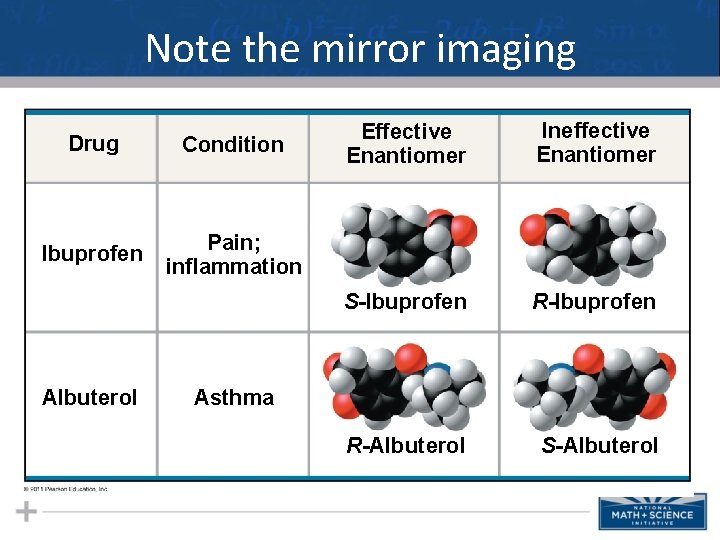
Note the mirror imaging Drug Condition Ibuprofen Pain; inflammation Albuterol Effective Enantiomer Ineffective Enantiomer S-Ibuprofen R-Albuterol S-Albuterol Asthma
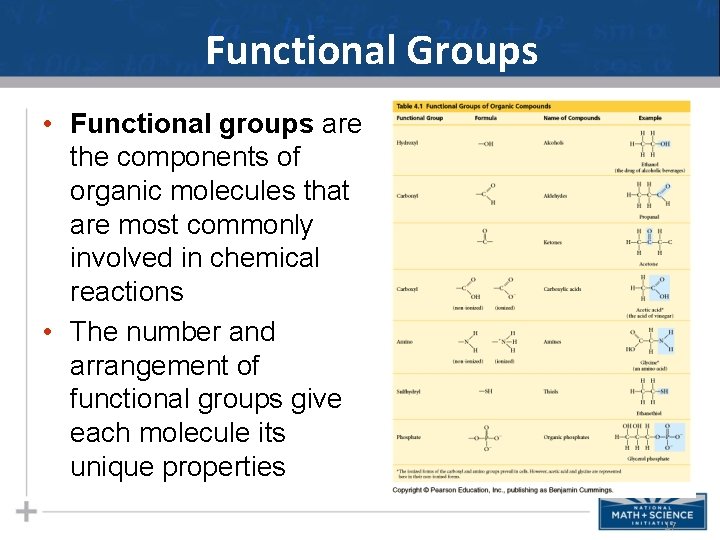
Functional Groups • Functional groups are the components of organic molecules that are most commonly involved in chemical reactions • The number and arrangement of functional groups give each molecule its unique properties 17
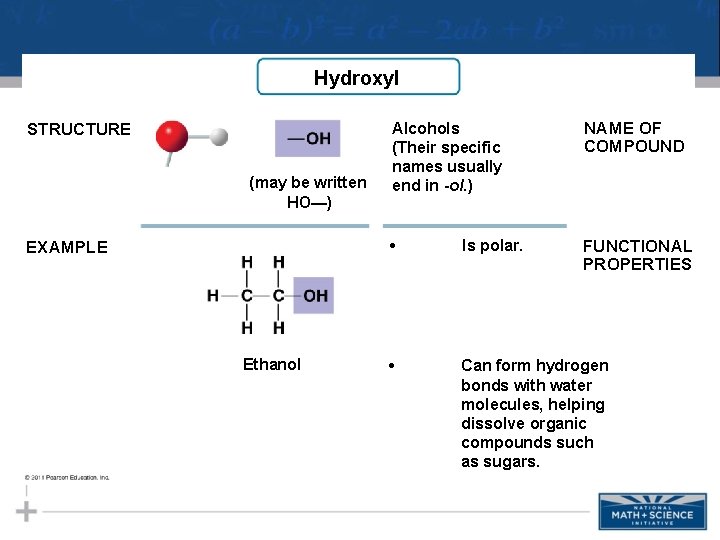
Hydroxyl STRUCTURE (may be written HO—) EXAMPLE Ethanol Alcohols (Their specific names usually end in -ol. ) NAME OF COMPOUND • Is polar. FUNCTIONAL PROPERTIES • Can form hydrogen bonds with water molecules, helping dissolve organic compounds such as sugars.
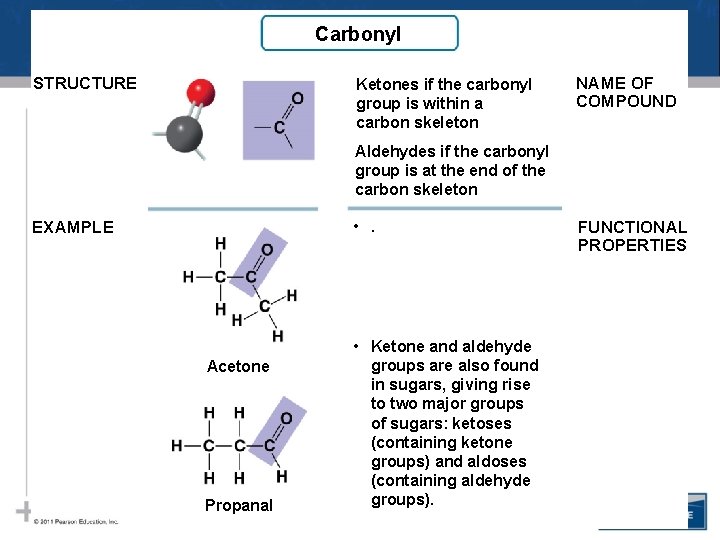
Carbonyl STRUCTURE Ketones if the carbonyl group is within a carbon skeleton NAME OF COMPOUND Aldehydes if the carbonyl group is at the end of the carbon skeleton • . EXAMPLE Acetone Propanal • Ketone and aldehyde groups are also found in sugars, giving rise to two major groups of sugars: ketoses (containing ketone groups) and aldoses (containing aldehyde groups). FUNCTIONAL PROPERTIES
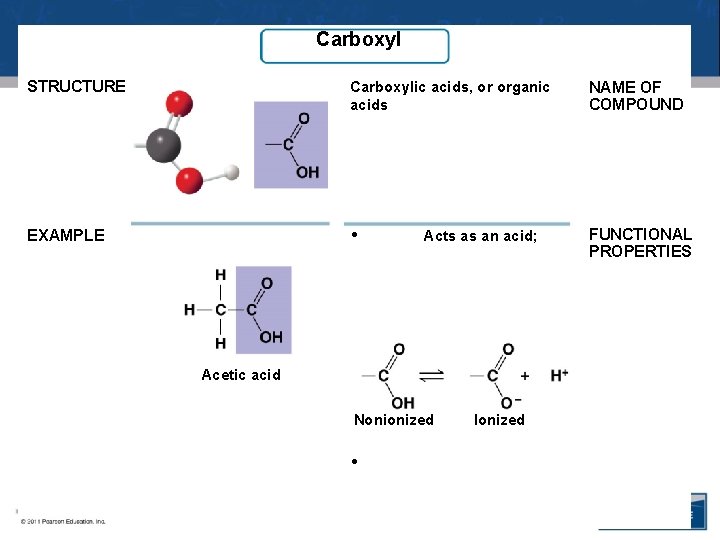
Carboxyl STRUCTURE Carboxylic acids, or organic acids NAME OF COMPOUND EXAMPLE • FUNCTIONAL PROPERTIES Acts as an acid; Acetic acid Nonionized • Ionized
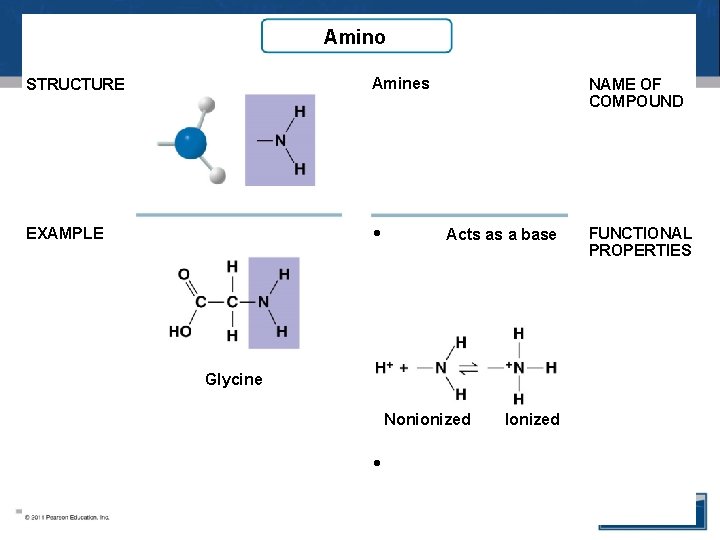
Amino STRUCTURE Amines EXAMPLE • NAME OF COMPOUND Acts as a base Glycine Nonionized • Ionized FUNCTIONAL PROPERTIES
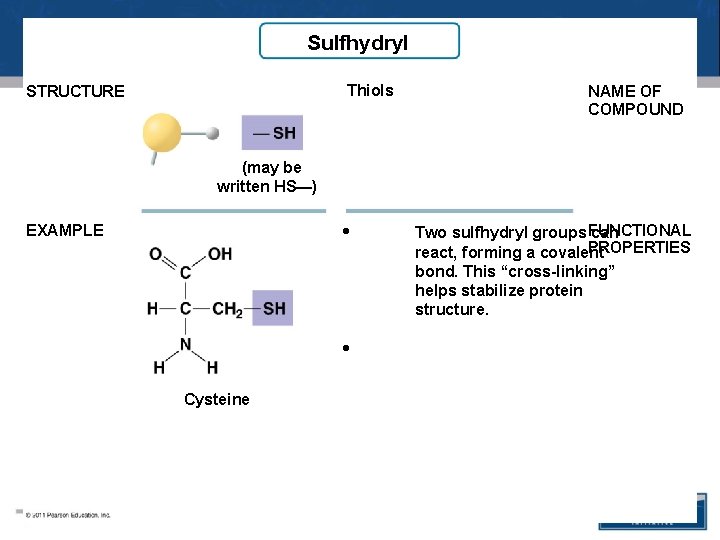
Sulfhydryl Thiols STRUCTURE NAME OF COMPOUND (may be written HS—) • EXAMPLE • Cysteine Two sulfhydryl groups FUNCTIONAL can PROPERTIES react, forming a covalent bond. This “cross-linking” helps stabilize protein structure.
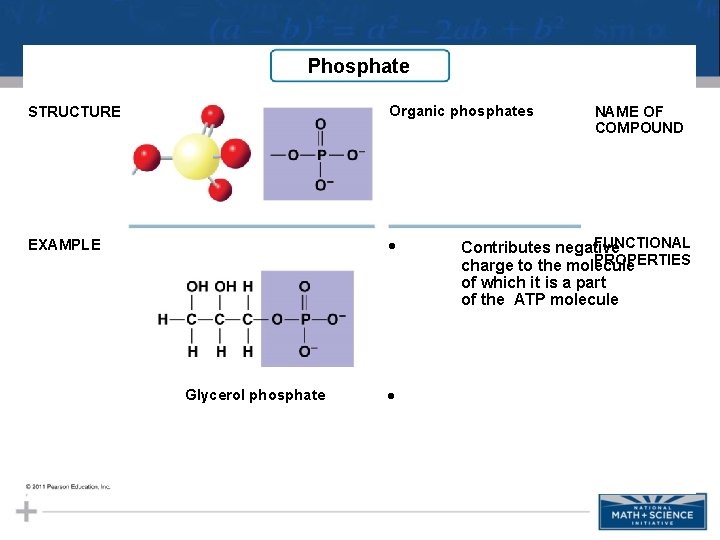
Phosphate STRUCTURE Organic phosphates EXAMPLE • Glycerol phosphate • NAME OF COMPOUND FUNCTIONAL Contributes negative PROPERTIES charge to the molecule of which it is a part of the ATP molecule
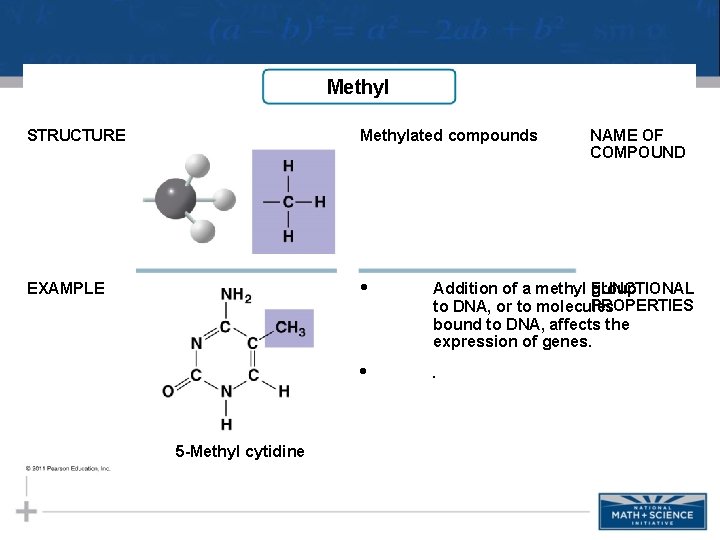
Methyl STRUCTURE Methylated compounds EXAMPLE • Addition of a methyl FUNCTIONAL group PROPERTIES to DNA, or to molecules bound to DNA, affects the expression of genes. • . 5 -Methyl cytidine NAME OF COMPOUND
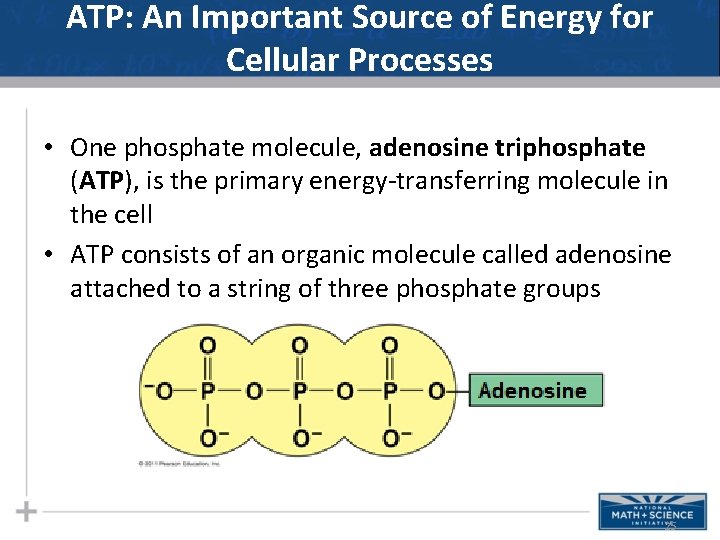
ATP: An Important Source of Energy for Cellular Processes • One phosphate molecule, adenosine triphosphate (ATP), is the primary energy-transferring molecule in the cell • ATP consists of an organic molecule called adenosine attached to a string of three phosphate groups 25
Final Thoughts • The versatility of carbon makes possible the great diversity of organic molecules • Variation at the molecular level lies at the foundation of all biological diversity 26
- Slides: 26