
Carbon Monitoring system sistm noun 1 a set
Carbon Monitoring sys·tem ˈsistəm/ noun 1. a set of connected things or parts forming a complex whole, in particular. a set of things working together as parts of a mechanism or an interconnecting network 2. a set of principles or procedures according to which something is done; an organized scheme or method.
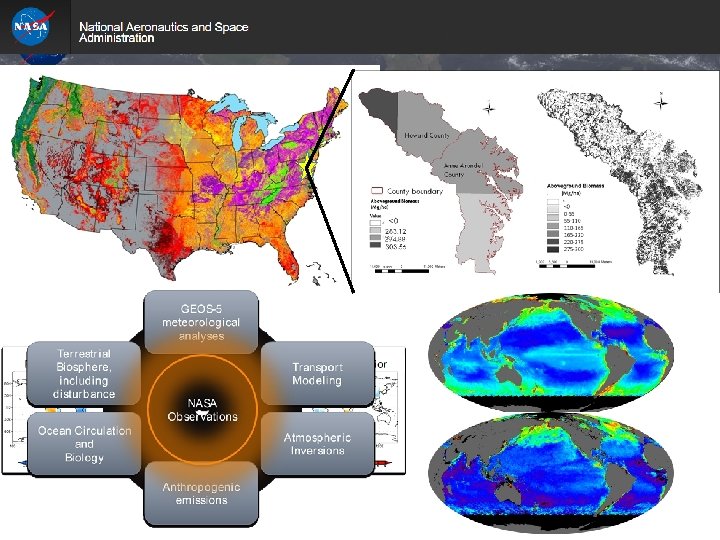
NASA-CMS Phase 1 Examples
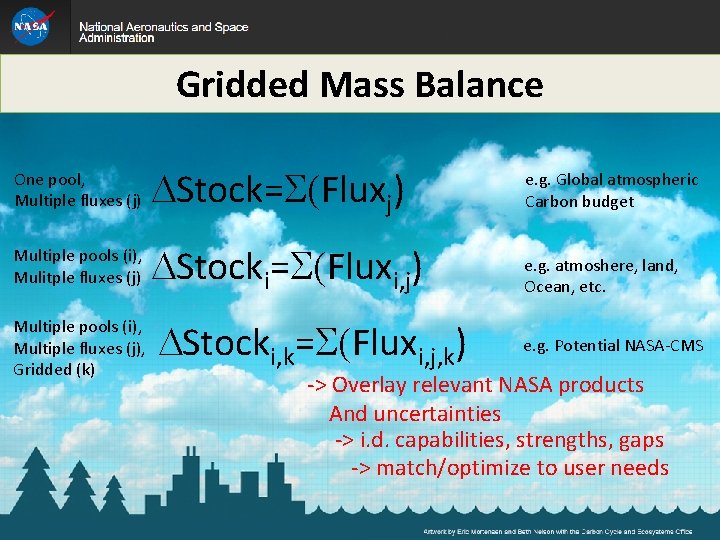
Gridded Mass Balance One pool, Multiple fluxes (j) DStock=S(Fluxj) e. g. Global atmospheric Carbon budget Multiple pools (i), Mulitple fluxes (j) DStocki=S(Fluxi, j) e. g. atmoshere, land, Ocean, etc. Multiple pools (i), Multiple fluxes (j), Gridded (k) DStocki, k=S(Fluxi, j, k) e. g. Potential NASA-CMS -> Overlay relevant NASA products And uncertainties -> i. d. capabilities, strengths, gaps -> match/optimize to user needs
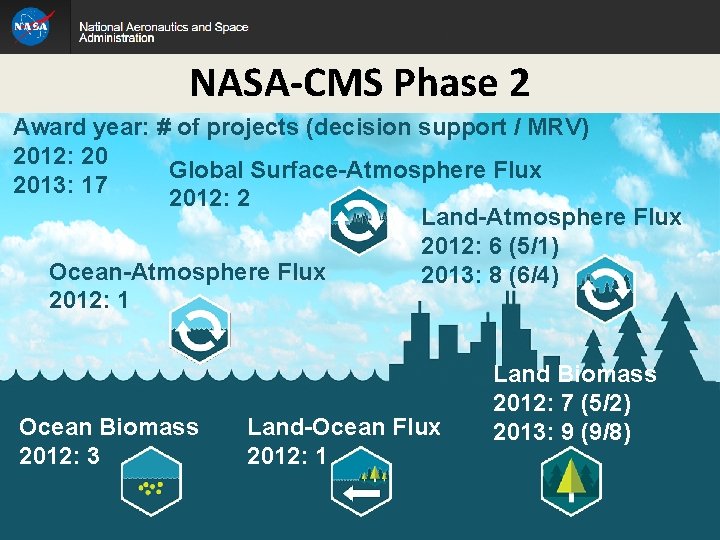
NASA-CMS Phase 2 Award year: # of projects (decision support / MRV) 2012: 20 Global Surface-Atmosphere Flux 2013: 17 2012: 2 Land-Atmosphere Flux 2012: 6 (5/1) Ocean-Atmosphere Flux 2013: 8 (6/4) 2012: 1 Ocean Biomass 2012: 3 Land-Ocean Flux 2012: 1 Land Biomass 2012: 7 (5/2) 2013: 9 (9/8)
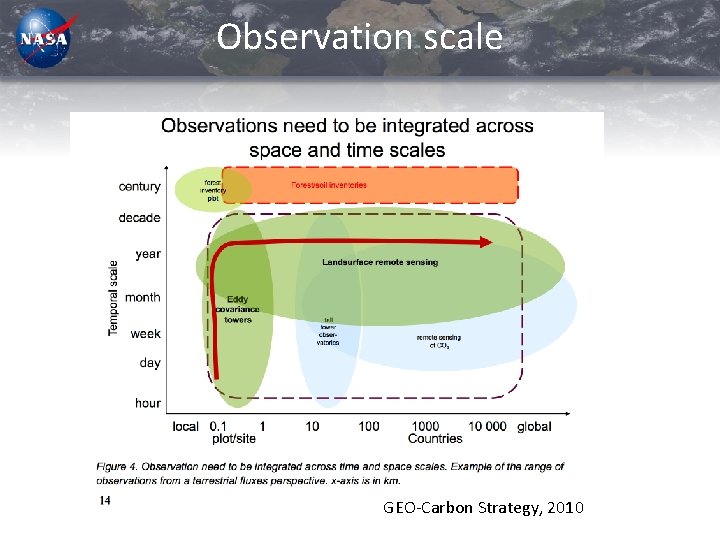
Observation scale GEO-Carbon Strategy, 2010
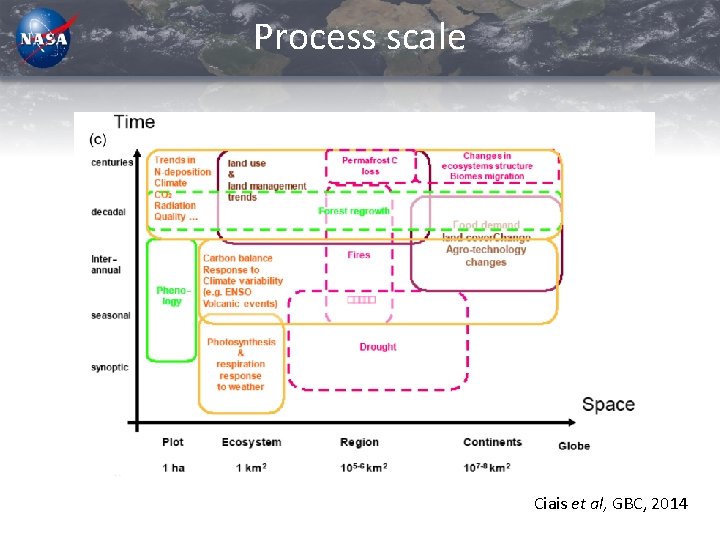
Process scale Ciais et al, GBC, 2014
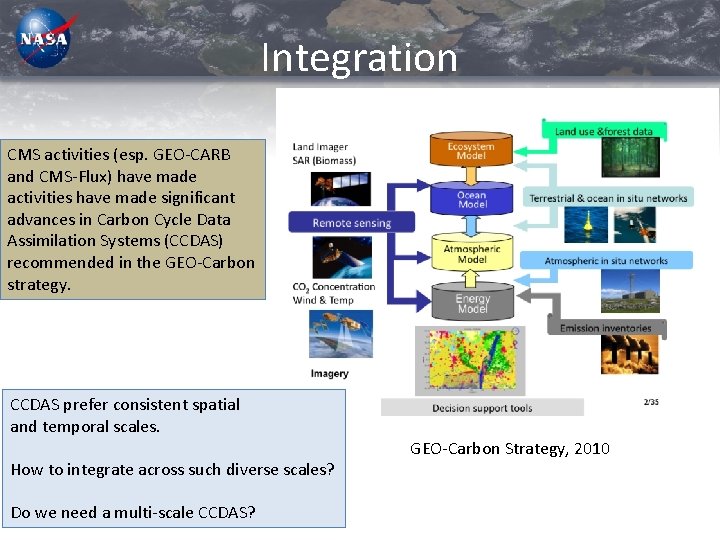
Integration CMS activities (esp. GEO-CARB and CMS-Flux) have made activities have made significant advances in Carbon Cycle Data Assimilation Systems (CCDAS) recommended in the GEO-Carbon strategy. CCDAS prefer consistent spatial and temporal scales. How to integrate across such diverse scales? Do we need a multi-scale CCDAS? GEO-Carbon Strategy, 2010
Towards a CMS: two approaches • “Bottom-up” – Find “systems-of-opportunity” that build collaborations leveraging existing projects – Find projects that are performing complimentary activities • “Top-down” – Review national and international documents related to CMS, e. g. , GEO-Carbon Strategy. • Assess relevance to CMS – Assess requirements from current and potential users – Recommend steps to build CMS framework(s)
- Slides: 8