
Carbon Isomerism Importance of Isomeric Forms CARBON Atomic
Carbon Isomerism Importance of Isomeric Forms
CARBON Atomic #: 6 1 st level: 2 2 nd Level: 4 # of bonds able to form – 4 - allows the formation of numerous different compounds - compounds that contain carbon are called ORGANIC except for a few very common ones such as CO and CO 2
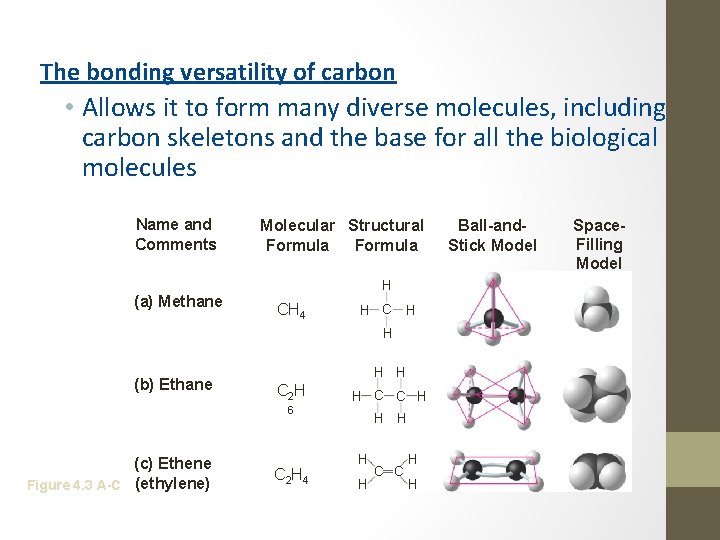
The bonding versatility of carbon • Allows it to form many diverse molecules, including carbon skeletons and the base for all the biological molecules Name and Comments Molecular Structural Formula H (a) Methane CH 4 H C H H (b) Ethane H H C 2 H H C C H 6 (c) Ethene Figure 4. 3 A-C (ethylene) C 2 H 4 H H C C H H Ball-and. Stick Model Space. Filling Model
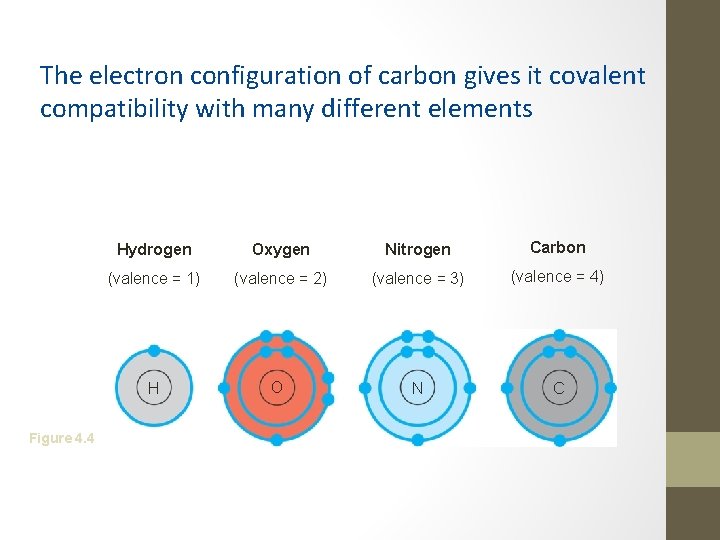
The electron configuration of carbon gives it covalent compatibility with many different elements Figure 4. 4 Hydrogen Oxygen Nitrogen Carbon (valence = 1) (valence = 2) (valence = 3) (valence = 4) H O N C
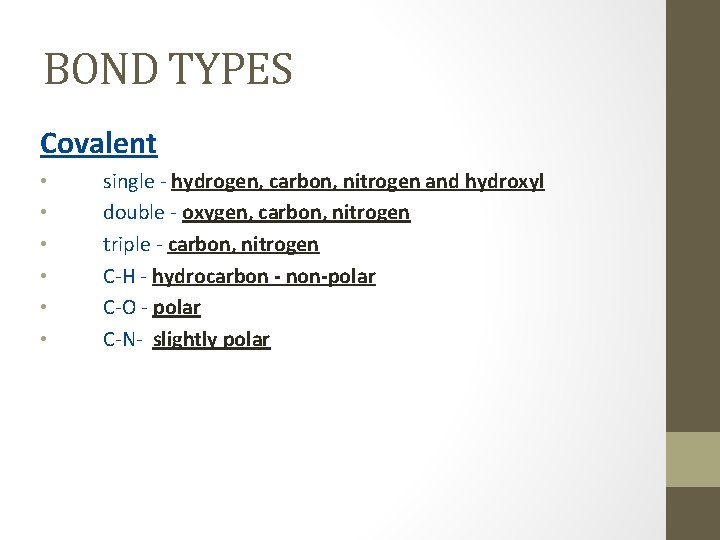
BOND TYPES Covalent • • • single - hydrogen, carbon, nitrogen and hydroxyl double - oxygen, carbon, nitrogen triple - carbon, nitrogen C-H - hydrocarbon - non-polar C-O - polar C-N- slightly polar
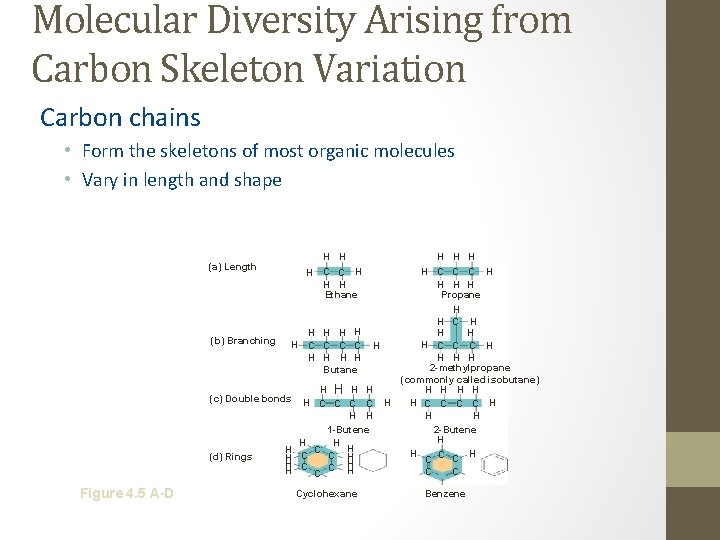
Molecular Diversity Arising from Carbon Skeleton Variation Carbon chains • Form the skeletons of most organic molecules • Vary in length and shape (a) Length H H H C C H H H Ethane H H C C C H H Propane H H C H H H H (b) Branching H C C H H C C C H H H H 2 -methylpropane Butane (commonly called isobutane) H H H H (c) Double bonds H H C C C C H H H 1 -Butene 2 -Butene H H C C H (d) Rings H C C H H C C C Figure 4. 5 A-D Cyclohexane Benzene
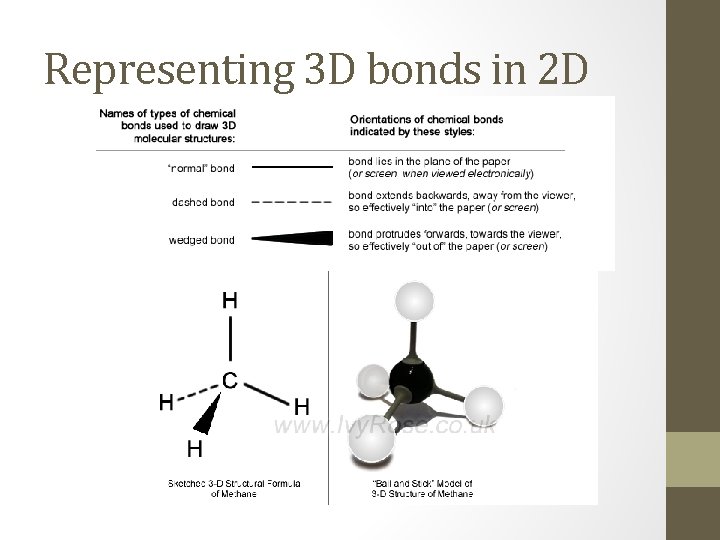
Representing 3 D bonds in 2 D
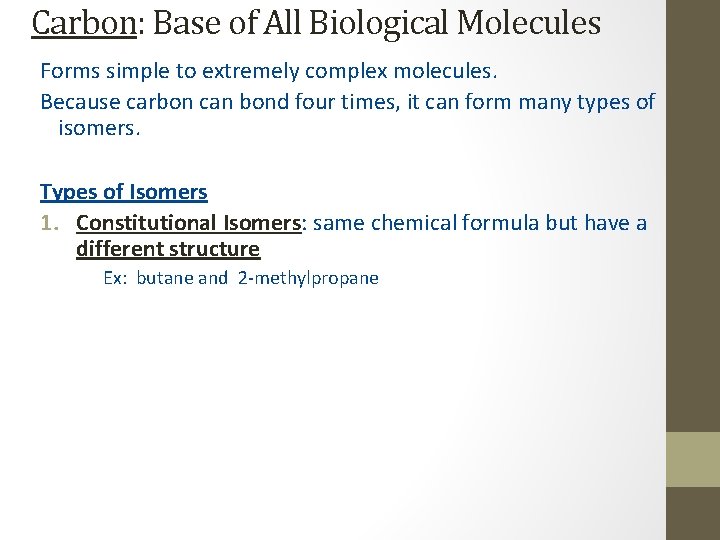
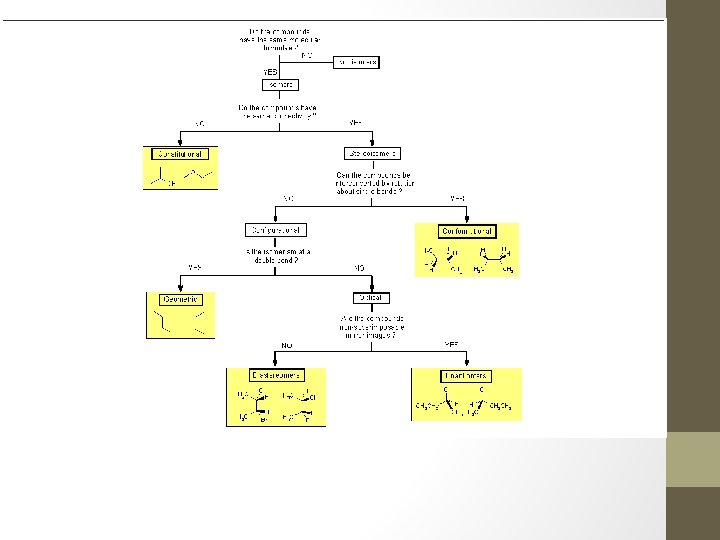
Carbon: Base of All Biological Molecules Forms simple to extremely complex molecules. Because carbon can bond four times, it can form many types of isomers. Types of Isomers 1. Constitutional Isomers: same chemical formula but have a different structure Ex: butane and 2 -methylpropane
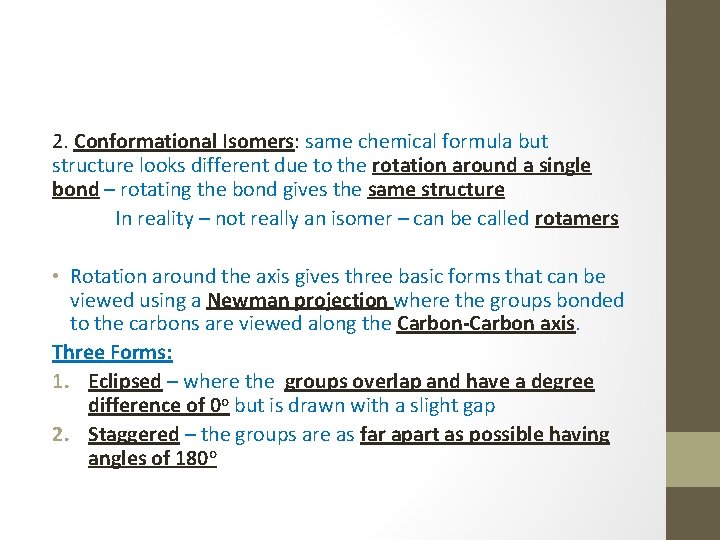
2. Conformational Isomers: same chemical formula but structure looks different due to the rotation around a single bond – rotating the bond gives the same structure In reality – not really an isomer – can be called rotamers • Rotation around the axis gives three basic forms that can be viewed using a Newman projection where the groups bonded to the carbons are viewed along the Carbon-Carbon axis. Three Forms: 1. Eclipsed – where the groups overlap and have a degree difference of 0 o but is drawn with a slight gap 2. Staggered – the groups are as far apart as possible having angles of 180 o
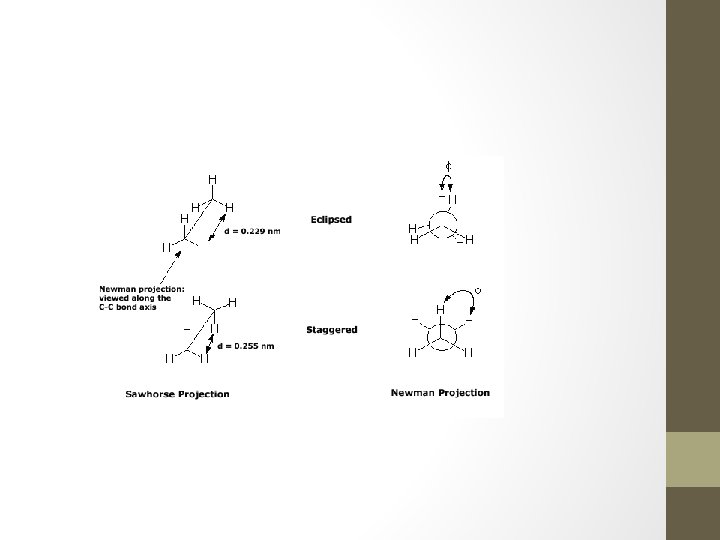
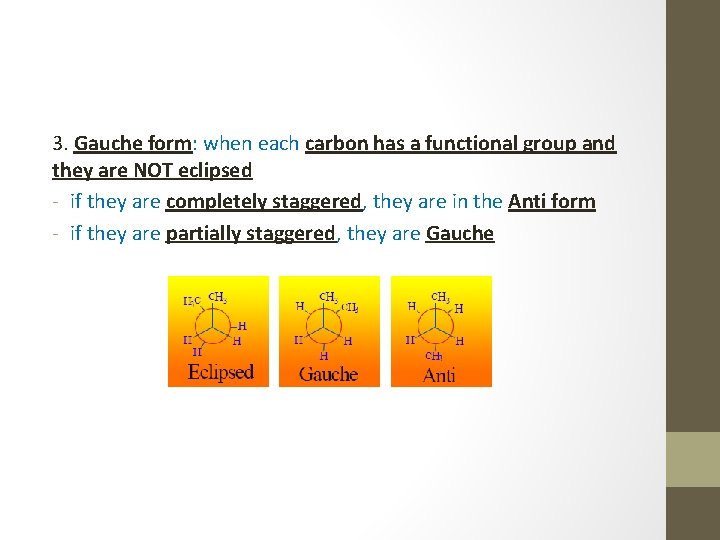
3. Gauche form: when each carbon has a functional group and they are NOT eclipsed - if they are completely staggered, they are in the Anti form - if they are partially staggered, they are Gauche
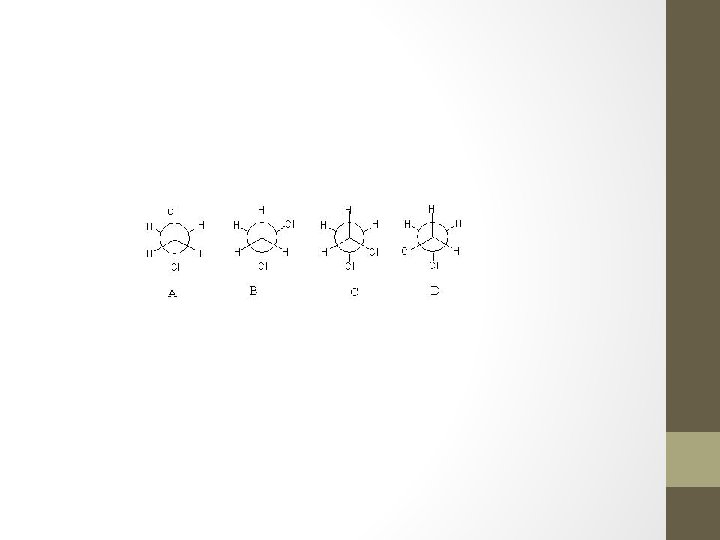
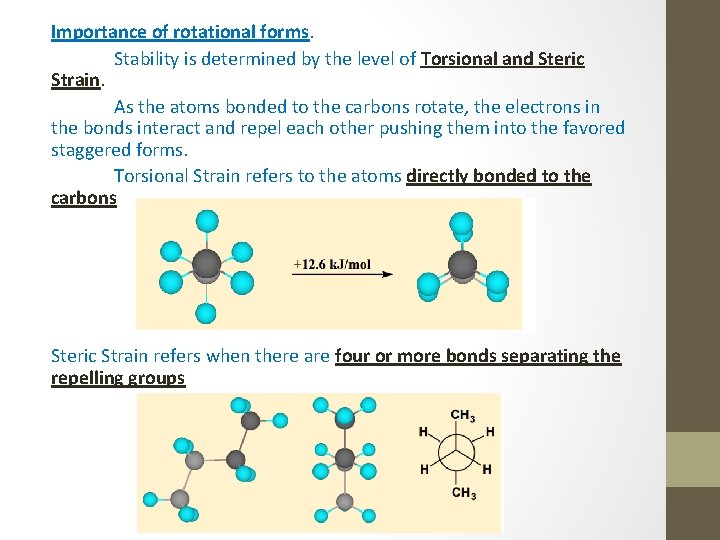
Importance of rotational forms. Stability is determined by the level of Torsional and Steric Strain. As the atoms bonded to the carbons rotate, the electrons in the bonds interact and repel each other pushing them into the favored staggered forms. Torsional Strain refers to the atoms directly bonded to the carbons Steric Strain refers when there are four or more bonds separating the repelling groups
Configurational Isomers: isomers with a different configuration that cannot be changed into one another by rotating around a single bond Two Types: 1) Geometric Isomers 2) Stereoisomers (optical isomers) - Enantiomers - Diastereomers
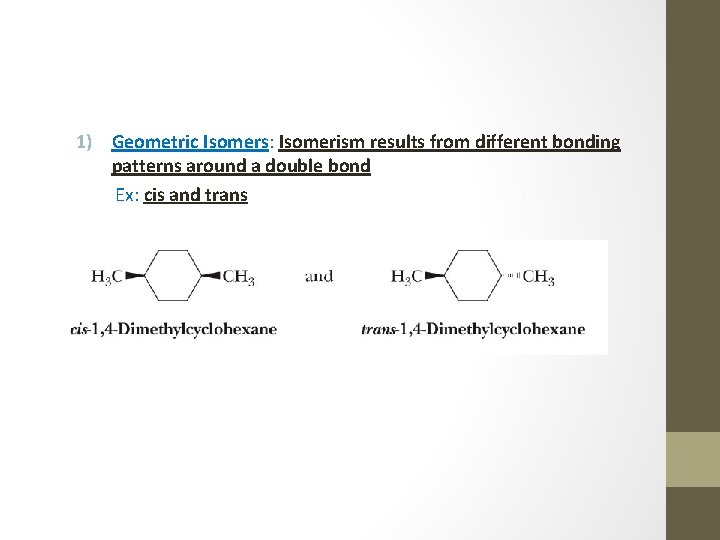
1) Geometric Isomers: Isomerism results from different bonding patterns around a double bond Ex: cis and trans
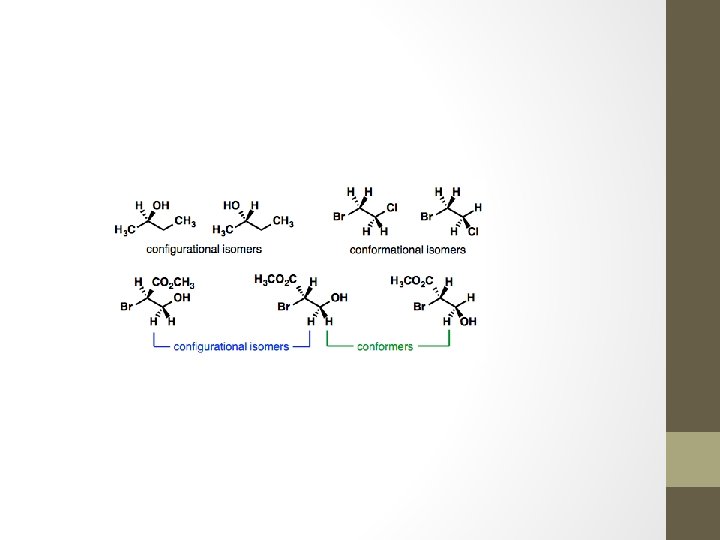
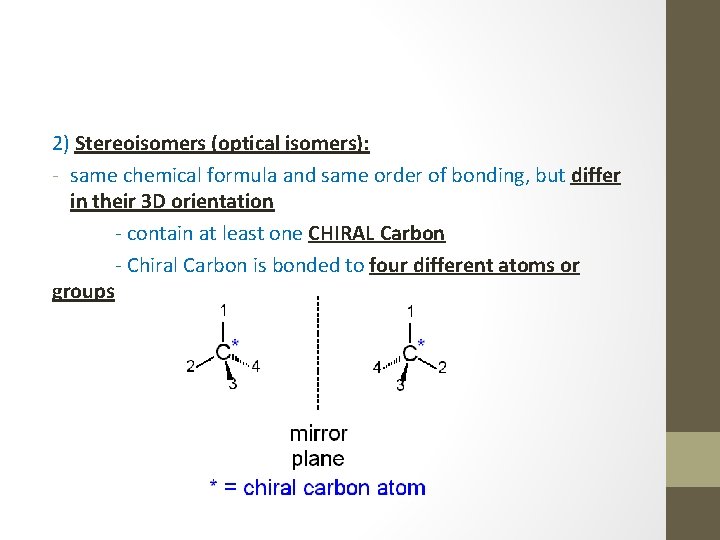
2) Stereoisomers (optical isomers): - same chemical formula and same order of bonding, but differ in their 3 D orientation - contain at least one CHIRAL Carbon - Chiral Carbon is bonded to four different atoms or groups
Determining Carbon Chirality 1) Is the carbon bonded to four different groups? Double or triple bond = NO = Not Chiral 2) Are the four groups different from one another? No = Not Chiral Yes = Chiral
Examples: 1) 2 -butanol
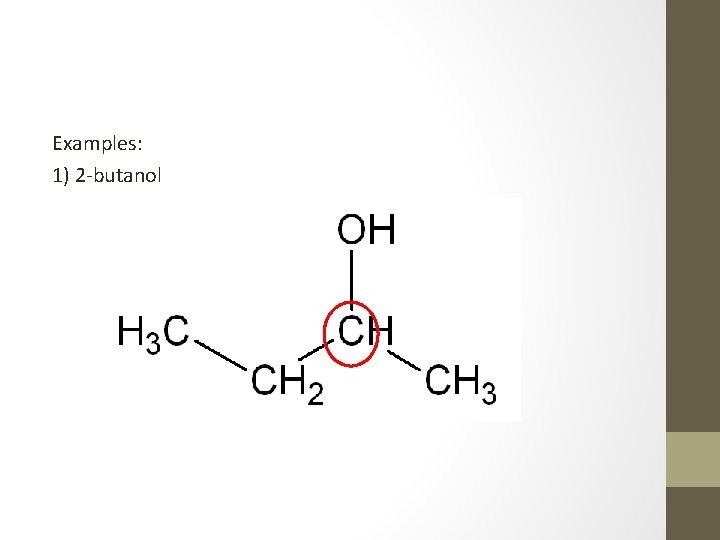
Examples: 1) 2 -butanol
2) 3 -pentanol
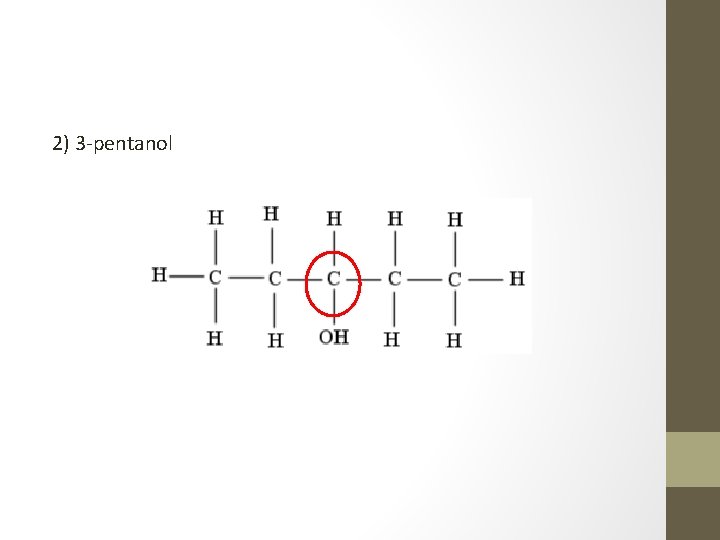
2) 3 -pentanol
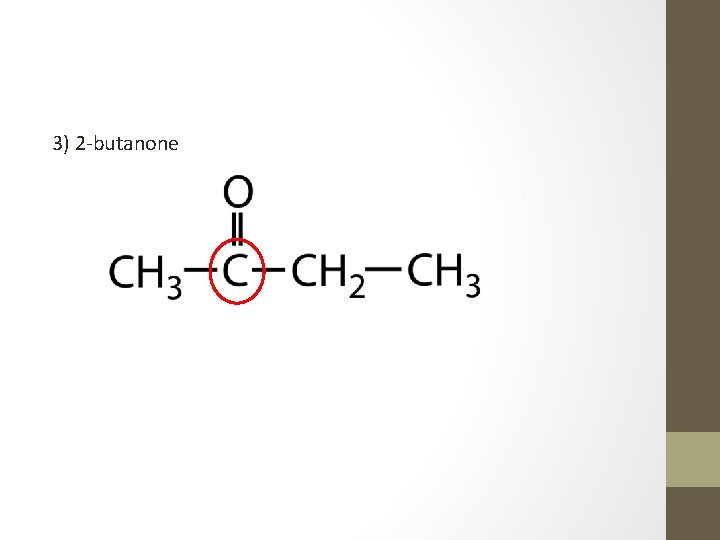
3) 2 -butanone
3) 2 -butanone
4) 3 -methylcyclohexanone
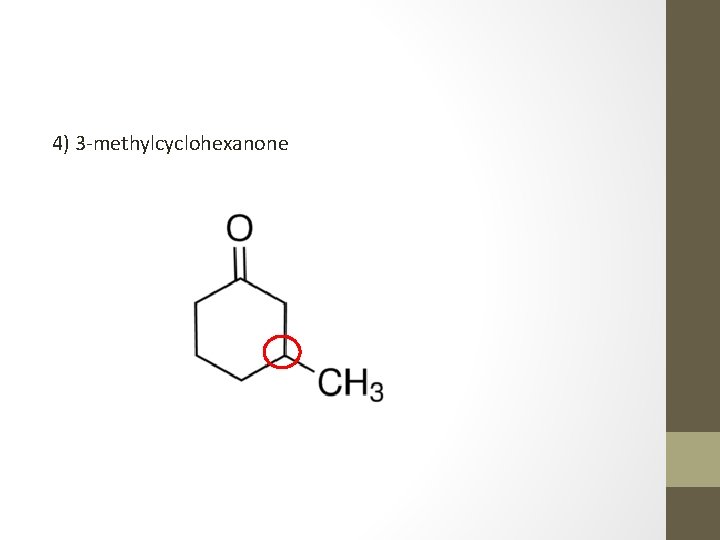
4) 3 -methylcyclohexanone
5) 1 -bromo-4 -methylcyclohexane
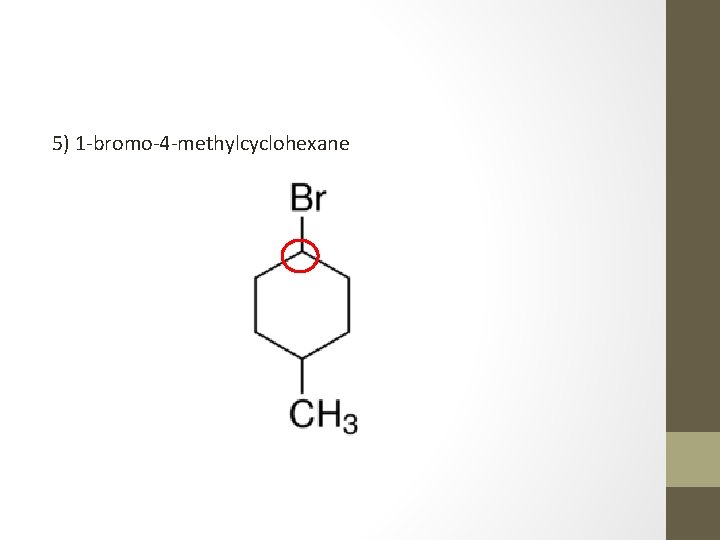
5) 1 -bromo-4 -methylcyclohexane

• Types of Stereoisomers: • Enantiomers: • - two molecules that are mirror images, but cannot be superimposed upon one another
Importance of Enantiomers: - Completely different biological interactions Chirality in your everyday life. Examples: 1) Thalidomide was released in 1956 as a mild sedative used to treat nausea in pregnant women. (Withdrawn from the market in 1961 once it was discovered thalidomide was a human teratogen. ) o As little as one dose could cause a significant birth defect. o Over 10, 000 infants were born with birth defects to women who ingested thalidomide during pregnancy. o In 1998, it was rereleased for leprosy selling over $300 M in sales.
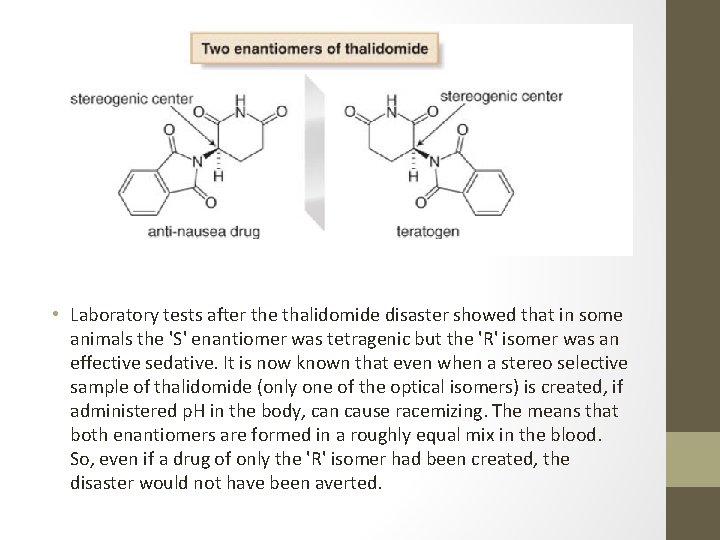
• Laboratory tests after the thalidomide disaster showed that in some animals the 'S' enantiomer was tetragenic but the 'R' isomer was an effective sedative. It is now known that even when a stereo selective sample of thalidomide (only one of the optical isomers) is created, if administered p. H in the body, can cause racemizing. The means that both enantiomers are formed in a roughly equal mix in the blood. So, even if a drug of only the 'R' isomer had been created, the disaster would not have been averted.
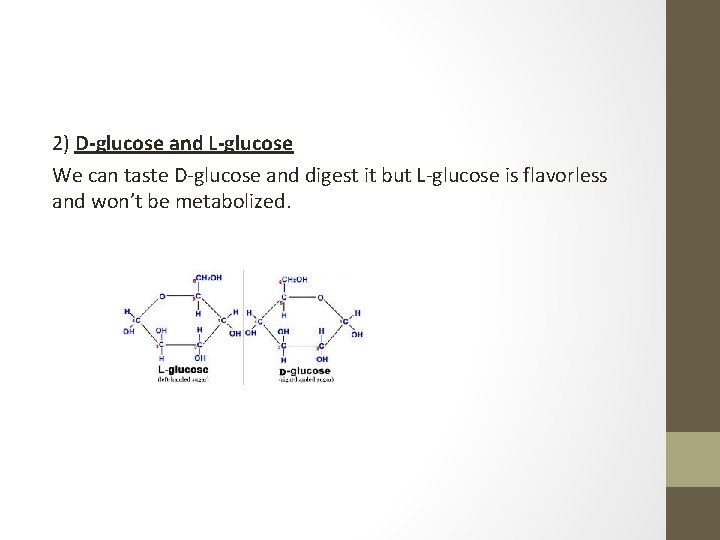
2) D-glucose and L-glucose We can taste D-glucose and digest it but L-glucose is flavorless and won’t be metabolized.
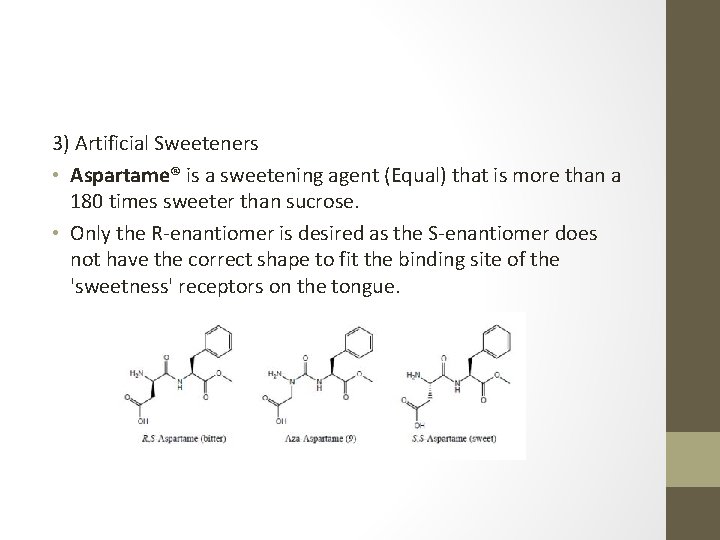
3) Artificial Sweeteners • Aspartame® is a sweetening agent (Equal) that is more than a 180 times sweeter than sucrose. • Only the R-enantiomer is desired as the S-enantiomer does not have the correct shape to fit the binding site of the 'sweetness' receptors on the tongue.
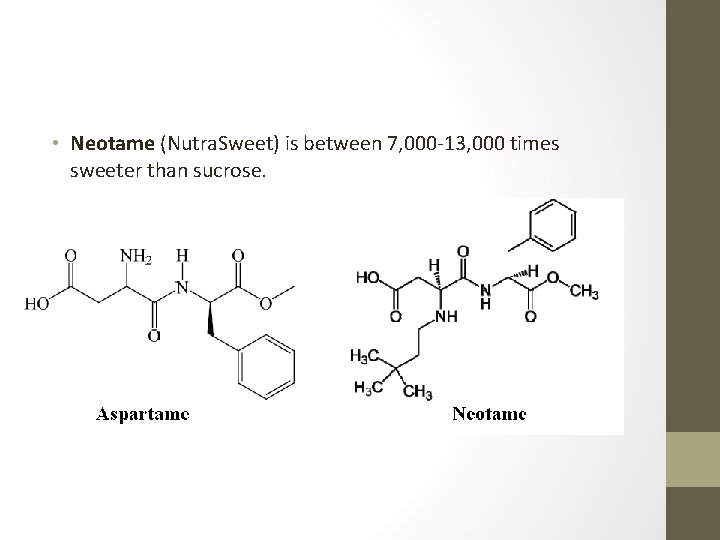
• Neotame (Nutra. Sweet) is between 7, 000 -13, 000 times sweeter than sucrose.
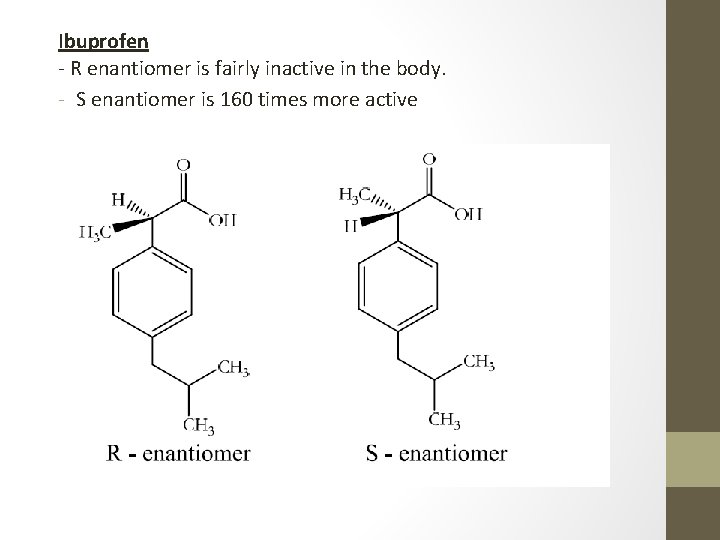
Ibuprofen - R enantiomer is fairly inactive in the body. - S enantiomer is 160 times more active
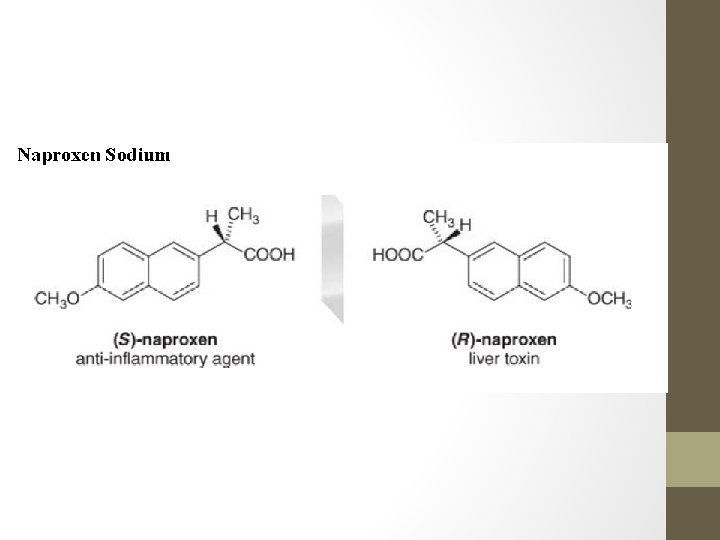
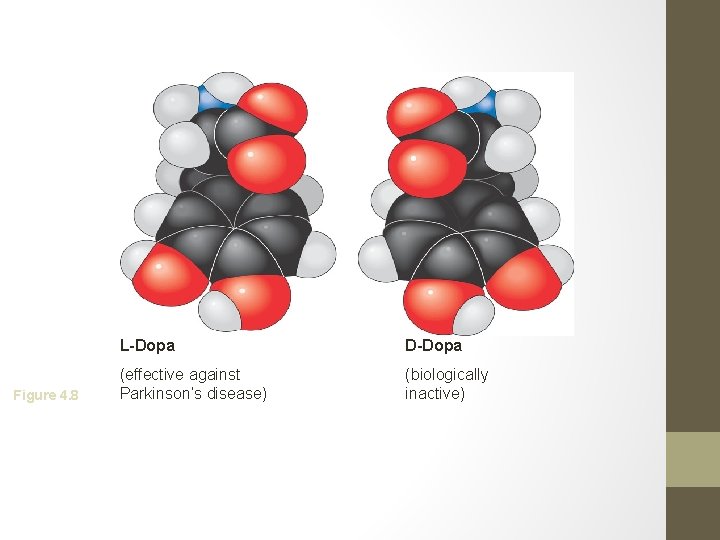
Figure 4. 8 L-Dopa D-Dopa (effective against Parkinson’s disease) (biologically inactive)
Naming Enantiomers can be named: R or S D or L + or – Every physical property of enantiomers are identical (melting point, boiling point, solubility, molar mass), except for how they bend light. Since the chiral molecules are mirror images, they bend light in opposite directions.
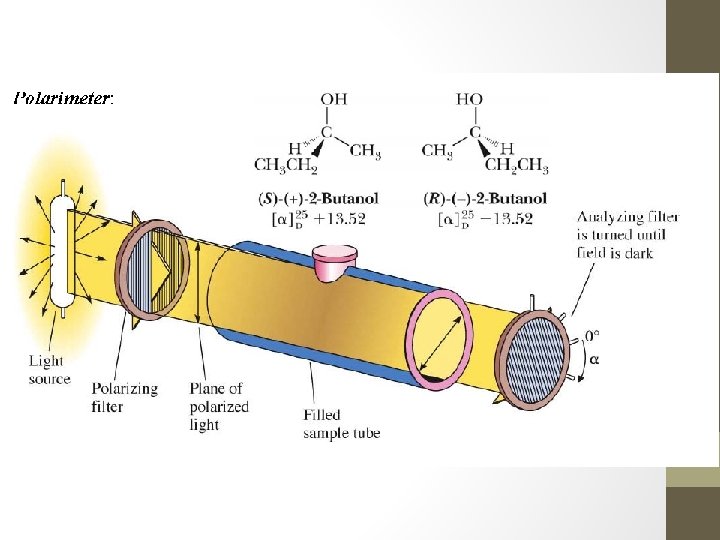
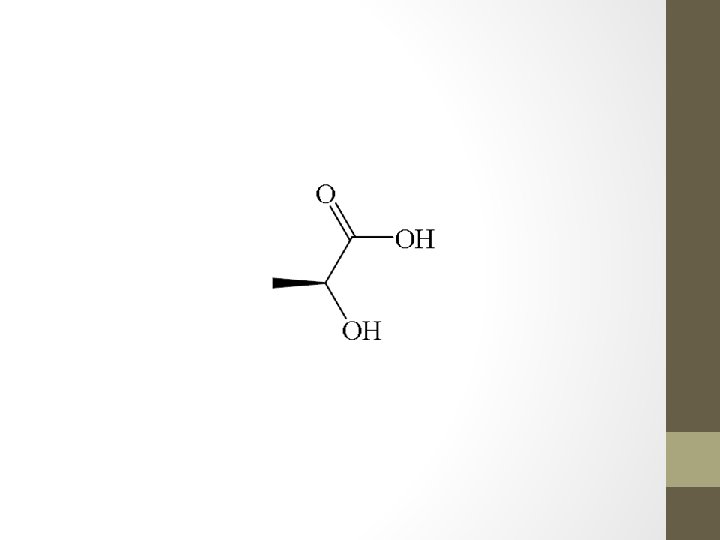
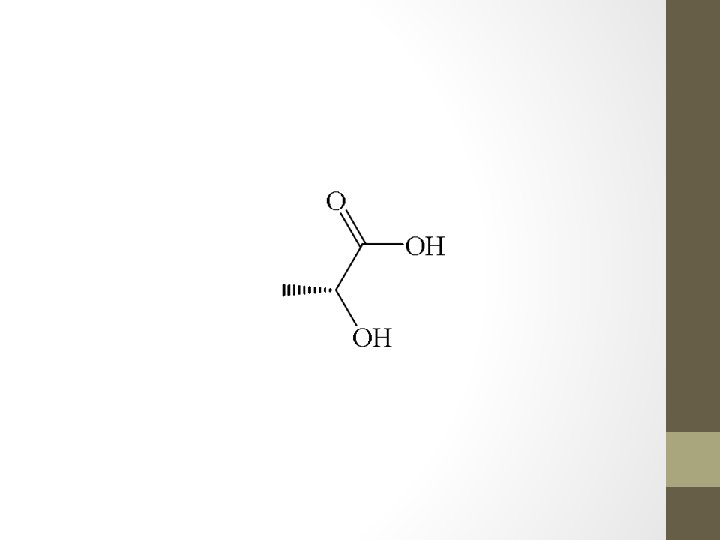
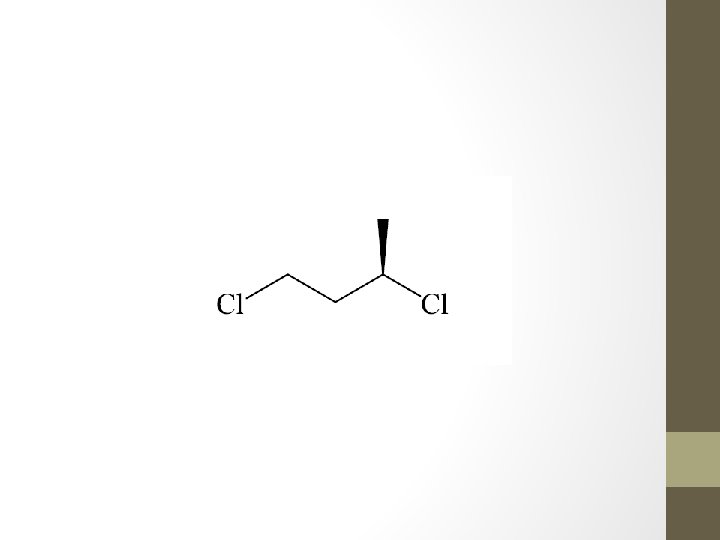
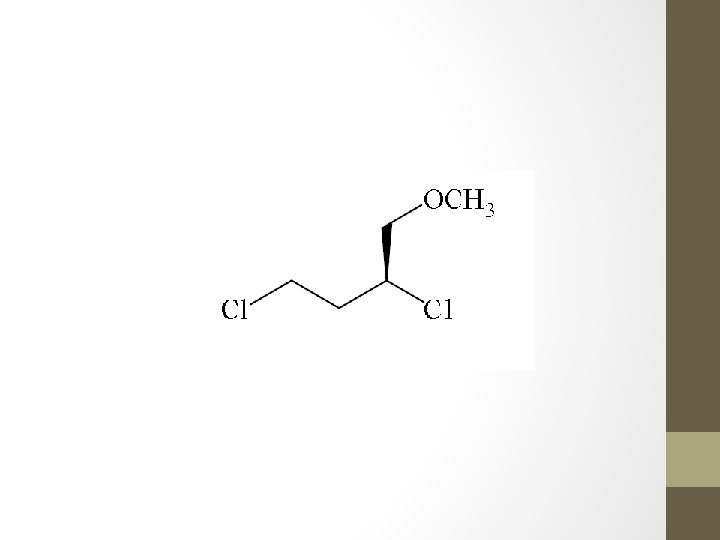
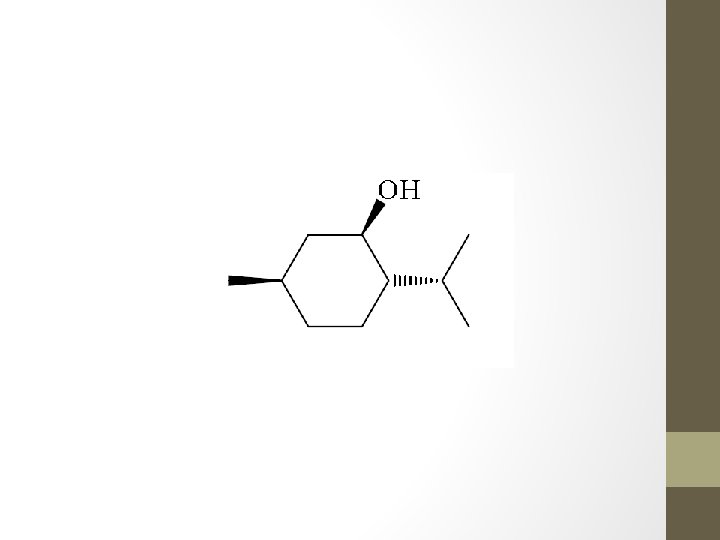
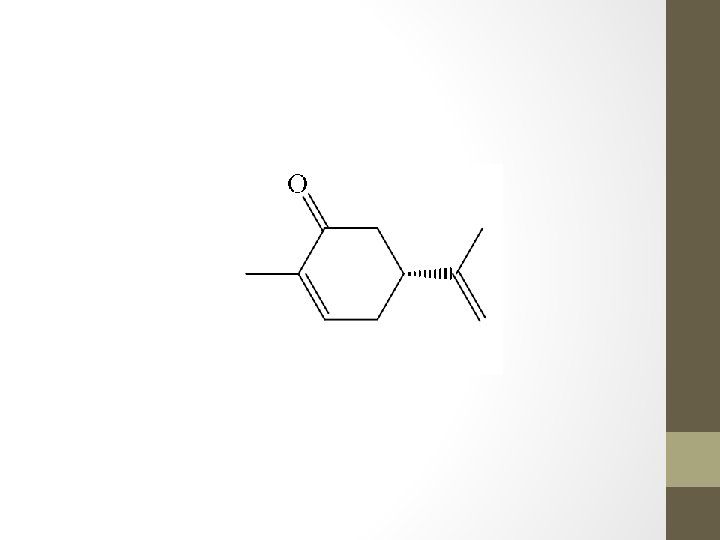
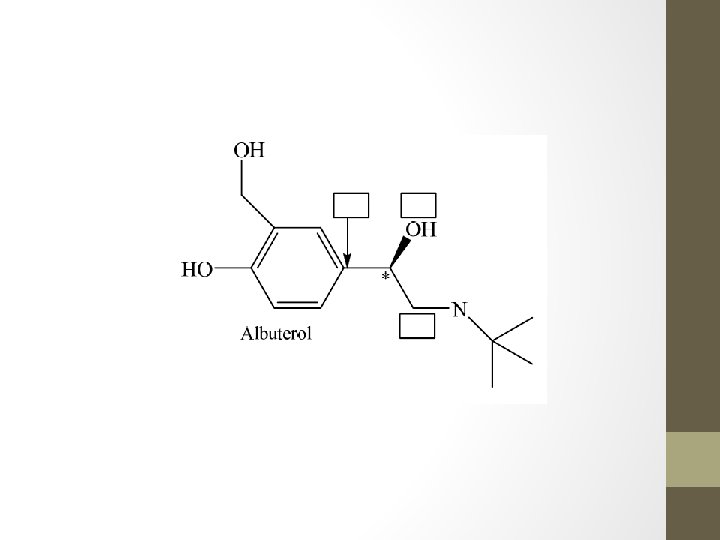
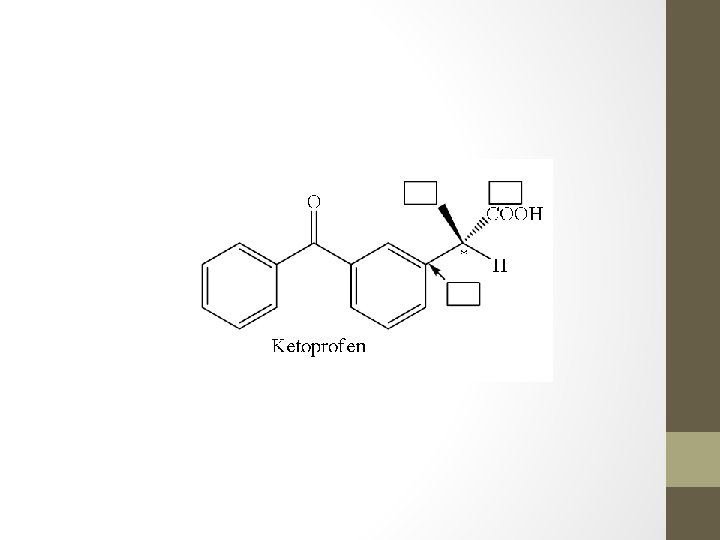
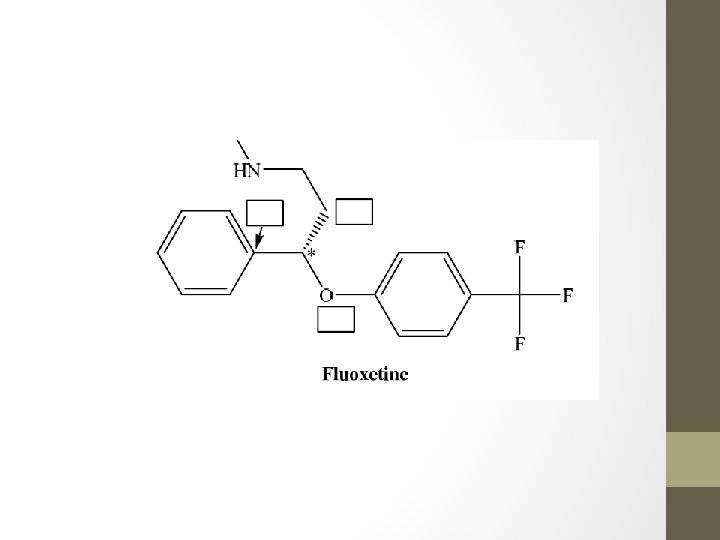
If a sample bends light to the right it is called R, D, or + R = rectus (Latin for “correct”) D = Dextrorotary (right) The enantiomer of an R/D/+ will bend the light to the left and be called S, L, or -. S= sinister (Latin for “left”) L = Levorotary (left) Molecular drawings and models can be used to determine R or S chirality. Orientation of the chiral carbon is determined by the priority of the groups bonded to the chiral carbon and the direction of rotation (Right (R) or Left (S)) around the central carbon.

Rules for Determining Priority 1) Higher Atomic Numbers Get Priority 2) If the atoms are the same, priority is determined by the next atom attached. Priority is assigned by the first point of difference.
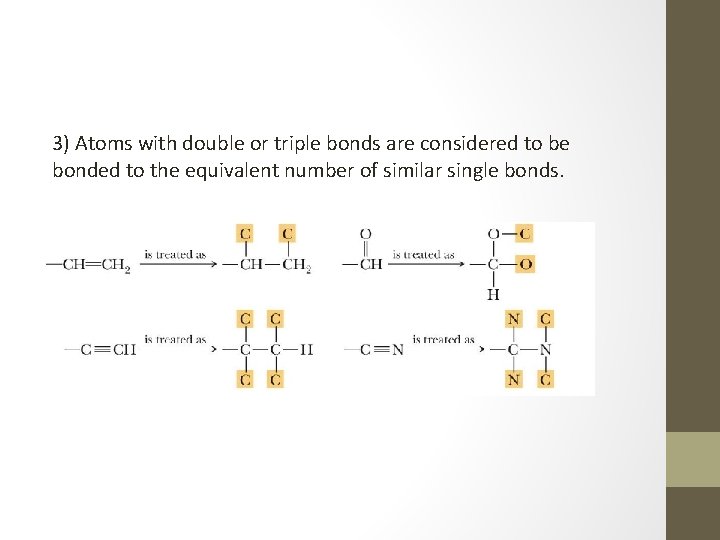
3) Atoms with double or triple bonds are considered to be bonded to the equivalent number of similar single bonds.

• To label the groups bonded to chiral carbon, the group with the lowest priority is orientated to the back position. • The remaining groups are labeled based on their priority from 1 to 3. • If the direction of the numbering goes clockwise (to the right), it is given the R configuration. • If the direction of the numbering goes counter clockwise (to the left, it is given the L configuration.
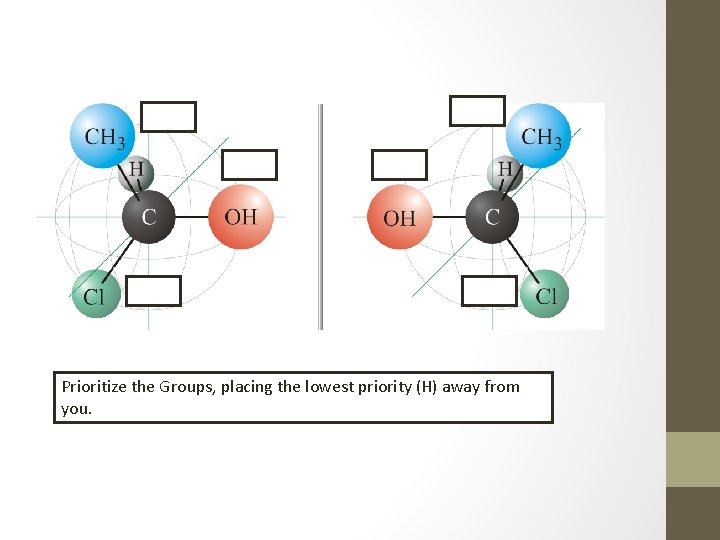
Prioritize the Groups, placing the lowest priority (H) away from you.
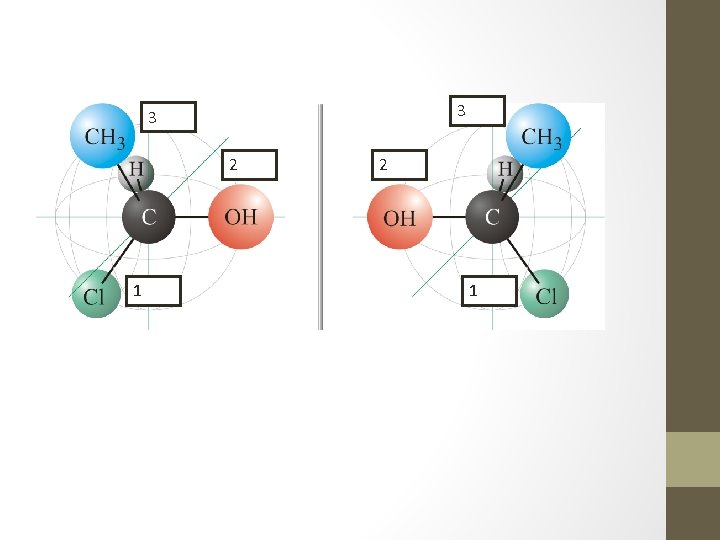
3 3 2 1
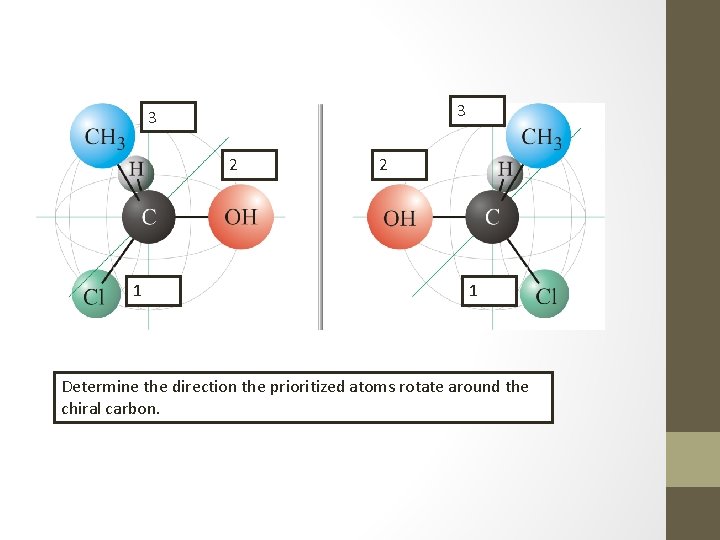
3 3 2 1 Determine the direction the prioritized atoms rotate around the chiral carbon.
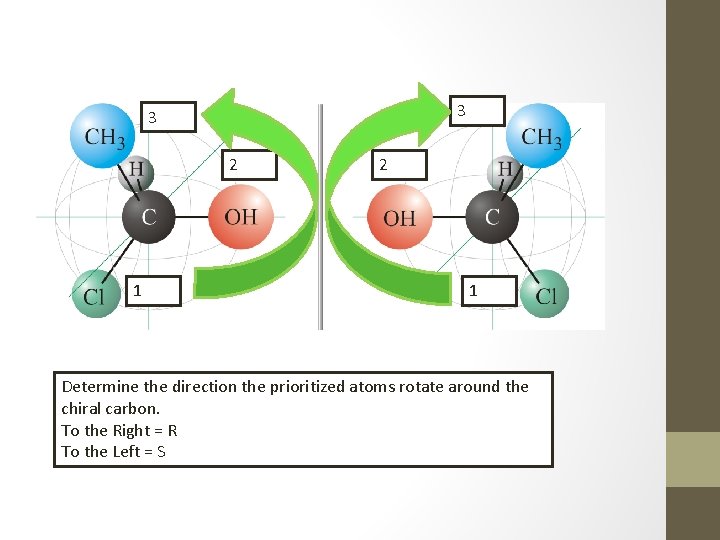
3 3 2 1 Determine the direction the prioritized atoms rotate around the chiral carbon. To the Right = R To the Left = S
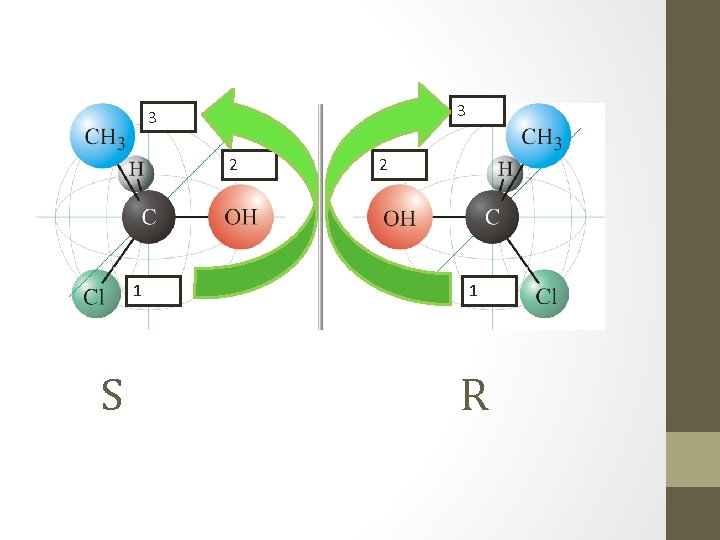
3 3 2 1 S 2 1 R
- Slides: 58