
Carbon Compounds Carbohydrates Made up of carbon hydrogen
Carbon Compounds
Carbohydrates • Made up of carbon, hydrogen, and oxygen in ratios of 1: 2: 1 • Carbohydrates end in -OSE • Living things use carbohydrates as their main source of energy. • Plants and some animals also use carbohydrates for structural purposes.
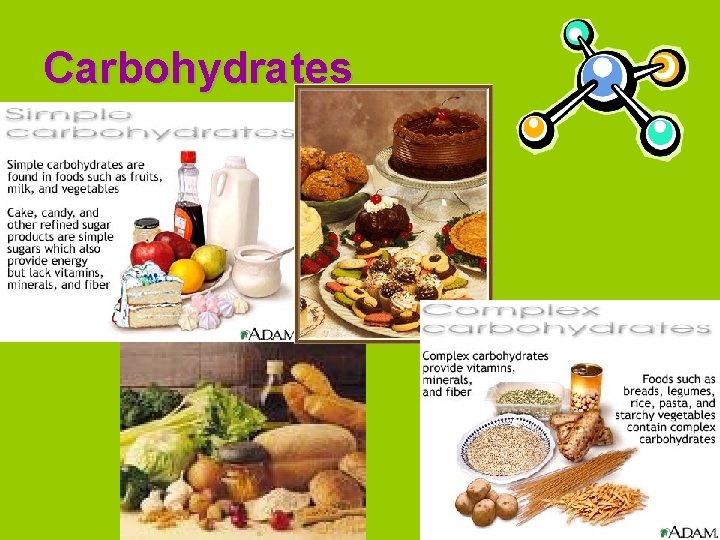
Carbohydrates • Carbohydrates = sugars & starches • Monomers are called monosaccharides. They supply immediate energy for all cell activities. Ex: glucose & fructose • Starches (polysaccharides) store extra sugar for living things. Ex: glycogen (animal starch) & cellulose (plant starch)
Carbohydrates
Lipids • Made of extremely long chains of carbon and hydrogen • They also contain Oxygen • Lipids are large MONOMERS! They are made up of fatty acids and Glycerol • Examples: fats, oils, waxes, steriods • Lipids can be used for long-term energy storage. • Some lipids are important parts of biological membranes and waterproof coverings.
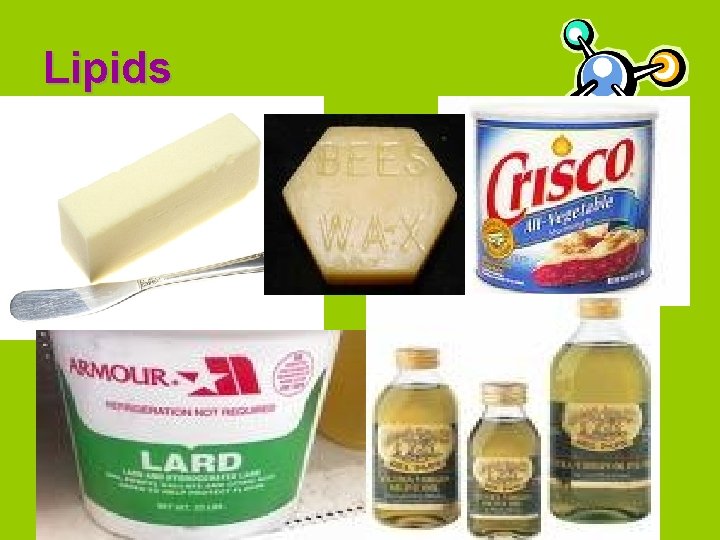
Lipids
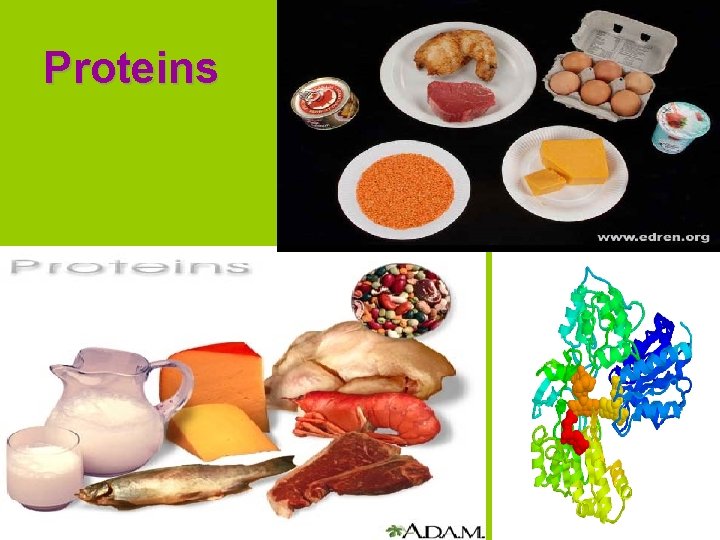
Proteins • Macromolecules made up of carbon, hydrogen, oxygen, and nitrogen • Proteins are polymers of molecules called amino acids. • Examples: Enzymes (saliva & catalase); Structural Proteins (muscle tissue & protein channels)
Proteins • Proteins help to: –Control the rate of chemical reactions (enzymes) –Transport small molecules in and out of cells –Fight diseases –Build tissues (ex: muscles)
Proteins
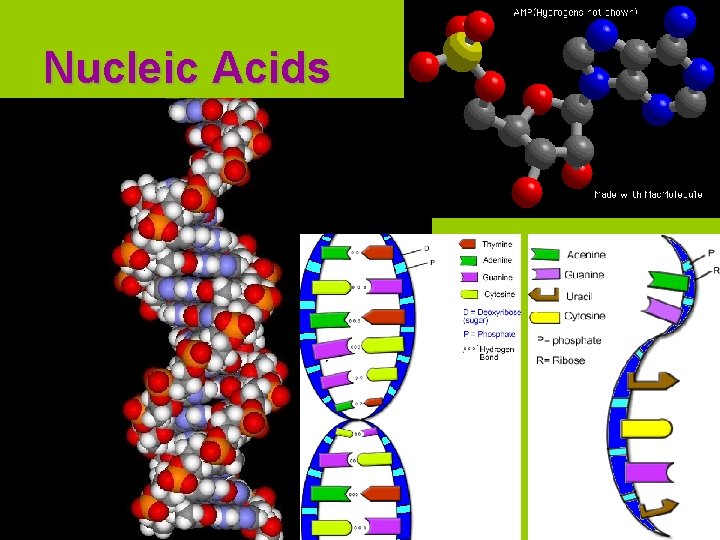
Nucleic Acids • Macromolecules made up of carbon, hydrogen, oxygen, nitrogen, and phosphorus • Nucleic acids are put together by monomers called nucleotides. • Nucleotides consist of 3 parts: – a 5 -carbon sugar – a phosphate group – a nitrogenous (nitrogen-containing) base
Nucleic Acids • Nucleic acids store and transmit hereditary (genetic) information. • There are 2 kinds of nucleic acids: – Ribonucleic acid (RNA), which contains the sugar ribose – Deoxyribonucleic acid (DNA), which contains the sugar deoxyribose
Nucleic Acids
- Slides: 12