
Carbon compounds and cells Life as we know
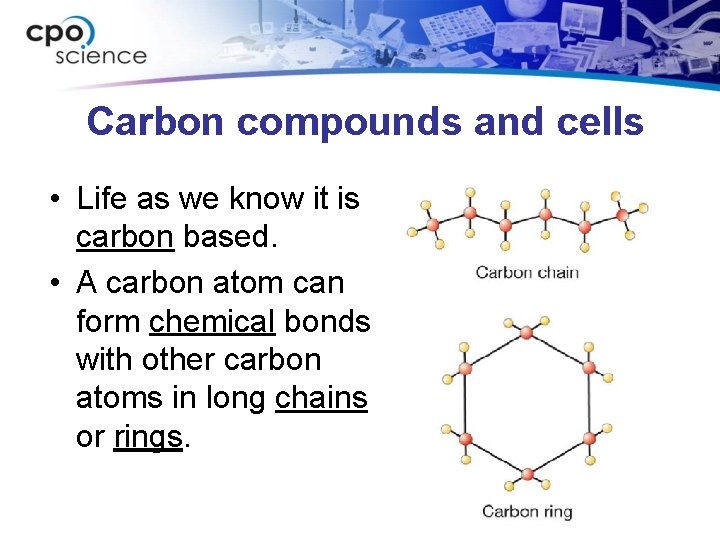
Carbon compounds and cells • Life as we know it is carbon based. • A carbon atom can form chemical bonds with other carbon atoms in long chains or rings.
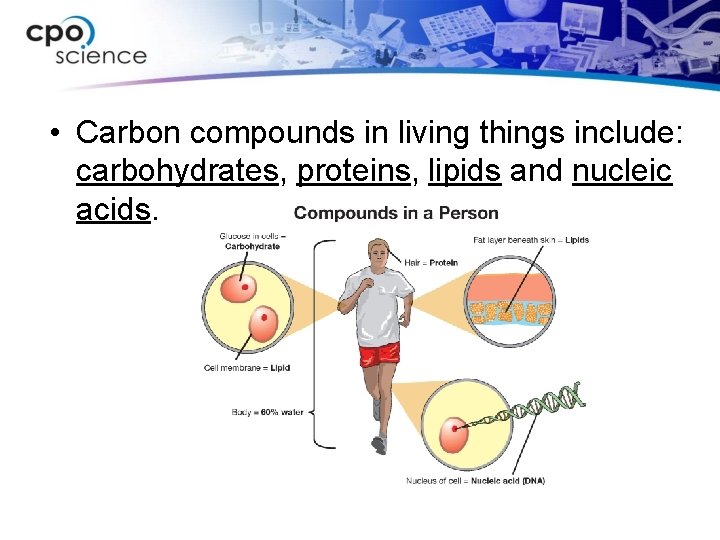
• Carbon compounds in living things include: carbohydrates, proteins, lipids and nucleic acids.
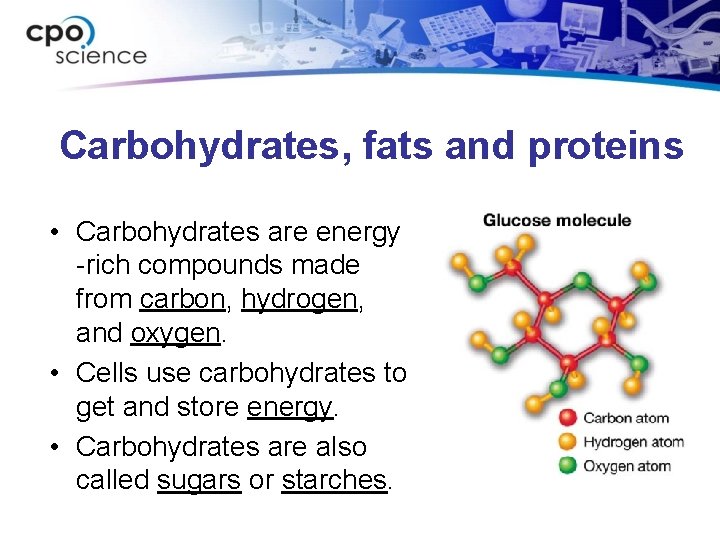
Carbohydrates, fats and proteins • Carbohydrates are energy -rich compounds made from carbon, hydrogen, and oxygen. • Cells use carbohydrates to get and store energy. • Carbohydrates are also called sugars or starches.
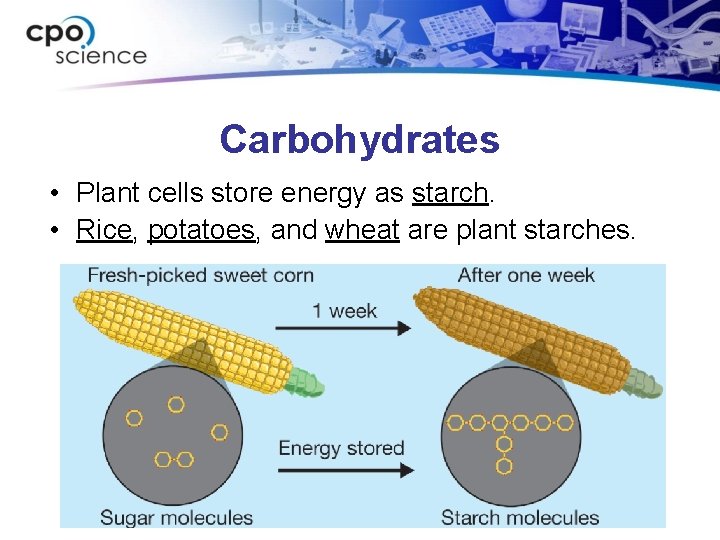
Carbohydrates • Plant cells store energy as starch. • Rice, potatoes, and wheat are plant starches.
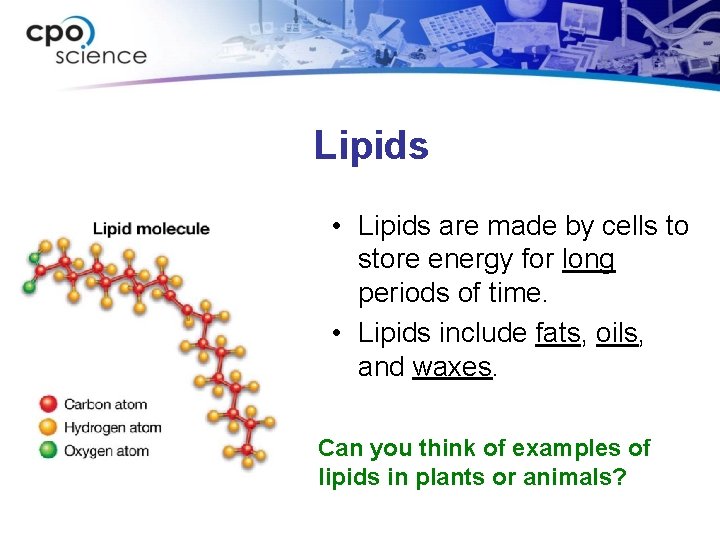
Lipids • Lipids are made by cells to store energy for long periods of time. • Lipids include fats, oils, and waxes. Can you think of examples of lipids in plants or animals?

Proteins • Proteins are very large molecules made of carbon, hydrogen, oxygen, nitrogen, and sometimes sulfur. • Protein molecules are made of smaller molecules (monomers) called amino acids.
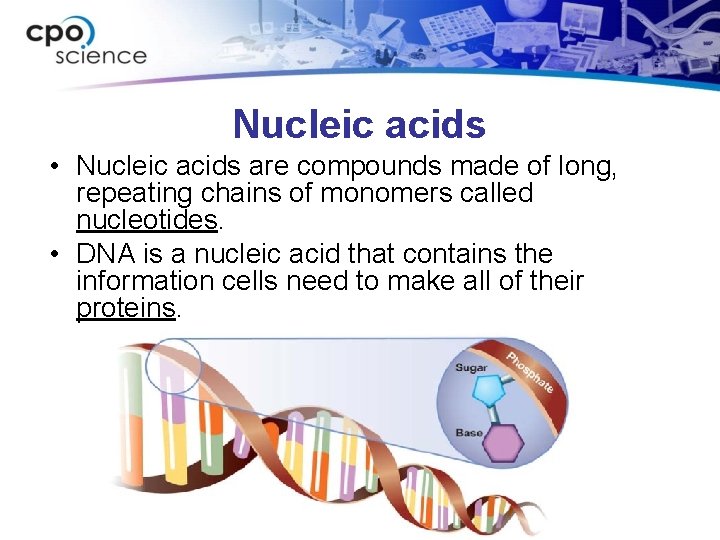
Nucleic acids • Nucleic acids are compounds made of long, repeating chains of monomers called nucleotides. • DNA is a nucleic acid that contains the information cells need to make all of their proteins.
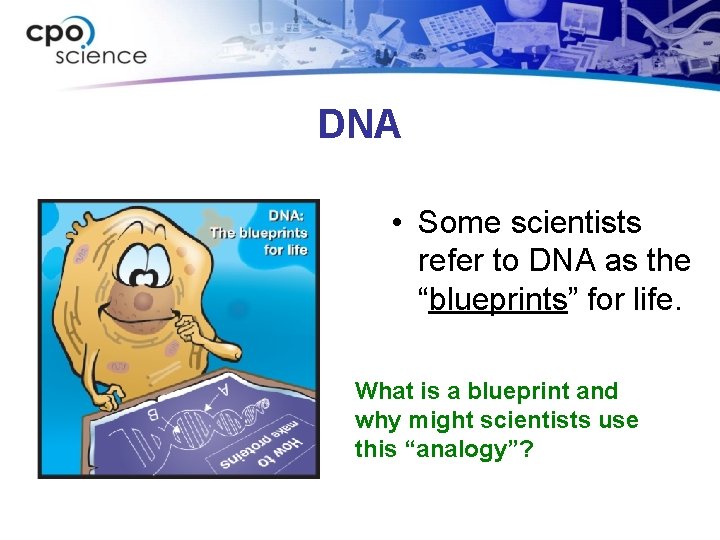
DNA • Some scientists refer to DNA as the “blueprints” for life. What is a blueprint and why might scientists use this “analogy”?
- Slides: 8