
Carbon Chemistry Whats so special about Carbon Fourth
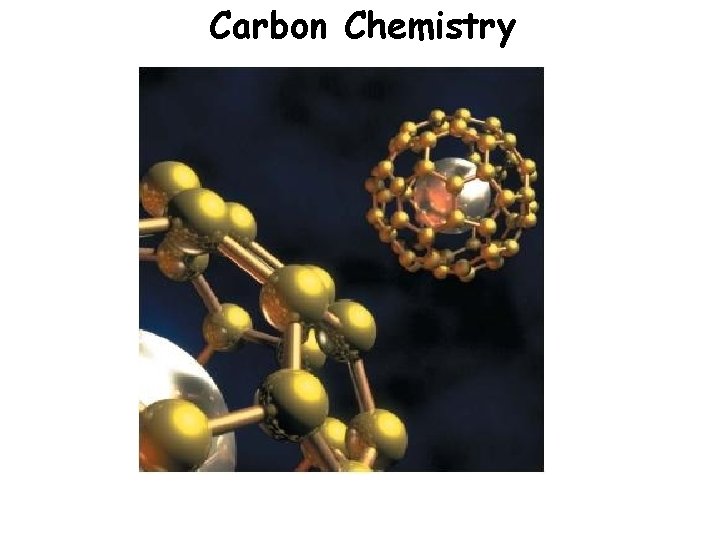
Carbon Chemistry
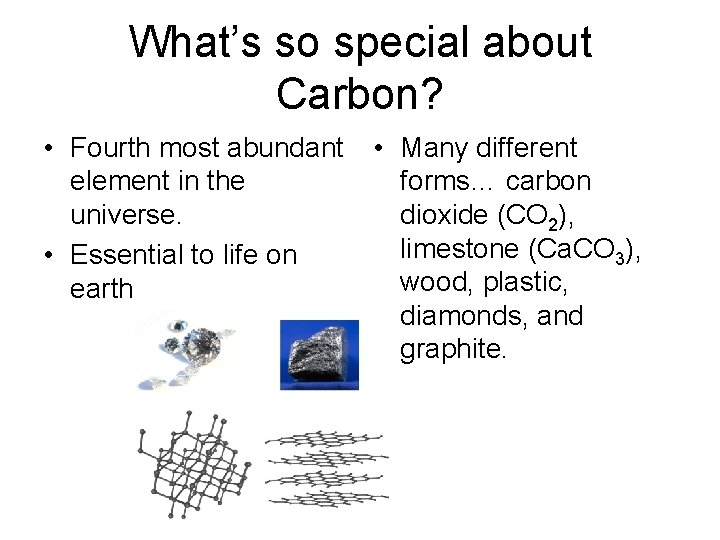
What’s so special about Carbon? • Fourth most abundant element in the universe. • Essential to life on earth. • Many different forms… carbon dioxide (CO 2), limestone (Ca. CO 3), wood, plastic, diamonds, and graphite.
Carbon – The Element of Life • Unique atomic structure… form covalent bonds with up to four other atoms. • Elements with either less or more than 4 valence electrons can only form a maximum of 3 covalent bonds, this is why 4 is a magic number and why carbon is special. • Lightest element with four valence electrons
Organic Compounds Organic compounds are those compounds found in any organism that is living or was once living. Chemically… Organic compound – any compound that contains the elements carbon and hydrogen. Inorganic

Carbon Compounds Carbon can be bonded covalently to up to four other atoms, but what a carbon is bonded to can be very simple or very complex. Hydrocarbons – when a carbon atom is bonded only to hydrogen atoms. Gasoline and fossil fuels are examples of hydrocarbons Carbon chains – when many carbons are bonded together to make long chains or rings. Often consist of many hydrocarbons bonded together called polymers
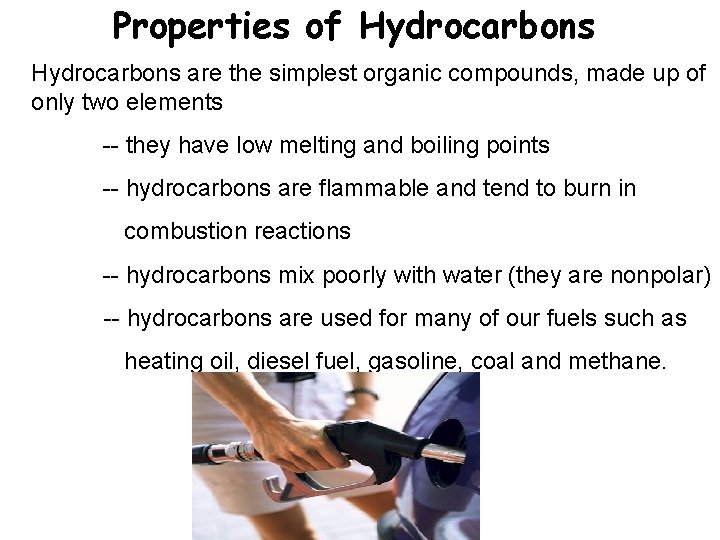
Properties of Hydrocarbons are the simplest organic compounds, made up of only two elements -- they have low melting and boiling points -- hydrocarbons are flammable and tend to burn in combustion reactions -- hydrocarbons mix poorly with water (they are nonpolar) -- hydrocarbons are used for many of our fuels such as heating oil, diesel fuel, gasoline, coal and methane.
Saturated vs Unsaturated • Saturated • Unsaturated hydrocarbons have hydrocarbons do not the maximum amount have the maximum of hydrogens possible. amount of hydrogens possible. • Hydrocarbons with all single bonds are considered to be saturated. • Alkanes • Any hydrocarbon with double or triple bonds are unsaturated. • Alkenes and Alkynes
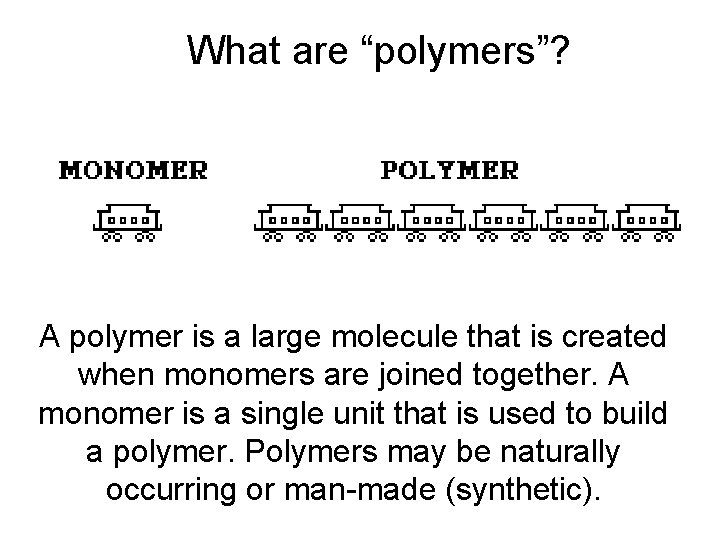
What are “polymers”? A polymer is a large molecule that is created when monomers are joined together. A monomer is a single unit that is used to build a polymer. Polymers may be naturally occurring or man-made (synthetic).
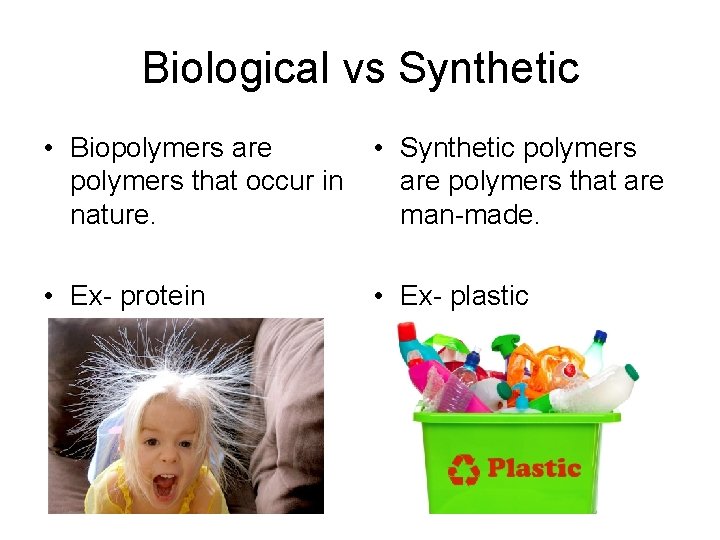
Biological vs Synthetic • Biopolymers are polymers that occur in nature. • Synthetic polymers are polymers that are man-made. • Ex- protein • Ex- plastic
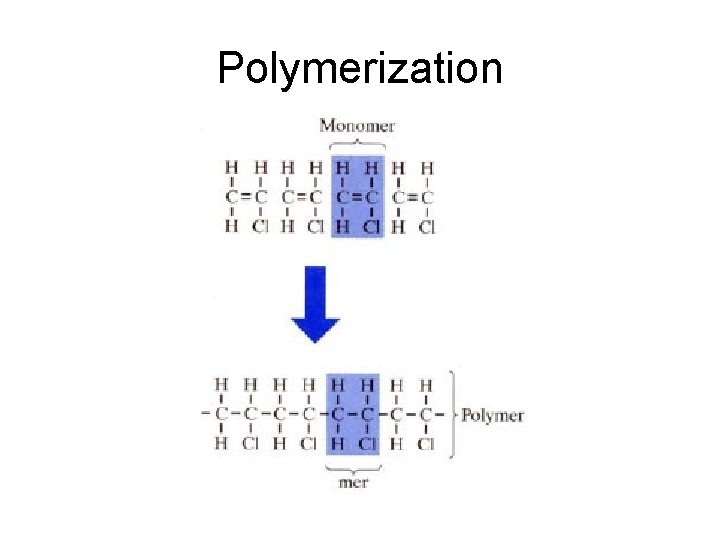
Polymerization
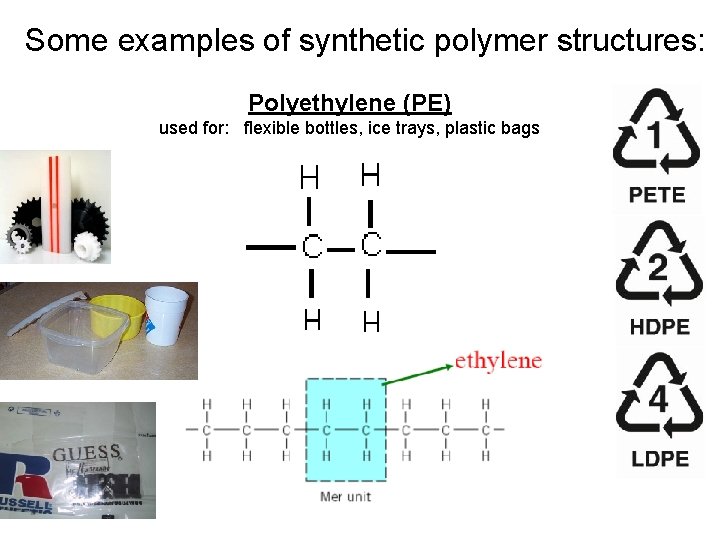
Some examples of synthetic polymer structures: Polyethylene (PE) used for: flexible bottles, ice trays, plastic bags
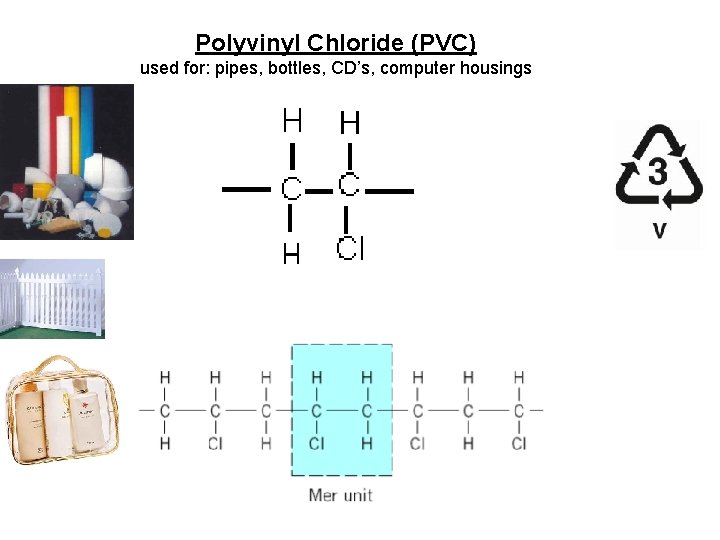
Polyvinyl Chloride (PVC) used for: pipes, bottles, CD’s, computer housings
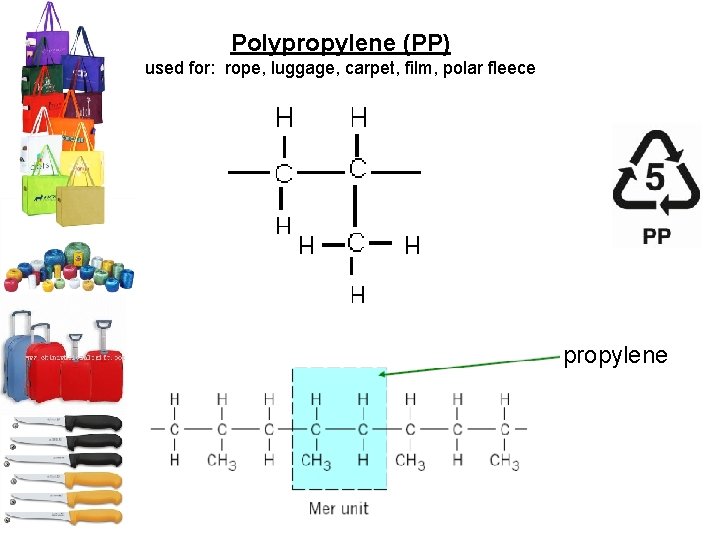
Polypropylene (PP) used for: rope, luggage, carpet, film, polar fleece propylene
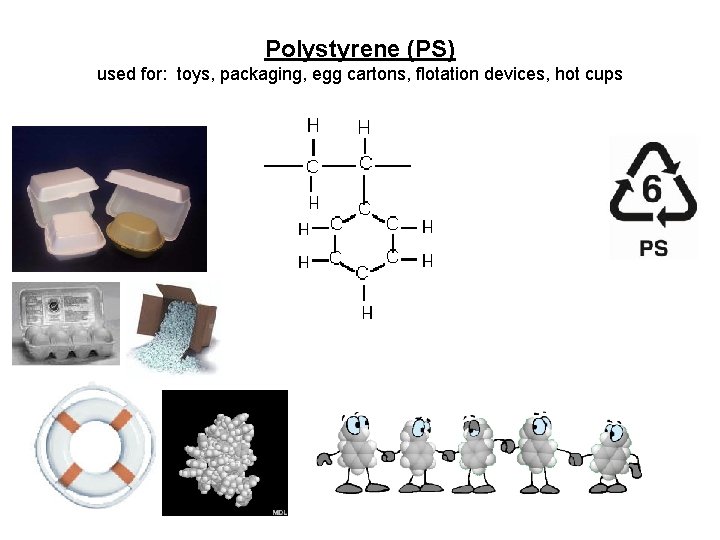
Polystyrene (PS) used for: toys, packaging, egg cartons, flotation devices, hot cups
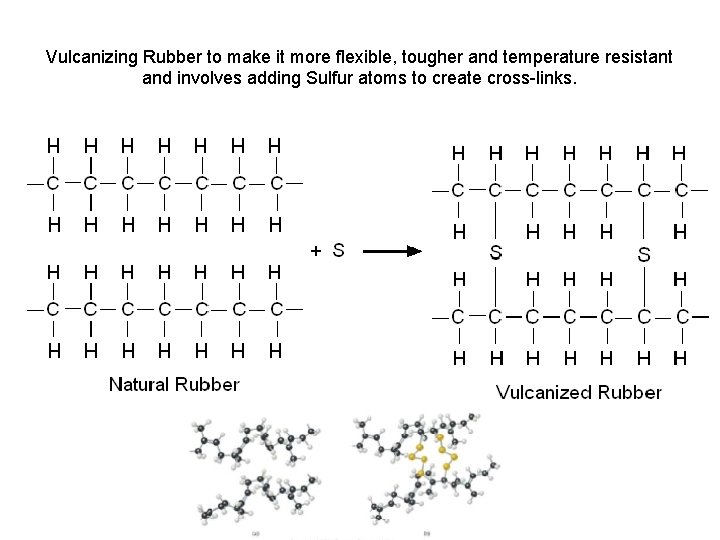
Vulcanizing Rubber to make it more flexible, tougher and temperature resistant and involves adding Sulfur atoms to create cross-links.
Properties of Polymers • Properties are determined by the structure of the molecules and depend on: -type of monomers used -chain length -branching -degree of cross-linking
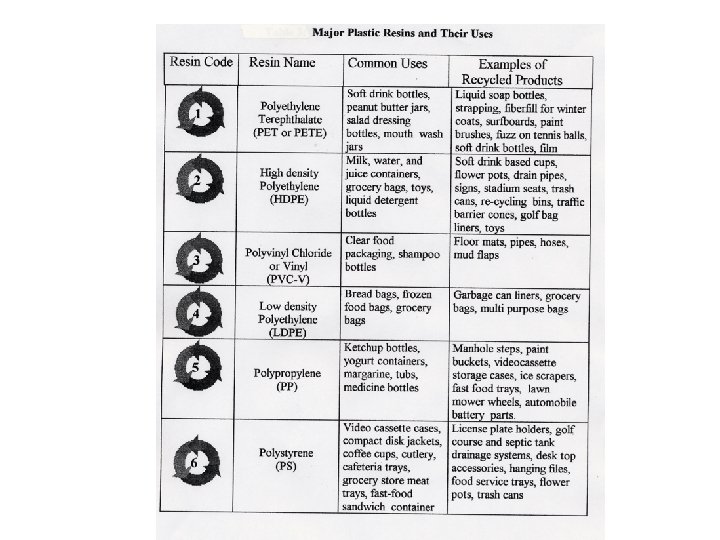
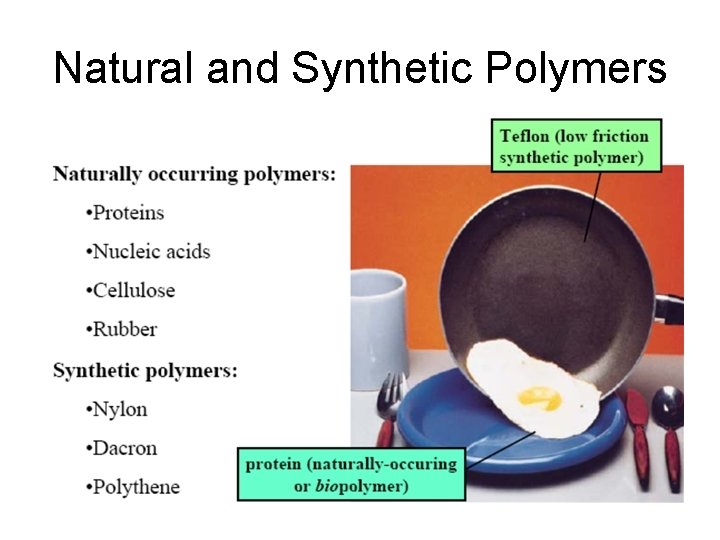
Natural and Synthetic Polymers
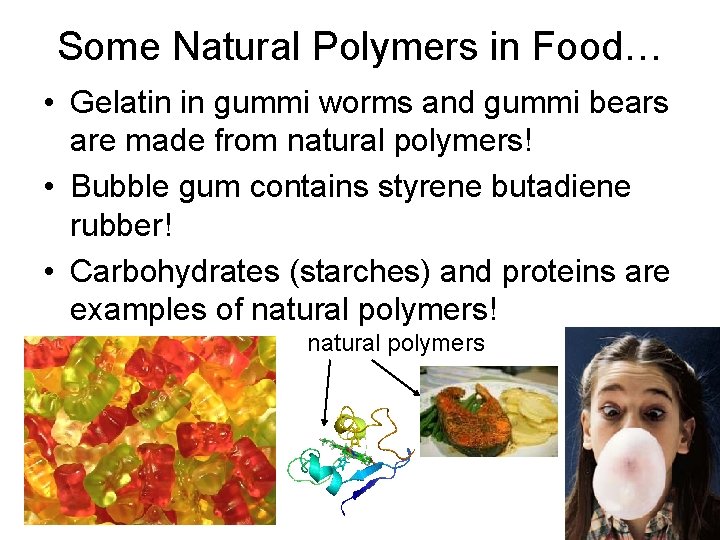
Some Natural Polymers in Food… • Gelatin in gummi worms and gummi bears are made from natural polymers! • Bubble gum contains styrene butadiene rubber! • Carbohydrates (starches) and proteins are examples of natural polymers! natural polymers
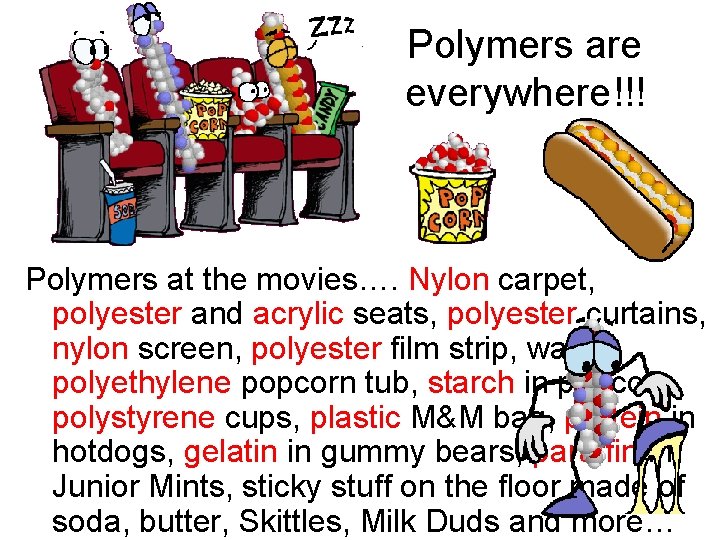
Polymers are everywhere!!! Polymers at the movies…. Nylon carpet, polyester and acrylic seats, polyester curtains, nylon screen, polyester film strip, waxy polyethylene popcorn tub, starch in popcorn, polystyrene cups, plastic M&M bag, protein in hotdogs, gelatin in gummy bears, paraffin in Junior Mints, sticky stuff on the floor made of soda, butter, Skittles, Milk Duds and more…
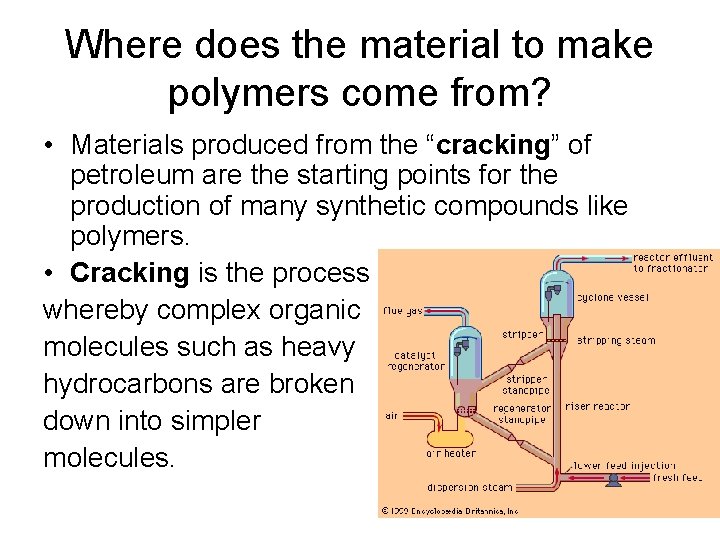
Where does the material to make polymers come from? • Materials produced from the “cracking” of petroleum are the starting points for the production of many synthetic compounds like polymers. • Cracking is the process whereby complex organic molecules such as heavy hydrocarbons are broken down into simpler molecules.
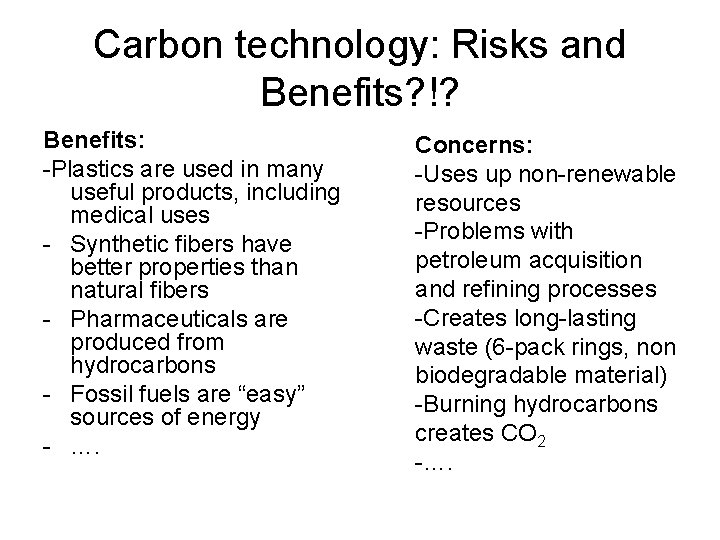
Carbon technology: Risks and Benefits? !? Benefits: -Plastics are used in many useful products, including medical uses - Synthetic fibers have better properties than natural fibers - Pharmaceuticals are produced from hydrocarbons - Fossil fuels are “easy” sources of energy - …. Concerns: -Uses up non-renewable resources -Problems with petroleum acquisition and refining processes -Creates long-lasting waste (6 -pack rings, non biodegradable material) -Burning hydrocarbons creates CO 2 -….
- Slides: 22