
Carbon Carbon atoms have unique bonding properties Carbon
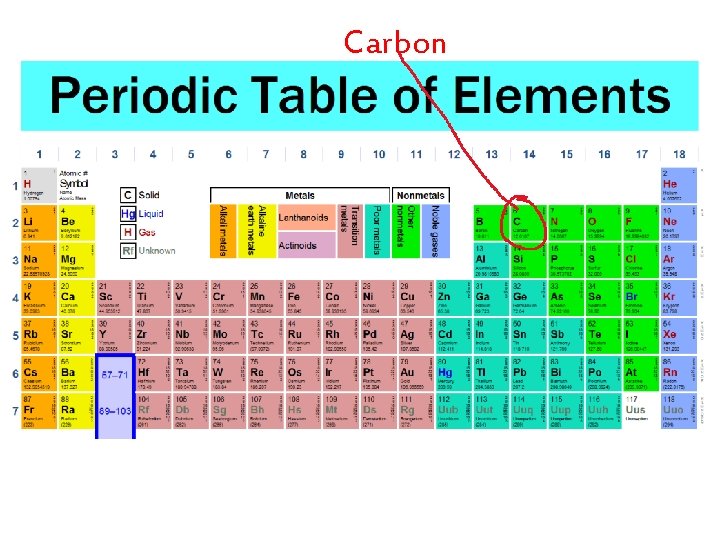
Carbon

Carbon atoms have unique bonding properties • Carbon forms covalent bonds with up to four other atoms, including other carbon atoms. • Carbon-based molecules: three general types of structures. 1. Straight chain 2. Branched chain 3. Ring
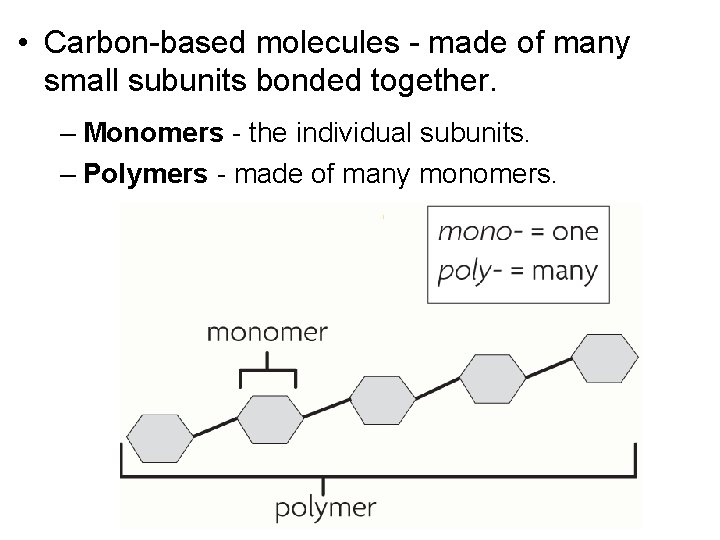
• Carbon-based molecules - made of many small subunits bonded together. – Monomers - the individual subunits. – Polymers - made of many monomers.
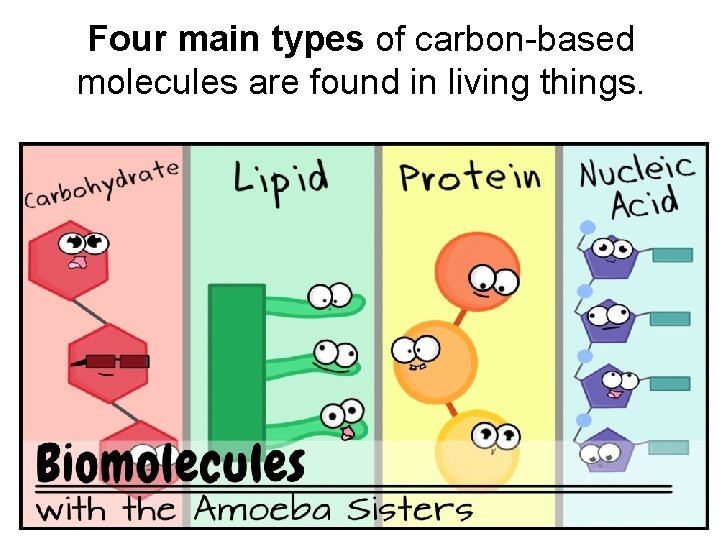
Four main types of carbon-based molecules are found in living things.

Four main types of carbon-based molecules are found in living things. 1. Carbohydrates are made of: carbon, hydrogen, and oxygen

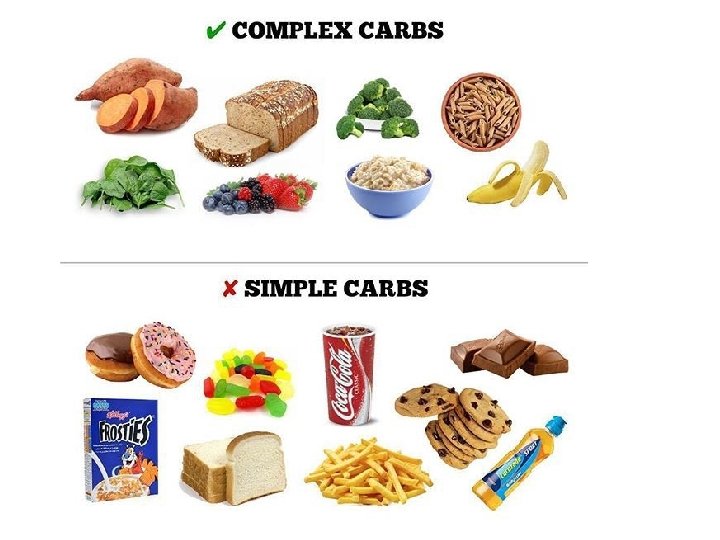
1. Carbohydrates • Monomer: Monosaccharides are simple sugars (glucose) • Polymer: Polysaccharides include starches, cellulose, & glycogen • Examples: sugars (glucose & fructose) and starches
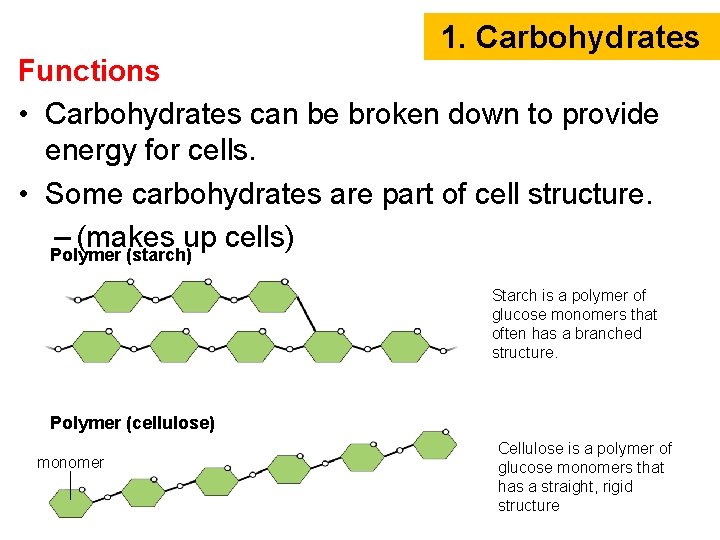
1. Carbohydrates Functions • Carbohydrates can be broken down to provide energy for cells. • Some carbohydrates are part of cell structure. – (makes up cells) Polymer (starch) Starch is a polymer of glucose monomers that often has a branched structure. Polymer (cellulose) monomer Cellulose is a polymer of glucose monomers that has a straight, rigid structure
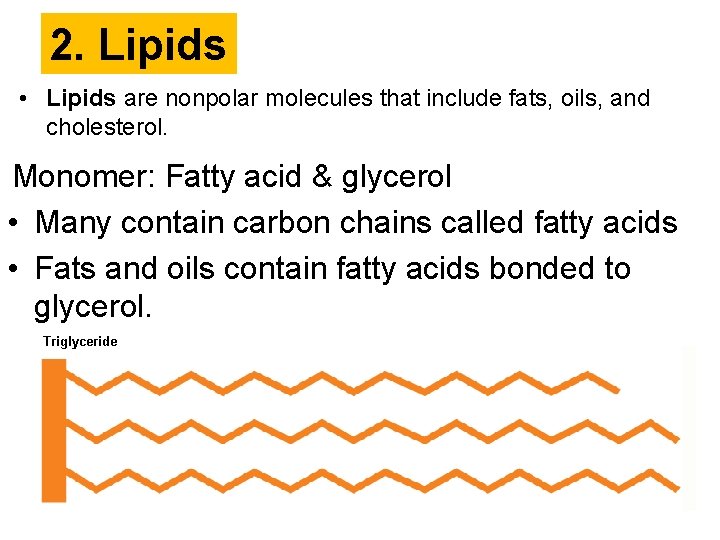
2. Lipids • Lipids are nonpolar molecules that include fats, oils, and cholesterol. Monomer: Fatty acid & glycerol • Many contain carbon chains called fatty acids • Fats and oils contain fatty acids bonded to glycerol. Triglyceride
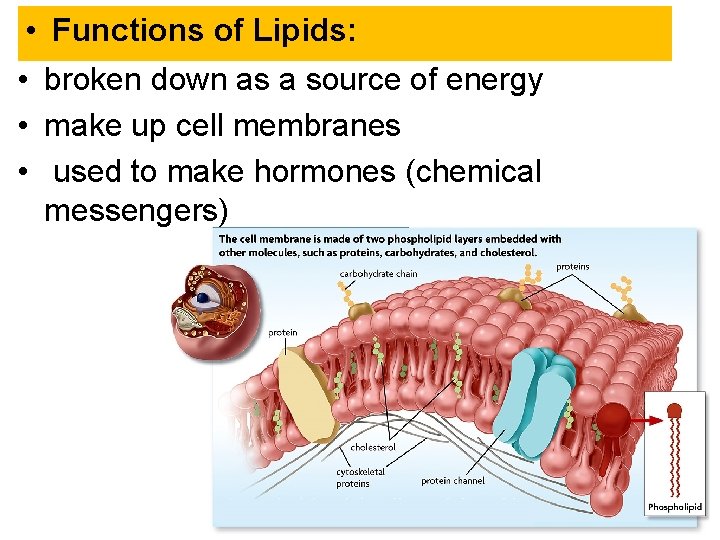
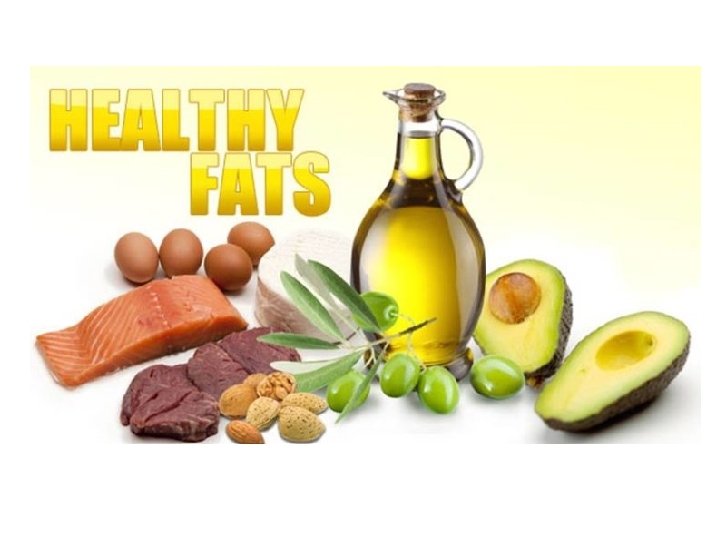
• Functions of Lipids: • broken down as a source of energy • make up cell membranes • used to make hormones (chemical messengers)
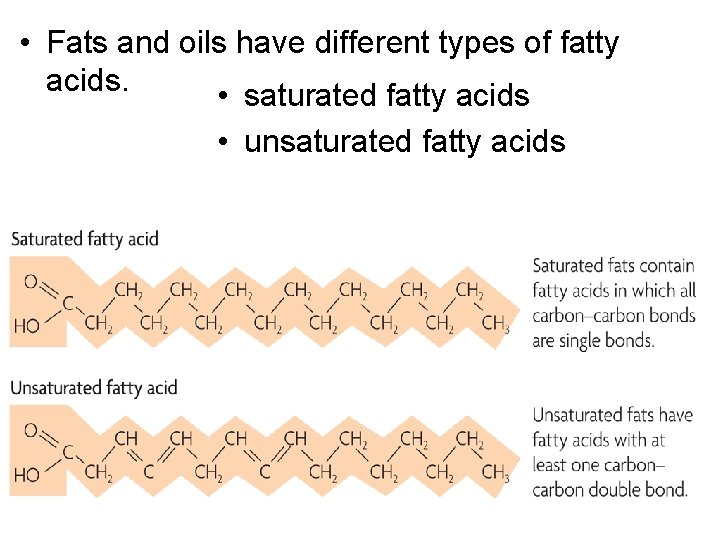
• Fats and oils have different types of fatty acids. • saturated fatty acids • unsaturated fatty acids
• Fats and oils have different types of fatty acids. • saturated fatty acids – Saturated with H atoms – Solid consistency @ room temp – Butter, milk & cheese • unsaturated fatty acids – Plant foods like nuts & seeds – Liquid @ room temp – Vegetable oil & peanut oil
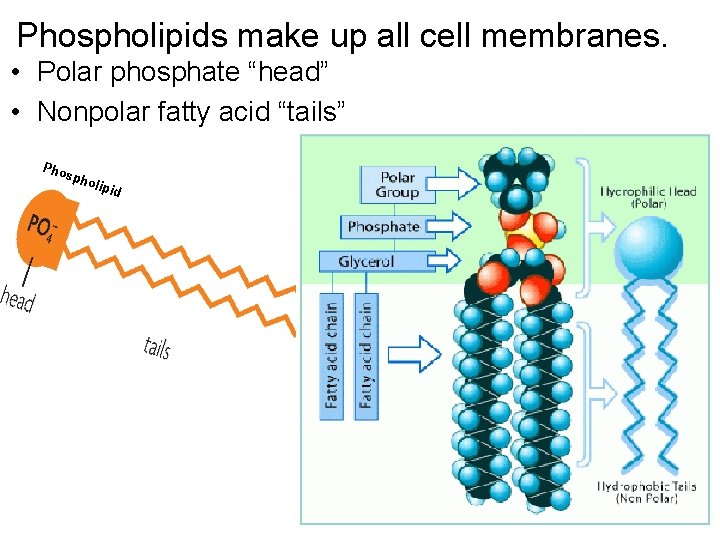
Phospholipids make up all cell membranes. • Polar phosphate “head” • Nonpolar fatty acid “tails” Pho sph olip id
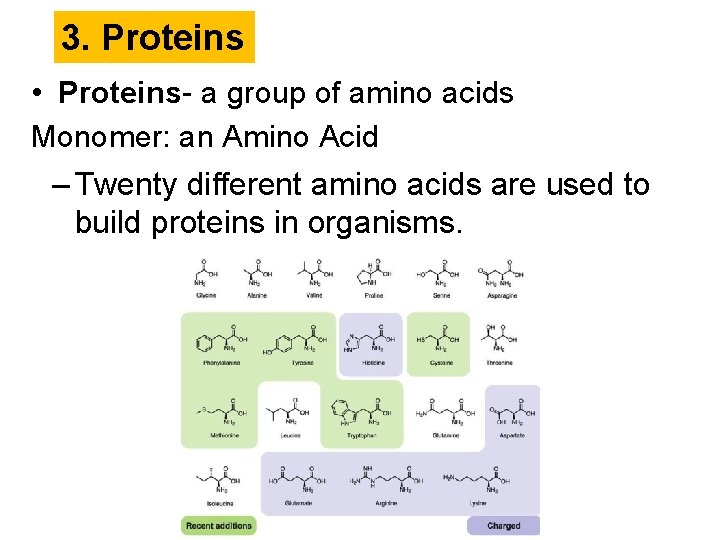
3. Proteins • Proteins- a group of amino acids Monomer: an Amino Acid – Twenty different amino acids are used to build proteins in organisms.
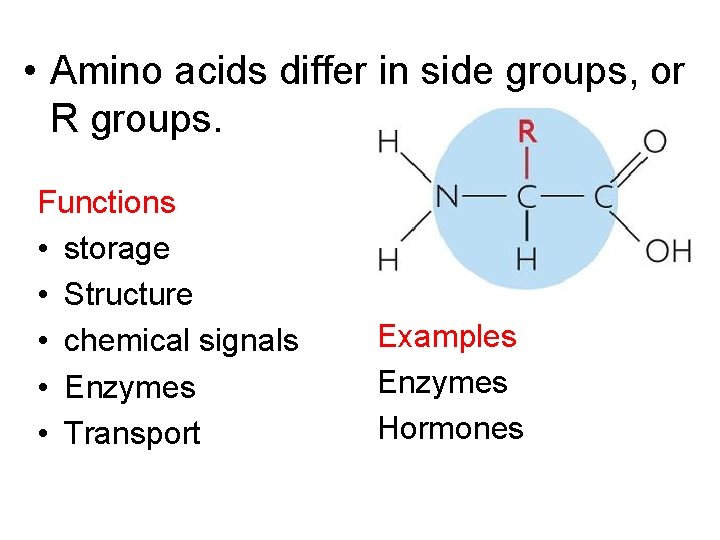
• Amino acids differ in side groups, or R groups. Functions • storage • Structure • chemical signals • Enzymes • Transport Examples Enzymes Hormones
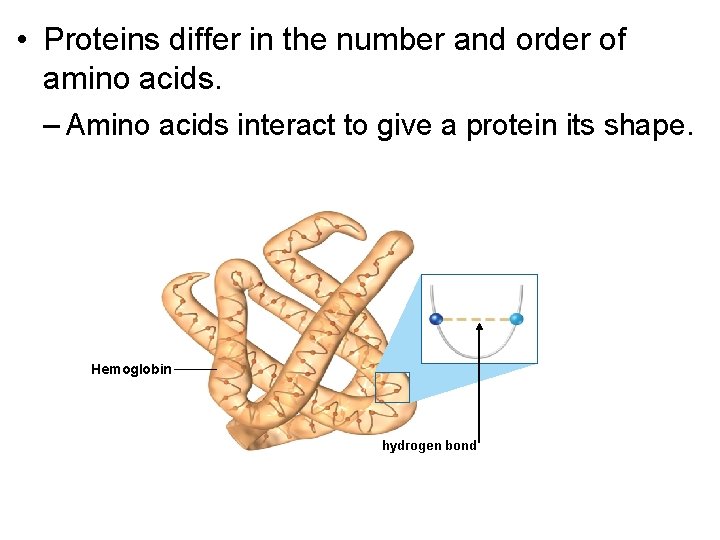
• Proteins differ in the number and order of amino acids. – Amino acids interact to give a protein its shape. Hemoglobin hydrogen bond
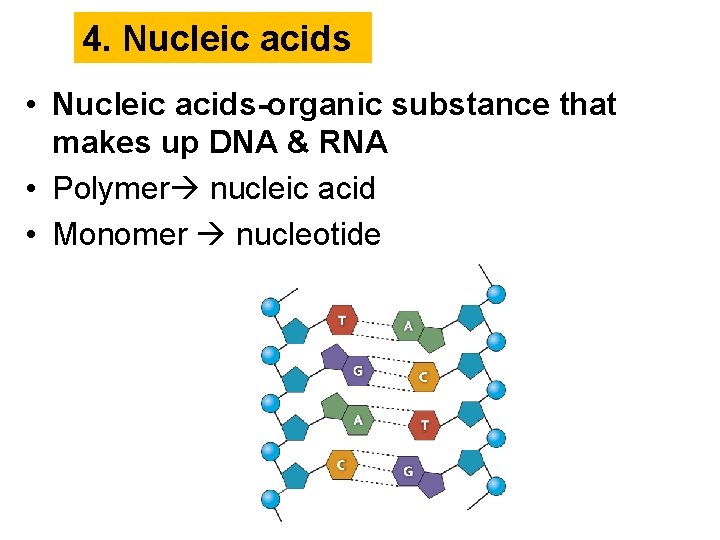
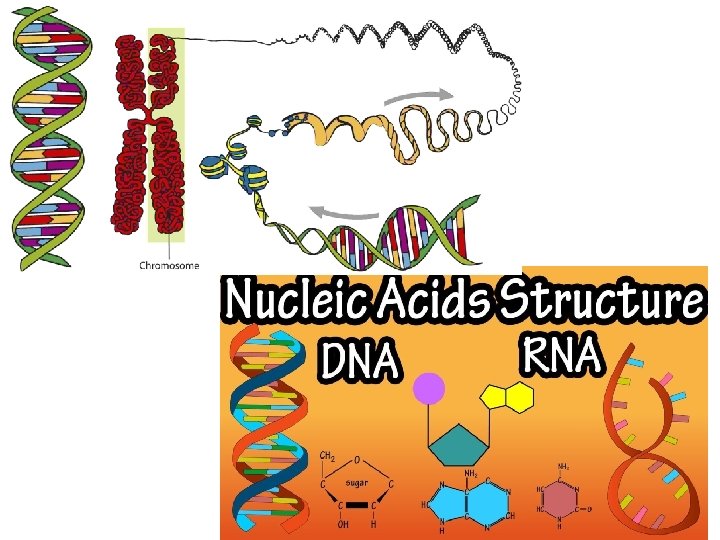
4. Nucleic acids • Nucleic acids-organic substance that makes up DNA & RNA • Polymer nucleic acid • Monomer nucleotide
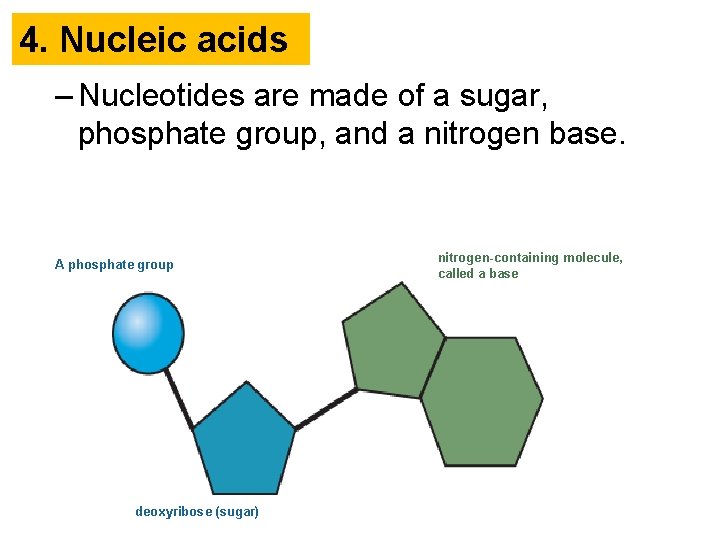
4. Nucleic acids – Nucleotides are made of a sugar, phosphate group, and a nitrogen base. A phosphate group deoxyribose (sugar) nitrogen-containing molecule, called a base
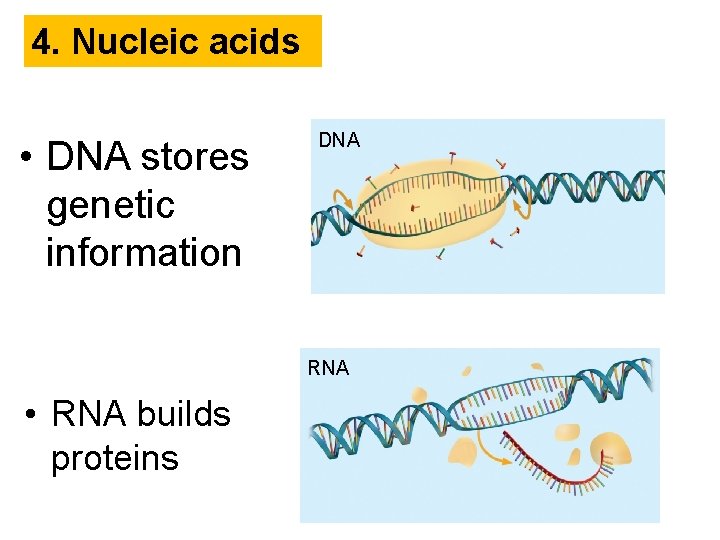
4. Nucleic acids • DNA stores genetic information DNA RNA • RNA builds proteins

https: //www. youtube. com/watch? v=YO 24 4 P 1 e 9 QM Amoeba Sisters: Video Recap Worksheet
- Slides: 23