
Carbohydrates Water of carbon Functions Provides and stores
Carbohydrates “Water of carbon”
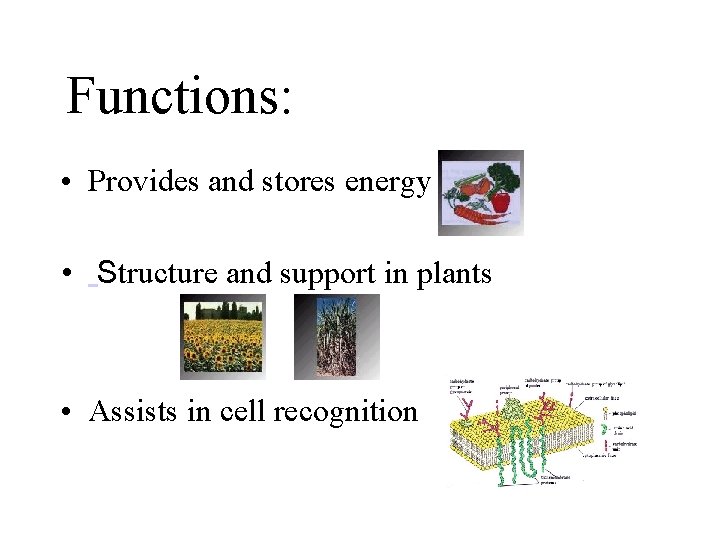
Functions: • Provides and stores energy • Structure and support in plants • Assists in cell recognition
I. Structure/Features A. Special Properties: * end in “ose” * in water, simple sugars form a ring structure
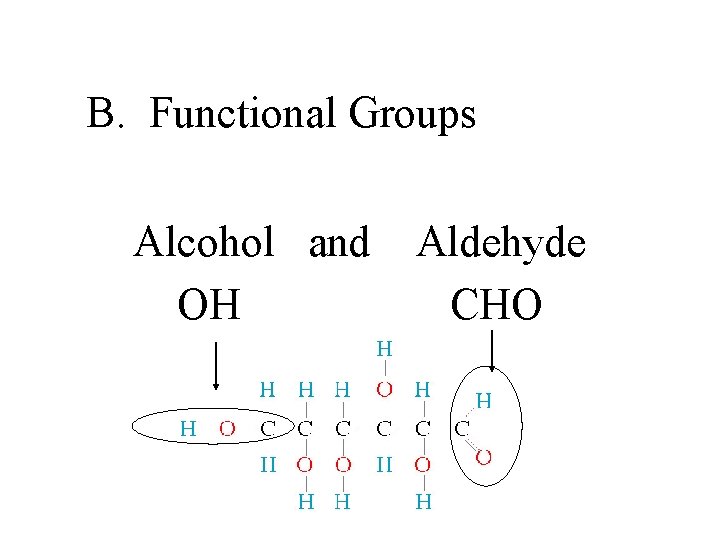
B. Functional Groups Alcohol and OH Aldehyde CHO
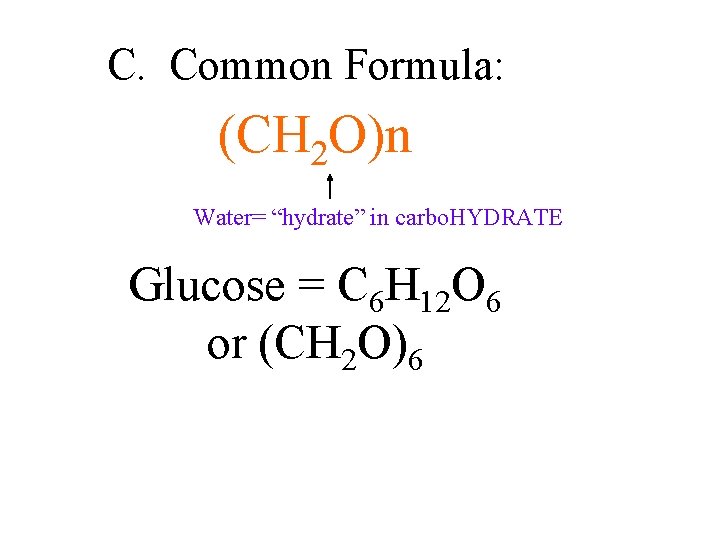
C. Common Formula: (CH 2 O)n Water= “hydrate” in carbo. HYDRATE Glucose = C 6 H 12 O 6 or (CH 2 O)6
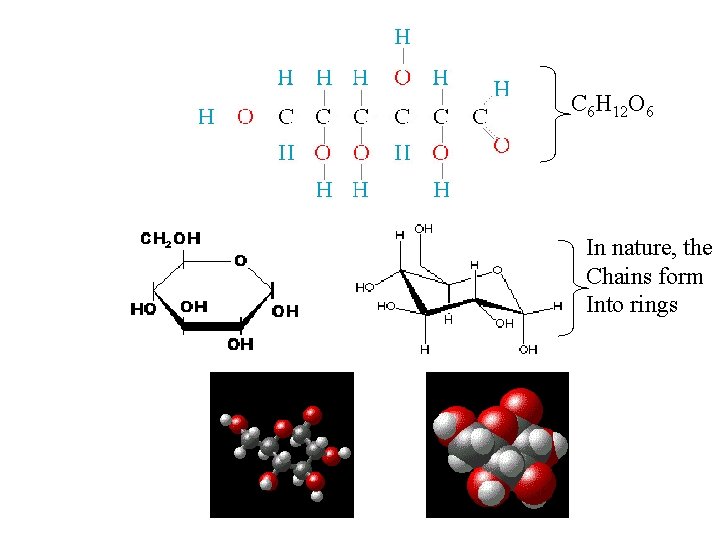
C 6 H 12 O 6 In nature, the Chains form Into rings
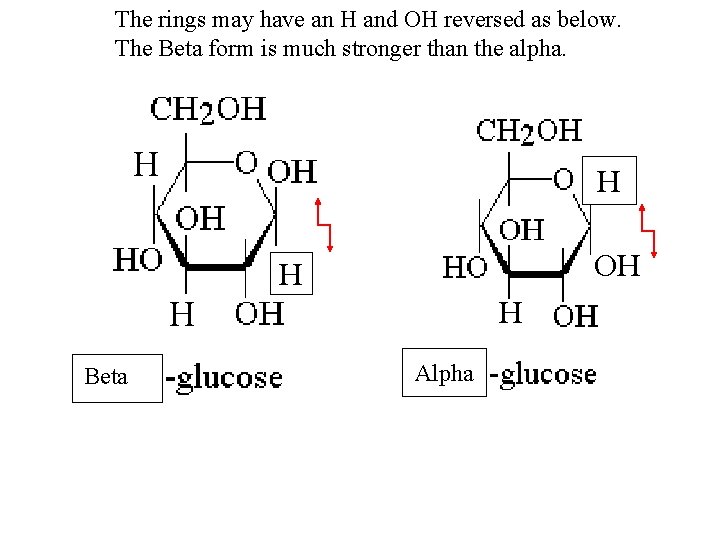
The rings may have an H and OH reversed as below. The Beta form is much stronger than the alpha. H H OH H Beta Alpha
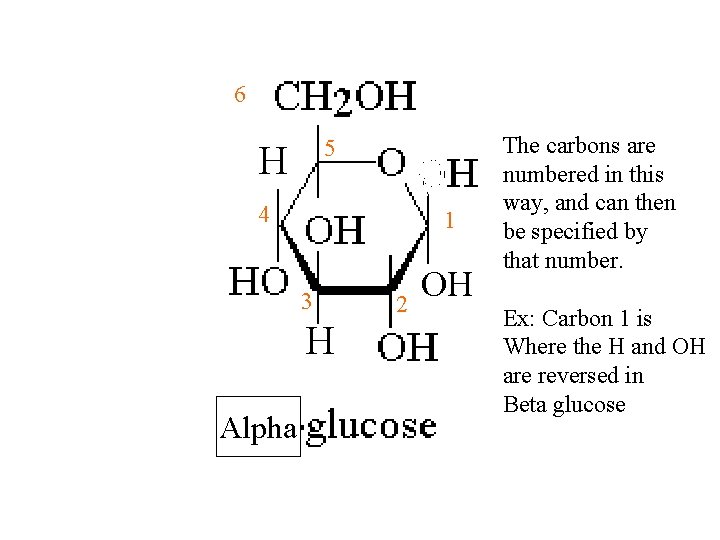
6 5 H 4 1 3 H Alpha 2 OH The carbons are numbered in this way, and can then be specified by that number. Ex: Carbon 1 is Where the H and OH are reversed in Beta glucose
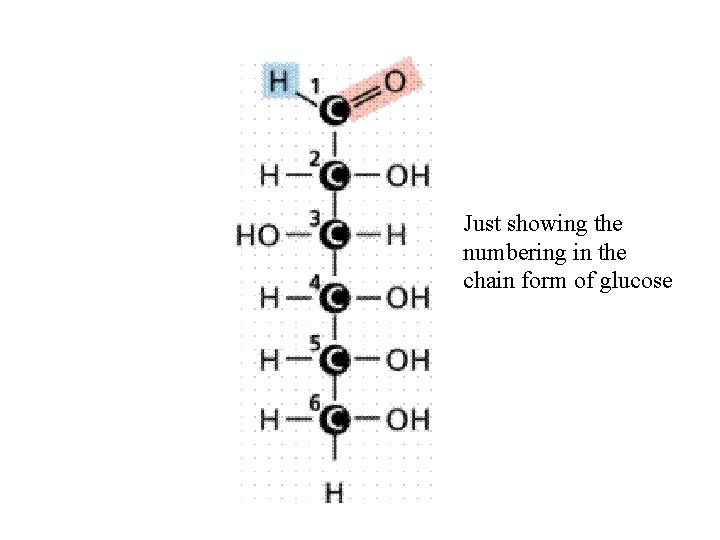
Just showing the numbering in the chain form of glucose
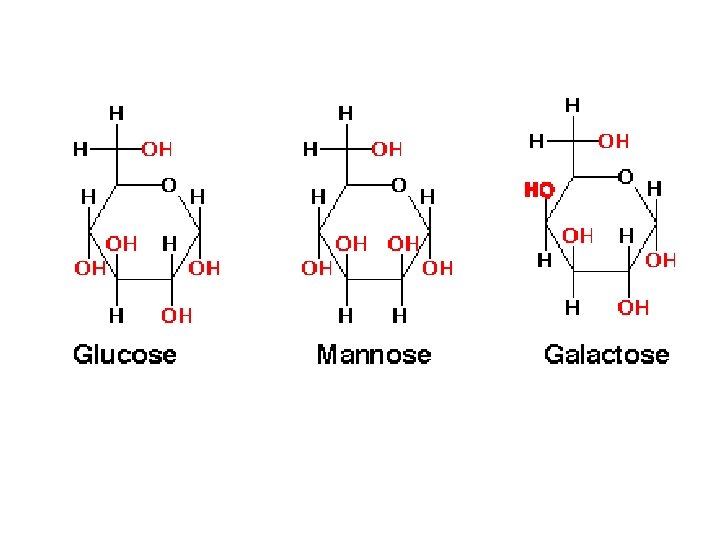
II. Types of Carbohydrates A. Monosaccharides B. *Simple Sugars *Smallest unit of carbohydrates Ex. Glucose, Fructose, Galactose, Mannose
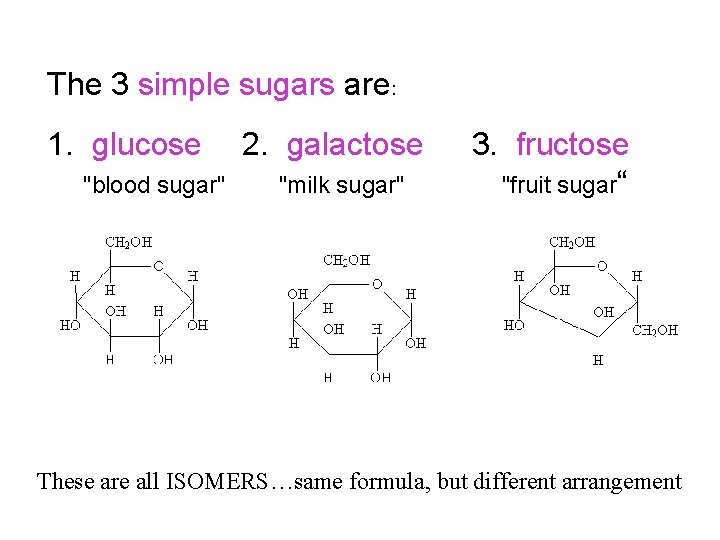
The 3 simple sugars are: 1. glucose "blood sugar" 2. galactose "milk sugar" 3. fructose "fruit sugar“ These are all ISOMERS…same formula, but different arrangement
B. Disaccharides *Two bonded monosaccharides Ex. Sucrose ( glucose + fructose) Maltose ( glucose + glucose) Lactose ( glucose + galactose) Notice they all contain glucose!
(Bonding Monosaccharides) Condensation or Dehydration Synthesis Reaction • Two or more monosaccharides bond together where one loses “H” and the other loses “OH”, forming water and the complex molecule (here a disaccharide)
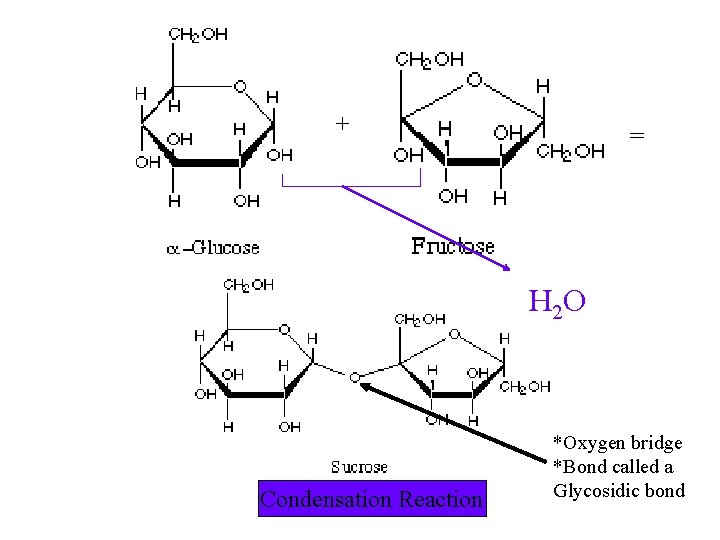
+ = H 2 O Condensation Reaction *Oxygen bridge *Bond called a Glycosidic bond
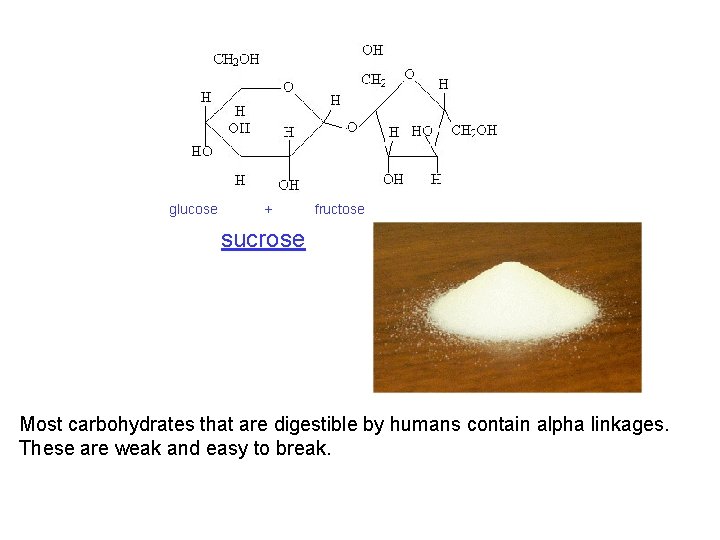
glucose + fructose sucrose Most carbohydrates that are digestible by humans contain alpha linkages. These are weak and easy to break.
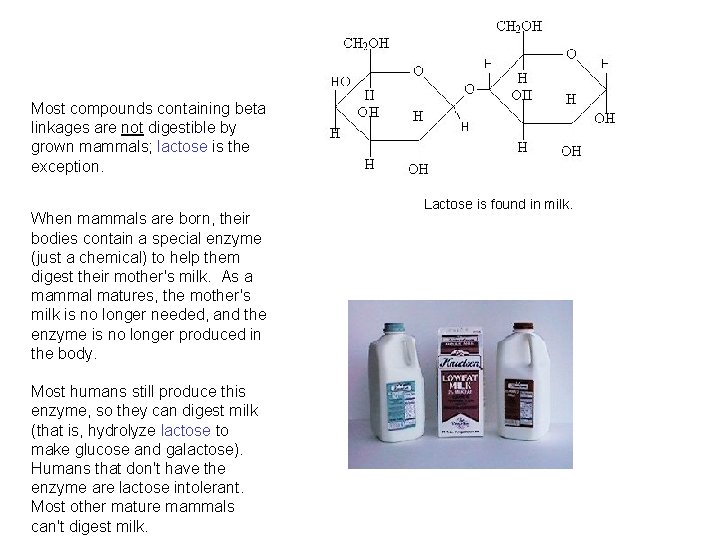
Most compounds containing beta linkages are not digestible by grown mammals; lactose is the exception. When mammals are born, their bodies contain a special enzyme (just a chemical) to help them digest their mother's milk. As a mammal matures, the mother's milk is no longer needed, and the enzyme is no longer produced in the body. Most humans still produce this enzyme, so they can digest milk (that is, hydrolyze lactose to make glucose and galactose). Humans that don't have the enzyme are lactose intolerant. Most other mature mammals can't digest milk. Lactose is found in milk.
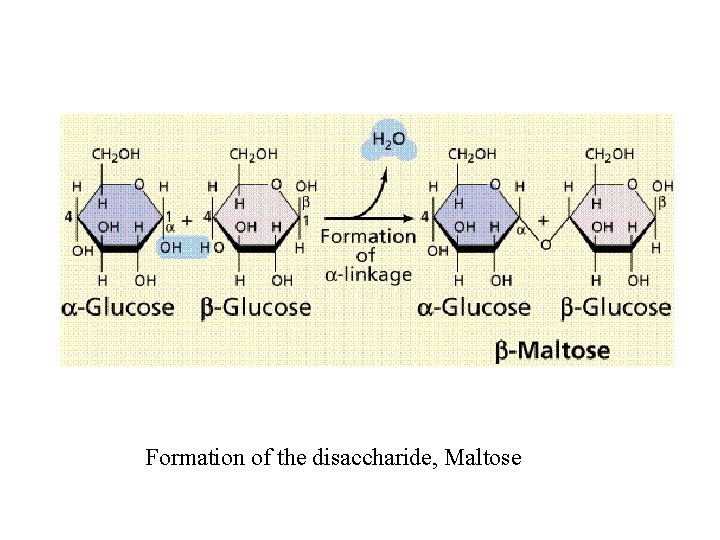
Formation of the disaccharide, Maltose
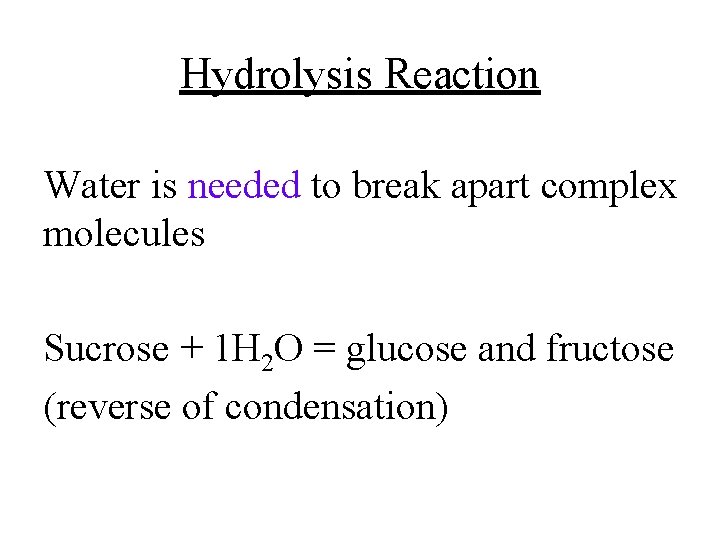
Hydrolysis Reaction Water is needed to break apart complex molecules Sucrose + 1 H 2 O = glucose and fructose (reverse of condensation)
C. Polysaccharides • Many monosaccharides bound together • all glucose • different bonding patterns and carbon skeleton Ex. Glycogen, Starch, Cellulose
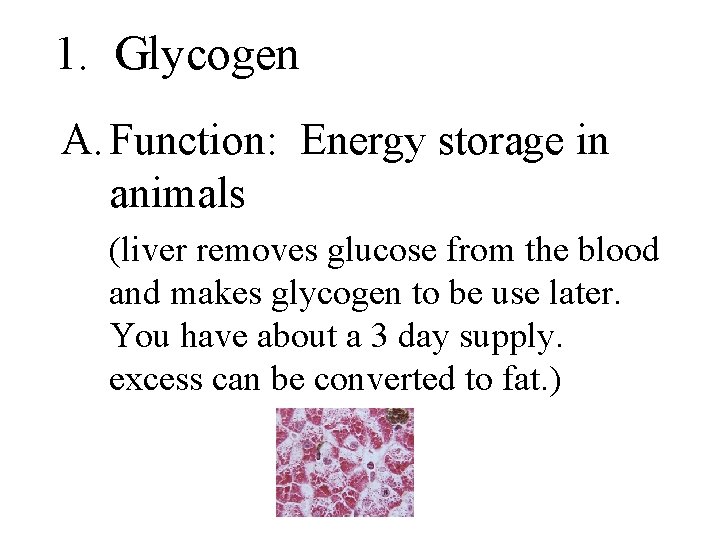
1. Glycogen A. Function: Energy storage in animals (liver removes glucose from the blood and makes glycogen to be use later. You have about a 3 day supply. excess can be converted to fat. )
B. Structure: C. *Alpha- glucose in chains with Carbon #1 attaching to Carbon #4 of the other Glucose. Called 1 -4 bonding D. * every 8 -10 links is a short 1 -6 branch. E. F. of Carbon #1 of one glucose to carbon #6 another G. * long chains with many short branches
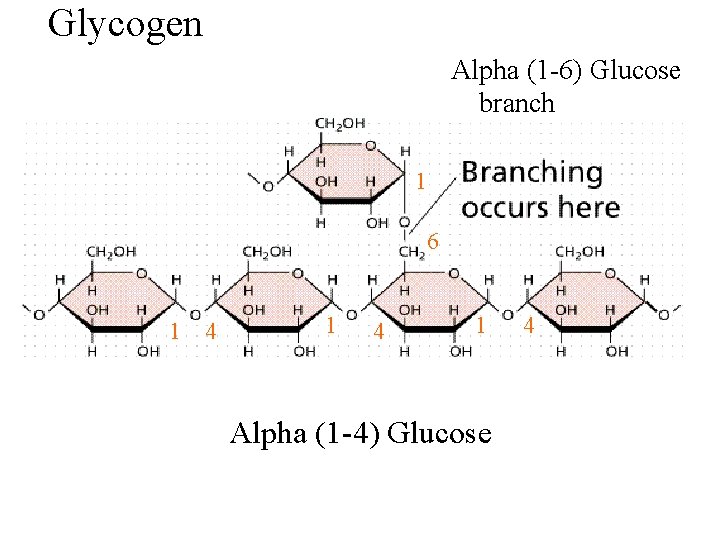
Glycogen Alpha (1 -6) Glucose branch 1 6 1 4 1 Alpha (1 -4) Glucose 4
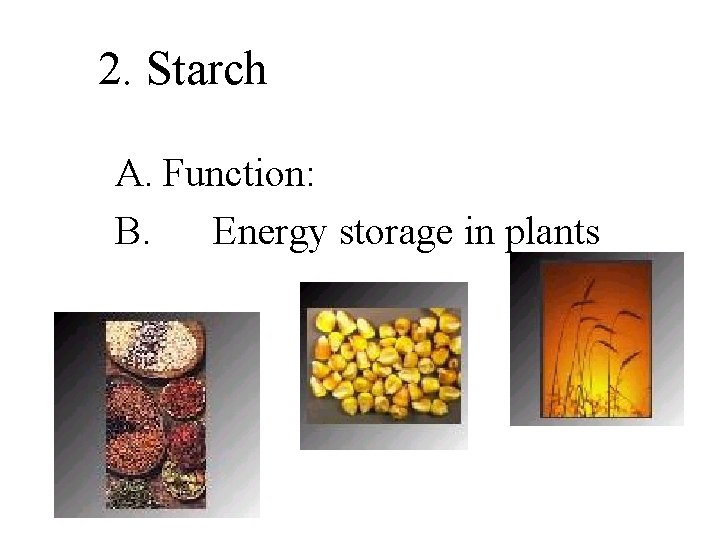
2. Starch A. Function: B. Energy storage in plants
B. Structure *Alpha- glucose in chains with 1 -4 bonds *every 1 -4 links is a long 1 -6 branch * long chains with long branches * Two types: Amylose, Amylopectin
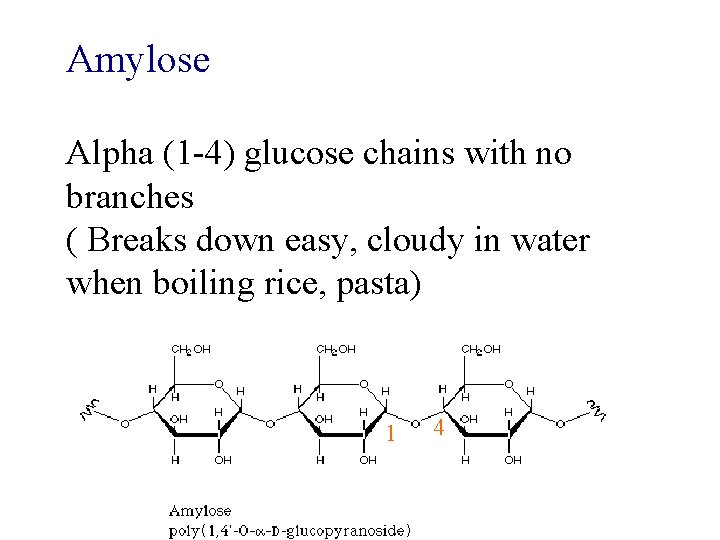
Amylose Alpha (1 -4) glucose chains with no branches ( Breaks down easy, cloudy in water when boiling rice, pasta) 1 4
Amylopectin Alpha (1 -4) glucose chains with (1 -6) branches ( Hard to break down, the part you eat of the pasta and rice)
3. Cellulose A. Function: Building material in plants (stems, leaves…) to provide shape and support.
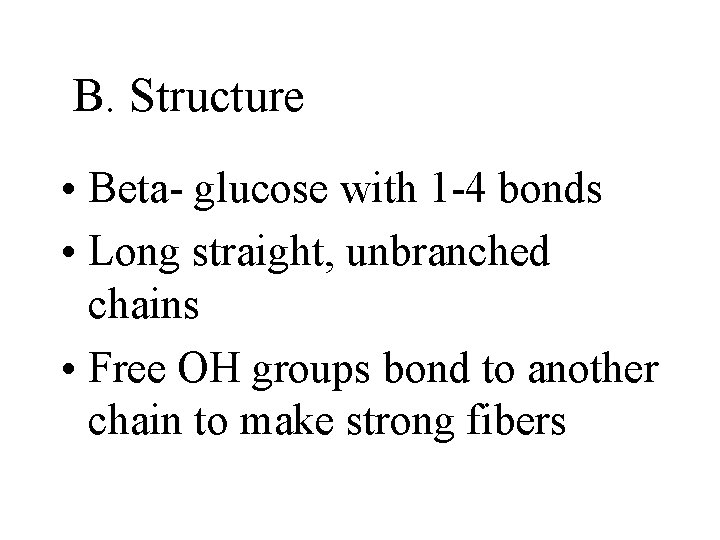
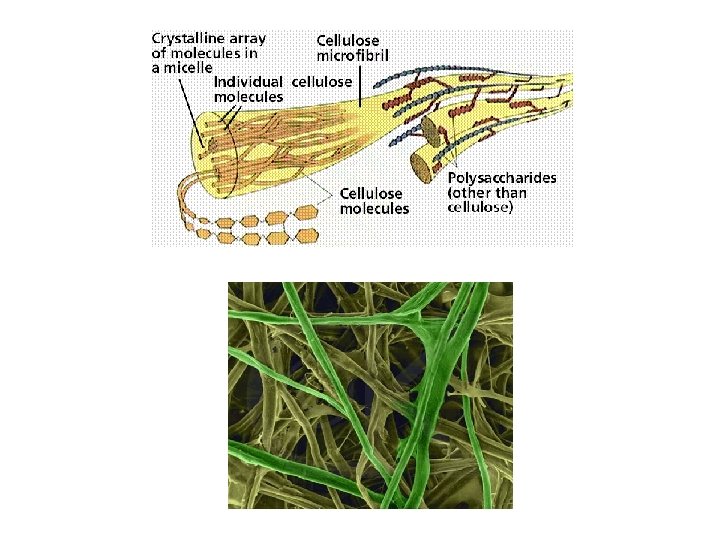
B. Structure • Beta- glucose with 1 -4 bonds • Long straight, unbranched chains • Free OH groups bond to another chain to make strong fibers

1 4 Beta-Glucose
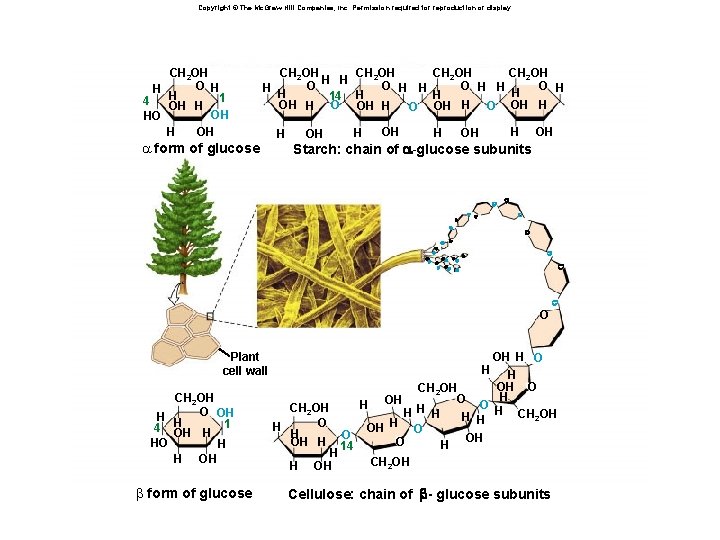
Copyright © The Mc. Graw-Hill Companies, Inc. Permission required for reproduction or display. CH 2 OH O H H H 1 4 OH HO H OH CH 2 OH H H O O H H H H H 14 H OH H O OH H a form of glucose H OH H H OH OH Starch: chain of a-glucose subunits O Plant cell wall CH 2 OH H H O OH 4 OH H 1 HO H H OH b form of glucose OH H O OH CH 2 OH H O CH 2 OH HH H OH O OH H 14 H H CH 2 OH H Cellulose: chain of b- glucose subunits
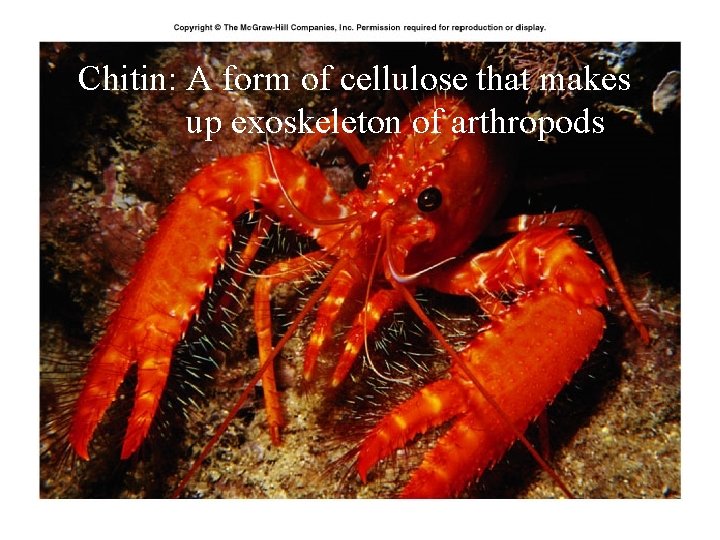
Chitin: A form of cellulose that makes up exoskeleton of arthropods
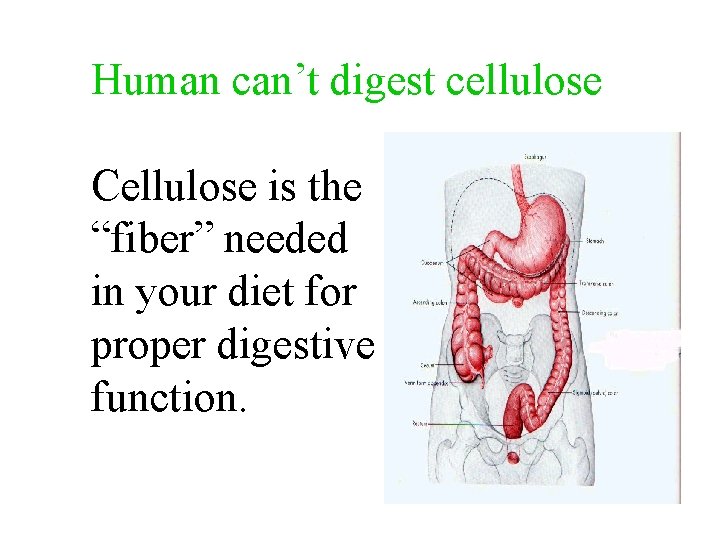
Human can’t digest cellulose Cellulose is the “fiber” needed in your diet for proper digestive function.
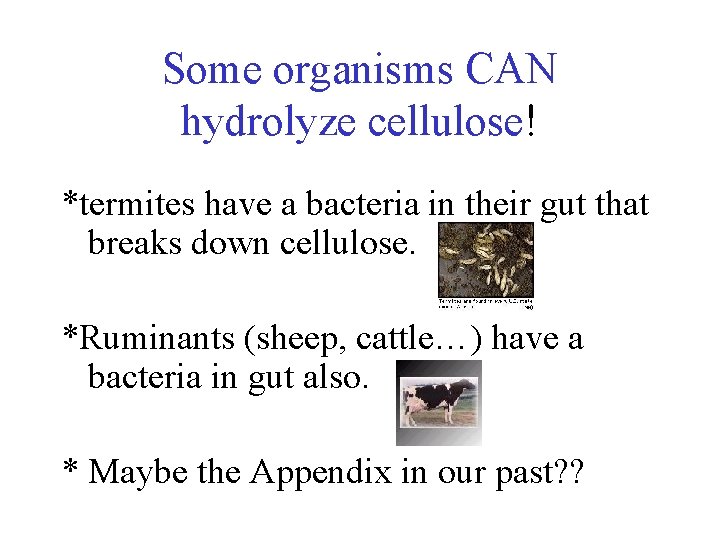
Some organisms CAN hydrolyze cellulose! *termites have a bacteria in their gut that breaks down cellulose. *Ruminants (sheep, cattle…) have a bacteria in gut also. * Maybe the Appendix in our past? ?

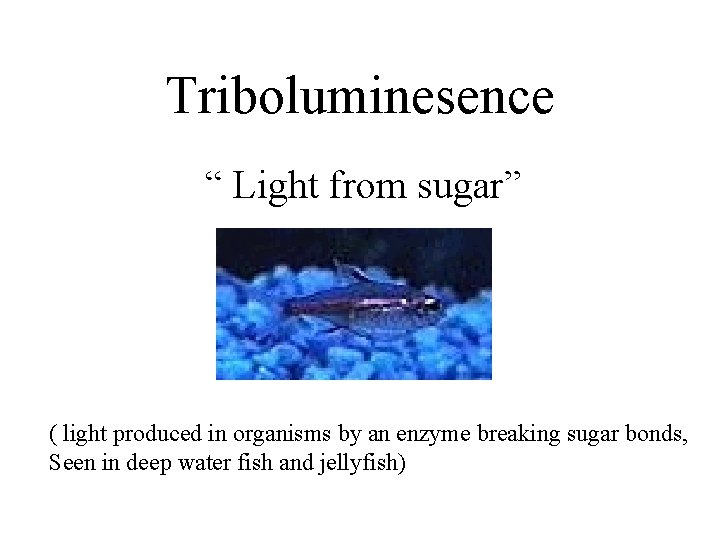
Triboluminesence “ Light from sugar” ( light produced in organisms by an enzyme breaking sugar bonds, Seen in deep water fish and jellyfish)
See it yourself! Bite on a wintergreen lifesaver with your mouth open While looking in a mirror in your dark ( lights out) bathroom. You will See sparks! Wintergreen only and not sugarfree ones
- Slides: 38