
Carbohydrates Structure and Function How do we define
Carbohydrates
Structure and Function • How do we define a carbohydrate? • aldehydes or ketones with multiple hydroxyl groups • “hydrate” of carbon – C-H 2 O • What are some of the functions of carbohydrates? • fuel for cells • storage of energy • cell structure • metabolic intermediates • cell-cell recognition
Monosaccharides • How is an aldose different from a ketose? • H-C=O versus C=O • How do we classify monosaccharides? • number of carbon atoms (3 -9) • • trioses tetroses pentoses hexoses
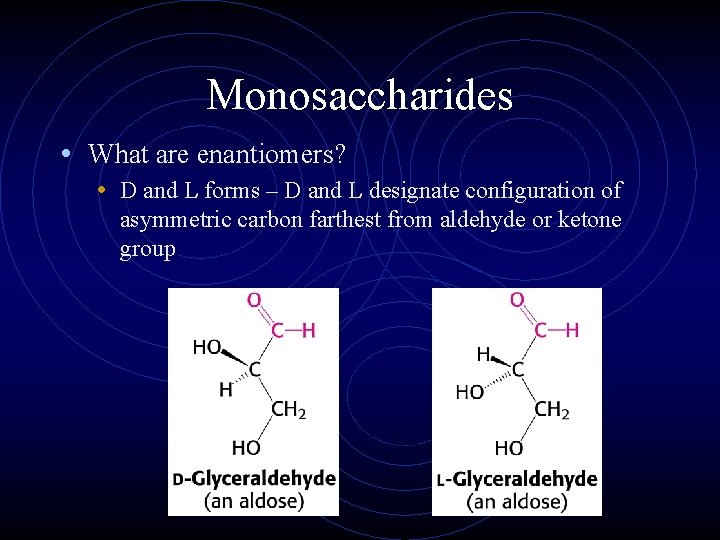
Monosaccharides • What are enantiomers? • D and L forms – D and L designate configuration of asymmetric carbon farthest from aldehyde or ketone group
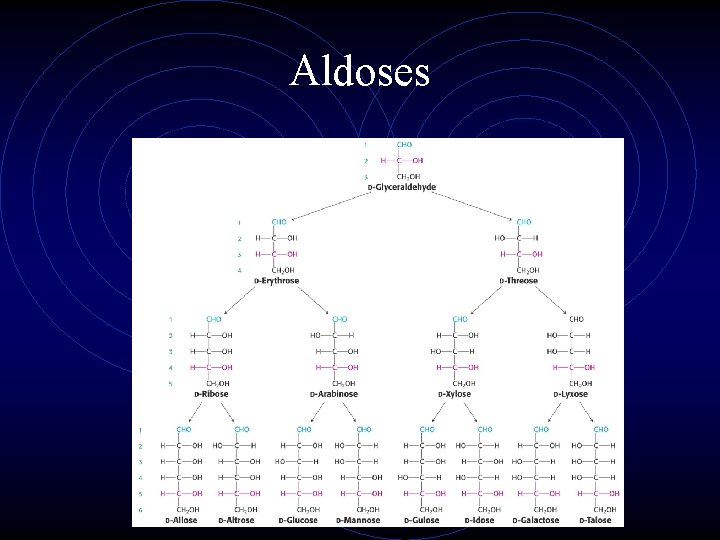
Aldoses

Ketoses
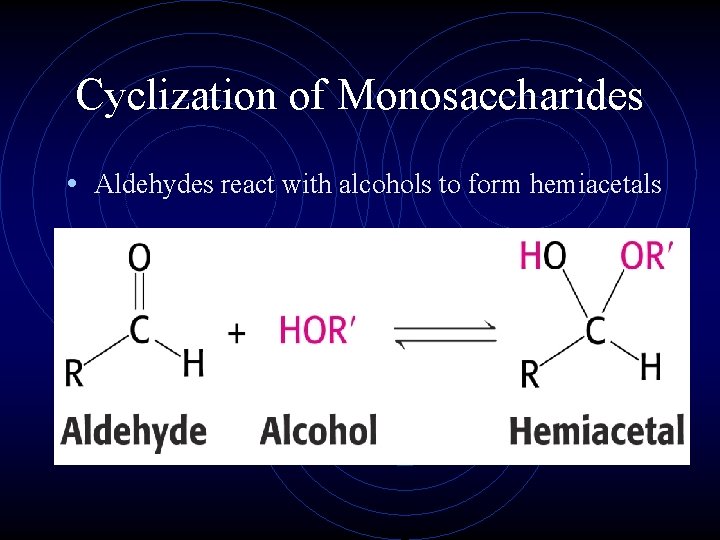
Cyclization of Monosaccharides • Aldehydes react with alcohols to form hemiacetals
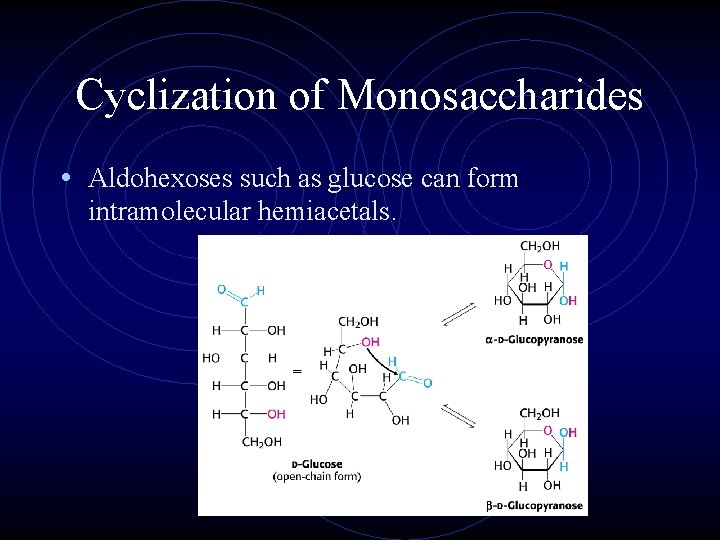
Cyclization of Monosaccharides • Aldohexoses such as glucose can form intramolecular hemiacetals.
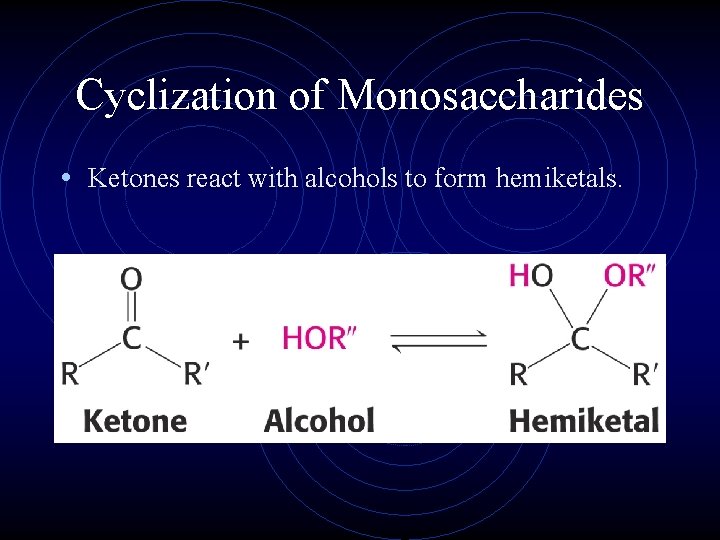
Cyclization of Monosaccharides • Ketones react with alcohols to form hemiketals.
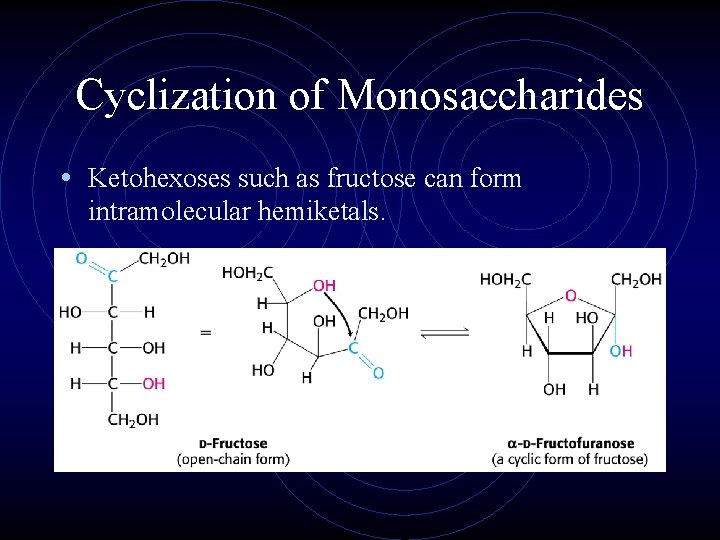
Cyclization of Monosaccharides • Ketohexoses such as fructose can form intramolecular hemiketals.
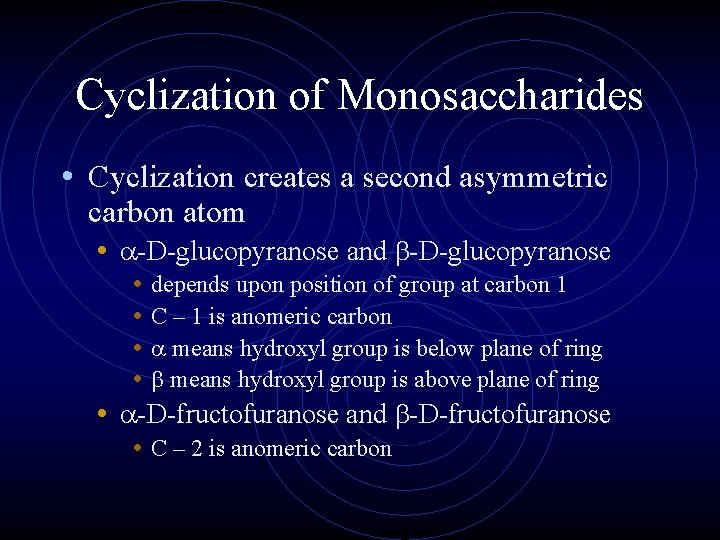
Cyclization of Monosaccharides • Cyclization creates a second asymmetric carbon atom • -D-glucopyranose and -D-glucopyranose • depends upon position of group at carbon 1 • C – 1 is anomeric carbon • means hydroxyl group is below plane of ring • means hydroxyl group is above plane of ring • -D-fructofuranose and -D-fructofuranose • C – 2 is anomeric carbon
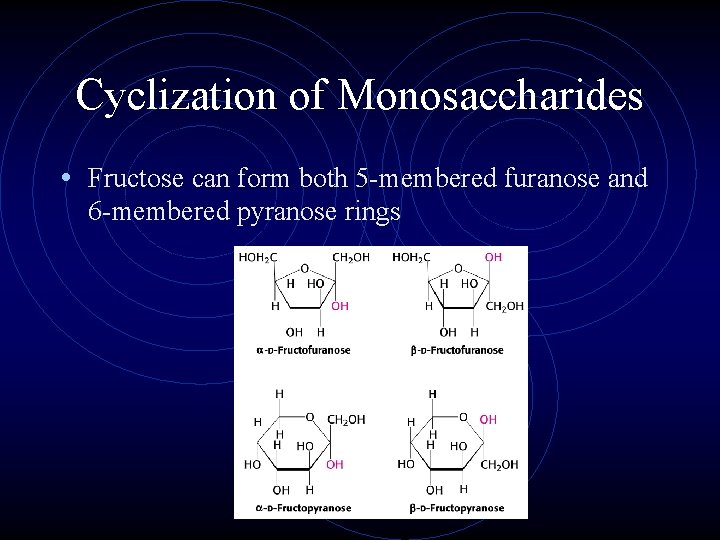
Cyclization of Monosaccharides • Fructose can form both 5 -membered furanose and 6 -membered pyranose rings
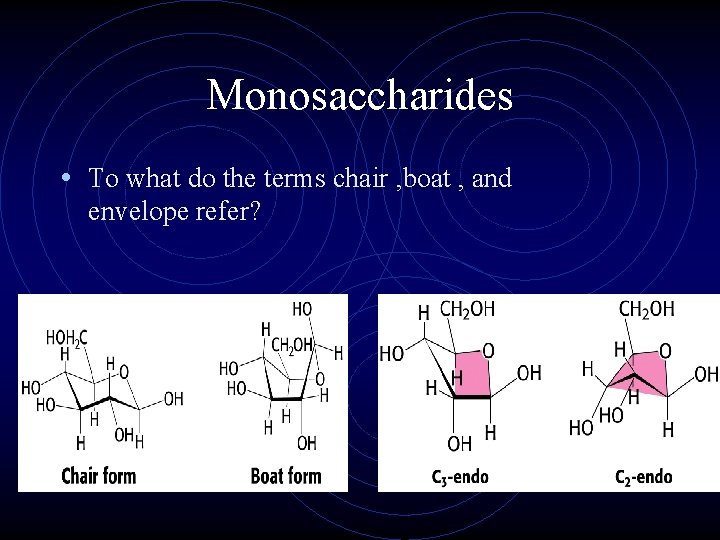
Monosaccharides • To what do the terms chair , boat , and envelope refer?
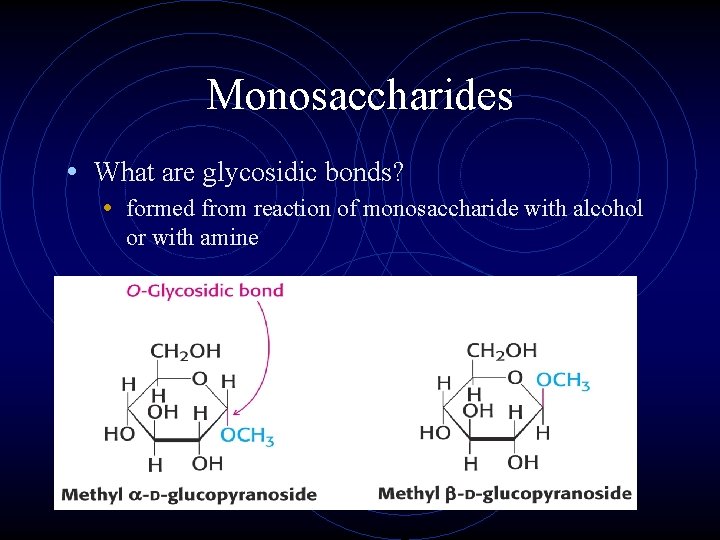
Monosaccharides • What are glycosidic bonds? • formed from reaction of monosaccharide with alcohol or with amine
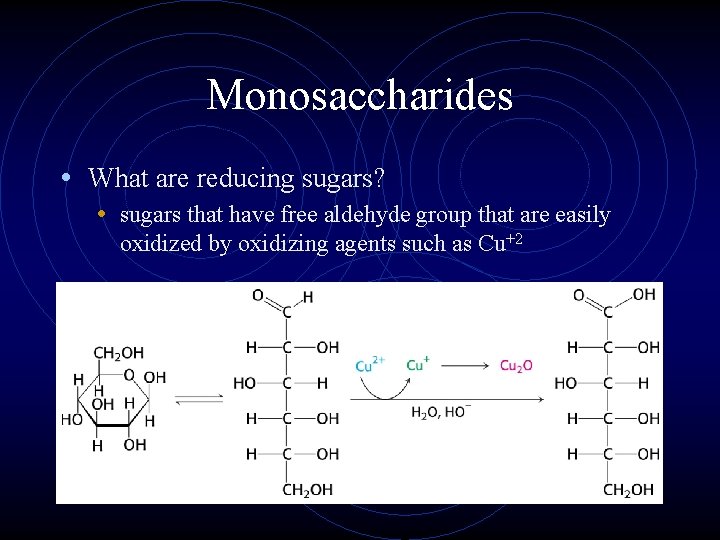
Monosaccharides • What are reducing sugars? • sugars that have free aldehyde group that are easily oxidized by oxidizing agents such as Cu+2
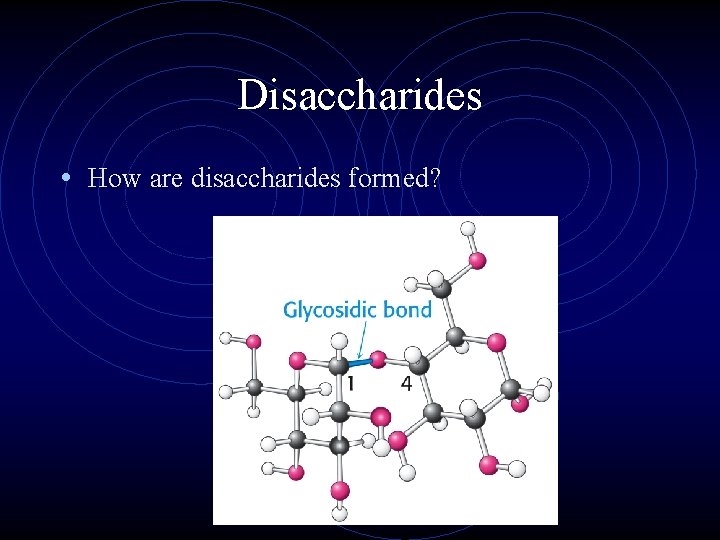
Disaccharides • How are disaccharides formed?
Disaccharides • What are the most common disaccharides? • sucrose • maltose • lactose
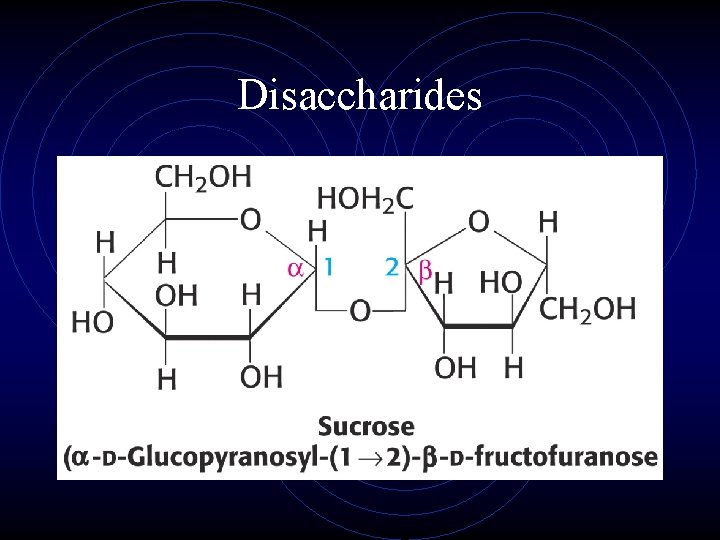
Disaccharides
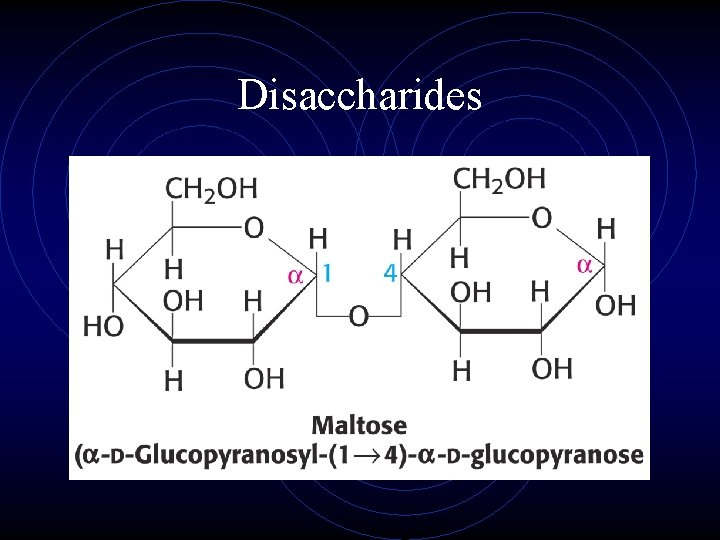
Disaccharides
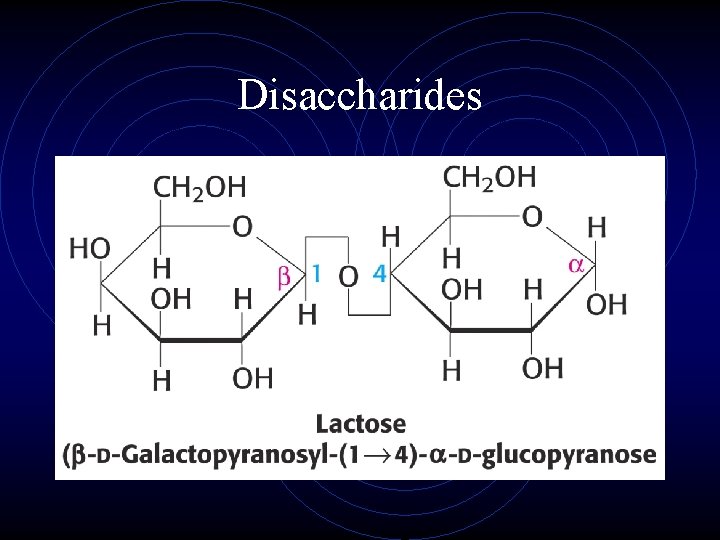
Disaccharides
Polysaccharides • What do glycogen and starch have in common? • polymers of glucose • homopolymers • How are glycogen and starch different? • glycogen - major storage form in animals • starch – major storage form in plants
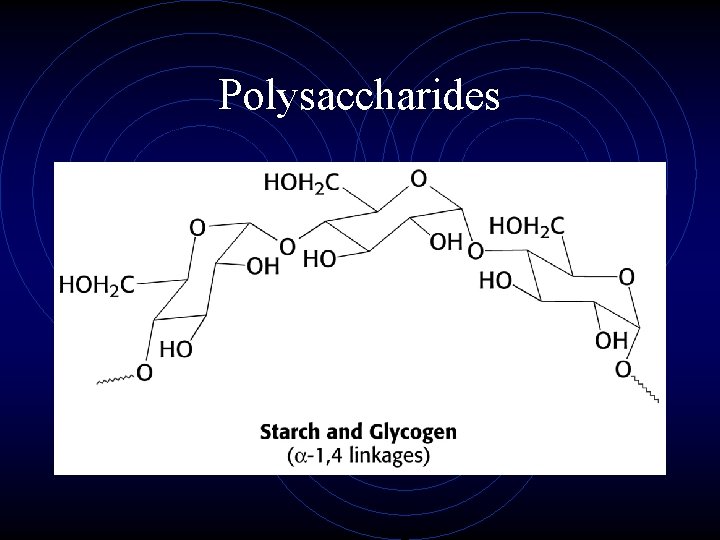
Polysaccharides
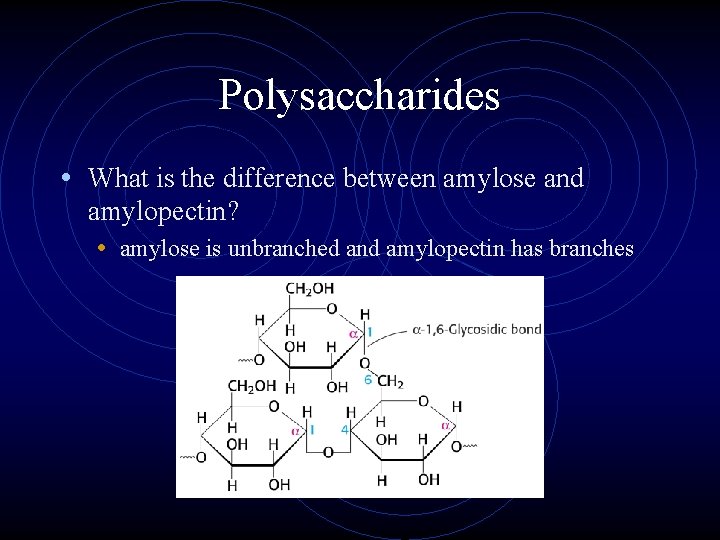
Polysaccharides • What is the difference between amylose and amylopectin? • amylose is unbranched and amylopectin has branches
Polysaccharides • How is cellulose similar to and different from starch? • both found in plants • both made of glucose units • cellulose is structural, starch is nutritional • starch contains linkages and cellulose linkages
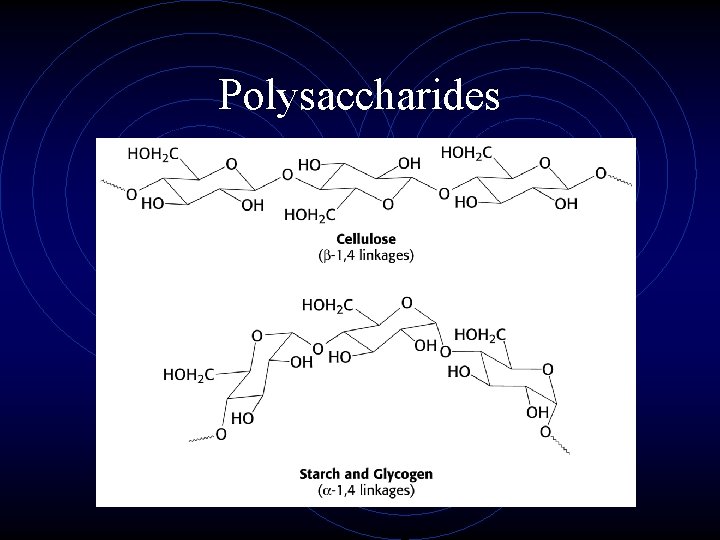
Polysaccharides
Polysaccharides • What are glycosaminoglycans? • polysaccharides made of repeating units of disaccharides containing a derivative of an amino sugar • one of the sugars in unit has negatively charged carboxylate or sulfate group • usually attached to proteins • proteoglycans
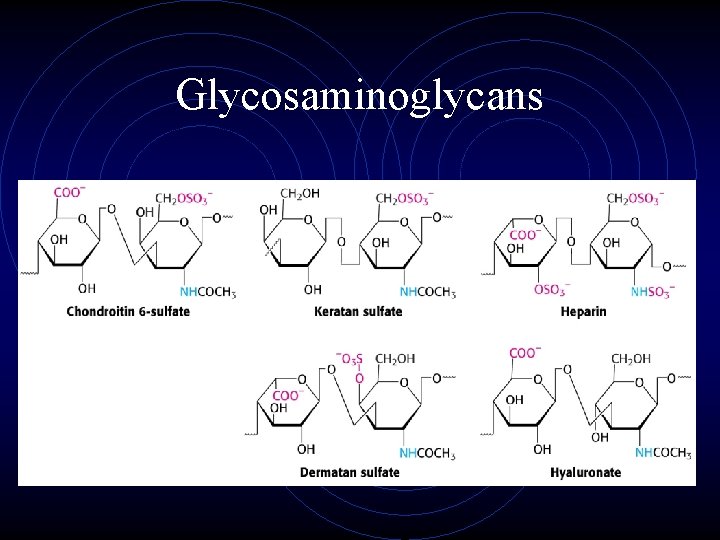
Glycosaminoglycans
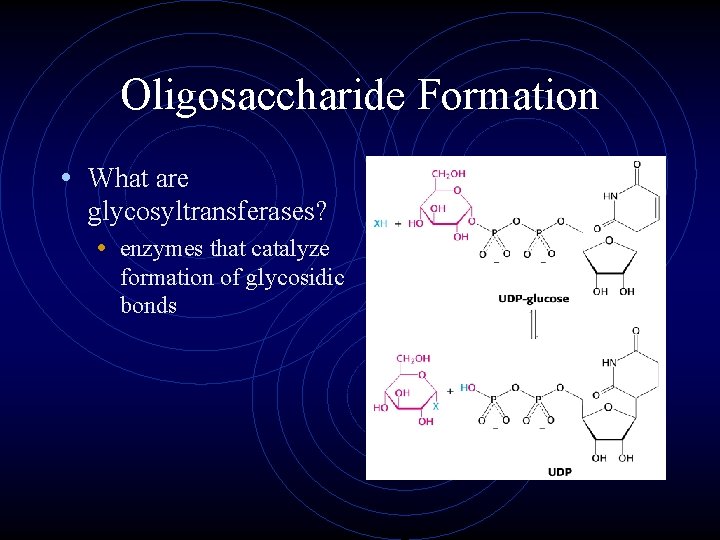
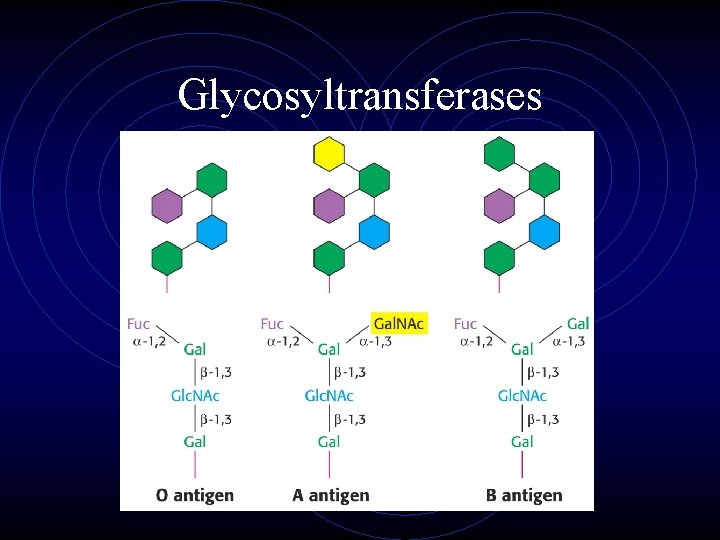
Oligosaccharide Formation • What are glycosyltransferases? • enzymes that catalyze formation of glycosidic bonds
Glycosyltransferases • What is the connection between these enzymes and the human blood groups? • A, B, and O blood groups have different oligosaccharides attached to glycoproteins and glycolipids on surface • A and B have one extra monosaccharide unit added by glycosyltransferase
Glycosyltransferases
- Slides: 30