
Carbohydrates Section 3 2 Learning Objectives Explain the
Carbohydrates Section 3. 2
Learning Objectives § Explain the difference between monosaccharides, disaccharides, & polysaccharides § Give examples of monosaccharides, disaccharides, & polysaccharides § Compare storage polysaccharides with structural polysaccharides
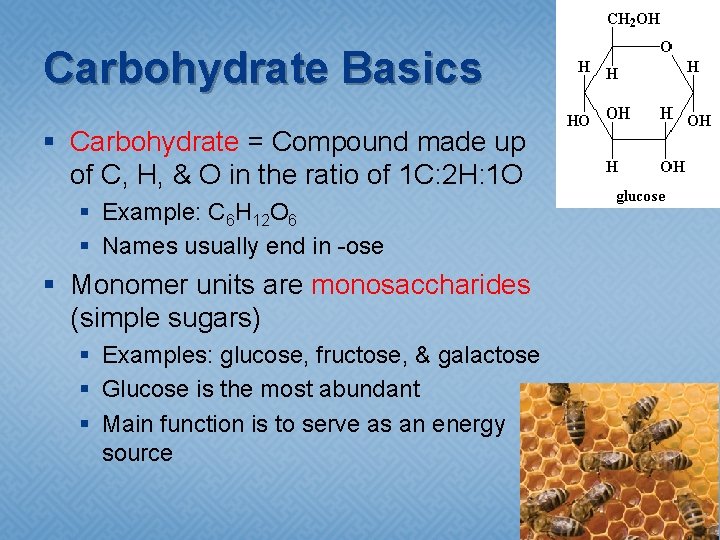
Carbohydrate Basics § Carbohydrate = Compound made up of C, H, & O in the ratio of 1 C: 2 H: 1 O § Example: C 6 H 12 O 6 § Names usually end in -ose § Monomer units are monosaccharides (simple sugars) § Examples: glucose, fructose, & galactose § Glucose is the most abundant § Main function is to serve as an energy source
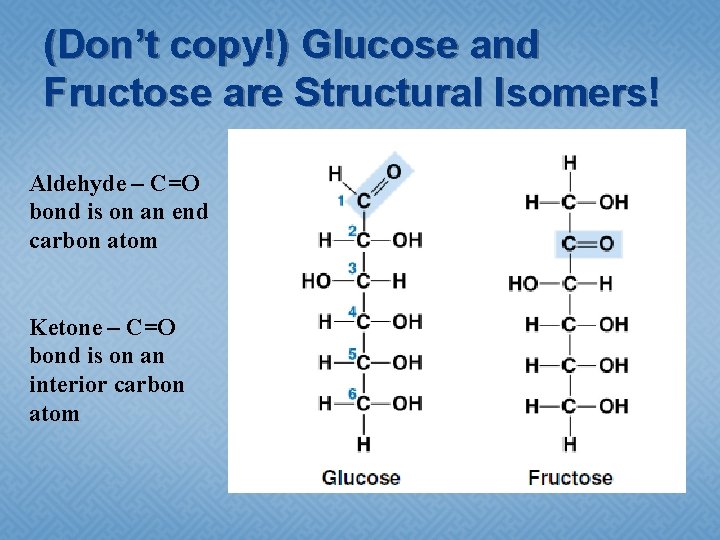
(Don’t copy!) Glucose and Fructose are Structural Isomers! Aldehyde – C=O bond is on an end carbon atom Ketone – C=O bond is on an interior carbon atom
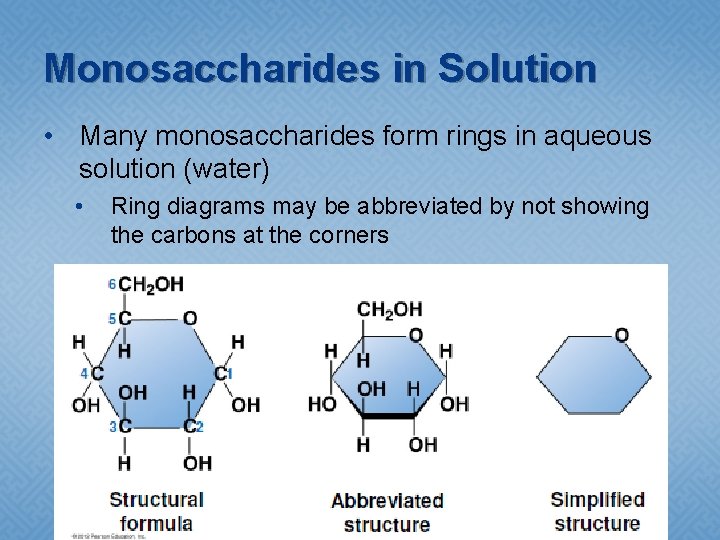
Monosaccharides in Solution • Many monosaccharides form rings in aqueous solution (water) • Ring diagrams may be abbreviated by not showing the carbons at the corners
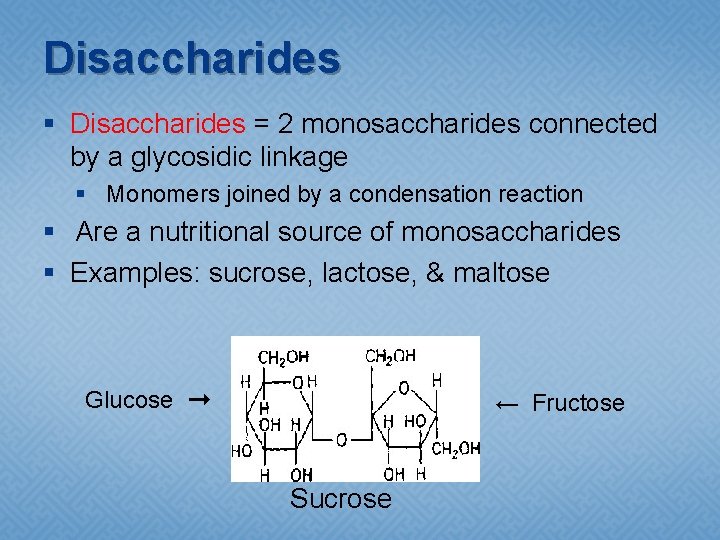
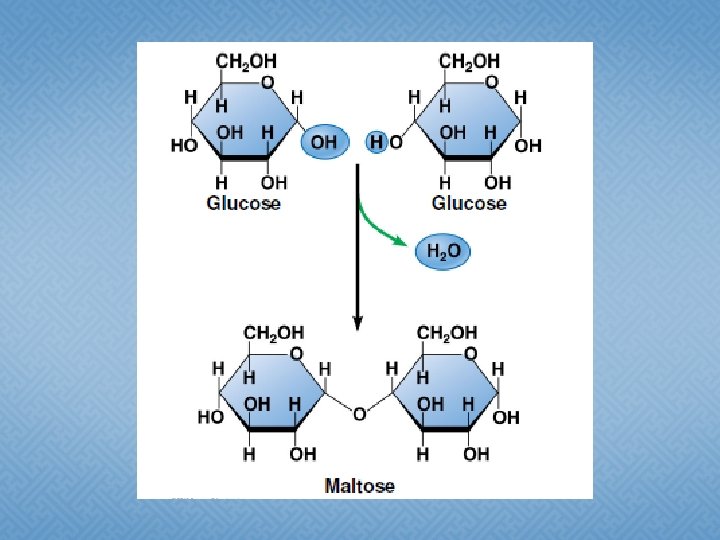
Disaccharides § Disaccharides = 2 monosaccharides connected by a glycosidic linkage § Monomers joined by a condensation reaction § Are a nutritional source of monosaccharides § Examples: sucrose, lactose, & maltose Glucose ➞ ← Fructose Sucrose
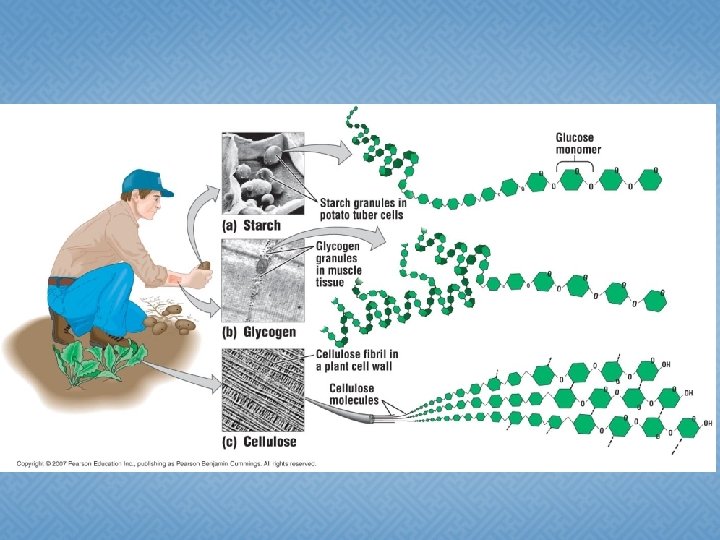
Polysaccharides § Polysaccharides —long chains of simple sugars § Function is energy storage and structural support § Examples include: § Starch —glucose storage in plants § Glycogen —glucose storage in animals § Cellulose —tough fibers that give plants strength and rigidity § Chitin – tough polymer found in cell walls of fungi (mushrooms) & exoskeletons of arthropods (ex. crustaceans & insects)
Digesting Cellulose § Animals do not have an enzyme that can break down cellulose § Can’t hydrolyze cellulose § There are some bacteria species that can digest cellulose § Live in the digestive system of termites, cows, and sheep
Other Carbohydrates § Glycoproteins = carbohydrate bonded to a protein § Found in the cell membrane of cells § Allow cells to stick to each other or provides protection § Glycolipids = carbohydrate bonded to a lipid molecule § Found in the cell membrane of cells § Allow cells to recognize & interact with each other
- Slides: 11