
Carbohydrates Macromolecule Monomer one molecule Polymer two or
Carbohydrates
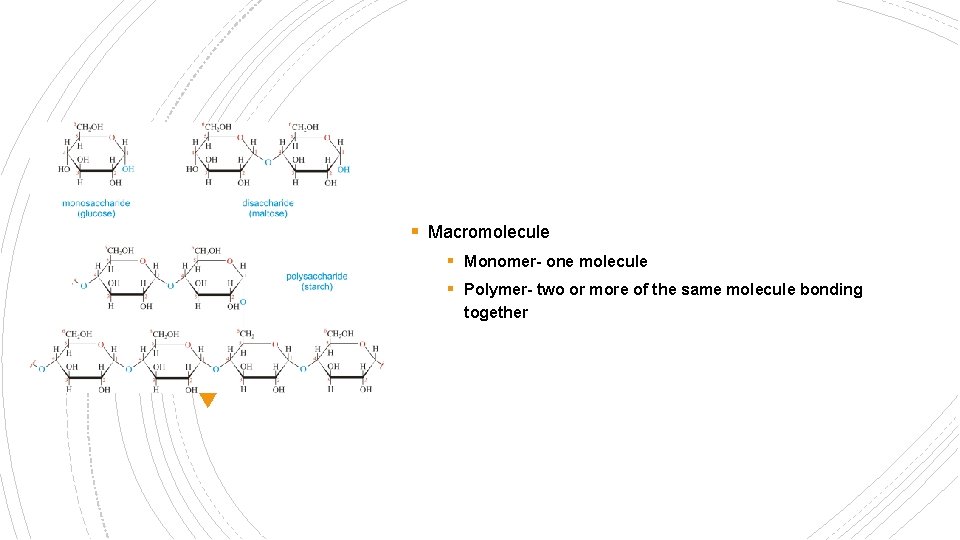
§ Macromolecule § Monomer- one molecule § Polymer- two or more of the same molecule bonding together
§ DEHYDRATION SYNTHESIS § De-Without § Hydro- Water Reactions § Synthesis put together § HYDROLYSIS § Hydro- water § Lysis-Break
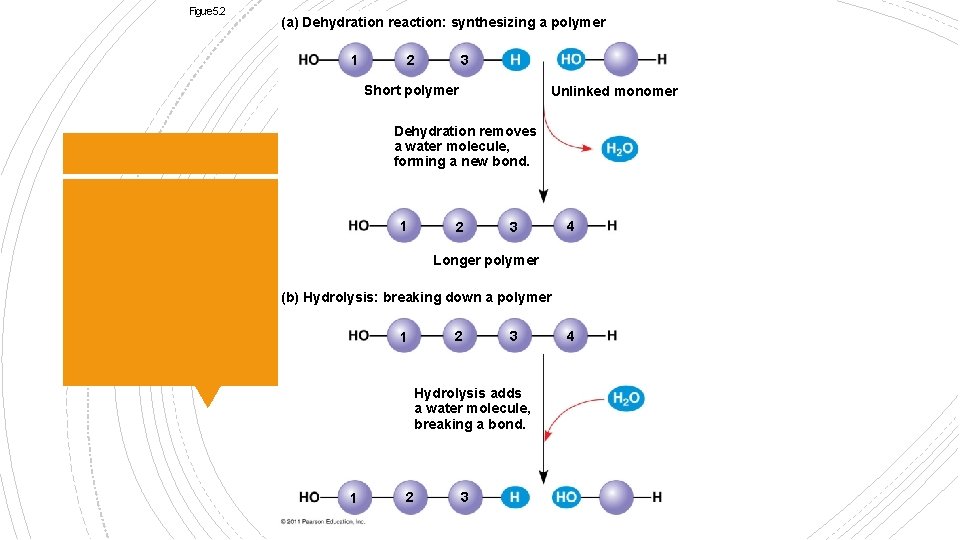
Figure 5. 2 (a) Dehydration reaction: synthesizing a polymer 1 2 3 Short polymer Unlinked monomer Dehydration removes a water molecule, forming a new bond. 1 2 3 4 Longer polymer (b) Hydrolysis: breaking down a polymer 1 2 3 Hydrolysis adds a water molecule, breaking a bond. 1 2 3 4
§ Low Carbohydrate Diets § People who eat less carbohydrates lose weight within days of eating minimal carbohydrates Case Study § Often times, when carbohydrates are reintroduced, the weight loss is reversed WHY? ? ?
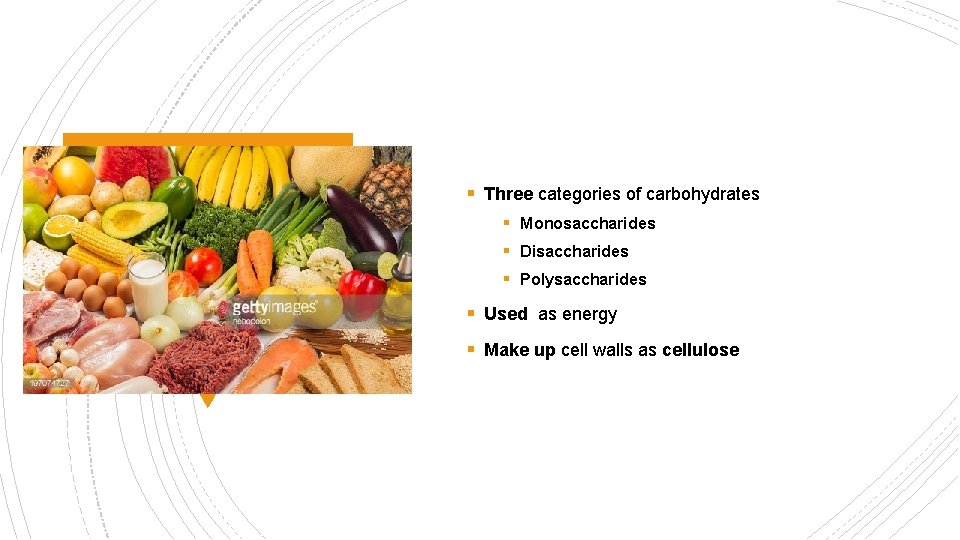
§ Three categories of carbohydrates § Monosaccharides Carbohydrates § Disaccharides § Polysaccharides § Used as energy § Make up cell walls as cellulose
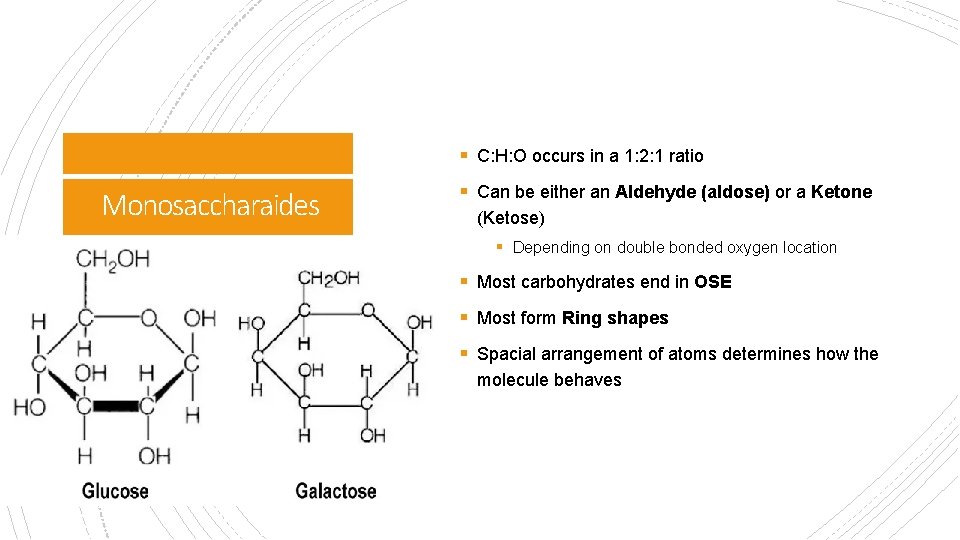
§ C: H: O occurs in a 1: 2: 1 ratio Monosaccharaides § Can be either an Aldehyde (aldose) or a Ketone (Ketose) § Depending on double bonded oxygen location § Most carbohydrates end in OSE § Most form Ring shapes § Spacial arrangement of atoms determines how the molecule behaves
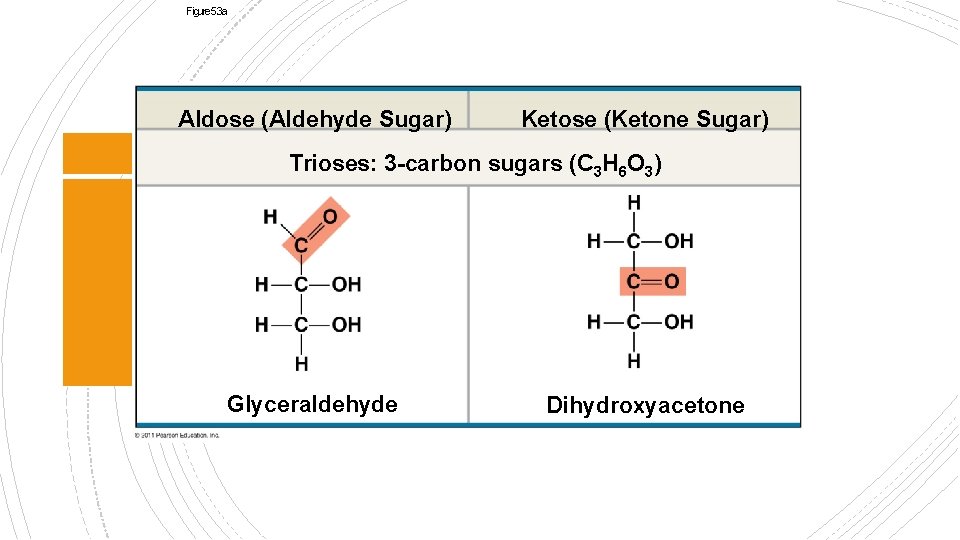
Figure 5. 3 a Aldose (Aldehyde Sugar) Ketose (Ketone Sugar) Trioses: 3 -carbon sugars (C 3 H 6 O 3) Glyceraldehyde Dihydroxyacetone
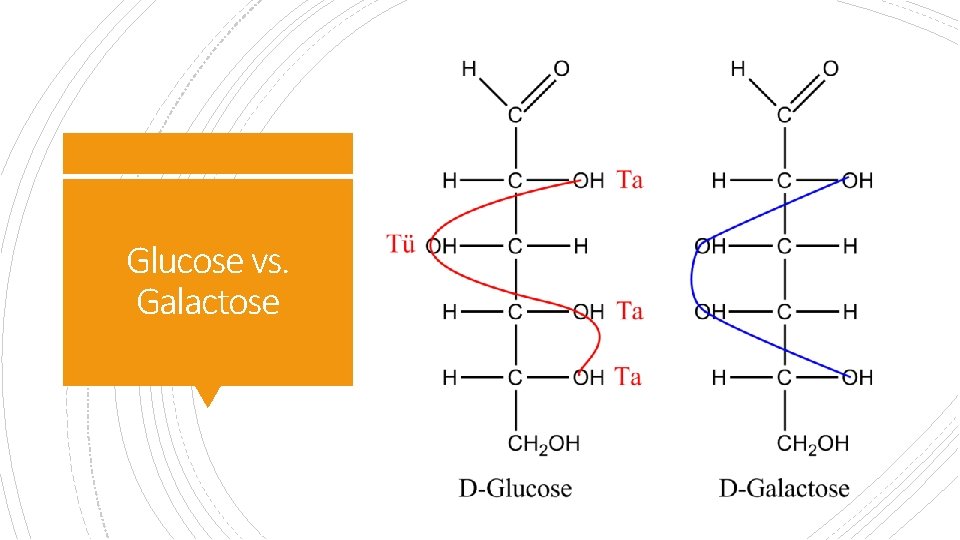
Glucose vs. Galactose

§ Two monomers (monosaccharides) bonded by a glycosidic linkage (covalent bond between two simple sugars) § Sucrose (table sugar) is the most common made from fructose and glucose § Glucose and Galactose = Lactose Disaccharides
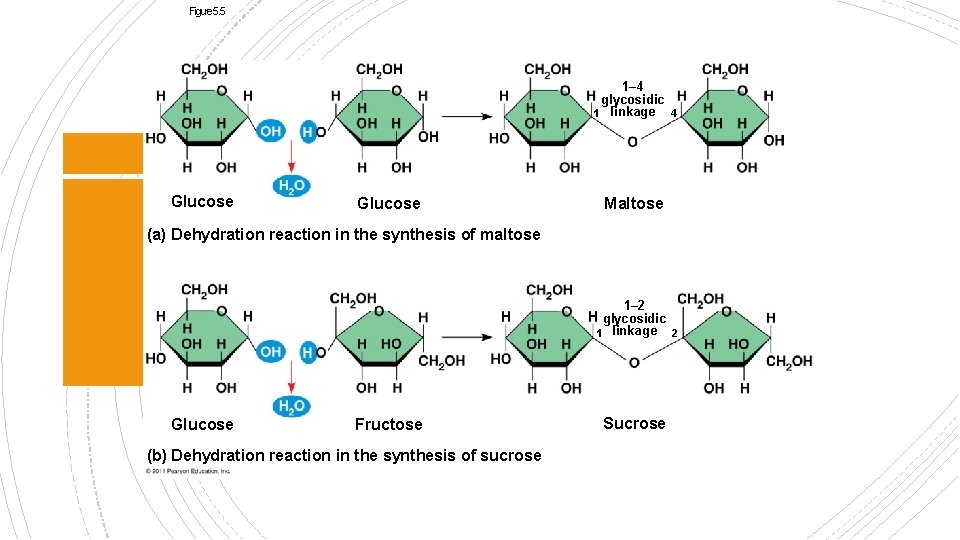
Figure 5. 5 1– 4 glycosidic 1 linkage 4 Glucose Maltose (a) Dehydration reaction in the synthesis of maltose 1– 2 glycosidic 1 linkage 2 Glucose Fructose (b) Dehydration reaction in the synthesis of sucrose Sucrose
§ Macromolecules or polymers § Can be used as storage material § Starch is made up of many glucose molecules Polysaccharides § Shape: Helical due to Carbon bonding location § Branched or unbranched § Plants store surplus starch as granules within chloroplasts and other plastids § The simplest form of starch is amylose
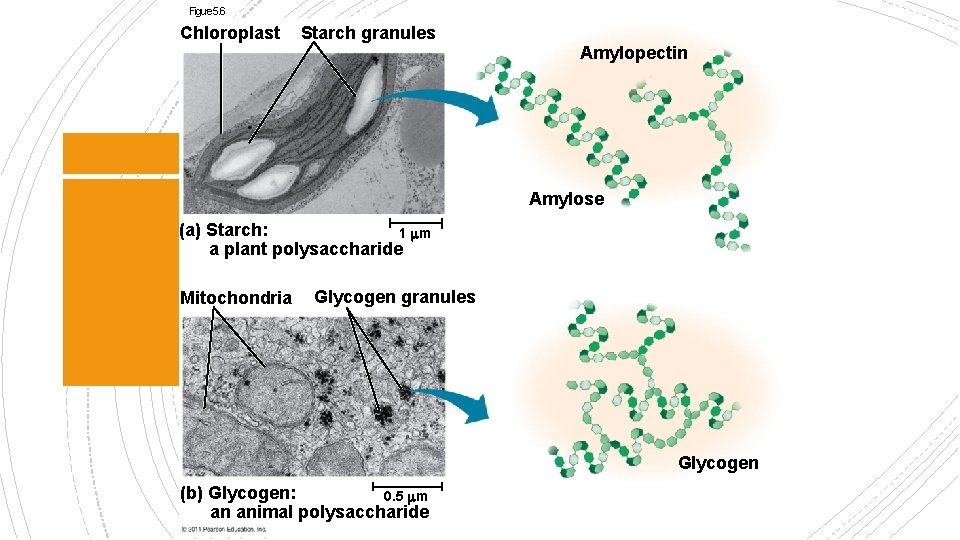
Figure 5. 6 Chloroplast Starch granules Amylopectin Amylose (a) Starch: 1 m a plant polysaccharide Mitochondria Glycogen granules Glycogen (b) Glycogen: 0. 5 m an animal polysaccharide

Case Study: Weight Loss § What does it take to lose excess weight?
§ Cellulose § Tough material that makes up cell walls of plant cells Structural Polysachharides § Most organic compound on Earth § Different configuration from Starch § Structure controls Function § More difficult to digest than starch because of enzyme shape
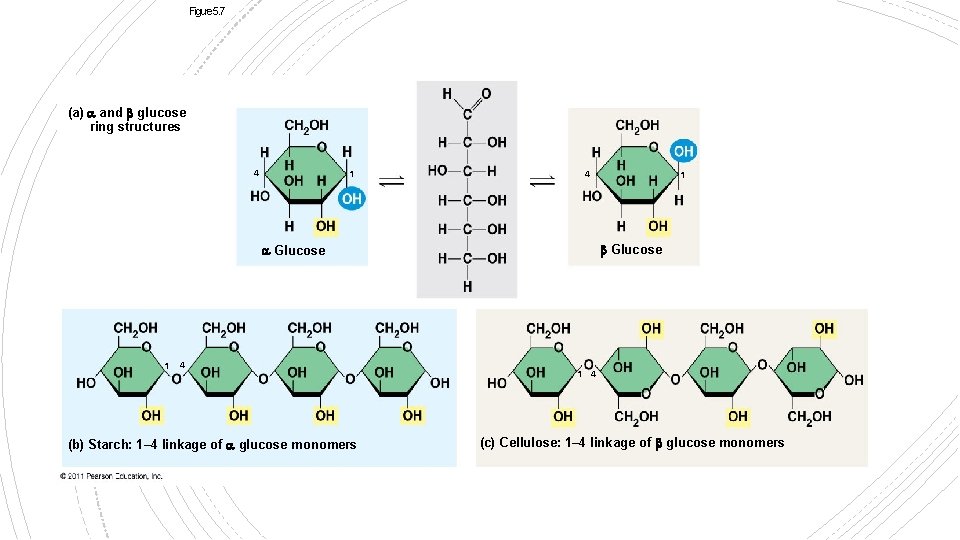
Figure 5. 7 (a) and glucose ring structures 4 1 4 Glucose 1 4 (b) Starch: 1– 4 linkage of glucose monomers 1 1 4 (c) Cellulose: 1– 4 linkage of glucose monomers
• Polymers with glucose are helical • Polymers with glucose are straight • In straight structures, H atoms on one strand can bond with OH groups on other strands • Parallel cellulose molecules held together this way are grouped into microfibrils, which form strong building materials for plants © 2011 Pearson Education, Inc.
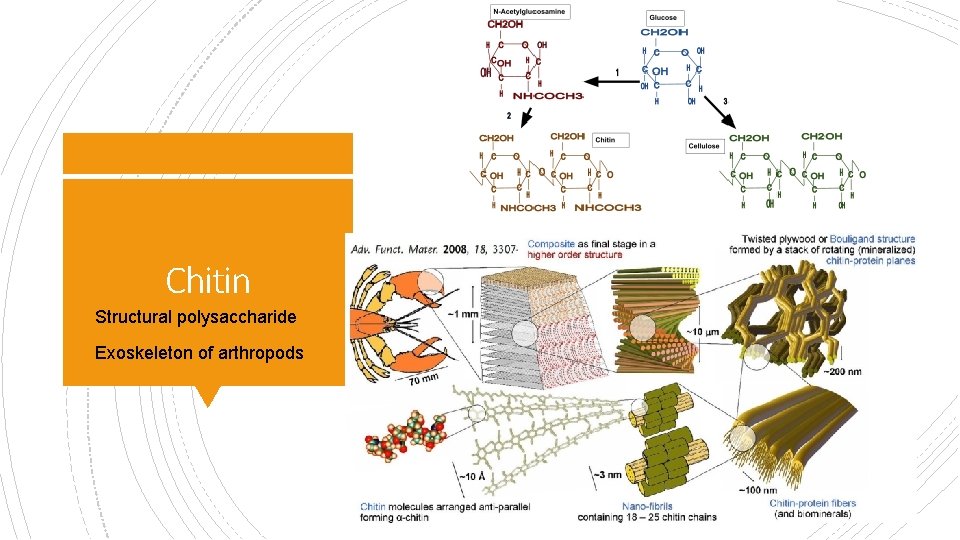
Chitin § Structural polysaccharide § Exoskeleton of arthropods
- Slides: 18