
Carbohydrates Lipids Proteins Nucleic Acids MACROMOLECULES Lets Review
Carbohydrates, Lipids, Proteins, Nucleic Acids MACROMOLECULES:
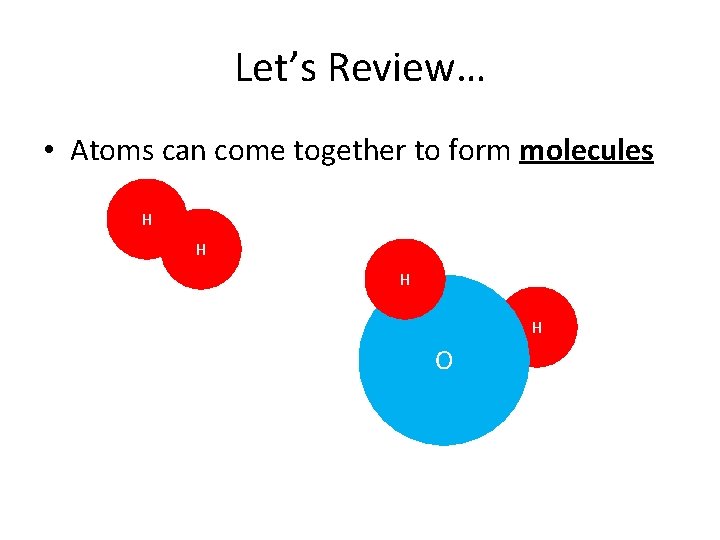
Let’s Review… • Atoms can come together to form molecules H H O
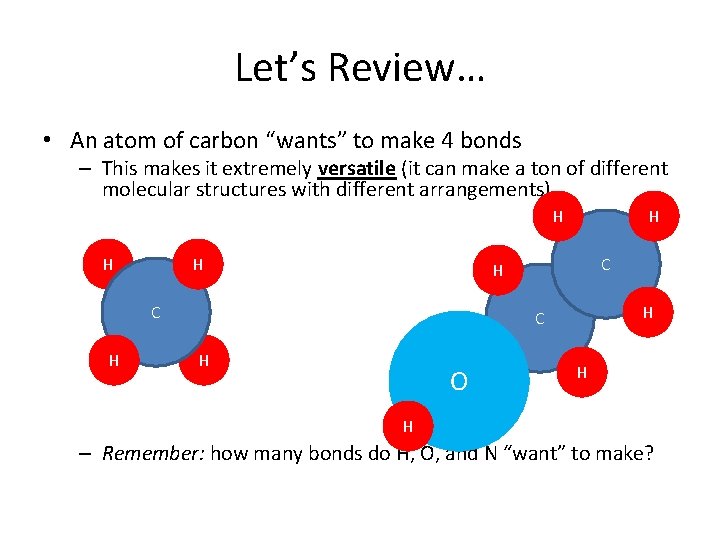
Let’s Review… • An atom of carbon “wants” to make 4 bonds – This makes it extremely versatile (it can make a ton of different molecular structures with different arrangements) H H H C H O H H – Remember: how many bonds do H, O, and N “want” to make?
Macromolecules • Many molecules in living things are HUGE (…relatively) • These huge molecules are called: Macromolecules • “Macro” – giant • “Molecule” – two or more atoms put together • Macromolecules are the building blocks of living things
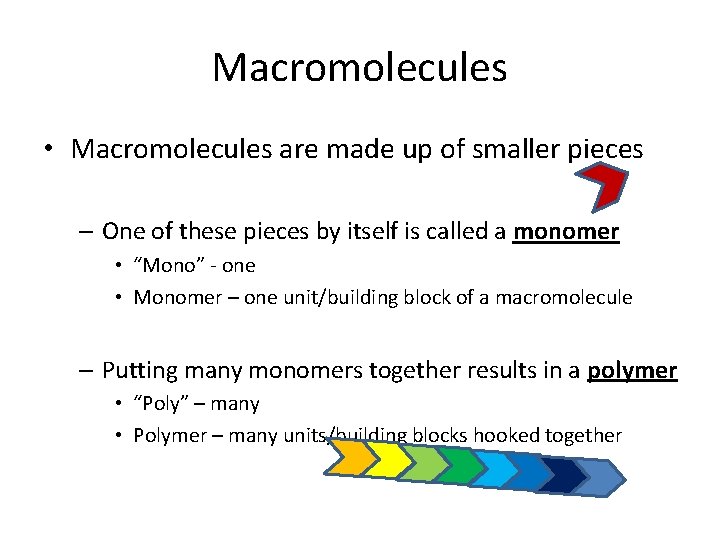
Macromolecules • Macromolecules are made up of smaller pieces – One of these pieces by itself is called a monomer • “Mono” - one • Monomer – one unit/building block of a macromolecule – Putting many monomers together results in a polymer • “Poly” – many • Polymer – many units/building blocks hooked together
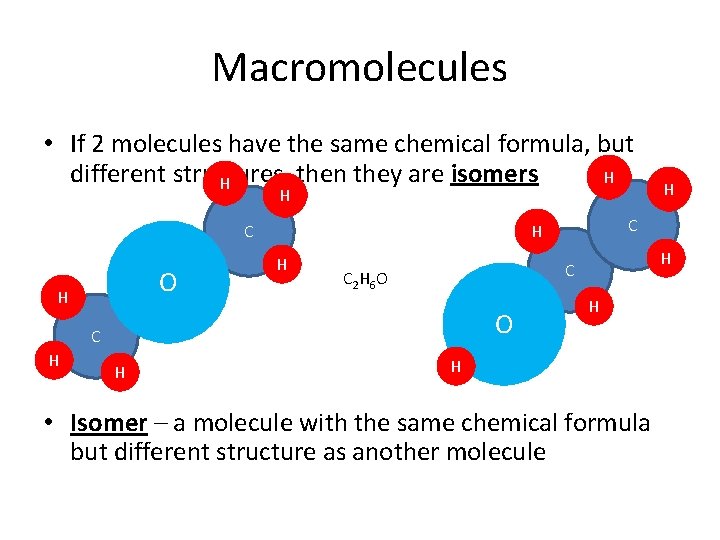
Macromolecules • If 2 molecules have the same chemical formula, but different structures, then they are isomers H H H C O H C 2 H 6 O O H H C C H H H • Isomer – a molecule with the same chemical formula but different structure as another molecule
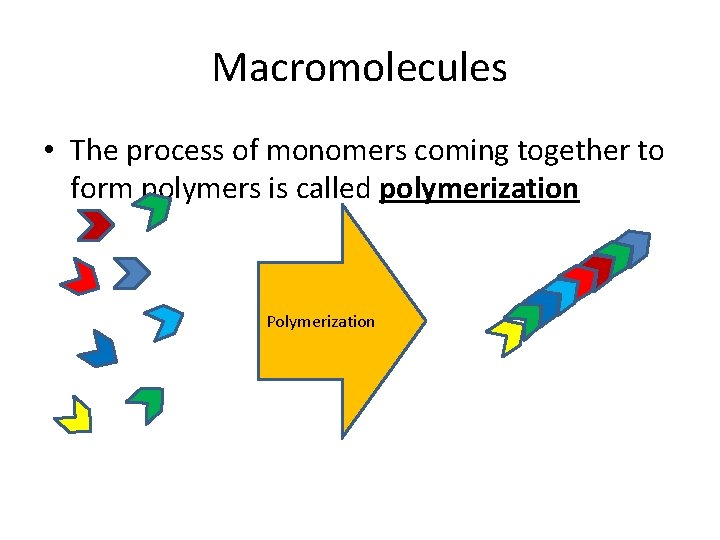
Macromolecules • The process of monomers coming together to form polymers is called polymerization Polymerization
Macromolecules • Putting two or more monomers together is done through a process called dehydration synthesis or condensation • Let’s break that one down… – De – “removal of” – Hydration – “water” – Synthesis – “put tegether” • So, dehydration synthesis means: – The removal of a water molecule to form a new bond
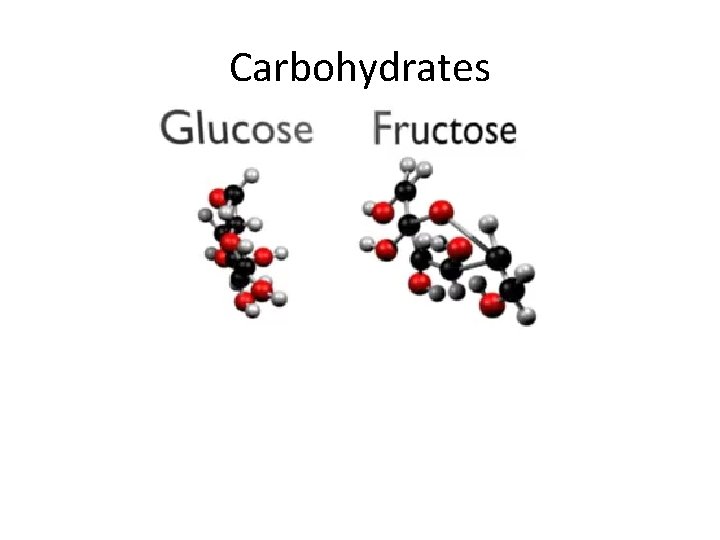
Carbohydrates
Carbohydrates • The reverse of a dehydration synthesis reaction is called a hydrolysis, where water is used to break the bond between monomers
Kinds of Macromolecules • 4 groups of macromolecules found in living things (organic compounds) are: – Carbohydrates – Lipids – Proteins – Nucleic Acids
- Slides: 11