
Carbohydrates First you get the sugar then you
Carbohydrates “First you get the sugar, then you get the women, then you get the power. ” H. J. Simpson
What’s a Carbothingie? • Carbohydrates are broadly defined as polyhydroxy aldehydes or ketones and their derivatives or as substances that yields one of these compounds (Mr. V has plagiarised this) • Carbohydrates are one of, if not the most abundant organic compound around. (What does Organic mean? ) • They are made of long chains of carbon, hydrogen and oxygen atoms.
But where can I find them? • Plants convert energy from the sun, and carbon dioxide and water to form the Carbohydrate known as Glucose. • Most carbo hydrates end in –ose. This indicated that they are a shugar. • What carbohydrates do you know of already? • (This is where Mr. V tries to write a list of the carbohydrates you know on the board but miss spells most if not all of them. )
Did you say any of these? • • Glucose Sucrose Lactose Cellulose Fructose Galactose Dioxyribose
What are they Cont. • Again there super common • There often the back bone of many long pollomers like starch or DNA. • About 65% of the food in our diet is carbohydrates (“But Mr. V where did you get your data I demand a source!”)(good point maybe I made it up, or maybe I found it on the internet either way you should probably disregard it. ) • There a few different categories like: … to be added later

Why carbohydrate? • • Major source of energy for the cell Major structural component of plant cell Immediate energy in the form of GLUCOSE Reserve or stored energy in the form of GLYCOGEN

Classification of Carbohydrates • Carbohydrates are classified according to the number of subunits that make them up • • 3 Types of Carbohydrates Monosaccharides Oligosaccharides Polysaccharides
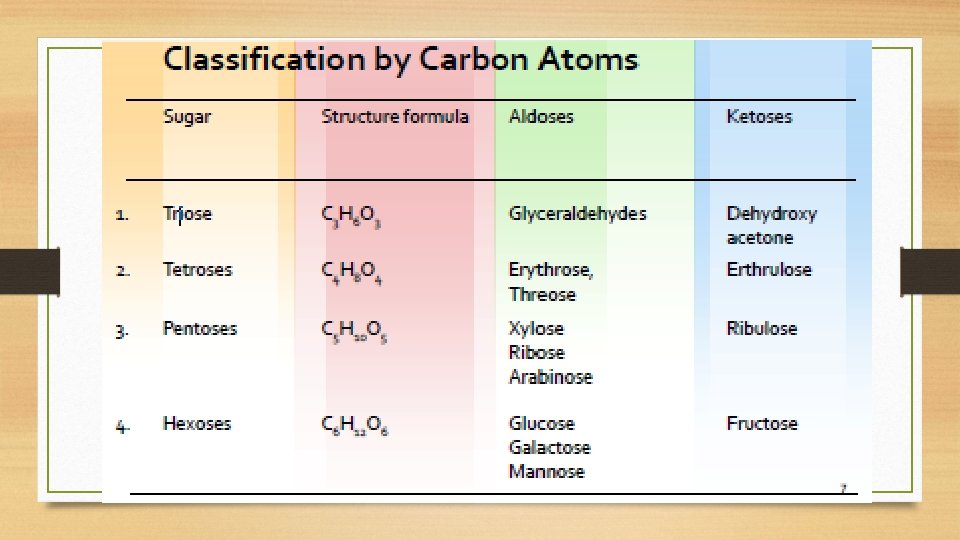
Monosaccharides • Monosaccharides are simple sugars, or the compounds which possess a free aldehyde (CHO) or ketone (C=O) group and two or more hydroxyl (OH) groups. • Monosaccharides contain a single carbon chain and are classified on the basis of number of carbon atoms they possess, and as aldoses or ketoses depending upon their groups.
Oligosaccharides • These are compound sugars that yield 2 to 10 molecules of the same or different monosaccharides on hydrolysis. • Disaccharides – Sucrose, Lactose, Maltose, Cellobiose, Trehalose, Gentiobiose, Melibiose • Trisaccharides – Rhamninose, Gentianose, Raffinose (= Melitose), Rabinose, Melezitose • Tetrasaccharides – Stachyose, Scorodose • Pentasaccharide – Verbascose
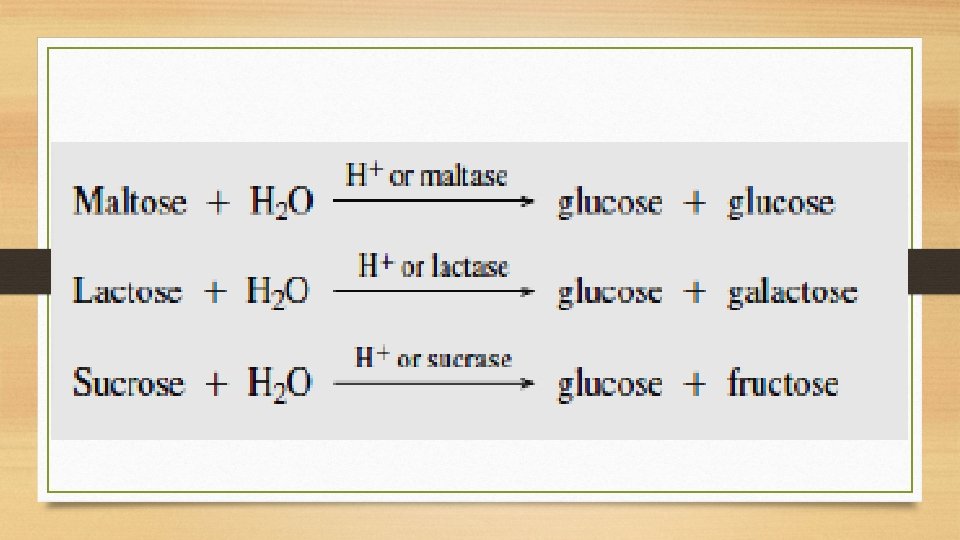
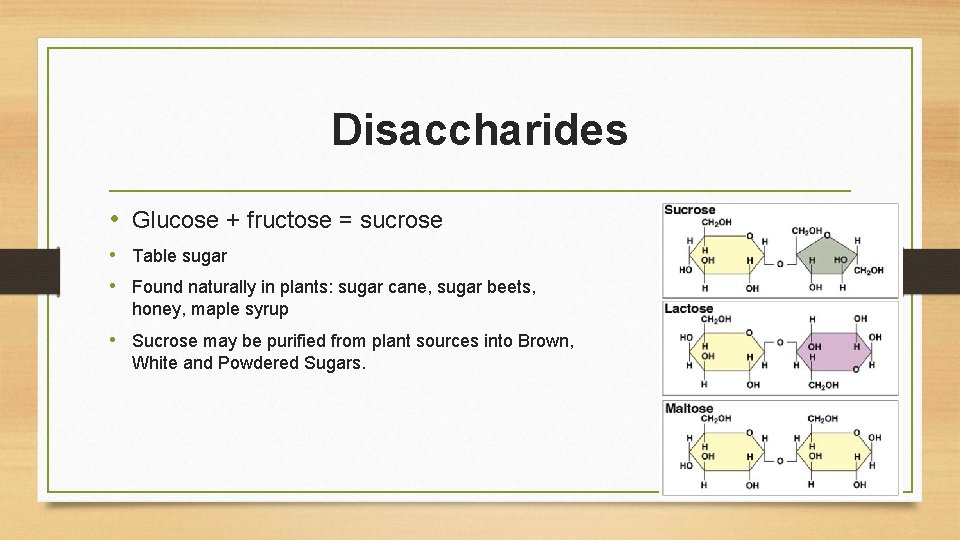
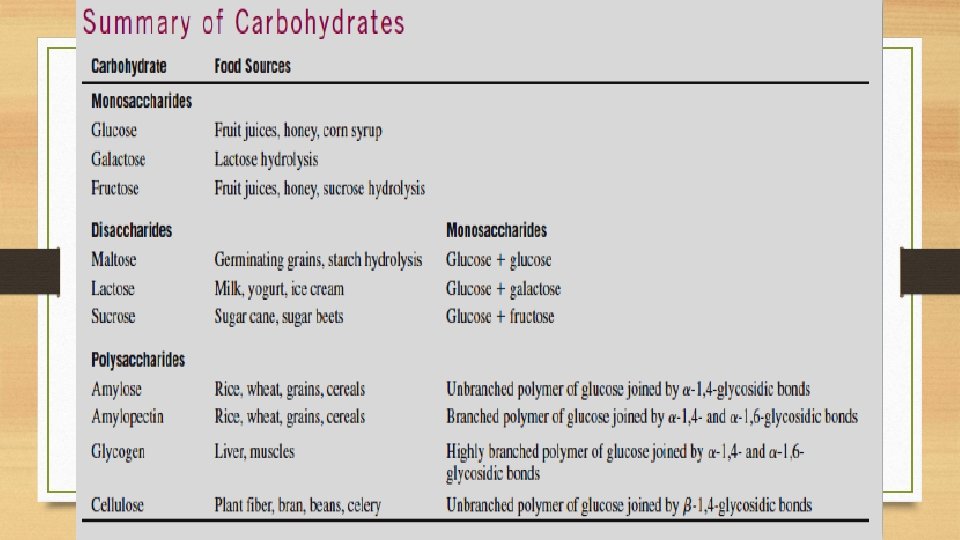
Disaccharides • Glucose + fructose = sucrose • Table sugar • Found naturally in plants: sugar cane, sugar beets, honey, maple syrup • Sucrose may be purified from plant sources into Brown, White and Powdered Sugars.
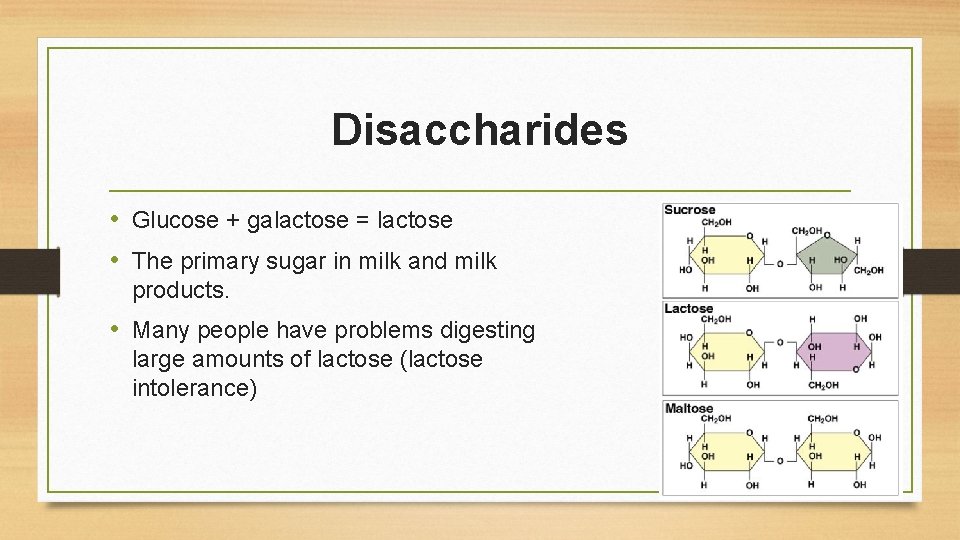
Disaccharides • Glucose + galactose = lactose • The primary sugar in milk and milk products. • Many people have problems digesting large amounts of lactose (lactose intolerance)
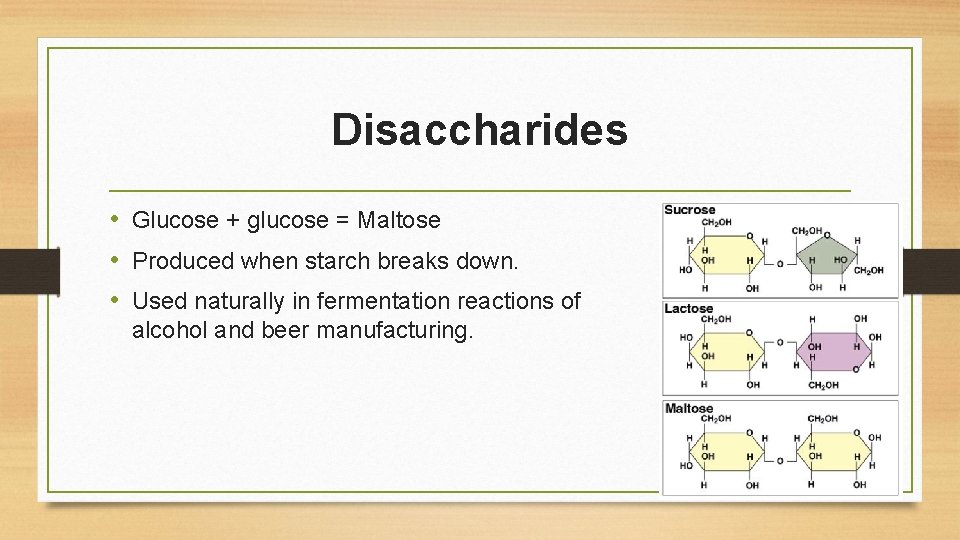
Disaccharides • Glucose + glucose = Maltose • Produced when starch breaks down. • Used naturally in fermentation reactions of alcohol and beer manufacturing.
Polysaccharides • Containing 10 or more monosaccharide units attached together • • Examples 1. Starch- digestible 2. Glycogen- digestible 3. Fiber- indigestible Long chains of glucose units form these polysaccharides Most carbohydrates present as polysaccharides.
Polysaccharides • Nutrient (or digestible) polysaccharides. These act as metabolic reserve of monosaccharides in plants and animals, e. g. , starch, glycogen and inulin. • Structural (or indigestible) polysaccharides. These serve as rigid mechanical structures in plants and animals, e. g. , cellulose, pectin and chitin

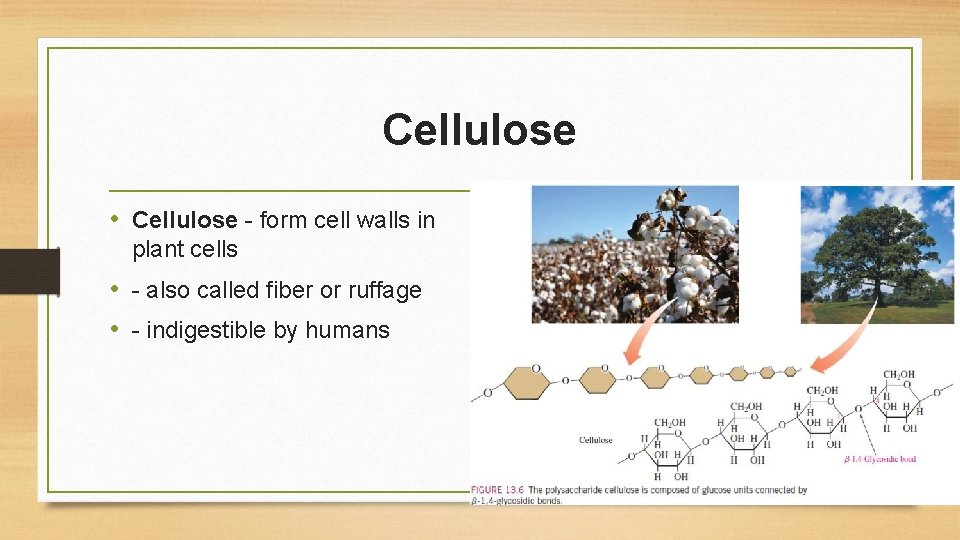
Cellulose • Cellulose - form cell walls in plant cells • - also called fiber or ruffage • - indigestible by humans
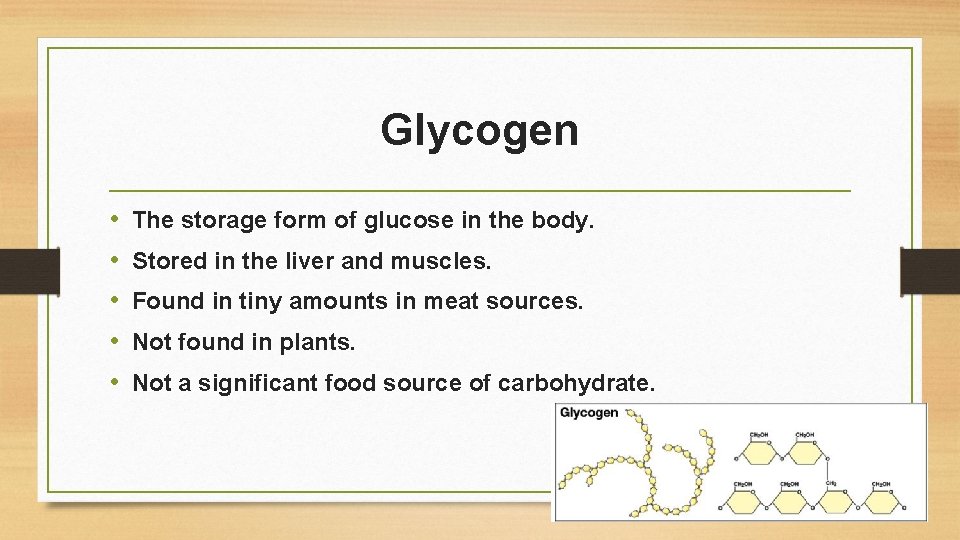
Glycogen • • • The storage form of glucose in the body. Stored in the liver and muscles. Found in tiny amounts in meat sources. Not found in plants. Not a significant food source of carbohydrate.
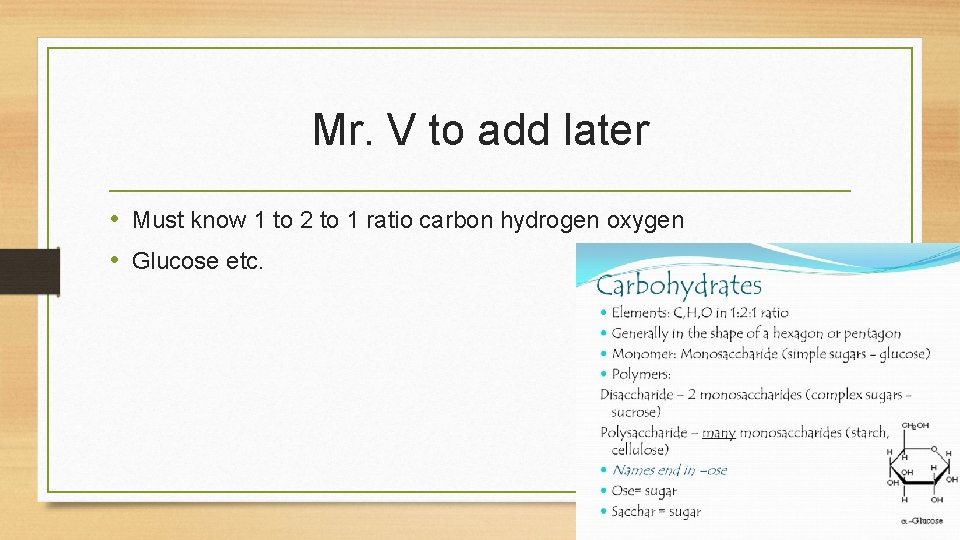
Mr. V to add later • Must know 1 to 2 to 1 ratio carbon hydrogen oxygen • Glucose etc.
- Slides: 21