
Carbohydrates Centres of chirality Asymmetric carbons Stereoisomers R
Carbohydrates • • • Centres of chirality Asymmetric carbons Stereoisomers R, S nomenclature Racemic mixtures

Fischer projection
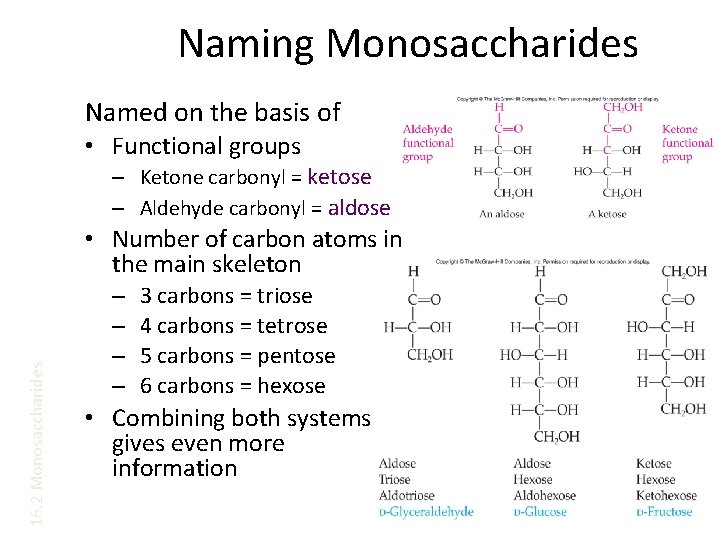
Naming Monosaccharides Named on the basis of • Functional groups – Ketone carbonyl = ketose – Aldehyde carbonyl = aldose 16. 2 Monosaccharides • Number of carbon atoms in the main skeleton – – 3 carbons = triose 4 carbons = tetrose 5 carbons = pentose 6 carbons = hexose • Combining both systems gives even more information

Hexoses
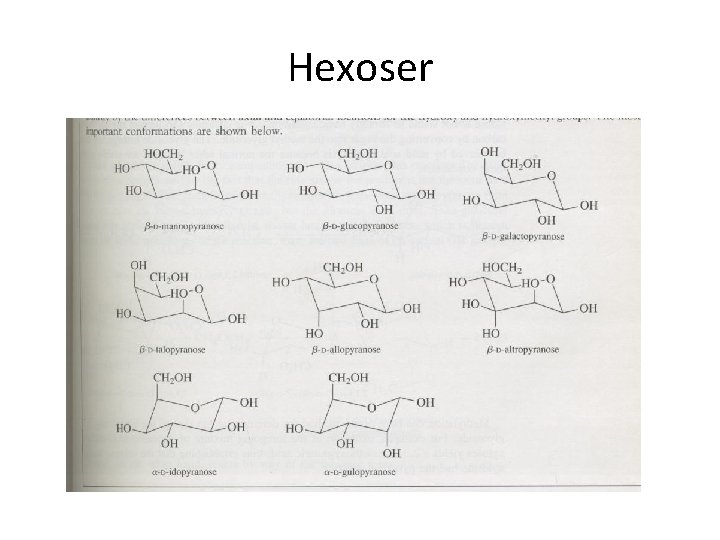
Hexoser
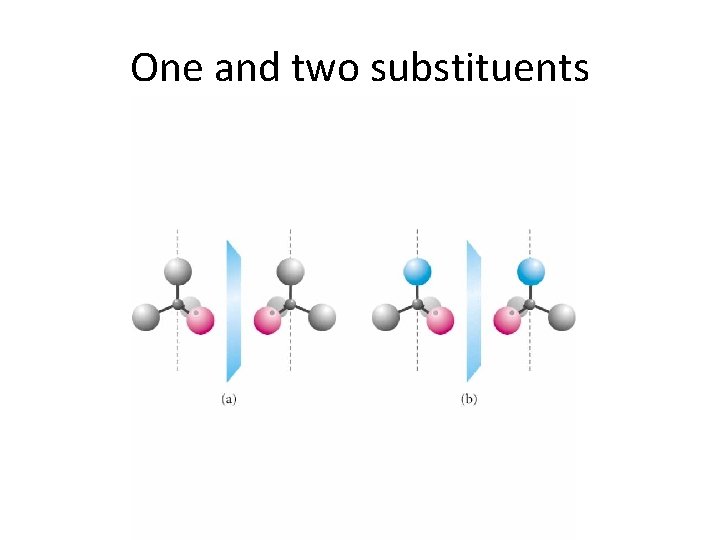
One and two substituents
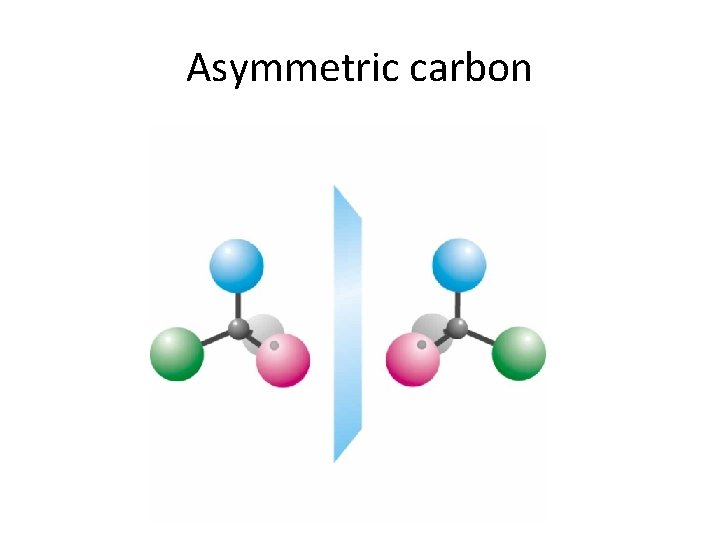
Asymmetric carbon
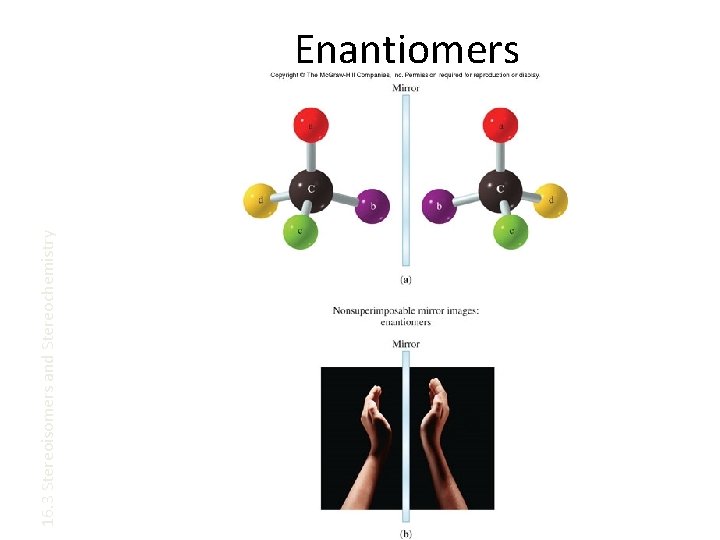
16. 3 Stereoisomers and Stereochemistry Enantiomers
16. 3 Stereoisomers and Stereochemistry Chirality • A carbon atom that has four different groups bonded to it is called a chiral carbon atom • Any molecule containing a chiral carbon can exist as a pair of enantiomers • Chirality in glyceraldehyde (the simplest carbohydrate) is conveyed by a chiral carbon • Larger biological molecules often have more than one chiral carbon
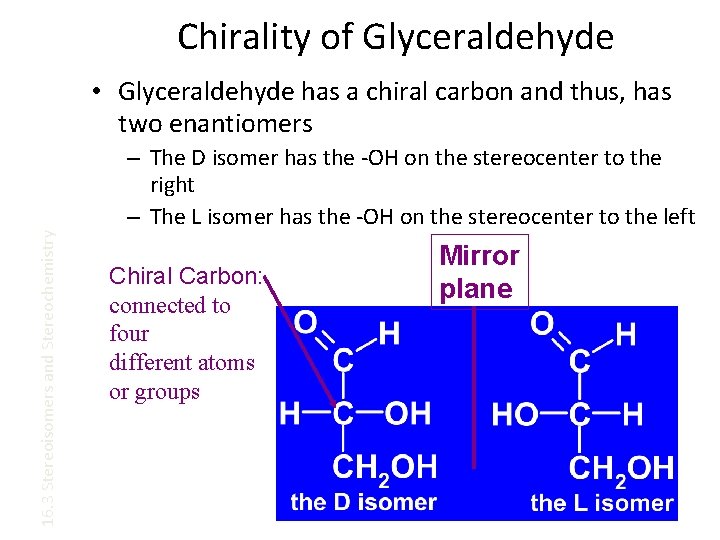
Chirality of Glyceraldehyde 16. 3 Stereoisomers and Stereochemistry • Glyceraldehyde has a chiral carbon and thus, has two enantiomers – The D isomer has the -OH on the stereocenter to the right – The L isomer has the -OH on the stereocenter to the left Chiral Carbon: connected to four different atoms or groups Mirror plane
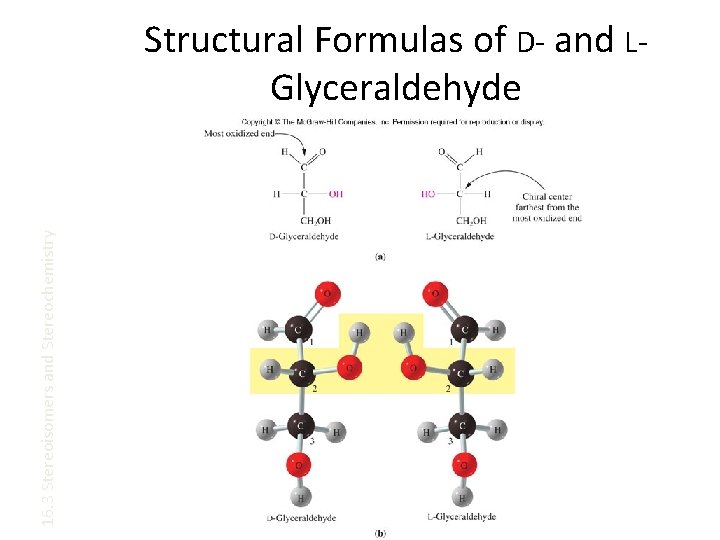
16. 3 Stereoisomers and Stereochemistry Structural Formulas of D- and LGlyceraldehyde
16. 3 Stereoisomers and Stereochemistry Optical Activity • Enantiomers are also called optical isomers • Enantiomers interact with plain polarized light to rotate the plane of the light in opposite directions – This interaction with polarized light is called optical activity – Optical activity distinguishes the isomers – It is measured in a device called a polarimeter
Polarized Light 16. 3 Stereoisomers and Stereochemistry • Normal light vibrates in an infinite number of directions perpendicular to the direction of travel – When the light passes through a polarizing filter (Polaroid sunglasses) only light vibrating in one plane reaches the other side of the filter – A polarimeter allows the determination of the specific rotation of a compound • Measures its ability to rotate plane-polarized light
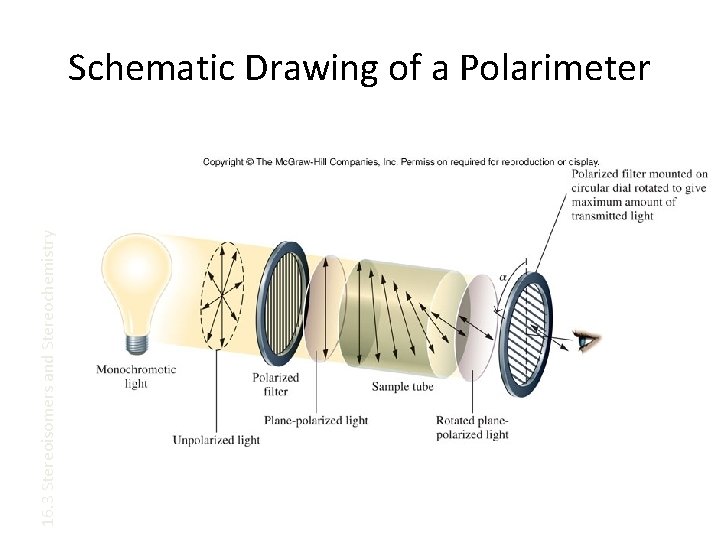
16. 3 Stereoisomers and Stereochemistry Schematic Drawing of a Polarimeter
The Relationship Between Molecular Structure and Optical Activity 16. 3 Stereoisomers and Stereochemistry • When an enantiomer in a solution is placed in the polarimeter, the plane of rotation of the polarized light is rotated – One enantiomer always rotates light in a clockwise (+) direction • This is the dextrorotatory isomer – The other isomer rotates the light in a counterclockwise (-) direction • It is the levorotatory isomer • Under identical conditions, the enantiomers always rotate light to exactly the same degree, but in opposite directions
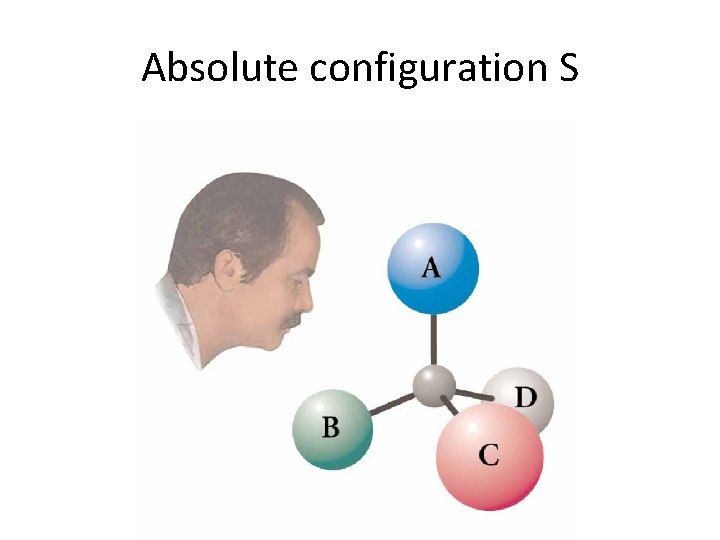
Absolute configuration S
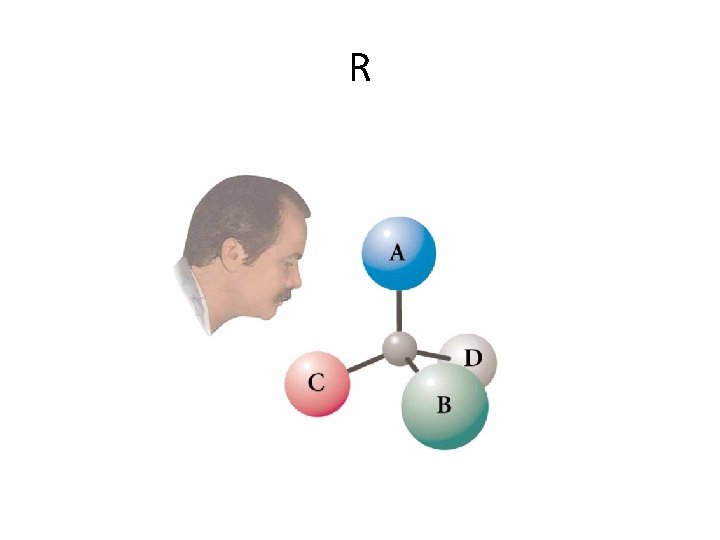
R
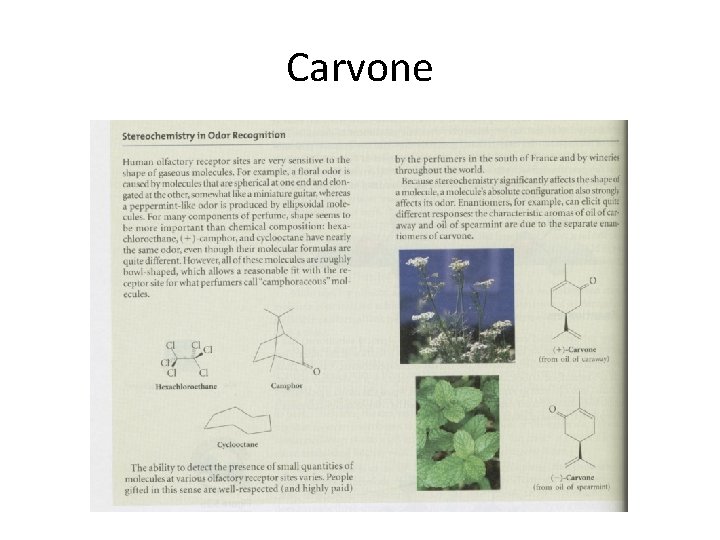
Carvone
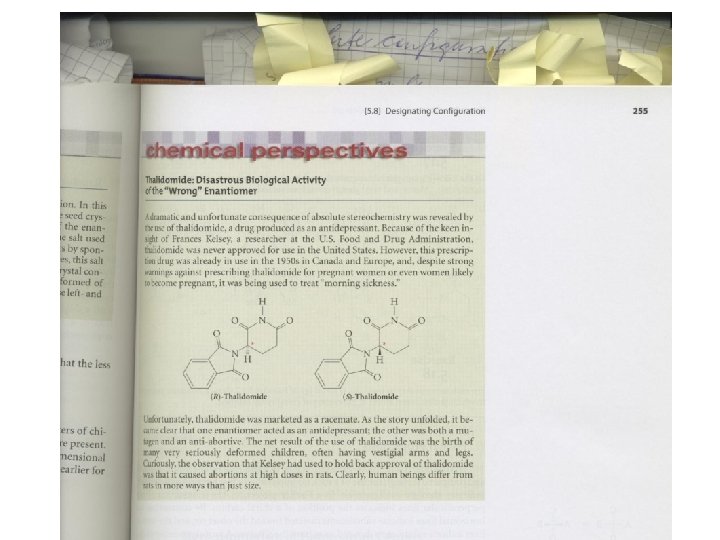
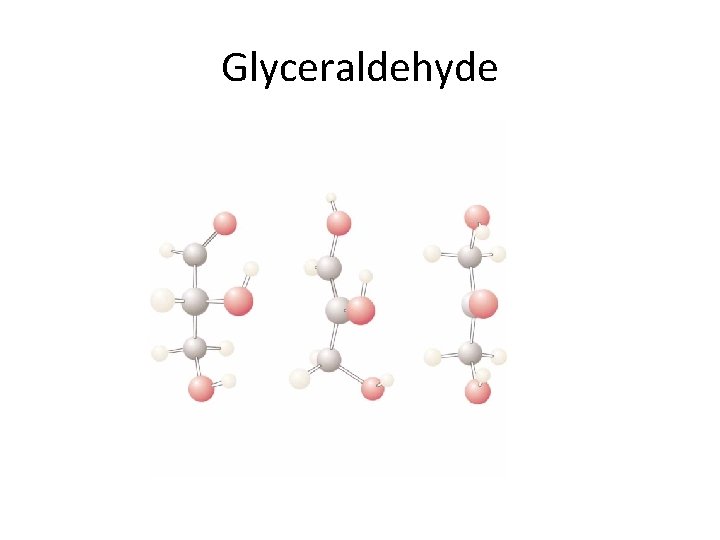
Glyceraldehyde
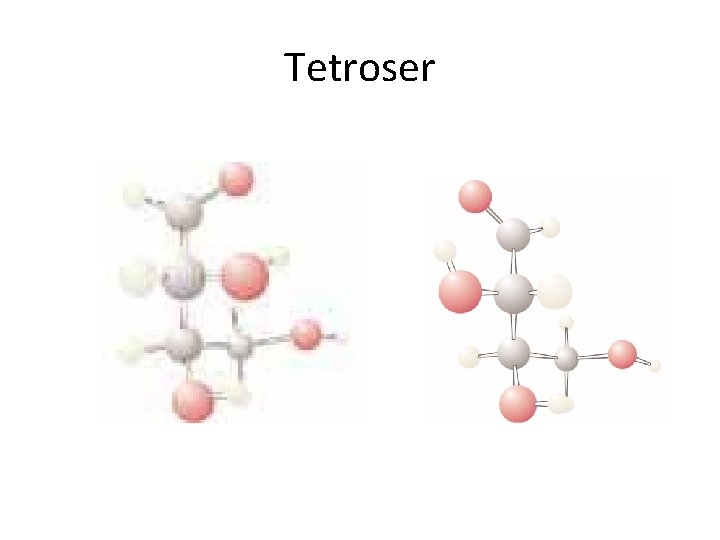
Tetroser
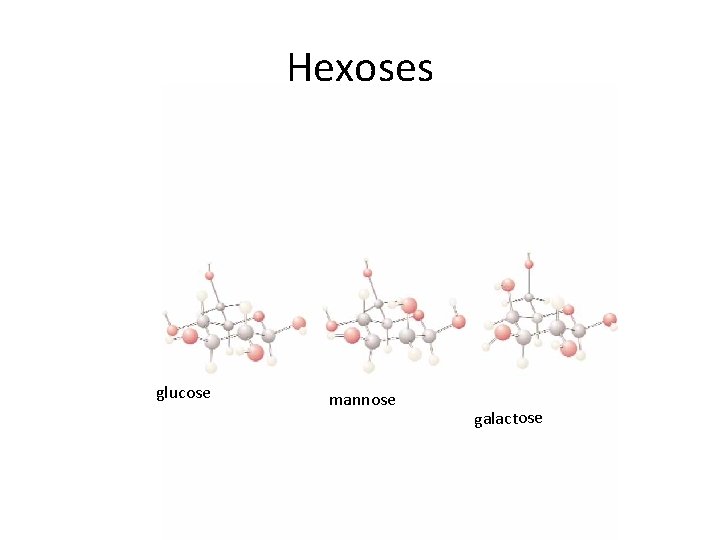
Hexoses glucose mannose galactose

Fischer Projection Formulas 16. 3 Stereoisomers and Stereochemistry • A Fischer projection uses lines crossing through a chiral carbon to represent bonds – Projecting out of the page (horizontal lines) – Projecting into the page (vertical lines) • Compare the wedge to the Fischer diagrams
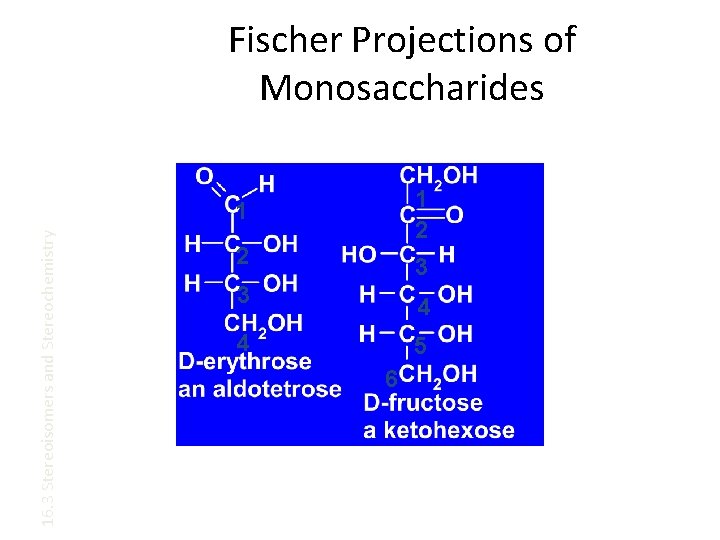
Fischer Projections of Monosaccharides 1 2 16. 3 Stereoisomers and Stereochemistry 1 2 3 3 4 4 5 6

Fischer projection
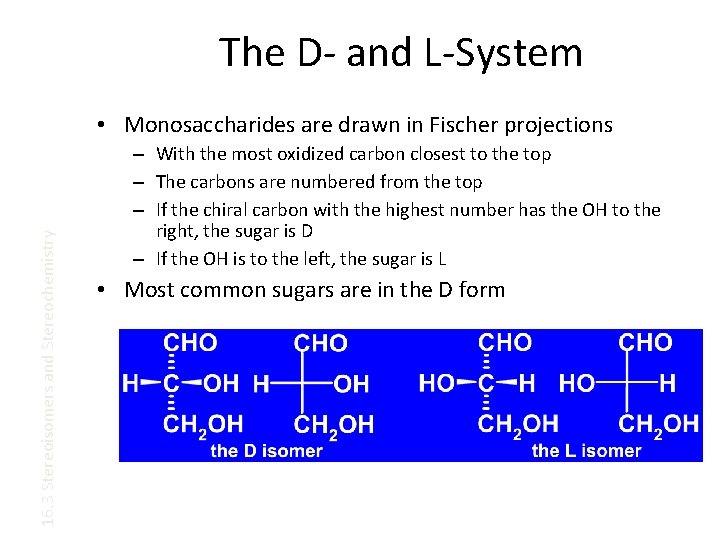
The D- and L-System 16. 3 Stereoisomers and Stereochemistry • Monosaccharides are drawn in Fischer projections – With the most oxidized carbon closest to the top – The carbons are numbered from the top – If the chiral carbon with the highest number has the OH to the right, the sugar is D – If the OH is to the left, the sugar is L • Most common sugars are in the D form
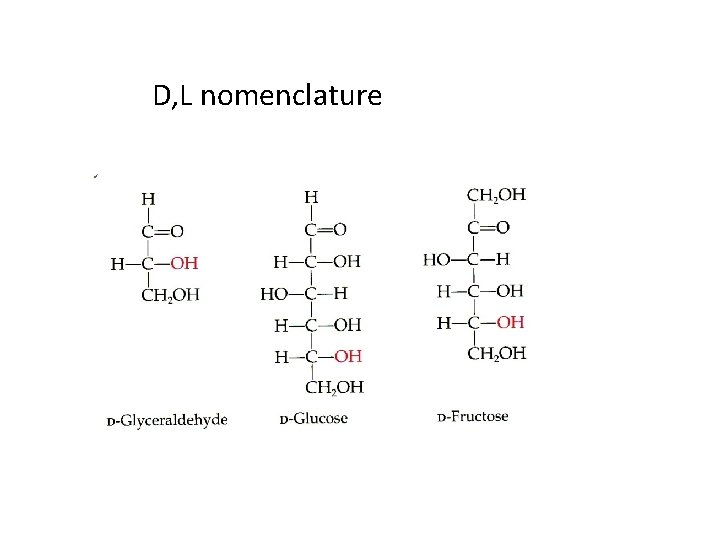
D, L nomenclature

Meso
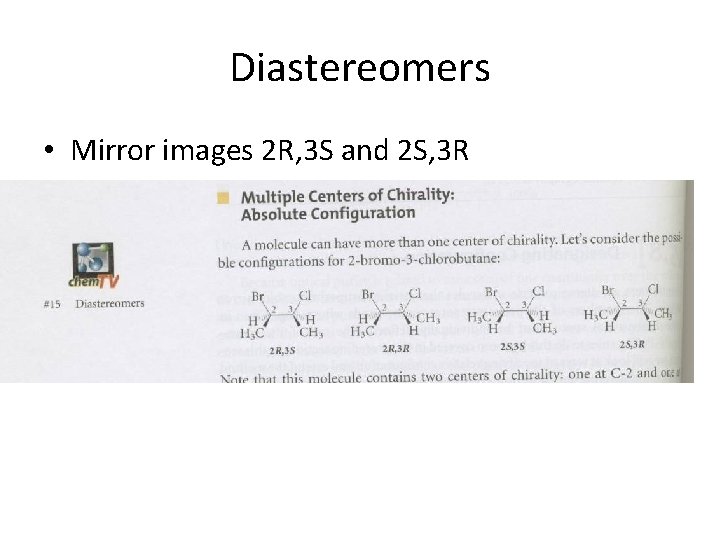
Diastereomers • Mirror images 2 R, 3 S and 2 S, 3 R • 2 R 3 R and 2 S 3 S
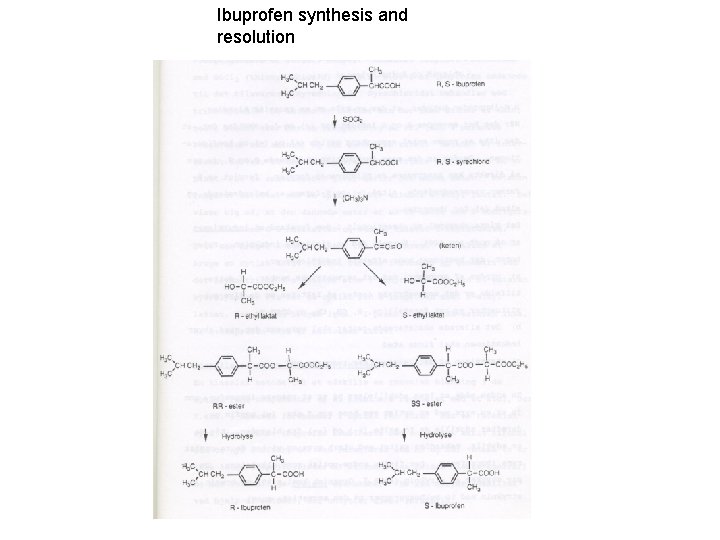
Ibuprofen synthesis and resolution
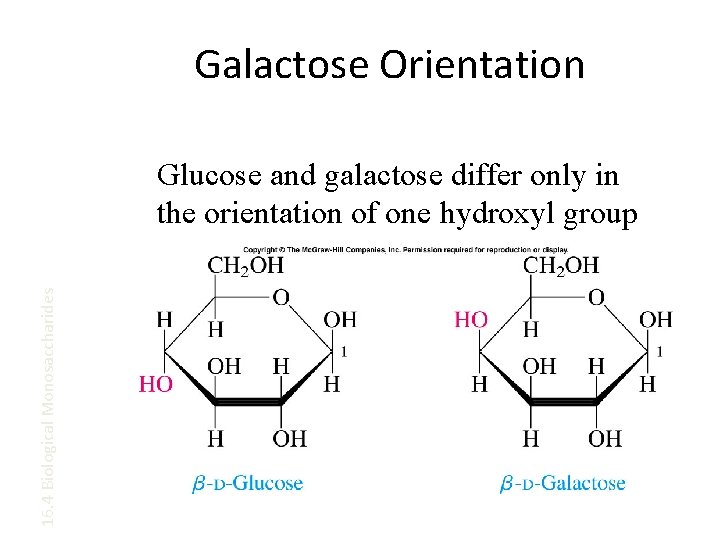
Galactose Orientation 16. 4 Biological Monosaccharides Glucose and galactose differ only in the orientation of one hydroxyl group
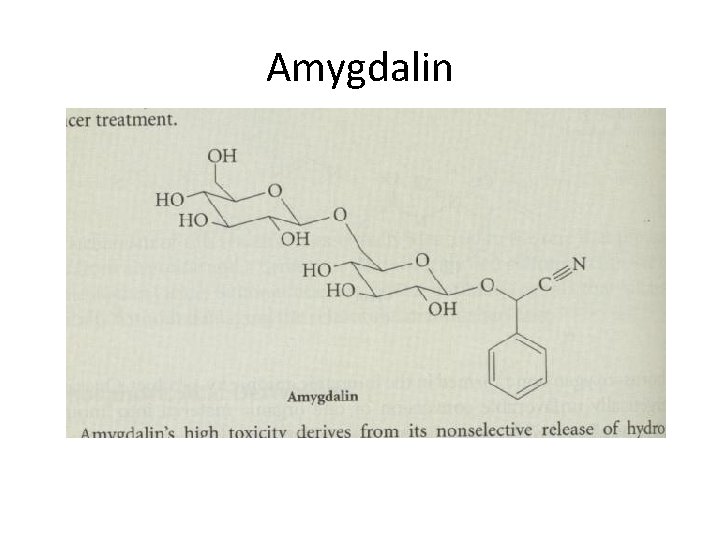
Amygdalin
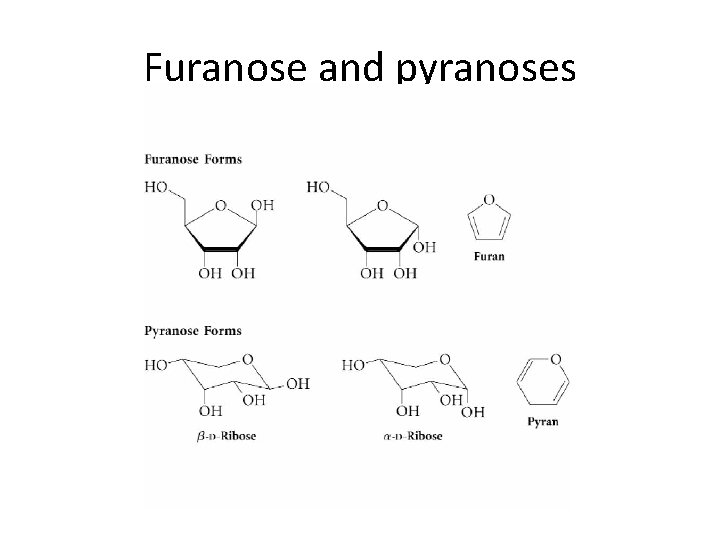
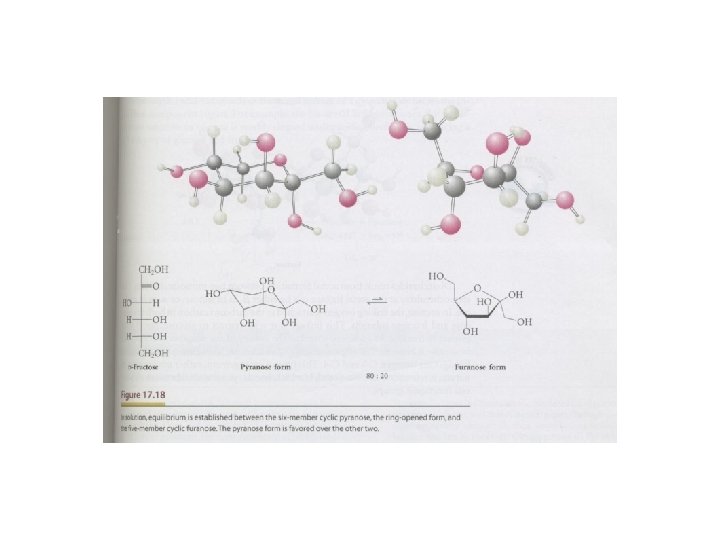
Furanose and pyranoses
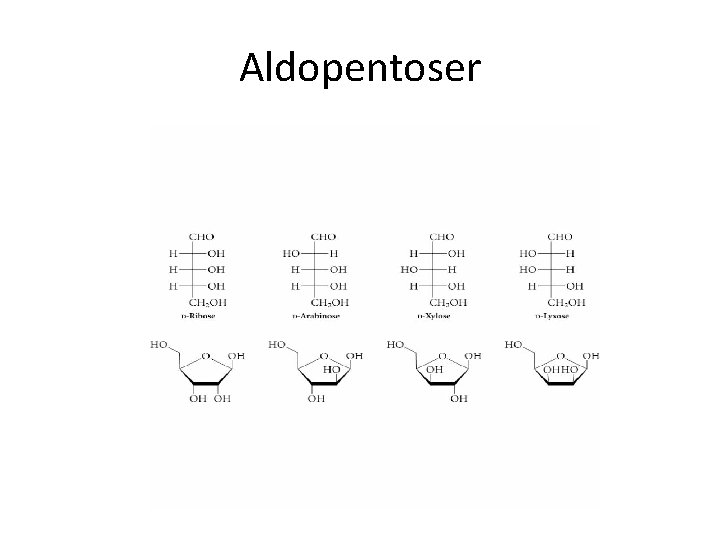
Aldopentoser
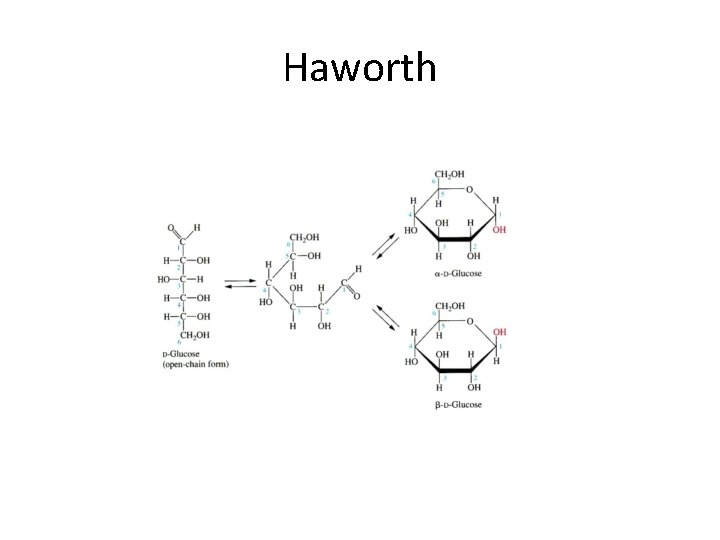
Haworth
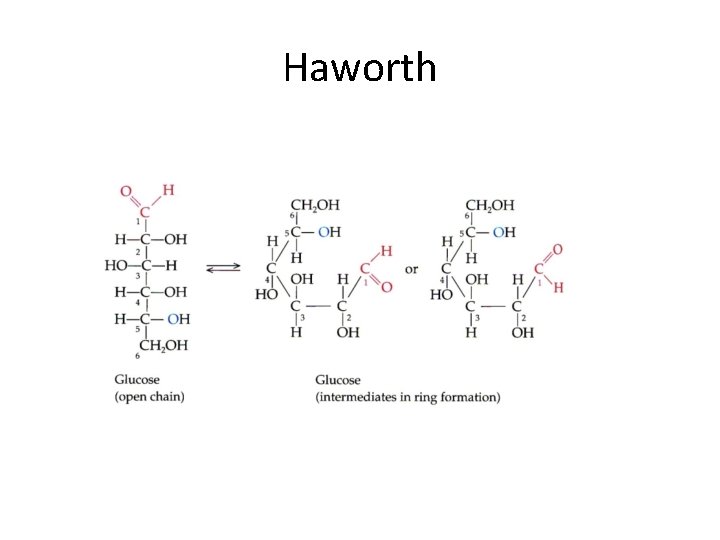
Haworth
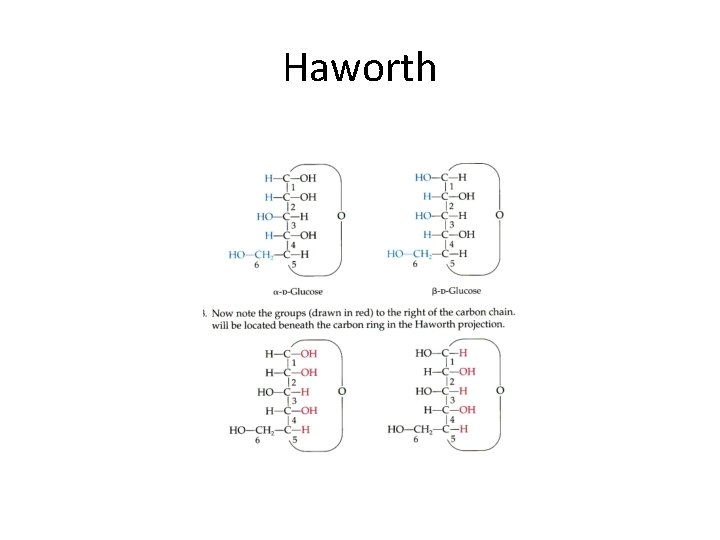
Haworth
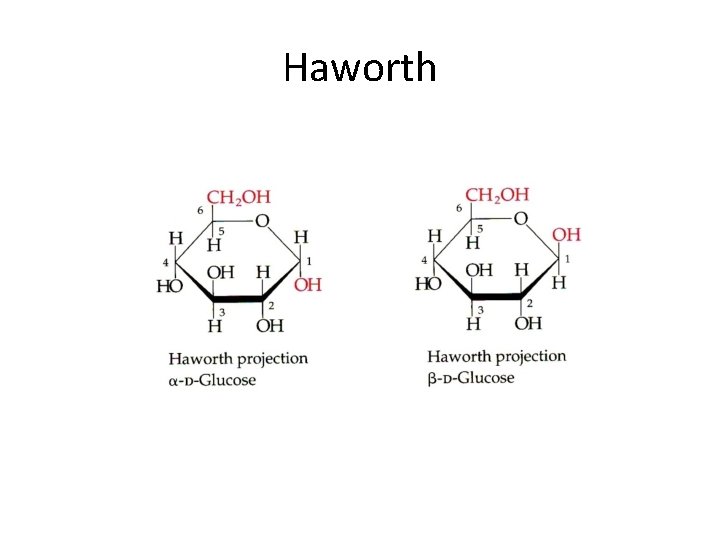
Haworth
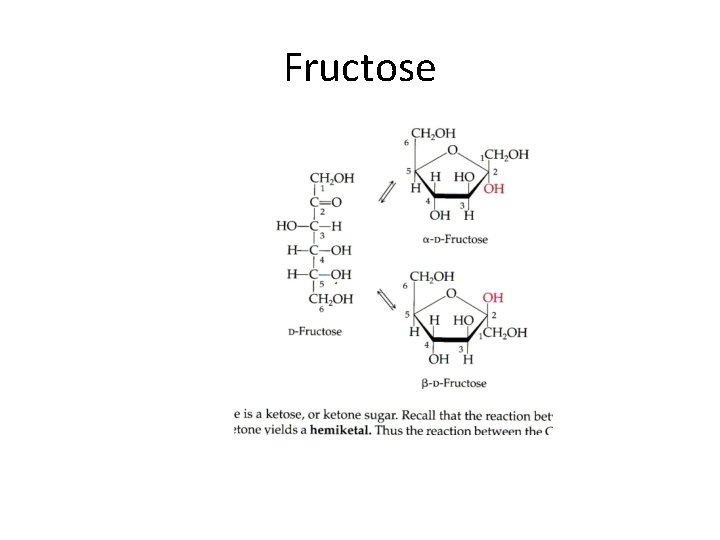
Fructose
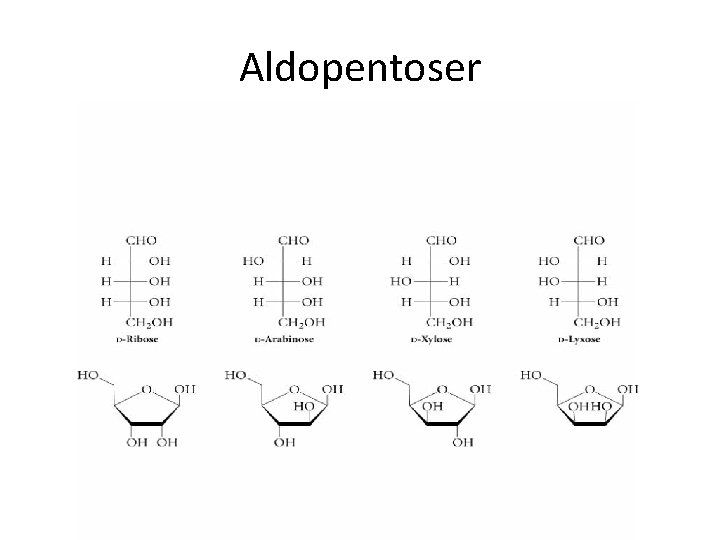
Aldopentoser
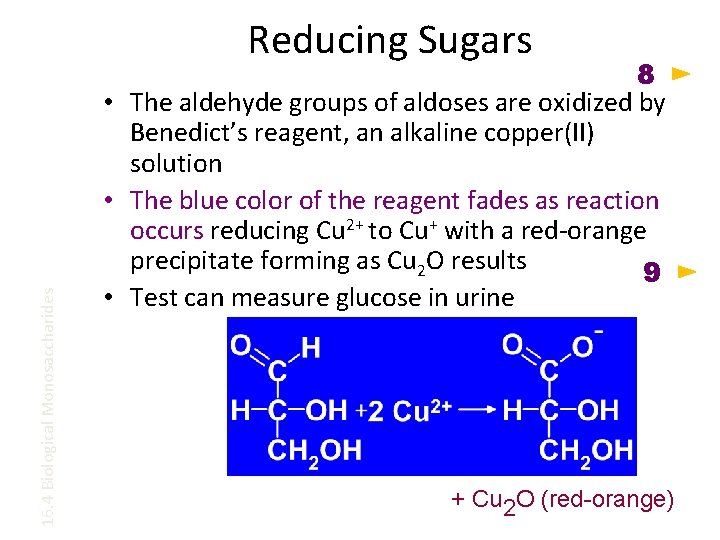
16. 4 Biological Monosaccharides Reducing Sugars 8 • The aldehyde groups of aldoses are oxidized by Benedict’s reagent, an alkaline copper(II) solution • The blue color of the reagent fades as reaction occurs reducing Cu 2+ to Cu+ with a red-orange precipitate forming as Cu 2 O results 9 • Test can measure glucose in urine + Cu 2 O (red-orange)
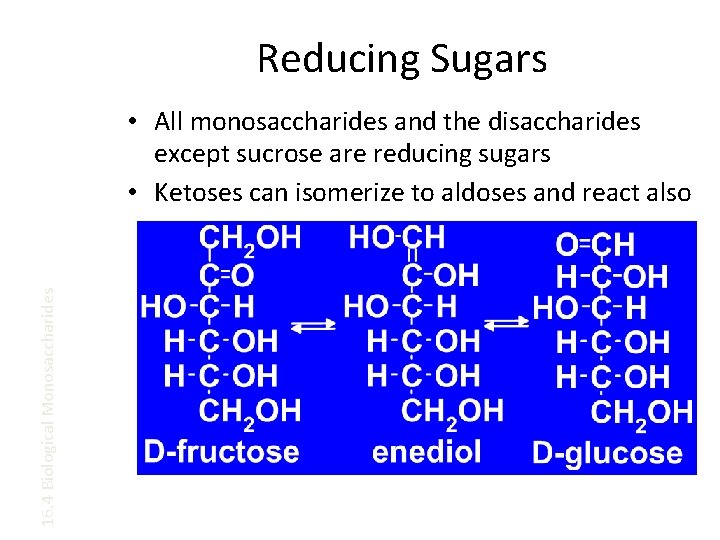
Reducing Sugars 16. 4 Biological Monosaccharides • All monosaccharides and the disaccharides except sucrose are reducing sugars • Ketoses can isomerize to aldoses and react also
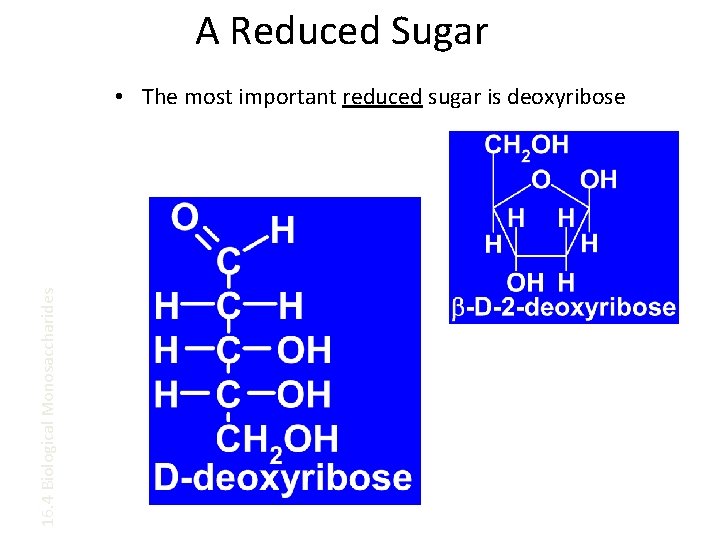
A Reduced Sugar 16. 4 Biological Monosaccharides • The most important reduced sugar is deoxyribose
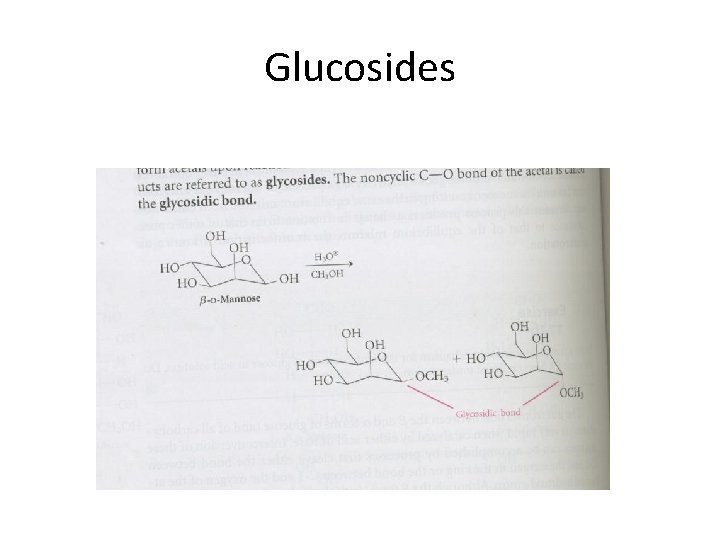
Glucosides
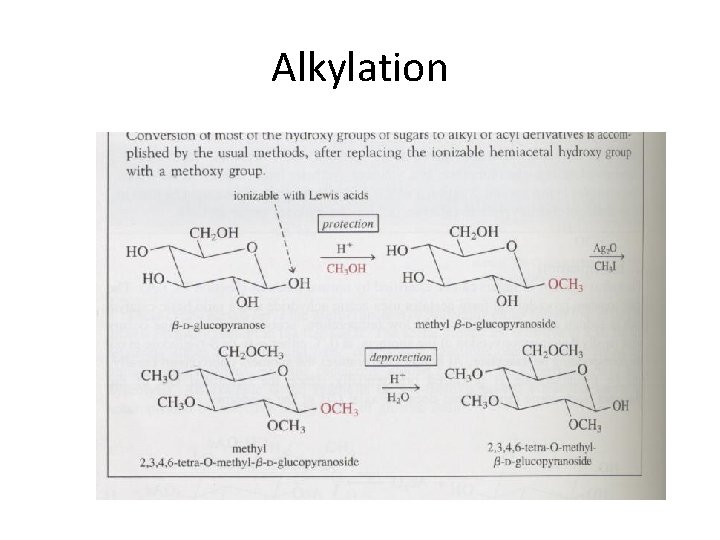
Alkylation
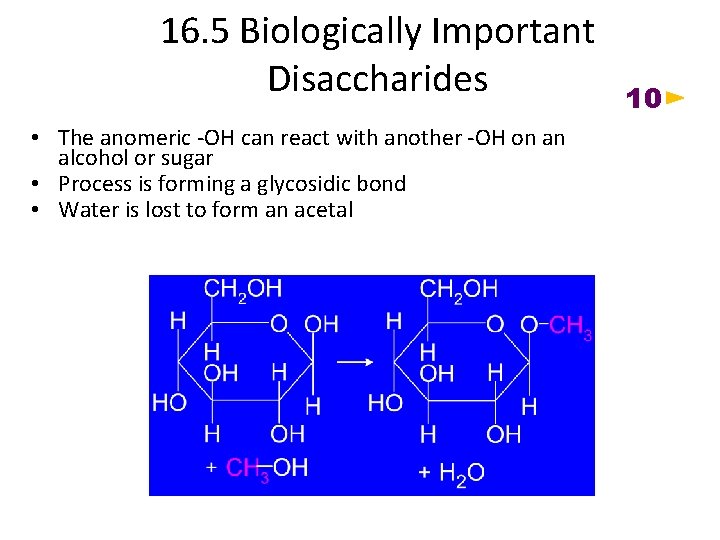
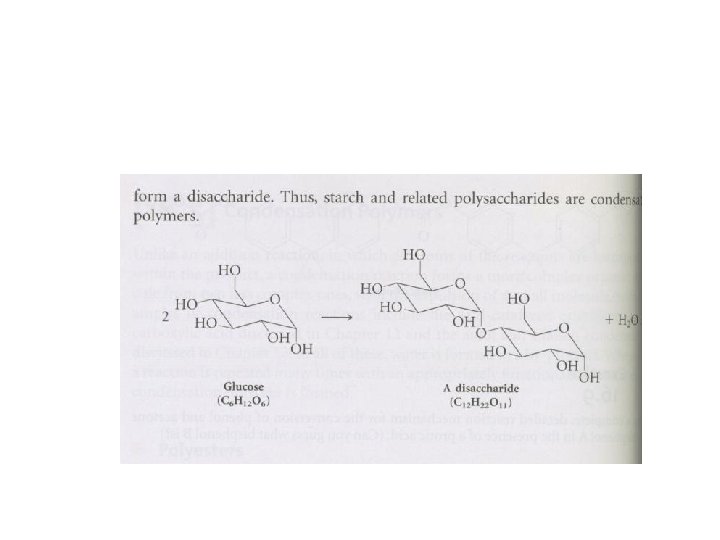
16. 5 Biologically Important Disaccharides • The anomeric -OH can react with another -OH on an alcohol or sugar • Process is forming a glycosidic bond • Water is lost to form an acetal 10
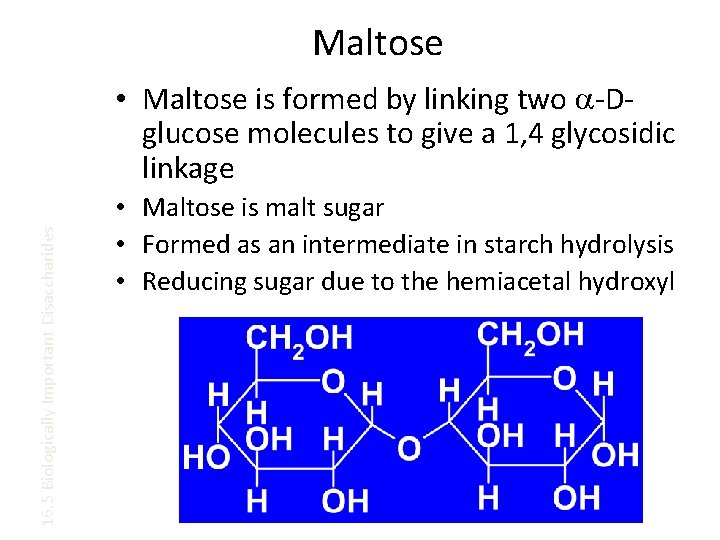
Maltose 16. 5 Biologically Important Disaccharides • Maltose is formed by linking two a-Dglucose molecules to give a 1, 4 glycosidic linkage • Maltose is malt sugar • Formed as an intermediate in starch hydrolysis • Reducing sugar due to the hemiacetal hydroxyl
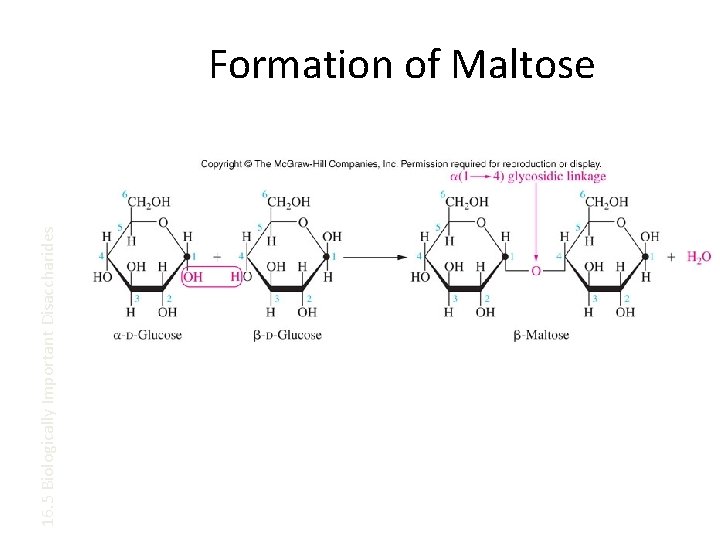
16. 5 Biologically Important Disaccharides Formation of Maltose
Lactose 16. 5 Biologically Important Disaccharides • Lactose is formed by joining b-D-galactose to a-D-glucose to give a b-1, 4 -glycoside 11 • Lactose is milk sugar – For use as an energy source, must be hydrolyzed to glucose and galactose – Lactose intolerance results from lack of lactase to hydrolyze the glycosidic link of lactose
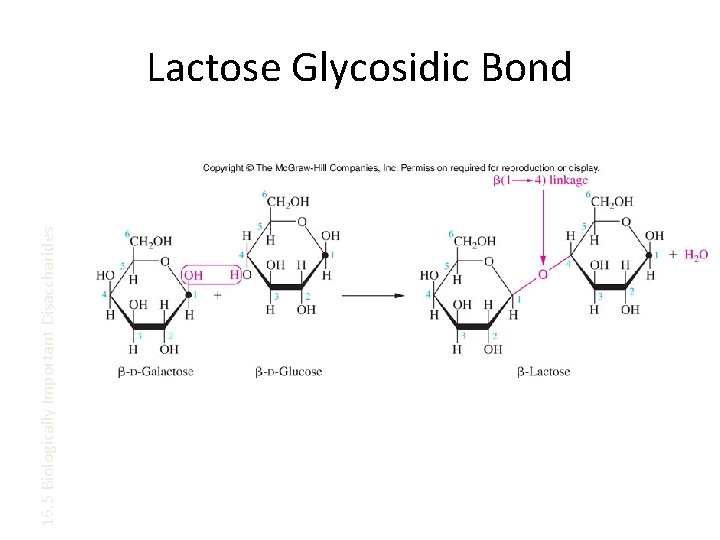
16. 5 Biologically Important Disaccharides Lactose Glycosidic Bond
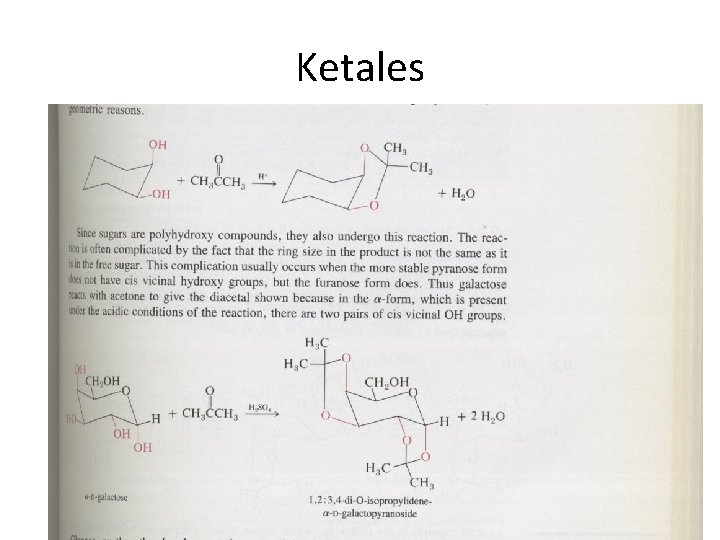
Sucrose • Sucrose is formed by linking a-D-glucose with b-Dfructose to give a 1, 2 glycosidic linkage – Nonreducing – negative reaction in Benedict test – The glycosidic O is part of an acetal and a ketal 16. 5 Biologically Important Disaccharides • Important plant carbohydrate – Water soluble – Easily transported in plant circulatory system • Cannot by synthesized by animals • Sucrose called: – – Table sugar Cane sugar Beet sugar Linked to dental caries
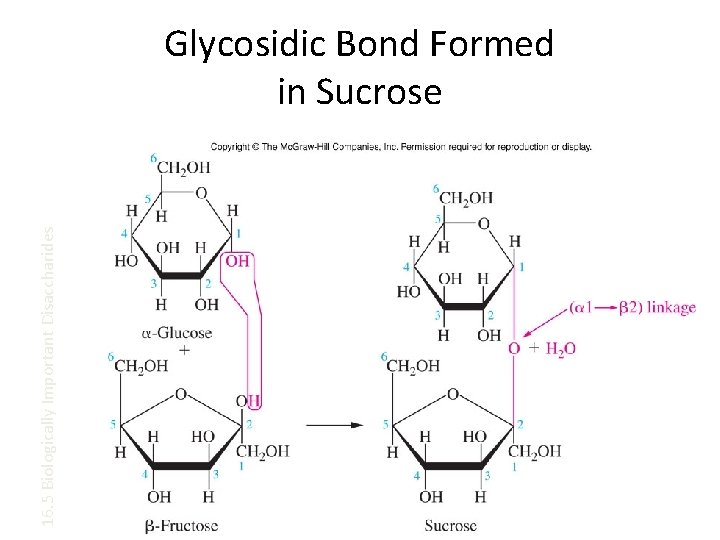
16. 5 Biologically Important Disaccharides Glycosidic Bond Formed in Sucrose
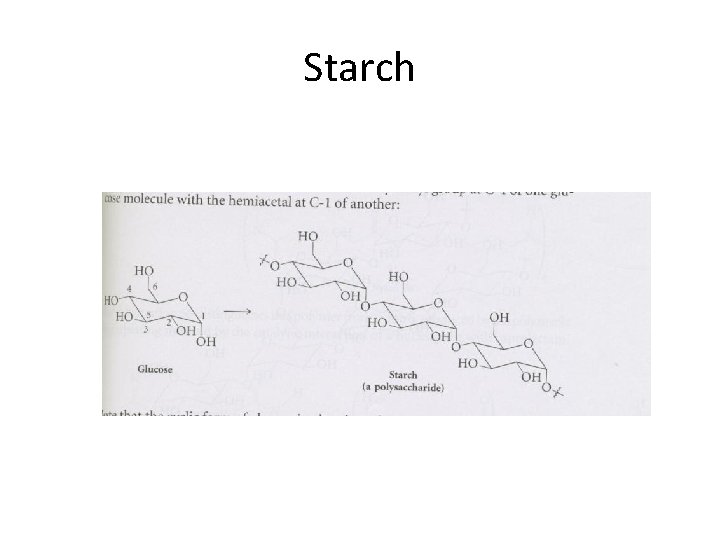
Starch
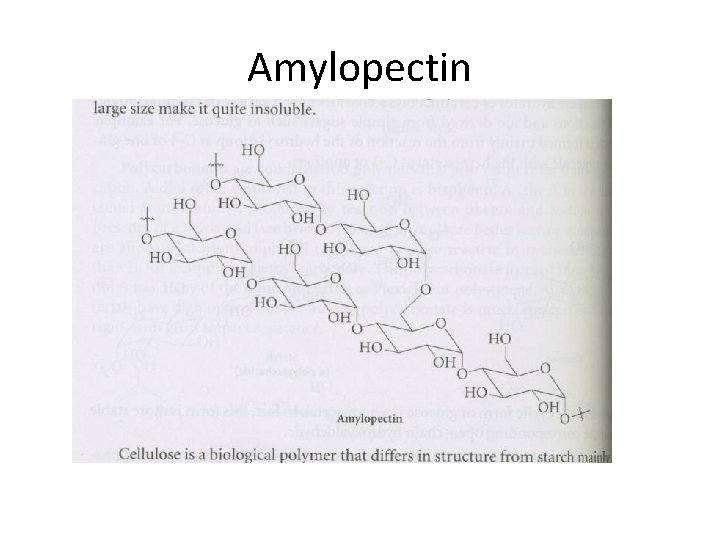
Amylopectin
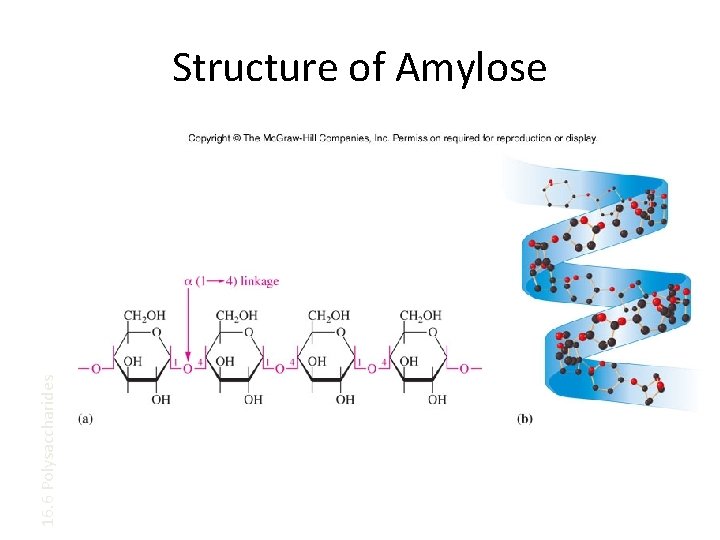
16. 6 Polysaccharides Structure of Amylose
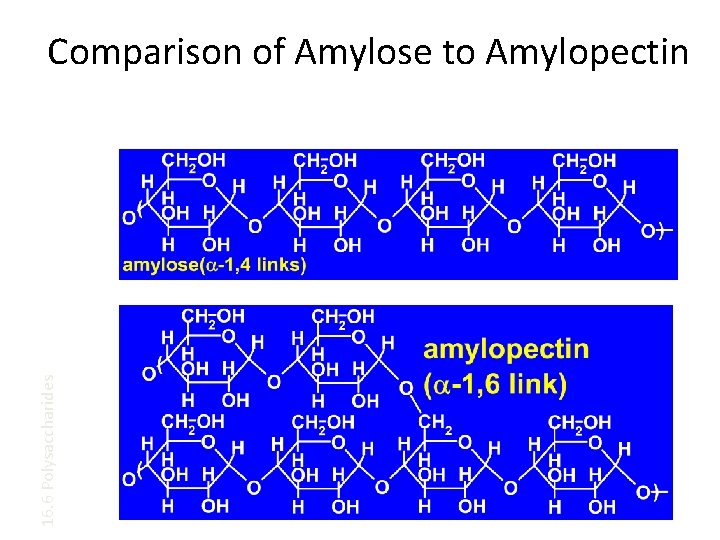
16. 6 Polysaccharides Comparison of Amylose to Amylopectin
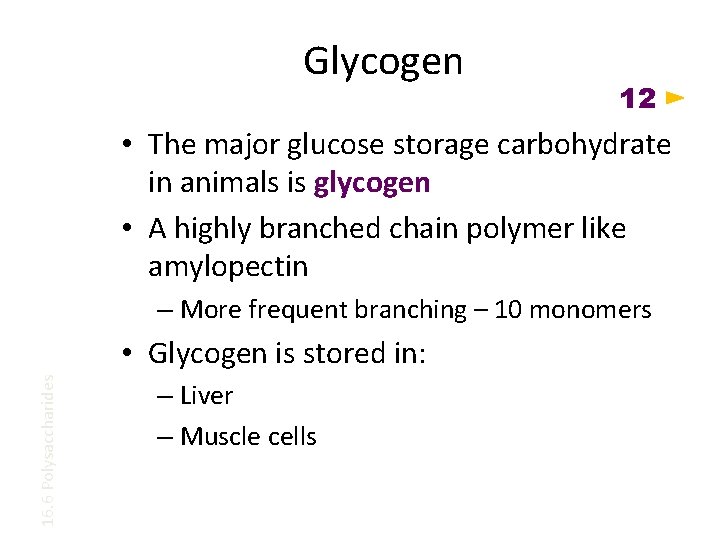
Glycogen 12 • The major glucose storage carbohydrate in animals is glycogen • A highly branched chain polymer like amylopectin – More frequent branching – 10 monomers 16. 6 Polysaccharides • Glycogen is stored in: – Liver – Muscle cells
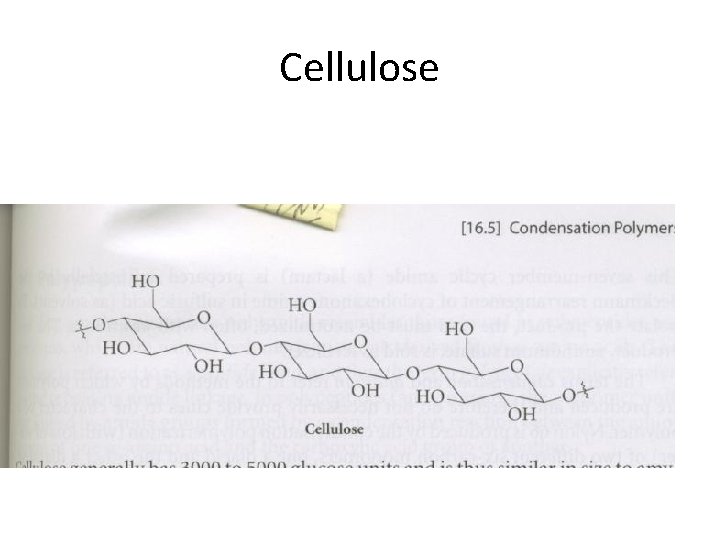
Cellulose
Cellulose • • • 16. 6 Polysaccharides • • 12 Cellulose is the major structural polymer in plants It is a liner homopolymer composed of b-Dglucose units linked b-1, 4 The repeating disaccharide of cellulose is bcellobiose Animals lack the enzymes necessary to hydrolyze cellulose The bacteria in ruminants (e. g. , cows) can digest cellulose so that they can eat grass, etc.
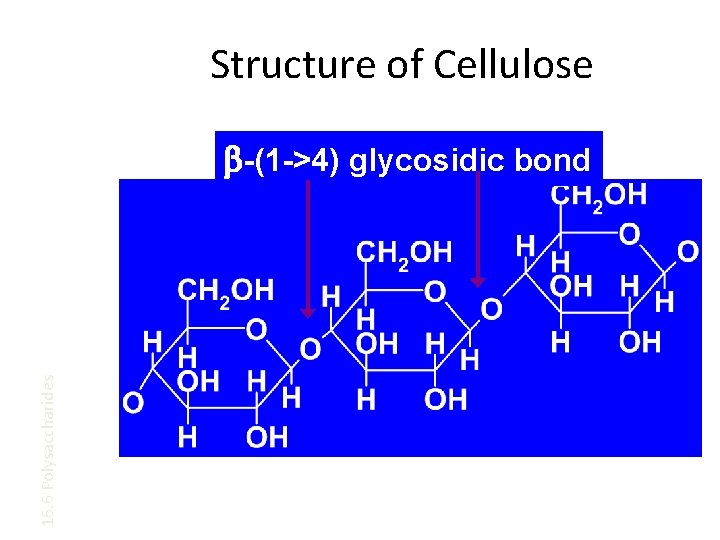
Structure of Cellulose 16. 6 Polysaccharides b-(1 ->4) glycosidic bond
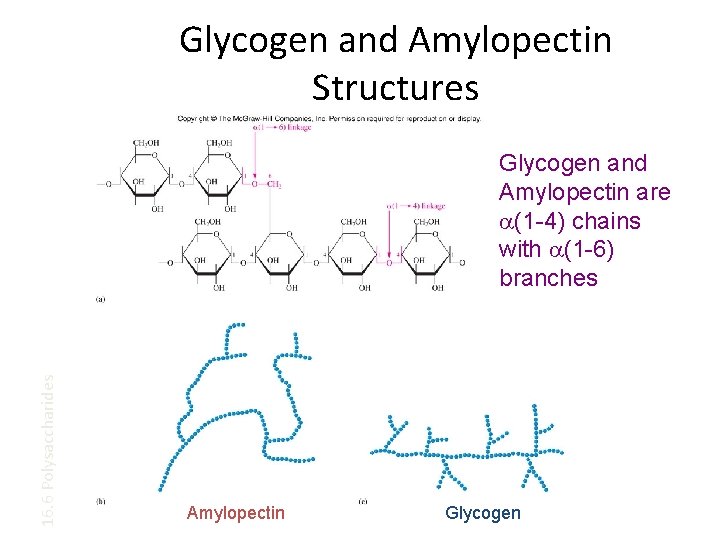
Glycogen and Amylopectin Structures 16. 6 Polysaccharides Glycogen and Amylopectin are a(1 -4) chains with a(1 -6) branches Amylopectin Glycogen
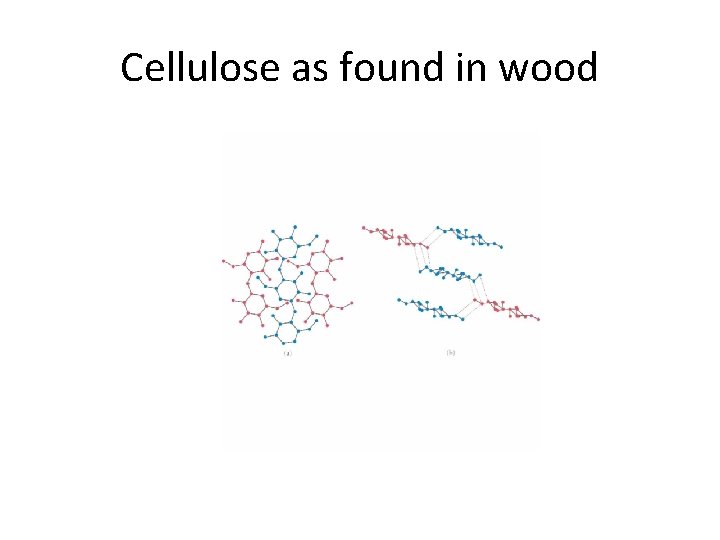
Cellulose as found in wood
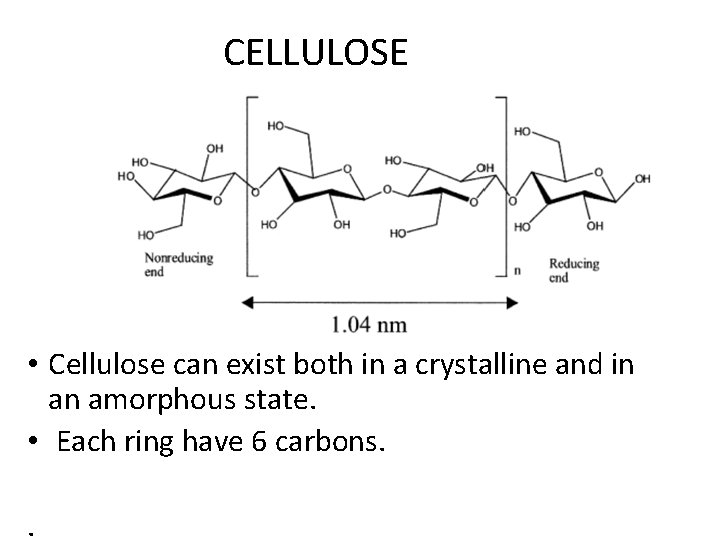
CELLULOSE • Cellulose can exist both in a crystalline and in an amorphous state. • Each ring have 6 carbons. .
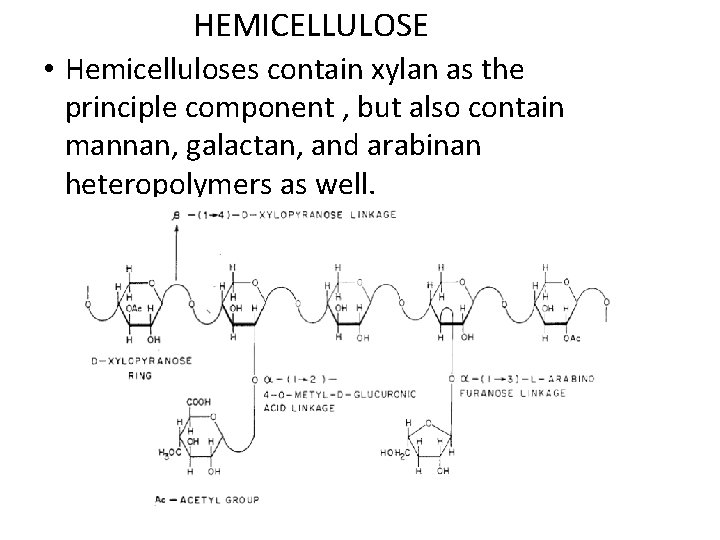
HEMICELLULOSE • Hemicelluloses contain xylan as the principle component , but also contain mannan, galactan, and arabinan heteropolymers as well.
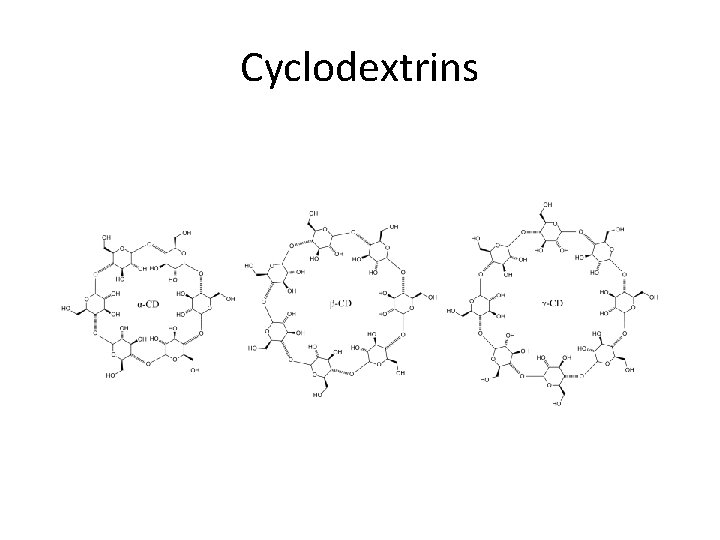
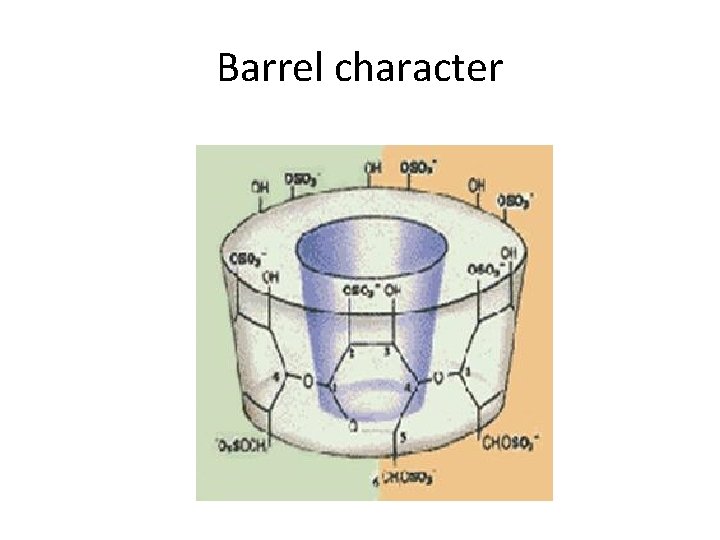
Cyclodextrins
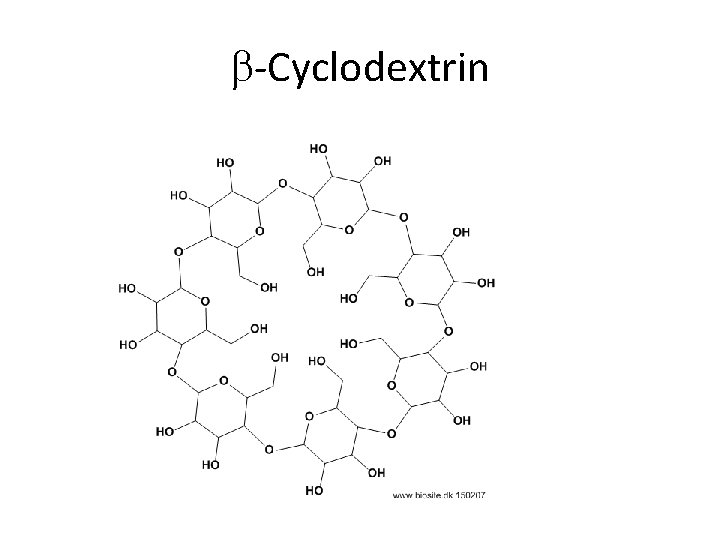
b-Cyclodextrin
Barrel character
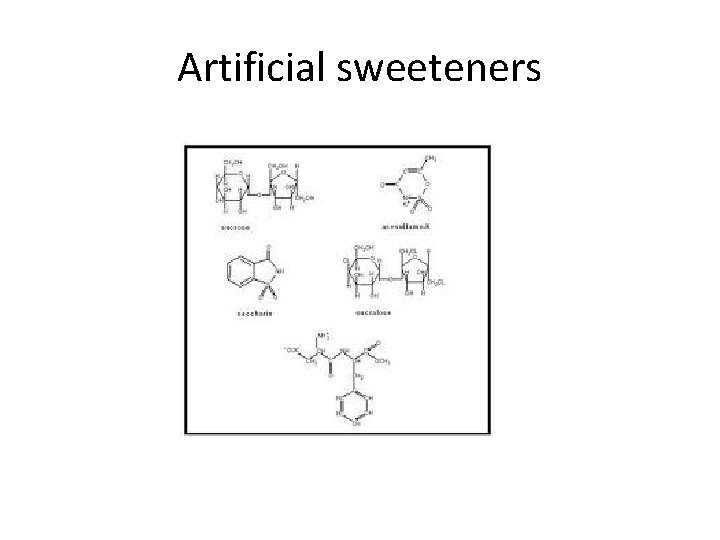
Artificial sweeteners

Nutrasweet
(E, RS)-Perillartine.
Neotame
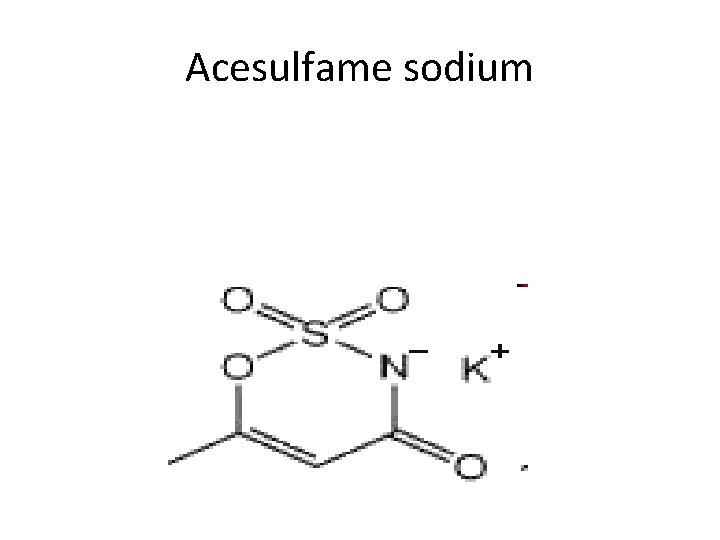
Acesulfame sodium
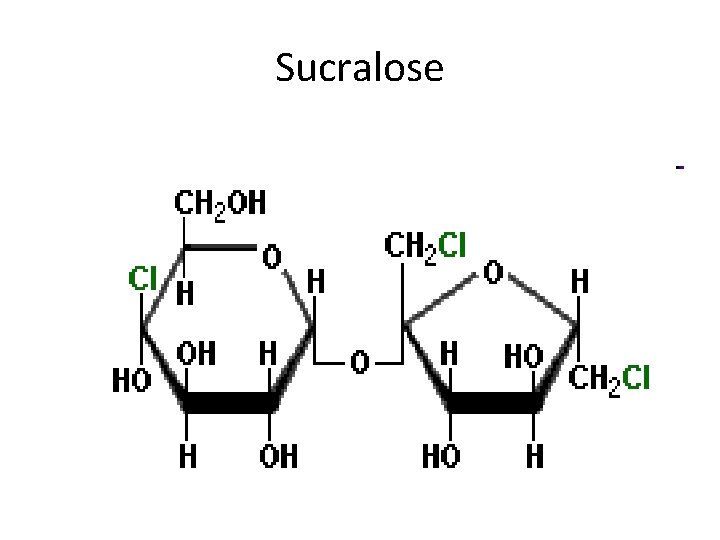
Sucralose
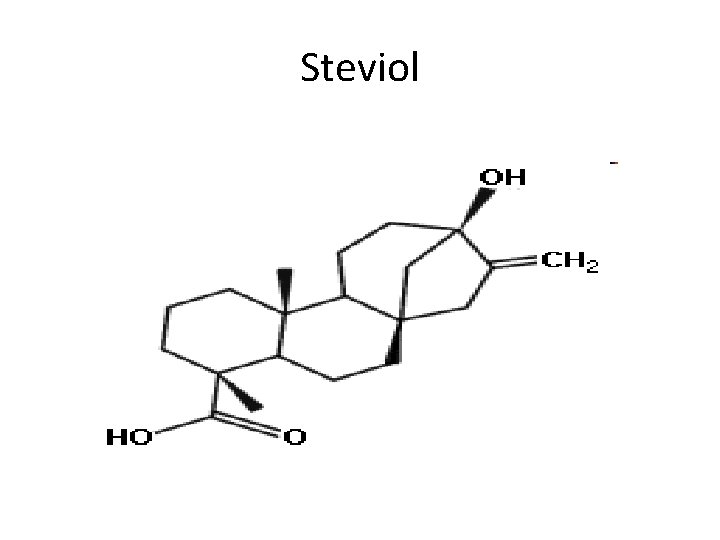
Steviol
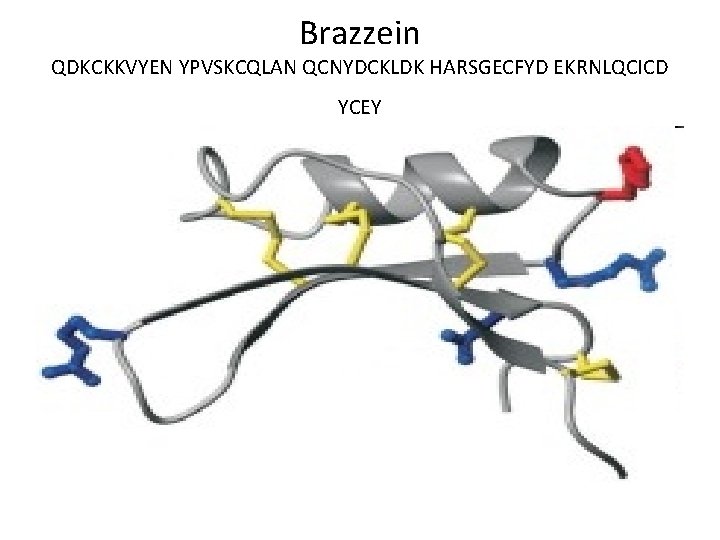
Brazzein QDKCKKVYEN YPVSKCQLAN QCNYDCKLDK HARSGECFYD EKRNLQCICD YCEY
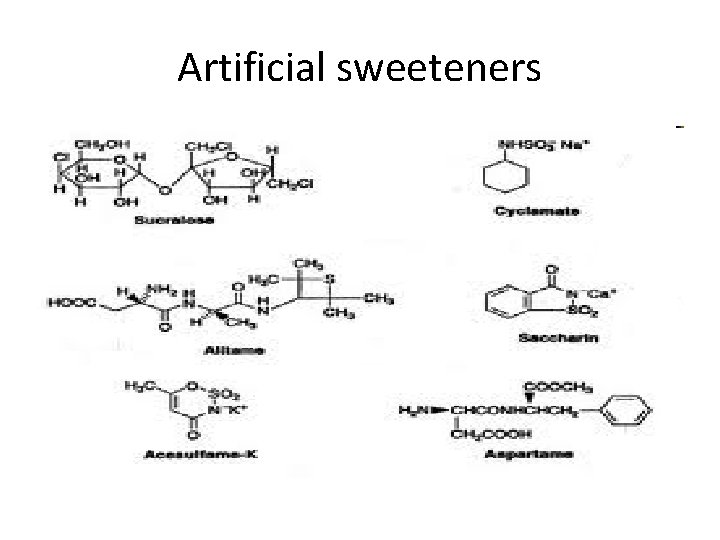
Artificial sweeteners
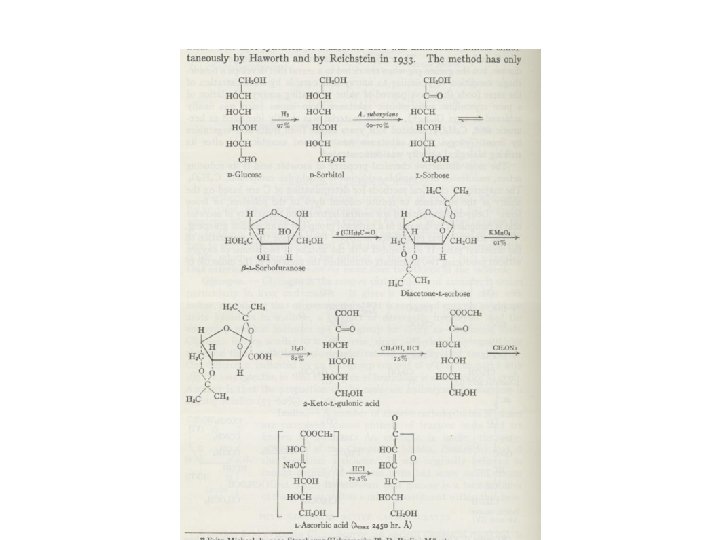
Ketales
Reduction
Oxidation
- Slides: 82