
Carbohydrates Carbs Objective B 2 Compare the structures

Carbohydrates “Carbs” Objective: B 2 - Compare the structures & functions of carbohydrates, lipids, proteins, & nucleic acids & their organization into long complex molecules
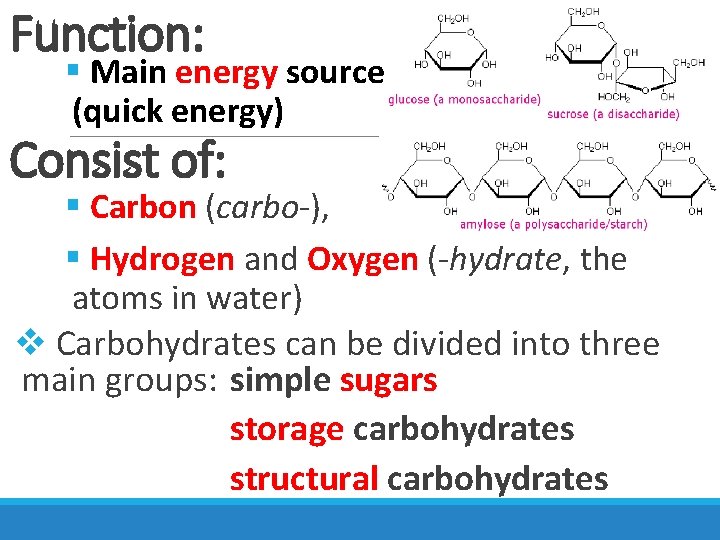
Function: § Main energy source (quick energy) Consist of: § Carbon (carbo-), § Hydrogen and Oxygen (-hydrate, the atoms in water) v Carbohydrates can be divided into three main groups: simple sugars storage carbohydrates structural carbohydrates

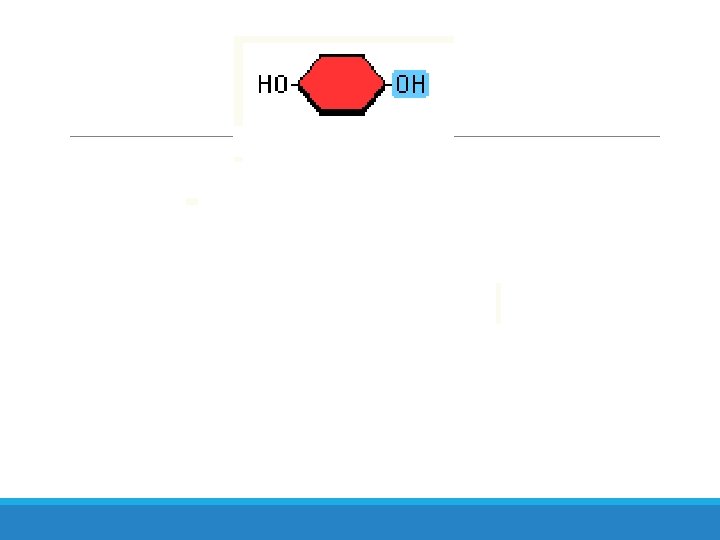
Simple Sugars v Monosaccharides (mono- means one) (saccharide is Greek for “sweet” or “sugar”) § glucose (blood sugar and a product of photosynthesis) § fructose (fruit sugar) C 6 H 12 O 6 v Disaccharides (di- means two) - 2 monosaccharides connected together § sucrose (table sugar) § lactose (milk sugar) lactose

Polysaccharides § many sugars chained together § can either be a storage or a structural carbohydrate

Storage Carbohydrates § are simply that, they store the sugar § generally long chains (upwards of 1, 000 or more) of glucose (When the body needs sugar (quick energy), it simply “plucks” a sugar off. Kind of like plucking of single grapes from a cluster. You eat one at a time, not the whole cluster at once) § In plants it’s called starch (potatoes, bread, rice) § In animals it’s called glycogen
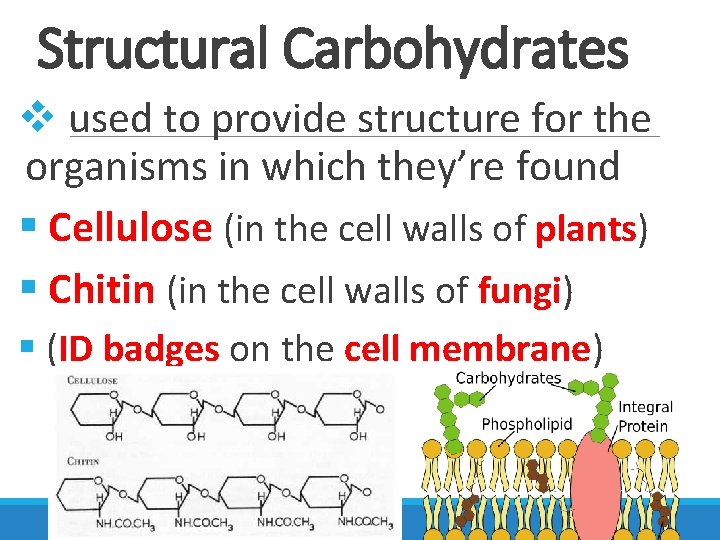
Structural Carbohydrates v used to provide structure for the organisms in which they’re found § Cellulose (in the cell walls of plants) § Chitin (in the cell walls of fungi) § (ID badges on the cell membrane)
Identifying Carbohydrates q. Roughly 90% of the time a carbohydrate ends in “-ose” q. Examples: glucose, fructose, galactose, sucrose, lactose, maltose, cellulose, ribose, deoxyribose, etc.
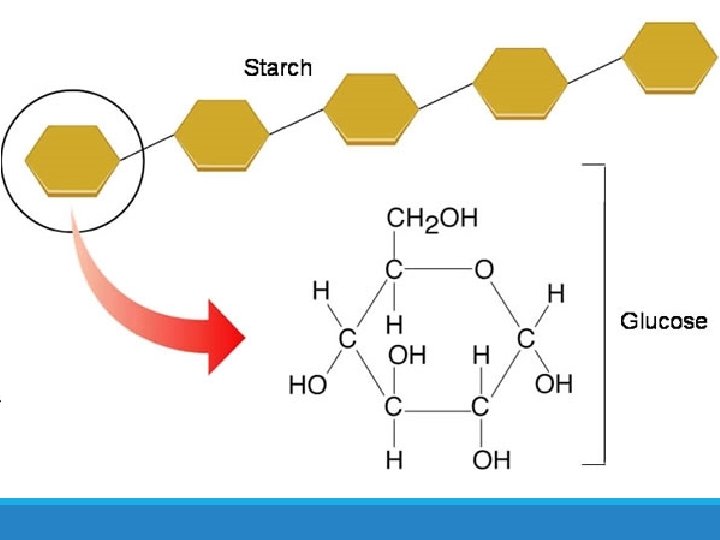
In conclusion… monomer (monosaccharide) polymer (polysaccharide)
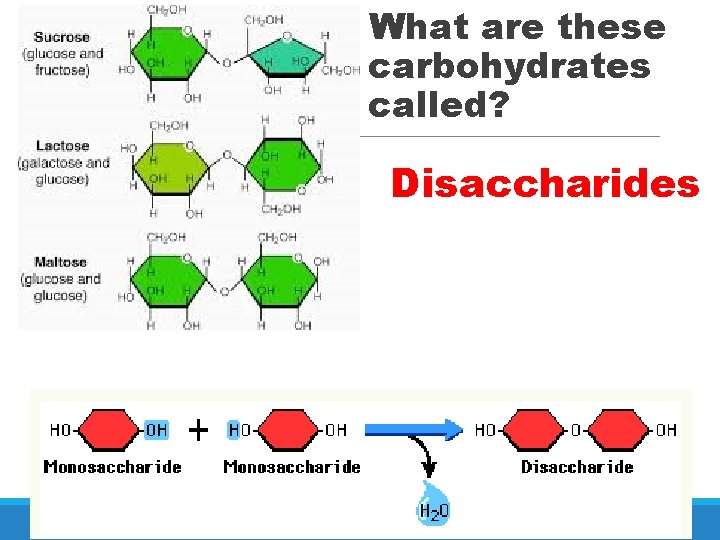
What are these carbohydrates called? Disaccharides
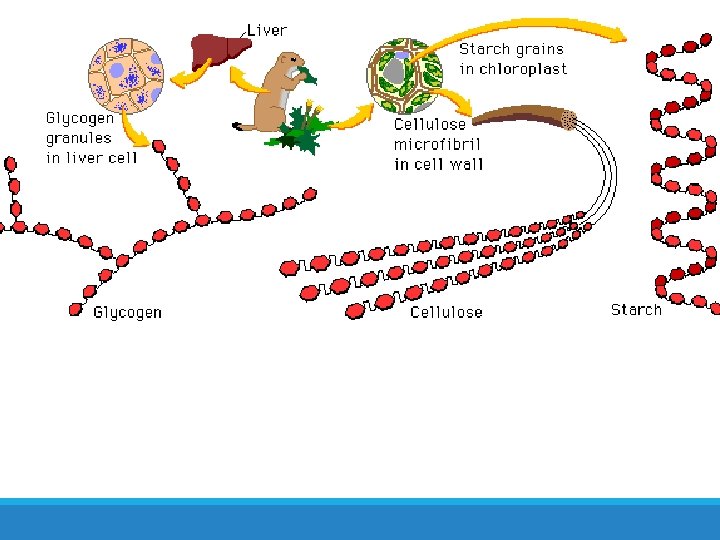
POLYSACCHARIDES IN ANIMALS * glycogen-animal starch, stores energy * in arthropods, makes up the exoskeleton POLYSACCHARIDES IN PLANTS * starch! made from plants that put together glucose * cell walls are made of cellulose

Etymology Monosaccharide: mono- (Gk. MONOS, single/one) + saccharide (L. SACCHARUM, sugar) Disaccharide: di- (Gk. DI, two) + -saccharide (sugar) Polysaccharide: poly- (Gk. POLUS, many) + -saccharide (sugar) Glucose: (Gk. GLUKUS, sweet) Fructose: fruct- (L. FRUCTUS, fruit) + -ose (Fr. -OSE, carbohydrate or sugar) Sucrose: sucr- (Fr. SUCRE, sugar) + -ose (sugar) Lactose: lact- (L. LACT-, milk) + -ose (sugar)
- Slides: 12