
Carbohydrates Carbohydrates Carbohydrates are compounds made of carbon
Carbohydrates
Carbohydrates �Carbohydrates are compounds made of carbon, hydrogen, and oxygen �general formula = CH 2 O; 1 -2 -1 ratio of carbon to hydrogen to oxygen ribose C 5 H 10 O 5 glucose C 6 H 12 O 6 sucrose C 12 H 22 O 11 �many carbohydrate names end in -ose �Examples of carbohydrates include: sugar, starch, and cellulose
Functions of Carbohydrates �Include: �Energy for metabolism (glucose) �Short term energy storage (glycogen/starch) �Structure: plants – cell wall animals – exoskeleton
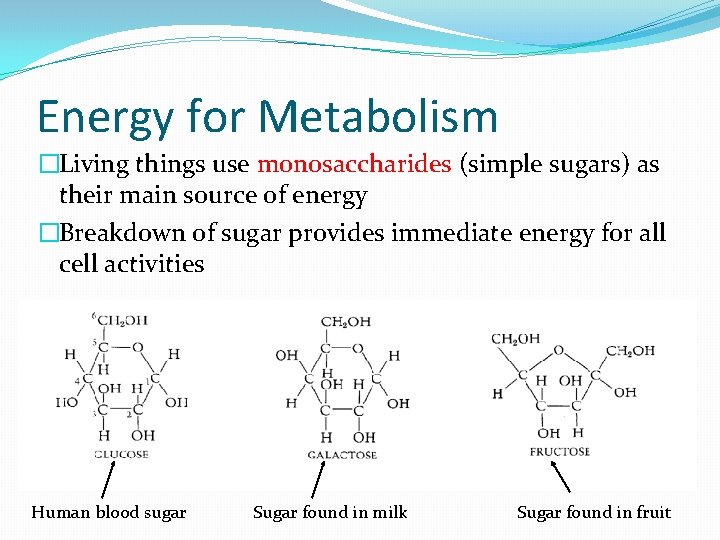
Energy for Metabolism �Living things use monosaccharides (simple sugars) as their main source of energy �Breakdown of sugar provides immediate energy for all cell activities Human blood sugar Sugar found in milk Sugar found in fruit
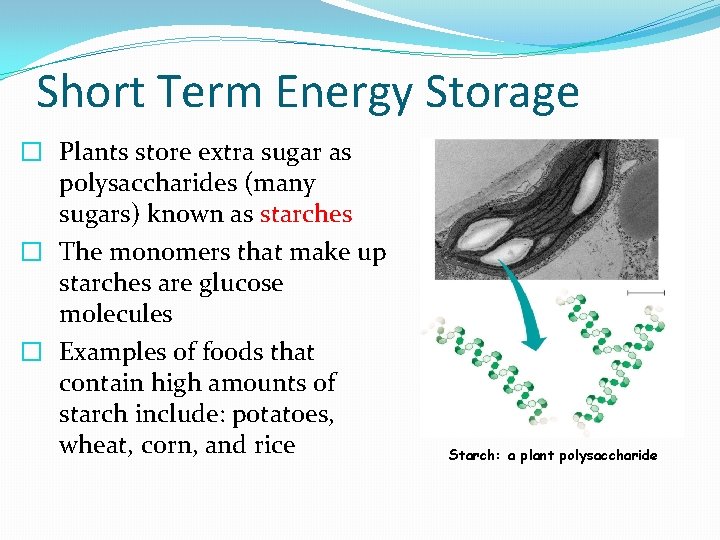
Short Term Energy Storage � Plants store extra sugar as polysaccharides (many sugars) known as starches � The monomers that make up starches are glucose molecules � Examples of foods that contain high amounts of starch include: potatoes, wheat, corn, and rice Starch: a plant polysaccharide
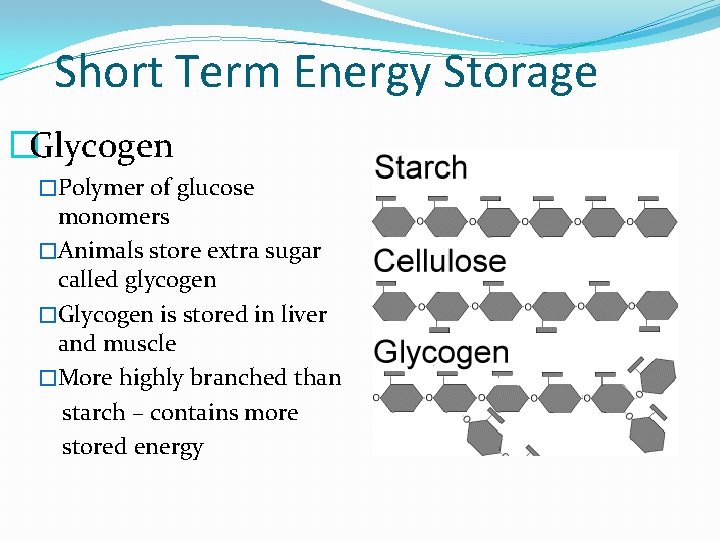
Short Term Energy Storage �Glycogen �Polymer of glucose monomers �Animals store extra sugar called glycogen �Glycogen is stored in liver and muscle �More highly branched than starch – contains more stored energy
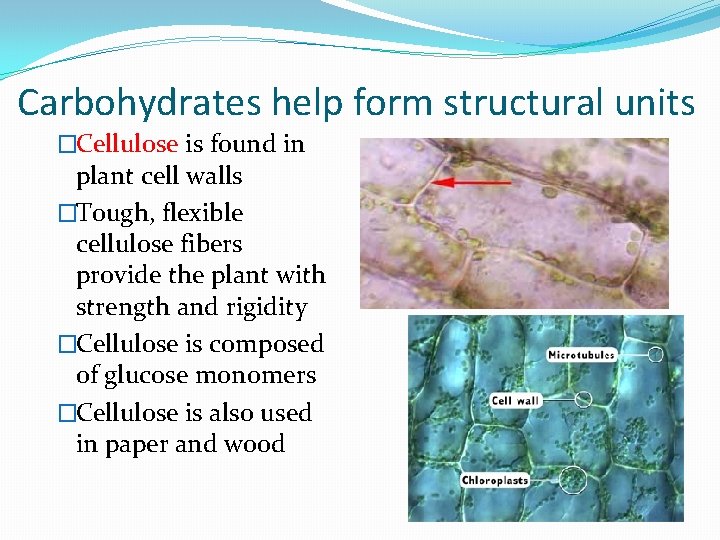
Carbohydrates help form structural units �Cellulose is found in plant cell walls �Tough, flexible cellulose fibers provide the plant with strength and rigidity �Cellulose is composed of glucose monomers �Cellulose is also used in paper and wood
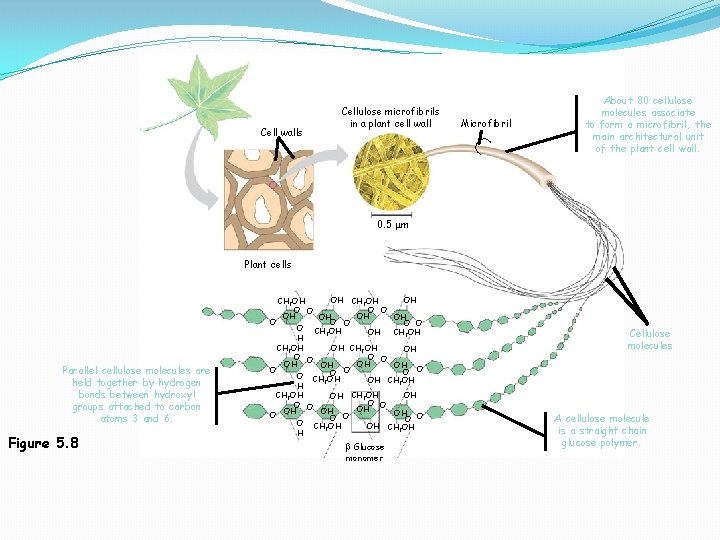
Microfibril Cell walls Cellulose microfibrils in a plant cell wall About 80 cellulose molecules associate to form a microfibril, the main architectural unit of the plant cell wall. 0. 5 m Plant cells Parallel cellulose molecules are held together by hydrogen bonds between hydroxyl groups attached to carbon atoms 3 and 6. Figure 5. 8 OH CH 2 OH O O OH OH O O O CH OH OH CH 2 OH 2 H CH 2 OH OH O O O CH OH OH CH 2 2 OH H CH 2 OH OH OH CH 2 OH O O OH OH OH O O O O CH OH OH CH 2 OH 2 H b Glucose monomer Cellulose molecules A cellulose molecule is a straight chain glucose polymer.
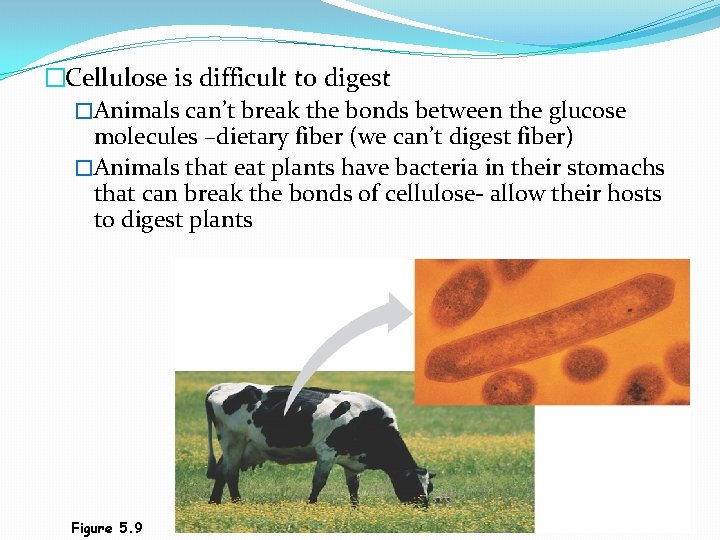
�Cellulose is difficult to digest �Animals can’t break the bonds between the glucose molecules –dietary fiber (we can’t digest fiber) �Animals that eat plants have bacteria in their stomachs that can break the bonds of cellulose- allow their hosts to digest plants Figure 5. 9
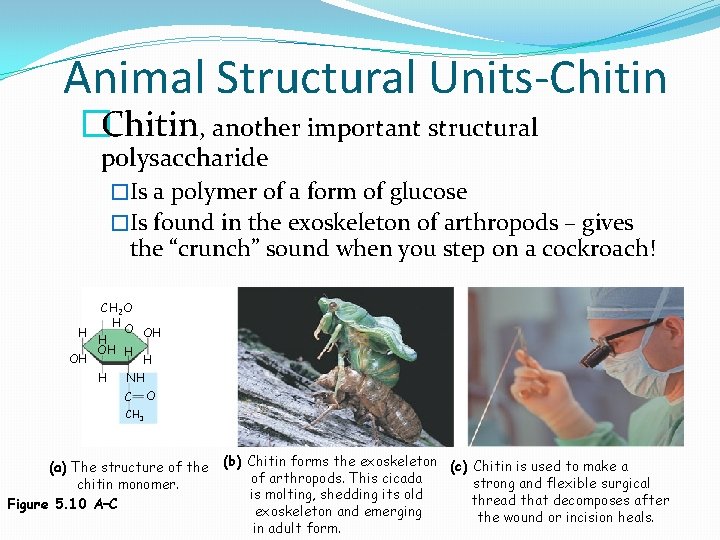
Animal Structural Units-Chitin �Chitin, another important structural polysaccharide �Is a polymer of a form of glucose �Is found in the exoskeleton of arthropods – gives the “crunch” sound when you step on a cockroach! CH 2 O H O OH H H NH C O CH 3 (a) The structure of the chitin monomer. Figure 5. 10 A–C (b) Chitin forms the exoskeleton (c) Chitin is used to make a of arthropods. This cicada strong and flexible surgical is molting, shedding its old thread that decomposes after exoskeleton and emerging the wound or incision heals. in adult form.
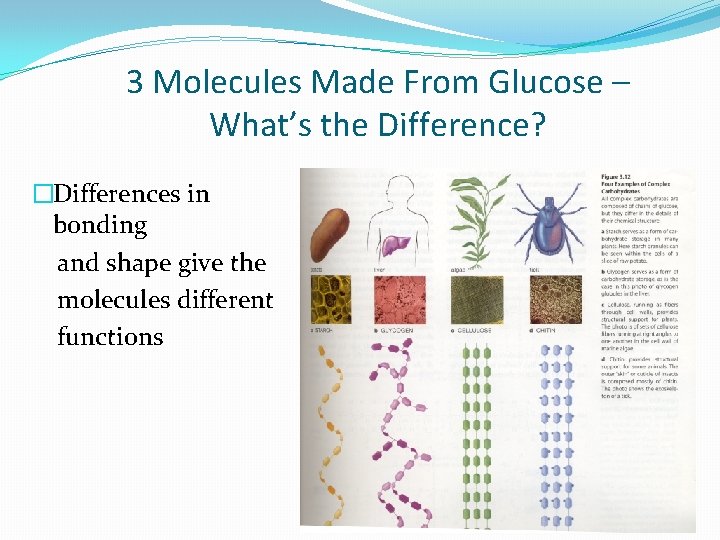
3 Molecules Made From Glucose – What’s the Difference? �Differences in bonding and shape give the molecules different functions
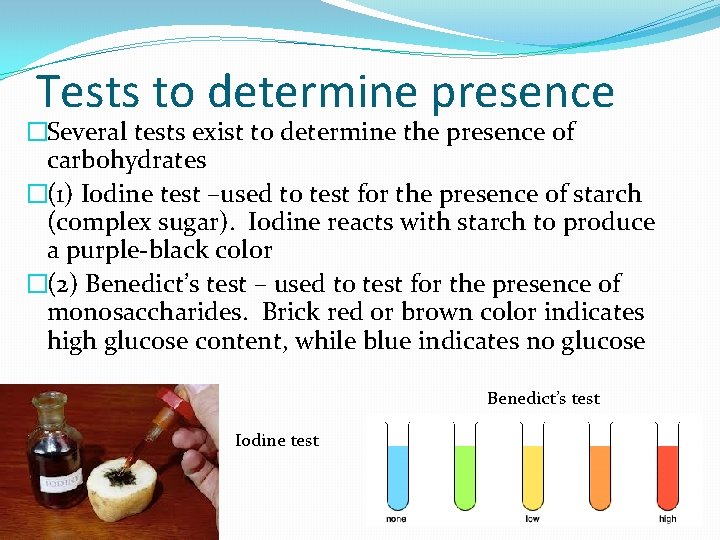
Tests to determine presence �Several tests exist to determine the presence of carbohydrates �(1) Iodine test –used to test for the presence of starch (complex sugar). Iodine reacts with starch to produce a purple-black color �(2) Benedict’s test – used to test for the presence of monosaccharides. Brick red or brown color indicates high glucose content, while blue indicates no glucose Benedict’s test Iodine test
Vocabulary to Know and Love �Carbohydrate �Monosaccharide �Glucose �Polysaccharide �Starch �Glycogen �cellulose �Chitin �Additional flashcards - 5 functions of carbohydrates - 3 elements found in carbohydrates - Iodine test- positive test and what molecule it indicates - Bendict’s test –positive test and what molecule it indicates
- Slides: 13