
Carbohydrates Capture Energy from the Sun Sugars starches
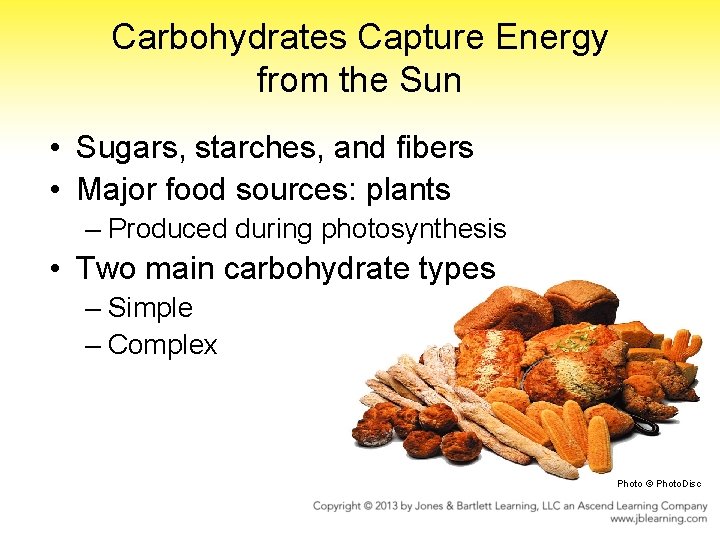
Carbohydrates Capture Energy from the Sun • Sugars, starches, and fibers • Major food sources: plants – Produced during photosynthesis • Two main carbohydrate types – Simple – Complex Photo © Photo. Disc
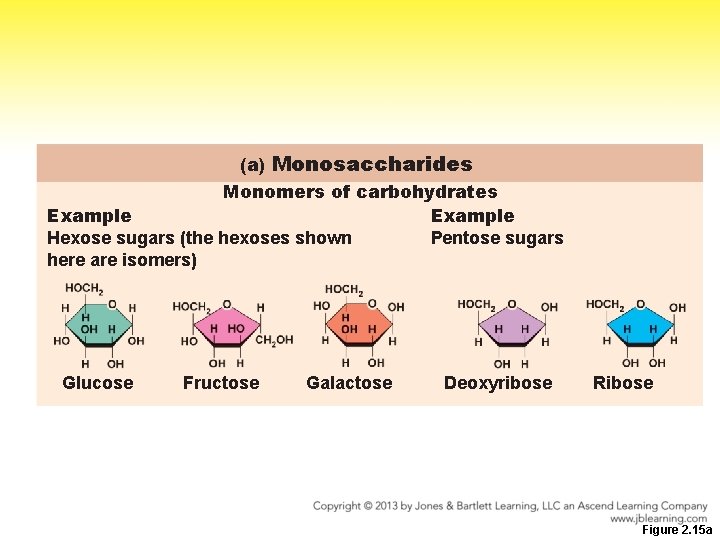
(a) Monosaccharides Monomers of carbohydrates Example Hexose sugars (the hexoses shown Pentose sugars here are isomers) Glucose Fructose Galactose Deoxyribose Ribose Figure 2. 15 a
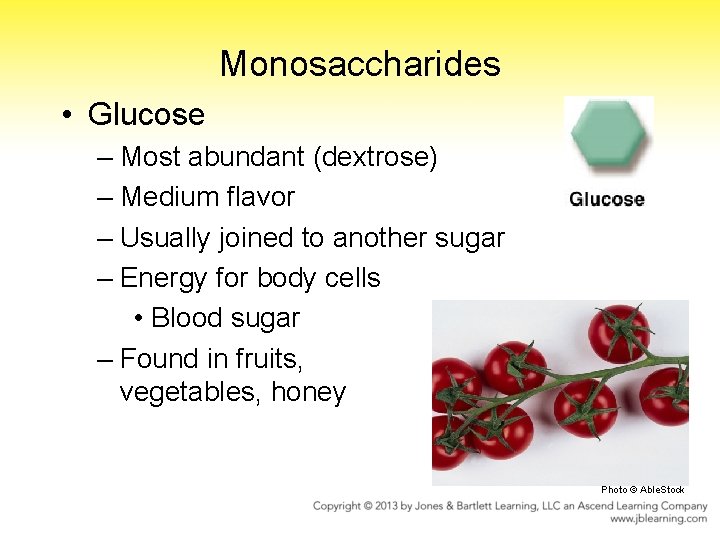
Monosaccharides • Glucose – Most abundant (dextrose) – Medium flavor – Usually joined to another sugar – Energy for body cells • Blood sugar – Found in fruits, vegetables, honey Photo © Able. Stock
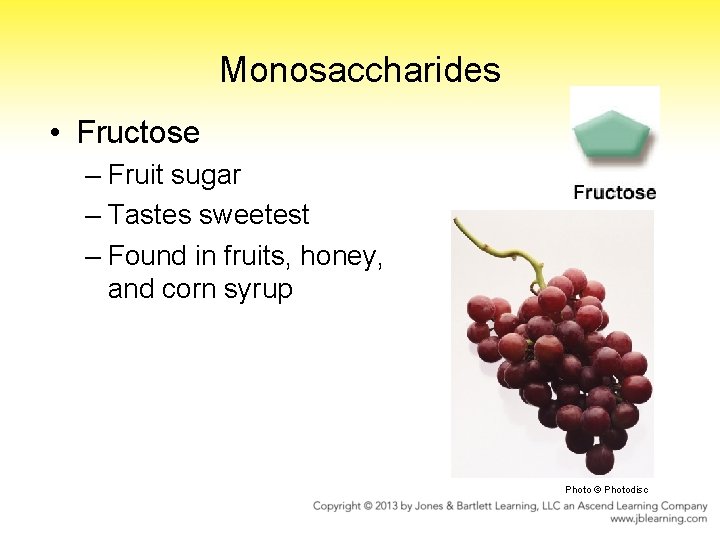
Monosaccharides • Fructose – Fruit sugar – Tastes sweetest – Found in fruits, honey, and corn syrup Photo © Photodisc
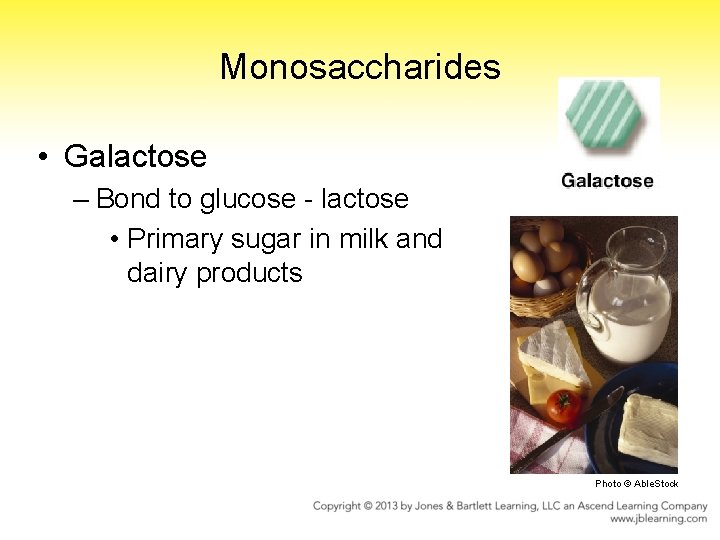
Monosaccharides • Galactose – Bond to glucose - lactose • Primary sugar in milk and dairy products Photo © Able. Stock
Disaccharides: The Double Sugars • Sucrose: glucose + fructose – “Table sugar” – Made from sugar cane and sugar beets – Listed as “sugar” on food labels • Lactose: glucose + galactose – “Milk sugar” – Found in milk and milk products
Disaccharides: The Double Sugars • Maltose: glucose + glucose – “Malt sugar” – Seldom occurs naturally – Product of starch breakdown – Found in germinating cereal grains
Complex Carbohydrates – Oligosaccharides • Three to ten sugar molecules • Beans, peas, and lentils – Polysaccharides • Long chains of glucose • Structural differences • Digestible or nondigestible

Complex Carbohydrates • Starch – Long chains of glucose • Amylose—straight chains • Amylopectin—branched chains – Resistant starch • Not digested • Glycogen – Stored skeletal muscle and liver
Complex Carbohydrates • Fiber – Nondigestible carbs and lignins – Dietary fiber: found in plants • Fruits, vegetables, legumes, and whole grains – Functional: isolated and added to foods – Total: sum of dietary and functional fiber
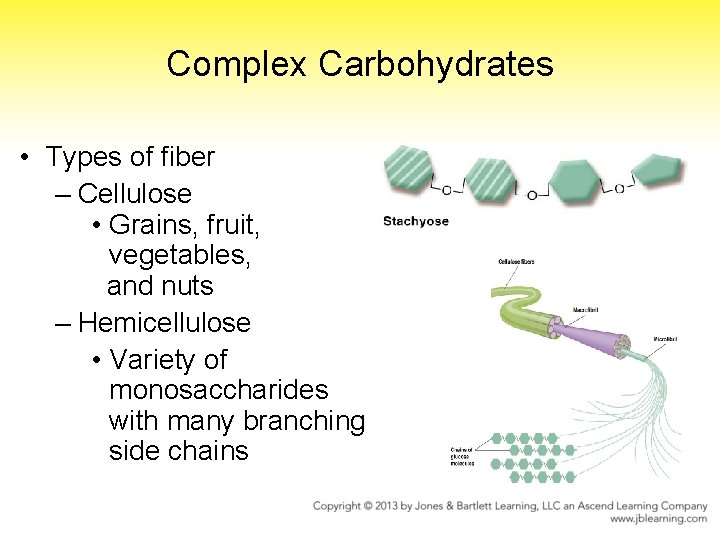
Complex Carbohydrates • Types of fiber – Cellulose • Grains, fruit, vegetables, and nuts – Hemicellulose • Variety of monosaccharides with many branching side chains
Complex Carbohydrates – Pectins • Especially fruits – Gums and cilages • Gel-forming fibers – Lignins • Nondigestable
Complex Carbohydrates – Beta-glucans • Branched polysaccharides • Barley and oats • Helps decrease blood cholesterol – Chitin and chitosan • Primarily consumed in supplement form • Marked as weight-loss supplements • May impair absorption of fat-soluble vitamins and some minerals
Digestion and Absorption • Digestion: – Mouth • Salivary amylase begins digestion – Stomach • Acidity of stomach juices halt action of salivary amylase
Digestion and Absorption – Small intestine • Pancreatic amylase • Brush border enzymes digest disaccharides • Other enzymes – Maltase, sucrase, and lactase
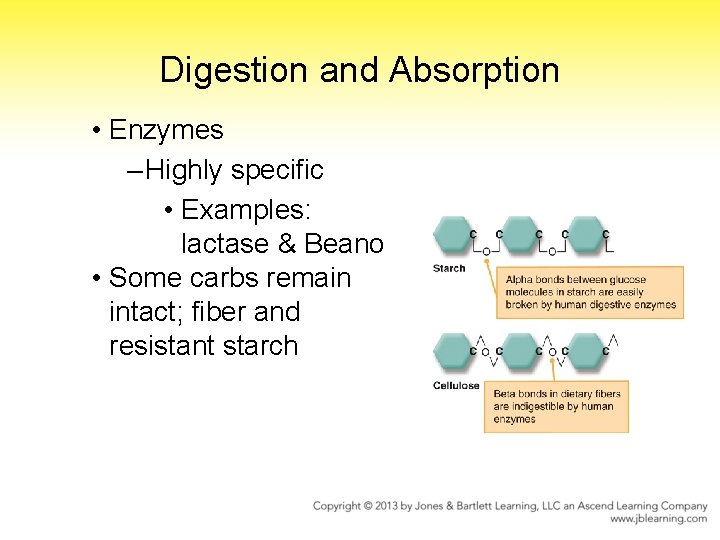
Digestion and Absorption • Enzymes – Highly specific • Examples: lactase & Beano • Some carbs remain intact; fiber and resistant starch
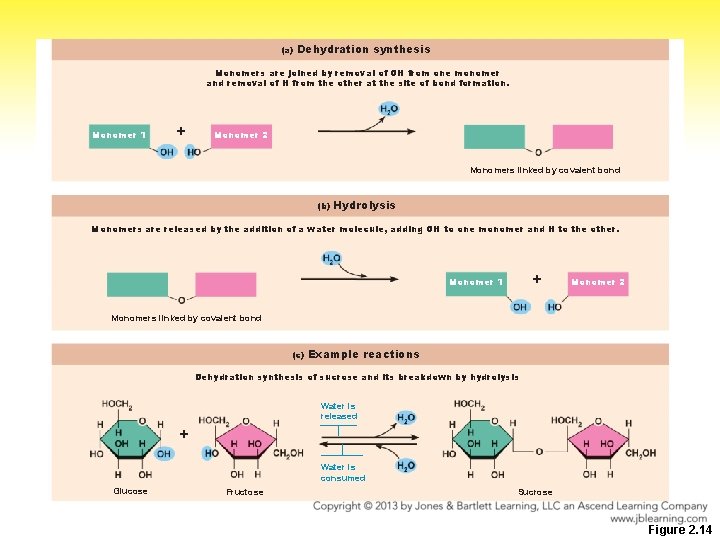
(a) Dehydration synthesis Monomers are joined by removal of OH from one monomer and removal of H from the other at the site of bond formation. Monomer 1 + Monomer 2 Monomers linked by covalent bond (b) Hydrolysis Monomers are released by the addition of a water molecule, adding OH to one monomer and H to the other. + Monomer 1 Monomer 2 Monomers linked by covalent bond (c) Example reactions Dehydration synthesis of sucrose and its breakdown by hydrolysis Water is released + Water is consumed Glucose Fructose Sucrose Figure 2. 14

Digestion and Absorption
Carbohydrates in the Body • Glucose primary fuel – Glucose needed to burn fat efficiently – Maintain blood glucose – Excess glucose is stored • Using glucose for energy – Liver glycogen (1/3) • Maintain normal blood glucose – Muscle glycogen (2/3) • Muscle activity
Carbohydrates in Action • Using glucose for energy – Sparing body protein • Adequate carbs prevent body from making glucose from proteins – Preventing ketosis • Ketone bodies ketosis dehydration • Body needs a min of 50 to 100 g of carbo/d to prevent
Carbohydrates in Action • Regulating blood glucose – Controlled by hormones • Insulin – Key • Glucagon – Breaks down glycogen to glucose • Epinephrine – “Fight or flight” hormone
Carbohydrates in Action • Regulating blood glucose – Glycemic index • Different foods vary in their effect on blood glucose • Measure effect of food on blood glucose
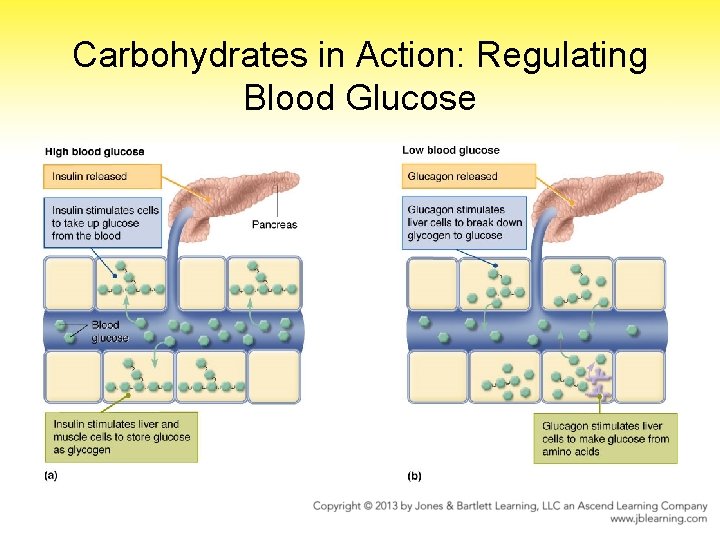
Carbohydrates in Action: Regulating Blood Glucose
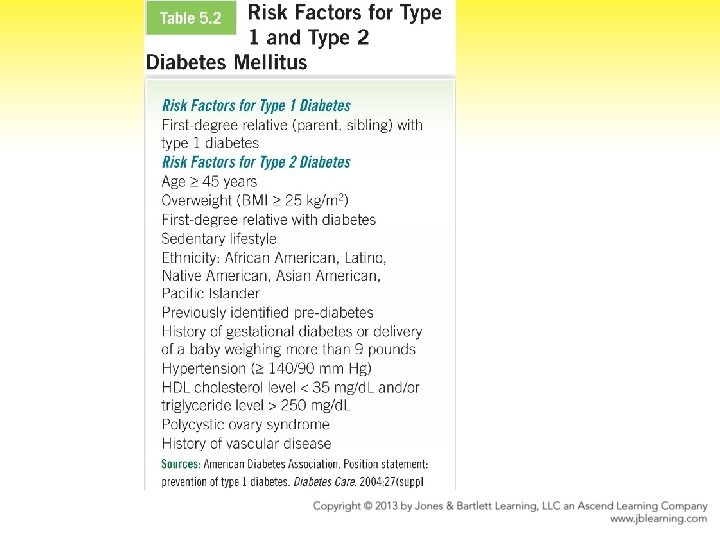
High Blood Glucose: Diabetes Mellitus • What is diabetes? – Disorder of total energy metabolism – After dig, glucose into blood and to cells • Requires insulin – Hyperglycemia: high blood glucose • Glucose unable to enter cells • Increased risk of high BP, heart and kidney disease
High Blood Glucose: Diabetes Mellitus • Diabetes mellitus – Consequences • Hyperglycemia • “Starvation in the midst of plenty” • Lose access to its main source of fuel • Use of fat and protein for energy sources ketosis and acidosis • Over time, damage to body proteins and tissues
High Blood Glucose: Diabetes Mellitus • Forms of diabetes mellitus – Type 1 diabetes: lack of insulin production – Type 2 diabetes: cells resistant to insulin • Prediabetes – Gestational diabetes: occurs during pregnancy
• Hypoglycemia – Symptoms • Nervousness, irritability, hunger, headache, shakiness, rapid heart rate, and weakness – Results from • Too much insulin, missed meals, and vigorous exercise – Reactive hypoglycemia – Fasting hypoglycemia
Carbohydrates in Your Diet • Recommended carbohydrate intake – RDA = 130 grams per day – AMDR = 45– 65% of calories – Daily Value (for 2, 000 kcal) = 300 grams – Dietary Guidelines • “Reduce intake of added sugars” • < 25% of daily energy intake • Choose whole grains, vegetables, fruits, beans and peas • > ½ of all grains as whole grains
Carbohydrates in Your Diet • Current consumption – How much are we eating? • AMDR = 45– 65% of kcal • Average American adult = 49– 50% of kcal • 13% of population has added sugar intake > 25% of kcal – Soft drinks! – At the same time, milk consumption and vitamin and mineral quality of diet is declining
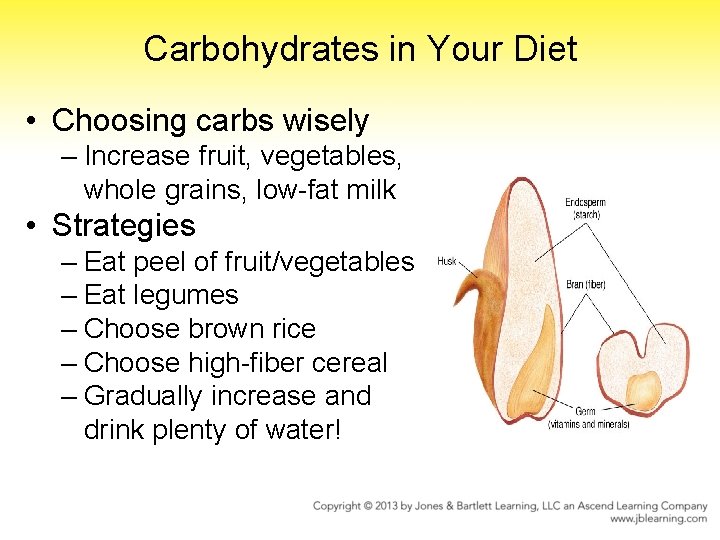
Carbohydrates in Your Diet • Choosing carbs wisely – Increase fruit, vegetables, whole grains, low-fat milk • Strategies – Eat peel of fruit/vegetables – Eat legumes – Choose brown rice – Choose high-fiber cereal – Gradually increase and drink plenty of water!
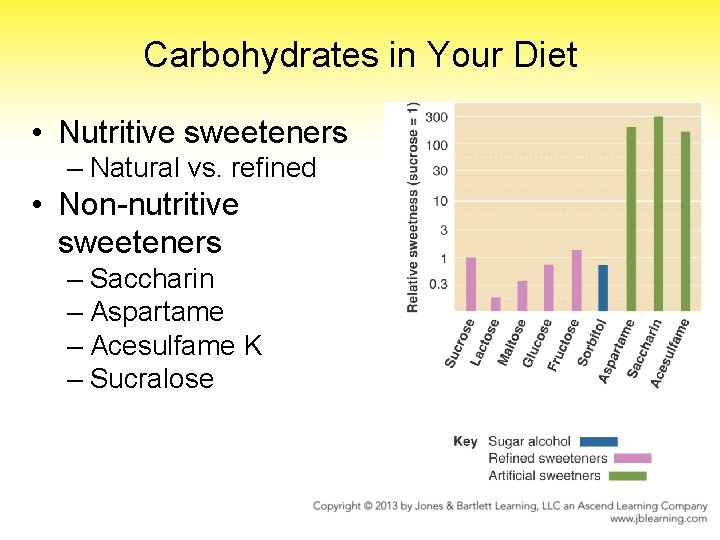
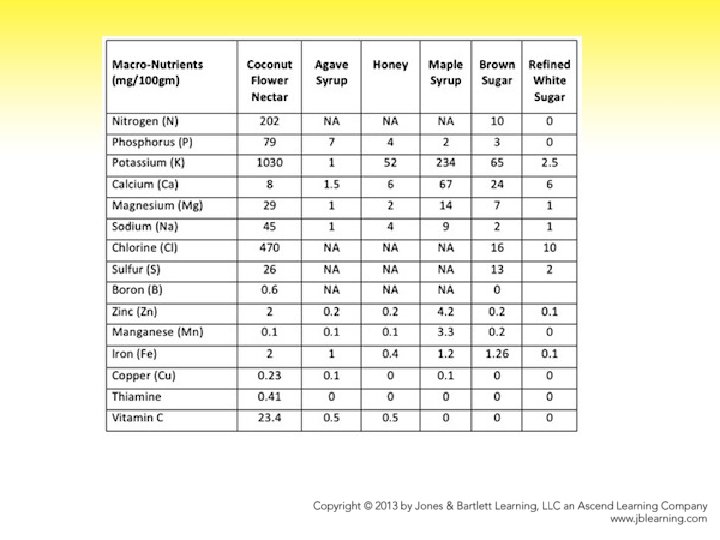
Carbohydrates in Your Diet • Nutritive sweeteners – Natural vs. refined • Non-nutritive sweeteners – Saccharin – Aspartame – Acesulfame K – Sucralose
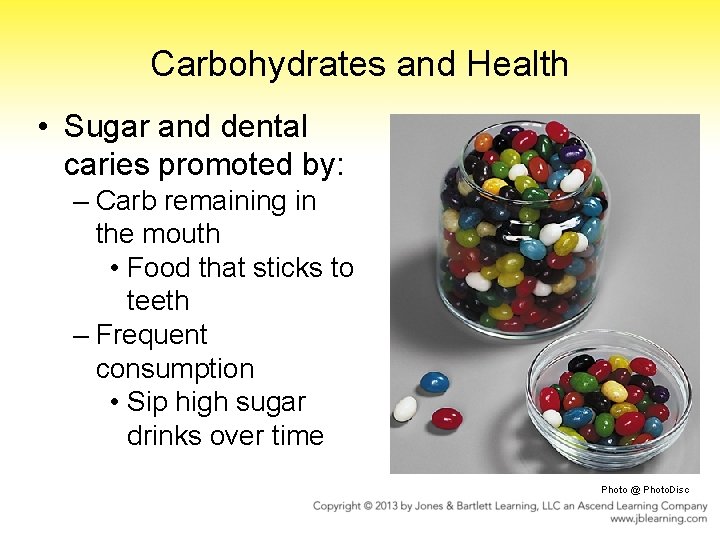
Carbohydrates and Health • Sugar and dental caries promoted by: – Carb remaining in the mouth • Food that sticks to teeth – Frequent consumption • Sip high sugar drinks over time Photo @ Photo. Disc
Carbohydrates and Health • Fiber and obesity –? • Fiber and type 2 diabetes –? • Fiber and cardiovascular disease –? • Fiber and gastrointestinal disorders –?
Carbohydrates and Health • Negative effects of excess fiber – Constipation? – Gas and bloating? – Can bind small amounts of minerals
- Slides: 36