
CARBOHYDRATES An organic compound that is the bodys
CARBOHYDRATES • An organic compound that is the body’s main source of energy. • Chapter 15
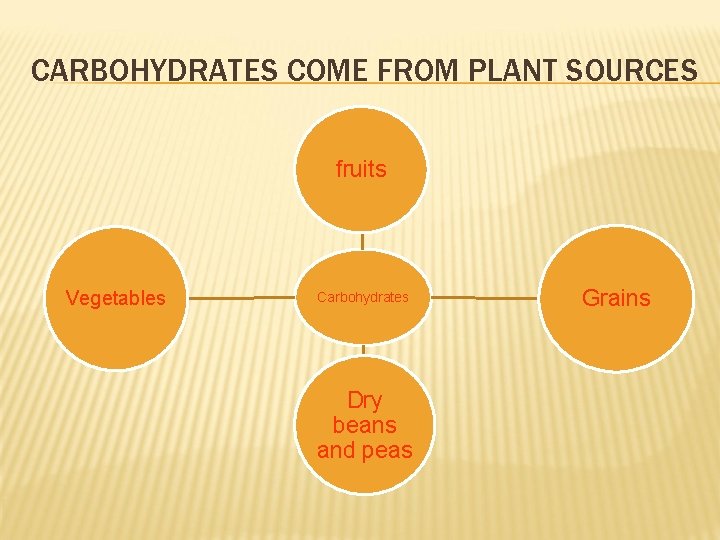
CARBOHYDRATES COME FROM PLANT SOURCES fruits Vegetables Carbohydrates Dry beans and peas Grains

HOW CARBOHYDRATES FORM Produced by green plants during photosynthesis. The carbohydrate formed by photosynthesis is glucose Glucose is the basic sugar molecule from which all other

BROKEN DOWN INTO TWO CATEGORIES Simple Carbohydrates: Sugars • Refined and Natural Complex Carbohydrates: Starch and fiber Complex Carbs vs. Simple Carbs (2: 46) http: //www. youtube. com/watch? v=6 es. FOqj_Ia. Y

SIMPLE CARBOHYDRATES/SUGARS Refined- removed from plants (sugar cane or sugar beets) and made into sweeteners Natural – sugars found in the foods we eat Fructose – comes from fruits Table sugar Maltose – comes from grains Brown sugar Lactose – comes from dairy

PROPERTIES OF SIMPLE SUGARS Range of Sweetness Fructose Glucose Sucrose Maltose Galactose Caramelization – browning reaction that can occur with any kind of sugar How to caramelize sugar – http: //www. youtube. com/watch? v=Hjq. Rzy. ZXwk. A (1: 38) http: //www. youtube. com/watch? v=j. Mi. XJE 3 e. XN 0 (5: 45) Solubility – dissolve in water easily because of the many hydroxyl groups Crystallization – occurs when you add more sugar to a solvent than it can dissolve. http: //www. youtube. com/watch? v=WQd. Xbf 8 huu. Q&list=TLWk 1 HVnc. EGRk (7: 23)
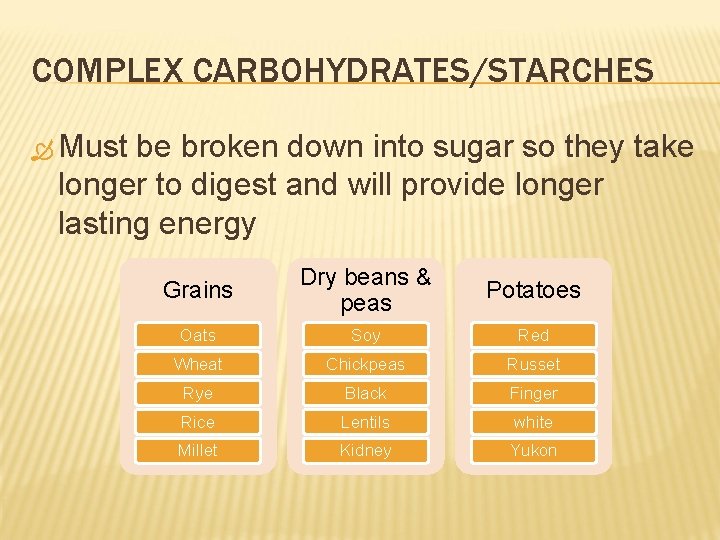
COMPLEX CARBOHYDRATES/STARCHES Must be broken down into sugar so they take longer to digest and will provide longer lasting energy Grains Dry beans & peas Potatoes Oats Soy Red Wheat Chickpeas Russet Rye Black Finger Rice Lentils white Millet Kidney Yukon
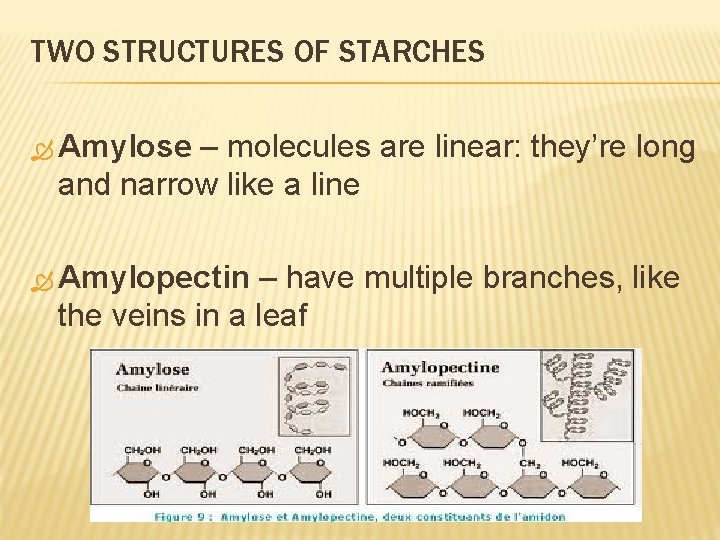
TWO STRUCTURES OF STARCHES Amylose – molecules are linear: they’re long and narrow like a line Amylopectin – have multiple branches, like the veins in a leaf
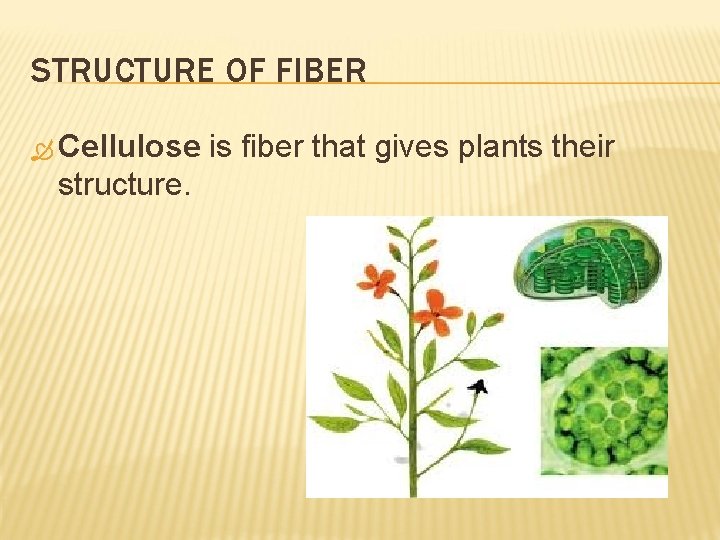
STRUCTURE OF FIBER Cellulose structure. is fiber that gives plants their
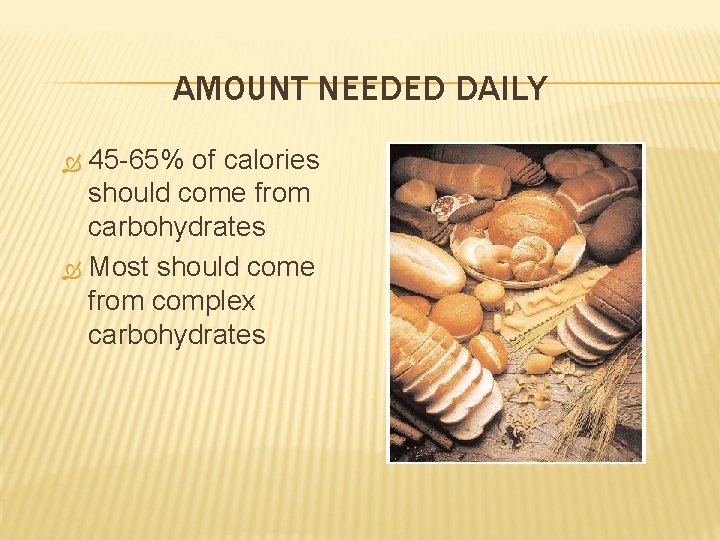
AMOUNT NEEDED DAILY 45 -65% of calories should come from carbohydrates Most should come from complex carbohydrates
DEFICIENCIES Lack of energy Uses protein as energy source Lack of vitamins, minerals, and fibers Not enough cushioning for the organs Central nervous system, kidneys, brain, and muscles won’t function properly
EXCESS Stored More Simple as excess fat susceptible to heart disease carbohydrates Raises blood sugar levels
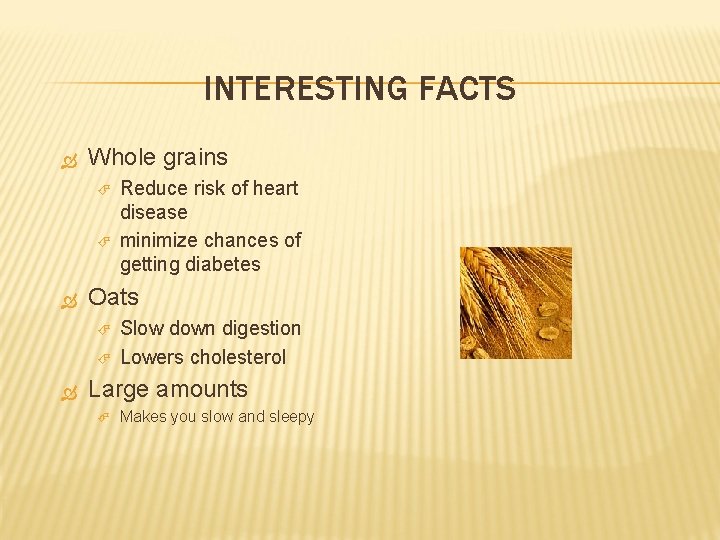
INTERESTING FACTS Whole grains Oats Reduce risk of heart disease minimize chances of getting diabetes Slow down digestion Lowers cholesterol Large amounts Makes you slow and sleepy
- Slides: 13